
About this worksheet
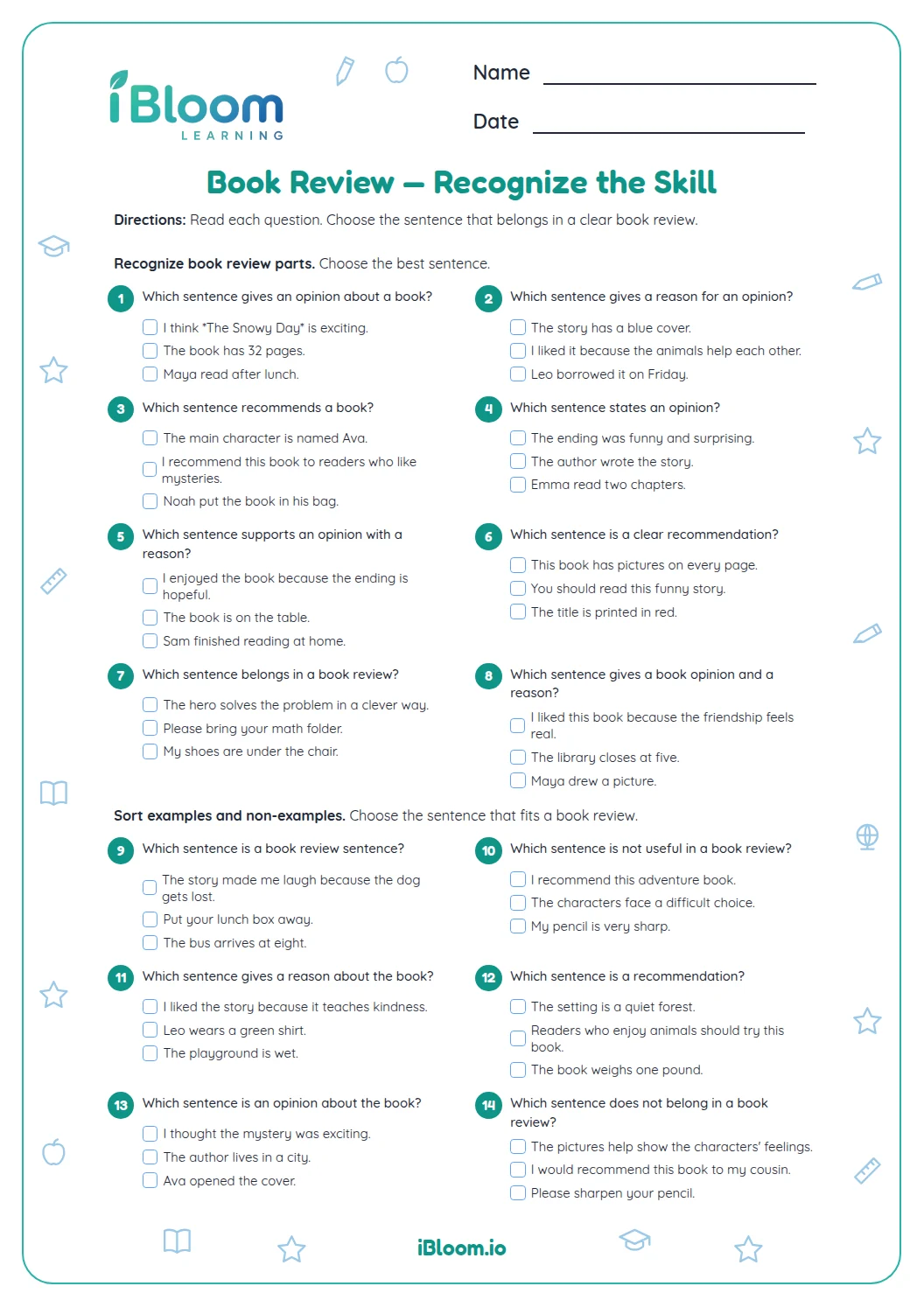
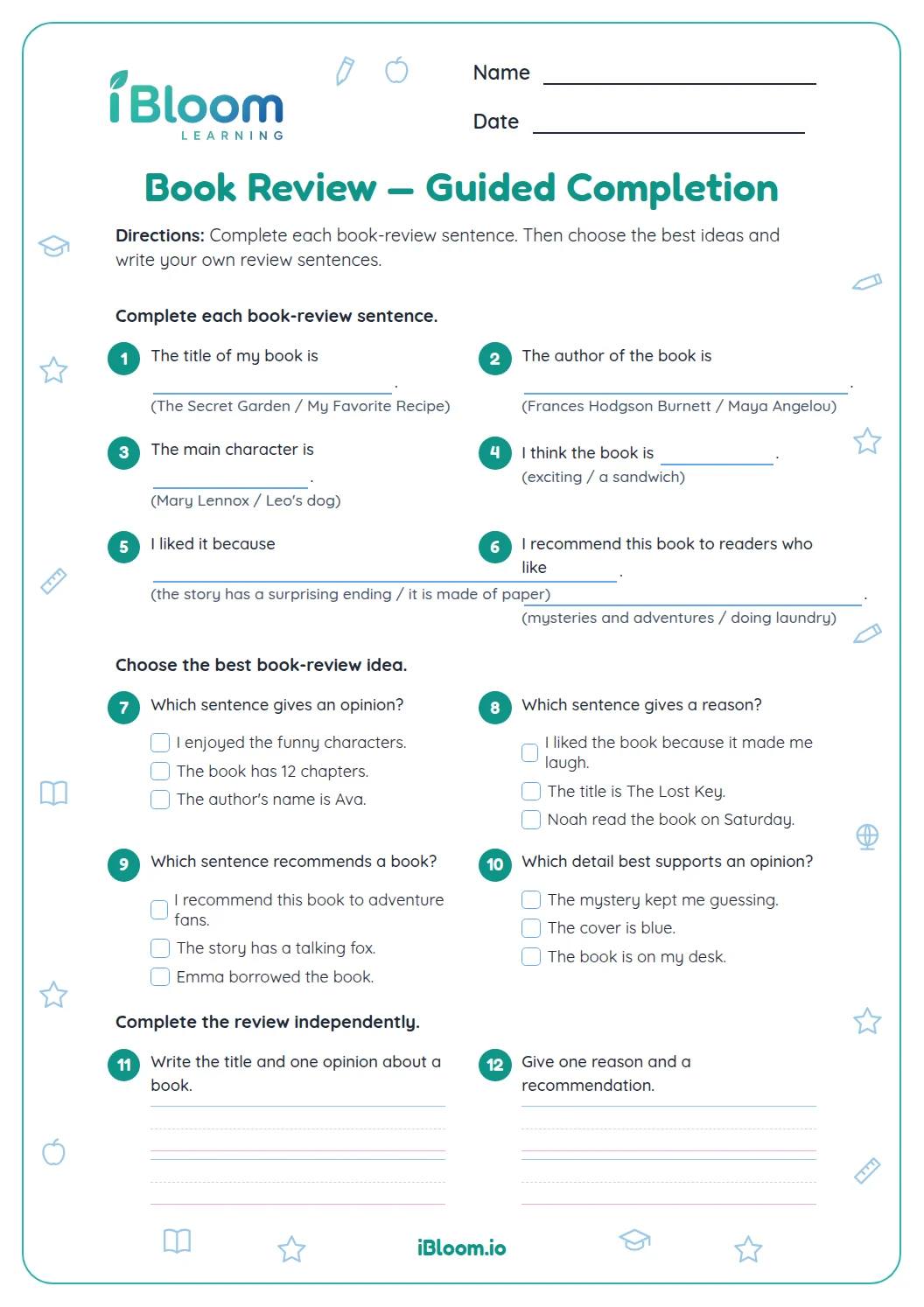
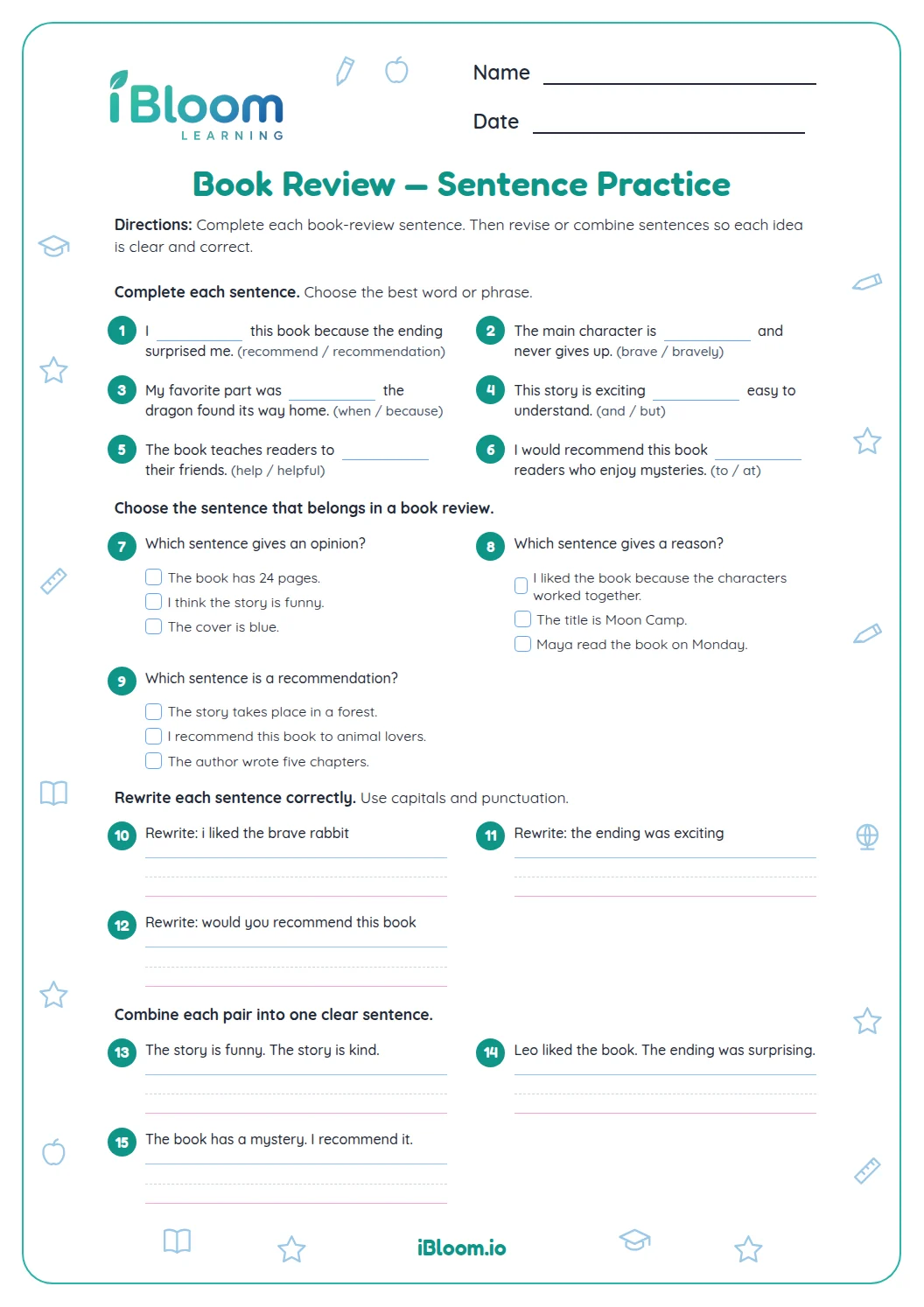
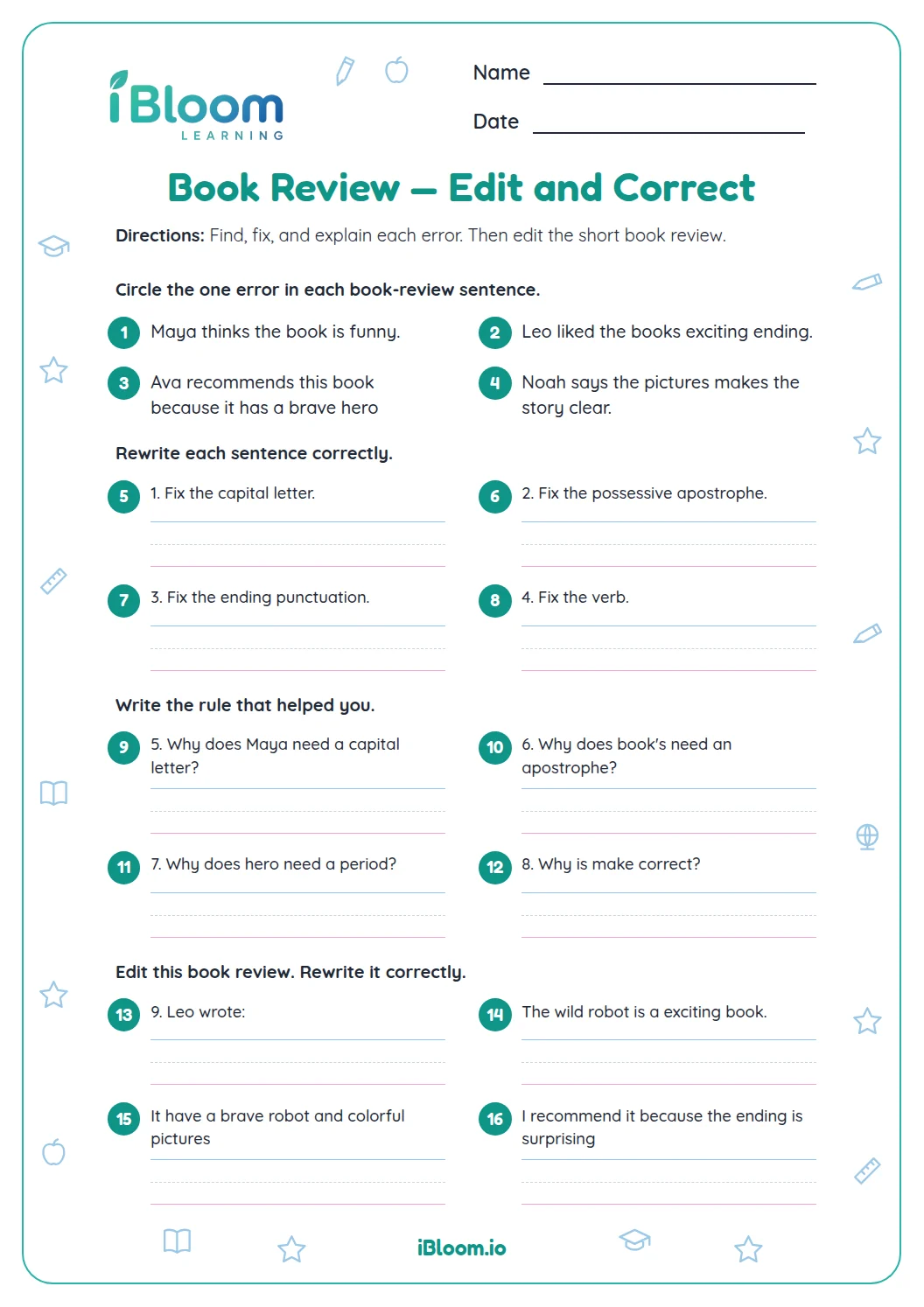
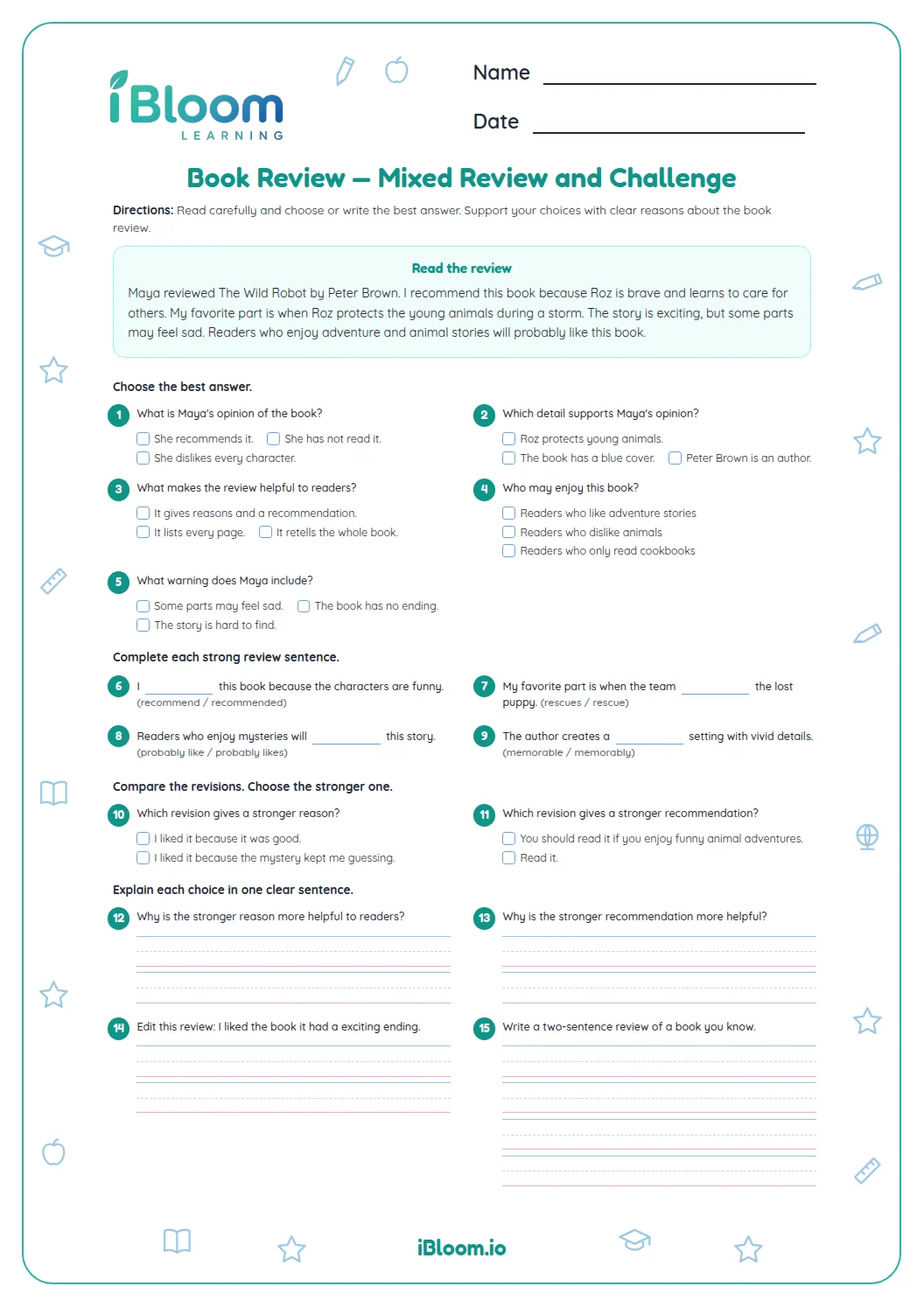
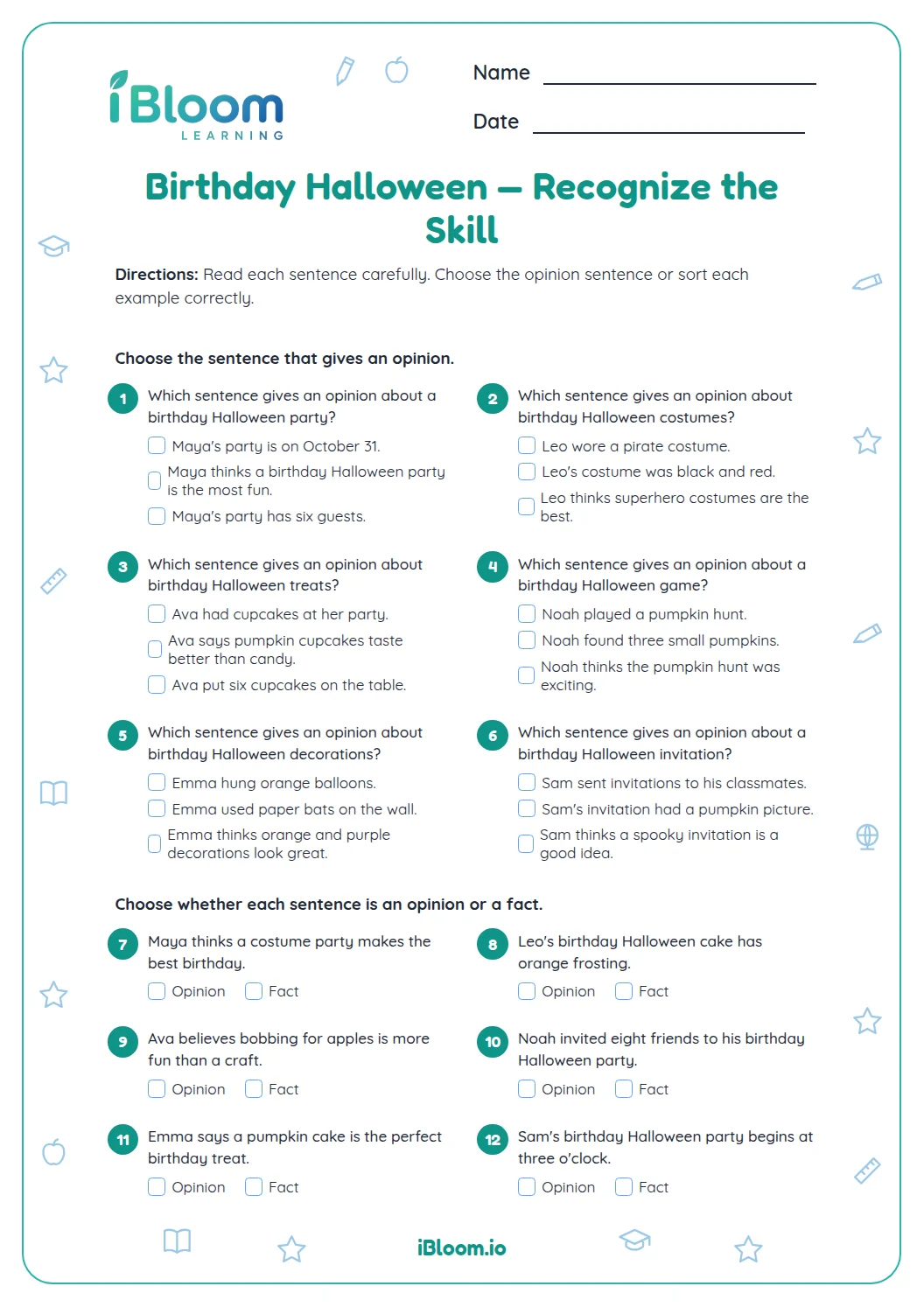
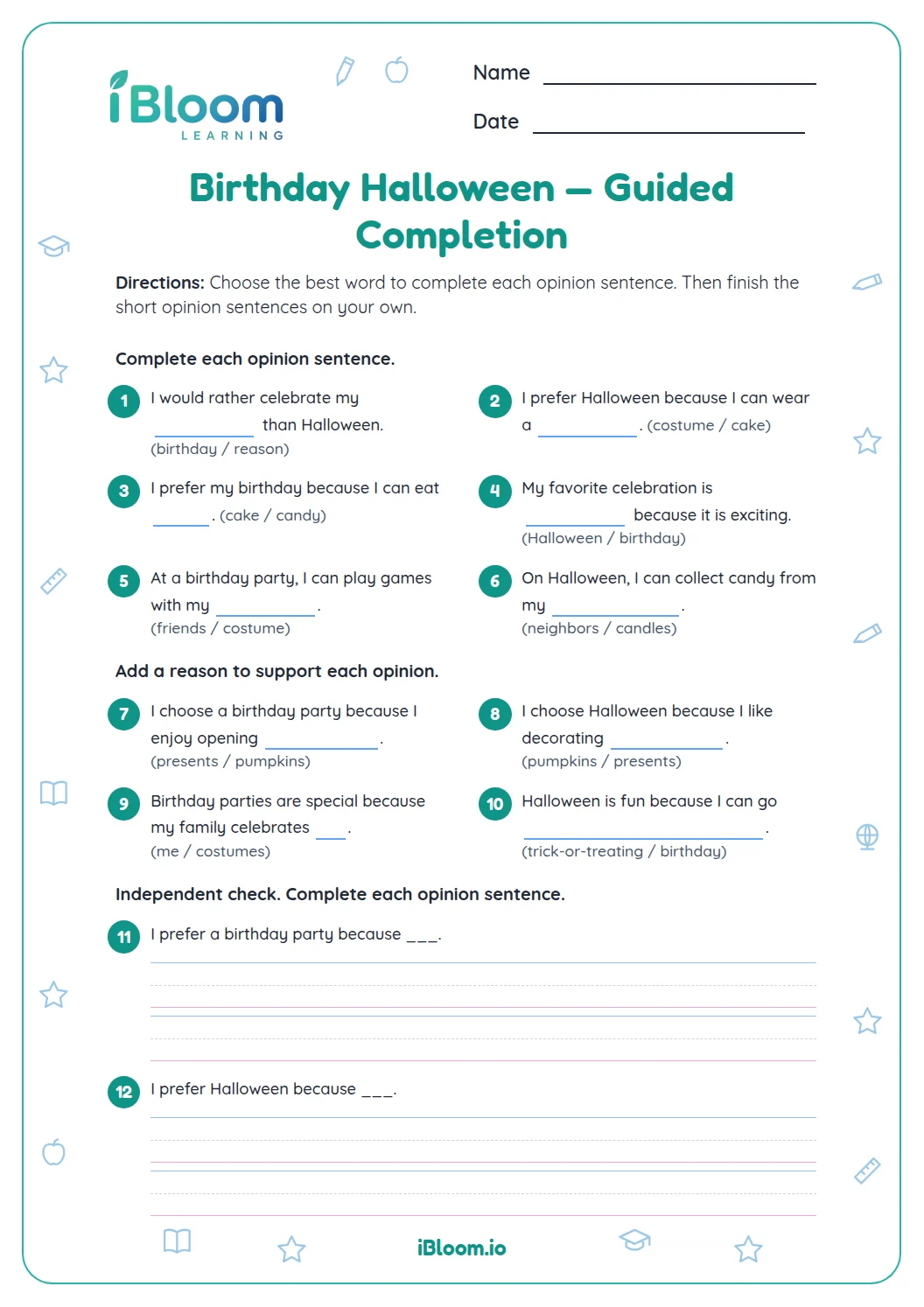
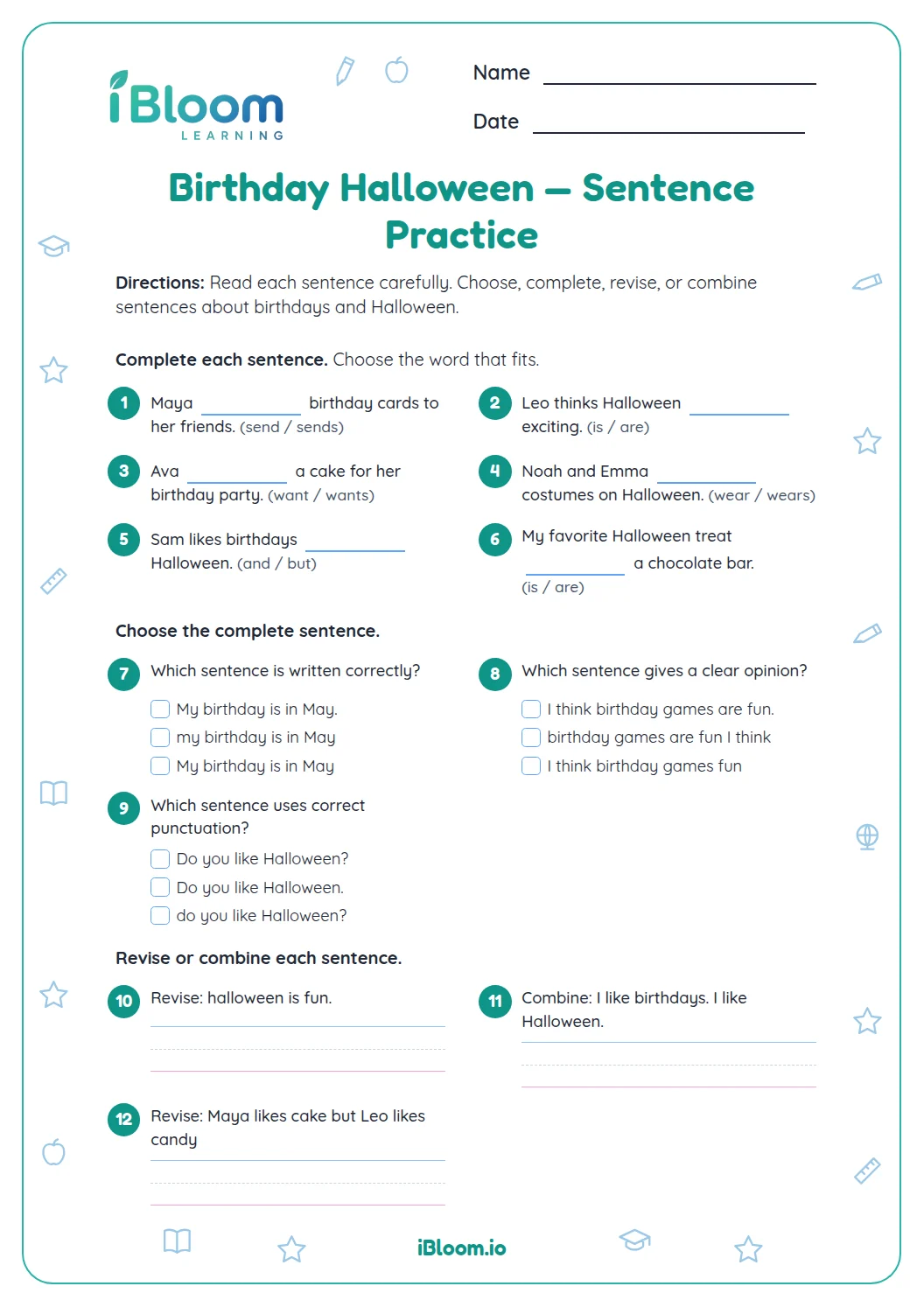
This Grade 3 printable supports book-review writing through opinion, reasons, relevant story details, and recommendations. Students answer seven selected-response questions, then write seven brief review sentences. The separate key gives the choices and sample responses. The tasks practice stating an opinion and supporting it with reasons, as described in Common Core W.3.1.
Aligned to W.3.1
What makes a book review useful to readers?
A review gives a clear opinion and supports it with a reason or a specific detail from the book. Naming the title and author also helps a reader identify the book being discussed.
In Part A, students identify these parts in sample review sentences. Part B asks them to write concise responses, such as an opinion about a character supported by a story detail.
- 1I recommend The Wild Garden because the friends solve a problem together.
- 2The reason explains the recommendation.
How to use this worksheet
- 1Read the direction at the start of each part.
- 2Work through each item and use the provided response space.
- 3For a written response, include the detail named in the prompt.
- 4Check answers with the key and revise any response that misses the task.
Common mistakes and quick fixes
The mistake
Answering before identifying exactly what the prompt asks.
The fix
Underline the key task word, such as quotient, reason, or detail.
The mistake
Giving a choice without checking its supporting evidence.
The fix
Point to the fact or text detail that makes your choice fit.
The mistake
Leaving a written response too general.
The fix
Add the specific number, reason, example, or story detail requested.
Curriculum alignment
State an opinion about a book and support it with reasons.
On this sheet:
Show the official wordingHide the official wording
Write opinion pieces on topics or texts, supporting a point of view with reasons.
What to practice next
Further reading
Questions parents and teachers ask
How many questions are on this worksheet?
There are 14 questions in two parts: seven choice questions and seven written responses. Students first identify useful parts of a review, then apply those ideas in their own sentences. The answer key includes the choice answers and examples for open responses.
Does the worksheet ask students to write a full review?
No. It asks for short responses that practice separate review moves, such as naming a book, stating an opinion, giving a reason, and recommending a title. These sentences can serve as building blocks when students later plan a complete review.
What should a book review include?
A clear review names the book and gives an opinion supported by a reason or story detail. The prompts also practice a recommendation and a closing sentence. Specific details help explain why a reader might enjoy the book.
Are there right answers for the writing questions?
The open responses can vary. The key provides sample answers that show one way to meet each prompt. Students may use different wording if the response follows the direction and includes the requested opinion, reason, or detail. A specific example from the book makes an answer stronger.
How can a student make a recommendation specific?
Name the kind of reader who might enjoy the book or point to a feature such as an exciting mystery or an animal adventure. A specific recommendation helps readers decide whether the book fits their interests and what makes it appealing.