
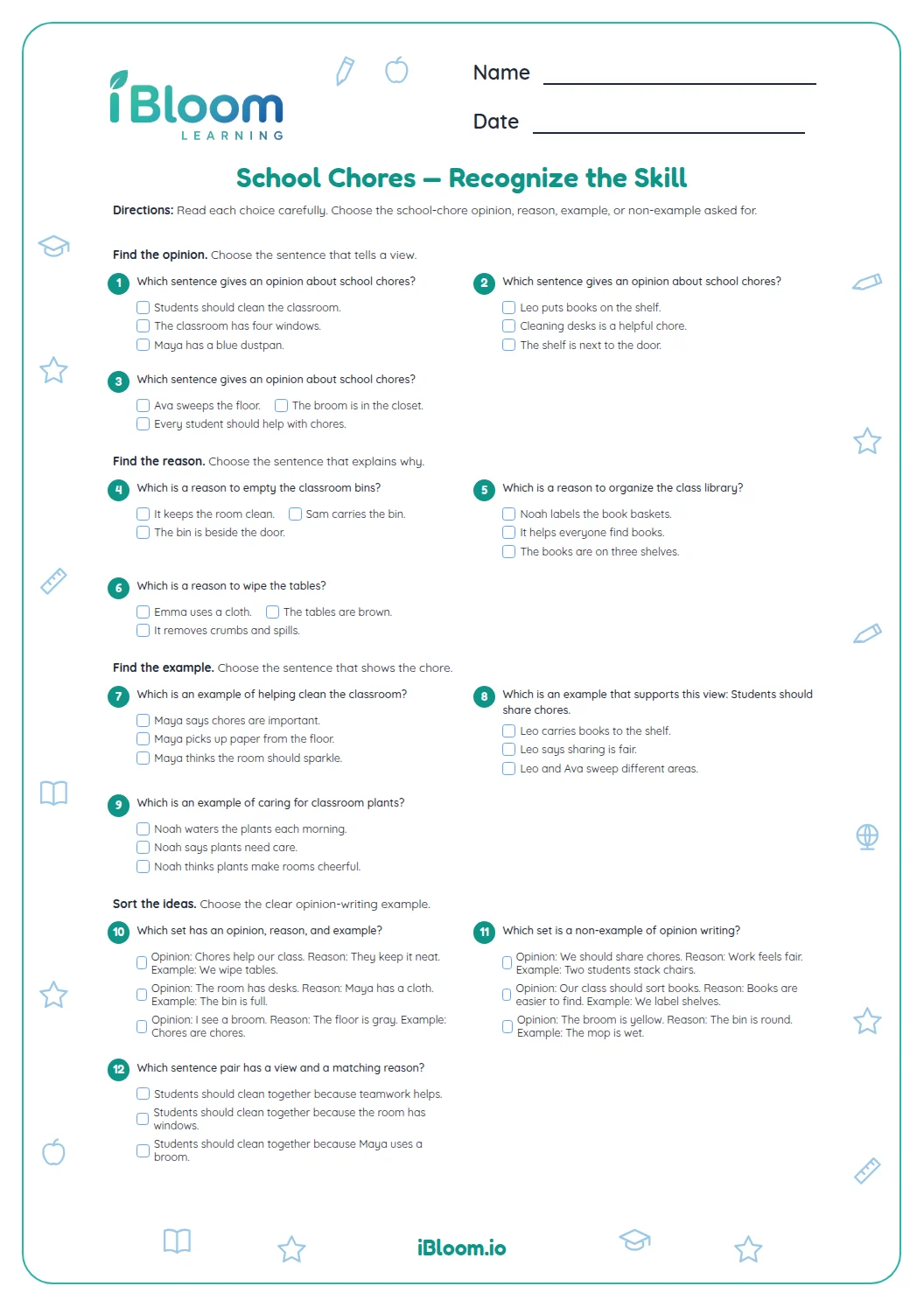
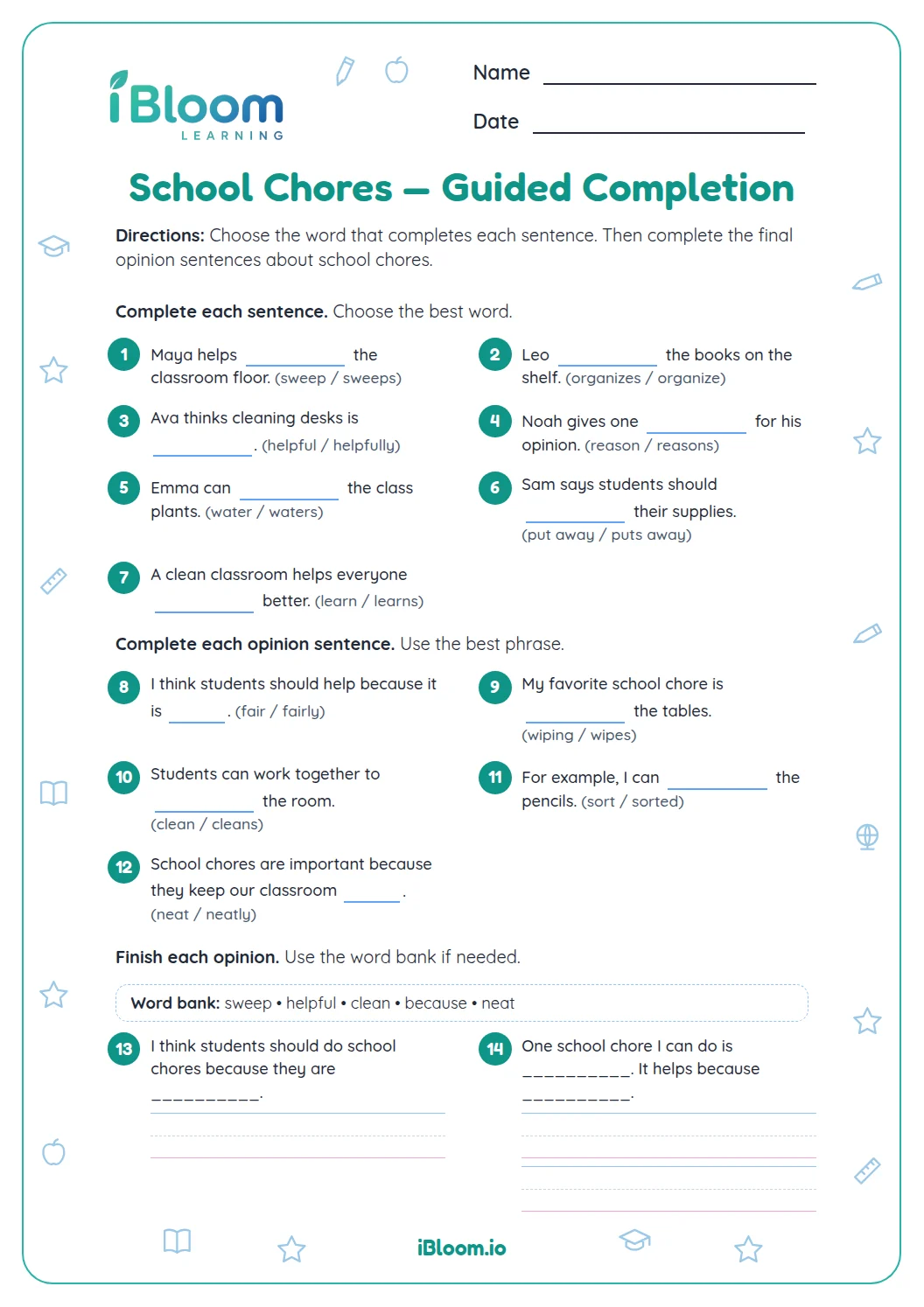

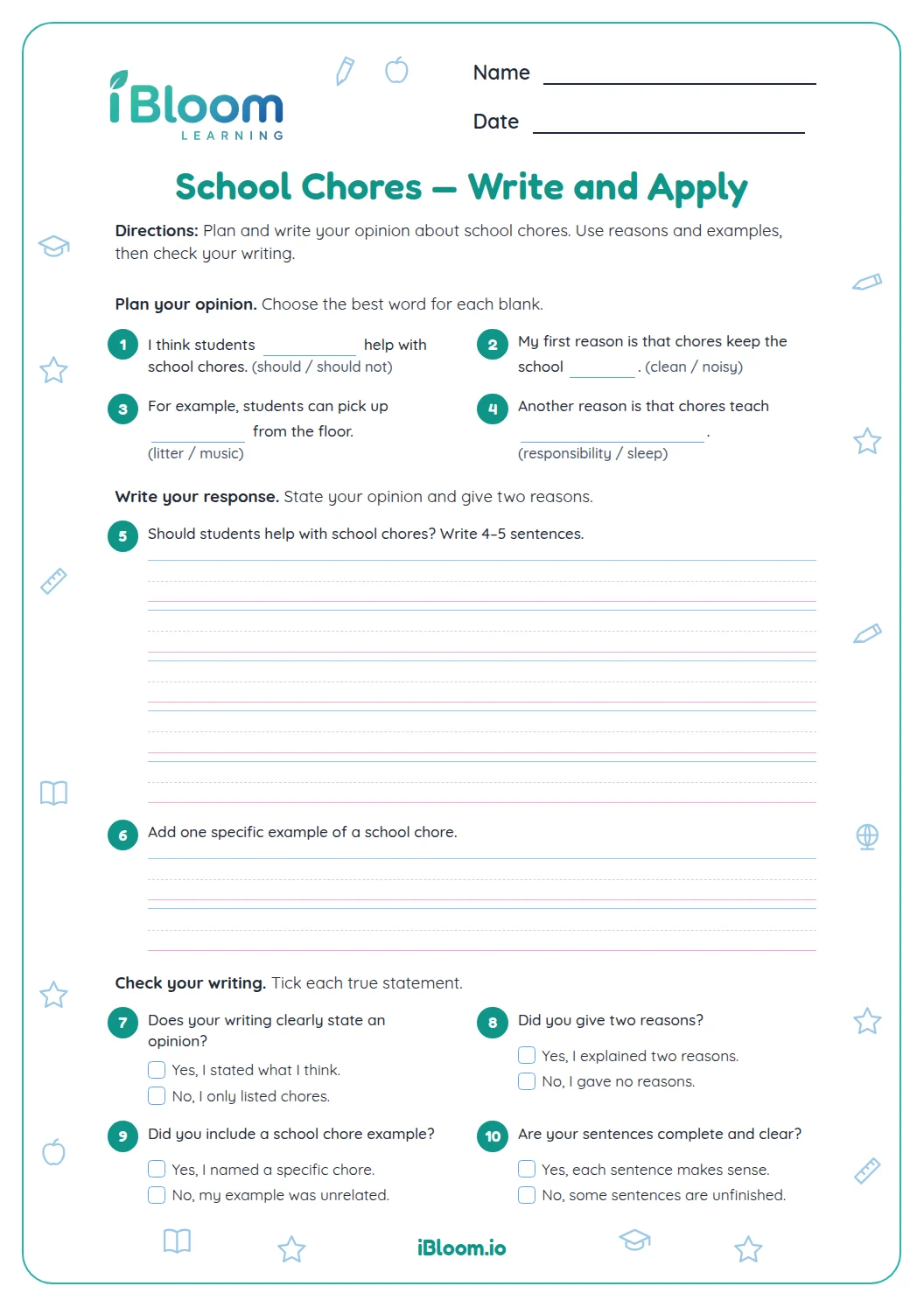
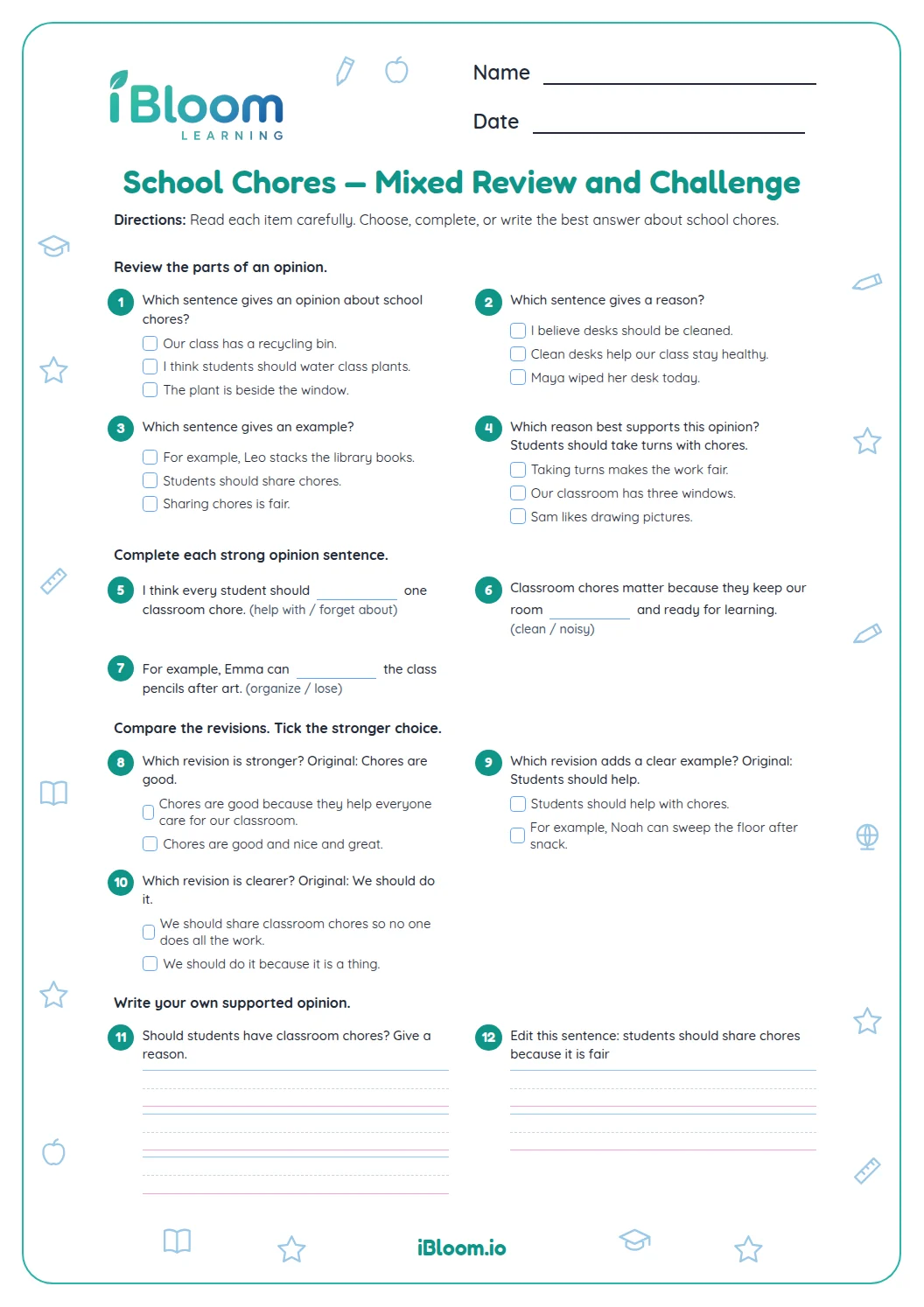
About this worksheet
This Grade 3 worksheet gives children 14 questions about school-chore opinions across two pages. They edit capitalization and punctuation, identify opinions, and choose reasons, details, and closings that support a point of view. A separate answer key follows. The tasks practice opinion writing aligned to CCSS W.3.1.
Aligned to W.3.1
What makes an opinion clear?
A clear opinion states what the writer thinks. A reason explains why, and a detail supports that reason. This sheet also asks children to correct capitalization and punctuation in short school-chore sentences.
How can a child choose a supporting reason?
Read the opinion first, then test each choice: does it explain why the opinion makes sense? “Plants need water to grow” supports watering classroom plants; the color of a watering can does not.
How does question 8 work?
The opinion says the class should water plants. Choose a detail that explains why plants need that job.
- 1Which detail supports “Our class should water the plants”?
- 2Answer: Plants need water to grow.
How to use this worksheet
- 1Read the sentence or opinion prompt carefully.
- 2Check the first word and the end mark.
- 3For an opinion, state what you think.
- 4Add a reason or detail that supports the opinion.
- 5Reread your response for capitals and punctuation.
Common mistakes and quick fixes
The mistake
Giving a reason that does not support the opinion
The fix
Ask how the reason explains why your opinion makes sense.
The mistake
Forgetting a capital at the start
The fix
Point to the first word and check that it begins with a capital.
The mistake
Ending a statement without punctuation
The fix
Read aloud and add a period or question mark to finish the thought.
Common Core alignment
This worksheet practices W.3.1 through grade-level tasks.
Edit opinion writing for capitals, punctuation, clear reasons, and a closing.
On this sheet: Edit opinion writing for capitals, punctuation, clear reasons, and a closing.
Show the official wordingHide the official wording
Write opinion pieces on topics or texts, supporting a point of view with reasons.
What to practice next
Make more practice
Further reading
Questions parents and teachers ask
What writing skill is practiced?
Children identify and strengthen a short opinion about classroom chores. They select corrected capitalization and punctuation, opinions, supporting reasons, details, and closing sentences. Ask whether each choice improves the school-chore opinion by correcting the sentence or supporting its point. Review the completed choices with the answer key.
How many questions are on the worksheet?
There are 14 multiple-choice questions across two worksheet pages, followed by a separate answer key. The items use short classroom chore examples. Ask whether each choice improves the school-chore opinion by correcting the sentence or supporting its point. Review the completed choices with the answer key.
What is the difference between an opinion and a reason?
An opinion tells what the writer thinks. A reason explains why the writer thinks it; a detail can add support. For example, “Plants need water to grow” supports watering classroom plants. Ask whether each choice improves the school-chore opinion by correcting the sentence or supporting its point. Review the completed choices with the answer key.
How can children spot an unrelated detail?
Ask whether the detail explains or supports the opinion. The color of a watering can does not explain why students should water plants, but the plants’ need for water does. Ask whether each choice improves the school-chore opinion by correcting the sentence or supporting its point. Review the completed choices with the answer key.
Does the page include editing practice?
Yes. The first four questions focus on capital letters and end punctuation in short sentences about classroom jobs. Ask whether each choice improves the school-chore opinion by correcting the sentence or supporting its point. Review the completed choices with the answer key.
Is there an answer key?
Yes. A separate key lists the correct choice for every question so an adult or student can review the selections. Ask whether each choice improves the school-chore opinion by correcting the sentence or supporting its point. Review the completed choices with the answer key.