






About this worksheet
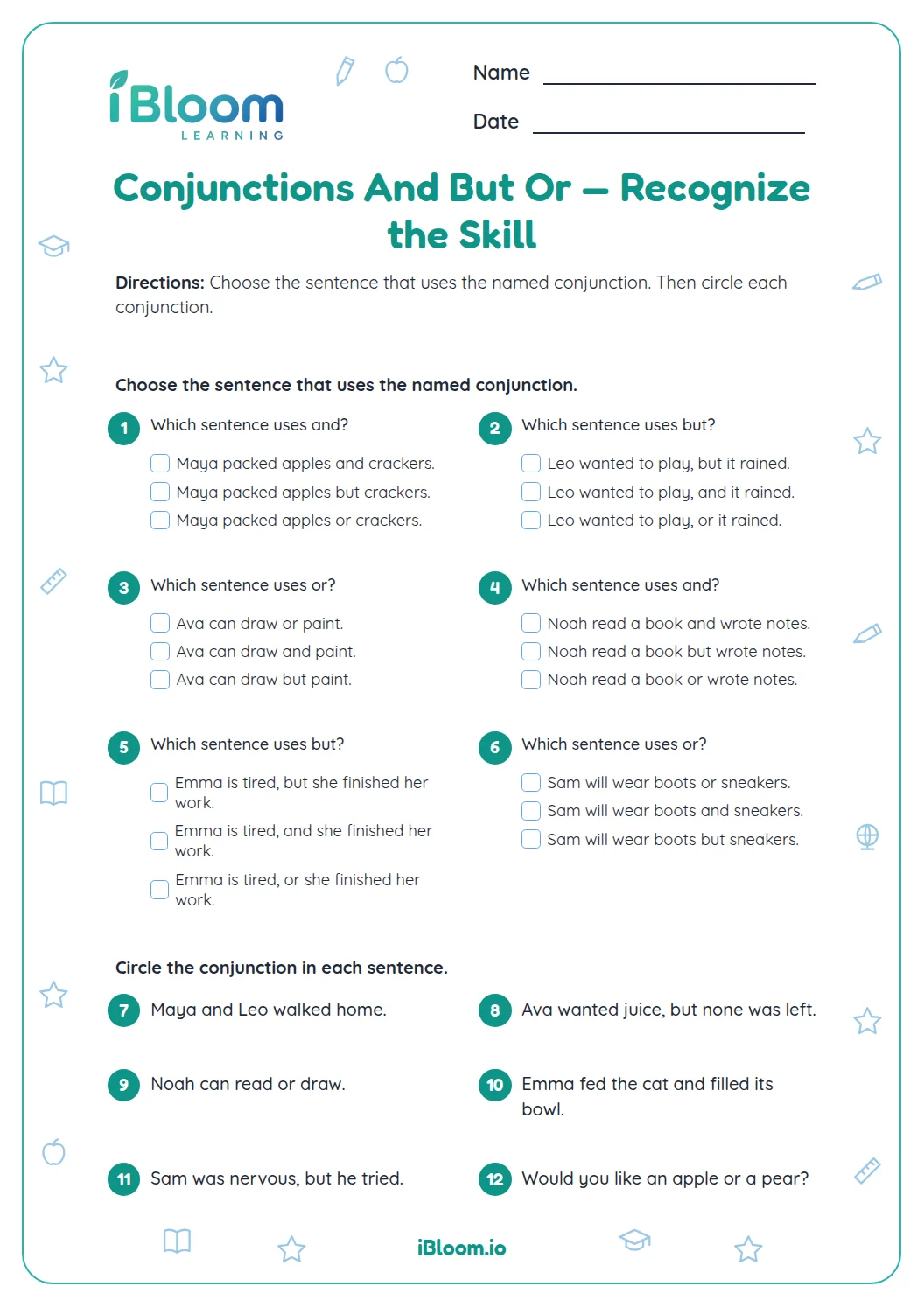
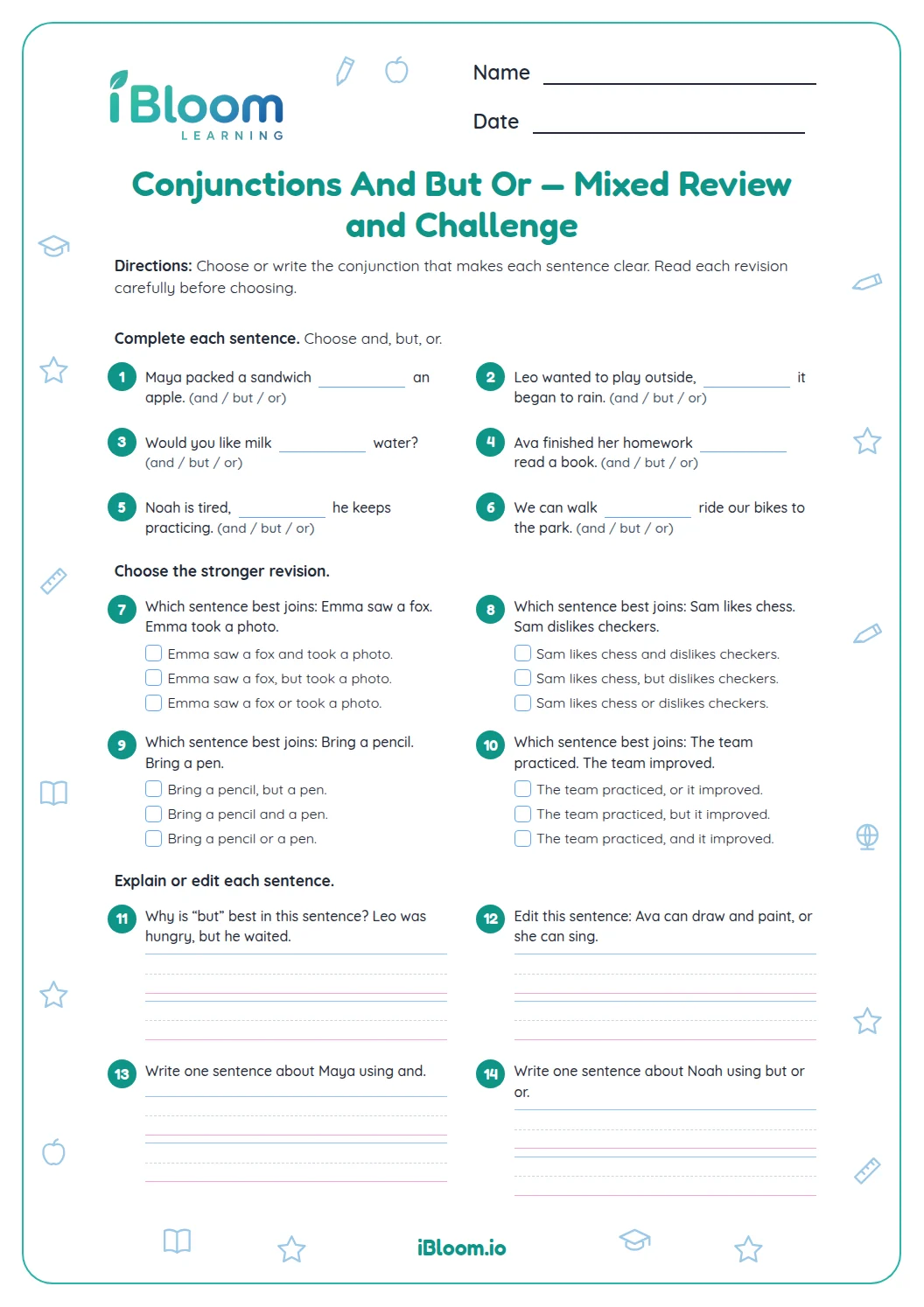
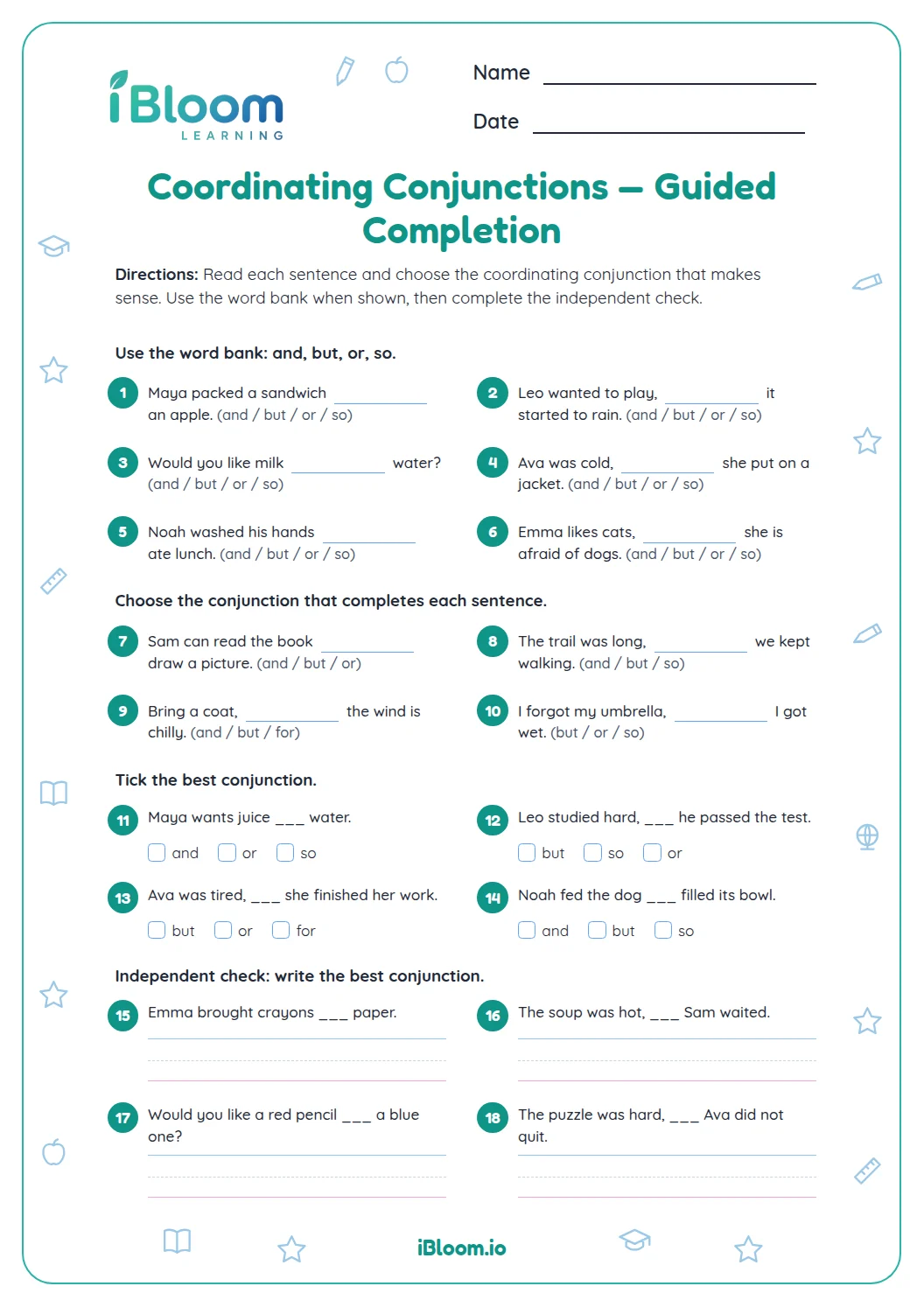
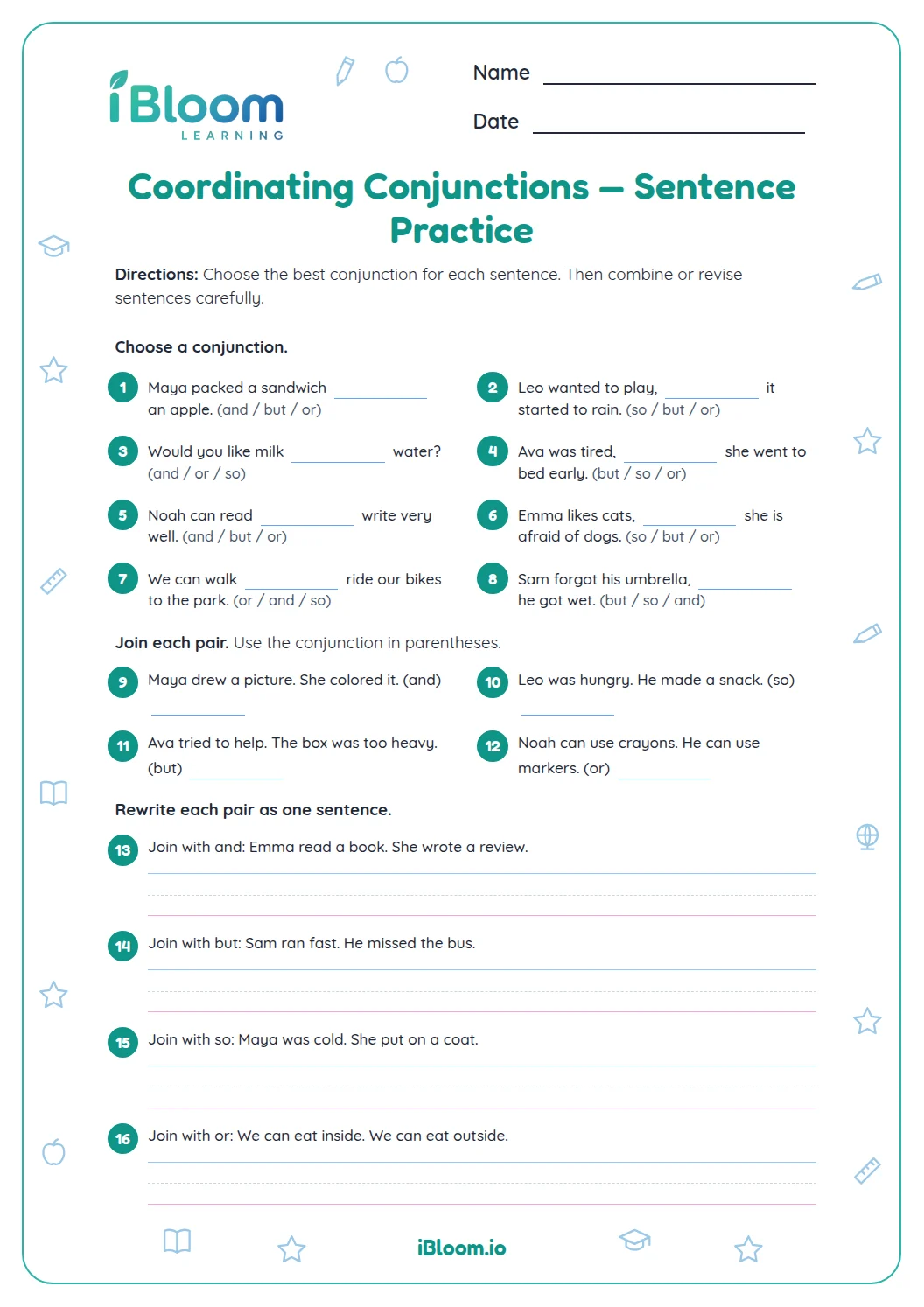
This Grade 3 printable practices choosing and using the conjunctions and, but, and or. Learners complete sentence blanks, then combine two ideas with and or but in their own writing. The 14 questions move from choosing a connector to applying it in a complete sentence. An answer key gives sample sentences for the written items, and the page aligns with CCSS L.3.1.h.
Aligned to L.3.1.h
What does this conjunctions sheet include?
Part A asks learners to choose a conjunction that connects the ideas: and adds, but contrasts, and or offers a choice. Part B uses short prompts to apply each connector in a sentence, followed by self-check questions.
The old sheet’s method is retained: learners work with these three conjunctions in meaningful sentences, then check whether their writing makes sense.
- 12 sentence-completion questions using and, but, or or
- 2 sentence-joining responses
- A separate answer key with sample wording
How can a writer choose between and and but?
Question 2 says the sky looked cloudy, ___ the game continued. “But” signals a contrast: the cloudy sky might suggest stopping, yet the game continued.
How can the answer key support practice?
For the two written items, check that the learner joined the ideas with the requested conjunction and kept the meaning. The exact wording can vary; the connector’s relationship should remain clear.
- Point to one clue that supports the answer
- Return to the passage or situation when needed
A simple practice routine
- 1Read the directions and scan the question group.
- 2Answer the first set by noticing the clue or relationship.
- 3Complete the next set without rushing.
- 4Write a clear sentence for open responses.
- 5Use the key to check and discuss one answer.
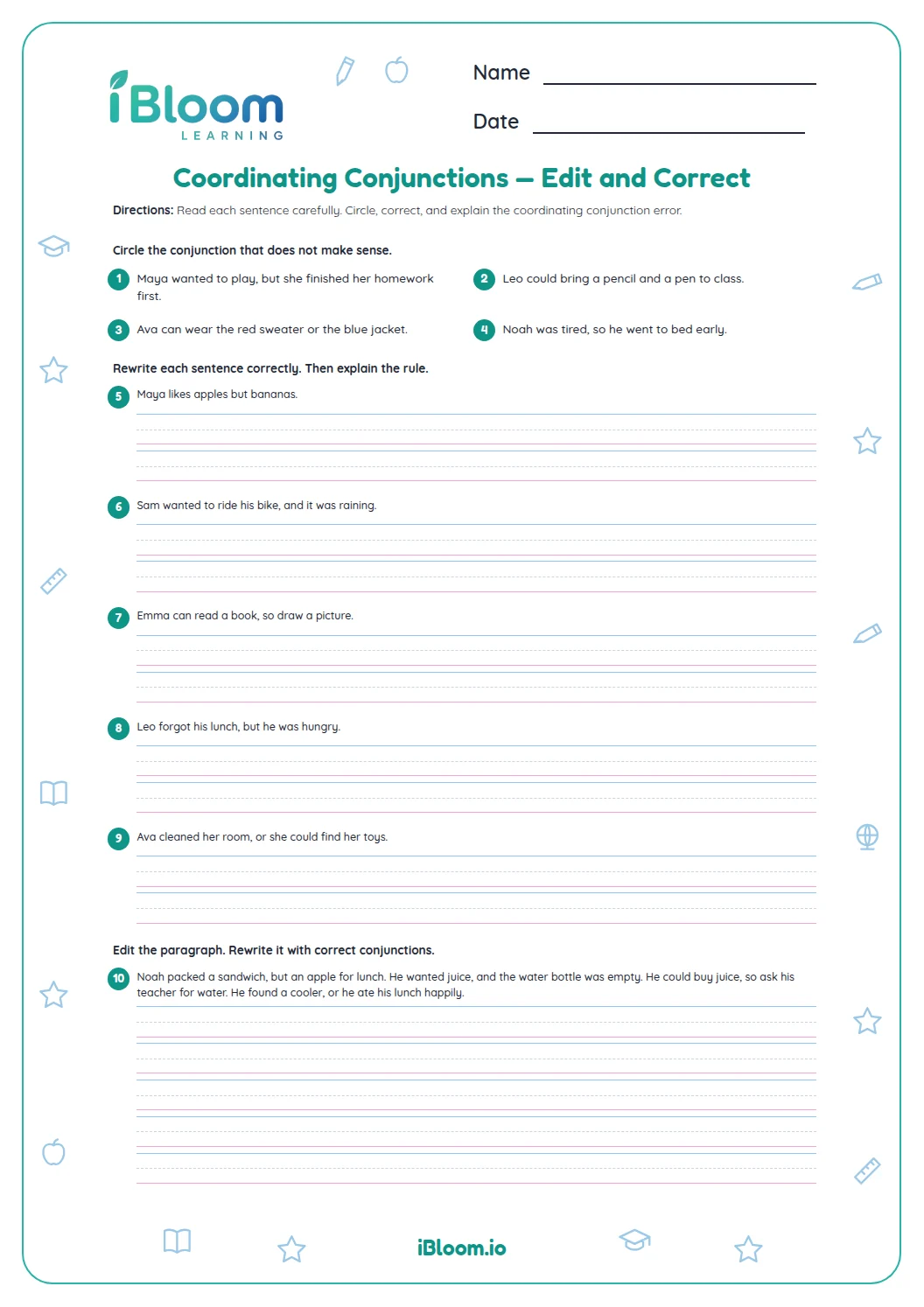
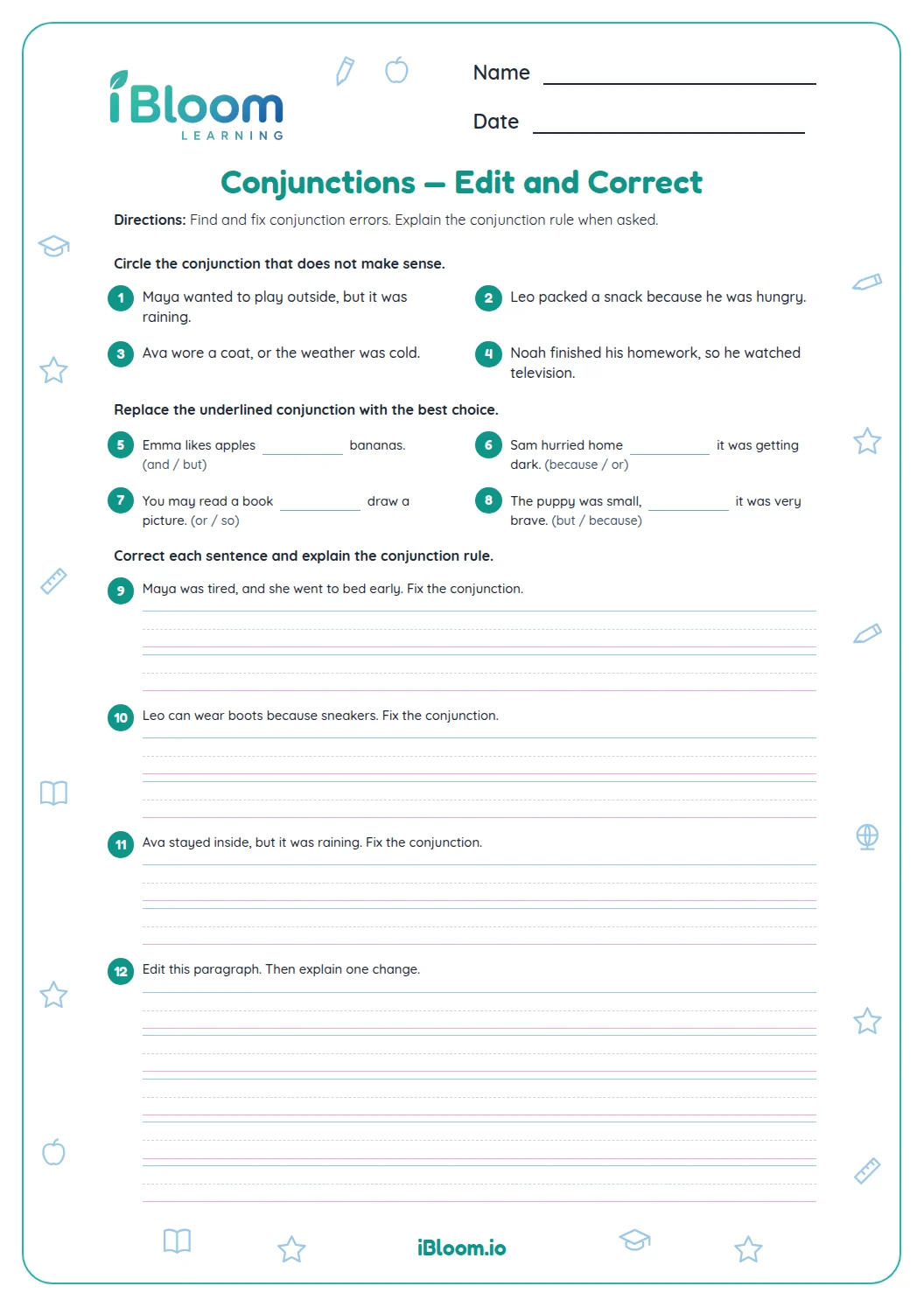
Common mistakes and quick fixes
The mistake
Using and when two ideas contrast.
The fix
Use but when the second idea contrasts with the first, as in question 2.
The mistake
Using or to add a second action that both happened.
The fix
Use and to join actions that both took place; save or for choices.
The mistake
Writing a fragment after choosing a conjunction.
The fix
Read the full joined sentence to check that it expresses a complete idea.
Curriculum alignment
This worksheet practices the standard named below.
Use coordinating conjunctions to join words and phrases.
On this sheet: Learners choose and use and, but, and or to connect related ideas.
Show the official wordingHide the official wording
Use coordinating and subordinating conjunctions.
What to practice next
Make more practice
Further reading
Questions parents and teachers ask
Which conjunctions do learners practice?
The sheet practices and, but, and or. And adds or joins related ideas, but signals a contrast, and or presents a choice. Learners complete 12 sentence blanks and write two joined sentences using a named conjunction. Invite the learner to explain one choice and point to its evidence before checking.
How can a child choose between and and but?
Ask how the ideas relate. Use and when the second idea adds information, as in packing a snack and a water bottle. Use but when the second idea contrasts with the first, as in cloudy skies while the game continues.
What does the writing section ask children to do?
Questions 13 and 14 each present two short sentences and name the conjunction to use. The learner combines each pair into one clear sentence. The answer key provides sample wording, while allowing other sentences that keep both ideas and use the conjunction correctly.
How many questions and pages are there?
There are 14 questions on two worksheet pages, followed by two answer-key pages. Part A has six multiple-choice items; Part B has six fill-ins; Part C has two sentence-writing prompts. Invite the learner to explain one choice and point to its evidence before checking.
How can an adult check a written sentence?
Check that the sentence includes both original ideas and the requested conjunction. Then read it aloud to see whether the connection makes sense. A comma may be appropriate before but when it joins two complete clauses, as in the sample answer.