





About this worksheet
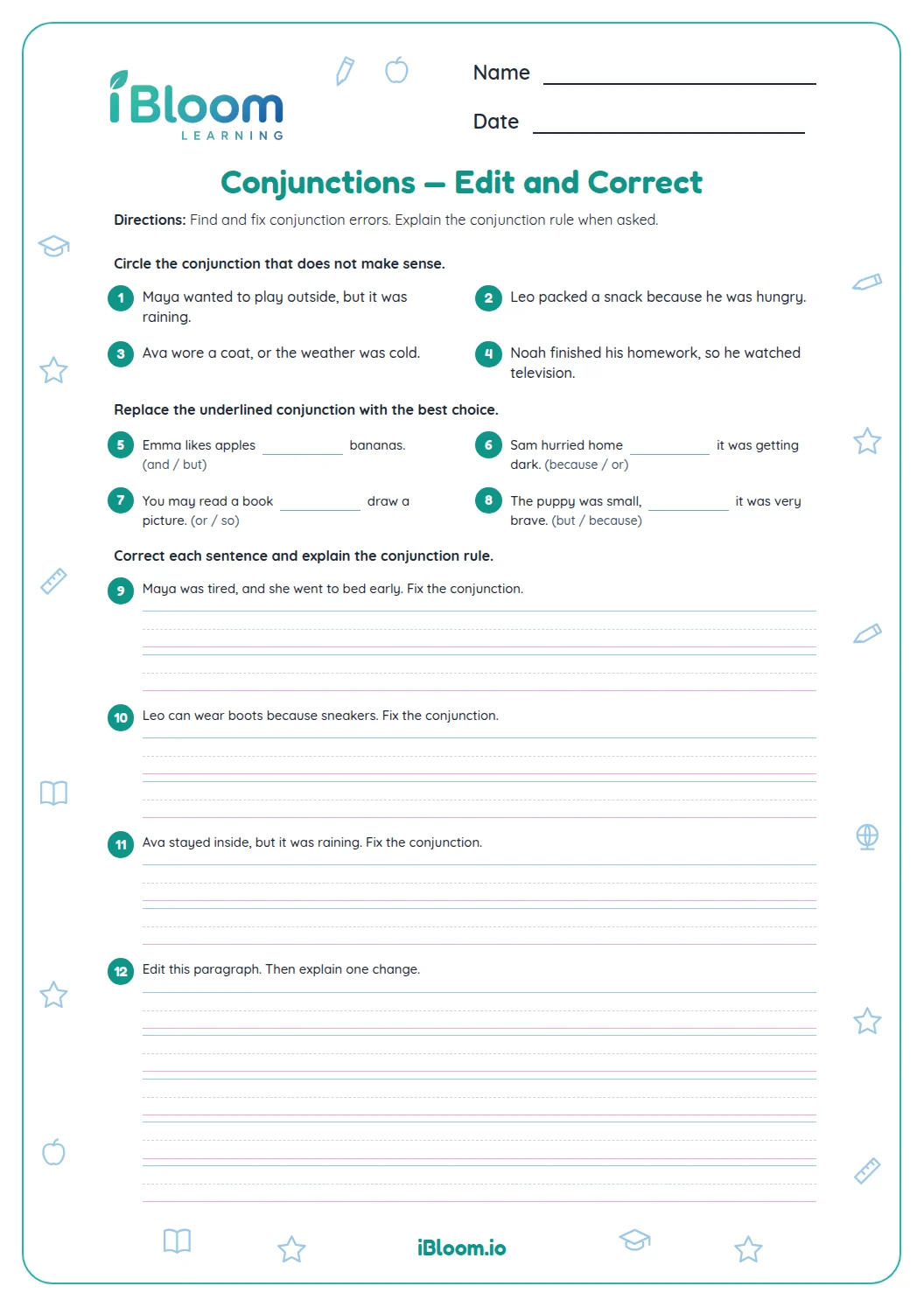
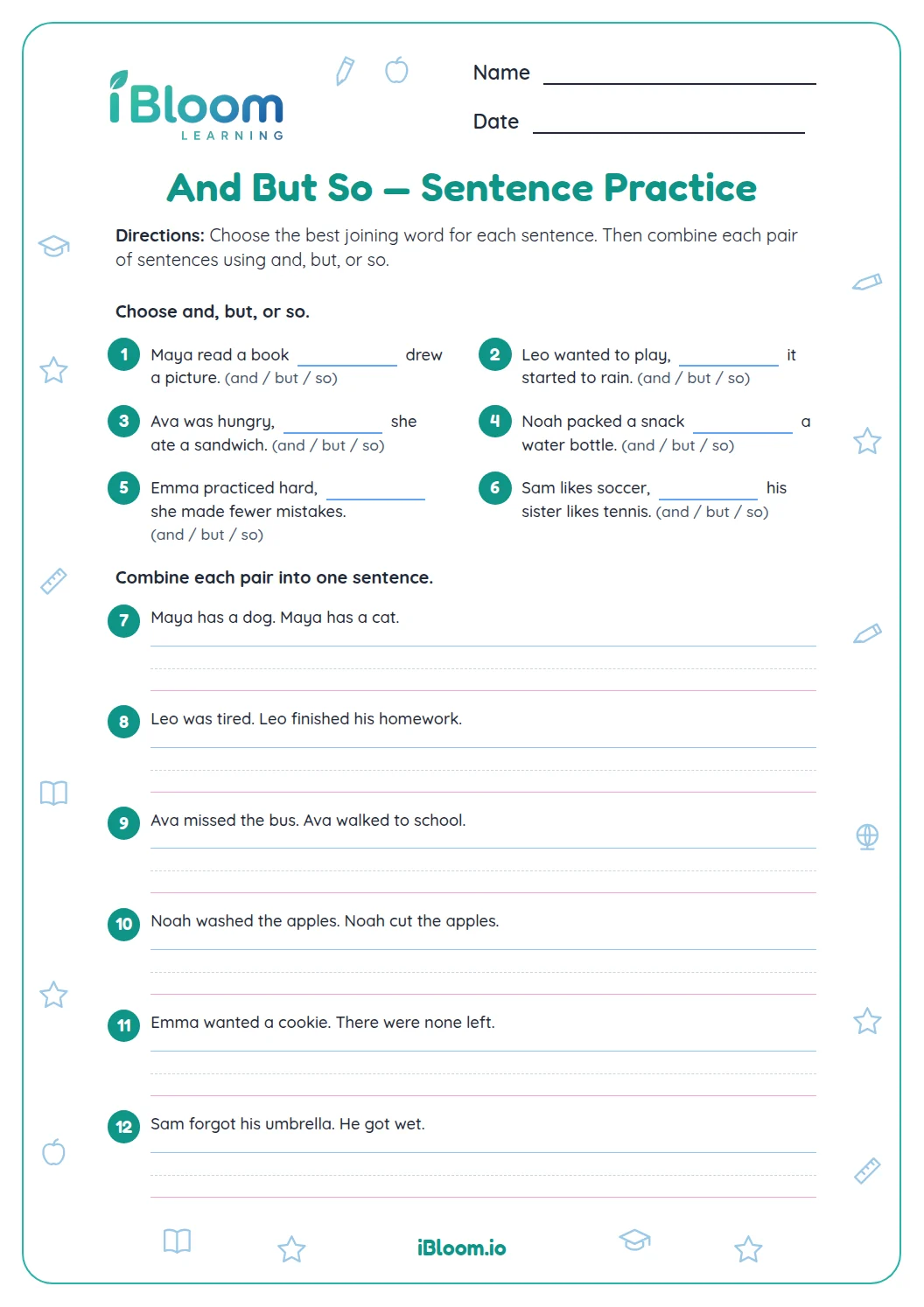
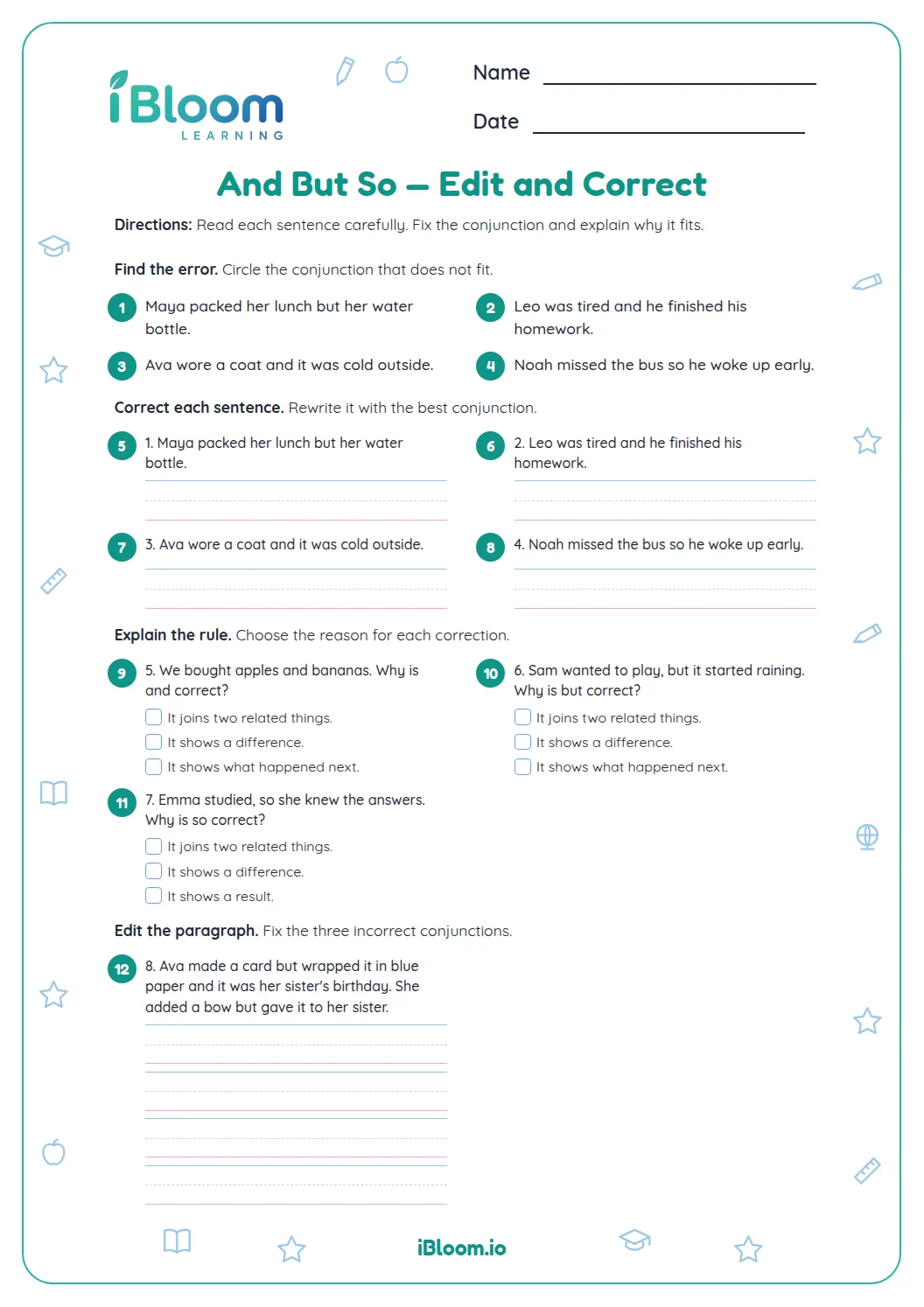
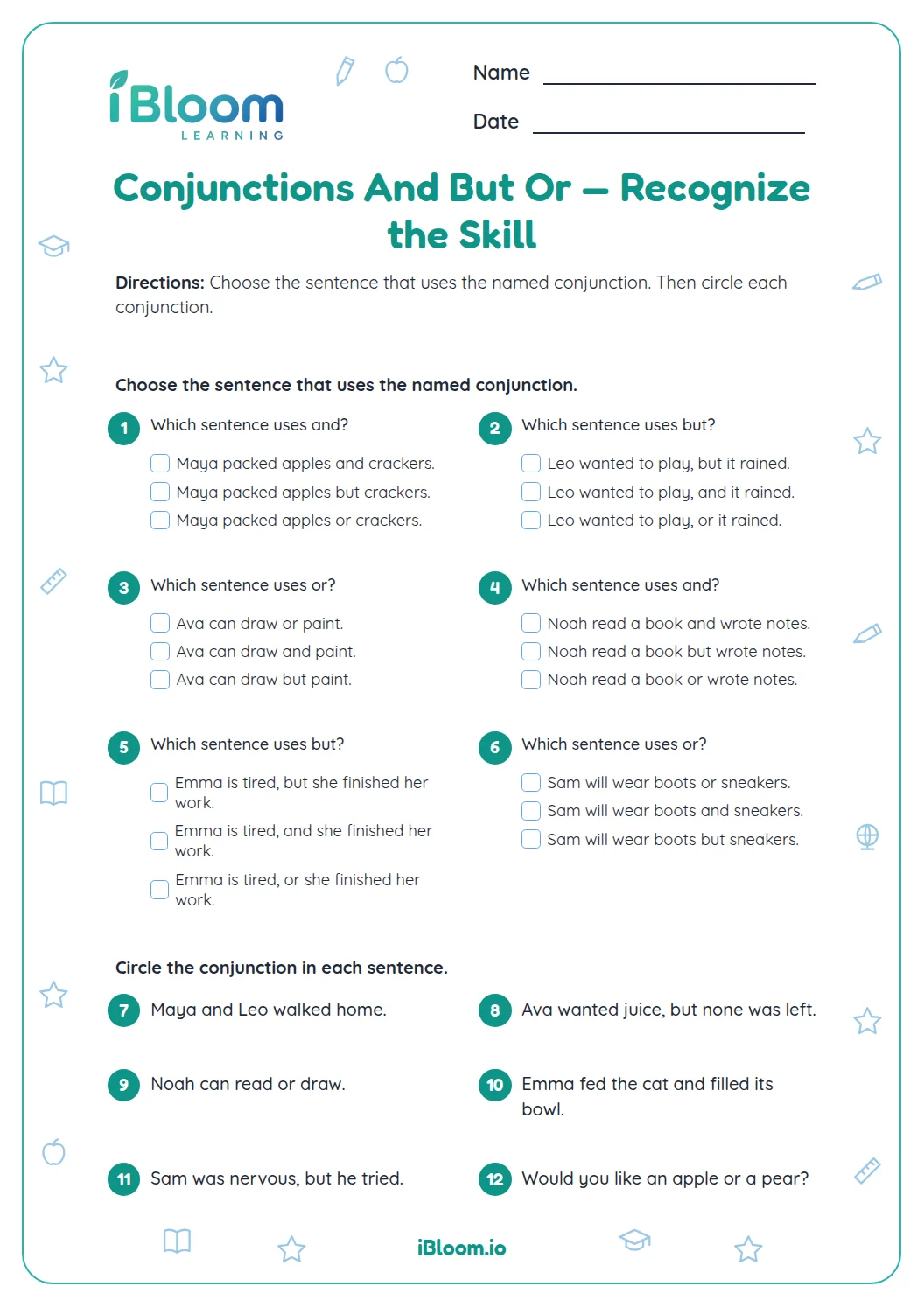
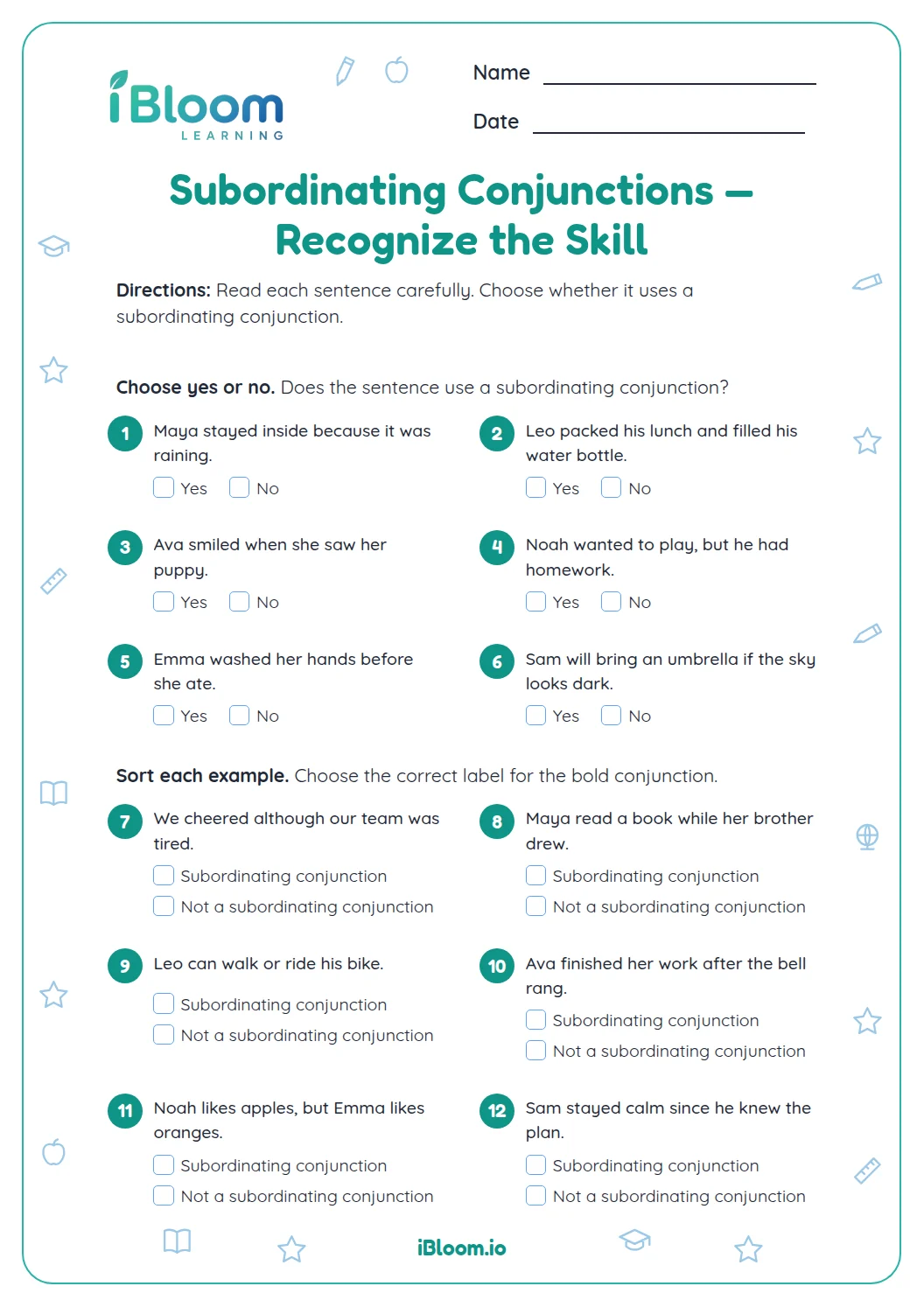
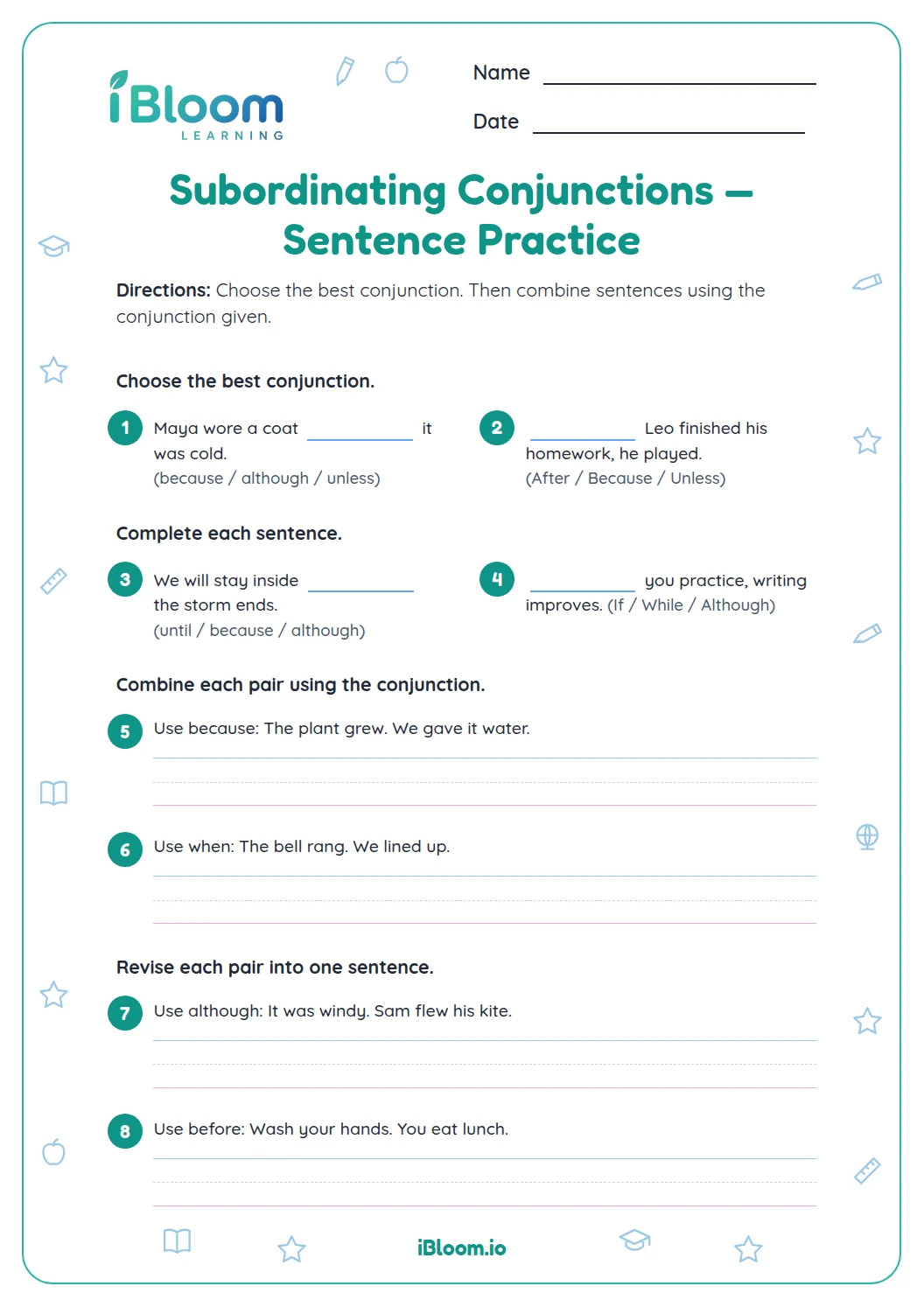
This Grade 3 grammar worksheet gives guided practice choosing conjunctions that make sentence relationships clear. Students first choose among answer options, then write conjunctions in four new sentences. The examples include coordinating words such as and, but, or, and so, plus subordinating words such as because, after, when, and while. The sheet practices CCSS L.3.1h, using coordinating and subordinating conjunctions. An answer key is included.
Aligned to L.3.1h
What does a conjunction do?
A conjunction joins words or ideas and can show how they relate. And adds information, but shows a contrast, or gives a choice, and so can show a result. Words such as because, when, after, and while can connect a main idea to another part of a sentence.
- 1I wanted to play, ___ it began to rain.
- 2The ideas contrast: wanting to play and rain beginning.
- 3But signals the contrast: “I wanted to play, but it began to rain.”
How do you choose a conjunction?
Read both sides of the blank and ask how the ideas fit: do they add, contrast, give a choice, explain a reason, or show time? Then read the completed sentence aloud to see whether the connection is clear.
What is on the guided practice page?
Part A offers three choices for each sentence. Part B asks students to write a conjunction that fits. Its prompts have a clear relationship, and the answer key gives the intended word.
How to use this worksheet
- 1Read the words on both sides of the blank.
- 2Name the connection: adding, contrast, choice, reason, time, or result.
- 3Choose a conjunction that signals that relationship.
- 4Read the full sentence aloud.
- 5For Part B, explain why the chosen conjunction fits.
Common mistakes and quick fixes
The mistake
Choosing a conjunction that sounds familiar but changes the meaning.
The fix
Name the relationship between the two ideas before selecting a word.
The mistake
Using and when the sentence shows a contrast.
The fix
Ask whether the second idea is different from what was expected; but may fit.
The mistake
Treating because and so as interchangeable.
The fix
Because gives a reason; so often introduces a result.
Curriculum alignment
This worksheet gives children direct practice with the skill named in the standard.
Use coordinating and subordinating conjunctions.
On this sheet: The sentence completions use coordinating and subordinating conjunctions to show how ideas connect.
Show the official wordingHide the official wording
Use coordinating and subordinating conjunctions.
What to practice next
Make more practice
Further reading
Questions parents and teachers ask
What is a conjunction?
A conjunction is a joining word that connects words, phrases, or ideas. In “Mia can draw or paint,” or joins two choices. In “We stayed inside because the wind was strong,” because connects an action with its reason. A quick reread of the completed item can confirm the answer and make the word relationship clear.
How can a student choose between and, but, and so?
Ask how the ideas relate. And adds information, but signals a contrast, and so can introduce a result. Read both sides of the blank and select the joining word that expresses that relationship. A quick reread of the completed item can confirm the answer and make the word relationship clear.
What is a subordinating conjunction?
A subordinating conjunction connects a dependent idea to a main idea. Words such as because, when, after, and while can show a reason, time, or simultaneous action. Several questions on this worksheet practice those sentence links. A quick reread of the completed item can confirm the answer and make the word relationship clear.
Can a sentence have more than one possible conjunction?
Sometimes a sentence can be revised to allow another conjunction, but each prompt on this sheet is written to signal a specific relationship. The answer key gives the intended choice. For a blank, ask the student to explain how the two ideas connect.
How can I help a child who chooses a word that sounds awkward?
Have the child read the sentence with the chosen word and name how the ideas connect. If the relationship is a contrast, for example, but may fit better than and. The read-aloud check often makes the connection easier to hear.