




About this worksheet
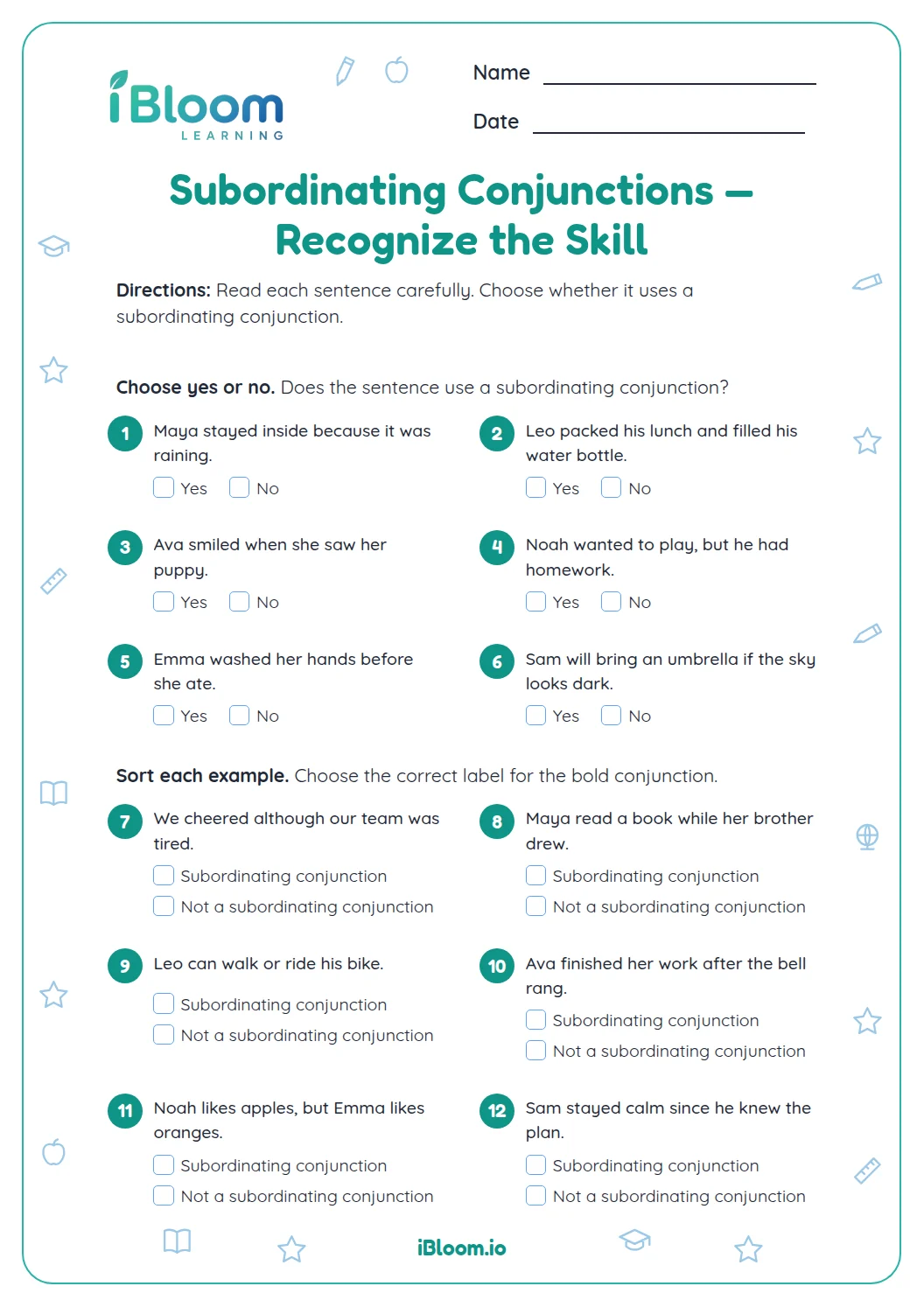
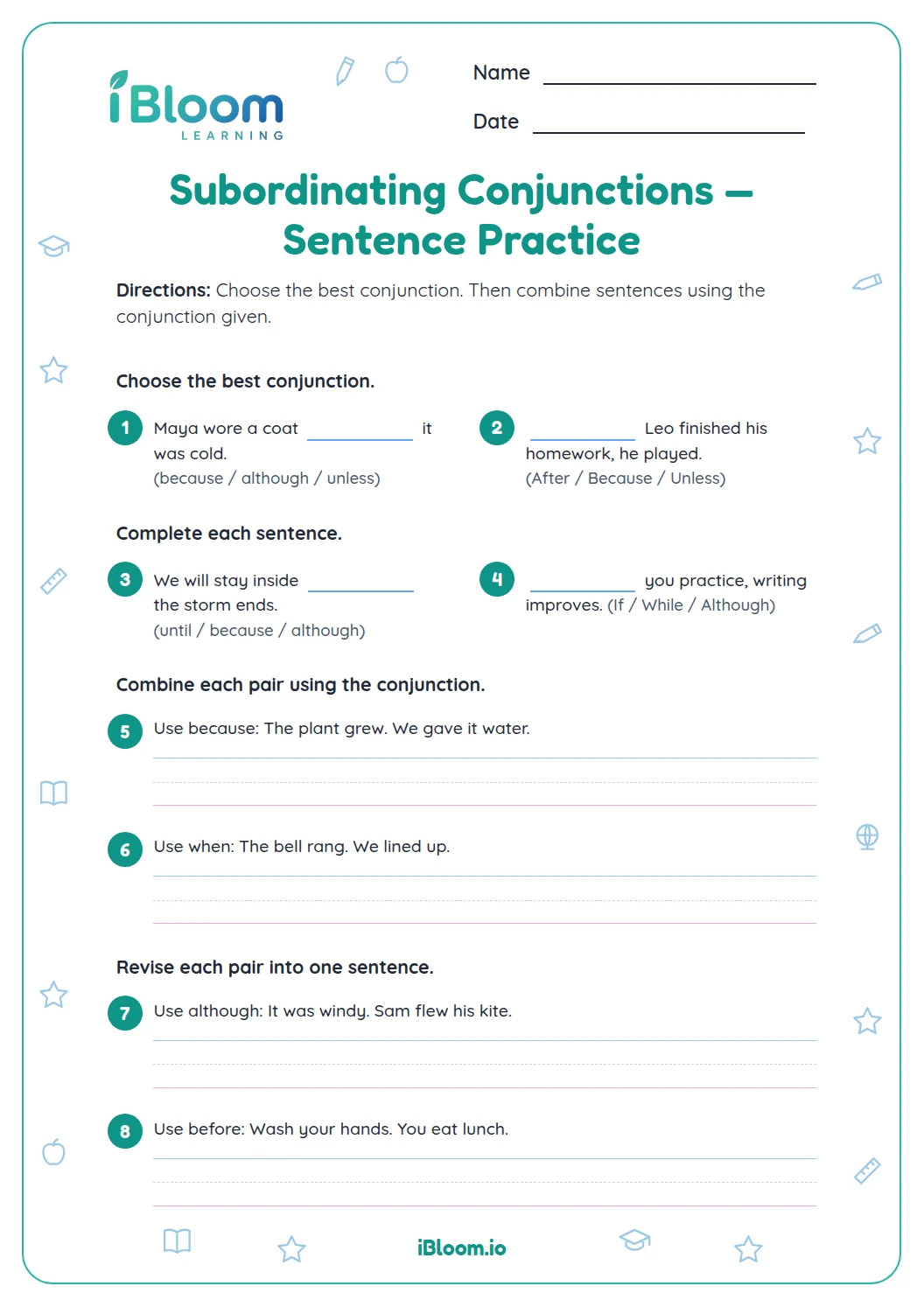
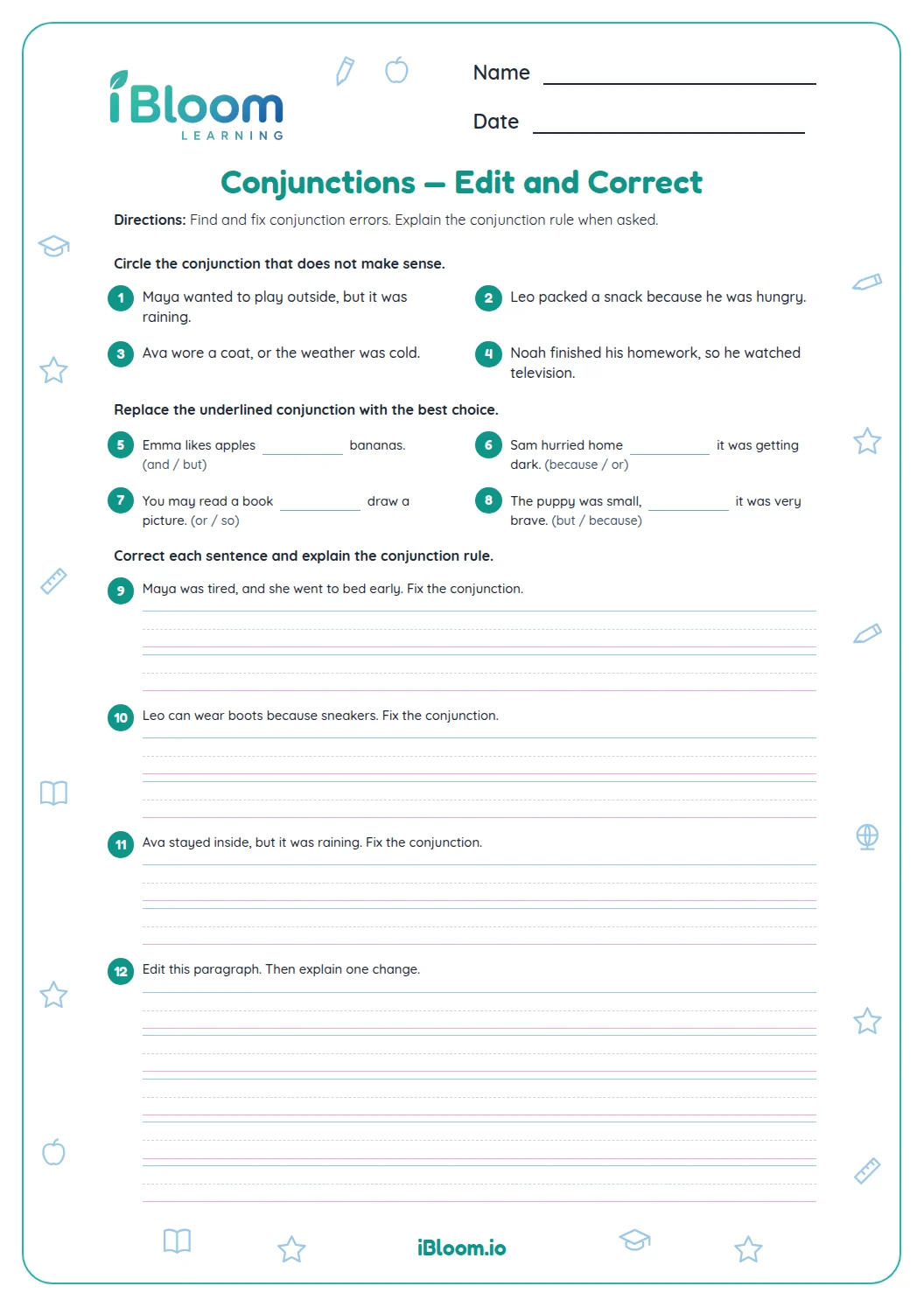
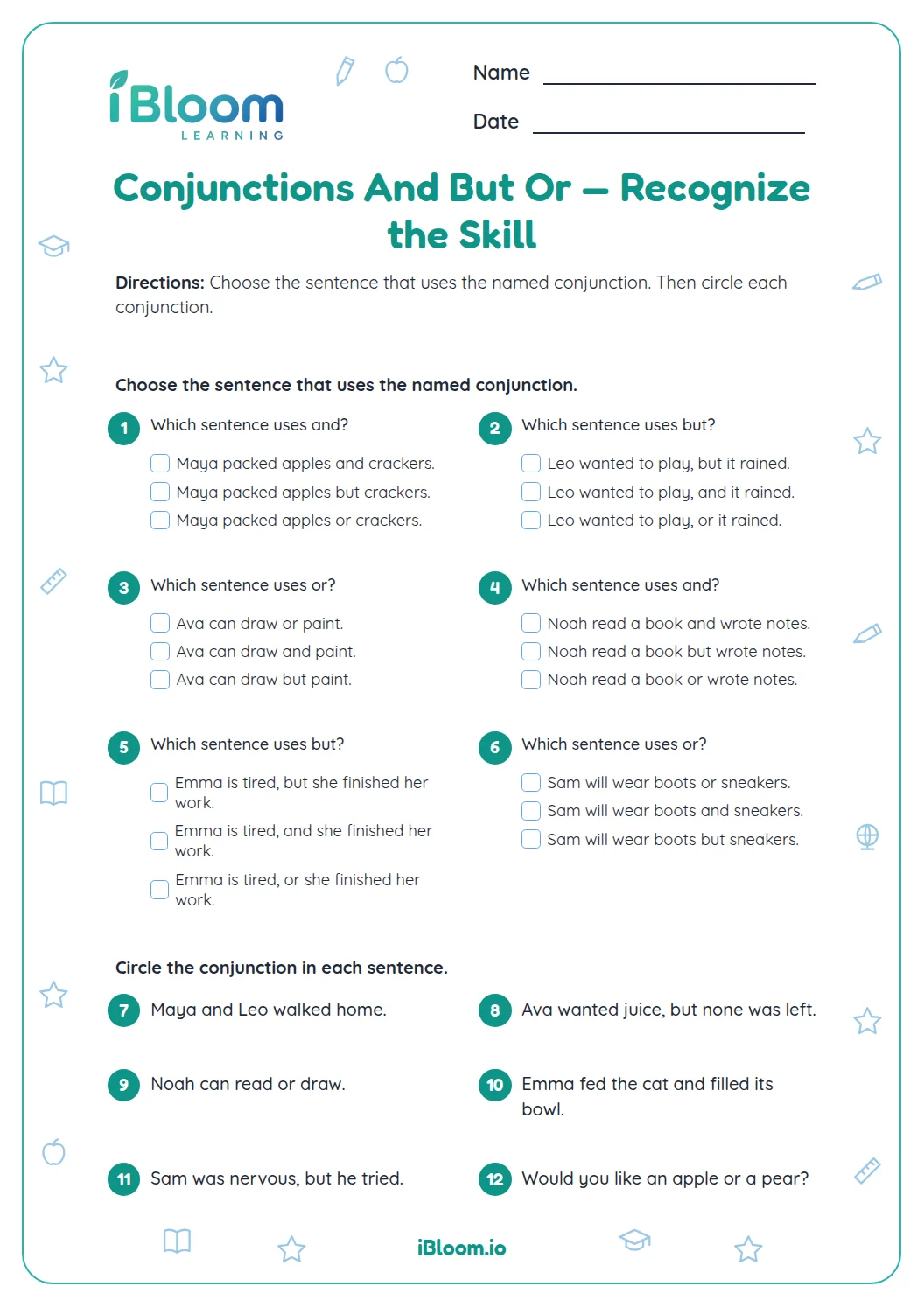
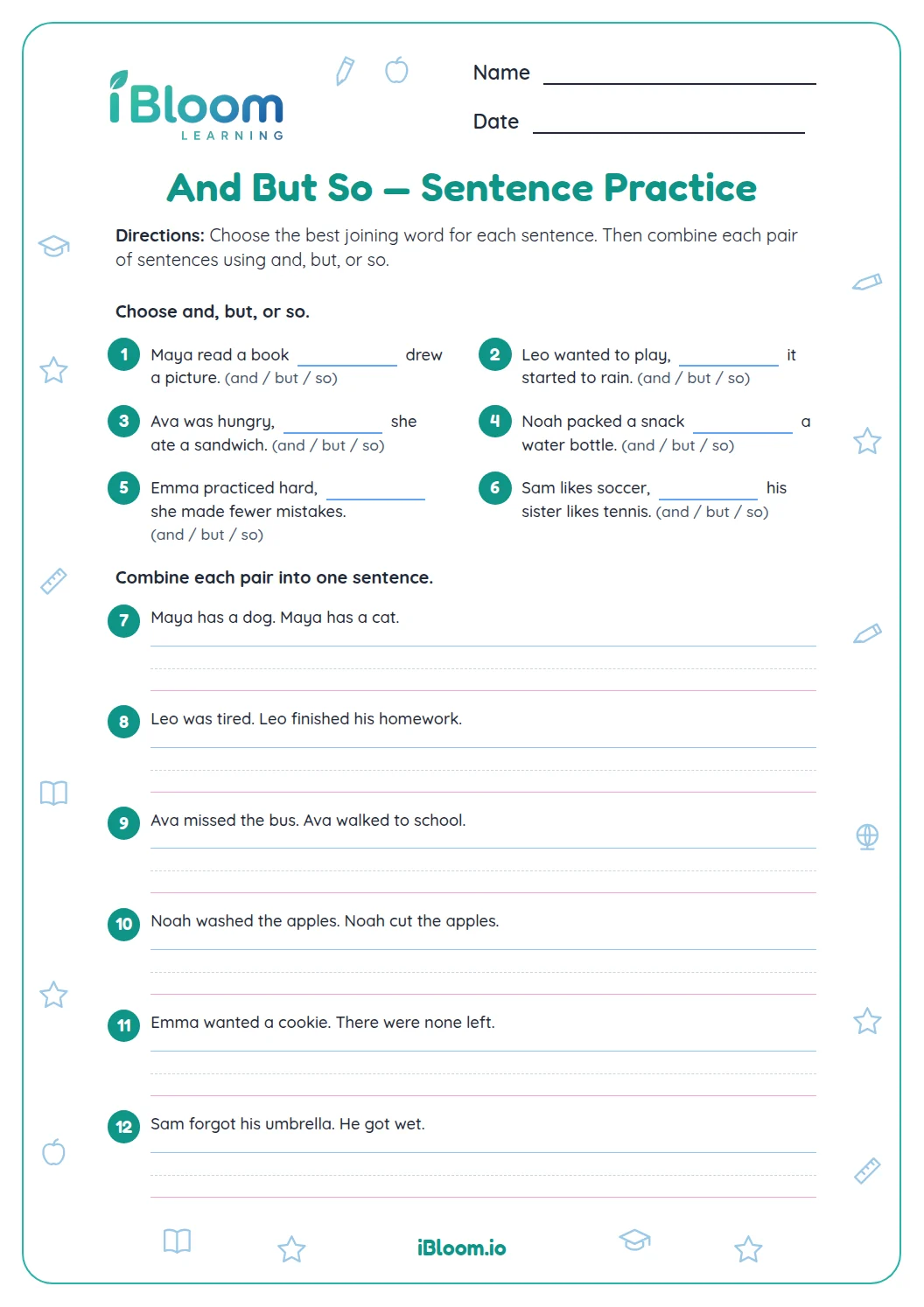
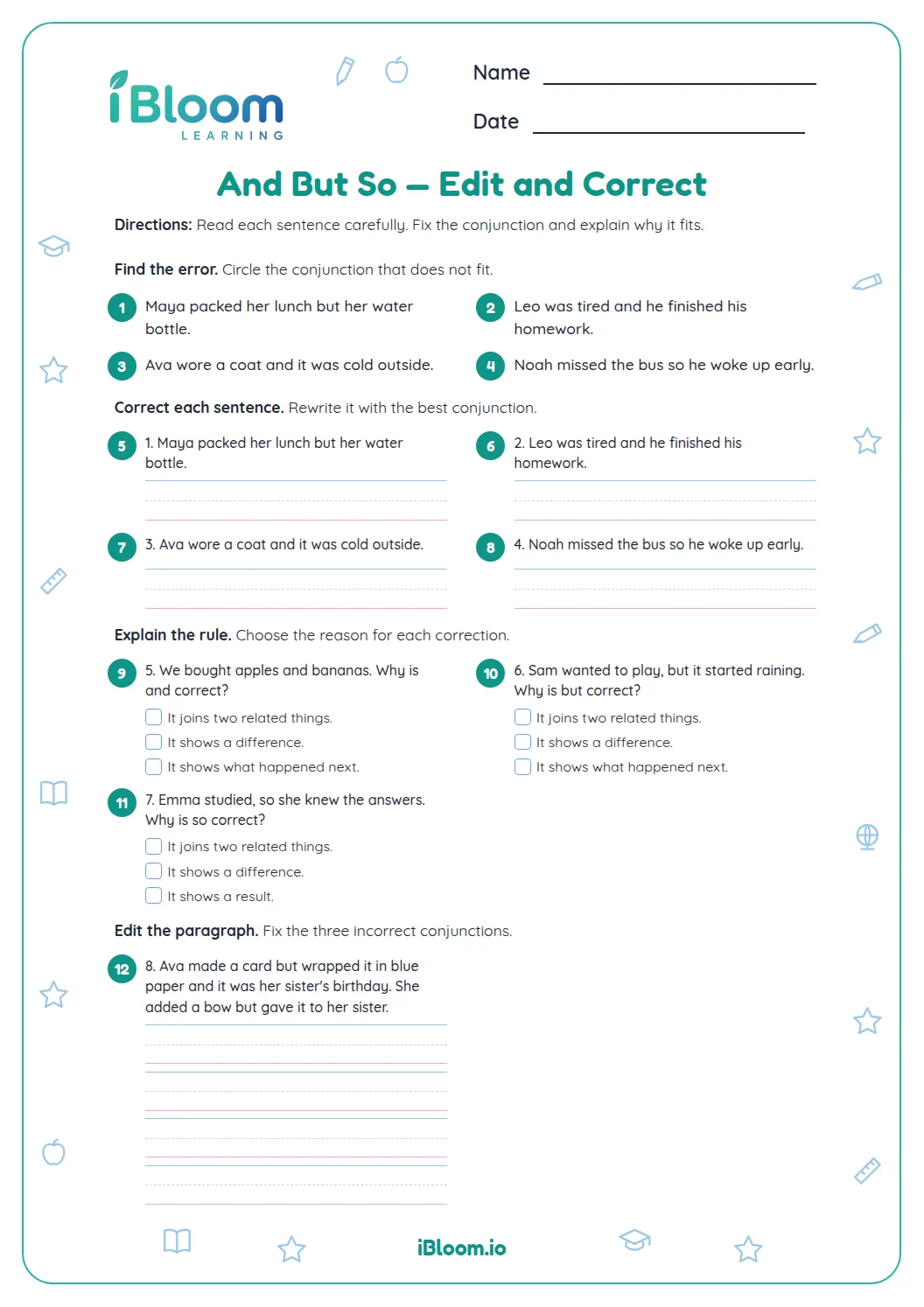
This free printable Grade 3 grammar worksheet practices subordinating conjunctions in sentences. Students identify conjunctions by the relationships they express, then answer questions about dependent clauses, conjunction meaning, and comma placement. The 15 items focus on using subordinating conjunctions to connect ideas, as described in CCSS L.3.1h. A separate answer key gives the selected answers.
Aligned to L.3.1h
What do students edit and correct?
Part A asks students to recognize subordinating conjunctions that introduce dependent clauses or show time, condition, and contrast. Part B checks conjunction meaning, complete clauses, and comma placement in sentences that begin with a dependent clause.
- 1Question: Which word shows contrast?
- 2although
- 3Although signals that the ideas differ or contrast.
- 4Reread the clause pair to check that the connection makes sense.
- 4 conjunction-identification questions
- 11 multiple-choice editing questions
- A separate key for all 15 answers
How does a subordinating conjunction connect ideas?
A subordinating conjunction introduces a dependent clause that needs a main clause to complete the thought. Because the bus was late gives a reason, but it does not say what happened. Add a main clause to finish the sentence.
- 1Because the bus was late, ___.
- 2The opening clause gives a reason but does not finish the thought.
- 3Add a main clause: “Because the bus was late, I missed my ride.”
- 4Now the reader knows what happened.
When does an opening clause need a comma?
When the dependent clause comes first, place a comma after it: “After we ate, we played.” If the main clause comes first, a comma is usually not needed: “We played after we ate.” The worksheet asks students to identify the comma location in opening-clause examples.
How can a conjunction show the relationship?
Choose a conjunction that fits the connection between the ideas. Because signals a reason, although signals a contrast, and when or after locates an event in time. Reread the whole sentence to check that the relationship makes sense.
How to edit each sentence
- 1Read both clauses before choosing a conjunction.
- 2Decide whether the ideas show a reason, time, condition, or contrast.
- 3Check that the dependent clause connects to a main clause.
- 4When a sentence starts with a dependent clause, mark the comma after it.
- 5Reread the corrected sentence aloud.
- 6Use the answer key to check each choice.
Conjunction and comma checks
The mistake
Leaving a because clause by itself.
The fix
Add a main clause that tells what happened.
The mistake
Choosing a conjunction without checking the relationship.
The fix
Ask whether one idea gives a reason, time, condition, or contrast.
The mistake
Forgetting the comma after an opening dependent clause.
The fix
Find where the opening clause ends and place the comma there.
Common Core alignment
The questions ask students to use subordinating conjunctions to link clauses and ideas.
Use subordinating conjunctions to connect clauses and show relationships between ideas.
On this sheet: Questions 1–15 practice selecting and using subordinating conjunctions in sentence contexts.
Show the official wordingHide the official wording
Use coordinating and subordinating conjunctions.
What to practice next
Further reading
Questions parents and teachers ask
What does a subordinating conjunction do?
A subordinating conjunction introduces a dependent clause and connects it to a main clause. Words such as because, when, although, and unless show how the ideas relate. This worksheet asks students to complete sentence blanks and choose conjunctions that make those relationships clear.
Why is “Because the bus was late” incomplete?
Because the bus was late gives a reason, but it does not tell what happened. Add a main clause, such as “Because the bus was late, I missed my ride.” The worksheet includes a question that asks students to choose a phrase that completes this kind of opening clause.
Where does the comma go when a sentence begins with a dependent clause?
Place the comma after the opening dependent clause and before the main clause. In “After we ate, we played,” the comma comes after ate. If the main clause comes first, as in “We played after we ate,” a comma is usually not needed.
What does “unless” mean in a sentence?
Unless means “if not.” It introduces a condition, as in “I will go unless it rains,” meaning I will go if it does not rain. One question on this worksheet asks students to identify that meaning among other conjunction definitions.
Does this worksheet include an answer key?
Yes. The answer key is separate from the two worksheet pages and gives the correct conjunction or punctuation choice for every question. Students can compare the full corrected sentence with the answer rather than checking only the conjunction word.