





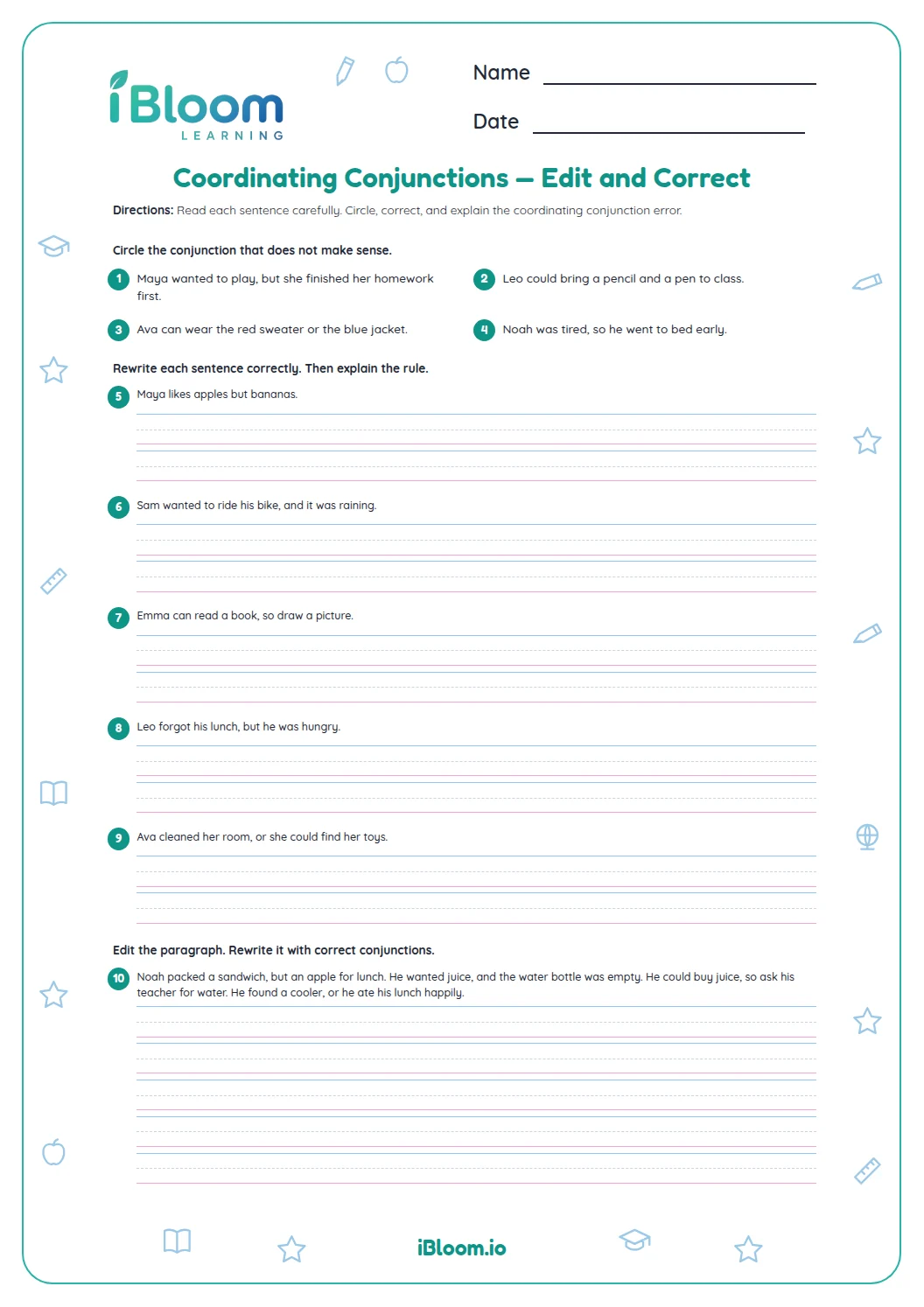
About this worksheet
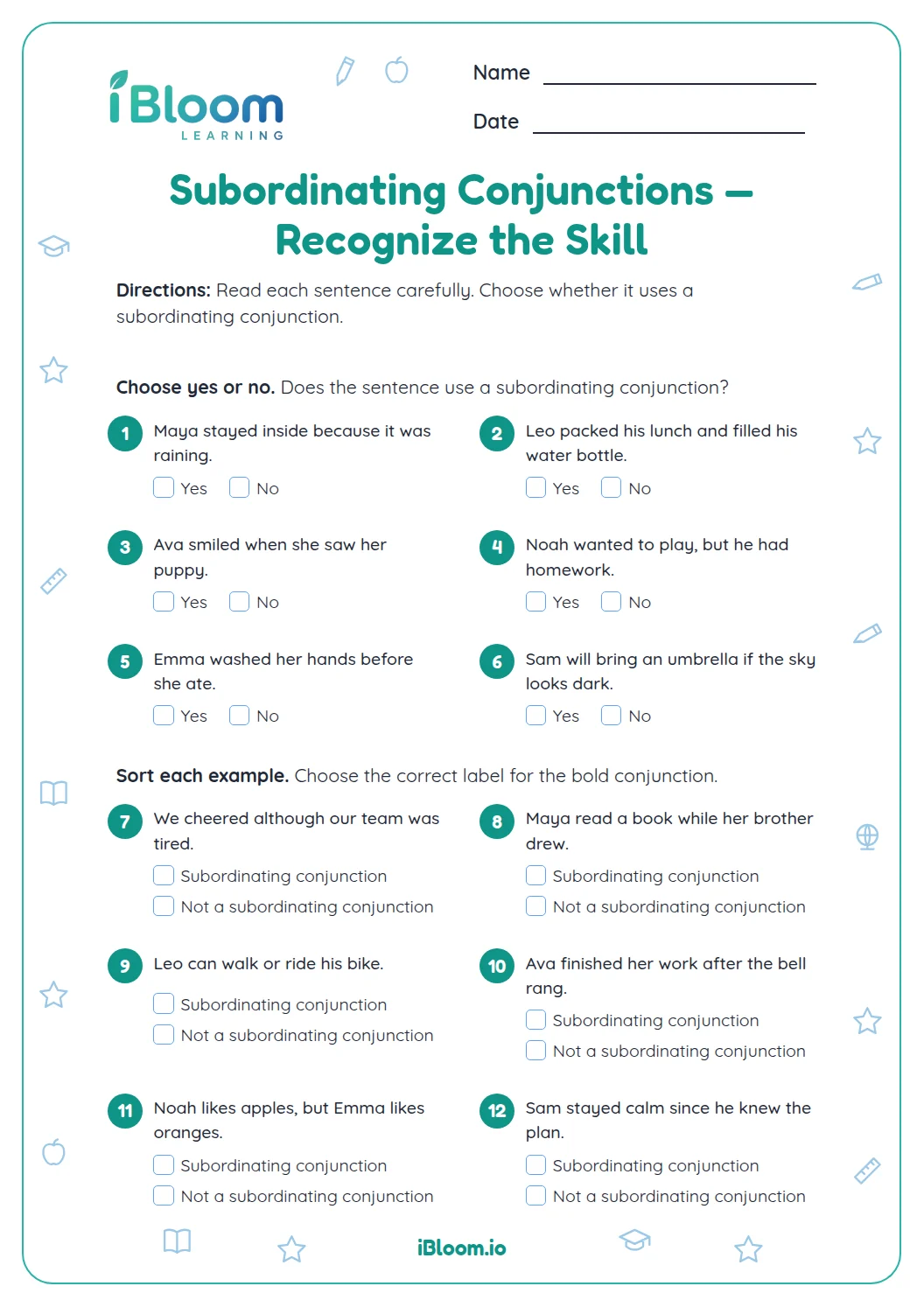
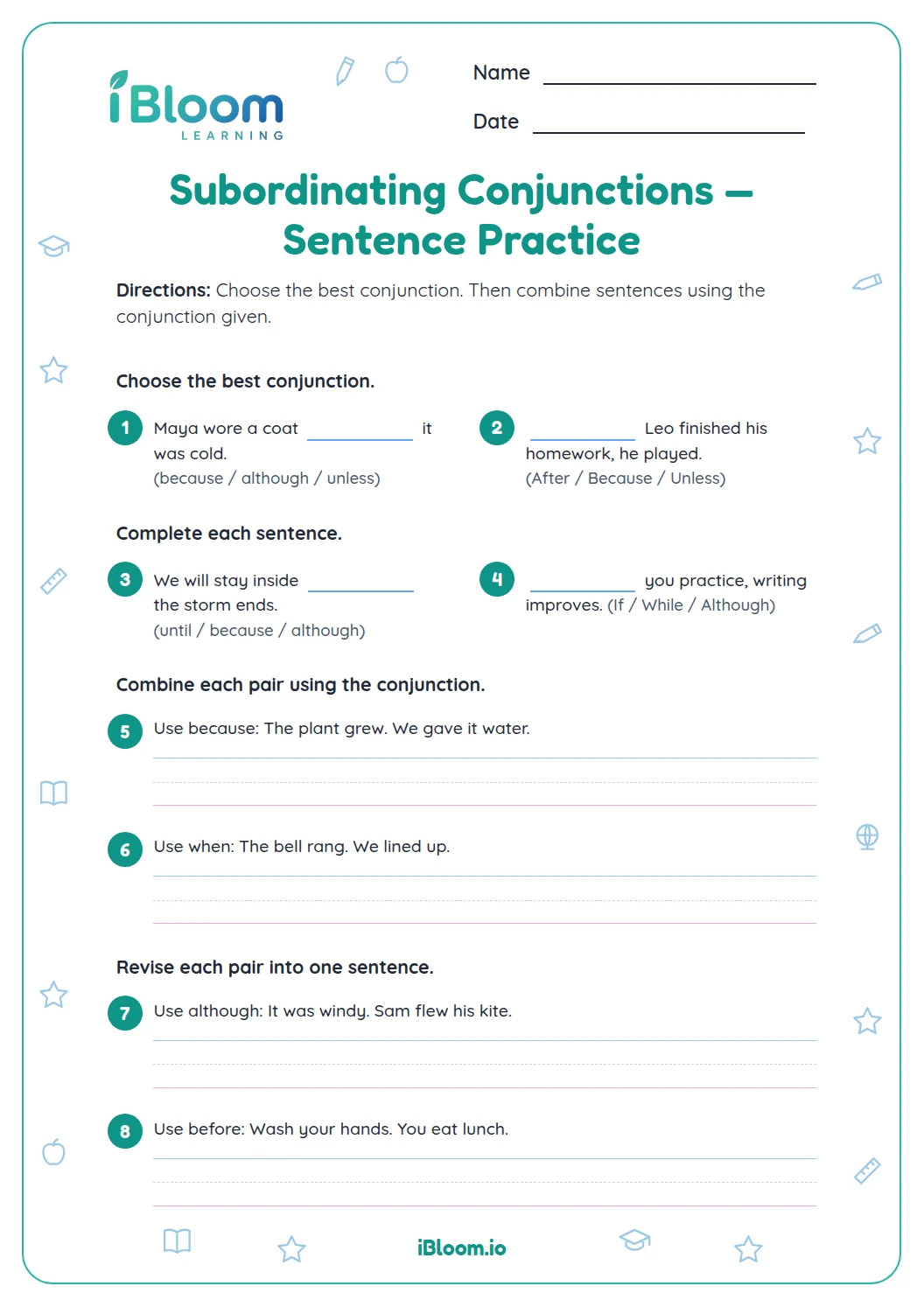
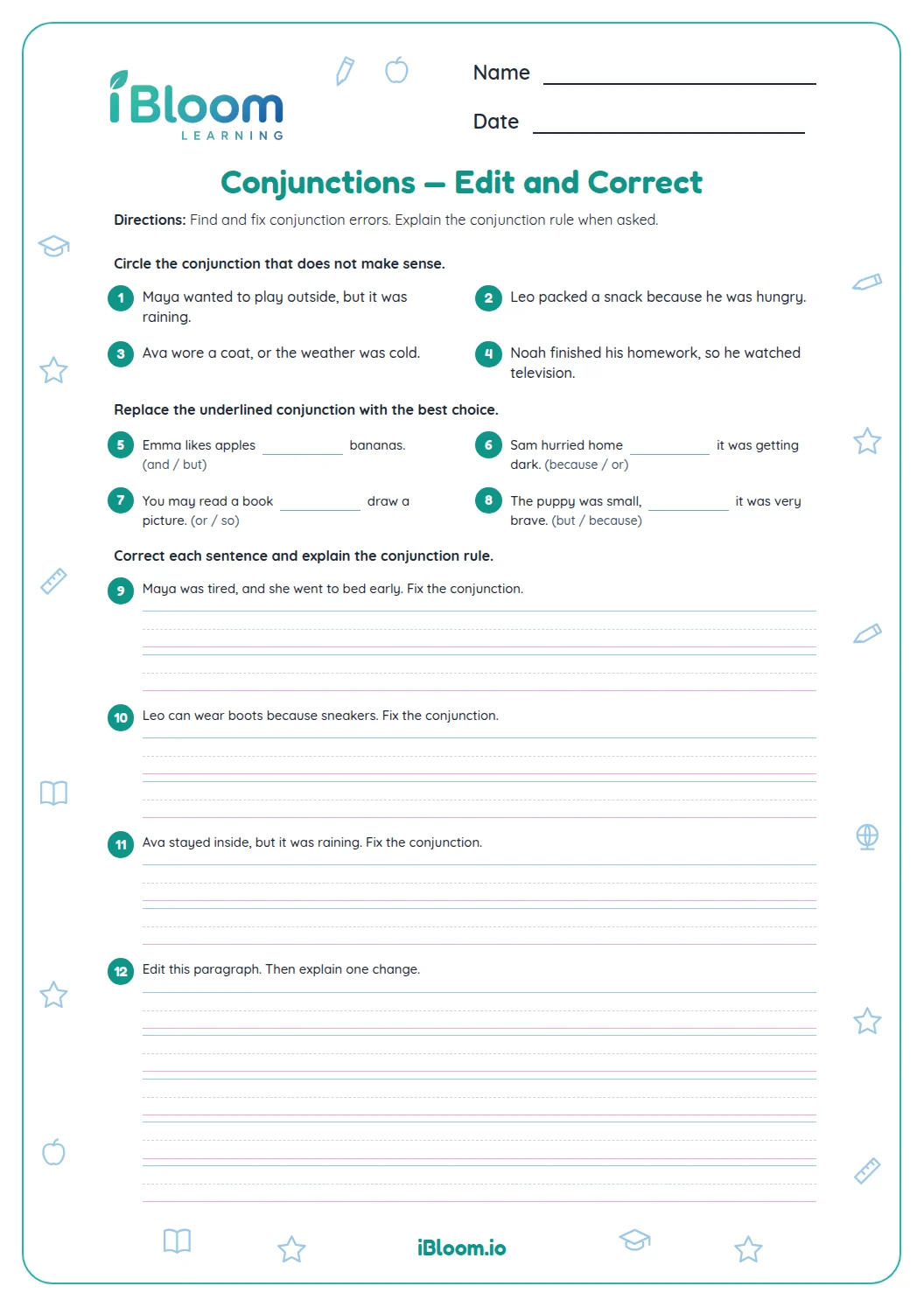
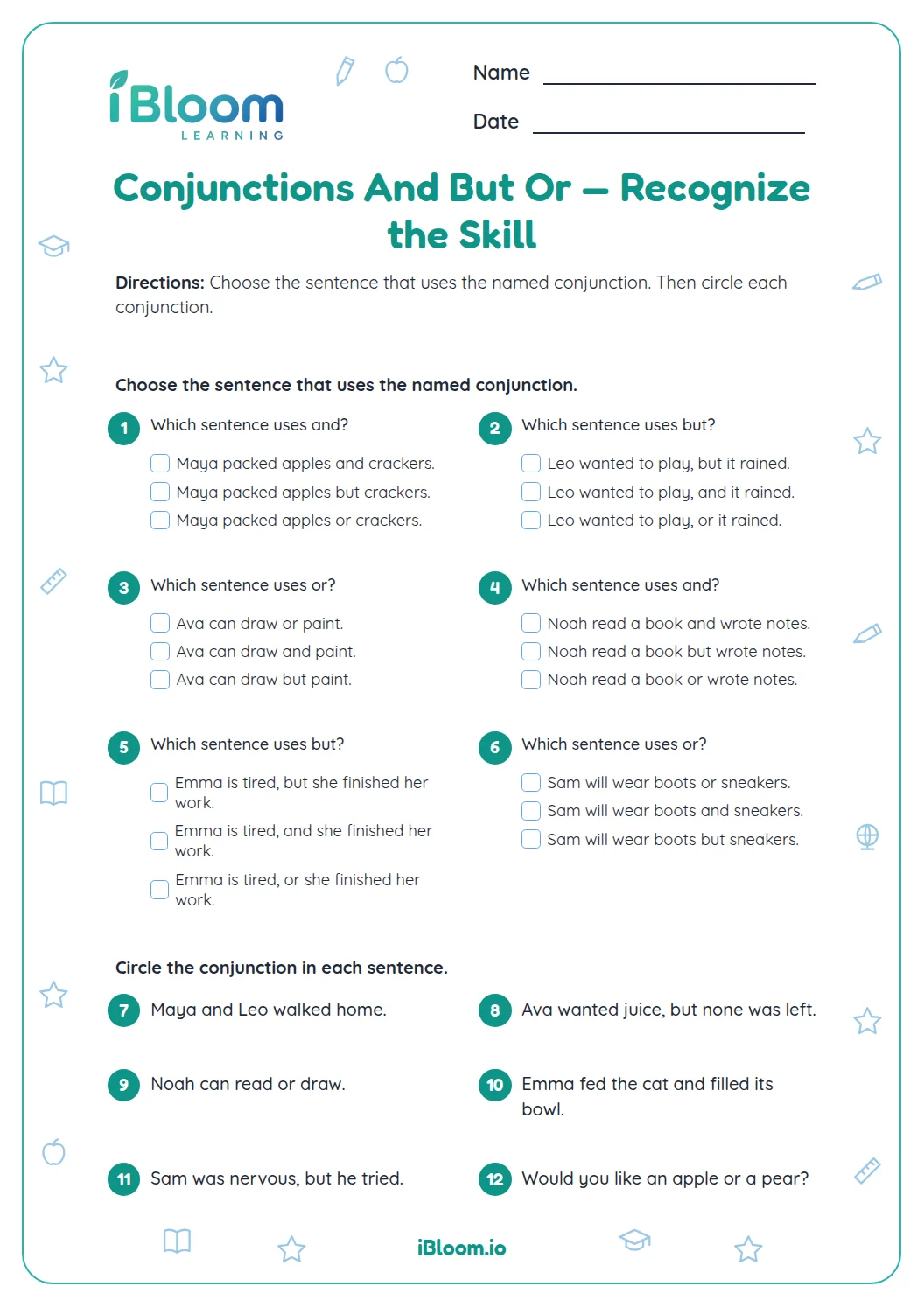
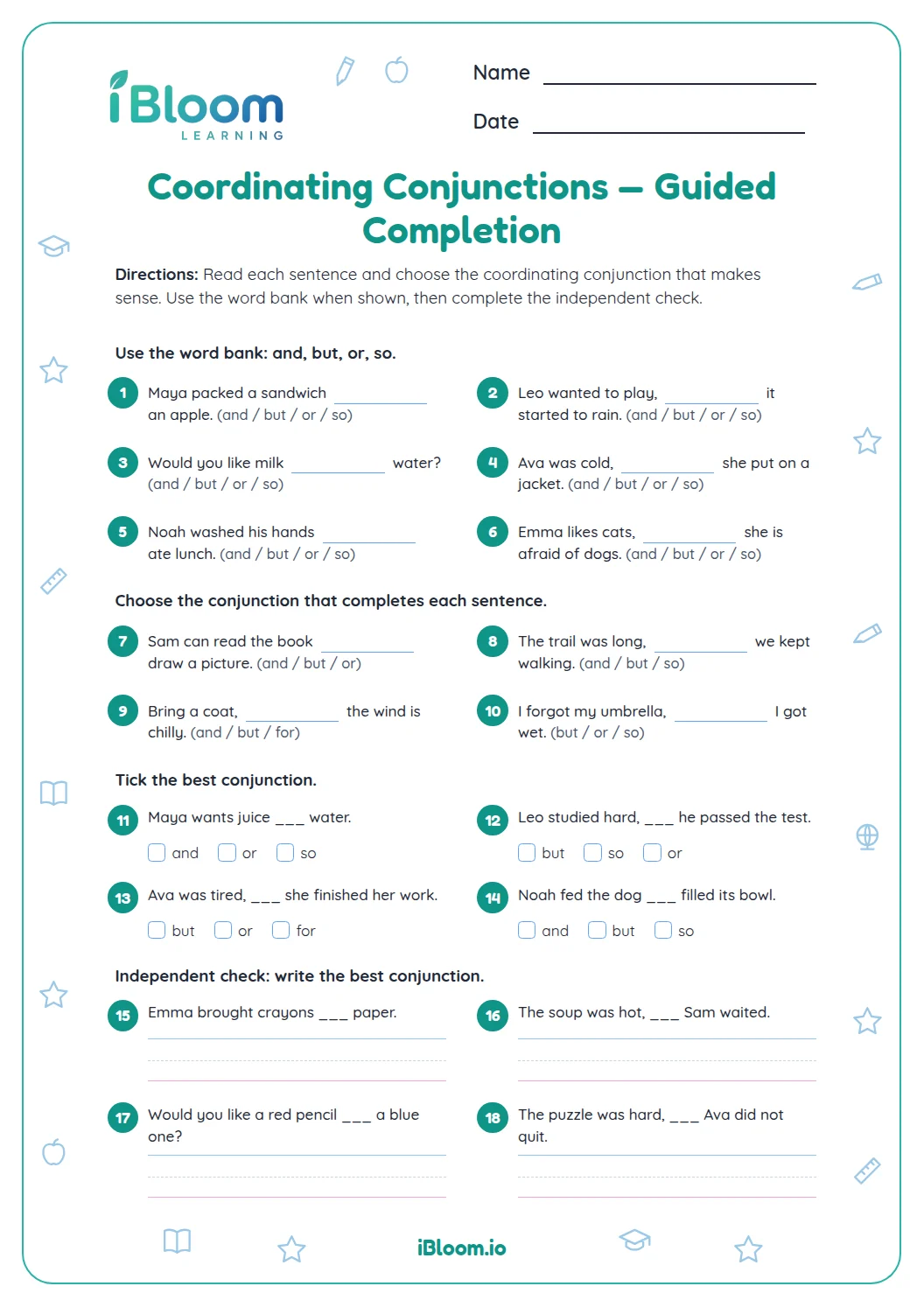
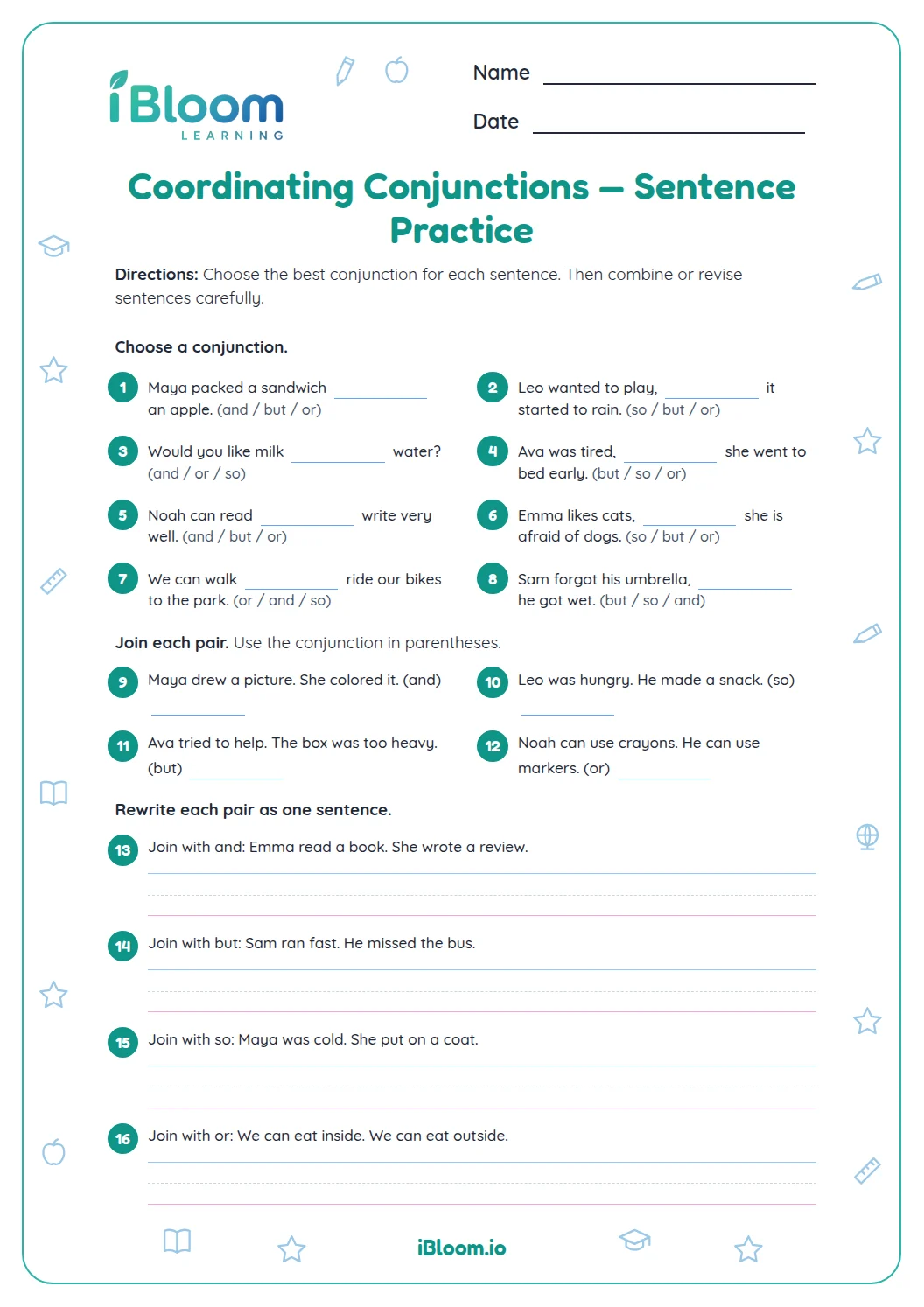
This free Grade 3 worksheet helps learners recognize and use subordinating conjunctions to connect ideas. The 14 questions move from choosing a conjunction, to completing a sentence, to joining clauses and repairing a fragment. The answer key provides correct choices and sample sentences. This work practices the Grade 3 language standard 3.L.1.h.
Aligned to 3.L.1.h
What does a subordinating conjunction do?
It begins a dependent clause and shows its relationship to a complete thought. Words such as because, until, after, when, and although can show reason, time, or contrast.
- 1I wore a coat because it was cold.
- 2“Because” connects the reason to the action.
How can you choose a conjunction that fits?
Read both ideas and decide how they relate. Choose a word that clearly shows that connection: time, reason, or contrast.
How do you join clauses and fix a fragment?
Put the clauses together with the given conjunction, then check that the full sentence expresses a complete thought. A clause beginning with “because” needs another clause to finish its meaning.
Steps for joining ideas
- 1Read both clauses and identify their relationship.
- 2Choose a subordinating conjunction that names that relationship.
- 3Place the conjunction where the sentence reads clearly.
- 4Check capitalization and punctuation.
- 5Read the whole sentence to be sure it expresses a complete thought.
Common conjunction slips
The mistake
Choosing a word that changes the intended relationship.
The fix
Check whether the ideas show time, reason, or contrast.
The mistake
Leaving a dependent clause by itself.
The fix
Add the complete thought that explains what happened.
The mistake
Joining clauses but forgetting the comma after an opening dependent clause.
The fix
When the dependent clause comes first, place a comma before the main clause.
Common Core alignment
The sentence choices and revisions practice connecting clauses with conjunctions.
Use subordinating conjunctions to connect related clauses.
On this sheet:
Show the official wordingHide the official wording
Use coordinating and subordinating conjunctions.
What to practice next
Make more practice
Further reading
Questions parents and teachers ask
What is a subordinating conjunction?
A subordinating conjunction connects a dependent clause to a complete thought and shows their relationship. In this worksheet, words such as because, until, after, when, and although express reasons, time, or contrast between ideas. Choosing the right word helps readers understand how the clauses fit.
How many questions are included?
The worksheet has 14 questions: five multiple-choice items, five sentence completions, and four sentence revisions. The last section asks learners to join clauses or repair an incomplete thought, then check that the result is a complete sentence. Writing answers appear on lines in the worksheet.
What is the difference between a clause and a sentence?
A complete sentence expresses a full thought. A dependent clause, such as “Because the bus was late,” leaves the reader waiting for what happened, so it needs a main clause to complete the idea and make a full sentence. This is why the clause needs another thought.
Does the answer key allow different sentences?
Yes. The key gives sample answers for the writing tasks. A response can use different wording if it uses the requested conjunction and forms a clear, complete sentence with a relationship that makes sense. The multiple-choice section has one best answer for each item.
How long should this worksheet take?
Plan for about 20 minutes. The first two sections are brief; allow extra time for the final sentence-writing questions so the learner can reread for punctuation, clarity, and whether each response expresses a complete thought. The worksheet can be completed in one sitting.