




About this worksheet
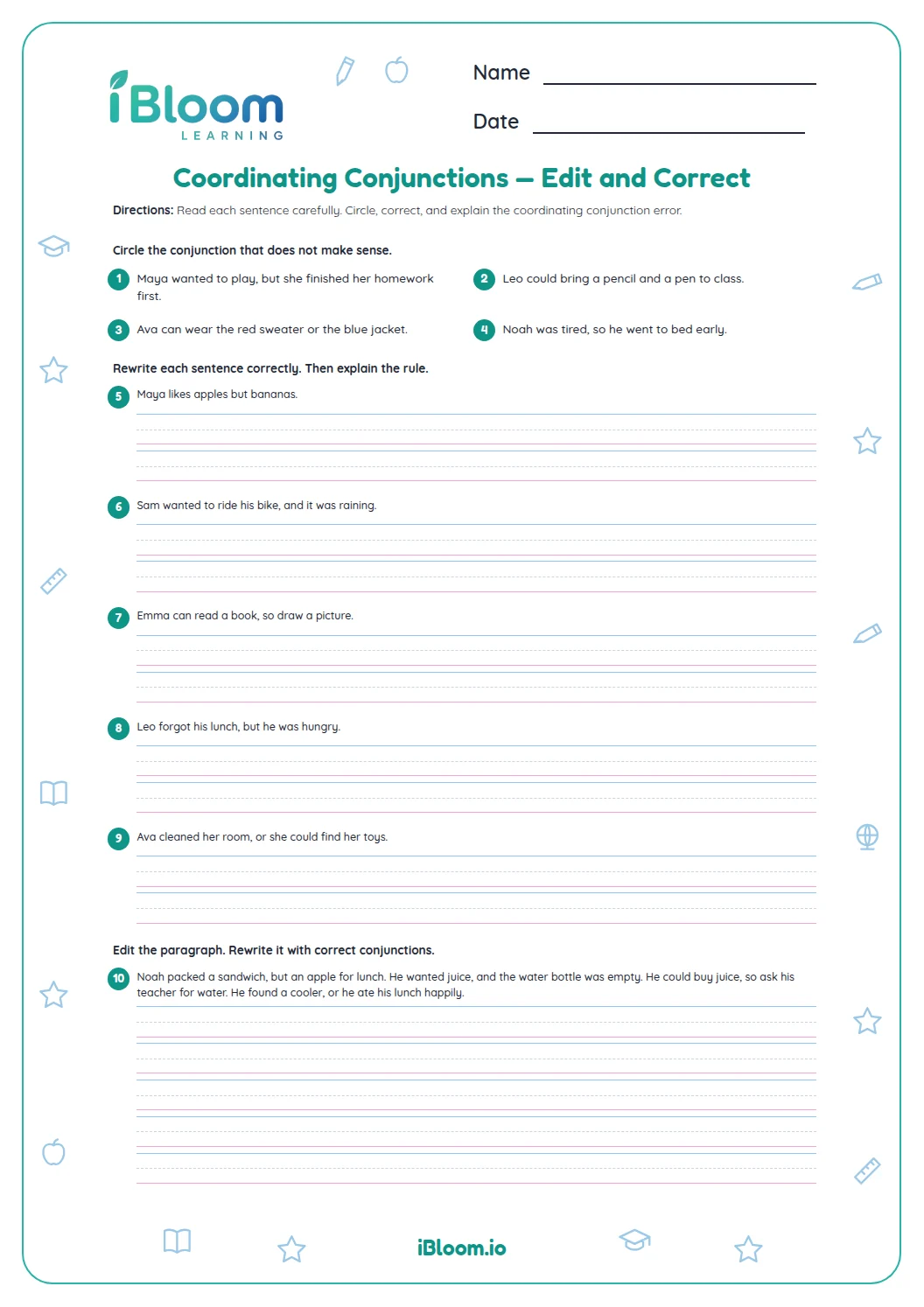
Learners use coordinating conjunctions such as and, but, or, and so, then spot conjunctions in context and complete sentences with time, cause, or contrast words. The activities move from choosing a sensible link to identifying one in a complete sentence and applying a wider set in new contexts.
Aligned to L.3.1h
What does this worksheet practice?
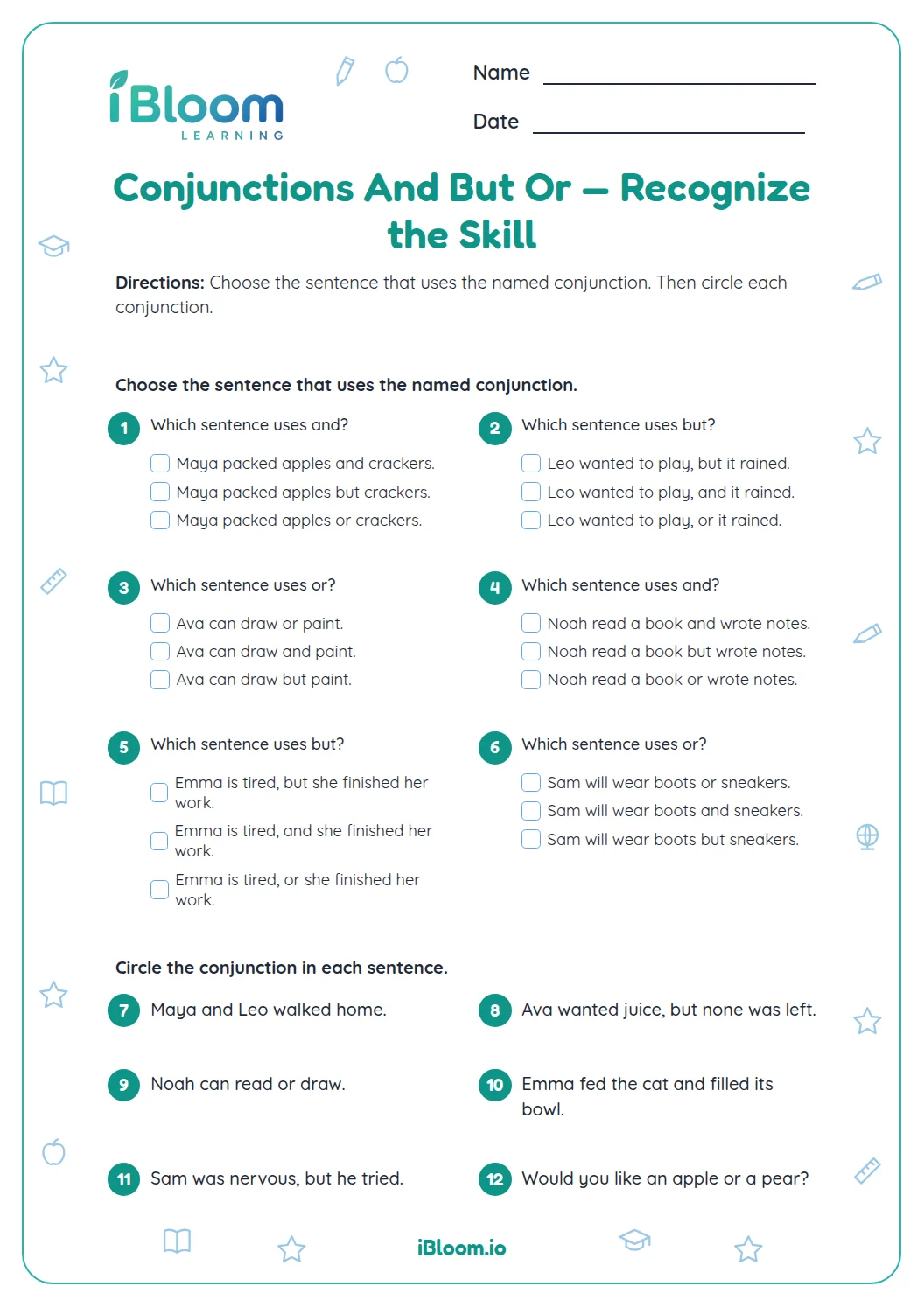
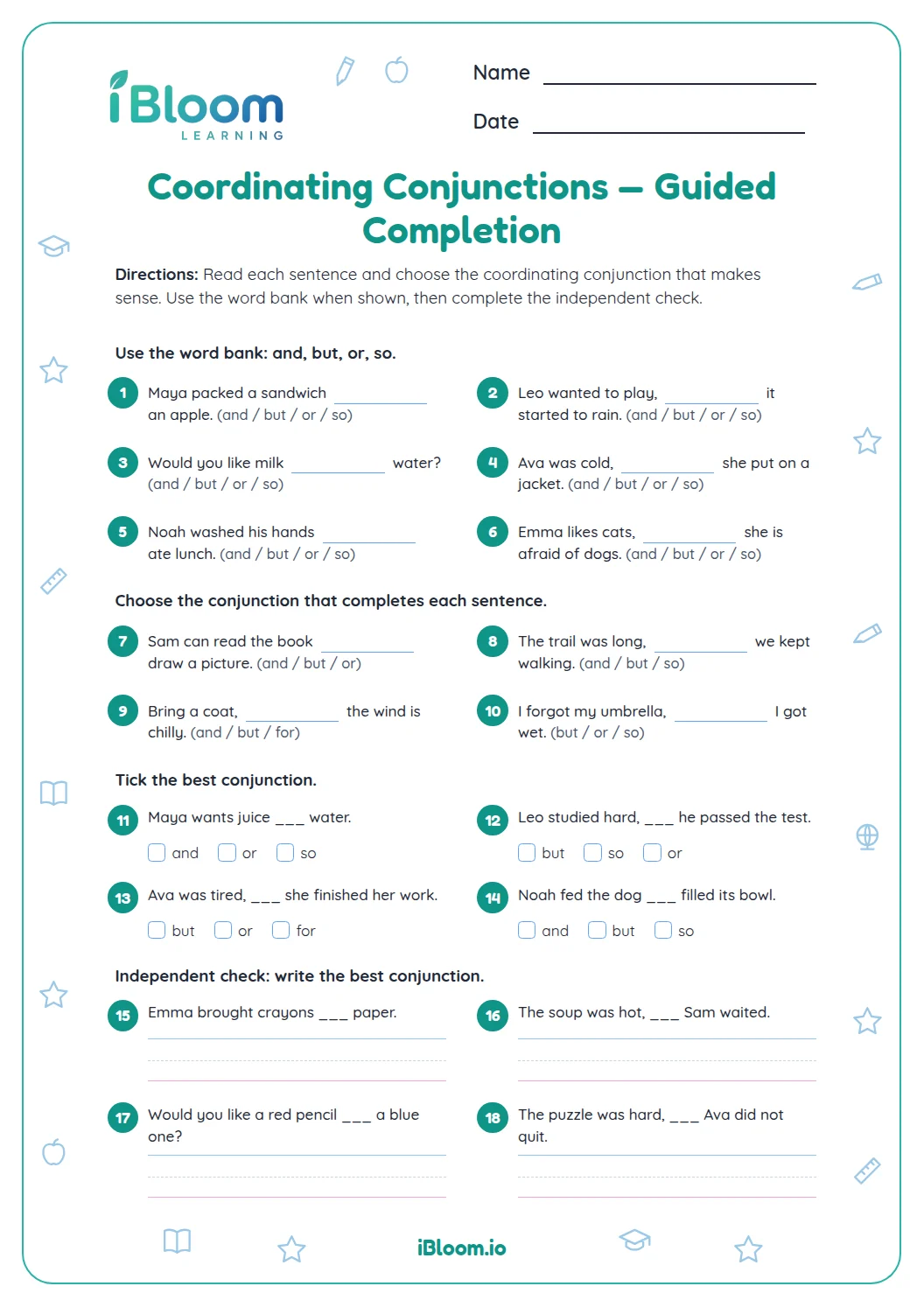
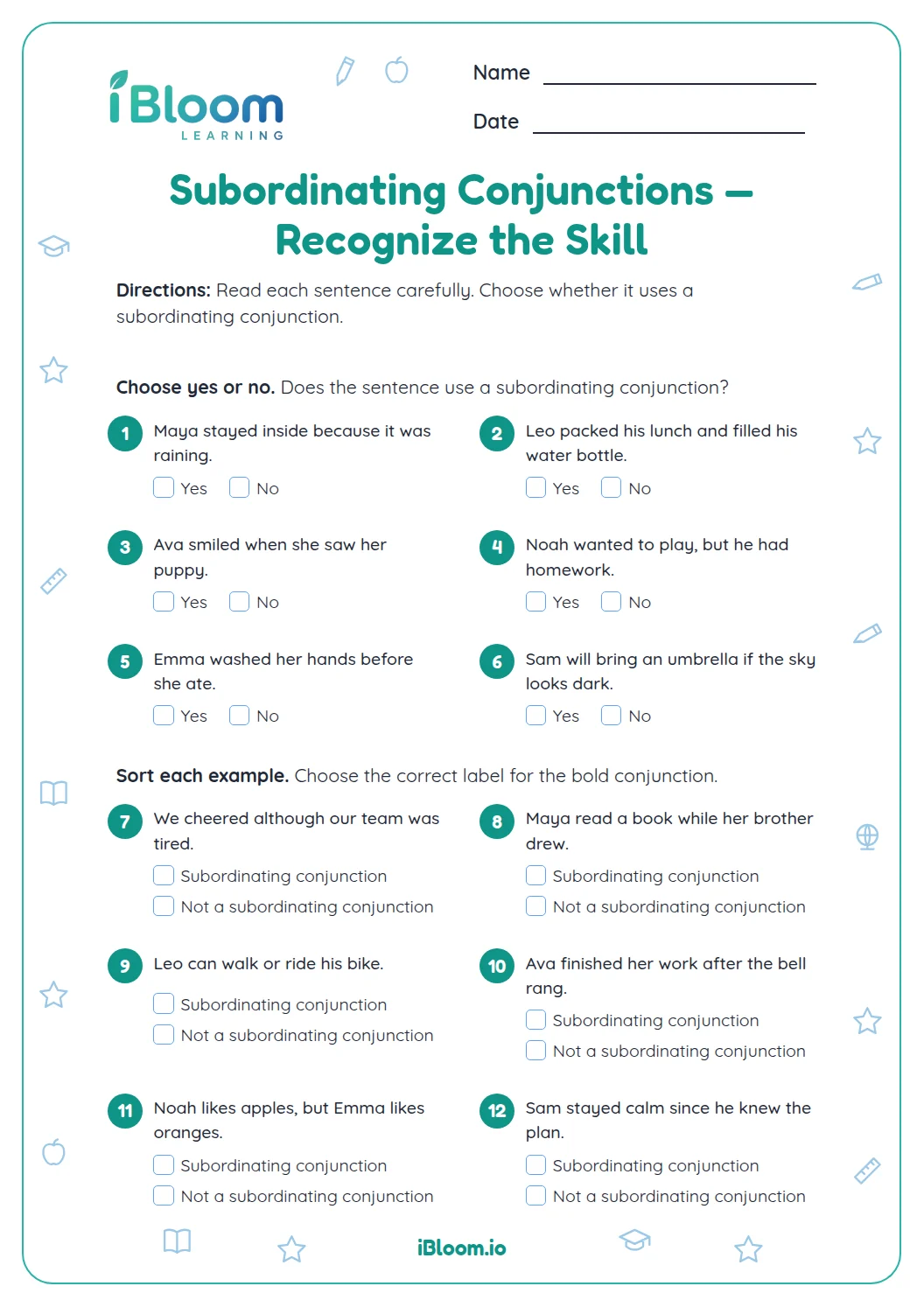
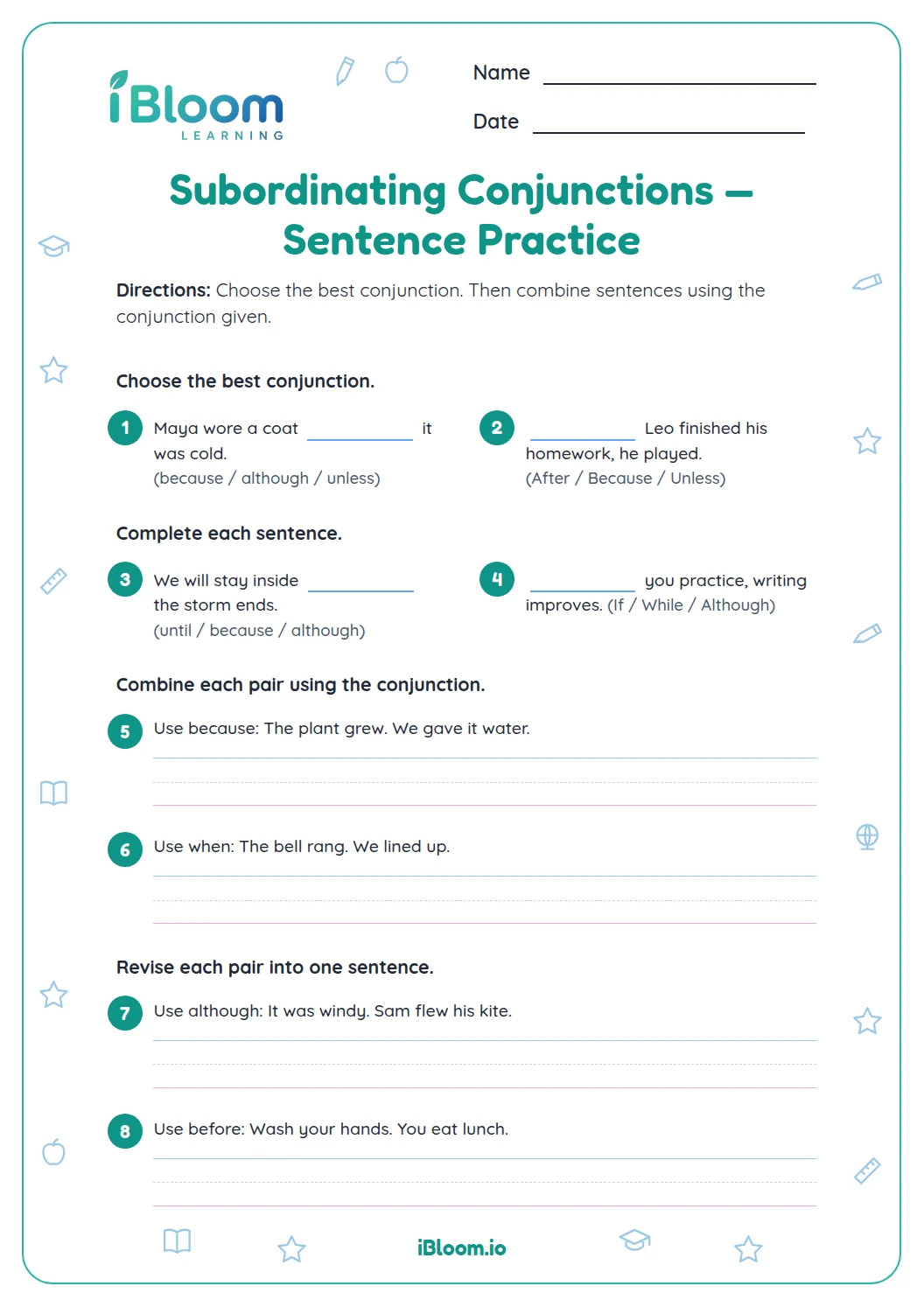
Part A asks children to choose a conjunction that makes the sentence relationship clear. Part B shifts from choosing a word to finding the conjunction already used. Part C is a challenge with conjunctions that show time, cause, and contrast.
- Part A: 5 multiple-choice items with and, but, or, and so
- Part B: 5 sentences to scan and circle
- Part C: 6 sentence completions using a wider range of conjunctions
How do I choose the conjunction?
Read both sides of the blank. Ask whether the second idea adds information, gives a different idea, offers a choice, or tells a result. And adds; but contrasts; or offers a choice; so introduces a result.
- 1The path was steep, ___ we kept climbing.
- 2The second idea contrasts with what a reader might expect.
- 3But makes that contrast clear.
How can I find conjunctions in a sentence?
A conjunction may be in the middle of a sentence or begin a dependent clause. In Part B, circle the joining word itself, not a nearby action or naming word. In Part C, use the meaning clue and reread the whole sentence aloud.
How to use this worksheet
- 1Read each whole sentence before choosing a word.
- 2For Part A, name the relationship between the two ideas before selecting.
- 3In Part B, look for a word joining words or ideas, then check the answer key.
- 4For Part C, reread the sentence with the answer to see whether the connection makes sense.
Common mistakes and quick fixes
The mistake
Choosing and whenever two ideas appear.
The fix
Check the relationship: but signals contrast, or signals a choice, and so can connect a result.
The mistake
Circling a noun or action word in Part B.
The fix
Ask which small word joins the words or ideas; circle that connector.
The mistake
Using because when the sentence only gives a time.
The fix
Use a time word such as when or until when the sentence tells when something happens.
Curriculum alignment
This worksheet practices coordinating and subordinating conjunctions in Grade 3 sentences.
Use coordinating and subordinating conjunctions.
On this sheet: Parts A and C use coordinating and subordinating conjunctions; Part B identifies them in sentences.
Show the official wordingHide the official wording
Use coordinating and subordinating conjunctions.
What to practice next
Make more practice
Further reading
Questions parents and teachers ask
What is a conjunction?
A conjunction is a word that joins words or ideas. On this sheet, children use words such as and, but, or, because, when, and until to connect parts of sentences. Reading the whole sentence helps them choose a connector that matches the relationship.
What is the difference between and, but, and or?
And adds information, but signals a contrast, and or presents a choice. Read both sides of the sentence to see which relationship makes sense before choosing. So can introduce a result, while because gives a reason and when tells when something happens.
Is because a conjunction?
Yes. Because introduces a reason. In “We stayed inside because it was raining,” because introduces the reason the children stayed inside. A reason answers why something happens, while a time clause tells when it happens. Part C asks learners to use both kinds of connections in sentences.
What grade is this worksheet for?
This worksheet is written for Grade 3 sentence practice. It supports Common Core L.3.1i by helping learners produce compound and complex sentences with joining words. Children choose connectors, find them in sentences, and use them to show how ideas relate.
How many questions are on the printable?
There are 16 questions in three parts, followed by a separate answer key. Children choose conjunctions, find them in sentences, and complete sentences with a wider set of connectors. The parts build from choosing a word to identifying and applying conjunctions.
How should a child check an answer?
Read the sentence with the selected word and explain how the ideas connect. Then compare it with the key; for an open response, another conjunction can work if it preserves the intended meaning. The best choice keeps the sentence clear and logical.