



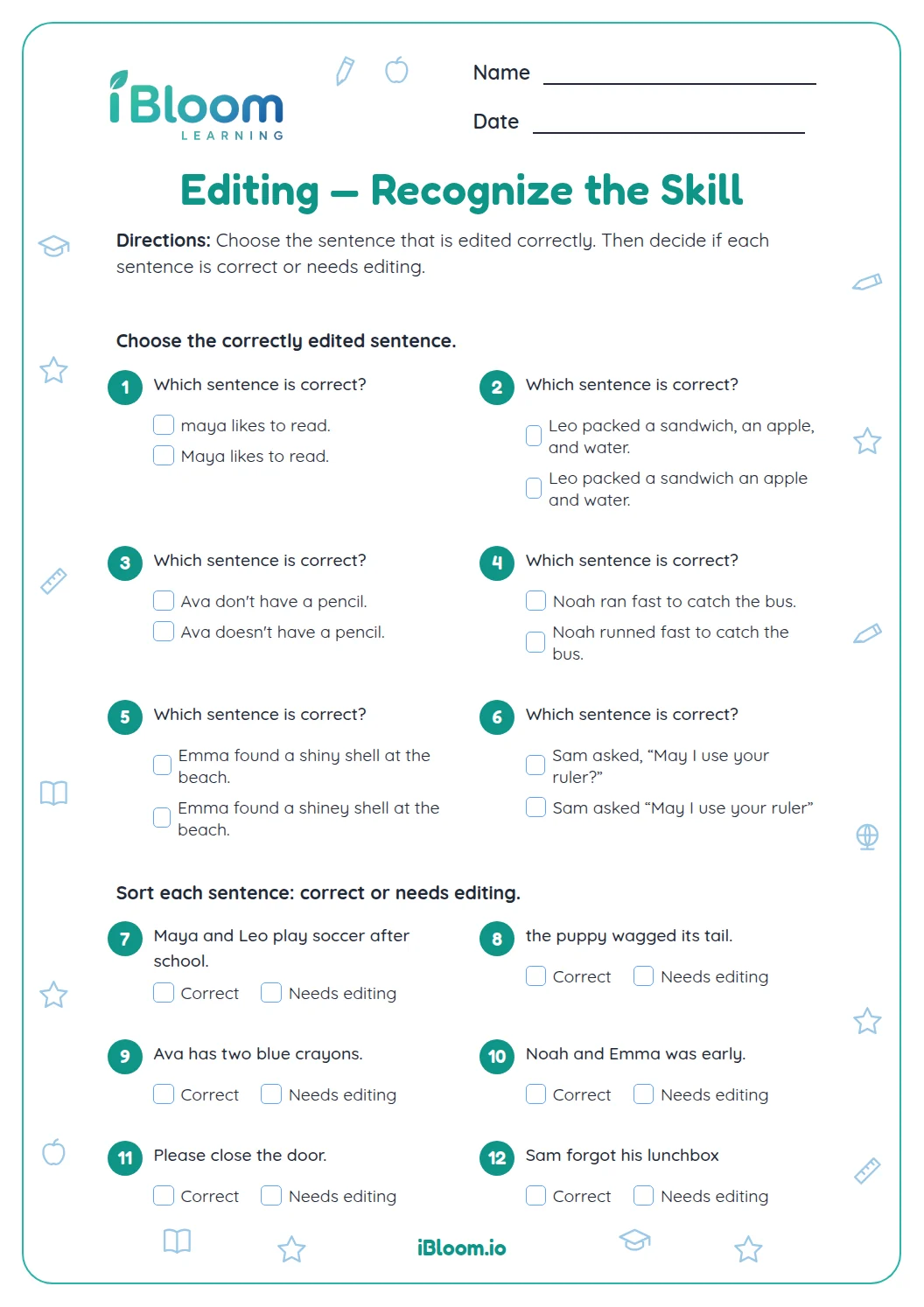


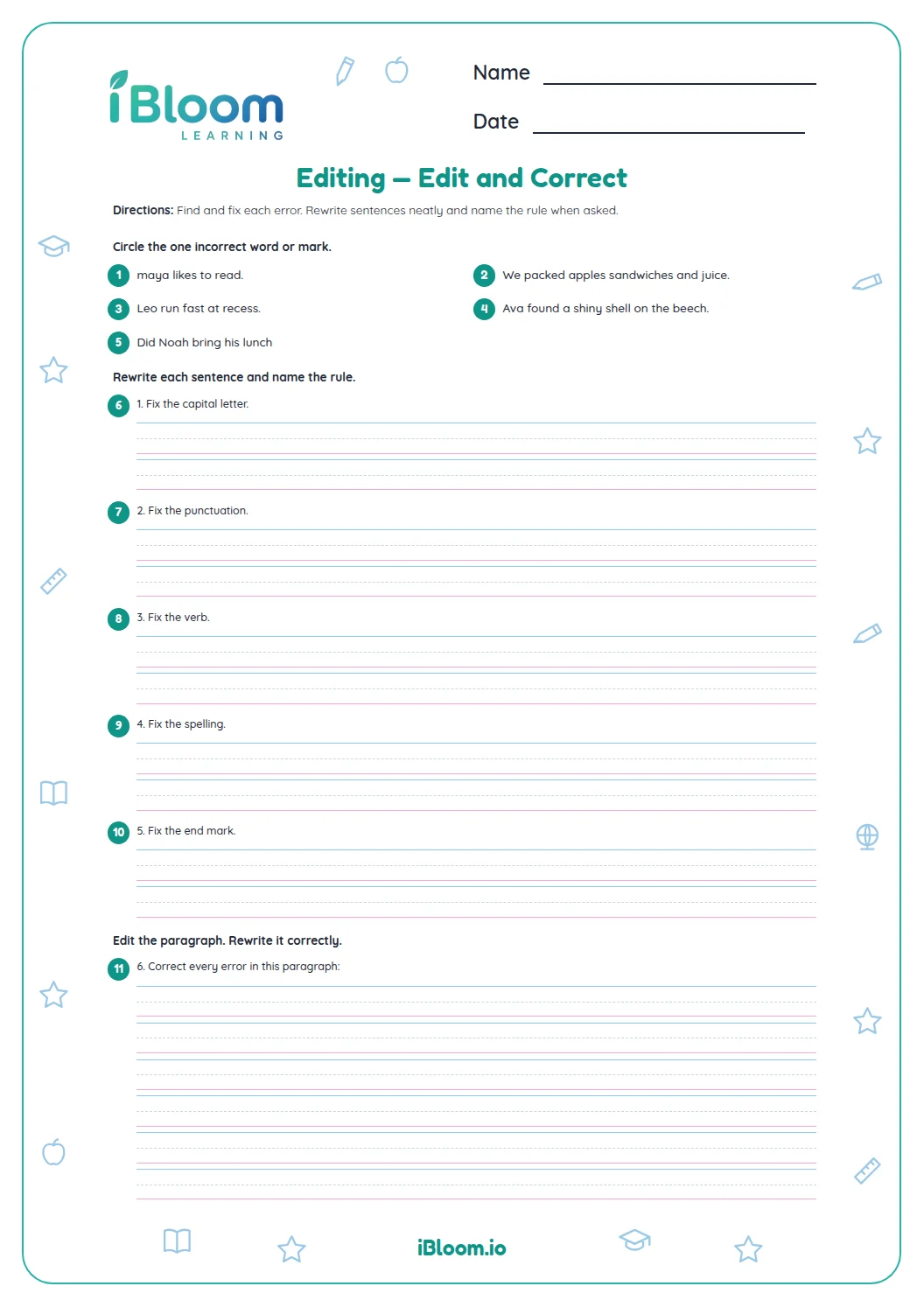


About this worksheet
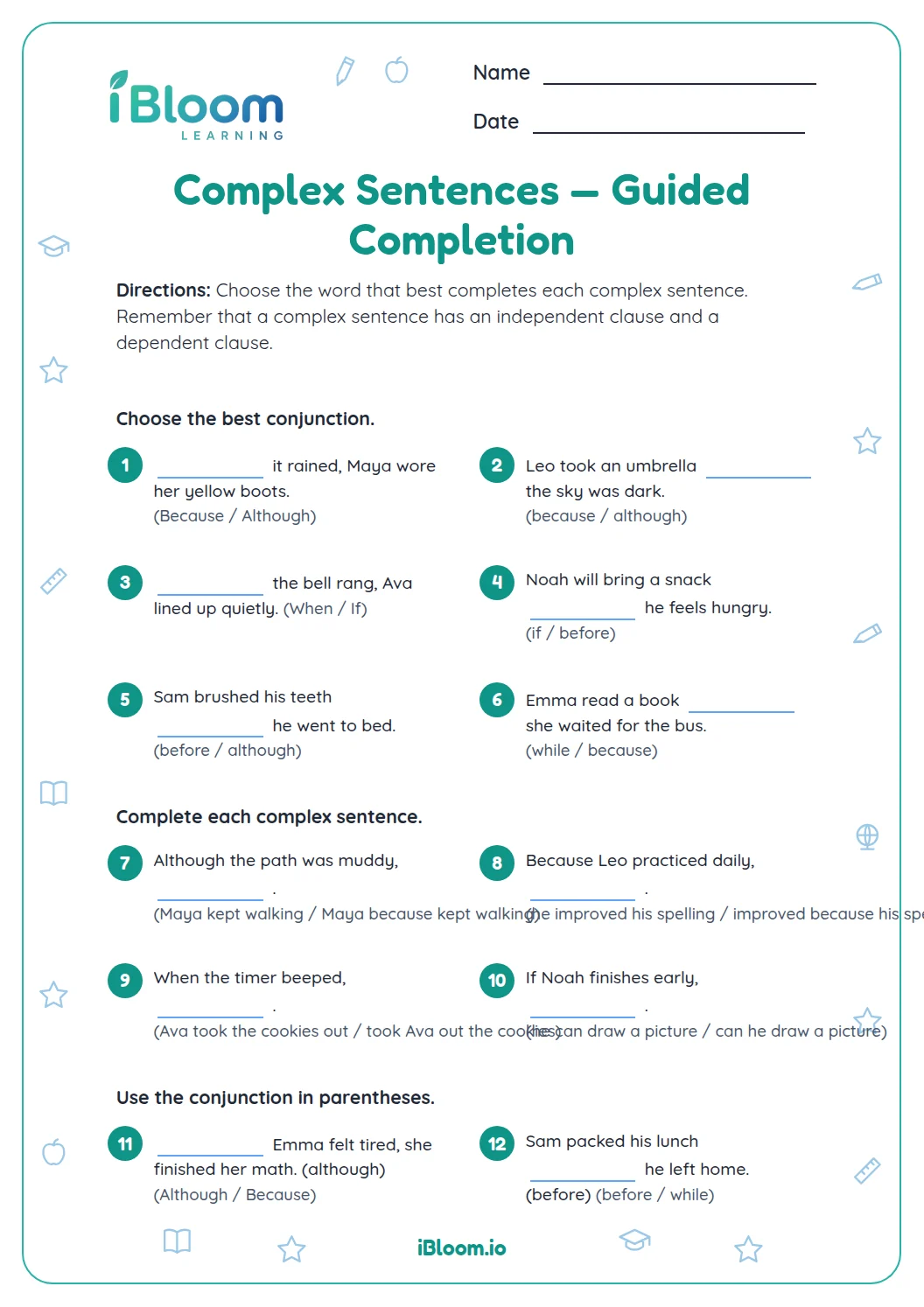
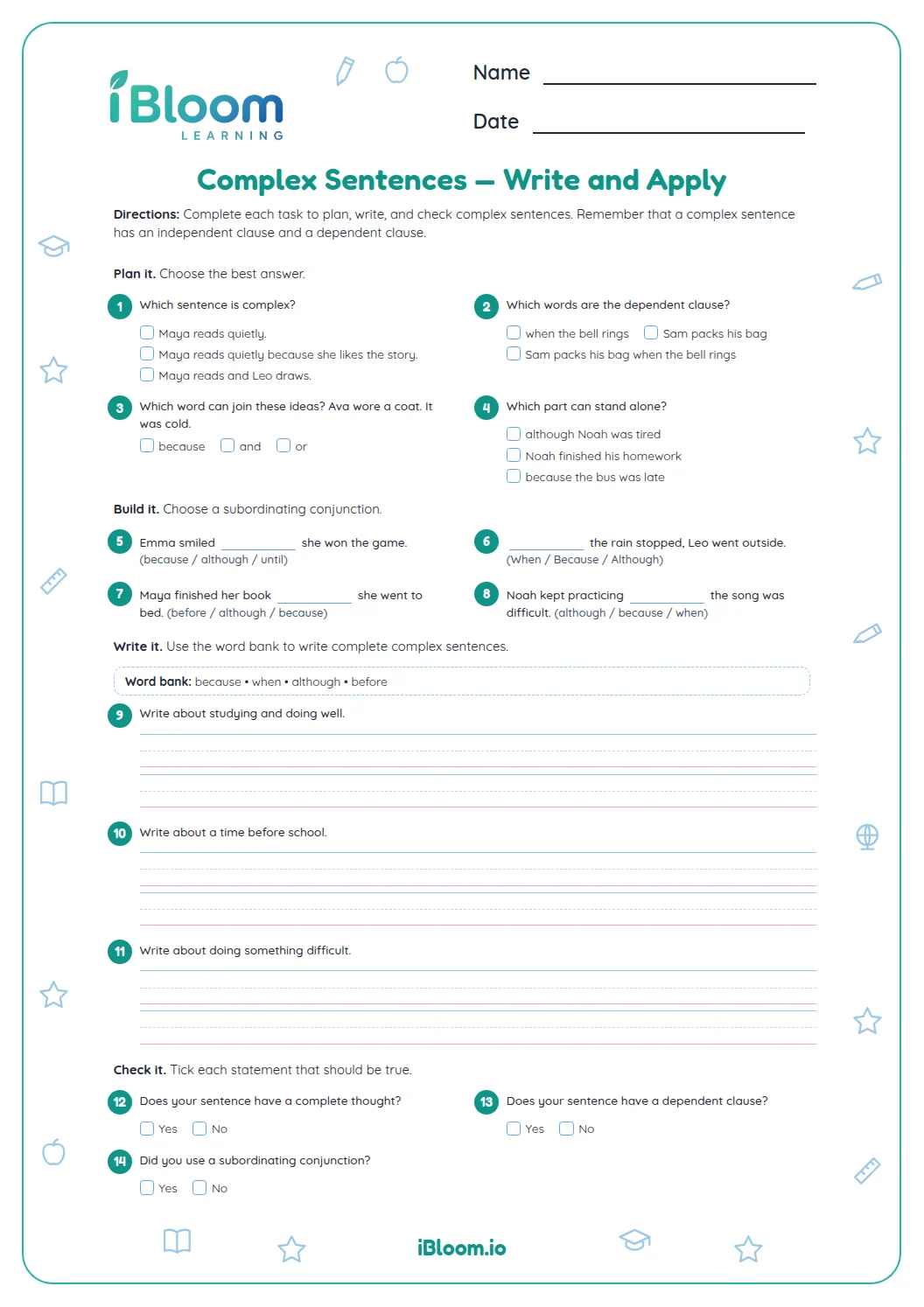
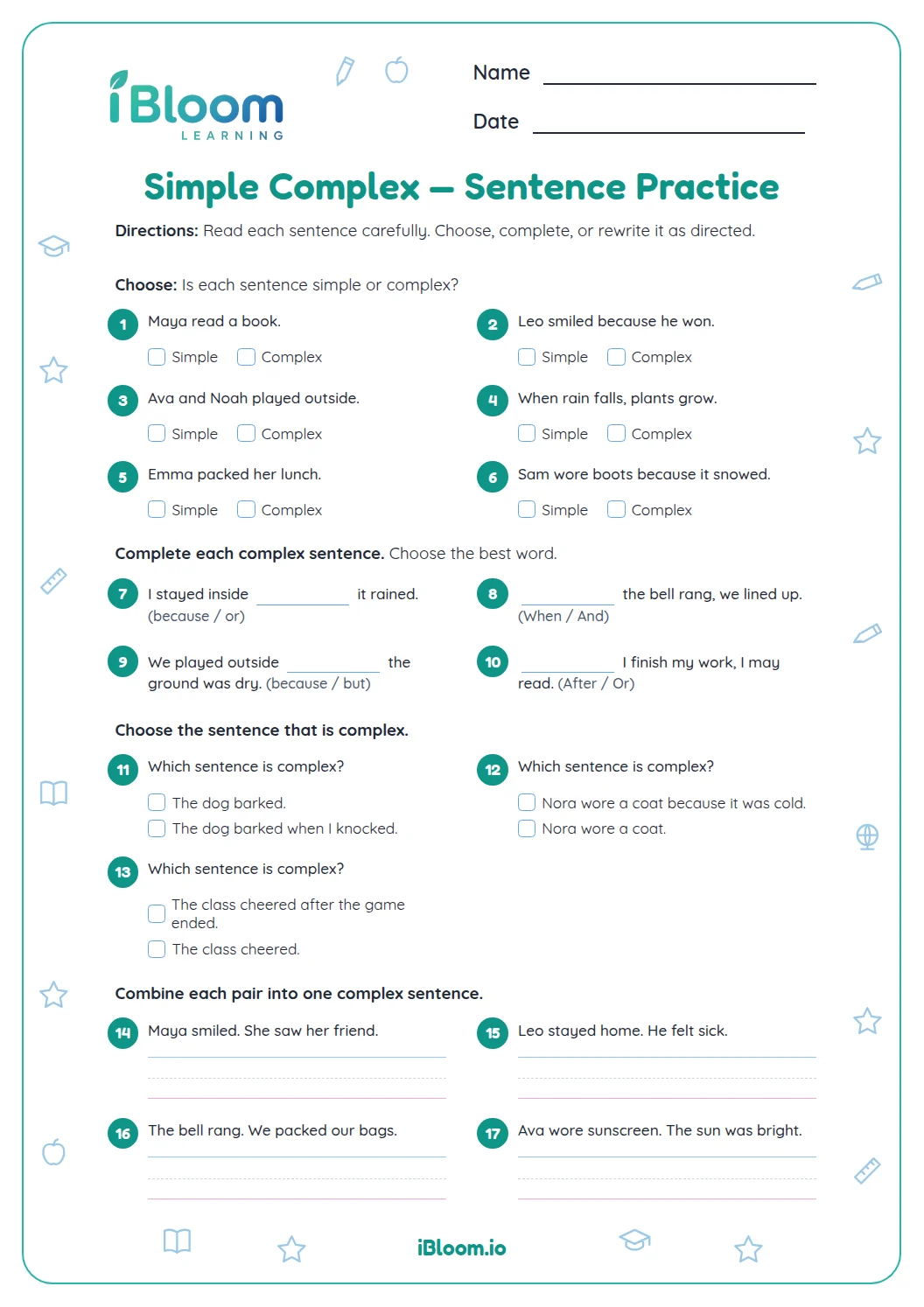
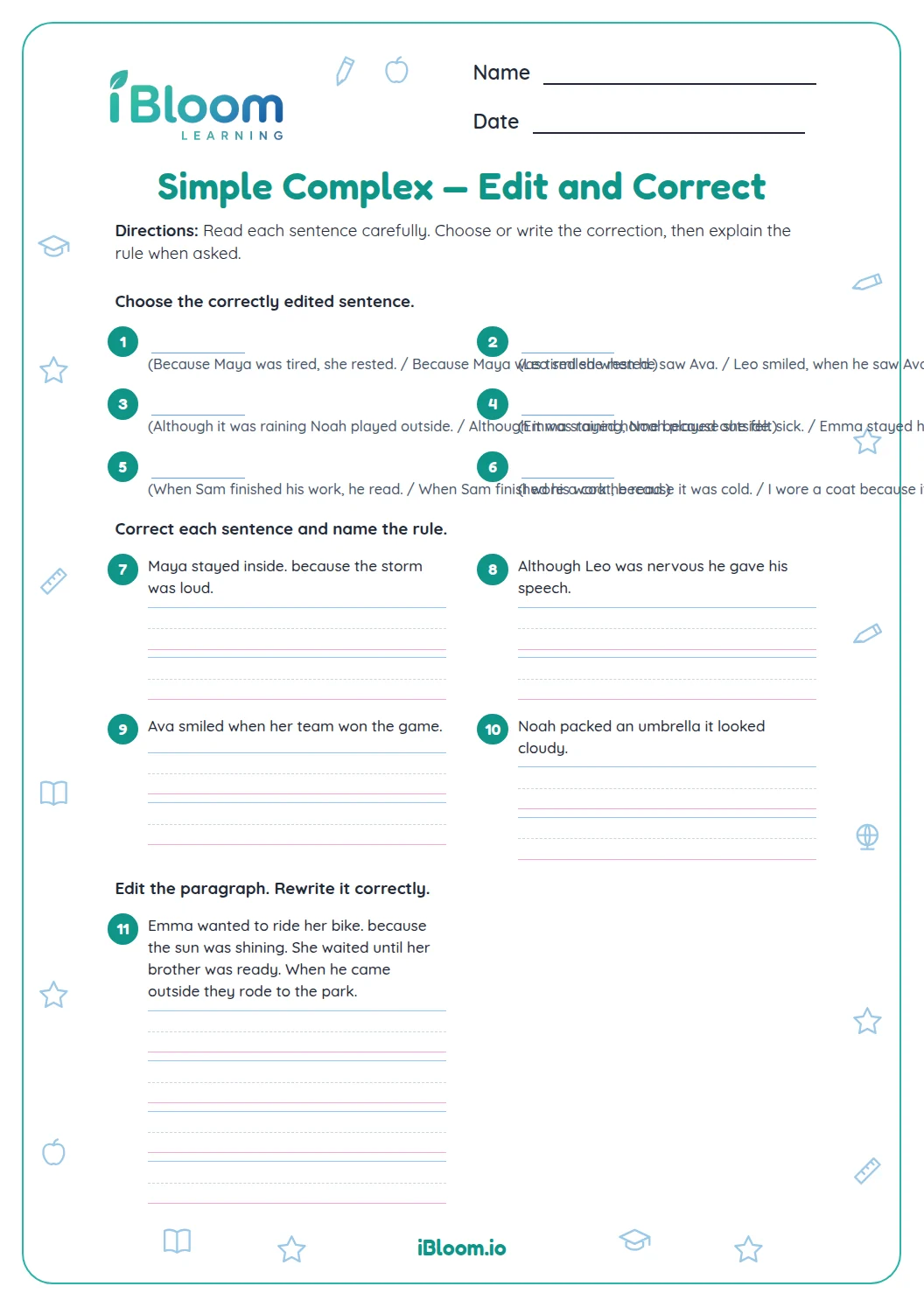
This Grade 3 printable worksheet provides 14 questions about complex sentences. Learners classify sentence structures and identify dependent and independent clauses in short examples. A separate answer key supports review. The sentence practice aligns with CCSS L.3.1.i.
Aligned to L.3.1.i
What does the worksheet practice about complex sentences?
The worksheet has 14 questions in short parts. The first items build familiarity with complex sentences, and later items ask learners to apply the same skill in new sentences. The separate key lists the matching response for each question.
How can a learner check one answer?
Read the entire sentence before choosing or revising it. Then check that the answer fits the meaning as well as the grammar.
- 1Which sentence is complex?
- 2Answer key: When the rain stopped, we went outside.
How can families use the answer key?
Let the learner complete a part before checking it. If an answer is different from the key, compare the sentence structure or punctuation rule and decide whether the response still meets the prompt.
How to use this worksheet
- 1Read each part direction before starting its questions.
- 2Read the whole sentence and identify the target grammar feature.
- 3Choose or write a response that fits both the structure and meaning.
- 4Reread the completed sentence for punctuation and clarity.
- 5Use the separate answer key after finishing to review each response.
Mistakes to watch for
The mistake
Calling a dependent clause a complete sentence.
The fix
Check whether it can stand alone; “because the rain stopped” needs another clause.
The mistake
Calling any sentence with and complex.
The fix
Look for a dependent clause joined to an independent clause.
The mistake
Missing the dependent clause when it comes first.
The fix
Find the subordinating word, then read the clause that follows it.
Curriculum alignment
This worksheet gives focused practice with the sentence or punctuation skill named above.
Produce simple, compound, and complex sentences through sentence practice.
On this sheet: Produce simple, compound, and complex sentences through sentence practice.
Show the official wordingHide the official wording
Produce simple, compound, and complex sentences.
What to practice next
Make more practice
Further reading
Questions parents and teachers ask
What does this complex sentence structure worksheet include?
The printable has 14 questions in two compact parts and a separate answer key. Learners identify complex sentences, distinguish dependent from independent clauses, and notice where a dependent clause appears. Each example is short enough to reread as students check the sentence structure.
How should a learner use the answer key?
Complete each question before checking the key. For a choice item, compare the selected response with the marked answer; for a written response, check that the sentence follows the direction and demonstrates the target skill. Read any different wording aloud to see whether it still fits.
How long does the practice take?
Plan for about 16 minutes to read and answer all 14 questions. A learner may finish sooner when the examples are familiar or take longer to reread each sentence carefully. The answer key is separate, so checking can happen after the full worksheet is complete.
What materials are needed?
Print the worksheet and use a pencil. The questions are designed to be answered on the page, and the separate answer key can be used for review afterward. No picture, extra passage, or special classroom material is needed to understand the prompts.
Can another response be correct?
Some questions ask learners to make or revise a sentence, so wording can vary while the grammar stays correct. The answer key gives a model where responses may differ. For selection questions, use the keyed answer and reread the full sentence to confirm why it fits.