




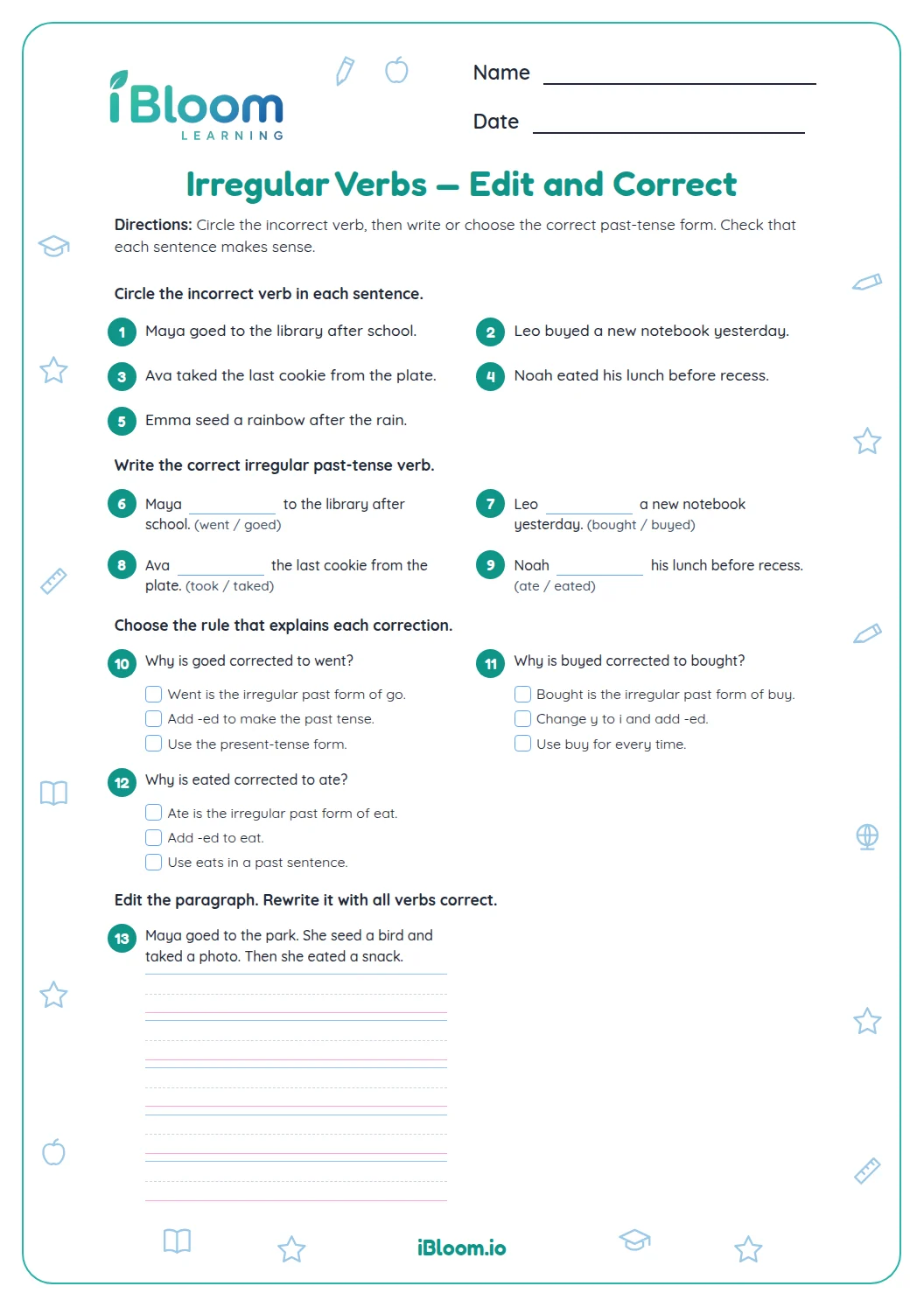
About this worksheet
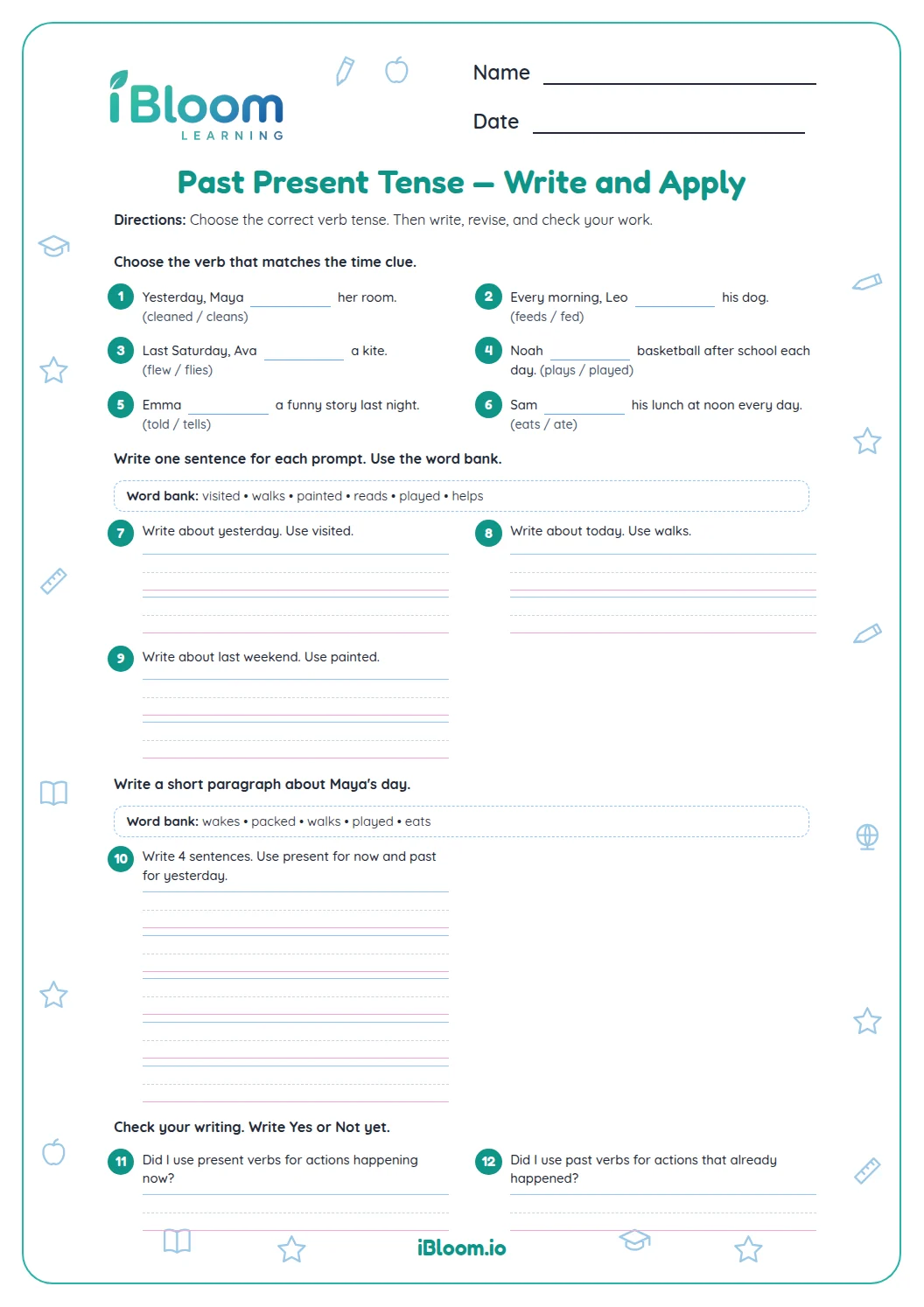
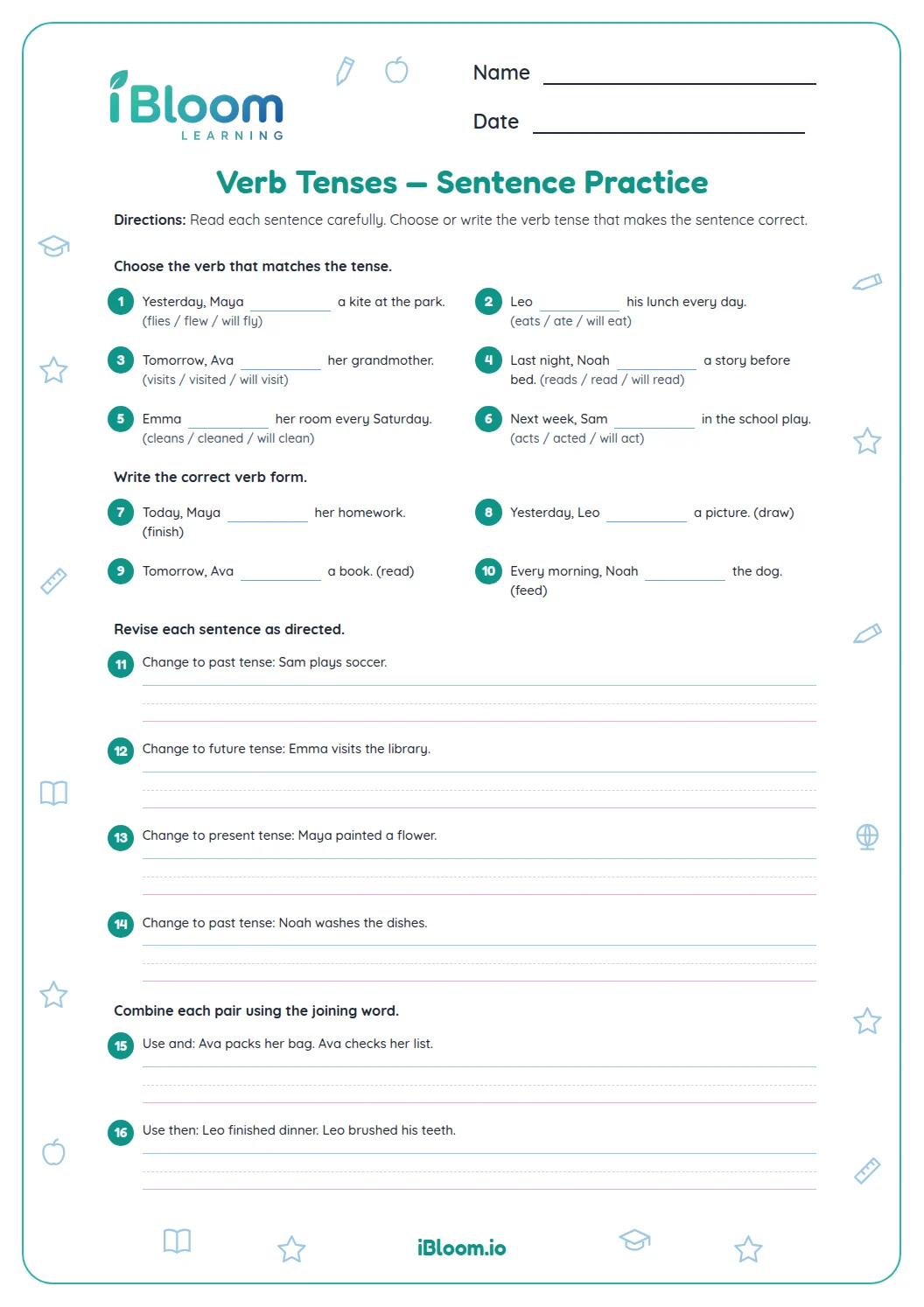
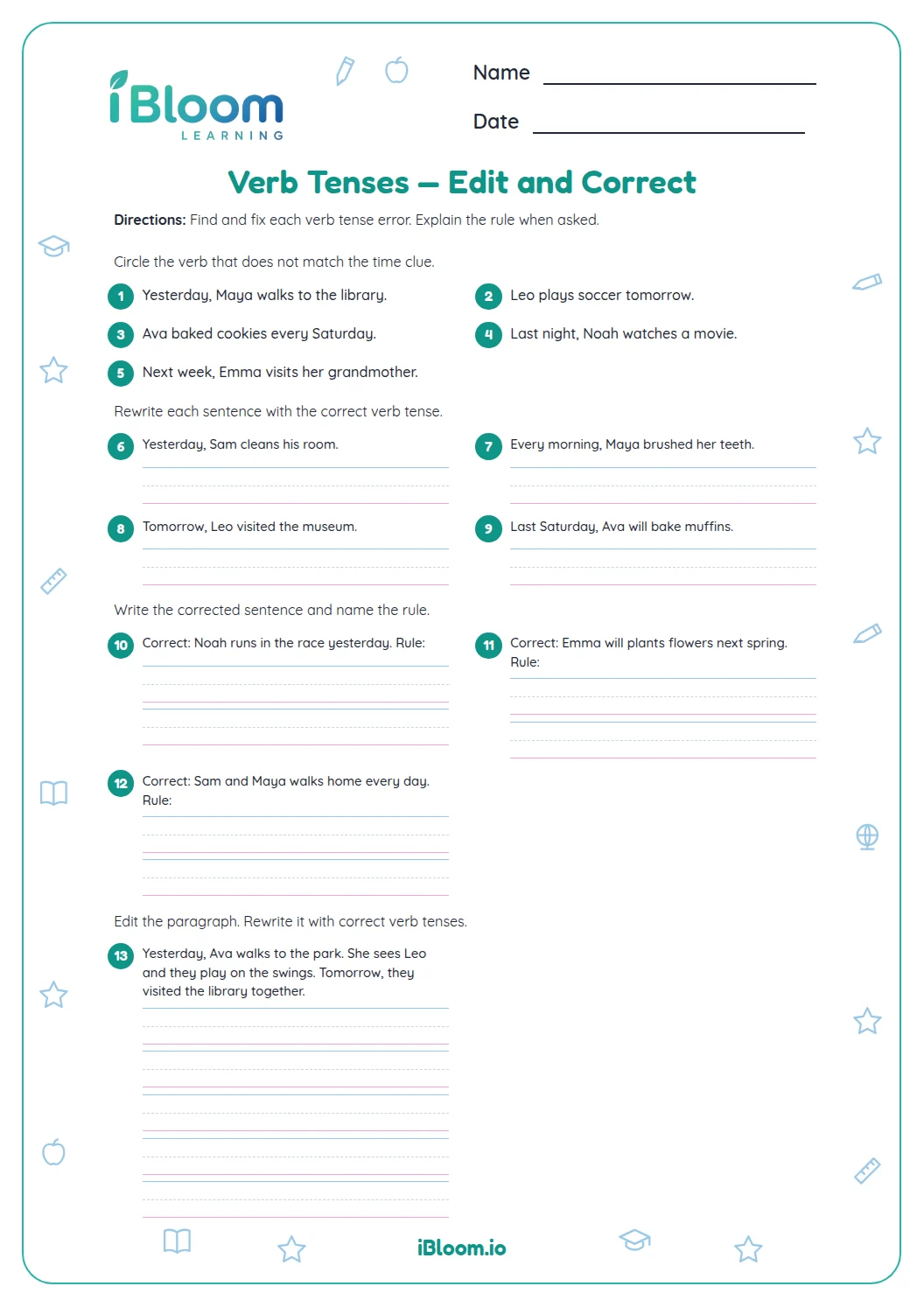
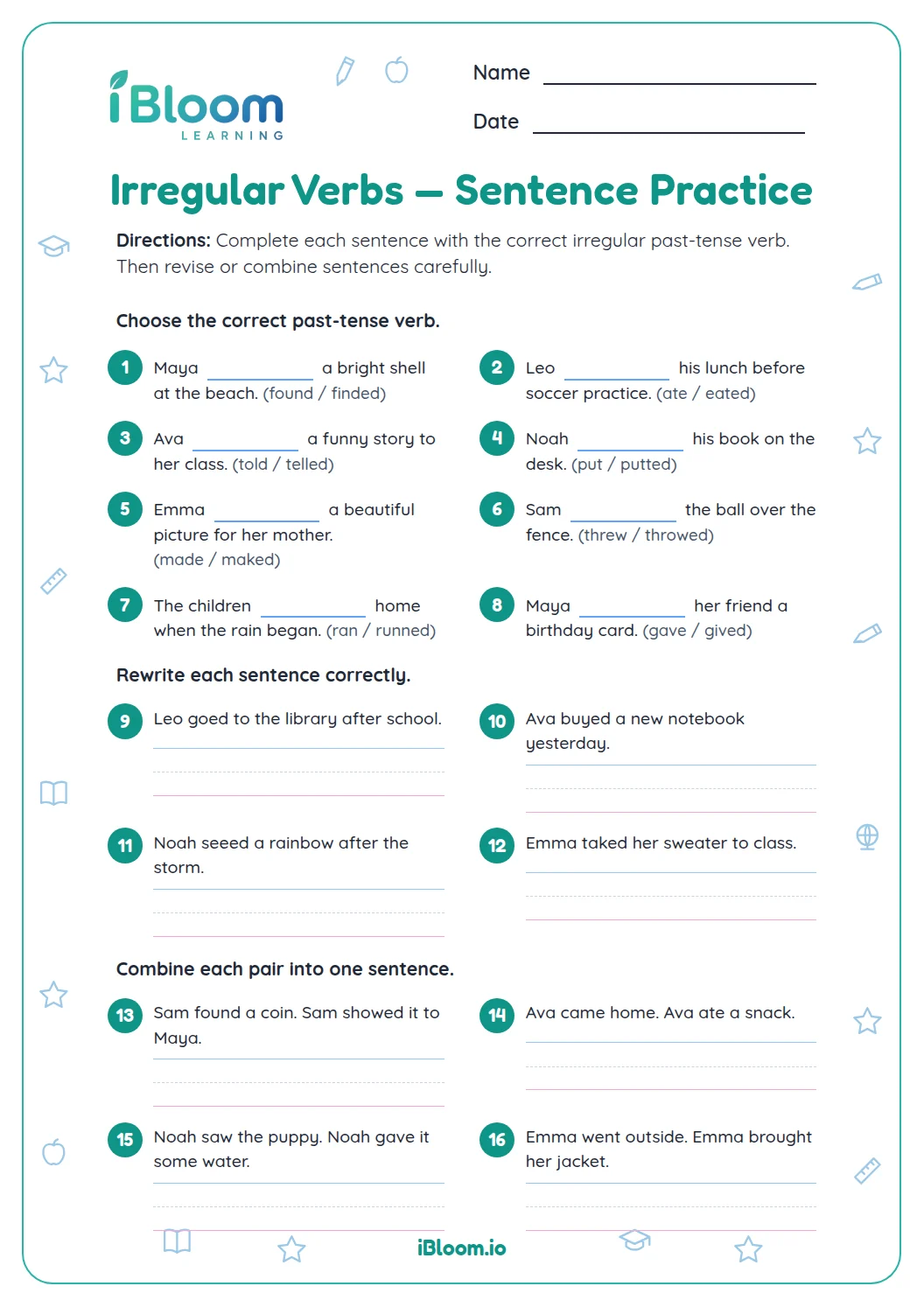
This Grade 3 worksheet practices recognizing past- and present-tense verbs through clear time clues such as “yesterday” and “every morning.” Students select verb forms, identify verbs in context, revise inconsistent sentences, and apply past tense in their own writing. The 16 questions move from recognition to revision and writing.
What skill does this page practice?
This Grade 3 worksheet practices recognizing past- and present-tense verbs through clear time clues such as “yesterday” and “every morning.” Students select verb forms, identify verbs in context, revise inconsistent sentences, and apply past tense in their own writing. The 16 questions move from recognition to revision and writing.
How can children tell whether a verb is past or present?
Look for a time clue such as “yesterday” or “every morning,” then choose the verb form that matches it. This 16-question worksheet includes selection, revision, and writing practice with a separate answer key.
How can learners check their work?
Underline the time clue mentally before choosing a verb in Part A. In Part B, identify the verb that carries the sentence action.
What is one useful example?
Use the time clue first: “yesterday” places the action in the past, so choose “played.”
How to use this worksheet at home or in class
- 1Underline the time clue mentally before choosing a verb in Part A.
- 2In Part B, identify the verb that carries the sentence action.
- 3For the revision questions, read both verbs together and check that they match the time clue.
- 4Use the answer key to check each response after completing the page.
Common mistakes and quick fixes
The mistake
Choosing “plays” after “Yesterday” because the subject is Sam.
The fix
Use the time clue first: “yesterday” places the action in the past, so choose “played.”
The mistake
Changing only one verb in a sentence that describes one past event.
The fix
Check every verb. If the event happened yesterday, both actions should be in past tense.
The mistake
Rushing past the clue in the prompt.
The fix
Read the full item again and point to the detail that supports the answer.
What to practice next
Questions parents and teachers ask
Which words can signal past tense?
“Yesterday,” “last week,” and “last Saturday” tell when an action happened. Match the verb to that past-time clue, as in “Yesterday, Maya cleaned her room.” The worksheet uses these clues in its verb choices. In question 1, the clue yesterday signals a completed event, so the sentence uses cleaned
What does consistent tense mean?
Consistent tense means the verbs in a sentence match the time being described. When a sentence tells about one past event, use past-tense verbs for each action. For example, the choices contrast plays and played in the worksheet.
How do present-tense verbs appear in this worksheet?
The present-tense examples describe regular actions, such as walking every afternoon or packing a backpack each morning. Words like “every” and “each day” signal habits and help children choose present-tense verbs. Question 2 describes a routine: Leo packs his backpack every morning. The recurring time phrase supports present tense, while the other option describes a past event.
Why revise a sentence with two verbs?
Both verbs should fit the time clue. If one verb is past and another is present in a sentence about one event, revise the sentence so both verbs agree with the stated time. Question 10 starts with a present-tense verb and a past-tense verb. Revising both to the same time makes the sentence consistent with a regular present action.
What is an example of a correct past-tense revision?
“Yesterday, Noah played and scored two points” uses two past-tense verbs. The time word yesterday and the verb forms point to a completed event, so the sentence keeps its tense consistent. The revision item keeps yesterday and changes both verbs to played and scored. Those past forms agree with each other and with the time clue in the sentence.
Is an answer key included?
Yes. A separate answer key gives the verb choices and consistent revisions, along with sample responses for open writing prompts. Other clear sentences using past tense can also satisfy the final writing task. The key lists the expected verb forms and model revisions The answer lines and selected options are visible on the matching page.