


About this worksheet
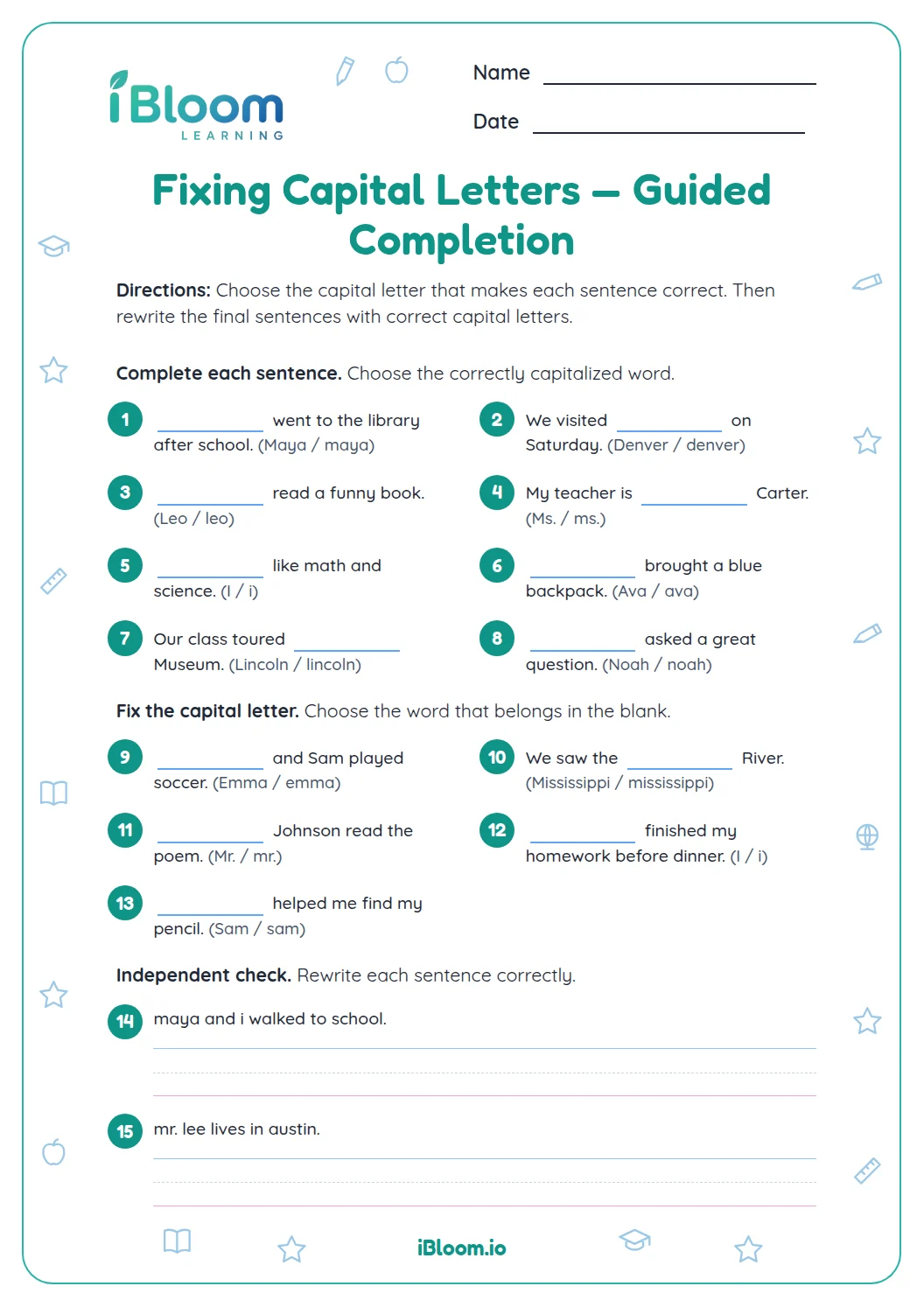
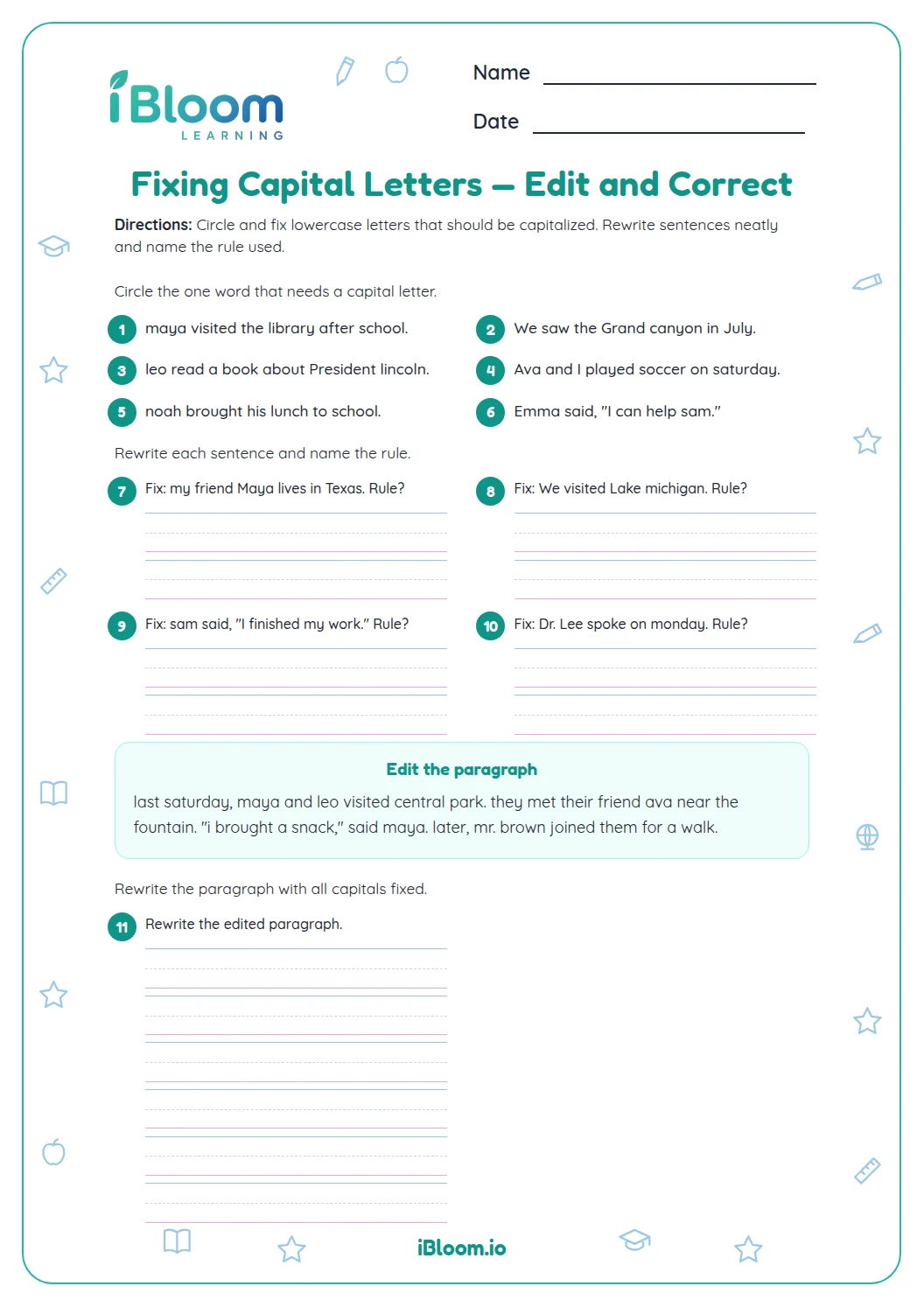
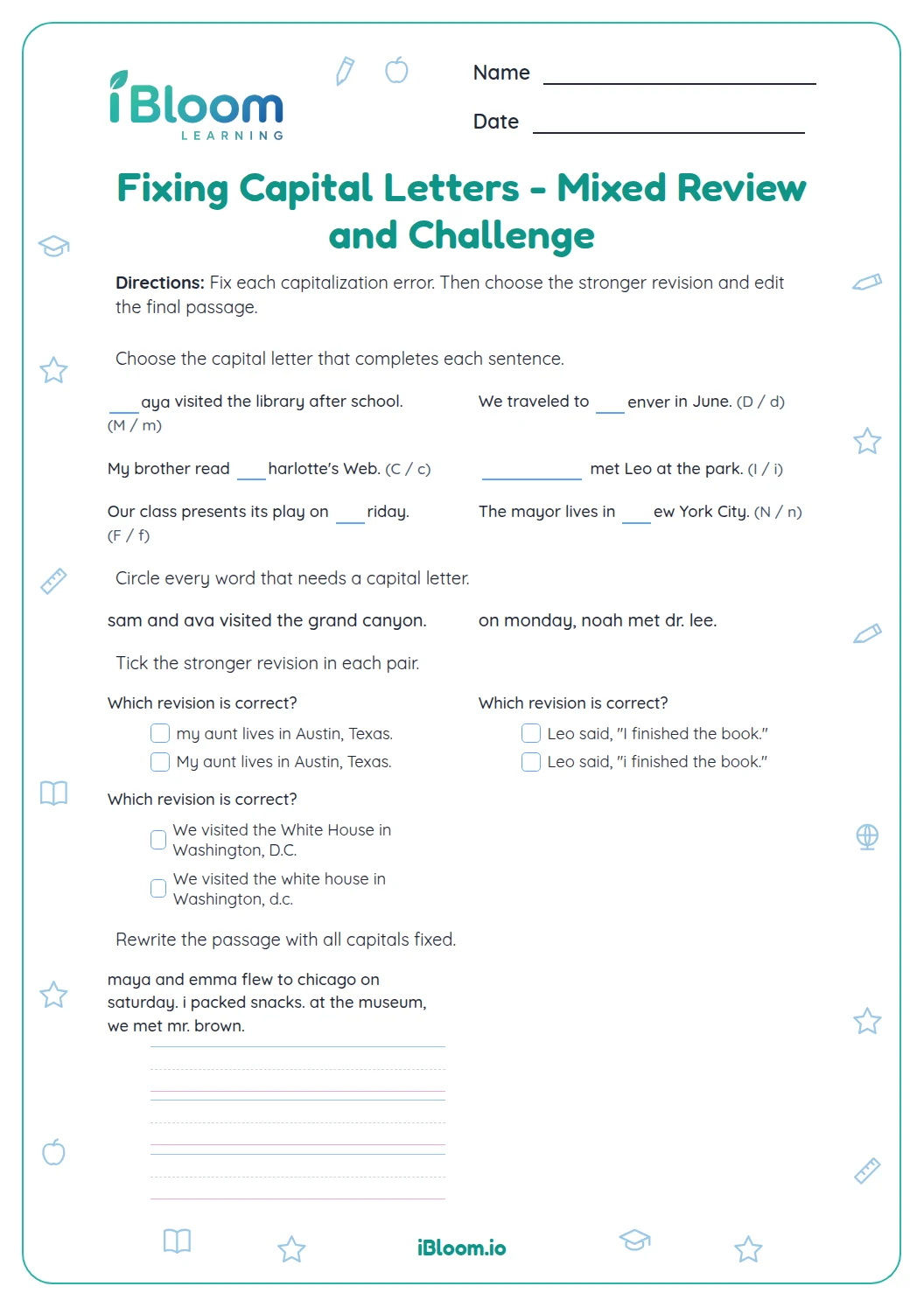
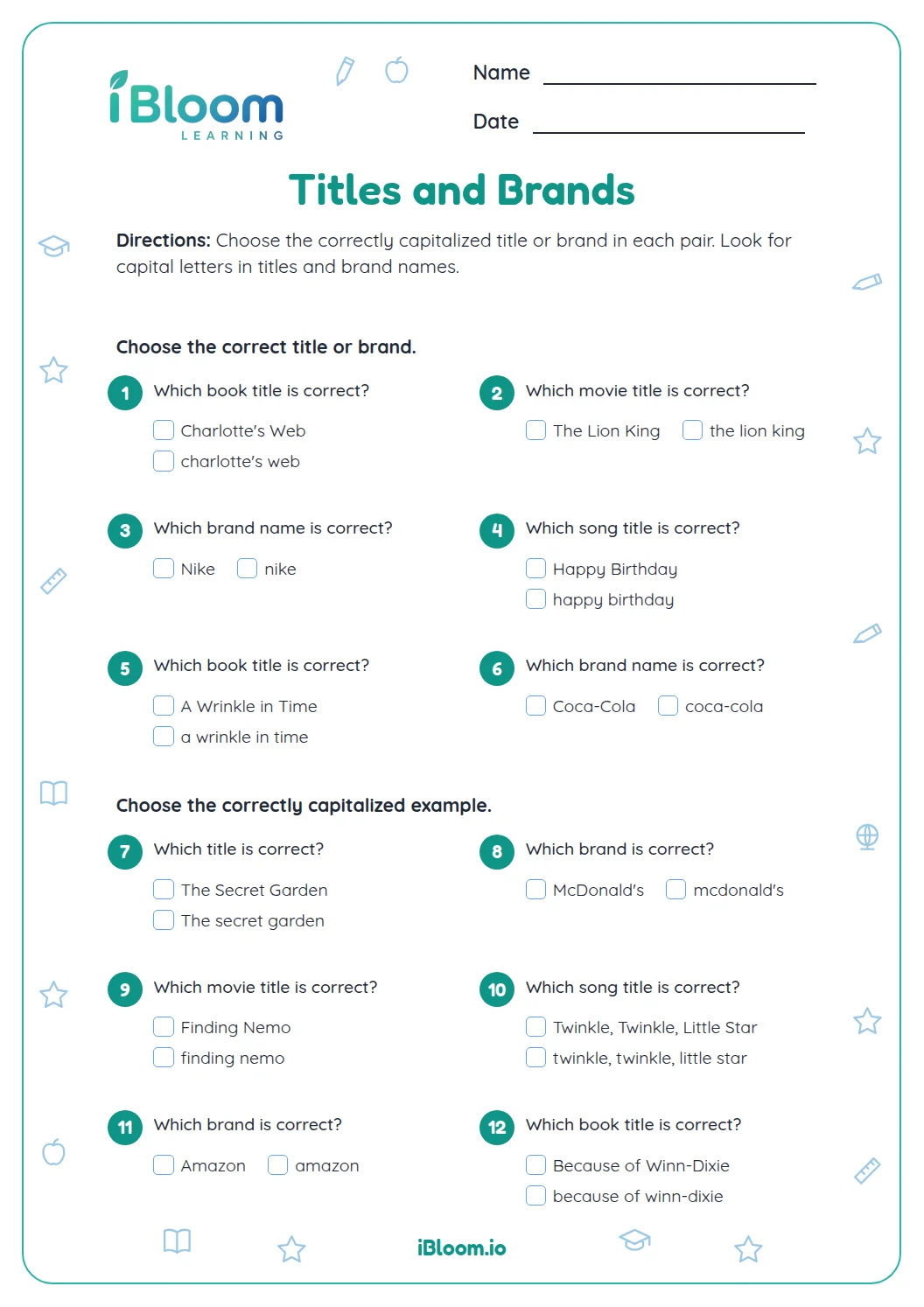
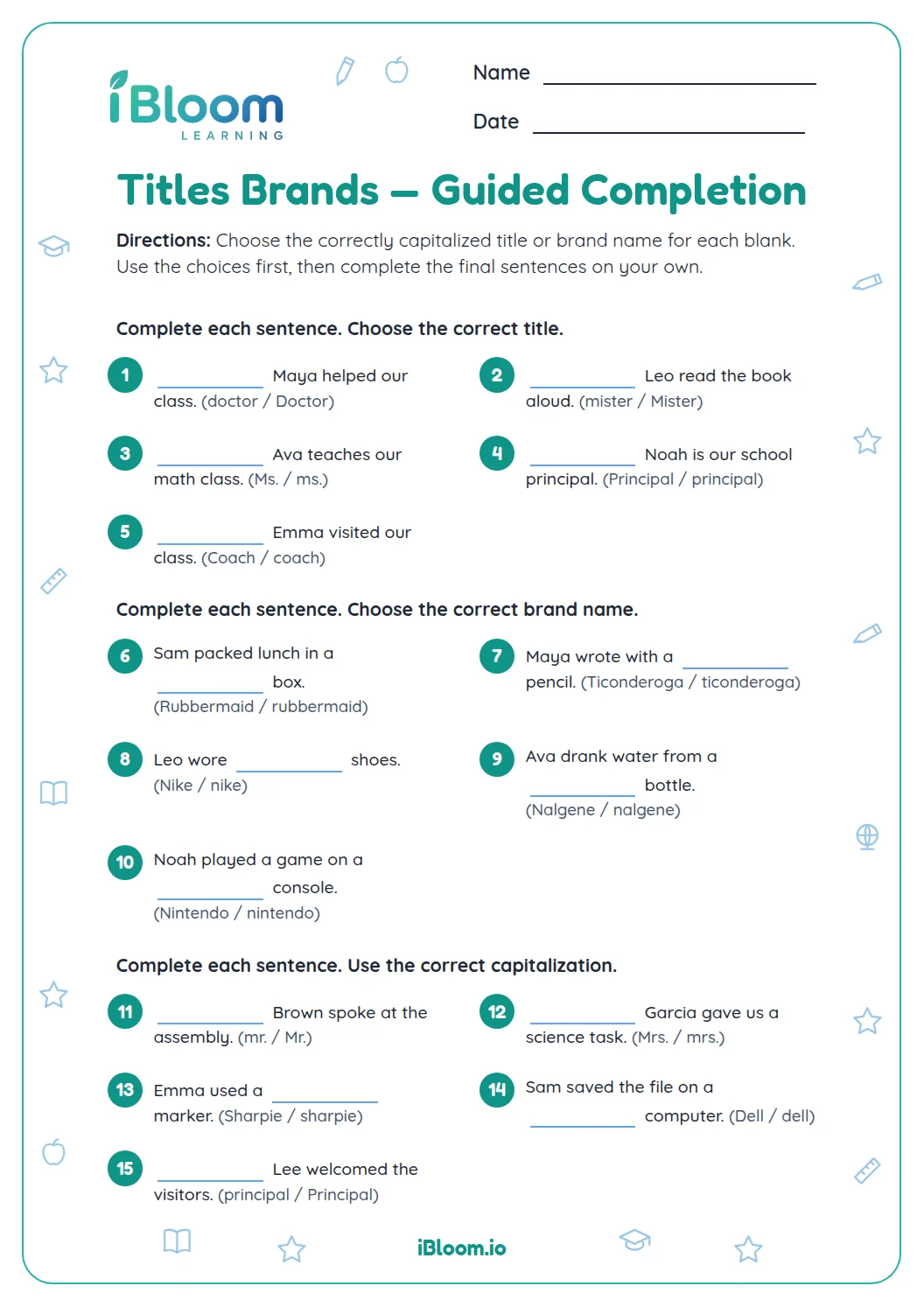
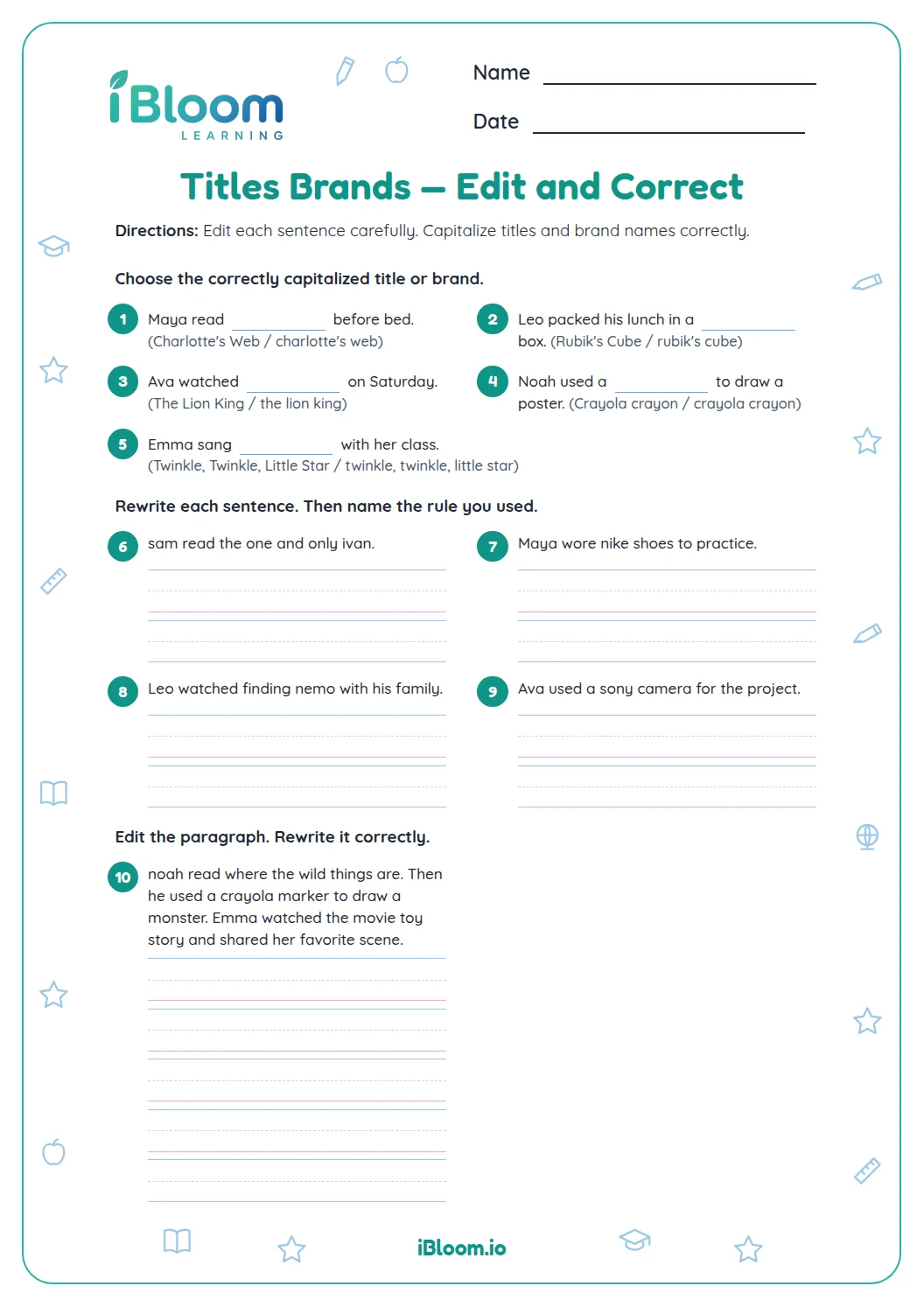
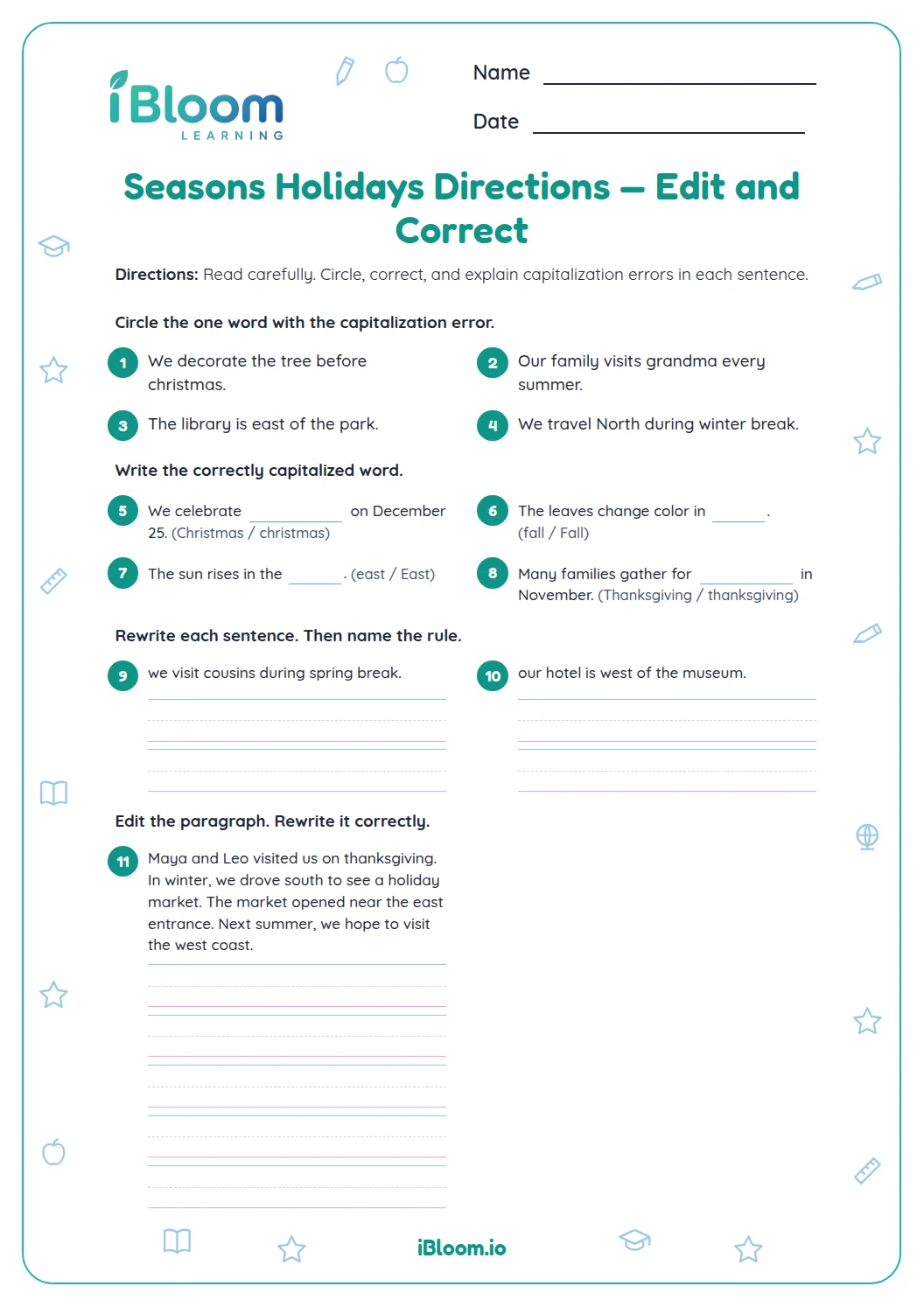
This Grade 4 printable practices capitalization in context. Students choose the correctly capitalized form of a word in 13 sentences about people, places, days, months, and book titles, then write a sentence about a book. The examples distinguish proper names such as “Aunt Rosa” from common nouns and show capitalization within titles. A separate answer key gives the correct choices and one sample sentence.
Aligned to L.4.2a
Which words need capital letters?
Capitalize the first word of a sentence and proper nouns, including names of people and places, days, and months. Capitalize important words in a book title. For example, “We visited Boston in April” begins with a capital and names a city and month.
- 1___ visited Boston in April.
- 2The first word begins the sentence.
- 3Choose “We.”
How can you check capitalization in a sentence?
Read the sentence and identify the kind of word in the blank. A person, city, state, day, month, street, river, or title word may need a capital. Then read the choice in the whole sentence.
How can students use capitals in their own writing?
The final prompt asks for a complete sentence about a book. Check the sentence’s first word and capitalize the important words in the title. The key gives one sample; another correctly capitalized book title is acceptable.
How to use this worksheet
- 1Read each sentence once for meaning.
- 2Check that the first word begins with a capital.
- 3Scan for names of people, places, days, and months.
- 4For title questions, capitalize the important words in the title.
- 5Reread original sentences and check every proper name.
Common mistakes and quick fixes
The mistake
Capitalizing a common noun such as aunt when it is not used as a name.
The fix
Capitalize a family title when it replaces a name, as in Aunt Rosa; lowercase it in “my aunt.”
The mistake
Leaving a day or month lowercase.
The fix
Scan specifically for calendar words; Friday and April need capitals.
The mistake
Capitalizing every word in an ordinary sentence.
The fix
Capitalize sentence beginnings and proper names, not every common noun.
Common Core alignment
Students edit and write sentences with correct capitalization.
Use correct capitalization.
On this sheet: Children correct capitals in sentence edits and apply capitalization in their own writing.
Show the official wordingHide the official wording
Use correct capitalization.
What to practice next
Make more practice
Further reading
Questions parents and teachers ask
What capitalization rules does this worksheet practice?
This page asks children to capitalize sentence beginnings and proper names, including people, cities, states, days, months, streets, rivers, and titles. They correct 13 words in context, then write one sentence about a book and its title. A separate key lists the answers.
Why is Boston capitalized in the first sentence?
Boston is the name of a specific city, so it is a proper noun and begins with a capital letter. The sentence also uses a capital at its beginning and for April, the name of a month. April follows the same month rule.
Should “aunt” always be capitalized?
Capitalize Aunt when it is used with a person’s name, as in Aunt Rosa. Use lowercase in a phrase such as “my aunt,” where it is a common noun rather than part of a name. The worksheet contrasts name use with the common noun form.
How should children capitalize a book title?
Charlotte’s Web has capitals in Charlotte’s and Web. The final prompt lets children choose another book; they should begin their sentence with a capital and capitalize the important words in the title they write. Check the finished sentence for both choices.
What counts as a correct answer for the last prompt?
The child should write a complete sentence about a book and capitalize its title and the first word of the sentence. The answer key gives “I read Charlotte’s Web with my sister” as one example. Any suitable book and correct title capitalization are acceptable.
How many questions are included?
There are 14 questions: 13 capitalization fill-ins and one original sentence. The key lists the corrected words and provides a sample for the last prompt, so an adult can compare the child’s own title and sentence with the capitalization rule.