




About this worksheet
This free Grade 4 worksheet helps students recognize how an informative paragraph is organized. Across 16 sentences about sea turtles, bees, and libraries, learners identify the topic sentence, supporting facts, an explanation, and the closing. The answer key makes each label easy to review. The activity practices CCSS W.4.2 by focusing attention on a topic and the information that develops it.
Aligned to W.4.2
What jobs do sentences do in an informative paragraph?
This sheet gives 16 sentences in three short topic groups. Students label a topic sentence, supporting facts, an explanation when a sentence tells why a fact matters, or a closing sentence.
The topics shift from sea turtles to bees to libraries, so students must use the sentence meaning rather than memorize a pattern. Each topic has one clear opening and one clear ending.
- T = topic sentence
- F = fact or detail
- E = explanation of a fact
- C = closing sentence
How can you tell a fact from an explanation?
A fact gives information about the topic. An explanation connects information to an idea, often with words such as “this” or “these.” A closing brings the group of ideas to a finish.
- 1“The warm sand helps the eggs develop.” → F (a detail about the eggs)
- 2“These steps give young turtles a chance to reach the water.” → E (it explains why the steps matter)
How can students use the labels when they write?
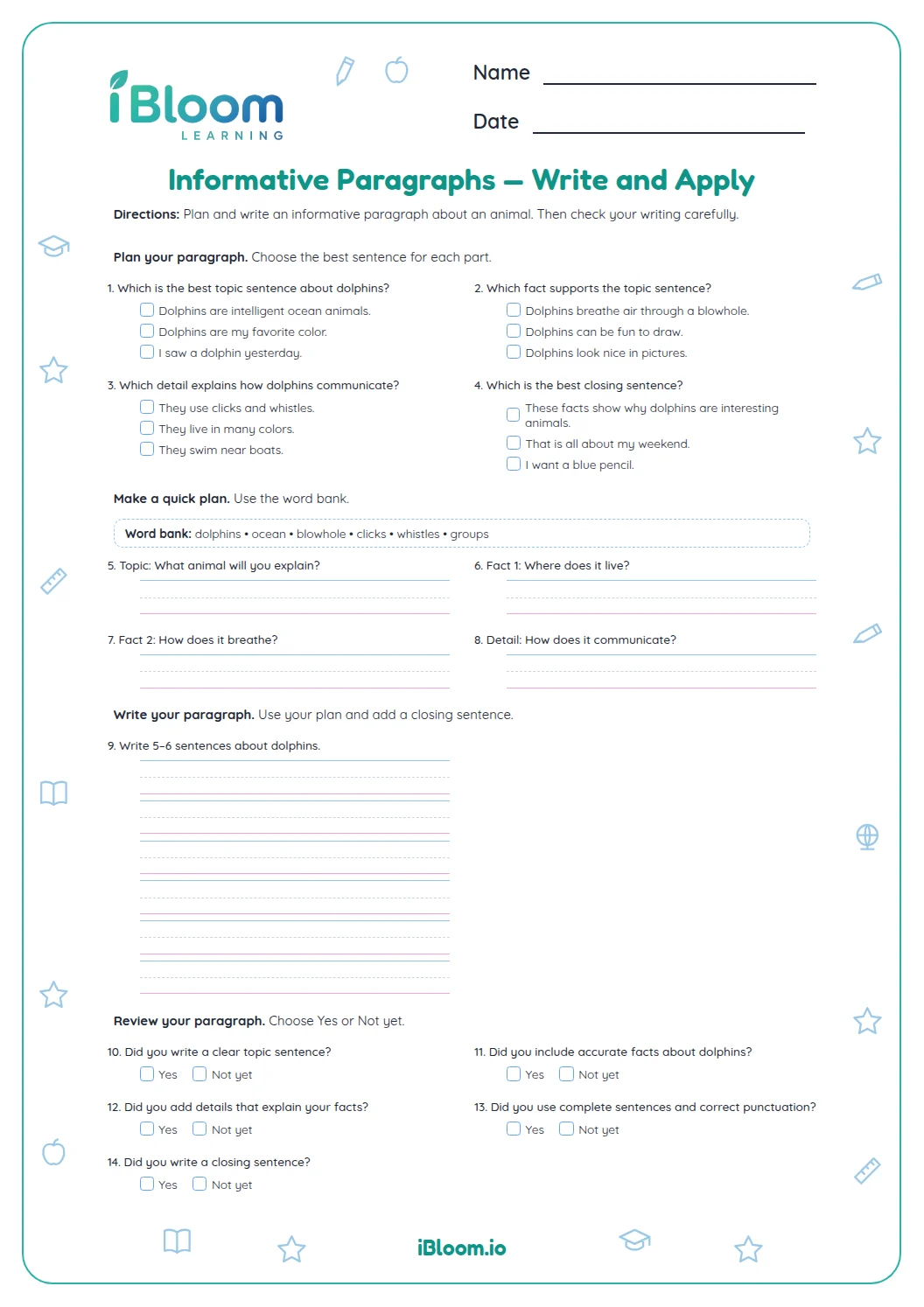
After checking the key, have the child read one topic group aloud in order. Ask whether the facts stay with the topic and whether the closing leaves the reader with a final thought. Students can then use the same four jobs to plan a paragraph of their own.
How to use this worksheet
- 1Read the four labels and what each one means before starting.
- 2Read the topic group first, then label one sentence at a time.
- 3Ask what each sentence adds: main idea, detail, explanation, or ending.
- 4Use the key to check every group and discuss any sentence that was tricky.
- 5Write a new topic sentence and one supporting fact about a familiar subject.
Common mistakes and quick fixes
The mistake
Labeling every informative sentence as a fact.
The fix
Find the sentence that states what the whole group is about; that is the topic.
The mistake
Calling a result an explanation even when it is a direct detail.
The fix
Ask whether the sentence gives a concrete detail or tells why another detail matters.
The mistake
Choosing a closing because a sentence is last in the group.
The fix
Look for a final thought that wraps up the topic, not just the final fact.
Common Core alignment
This page practices recognizing how facts and ideas work together in an informational paragraph.
Name an informational topic, group related facts, and explain it clearly.
On this sheet: Students recognize and build topic sentences, related facts, and explanations in short informational paragraphs.
Show the official wordingHide the official wording
Write informative/explanatory texts to examine a topic and convey ideas and information clearly.
What to practice next
Make more practice
Further reading
Questions parents and teachers ask
How many sentences are on this worksheet?
There are 16 sentences in three topic groups: sea turtles, bees, and libraries. Students label each sentence as a topic, fact, explanation, or closing. The separate answer key lists all 16 labels, so a parent or teacher can check the work quickly.
What is the difference between a fact and an explanation?
A fact gives information that belongs to the topic, such as a bee carrying pollen from one flower to another. An explanation tells why a fact matters. In question 9, “This transfer lets some plants produce fruit” explains the result of the pollen transfer.
Why are the sentences grouped by topic?
Each group stays with one subject so children can notice the paragraph structure. They can ask whether each sentence belongs with the topic, adds information, explains a point, or wraps up the group. The three subjects also make the same labels useful across different kinds of informational writing.
Should students label every supporting sentence as a fact?
Most supporting sentences on this page provide a concrete fact or detail. A sentence that explains a result or connects details to the topic earns E instead. Students can look for a cause, result, or phrase such as “these steps” to distinguish the explanation.
How can I help if two labels seem possible?
Have the child read the sentence with the one before and after it. Then ask what the sentence contributes: the group’s main idea, a checkable detail, a reason the detail matters, or a final thought. The answer key reflects the intended role of each sentence in its group.
What can students practice next?
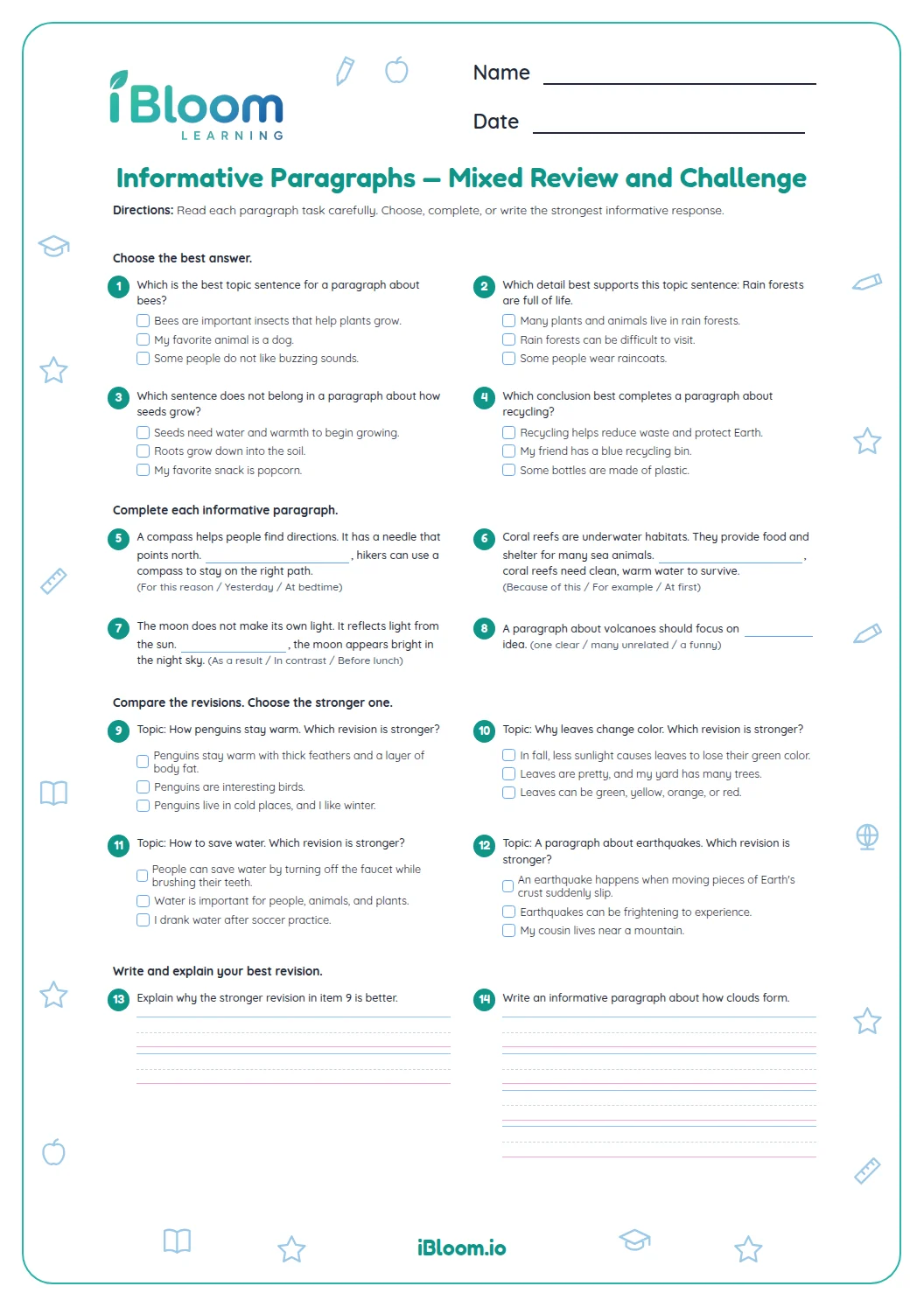
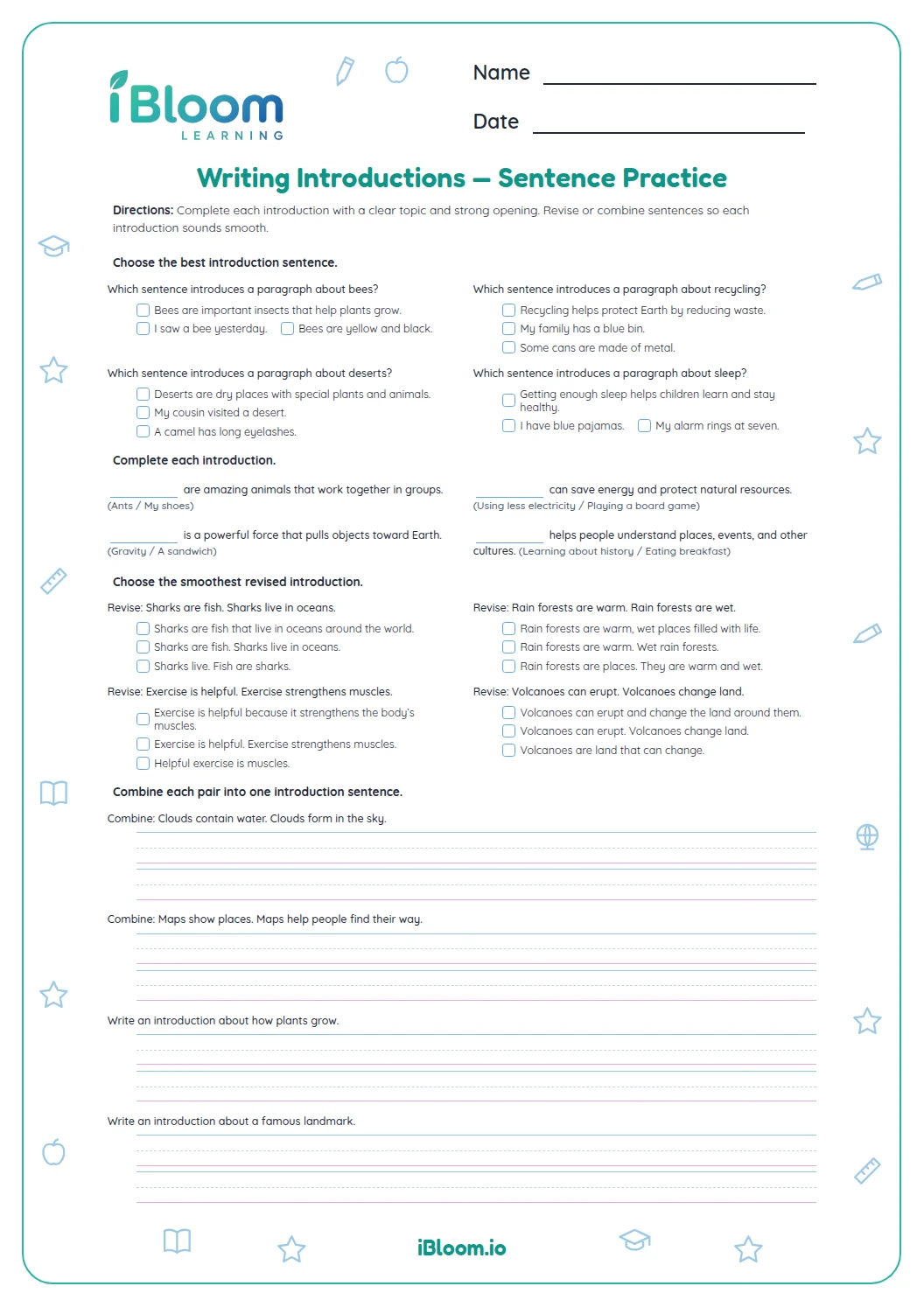
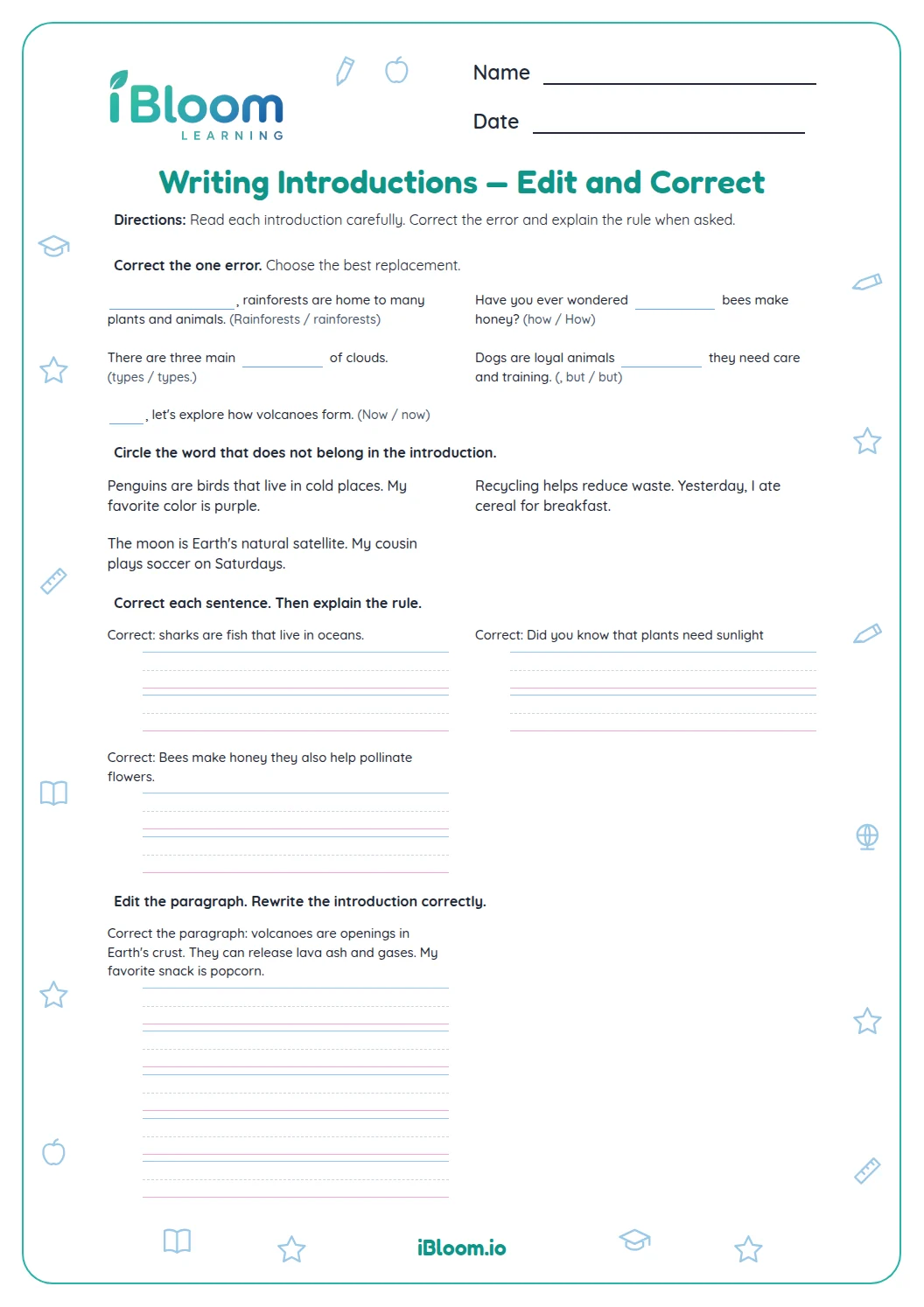
Students can use the labels to draft a paragraph about a familiar subject, then check that facts support the topic and a closing finishes the idea. The Supporting Details and Writing Introductions pages offer related practice with building and opening informative pieces.