




About this worksheet
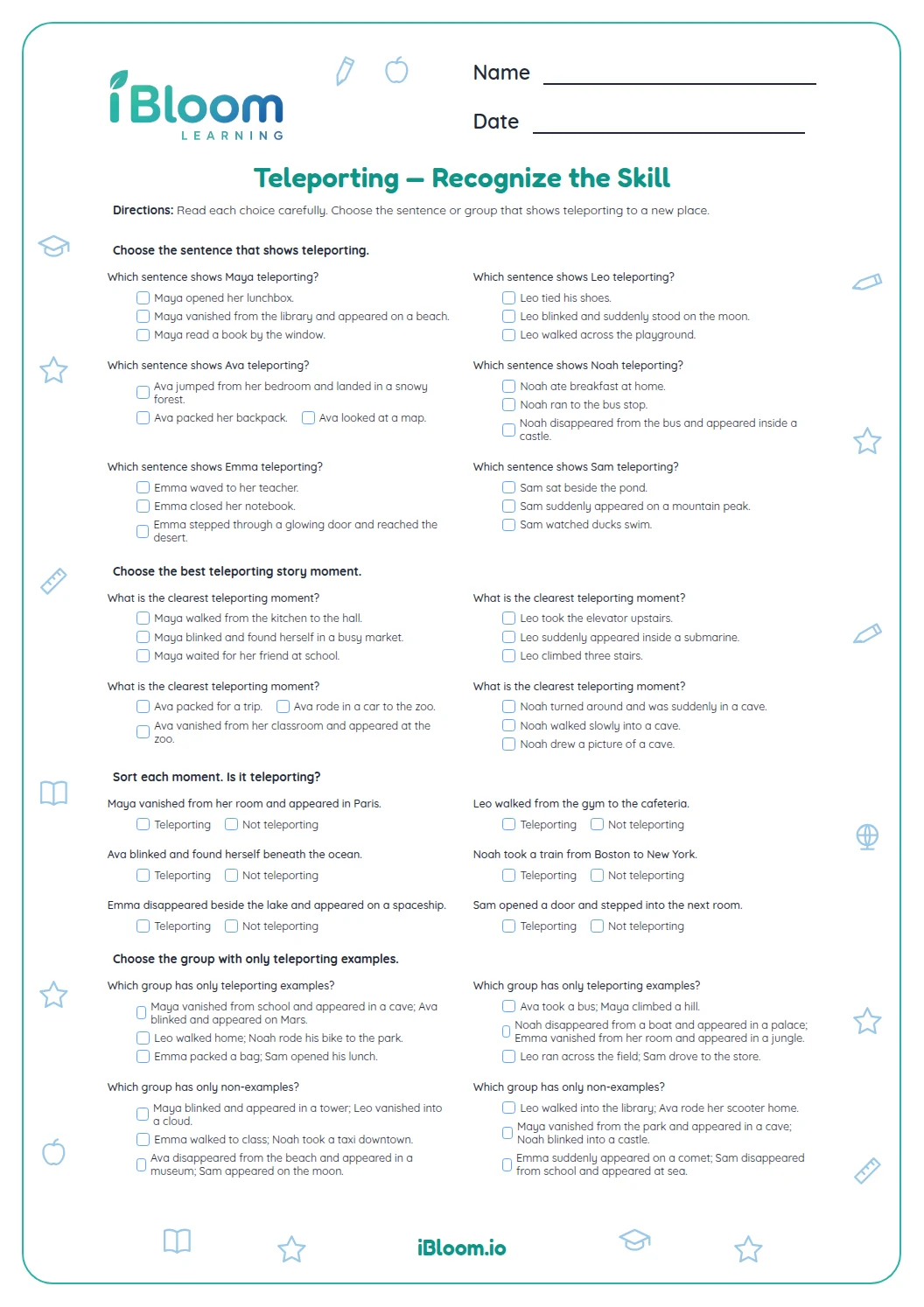
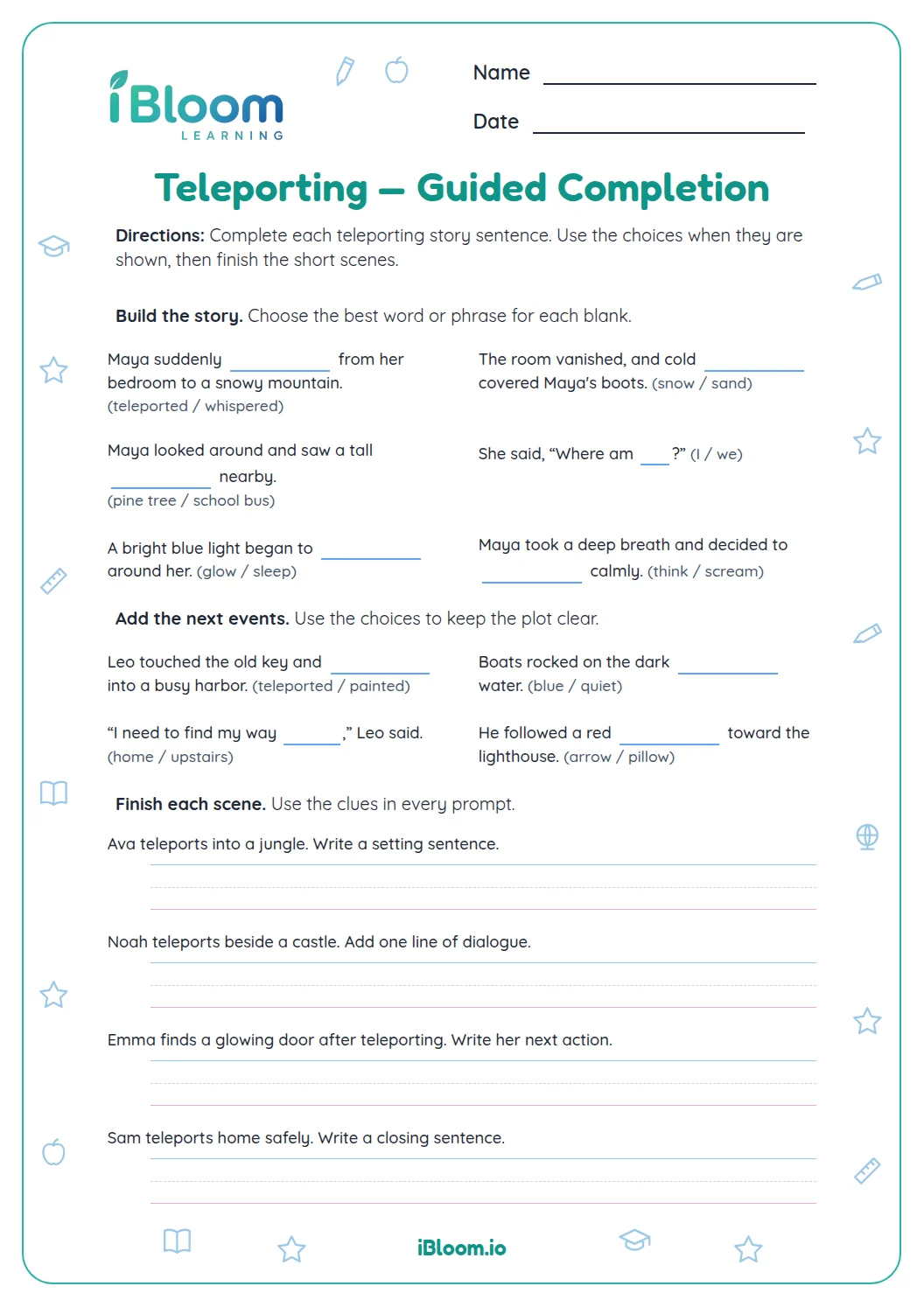
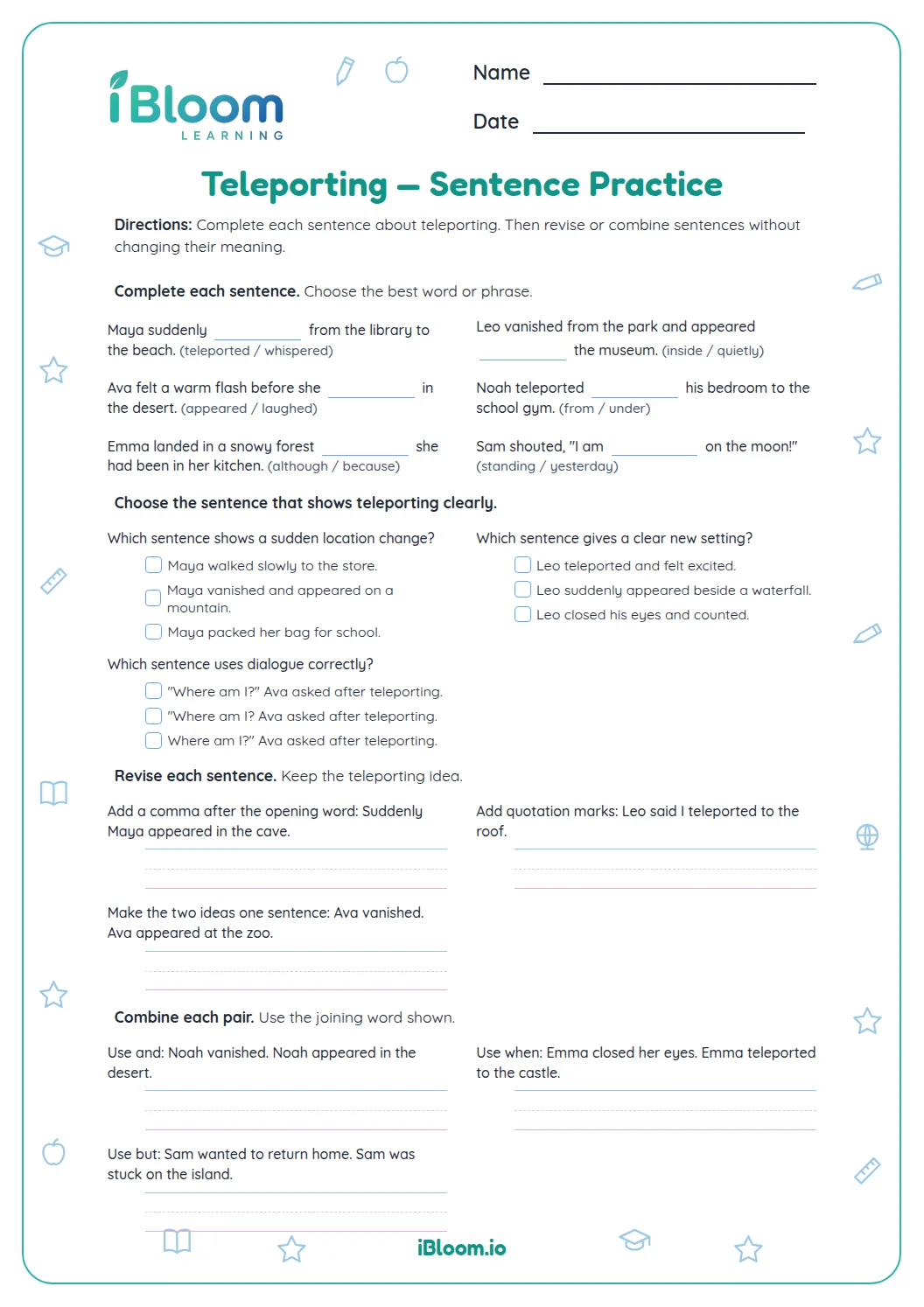
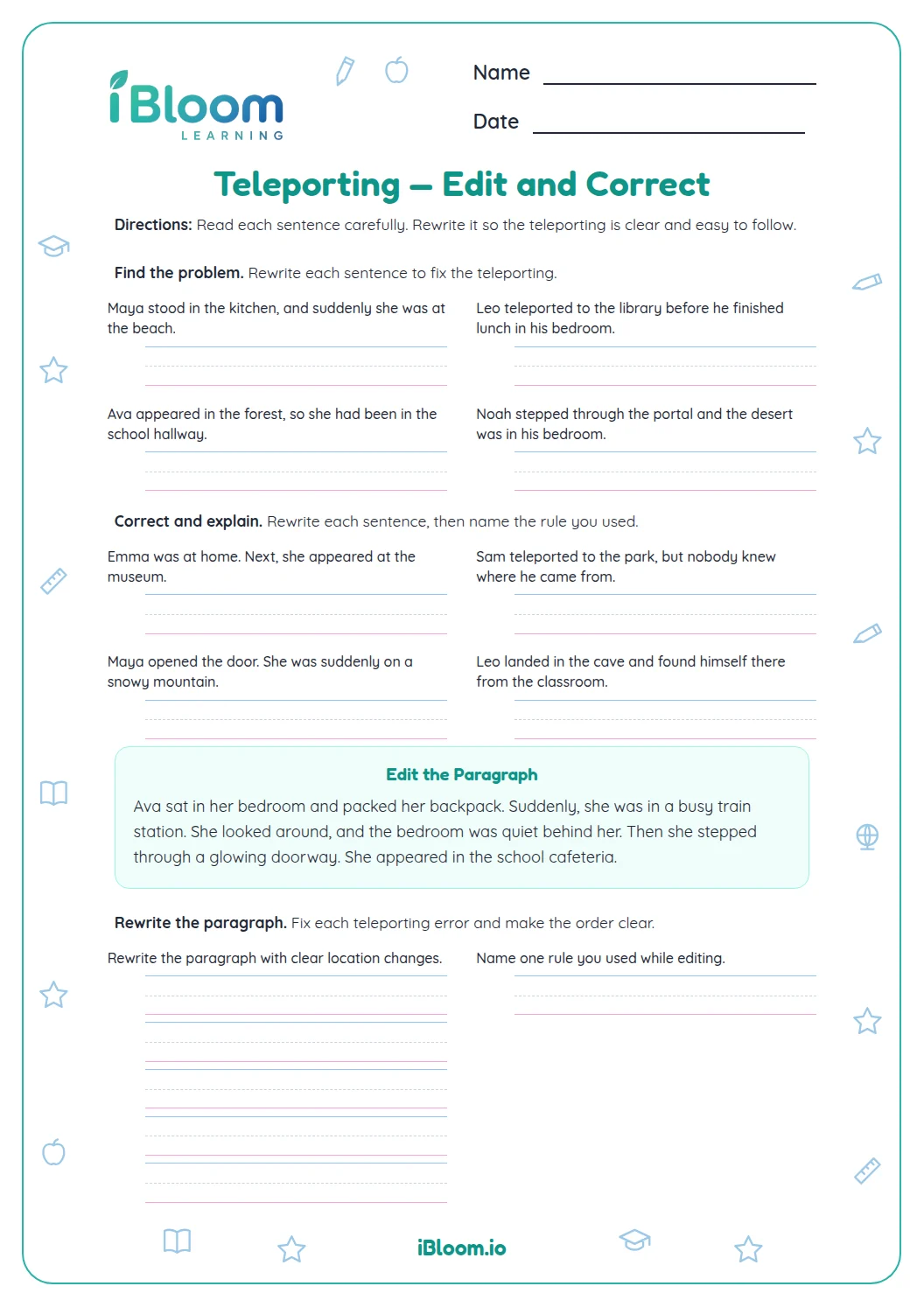
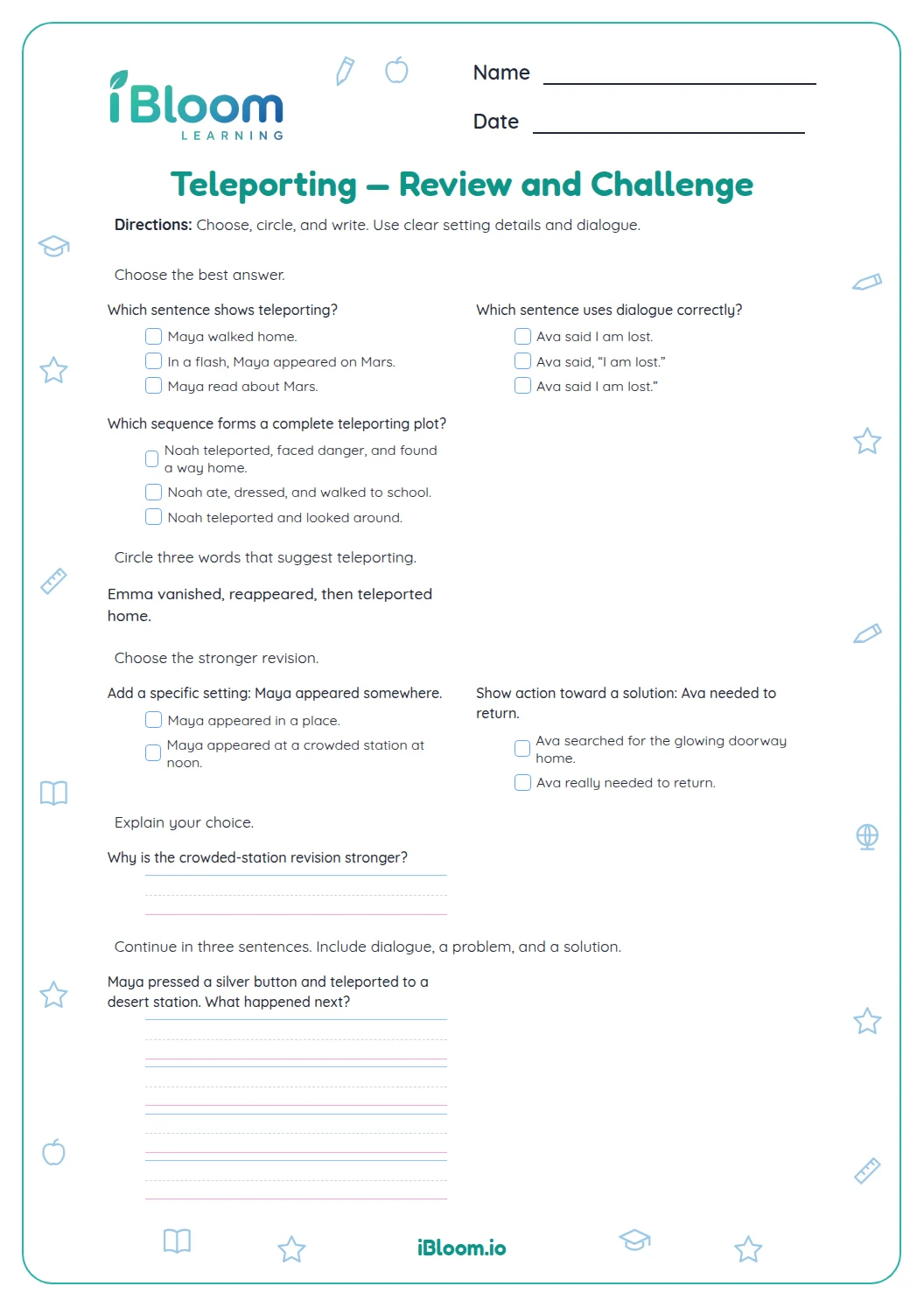
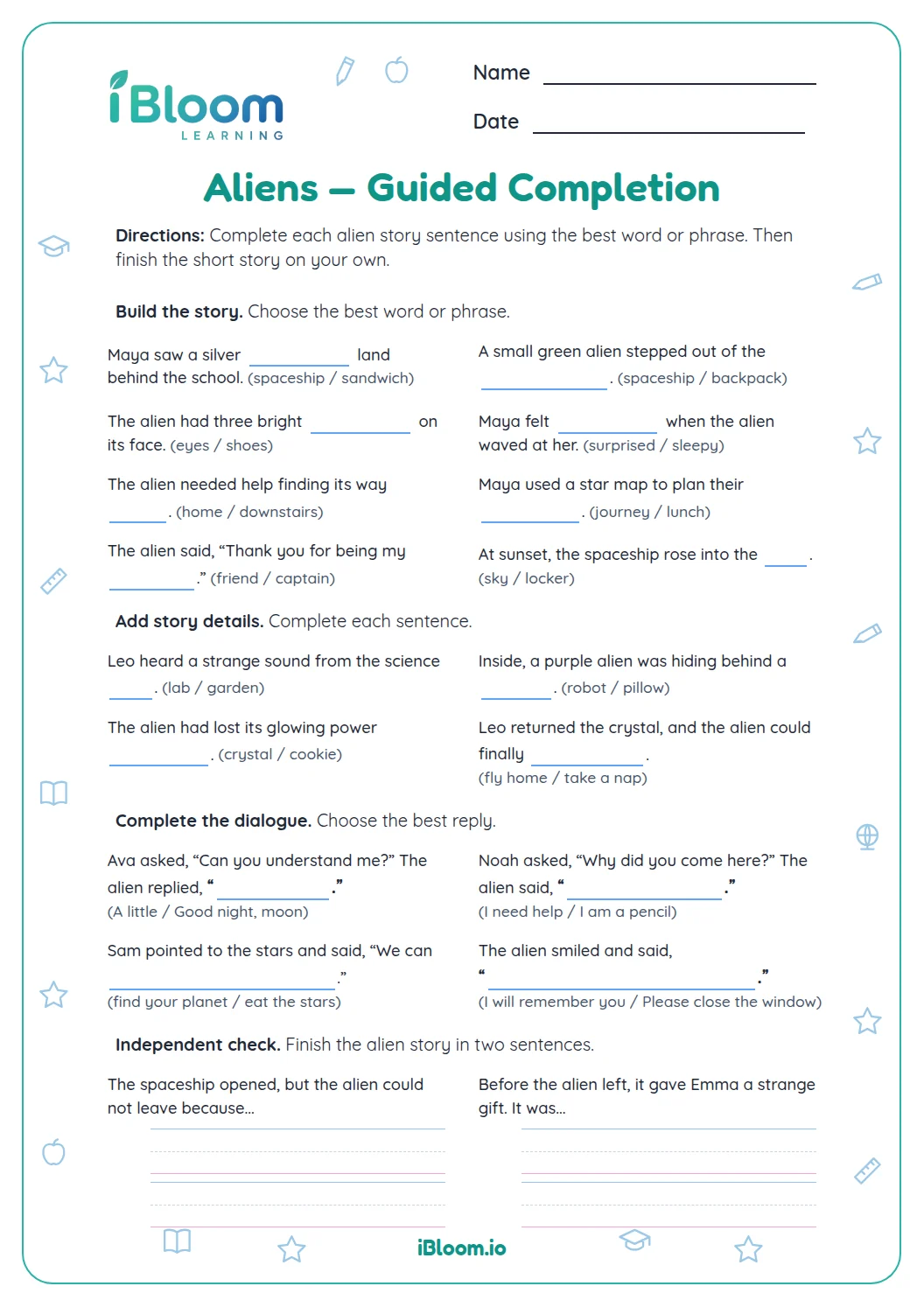
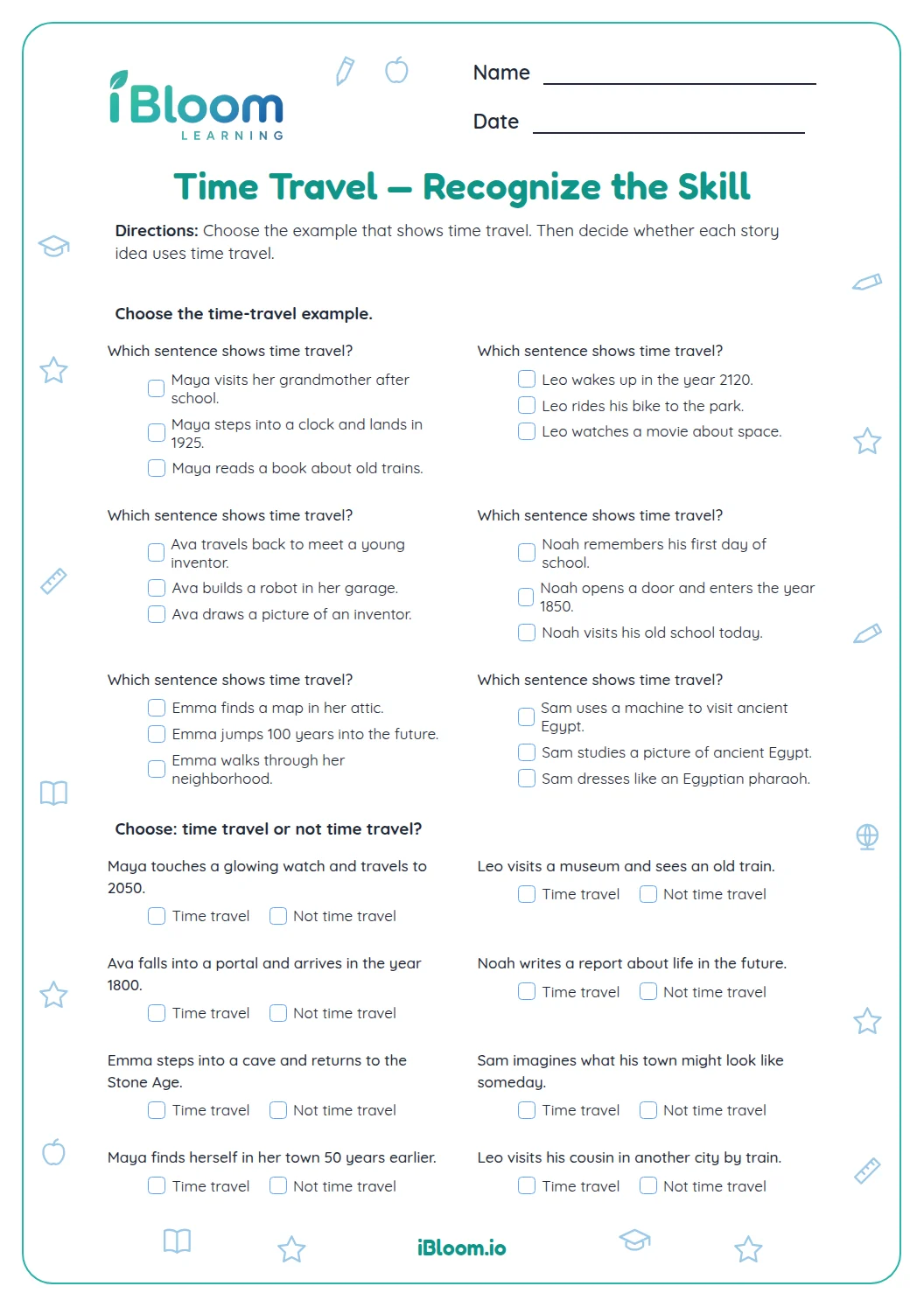
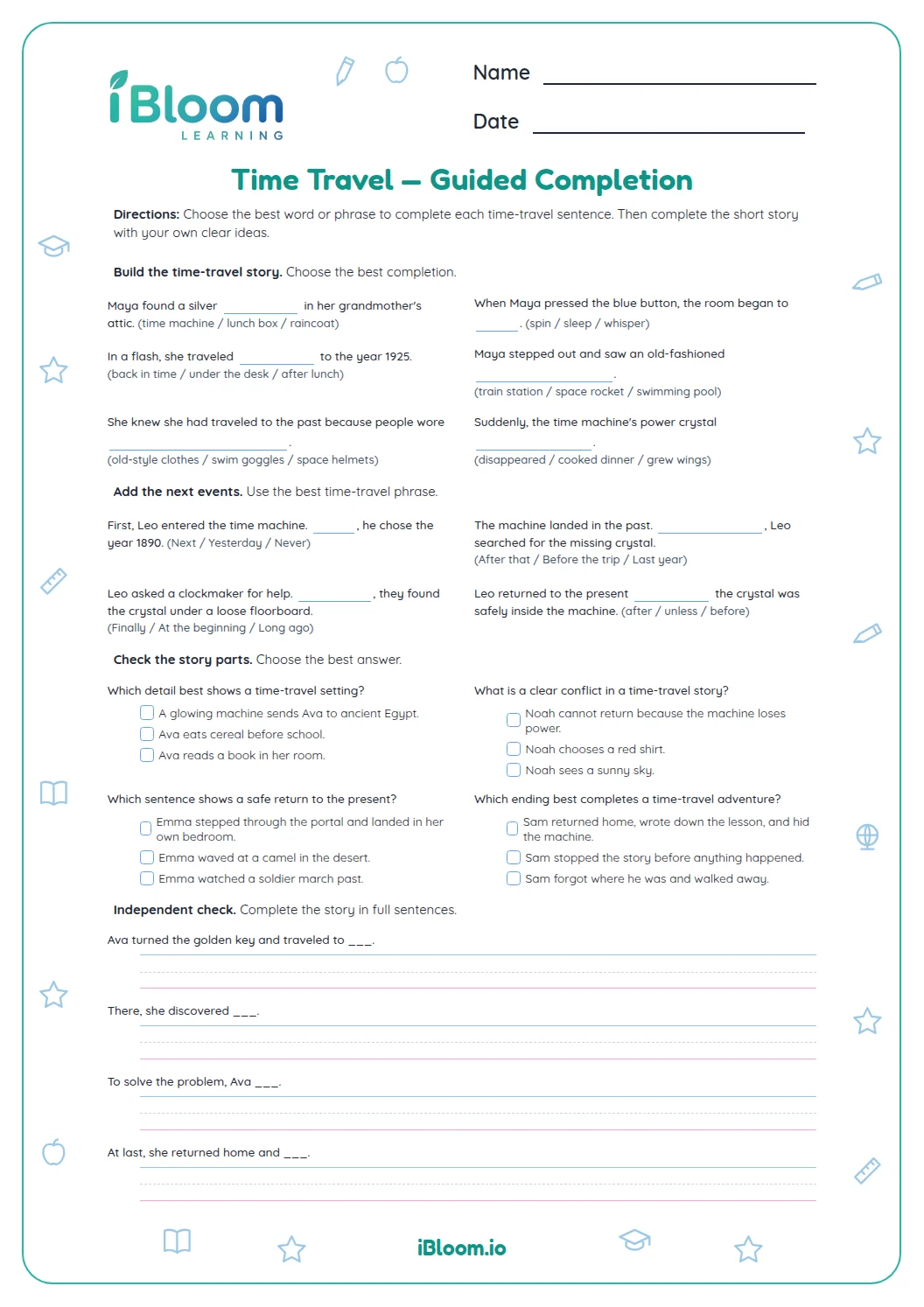
This Grade 4 worksheet turns a teleporting idea into a short narrative. Students plan a character’s arrival, choose details and transitions, add an obstacle, then write an opening and ending. These tasks practice event sequence, description, and closure in CCSS W.4.3.
Aligned to W.4.3
What makes a narrative sequence easy to follow?
Readers need to know who is in the story, where the character is, and what happens next. Transitions such as “A moment later” connect events, while specific details help readers picture the new place.
- 1A character steps through a glowing door.
- 2A windy lighthouse island gives the arrival a clear setting.
How do dialogue and sensory details develop a scene?
Sensory details help readers imagine the new place. An obstacle such as a spinning compass can make the return harder and give the character a problem to solve.
How can an ending follow naturally?
Begin with the character and the instant the location changes. In the final part, add a return detail and a lesson the character can carry forward. The key gives one possible version, not the only one.
How to use this worksheet
- 1Choose a character, starting place, and surprising arrival.
- 2Add a sensory detail that helps readers picture the scene.
- 3Use an obstacle to give the character a problem.
- 4Write an opening that shows the teleport.
- 5Add a return detail and a lesson that fit the character’s adventure.
Common mistakes and quick fixes
The mistake
Listing events without connecting them
The fix
Add a time or cause transition such as “A moment later” or “Because of that.”
The mistake
Using a vague word like “nice” for a setting
The fix
Choose a detail readers can picture or sense, such as cold mist or a crowded station.
The mistake
Ending before the problem is resolved
The fix
Show the character’s action to address the complication, then finish the experience.
Common Core alignment
This worksheet gives students focused practice with a grade-level skill.
Build an imagined event sequence with details and a clear ending.
On this sheet: Build an imagined event sequence with details and a clear ending.
Show the official wordingHide the official wording
Write narratives to develop real or imagined experiences or events using effective technique, descriptive details, and clear event sequences.
What to practice next
Make more practice
Further reading
Questions parents and teachers ask
Does a story have to use the key’s setting?
No. The key shows one possible answer, while a student can invent another setting that fits the teleporting idea. A clear opening should identify the character and show the sudden change of place. Students may change the destination as long as the new place and sudden arrival are understandable.
What counts as a sensory detail?
A sensory detail tells what a character sees, hears, feels, smells, or tastes. “Cold mist stung Eli” gives a touch detail, while a train whistle gives a sound detail. These clues help readers picture the arrival. A useful detail is specific enough to help a reader imagine the character’s experience.
Why include an obstacle in the scene?
A problem gives the character something to respond to and helps the events connect. A spinning compass, for example, could make it harder to find the way back. The ending can show how the character solves or learns from it.
How long should the student’s story be?
The worksheet asks for a short opening and a short ending, rather than a full-length story. Each response should make its purpose clear: introduce the teleporting moment, or close the adventure and show what the character learned. A few focused sentences are enough when each one advances the scene or shows the character’s response.
What should a student check while revising?
Check that the location change is clear, details help the reader imagine the place, and the ending feels connected to the events. Dialogue can show a character’s reaction, and transitions can help readers follow what happens next. Reading the scene aloud can help students notice a missing transition or an ending that feels abrupt.