



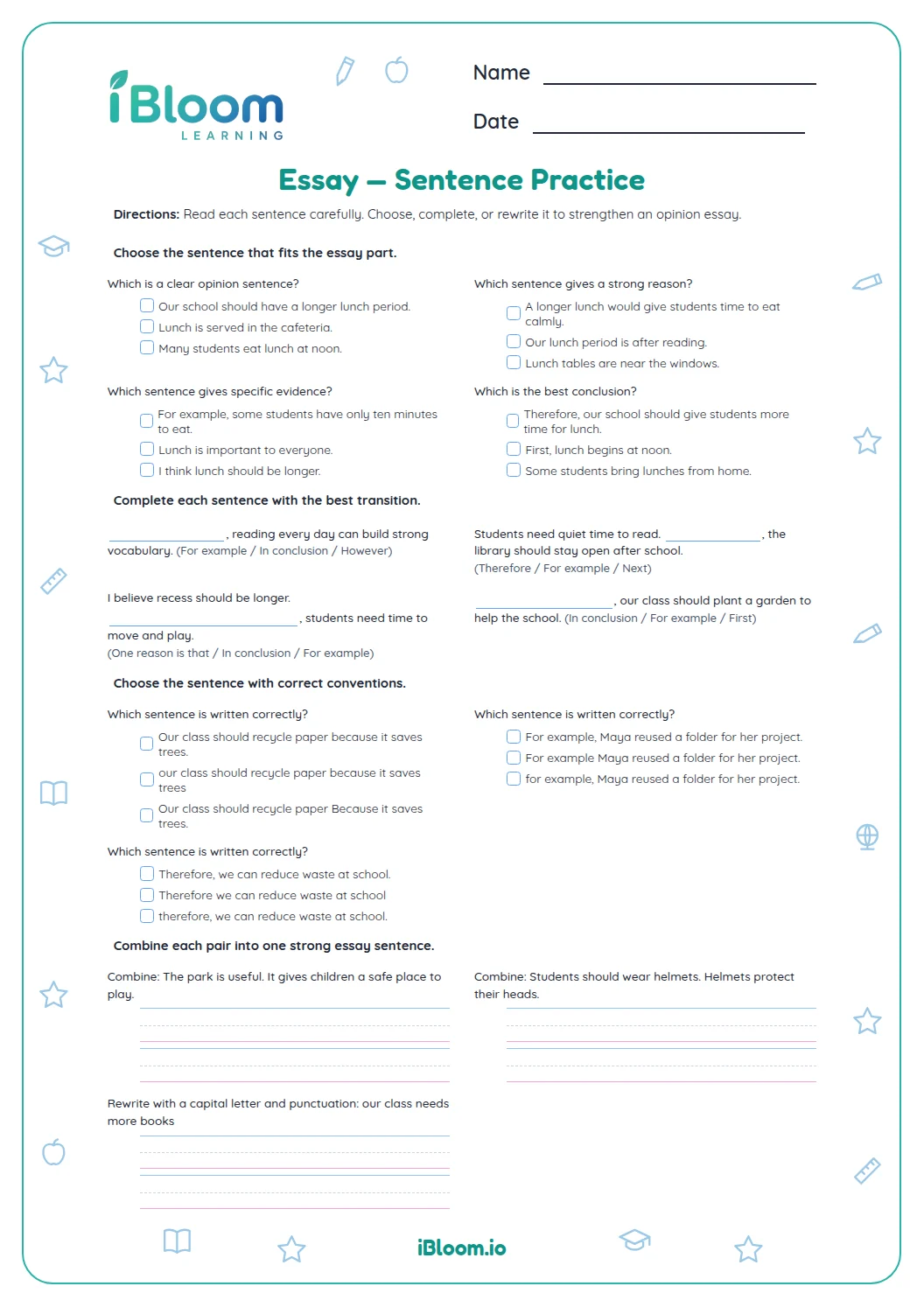

About this worksheet
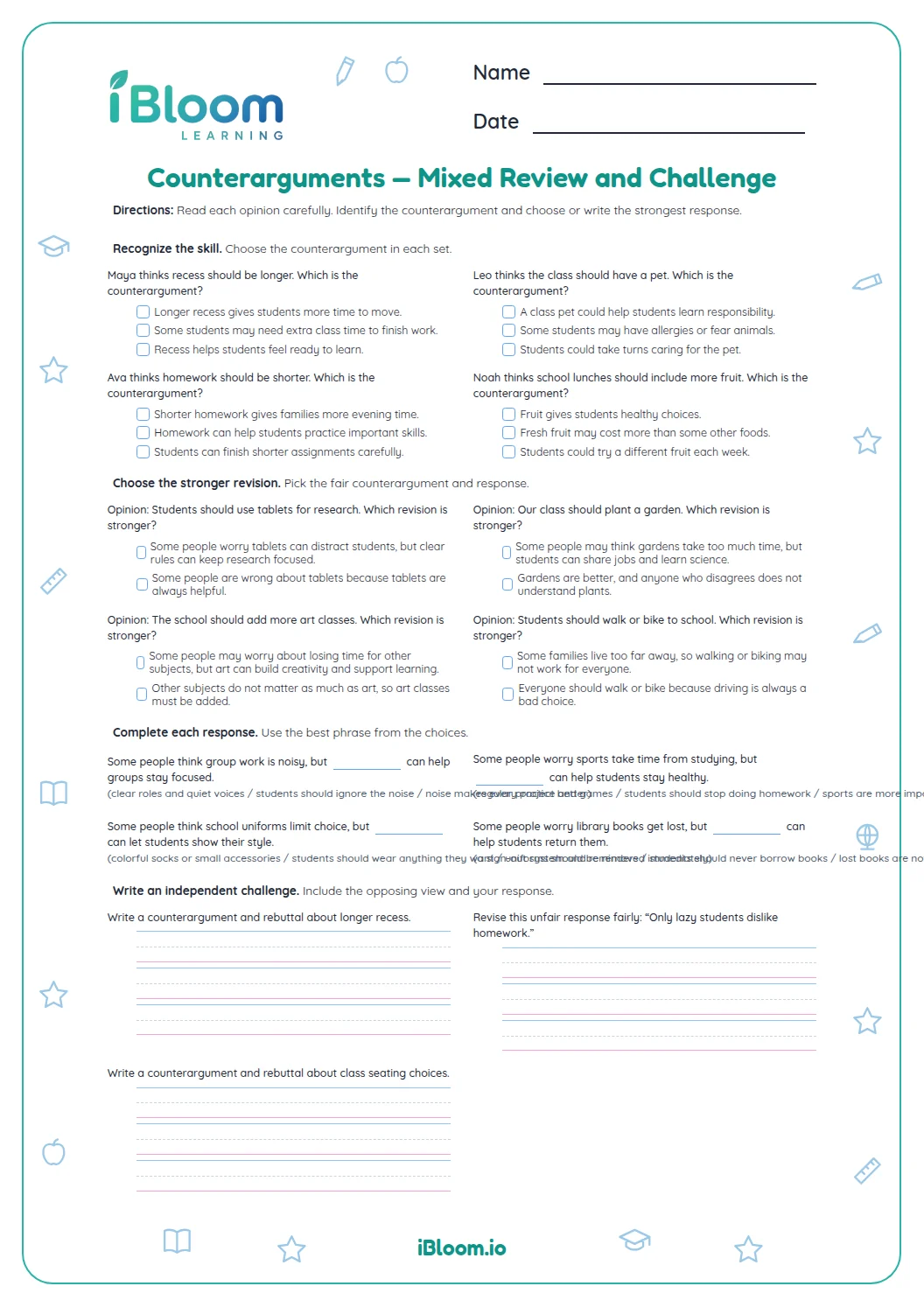
Students move from identifying counterarguments to completing fair responses and writing both sides of a guided example.
Aligned to W.4.1
What is a counterargument?
A counterargument is a different viewpoint or concern about a claim. A writer shows they understand that concern, then responds with a reason, fact, or practical solution.
For example, someone may worry that a class garden takes too much time. A response could explain how short care turns make the plan manageable. The response should address the actual concern.
How does the guided practice work?
The first questions distinguish a counterargument from a supporting reason. Later prompts ask students to complete responses, propose solutions, and write a fair concern of their own. The final item combines both moves.
- Part A: recognize another viewpoint
- Part B: complete replies that answer concerns
- Part C: write a concern and a relevant response
How to use this worksheet
- 1Read both viewpoints before deciding which sentence is the concern.
- 2Check that each written response answers the exact concern named in the prompt.
Common mistakes and quick fixes
The mistake
Repeating the opinion instead of responding to the concern.
The fix
Name the concern first, then give a reason or solution that addresses it.
The mistake
Making the opposing view sound silly.
The fix
State a reasonable concern that a real reader might have.
Common Core alignment
This page gives focused practice with the skill named in its title.
Write opinion pieces supported by reasons and information.
On this sheet: Students practice considering another viewpoint and giving a reasoned response as part of opinion writing.
Show the official wordingHide the official wording
Write opinion pieces on topics or texts, supporting a point of view with reasons and information.
What to practice next
Make more practice
Further reading
Questions parents and teachers ask
Does a counterargument mean the writer changes their opinion?
No. It presents a different viewpoint fairly, then explains why the writer still supports the claim or how a concern can be addressed. A useful check is to reread the concern and ask whether the proposed response directly addresses it.
What makes a response effective?
It answers the specific concern with a relevant reason, detail, or practical solution. A useful check is to reread the concern and ask whether the proposed response directly addresses it. This gives students a clear way to check their reasoning and make the next practice attempt more accurate.
Is a counterargument the same as a reason supporting an opinion?
No. A supporting reason gives evidence for the writer’s claim. A counterargument presents a different viewpoint or concern. A complete opinion piece can recognize that concern and then answer it with a relevant reason, detail, or solution. A useful check is to reread the concern and ask whether the proposed response directly addresses it.
How can a student make a response fair?
First state a concern that someone could reasonably have. Then answer that specific concern instead of changing the topic. For example, if time is the concern, suggest a short schedule or another plan that addresses time. A useful check is to reread the concern and ask whether the proposed response directly addresses it.
Does every counterargument need to begin with “Some people think”?
No. That phrase is one useful way to introduce another viewpoint, but writers can use other clear wording. They can say “A reader might worry…” or name the concern directly before explaining a response. A useful check is to reread the concern and ask whether the proposed response directly addresses it.