
About this worksheet
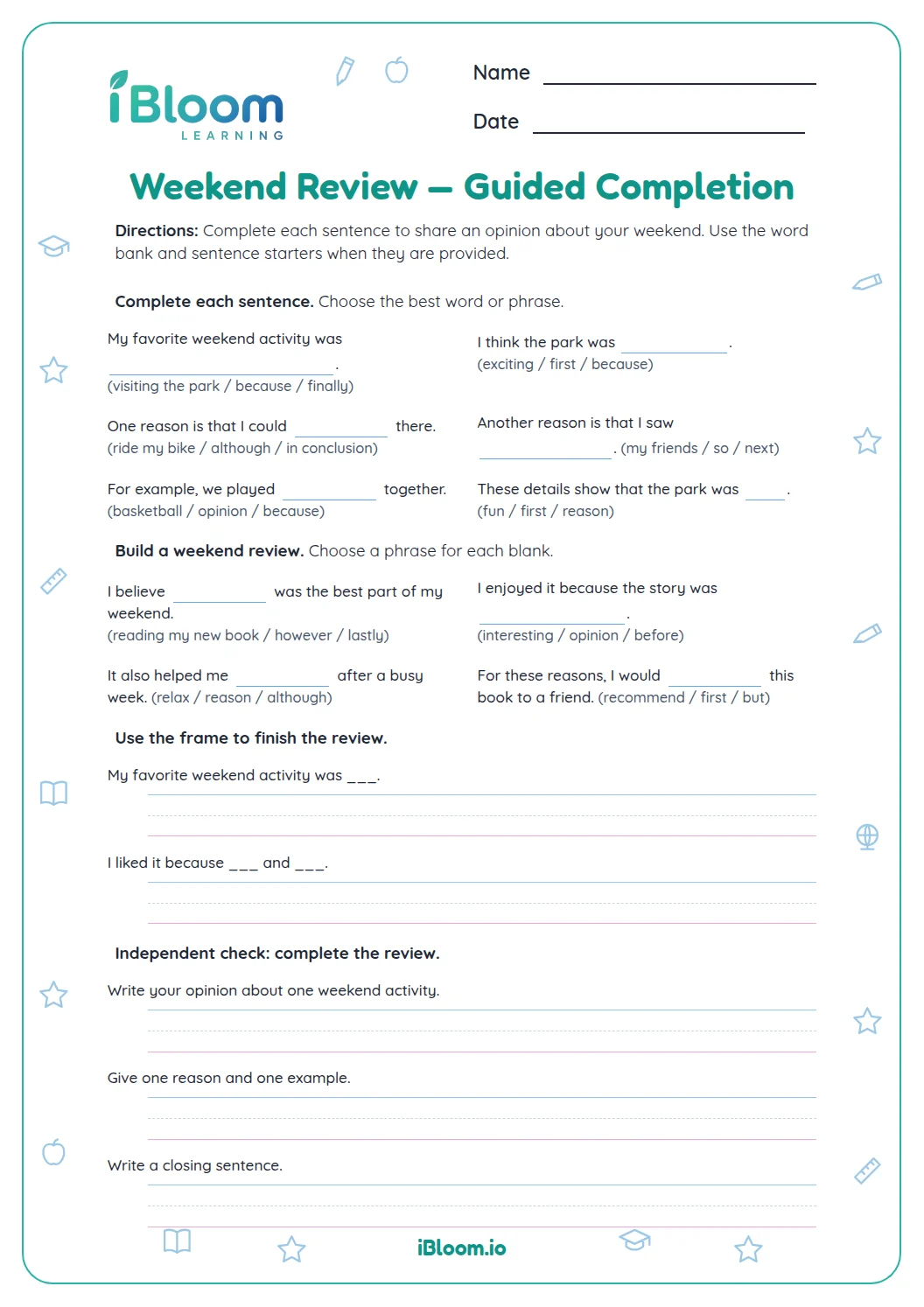
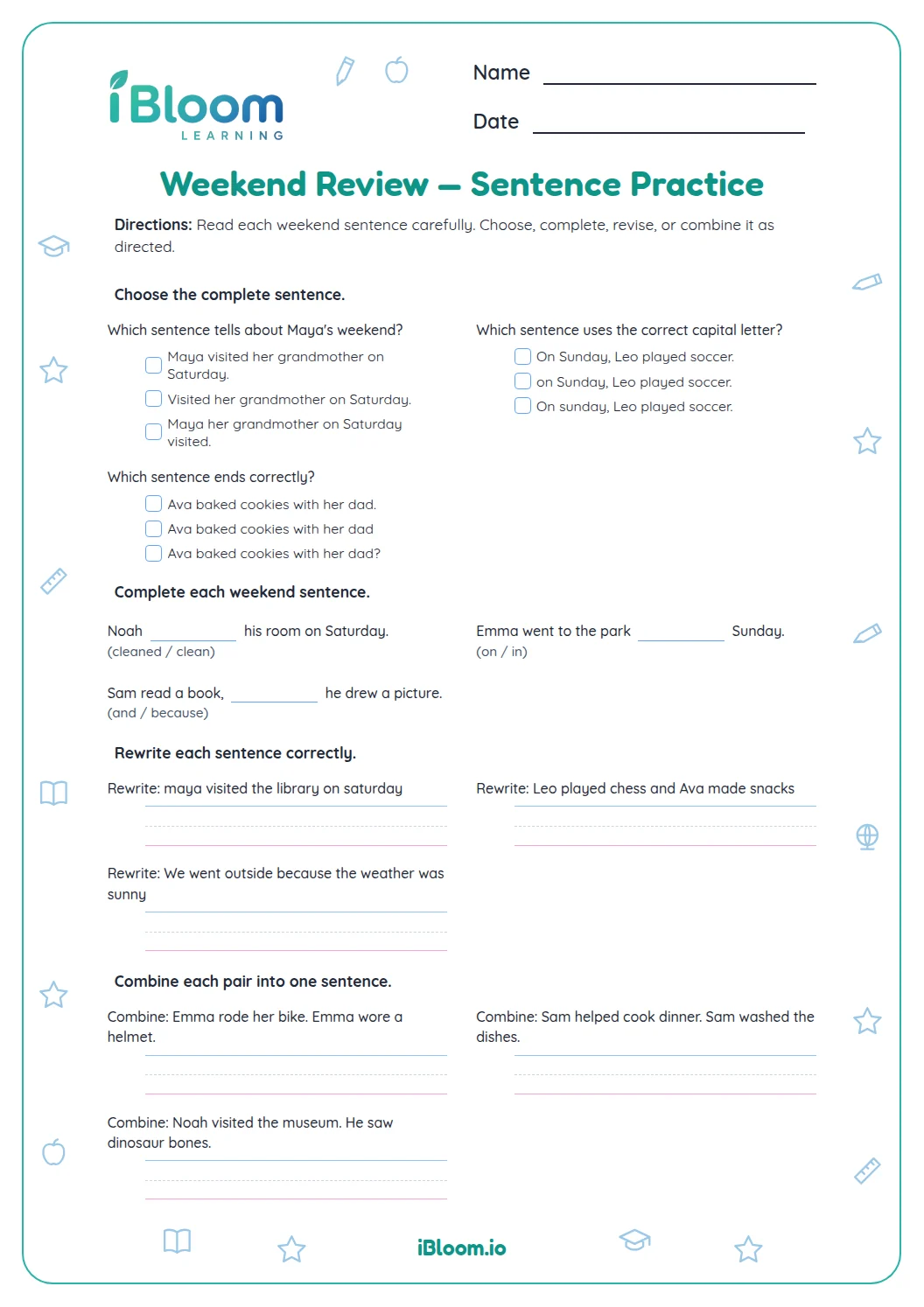
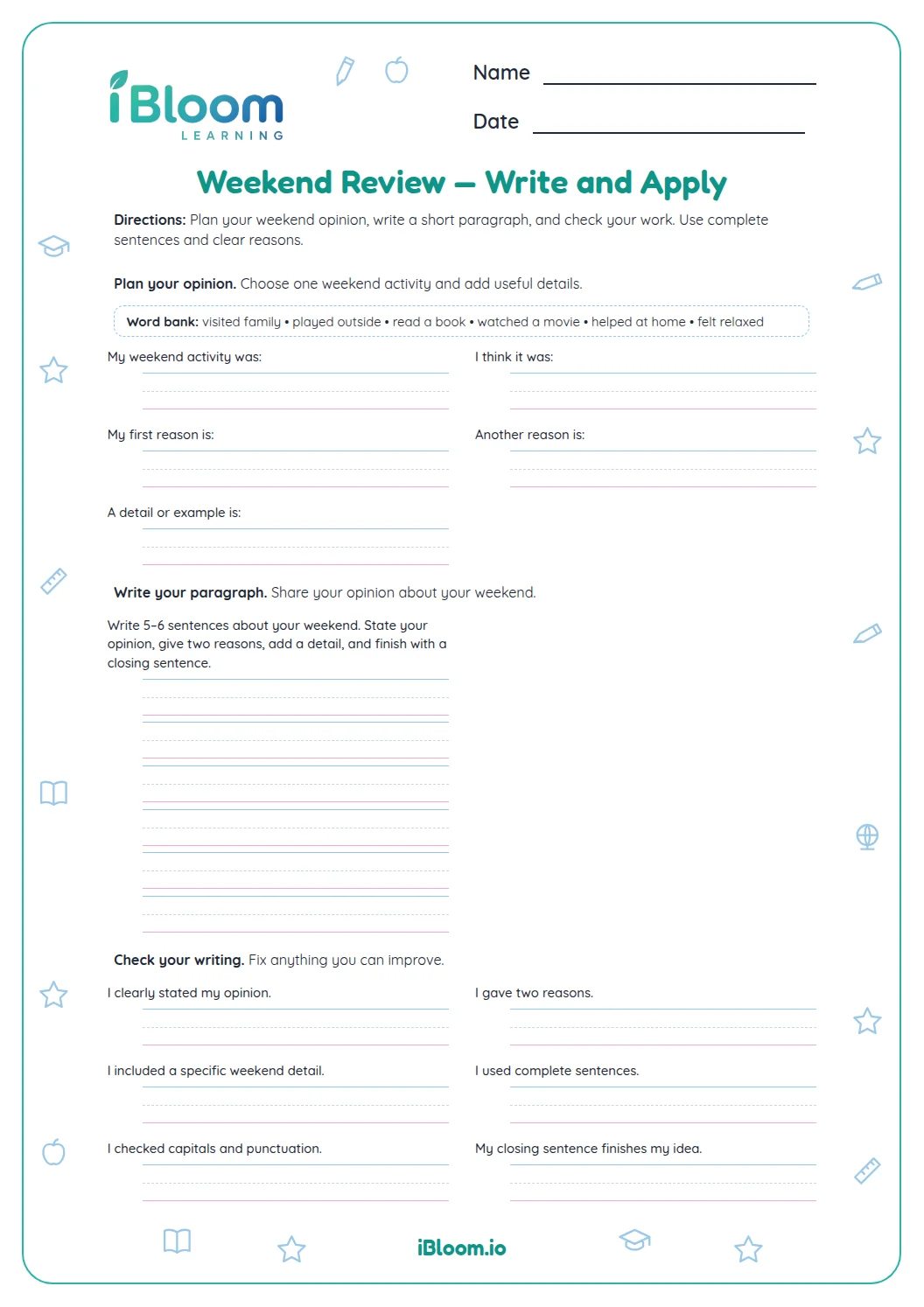
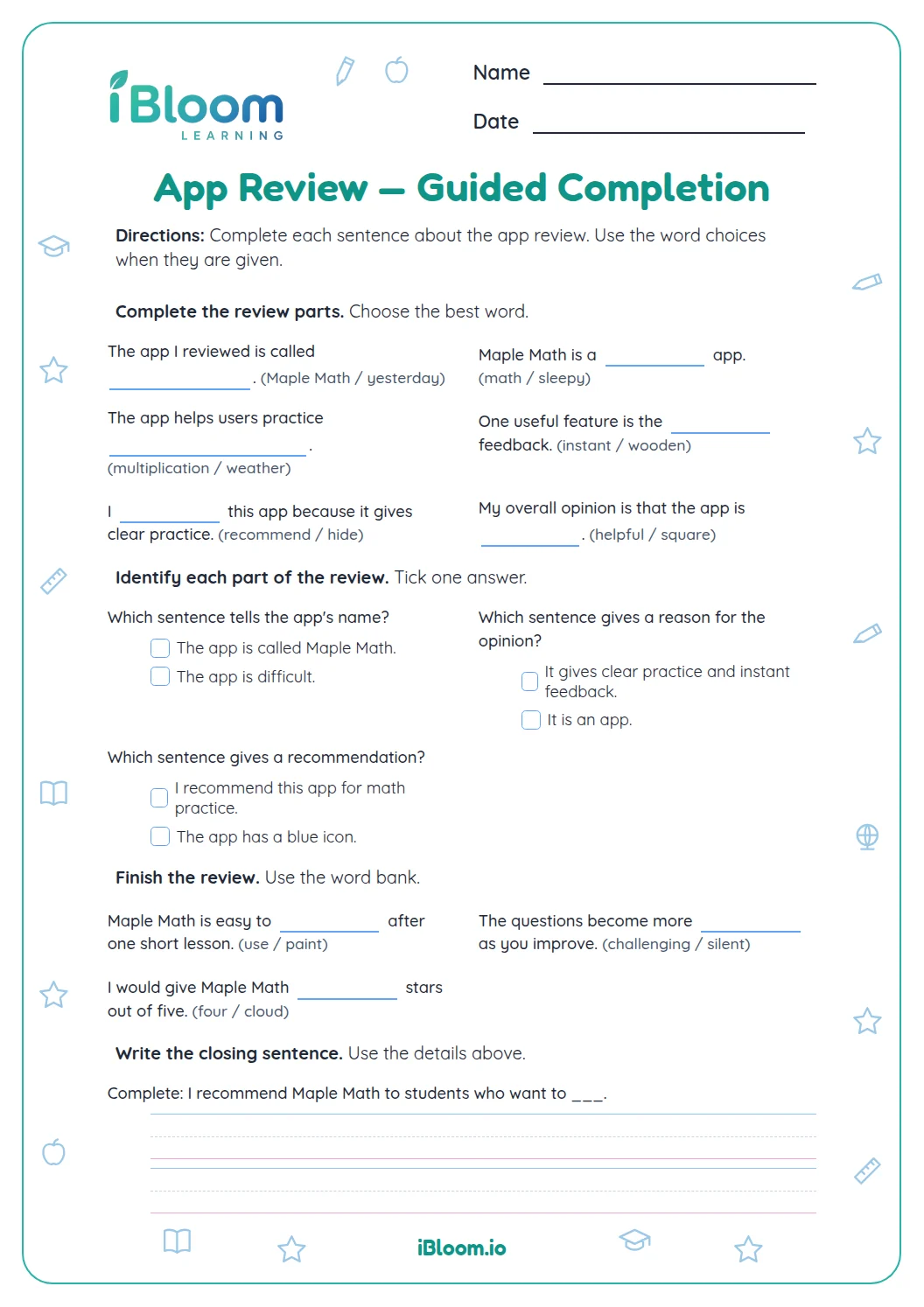
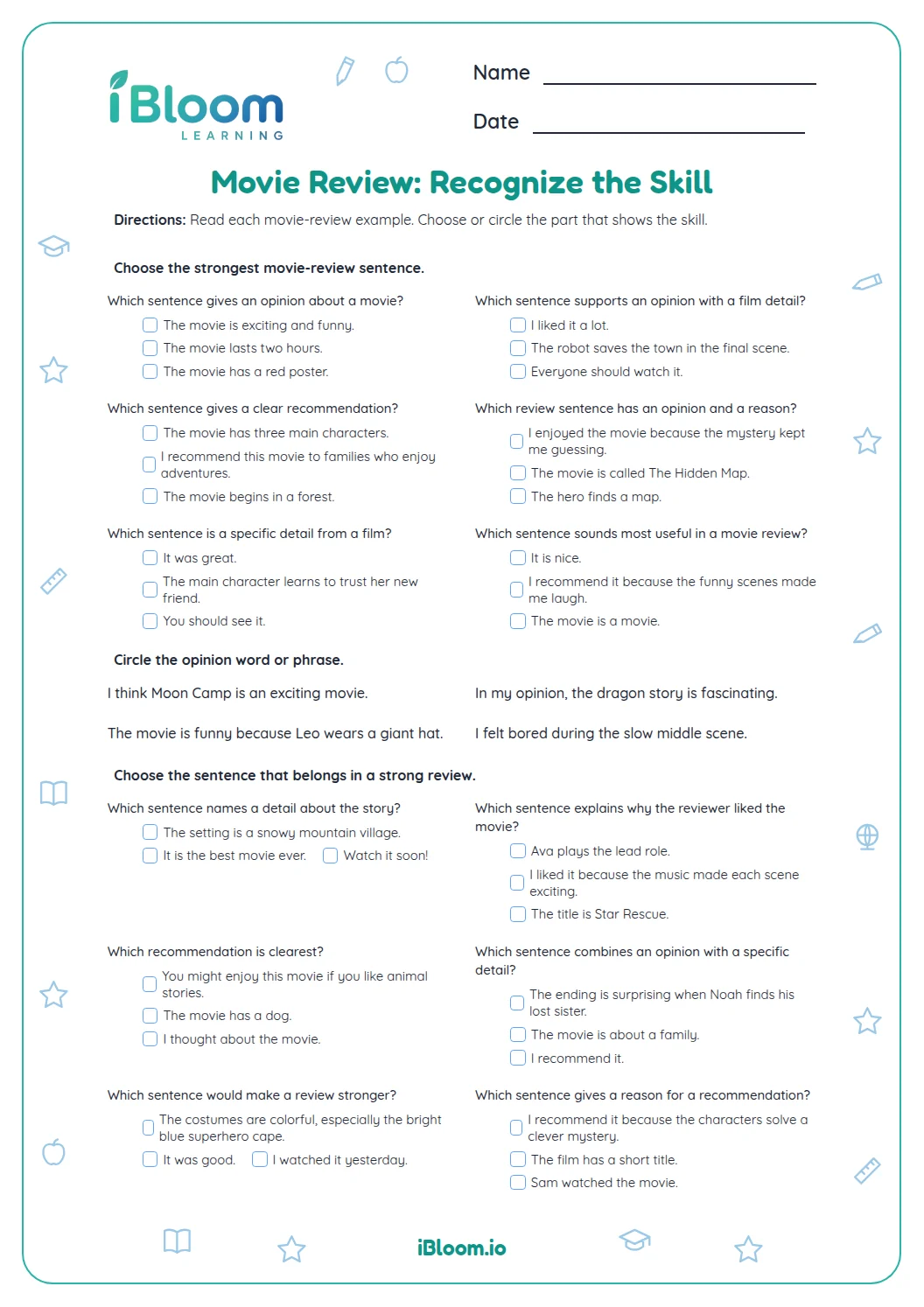
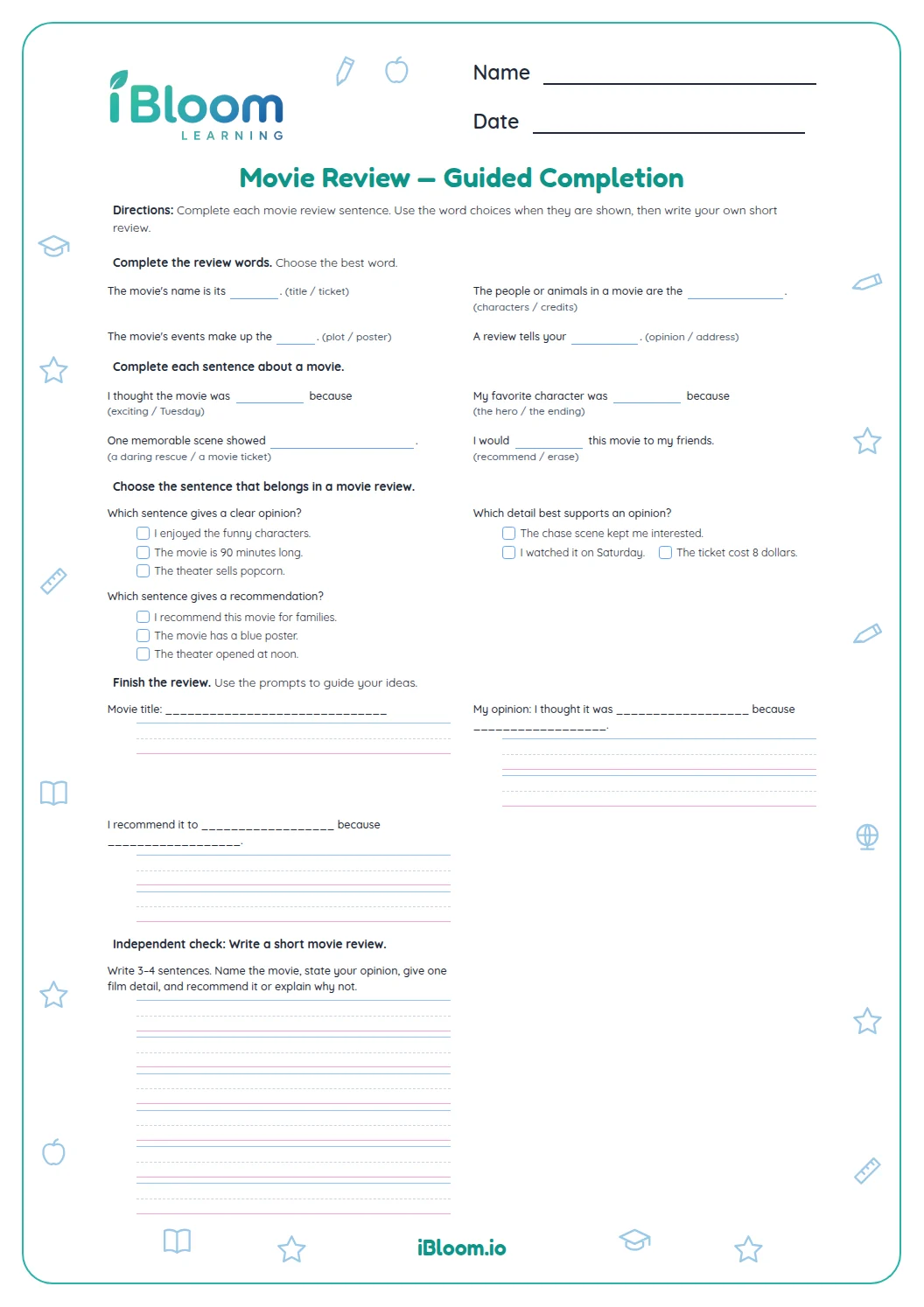
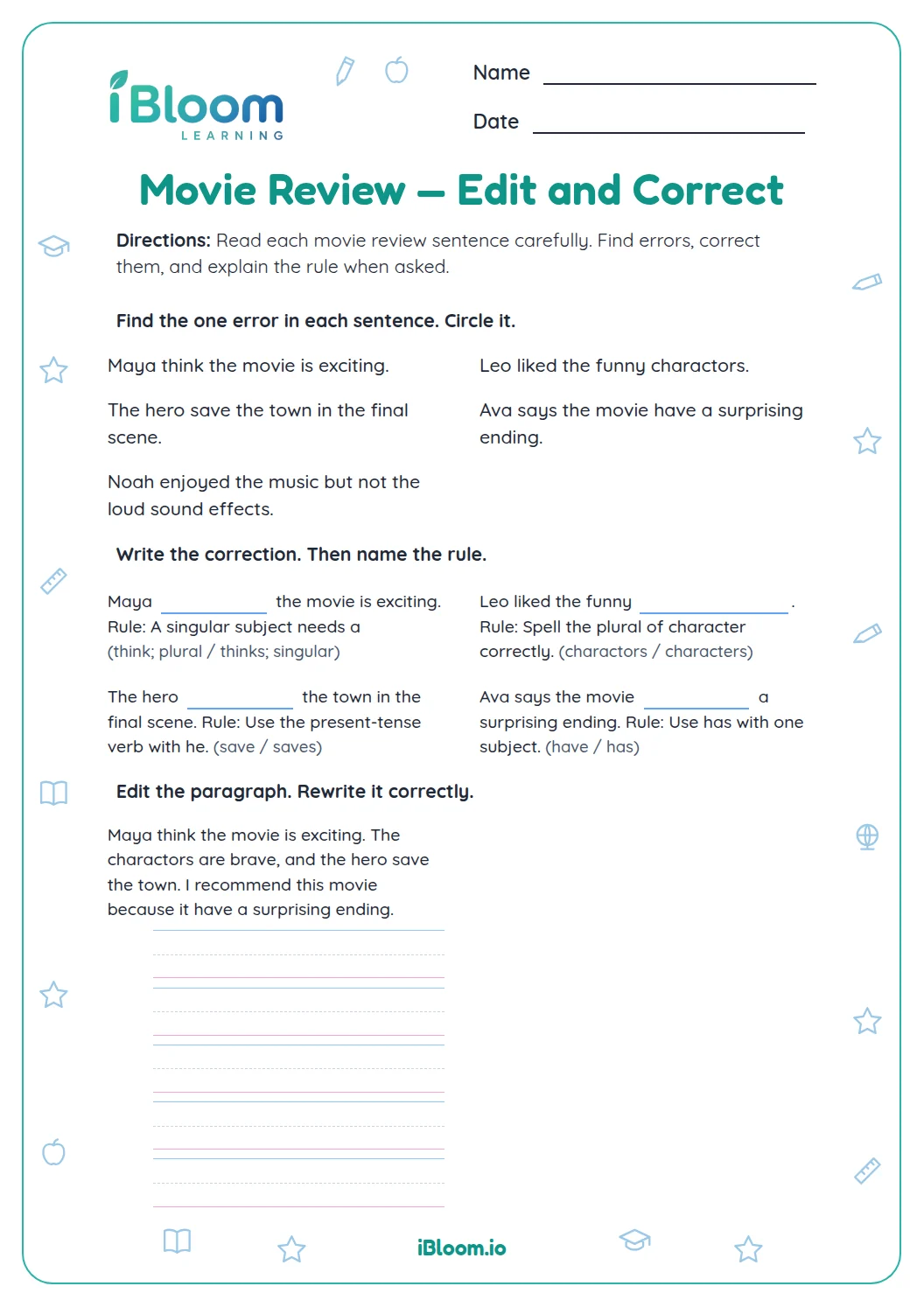
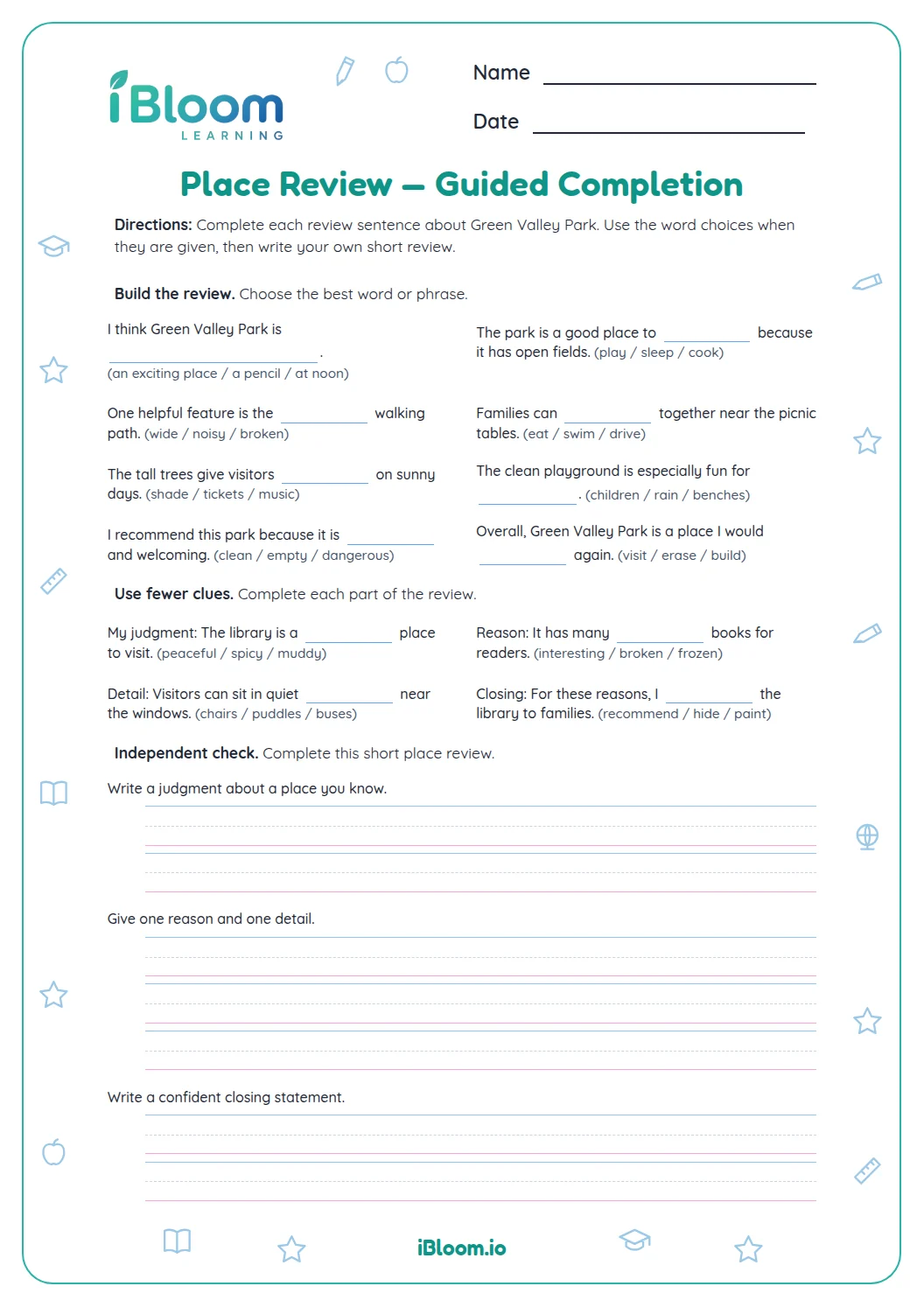
This Grade 4 weekend review worksheet asks students to recognize opinions and the parts that support them. They distinguish opinion statements from facts, classify short sentences, and select reasons that explain a stated point of view. The answer key shows the intended choice or sample reason for all 14 questions. The page practices CCSS W.4.1.
Aligned to W.4.1
How can you tell an opinion from a fact?
An opinion expresses a point of view that people may disagree about. A fact can be checked. In question 1, “Saturday is the best day” expresses a judgment; a statement about the number of days in a week is verifiable.
- 1Opinion: Saturday is the best day.
- 2Fact: A week has seven days.
How can a sentence show a viewpoint or a fact?
Questions 7–10 ask students to classify short statements. “I think Saturday is peaceful” expresses a viewpoint; “The library has four tables” can be checked.
What makes a reason support an opinion?
A supporting reason explains why someone holds a point of view. For example, learning new words explains why weekend reading can be valuable. A detail that is merely related to the topic may not explain the opinion.
- 1Opinion: Weekend reading is valuable.
- 2Reason: It teaches new words.
How to answer the review
- 1Read the whole sentence before choosing an answer.
- 2Ask whether a statement can be checked or expresses a viewpoint.
- 3For questions 7–10, classify each sentence as an opinion or fact.
- 4For the final questions, choose a reason that explains the stated opinion.
- 5Check each response with the separate answer key.
Common mistakes and quick fixes
The mistake
Choosing a fact because it mentions the same topic.
The fix
Check whether the sentence can be verified or gives a viewpoint.
The mistake
Circling a topic word instead of the signal.
The fix
Look for words such as think, believes, feels, or in my opinion.
The mistake
Choosing a detail that does not explain the opinion.
The fix
Ask how the reason supports the point of view.
Common Core alignment
Students identify opinions, distinguish them from facts, and recognize reasons that support a point of view.
Recognize opinions and reasons that support a point of view.
On this sheet: Students distinguish opinions from facts and choose reasons that support stated opinions.
Show the official wordingHide the official wording
Write opinion pieces on topics or texts, supporting a point of view with reasons and information.
What to practice next
Make more practice
Further reading
Questions parents and teachers ask
How is an opinion different from a fact?
A fact can be checked, while an opinion expresses a point of view. In question 1, “Saturday is the best day” is a judgment; the number of days in a week is verifiable. The first six questions ask students to name an opinion or a fact.
How do the middle questions use opinion signals?
An opinion signal is a word or phrase that shows a writer’s viewpoint, such as “I think,” “believes,” or “feels.” The four middle questions use sample sentences with viewpoints and facts; students classify each whole sentence rather than copying its signal word.
What makes a reason strong?
A reason explains why a person holds an opinion. “It teaches new words” supports the idea that weekend reading is valuable because it gives a benefit of reading. The last four questions ask students to provide a reason that fits the stated opinion.
What does the answer key include?
The separate key gives an intended word or reason for each of the 14 questions. Students can reread a missed item and explain why their response fits. A different reason can also make sense if it clearly supports the opinion.
How long does the review take?
Plan about 20 minutes for this two-page review. Students complete six opinion-or-fact items, classify four short sentences, and choose four supporting reasons. Reviewing why a response fits may add time and helps connect the three skills. The separate key supports a quick check at the end.