




About this worksheet
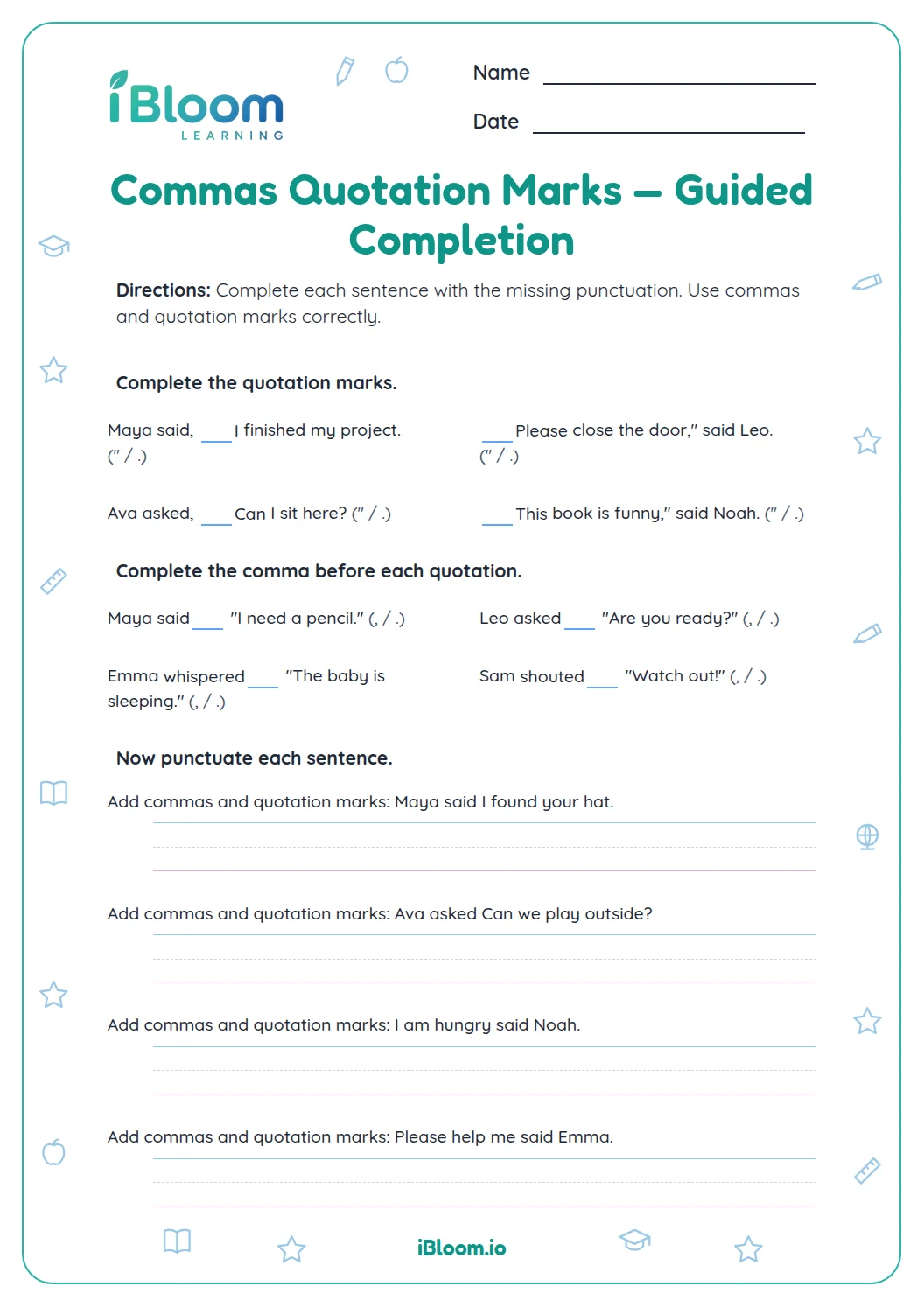
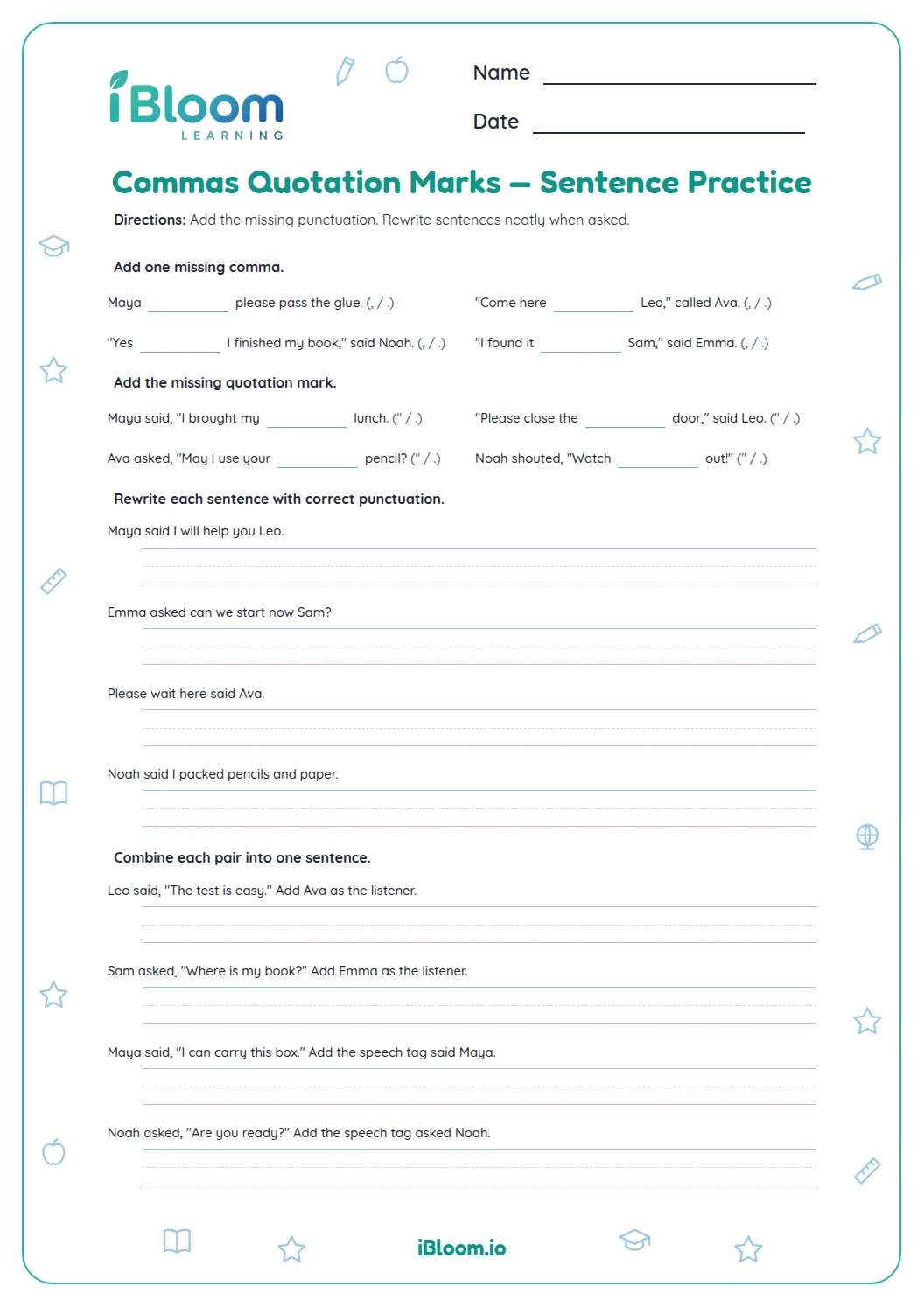
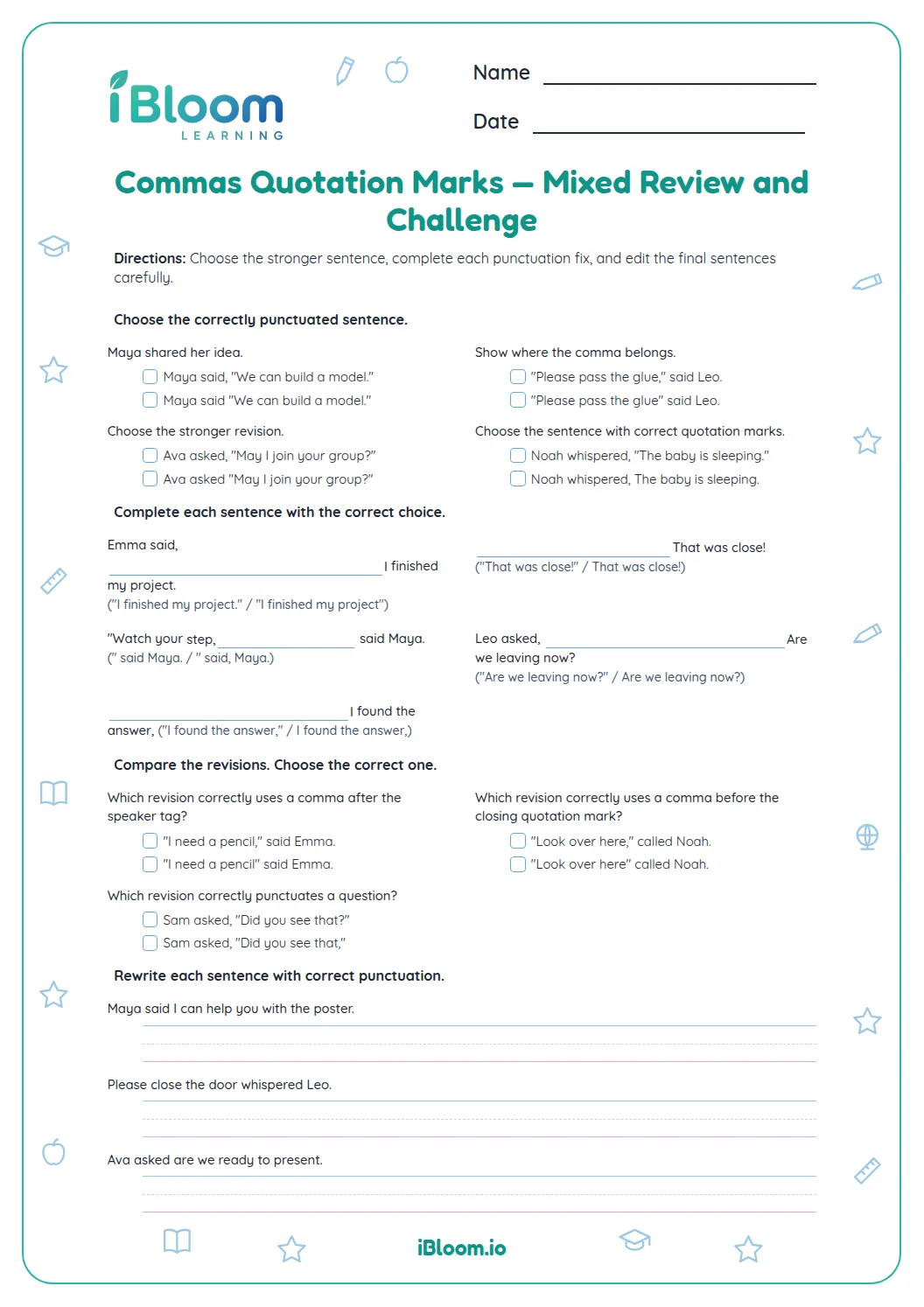
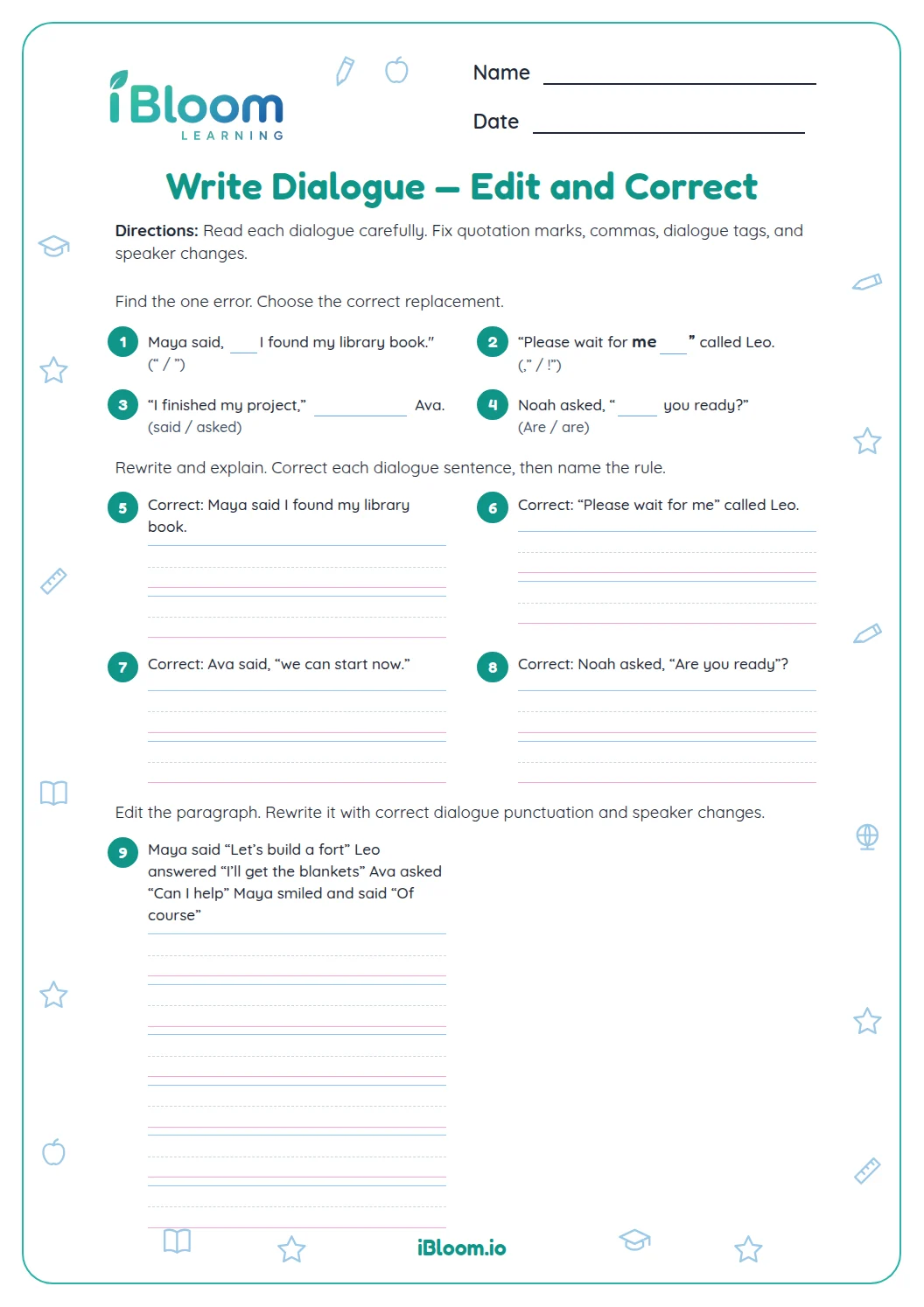
This Grade 4 worksheet gives students fourteen chances to use commas and quotation marks in dialogue, introductory phrases, and a series. Students fill in two dialogue commas, choose lines that fit a speaker’s words, and identify correctly punctuated examples. The answer key marks each response.
Aligned to L.4.2 and L.4.2.b
Where do commas and quotation marks go in dialogue?
Quotation marks go around the exact words a character says. When a speaker tag follows a statement, place a comma inside the closing quotation mark: “I can help,” said Noor. A question mark or exclamation point that belongs to the spoken sentence also goes inside.
Questions 1–3 and 7–12 ask students to notice where those marks belong. Read each sentence aloud to hear whether it is a question, an exclamation, or a statement.
When does an opening phrase need a comma?
A comma often follows an introductory word or phrase that comes before the main sentence: “After lunch, we planted seeds.” Commas also separate three or more items in a series. The comma helps readers see where one part ends and the next begins.
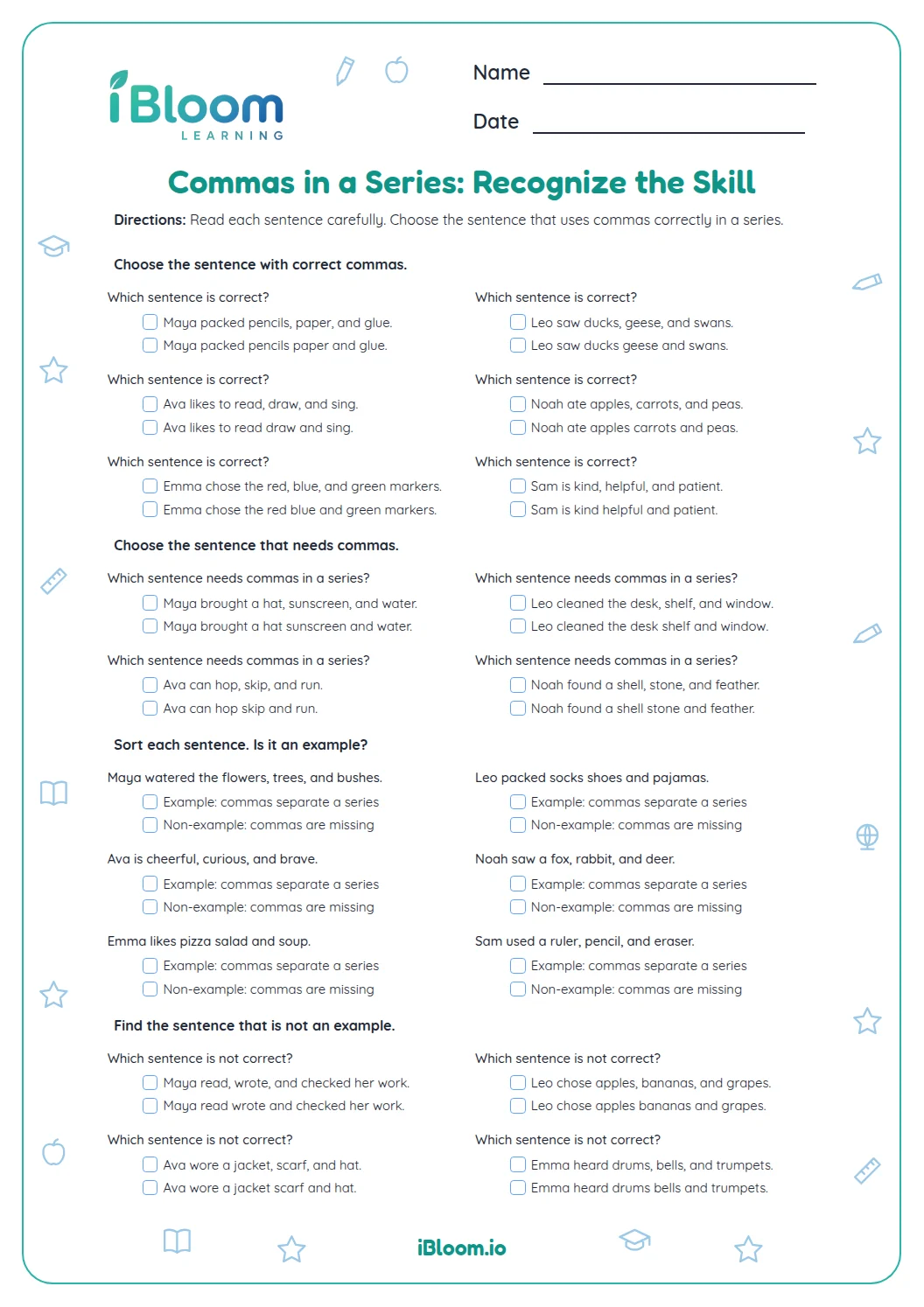
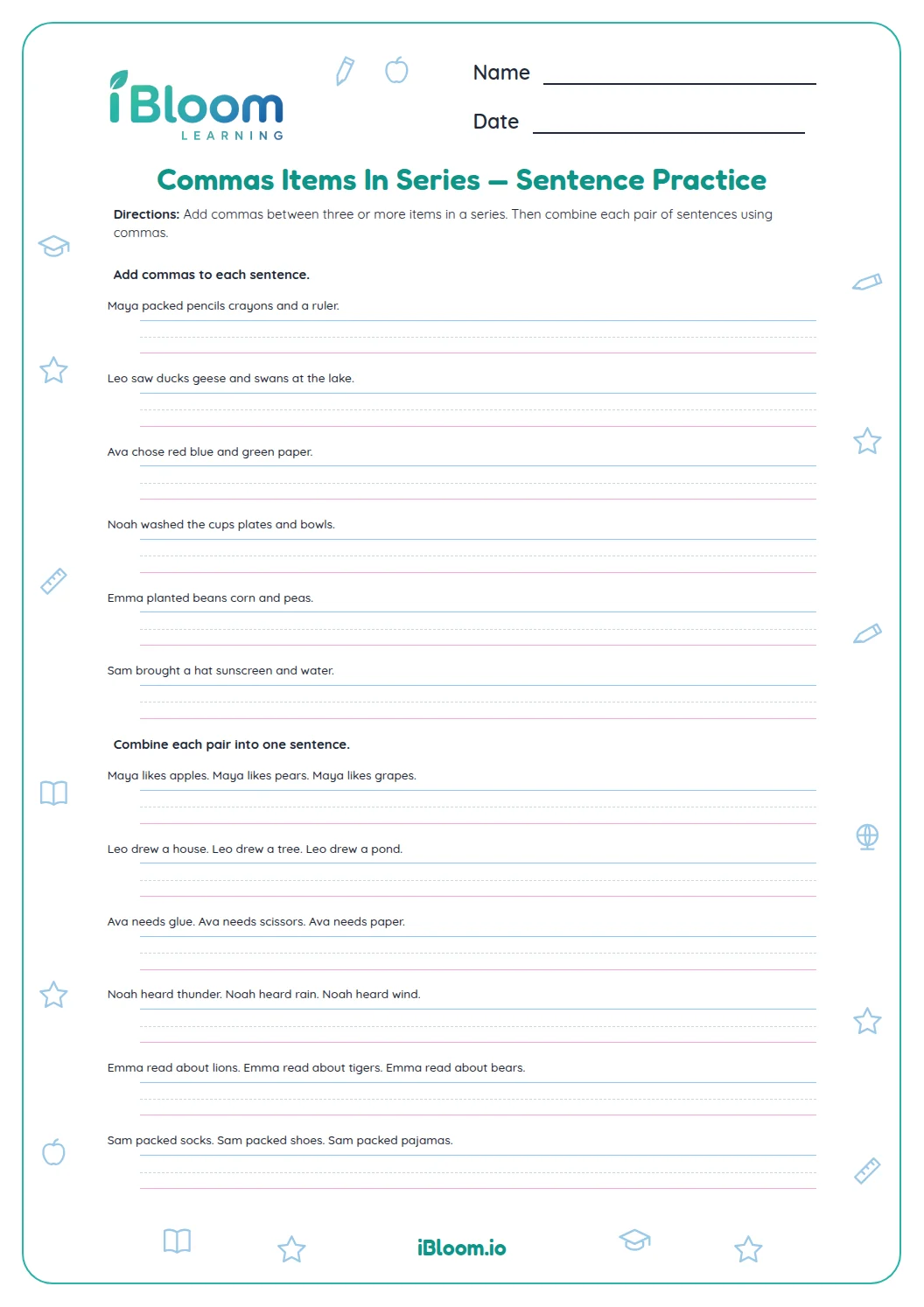
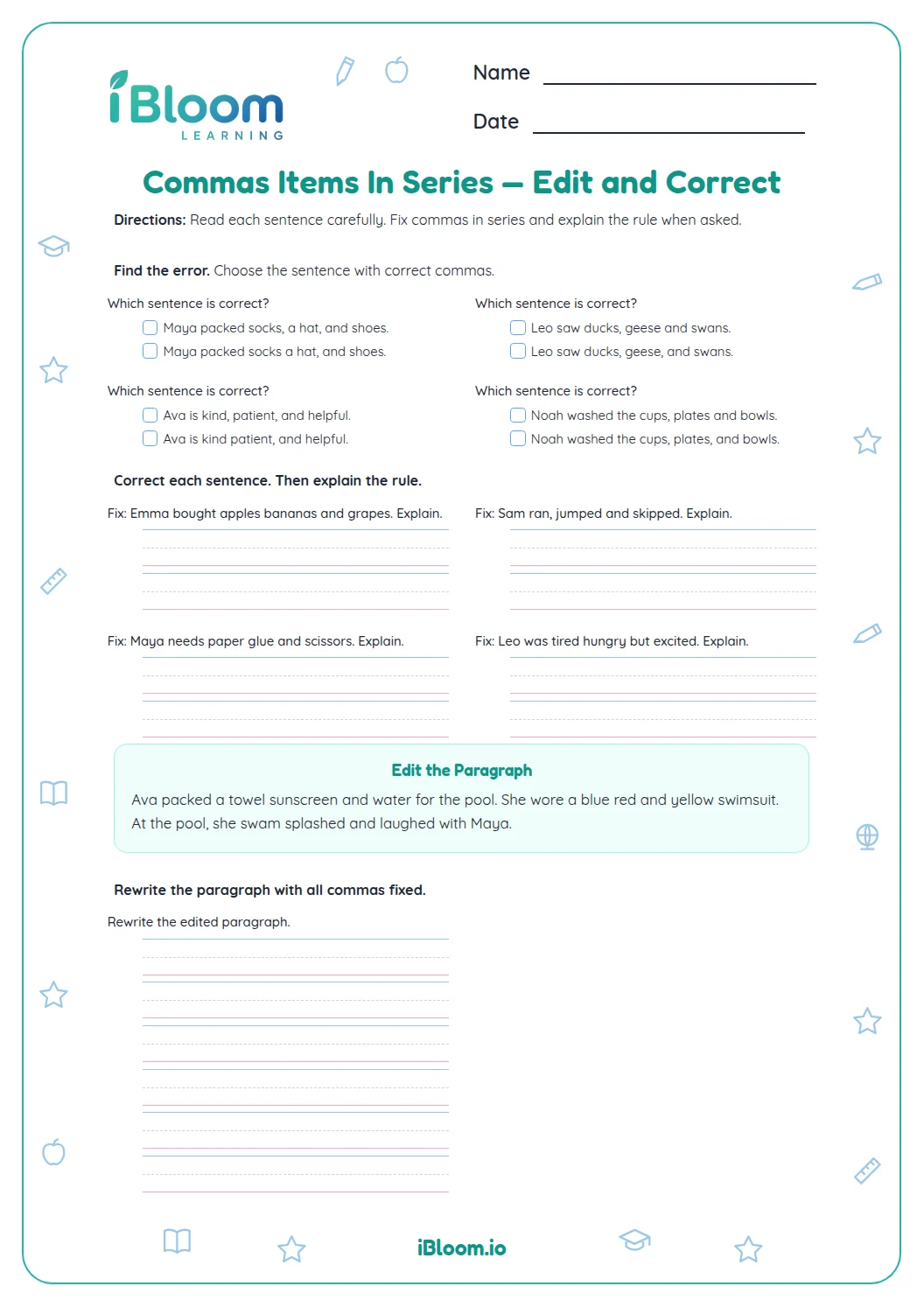
How can I check commas in a list?
Find each item in the series and separate the items with commas. Read the sentence once more to make sure the commas do not break apart a phrase that belongs together.
How to use this worksheet
- 1Read the sentence for meaning before editing it.
- 2Enclose exact spoken words in quotation marks.
- 3Place commas inside quotes when a speaker tag follows a statement.
- 4Check introductory phrases and list items for commas.
Common mistakes and quick fixes
The mistake
Putting the comma after the closing quotation mark.
The fix
Place the comma inside the quote before a speaker tag.
The mistake
Putting a spoken question mark outside the quote.
The fix
Keep the question mark inside when it belongs to the spoken words.
The mistake
Leaving items in a series unseparated.
The fix
Use commas to separate the list items.
Common Core alignment
The questions apply Grade 4 conventions for commas and quotation marks in sentences and dialogue.
Use grade-level capitalization, punctuation, and spelling conventions.
On this sheet: Students apply commas in dialogue, introductory phrases, and a series, and use quotation marks around spoken words.
Show the official wordingHide the official wording
Demonstrate command of the conventions of standard English capitalization, punctuation, and spelling when writing.
Use commas and quotation marks to mark direct speech.
On this sheet: Questions practice quotation marks, punctuation inside the quote, and commas before speaker tags.
Show the official wordingHide the official wording
Use commas and quotation marks to mark direct speech and quotations from a text.
What to practice next
Make more practice
Further reading
Questions parents and teachers ask
What punctuation does this worksheet practice?
The fourteen questions cover quotation marks and commas in direct speech, introductory phrases, and a series. Students fill two missing dialogue commas, then select correctly punctuated sentences. The answer key marks each response. Read examples aloud to hear how punctuation helps distinguish the spoken words from the speaker tag.
Where does the comma go before a speaker tag?
When a statement is followed by a speaker tag, put the comma inside the closing quotation mark: “I can help,” said Noor. The comma separates the spoken words from the tag. Keep the exact spoken words inside the quotation marks.
Where does a question mark go in dialogue?
When the quoted words are a question, put the question mark inside the closing quotation mark: “Are you ready?” asked Leo. The question mark belongs to the spoken words. A speaker tag that follows stays outside the quotation marks. The mark stays with the speaker’s spoken sentence.
When does a sentence need a comma after an opening phrase?
Use a comma after an introductory phrase when it helps separate that opening from the main clause, as in “After lunch, we planted seeds.” Read the sentence to find where the opening ends and the main thought begins. Look for the end of the opening phrase before the main thought.
Can students write different dialogue from the key?
Yes. The key gives one sample. Accept other dialogue when the speaker’s words are enclosed in quotation marks, commas and end punctuation are placed correctly, and the response follows the prompt. The selected-answer questions have one intended answer. Read the spoken words and check the punctuation around them.