


About this worksheet
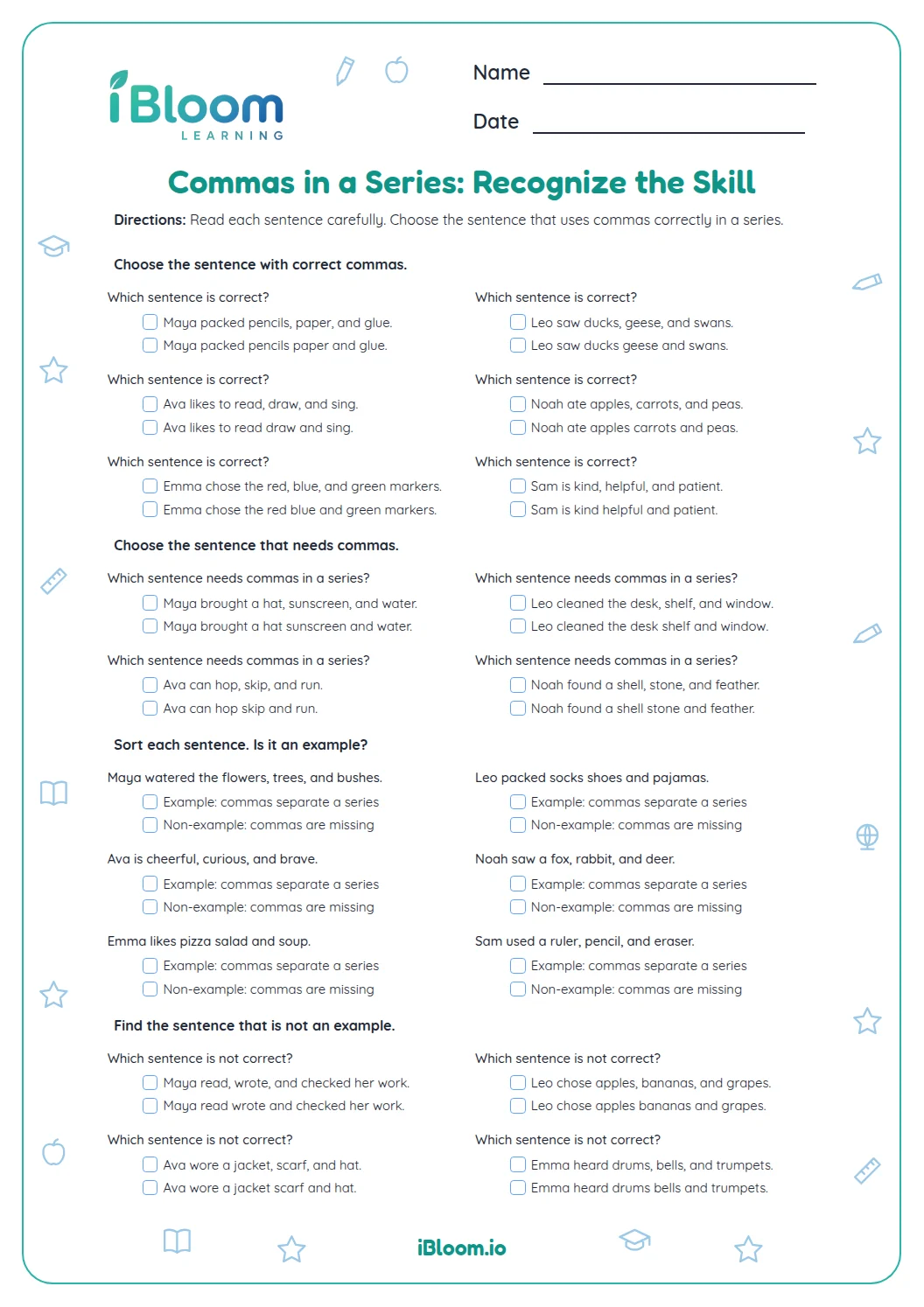
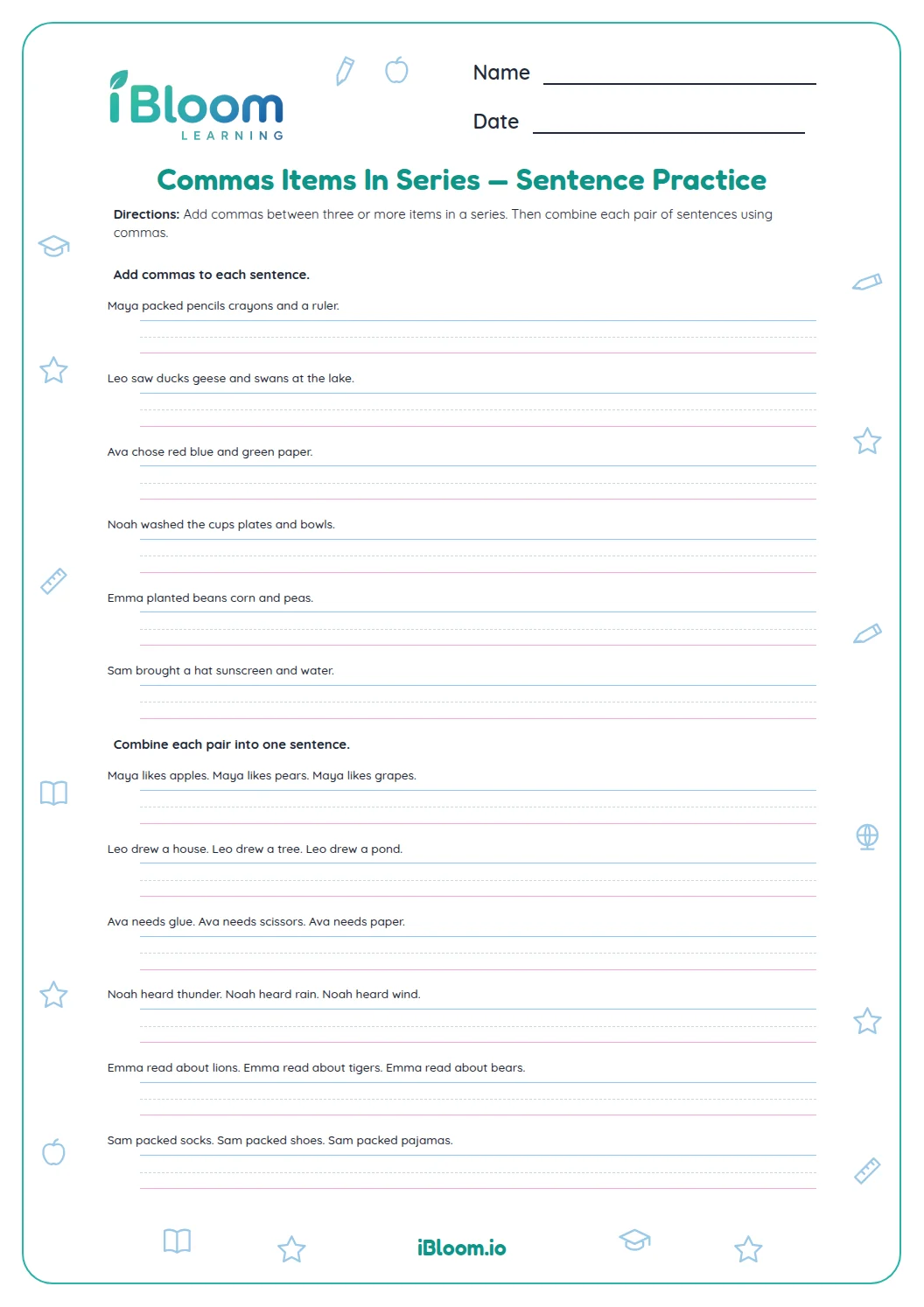
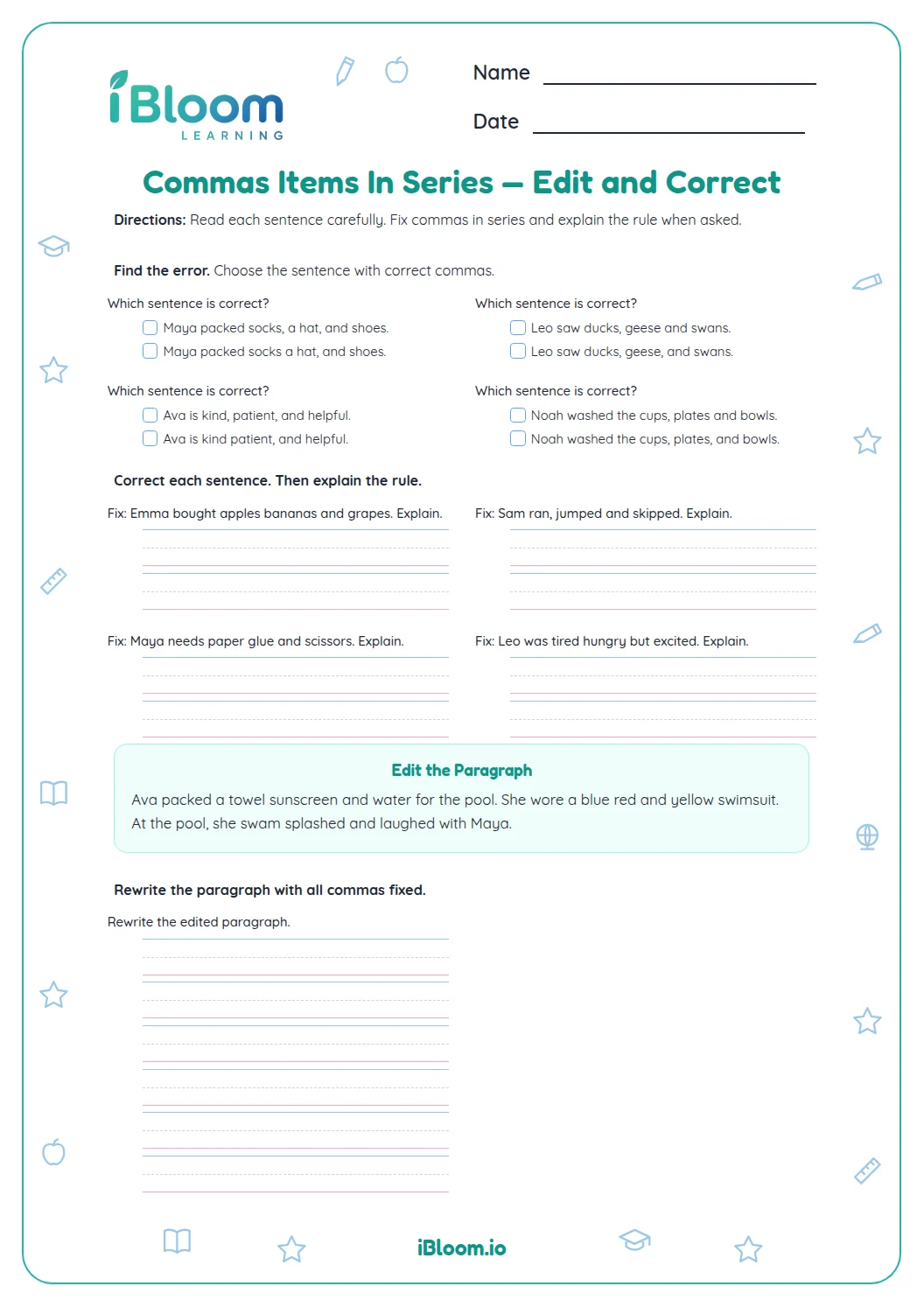
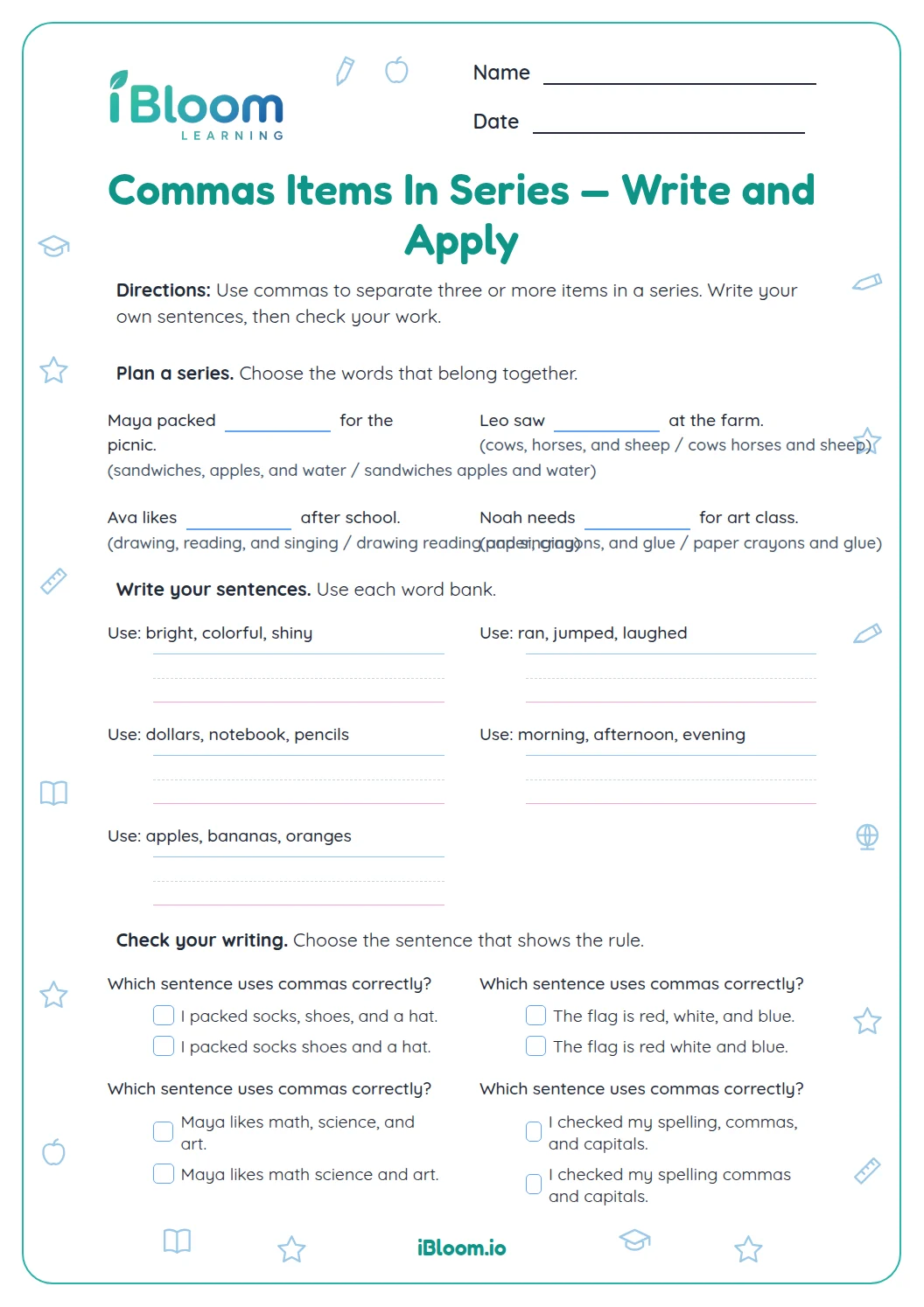
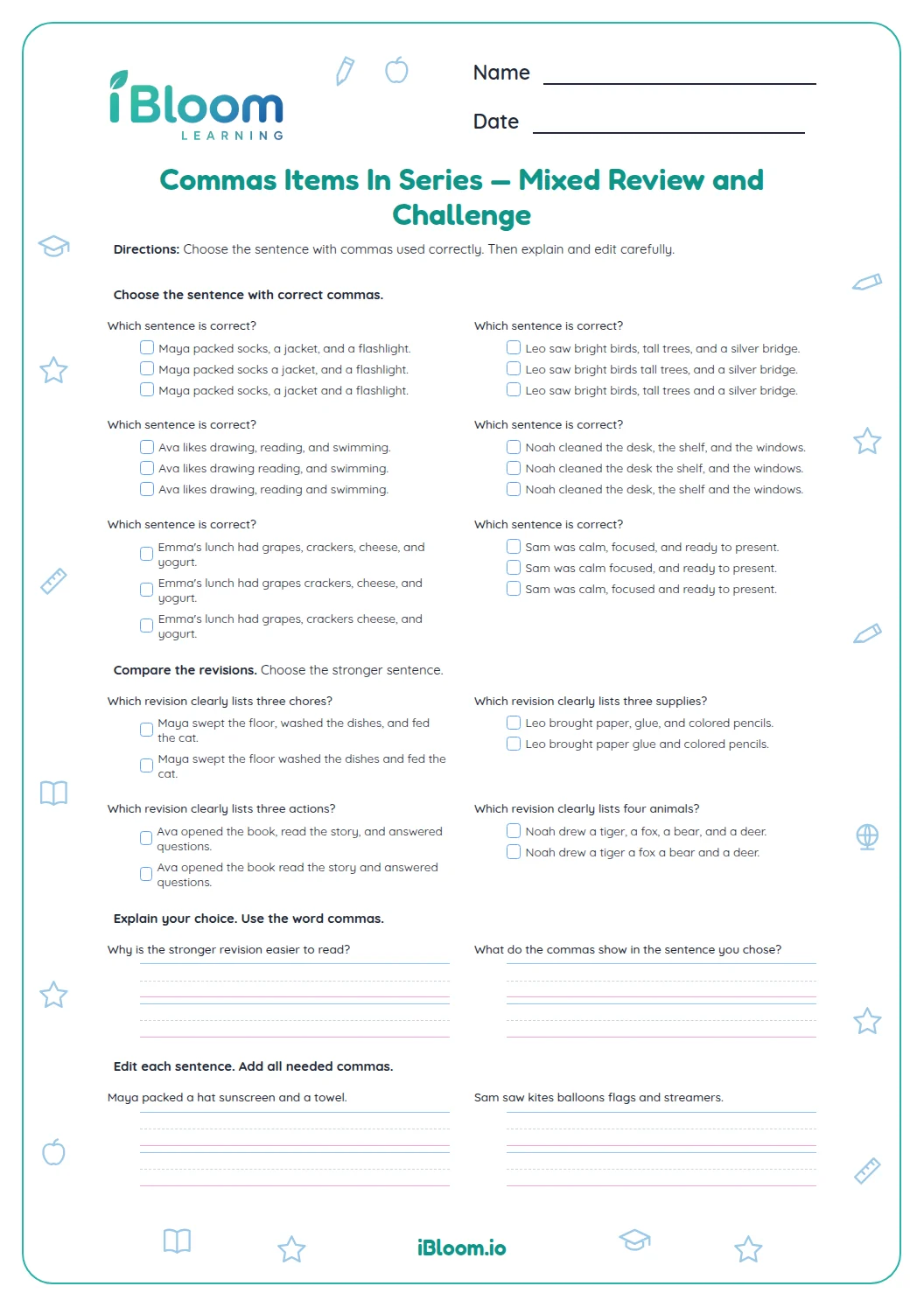
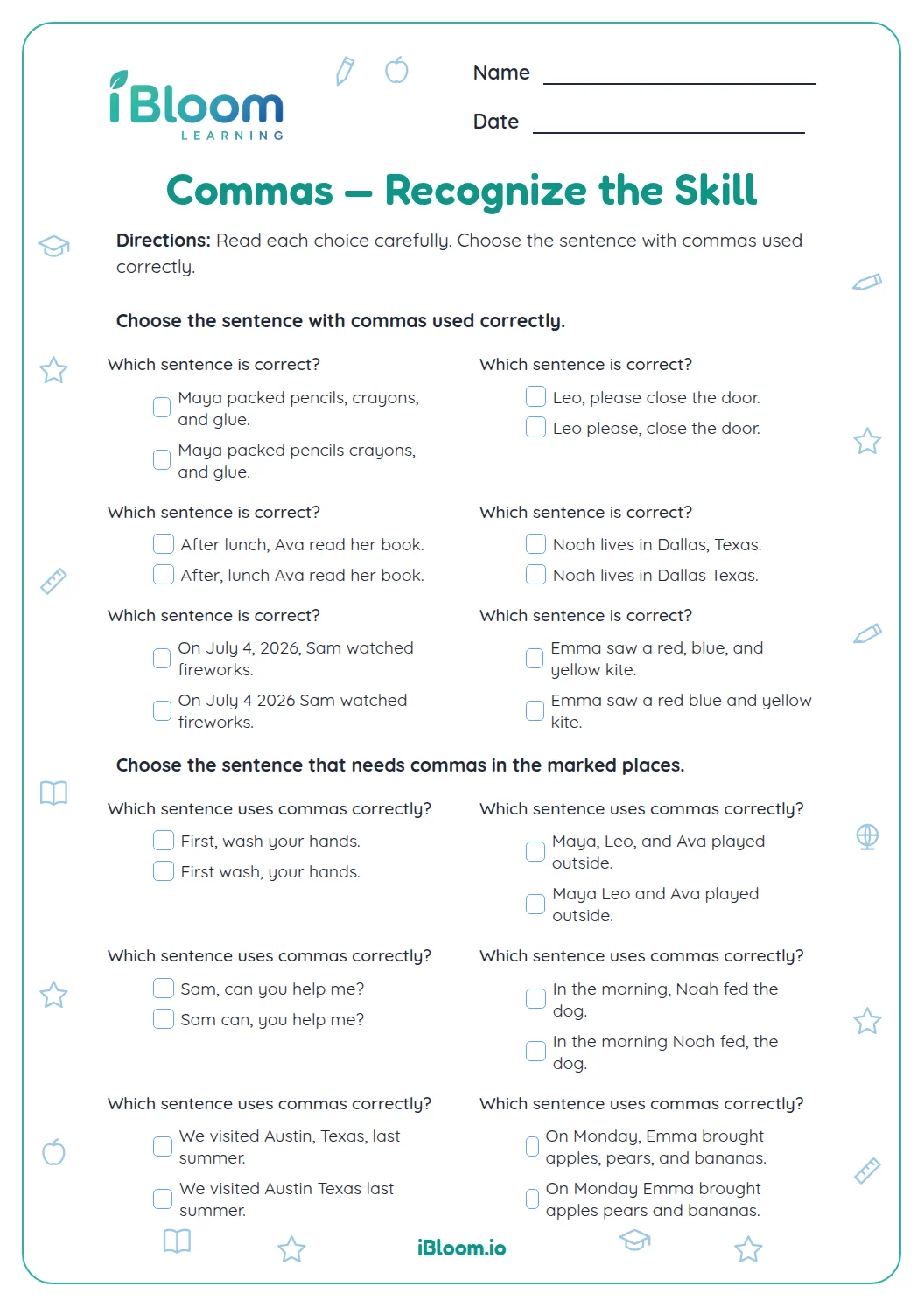
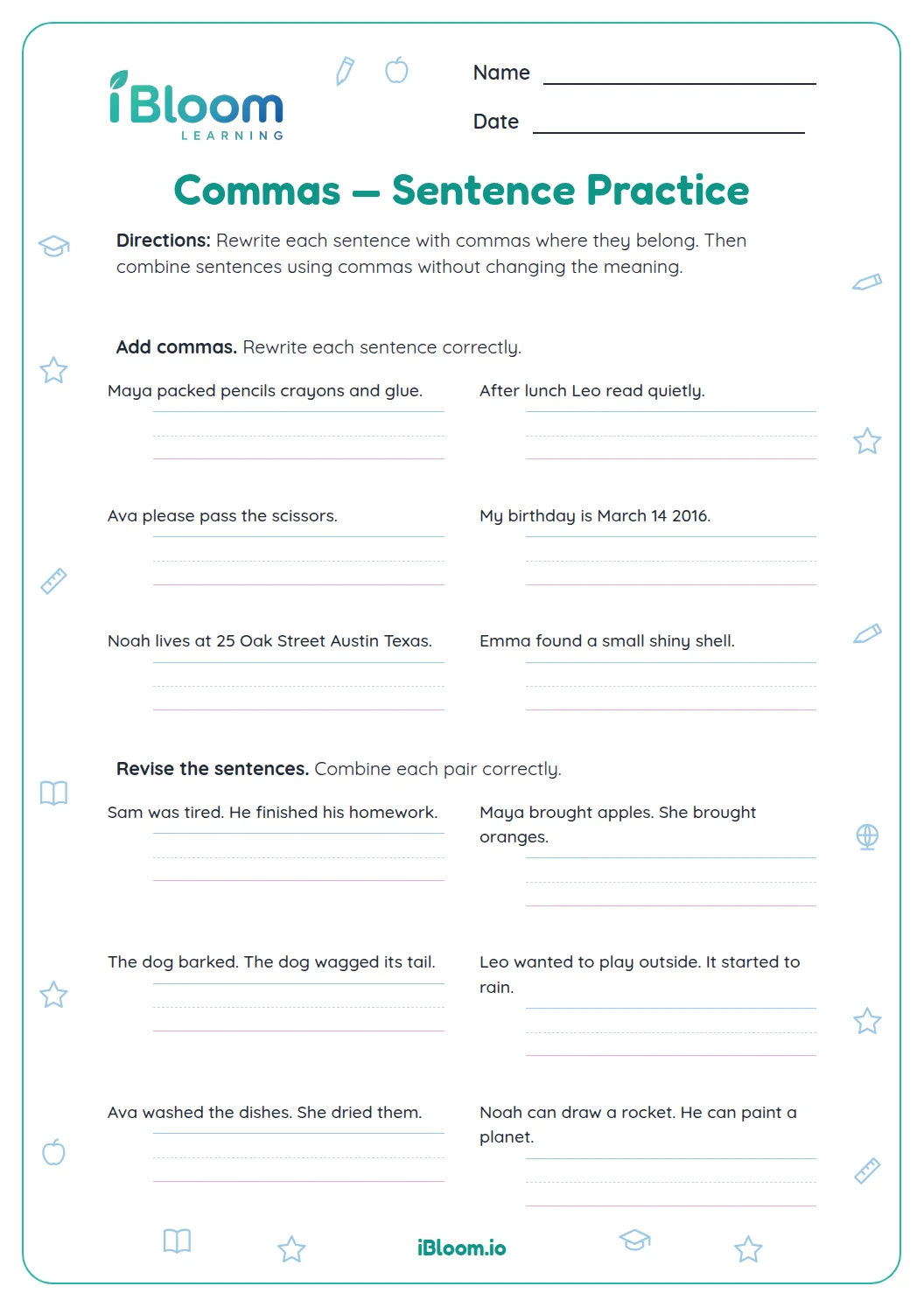
This Grade 4 worksheet gives students sixteen chances to punctuate and complete lists of three or more items. In Part A, each sentence needs a comma before the final “and.” In Part B, students choose a missing list item and check that the commas separate every item, including the last pair.
Where do commas go in a series?
Put commas between the items in a list of three or more, including before the conjunction that introduces the last item. Question 1 becomes “We packed apples, oranges, and crackers.”
How does the completion part work?
In Part B, choose a word or phrase that belongs with the other list items. For Question 12, “beef” fits with fish, chicken, turkey, and rice; the other choices do not name foods in the series.
How can a student check a list?
Read each item in order and check for a comma between neighboring items. The comma before “and” belongs between the next-to-last and final items.
- 1We packed apples, oranges ___ and crackers.
- 2Answer: ,
How to use this worksheet
- 1Read the directions and example aloud.
- 2Complete the first part together, naming the clue or rule.
- 3Let the student try the next part independently.
- 4Use the answer key to check each response.
- 5Review one missed item by explaining the correct choice.
Comma slips and quick fixes
The mistake
Leaving out the comma before the final “and.”
The fix
Check the space between the next-to-last item and “and.”
The mistake
Using a comma after the last item.
The fix
Separate items, but do not place a comma after the final item.
The mistake
Choosing a word that does not belong in the series.
The fix
Read the list aloud and check that the added item fits the same group.
What to practice next
Make more practice
Questions parents and teachers ask
Where do commas go in a series?
Place a comma between each item in a list of three or more, including before the “and” or “or” that introduces the final item. Question 1 reads “We packed apples, oranges, and crackers” after the blank is filled.
What is the comma before “and” called?
A series has three or more items. The sentences use lists of foods, colors, activities, and objects. Count the items first, then check that each neighboring pair is separated by a comma, including the pair before “and.” The worksheet includes examples with different kinds of items, so the same comma pattern is practiced across sentences.
How many items make a series?
Part B provides a list with one item missing and offers three choices. Students choose a word or phrase that fits the category, then make sure the sentence punctuation separates every item in the completed series. Students should read the whole sentence with each option to ensure the completed list remains parallel and clear.
What is different about Part B?
Read the list slowly and point to each item. Look for a comma between every pair of neighboring items, including the comma before “and.” Then compare the completed sentence with the key and check that no item was skipped.
How can I check the punctuation?
Read the list slowly and point to each item. Look for a comma between every pair of neighboring items, including the comma before “and.” Then compare the completed sentence with the key. The key shows the expected comma placement for the items in each question.