
About this worksheet
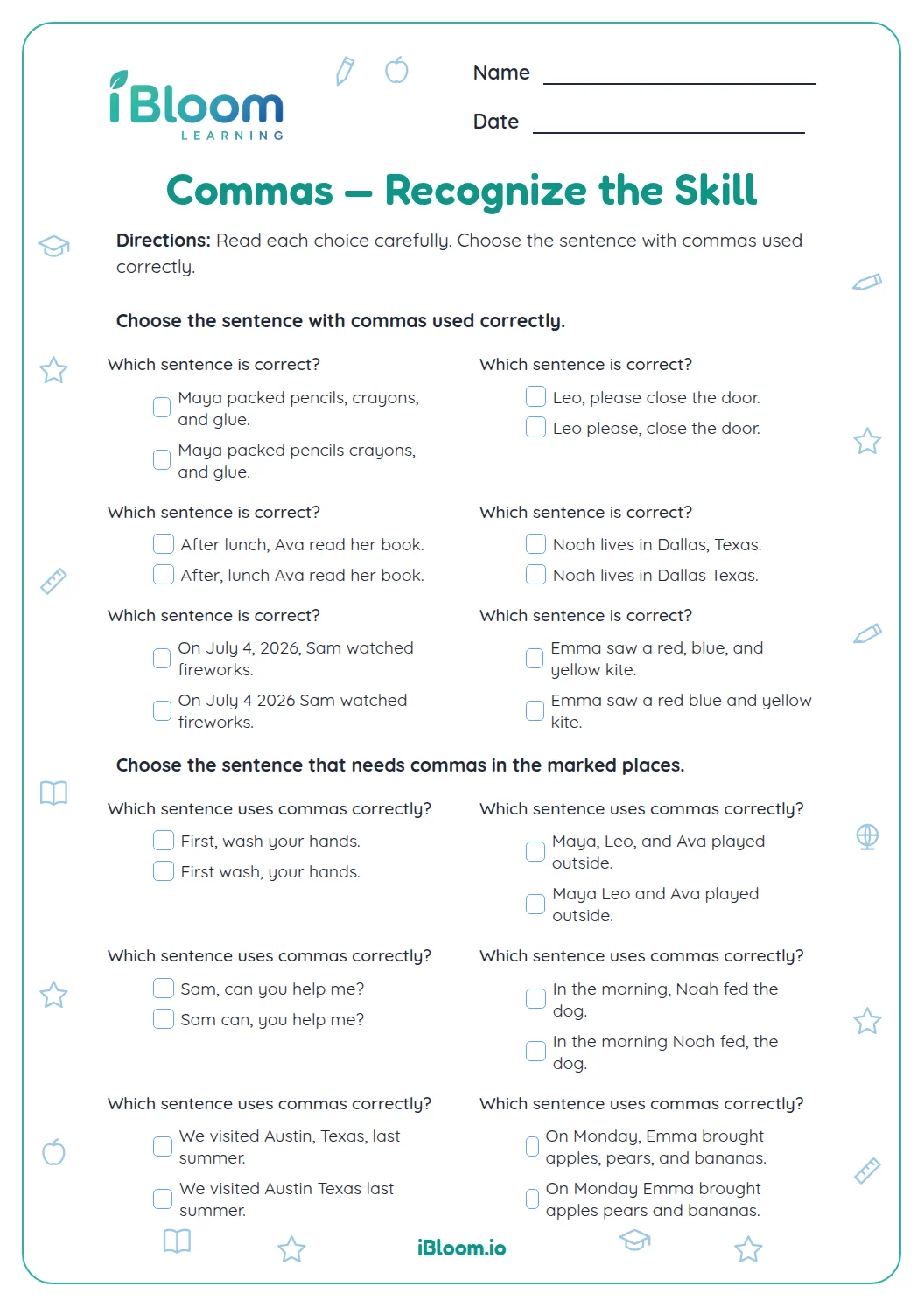
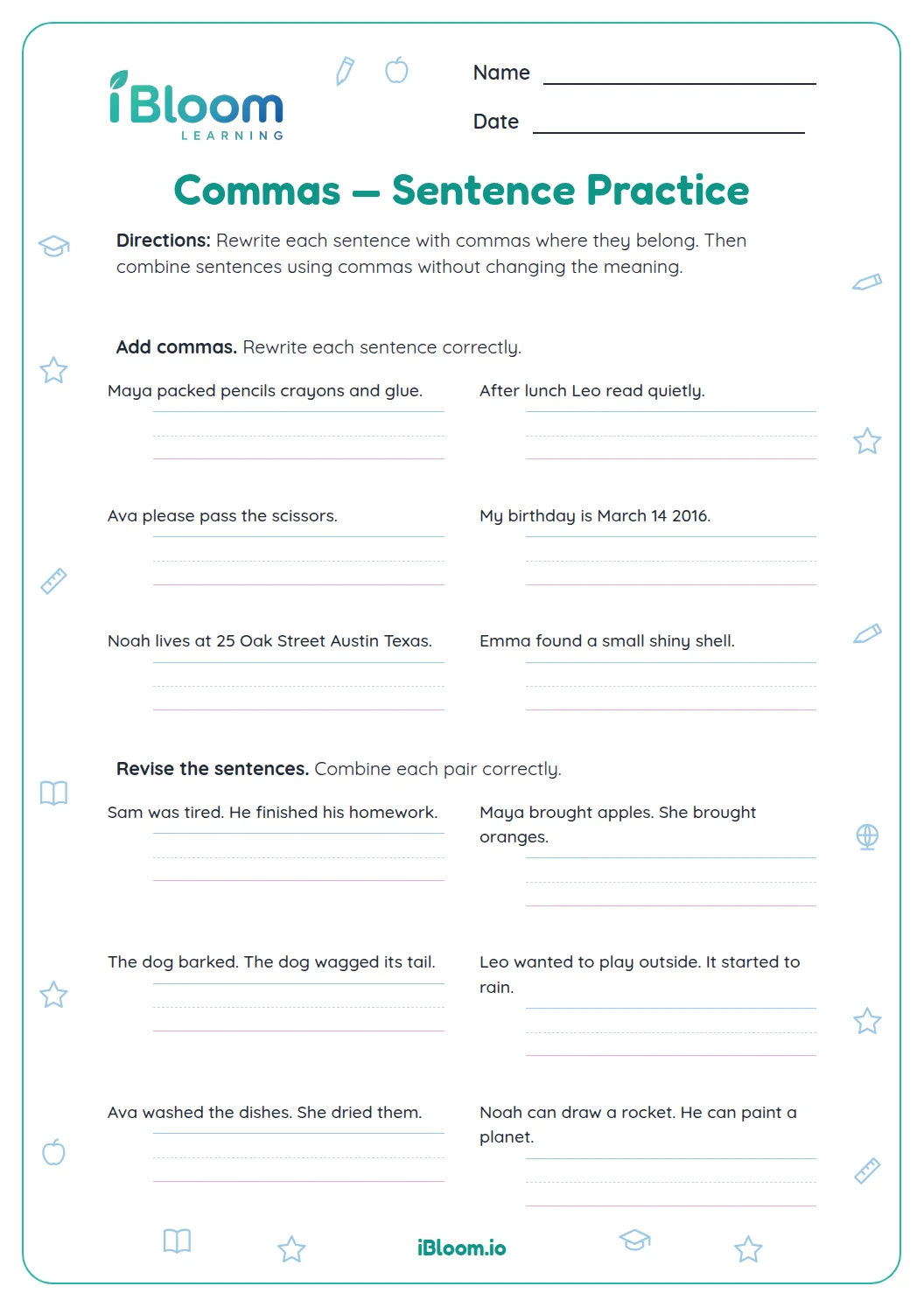
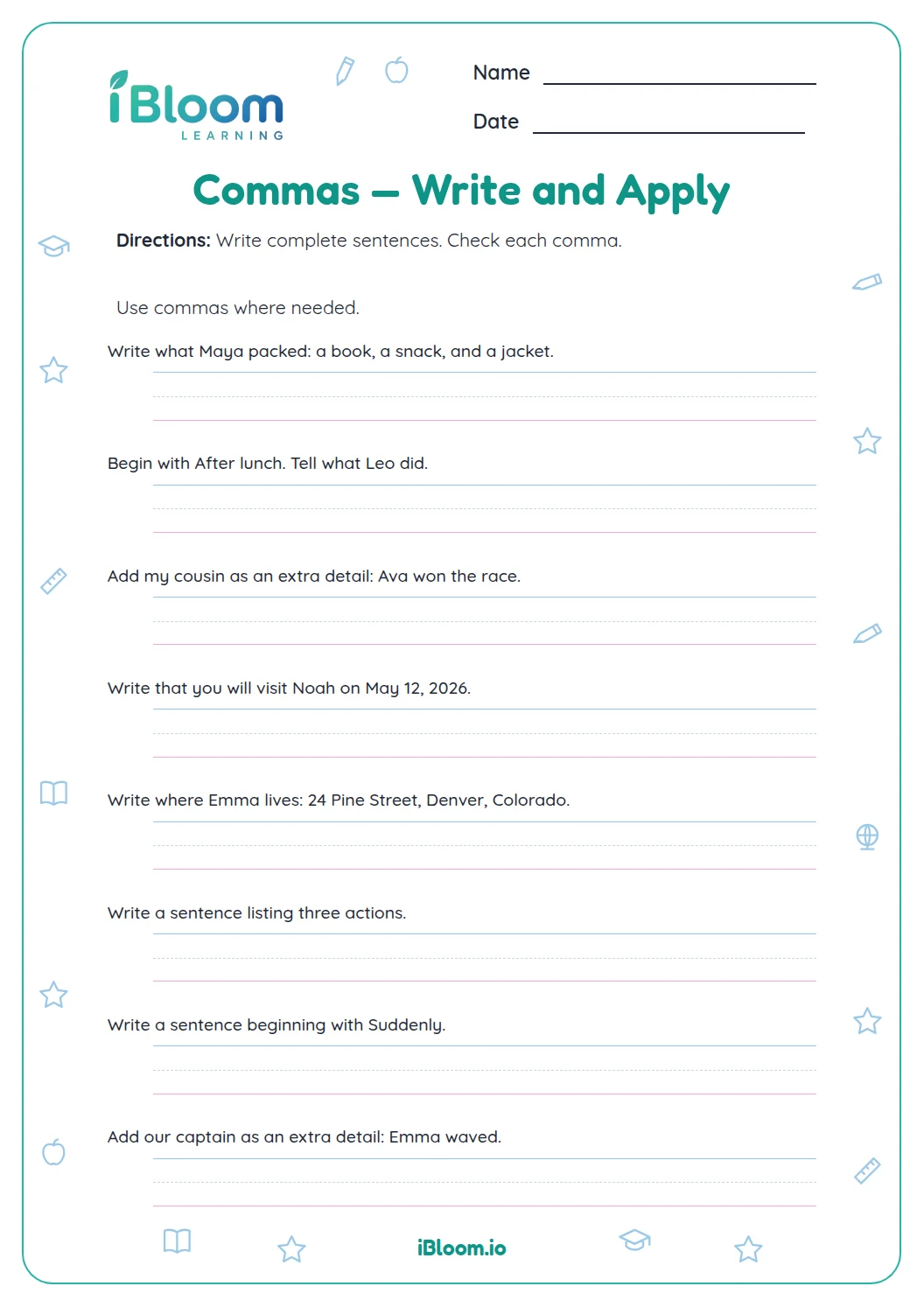
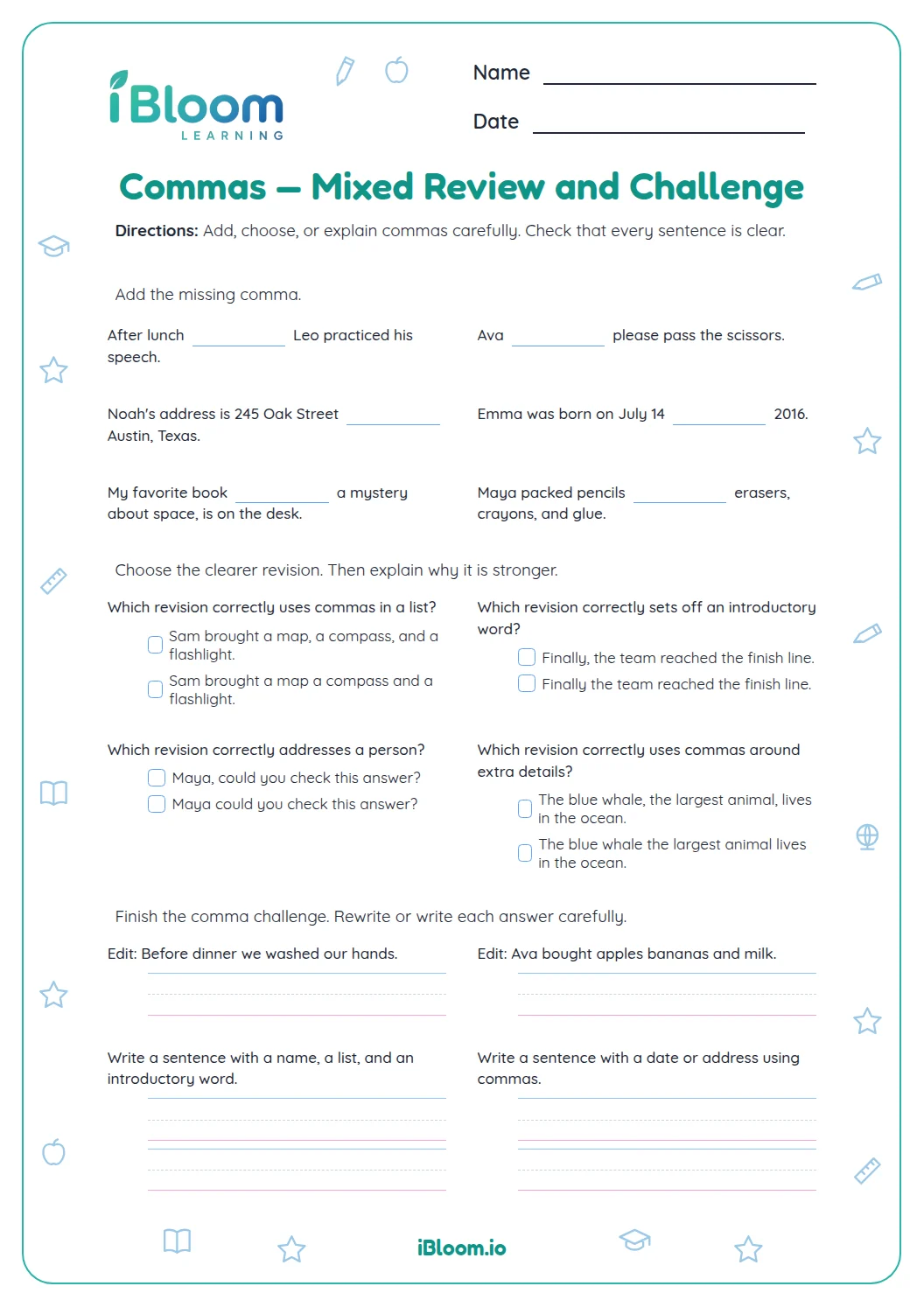
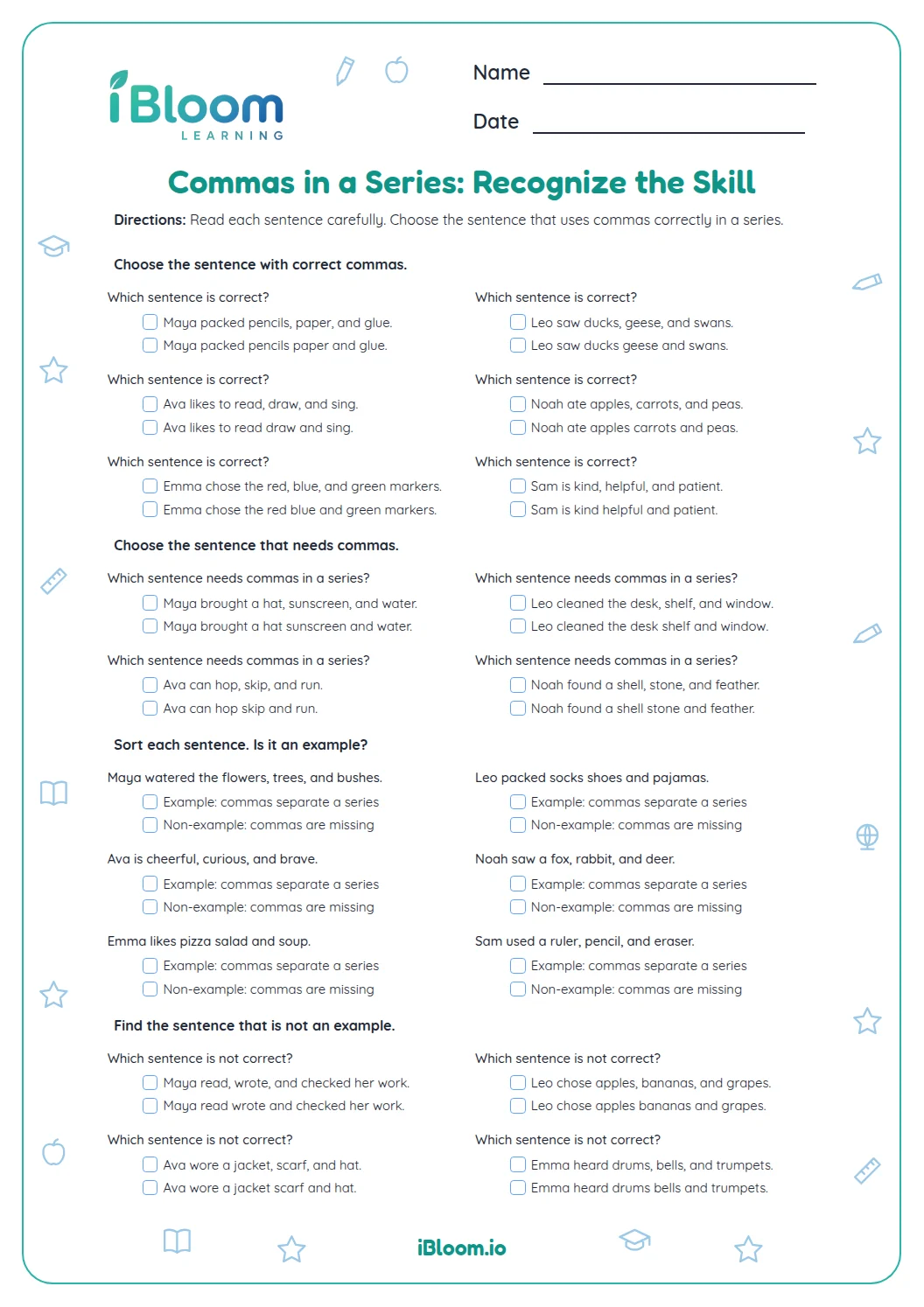
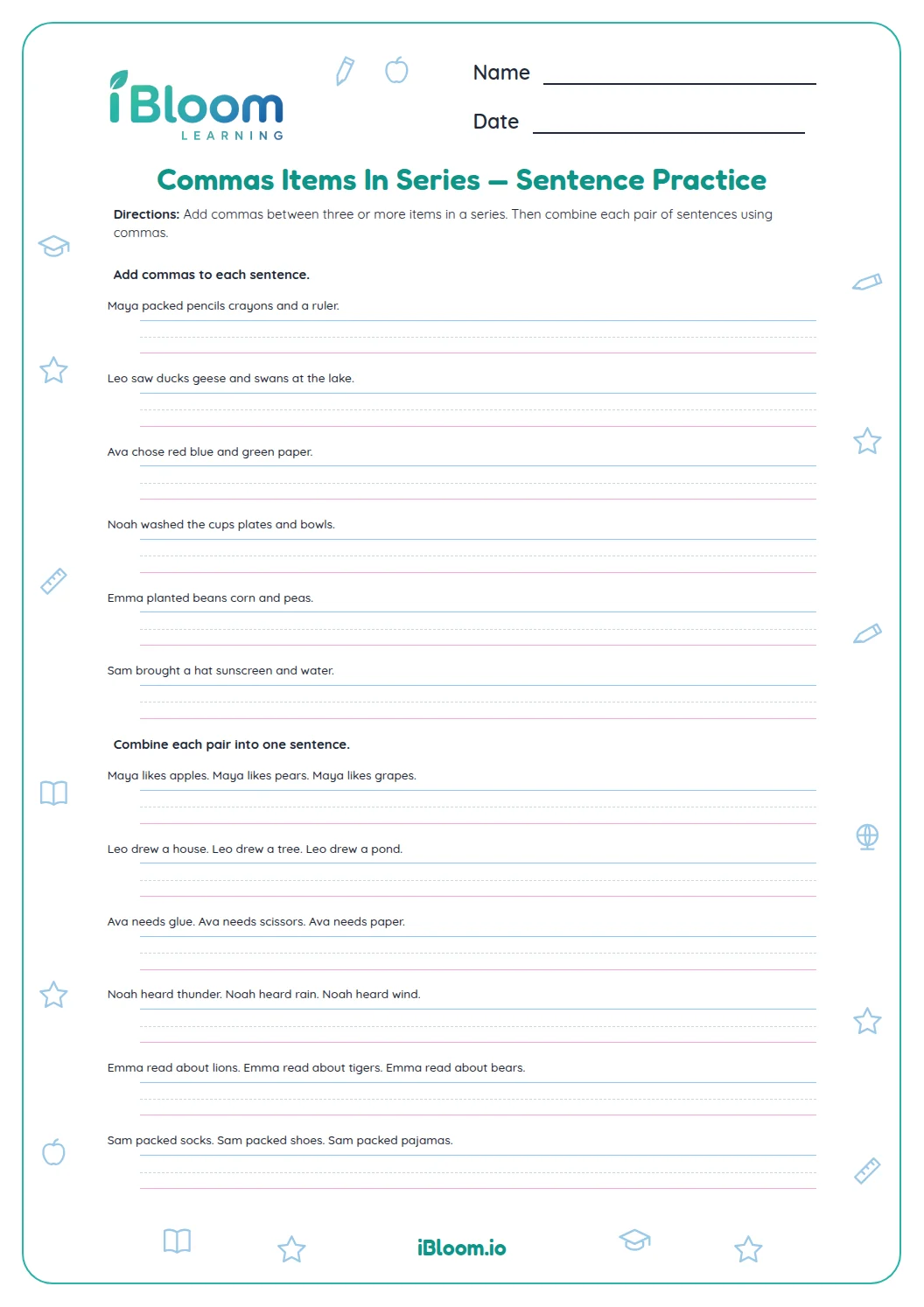
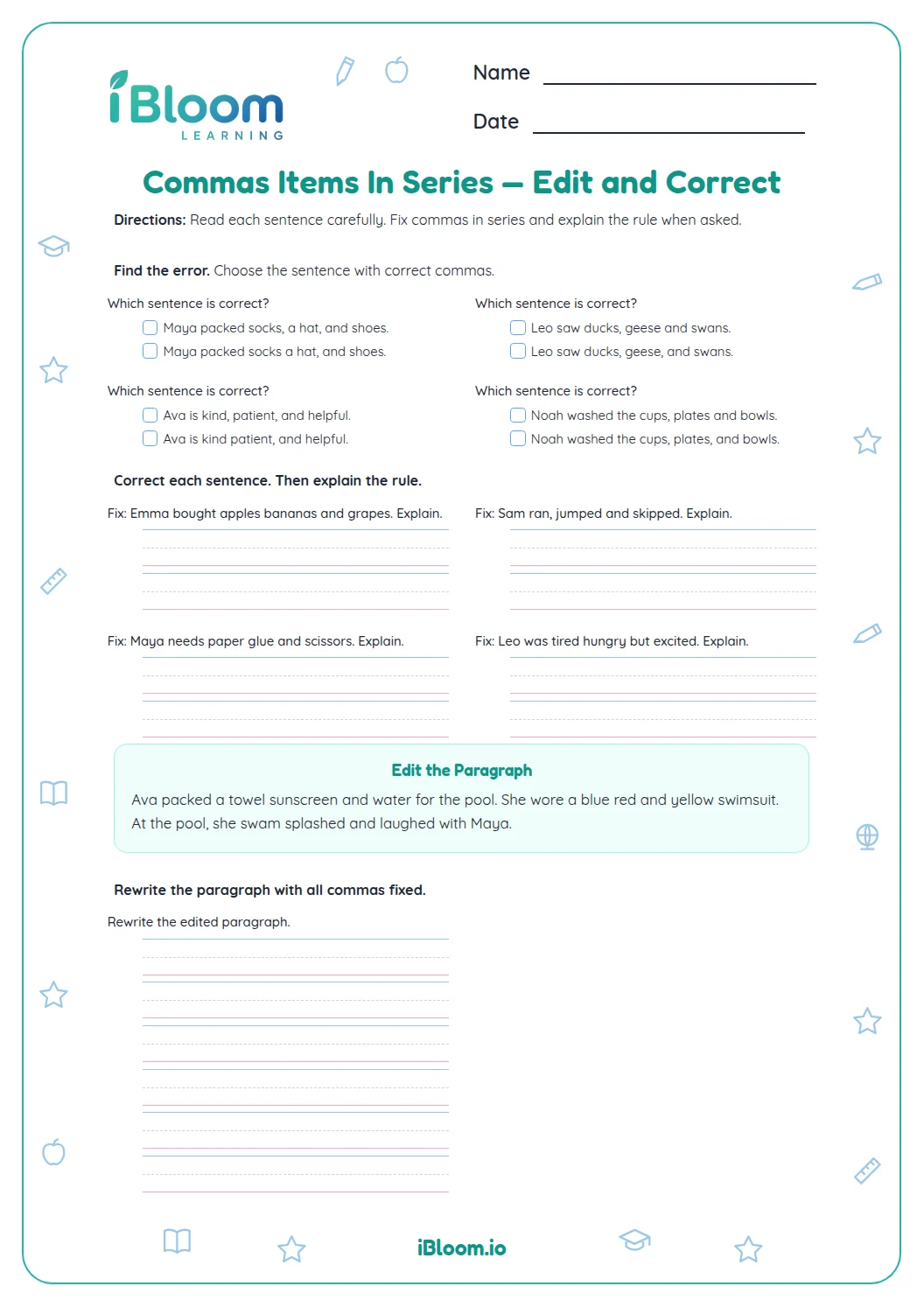
This Grade 4 worksheet gives students 16 questions on commas in a series, after introductory words, and around extra information. They add and correct commas, rewrite sentences, and apply the patterns in their own writing. A separate answer key includes sample responses for open-ended items. The practice aligns with CCSS L.4.2 conventions.
Aligned to L.4.2
Where do commas go in a list?
Use commas to separate items in a series. Question 1 reads “We packed apples ___ pears and plums.” Add the comma after “apples” so the list is easy to read.
When does an opening phrase need a comma?
A comma often follows an introductory word or phrase. In “After the game we ate sandwiches,” place the comma after “game” to separate the opening from the main sentence.
How do commas set off extra information?
Use a pair of commas around added information in the middle of a sentence. For example, “My cousin Ava, who lives nearby, is coming” keeps the main idea intact while setting off the detail.
Common mistakes and quick fixes
The mistake
Leaving out commas between list items.
The fix
Read each item in order and put a comma between neighboring items.
The mistake
Putting the comma before an introductory phrase.
The fix
Find where the main sentence begins; place the comma after the opening.
The mistake
Using only one comma around a middle detail.
The fix
Mark both ends of the extra information with commas.
This page practices a Common Core skill.
The questions practice comma placement and sentence editing.
On this sheet:
Show the official wordingHide the official wording
Demonstrate command of the conventions of standard English capitalization, punctuation, and spelling when writing.
What to practice next
Make more practice
Further reading
Questions parents and teachers ask
What comma rules appear on the worksheet?
Students add commas in a series, after introductory words, and around extra information. The questions include examples such as a list of school supplies and a sentence beginning with “After the game.” A separate answer key gives corrections and sample answers.
How many questions are included?
There are 16 questions across guided comma placement, sentence correction, rewriting, and independent application. The sheet uses short sentences so students can focus on punctuation, reread each sentence for meaning, and check their work with the separate answer key.
Can students use the answer key for open responses?
Yes. The key provides sample answers for prompts that ask students to write their own sentence. Other correct sentences can also work if they follow the requested comma rule, use complete thoughts, and remain clear to a reader.
What should students check in a list?
They should separate each item in a series with commas and keep the final conjunction with the last item. This worksheet includes a three-item series, so students can check that each listed item is easy to distinguish as they read the complete sentence.
What does the worksheet mean by extra information?
It means a phrase that adds detail but is set apart from the main sentence. Students practice marking that information with commas, then reread the sentence to make sure the main idea still reads clearly from beginning to end.