
About this worksheet
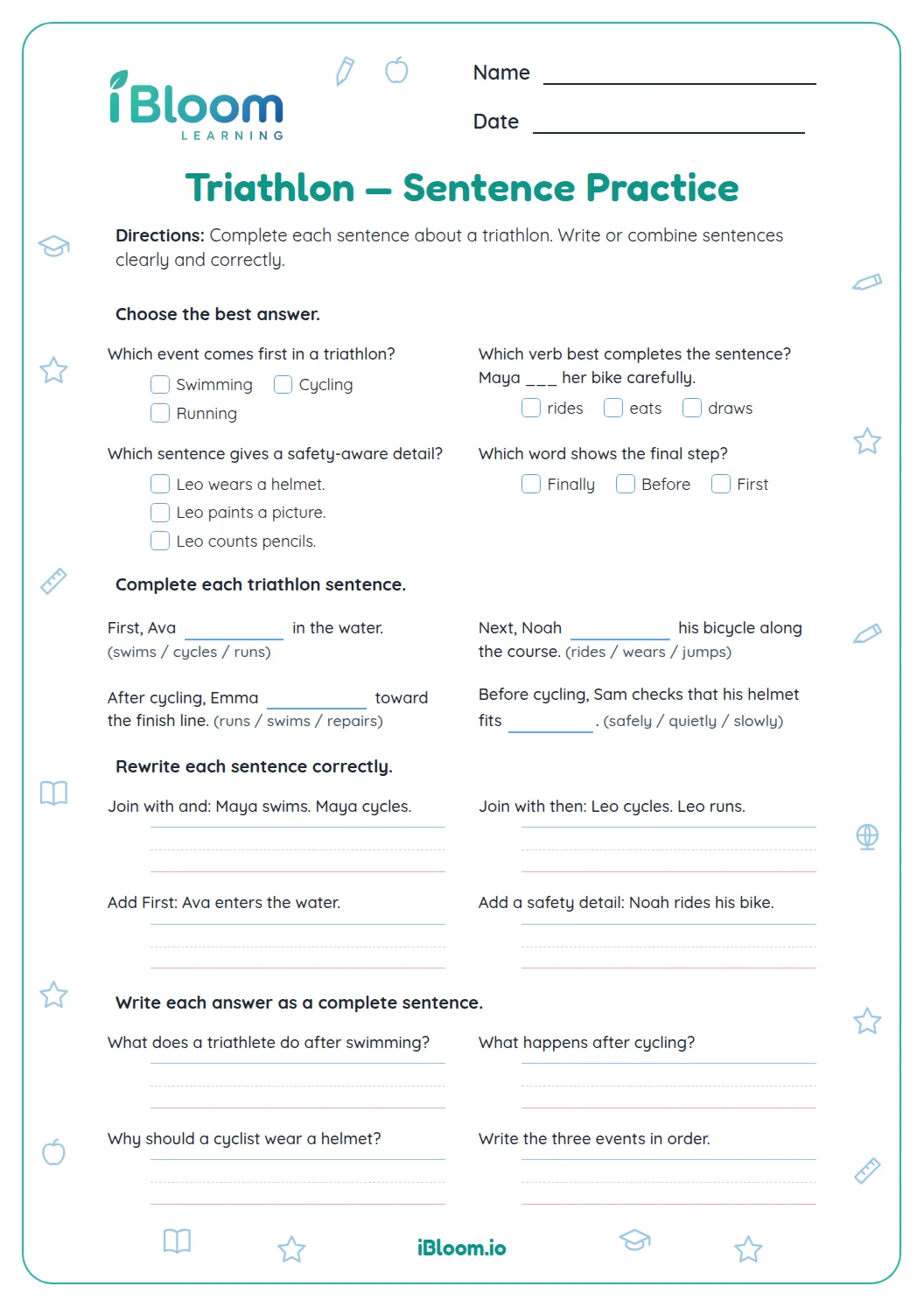
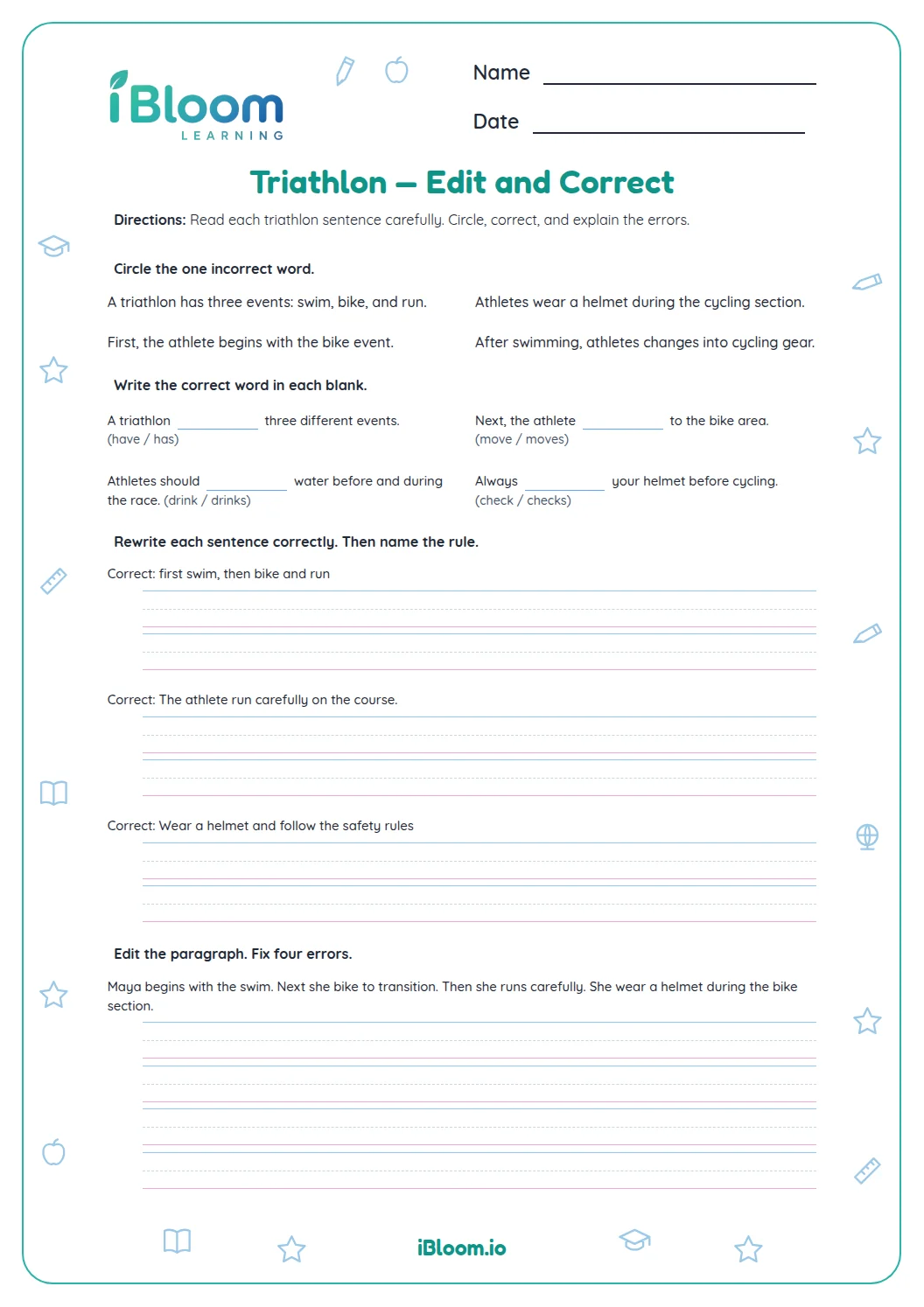
This Grade 4 guided writing worksheet helps learners explain the three stages of a triathlon in order. Thirteen choice questions practice event sequence, action words, and safe details; one writing prompt asks learners to draft a beginning and final direction. A separate answer key includes a sample response.
Aligned to L.4.3a
What order does a triathlon follow?
The three events are swimming, biking, and running. Sequence words such as first, next, and finally help readers follow the process.
What makes a direction easy to follow?
Use an action verb and name the action clearly. “Wear a helmet before riding” tells the reader what to do and when.
How can learners write the three final steps?
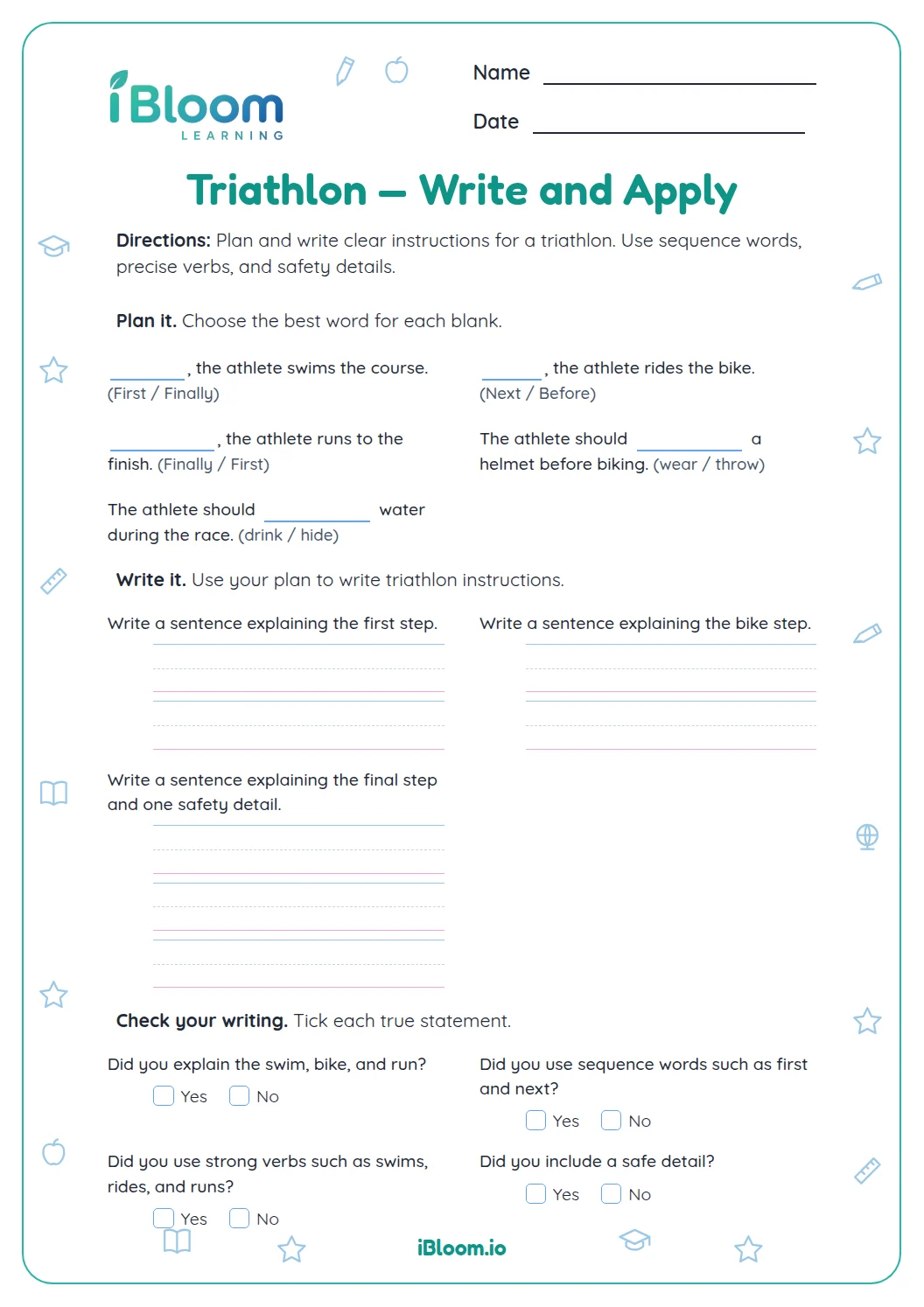
The final question asks for three sentences, one for each stage. Start each with a sequence cue, name the event, and add a useful action or safety detail.
How to use this worksheet
- 1Read each sentence and choose the word that completes its meaning.
- 2Check the event order: swim, bike, then run.
- 3Notice sequence words such as before, next, and finally.
- 4In the last part, write one complete sentence for each stage in order.
- 5Compare your choices and written steps with the answer key.
Common mistakes and quick fixes
The mistake
Putting the run before the bike.
The fix
Say the three event names aloud in their race order: swim, bike, run.
The mistake
Using a vague verb such as do or go.
The fix
Choose a specific action like swim, ride, check, or cool down.
The mistake
Leaving out safety details in a direction.
The fix
Ask what a participant needs to do to stay safe at that stage.
Common Core alignment
This worksheet practices choosing clear, precise language for instructions.
Choose precise words and phrases to make directions clear.
On this sheet: Learners select precise actions and write ordered directions for triathlon stages.
Show the official wordingHide the official wording
Choose words and phrases to convey ideas precisely.*
What to practice next
Make more practice
Further reading
Questions parents and teachers ask
What are the three stages of the triathlon in this worksheet?
The stages are swimming, biking, and running, in that order. The first 13 questions complete directions and identify sequence cues. The final question asks learners to write a beginning, middle, and final direction, using the sequence words first, next, and finally.
Do written answers have to match the key exactly?
No. The key gives sample directions, but other clear and accurate sentences can work. A response should name the correct event, use an understandable action verb, and keep the steps in order. Safety details such as wearing a helmet are useful when they fit.
What does “finally” tell a reader?
Finally signals the last step in a sequence. On this sheet, it introduces the running stage and finish. Learners also see first and next, which help mark the earlier parts of the triathlon instructions. It should also tell what action to take, so the reader can picture the step and follow it in the race.
How can I help a learner plan a direction?
Ask the learner to say the event aloud, name the action, and consider one helpful detail. For example, a biking direction can name riding the bicycle and wearing a helmet. Then have the learner write the idea as one complete sentence.
Is an answer key included?
Yes. The separate answer key lists the correct choices for the first 13 questions and a sample set of directions for the last question. Other clear and accurate sentences can work if they name the right event and keep the stages in order.