




About this worksheet
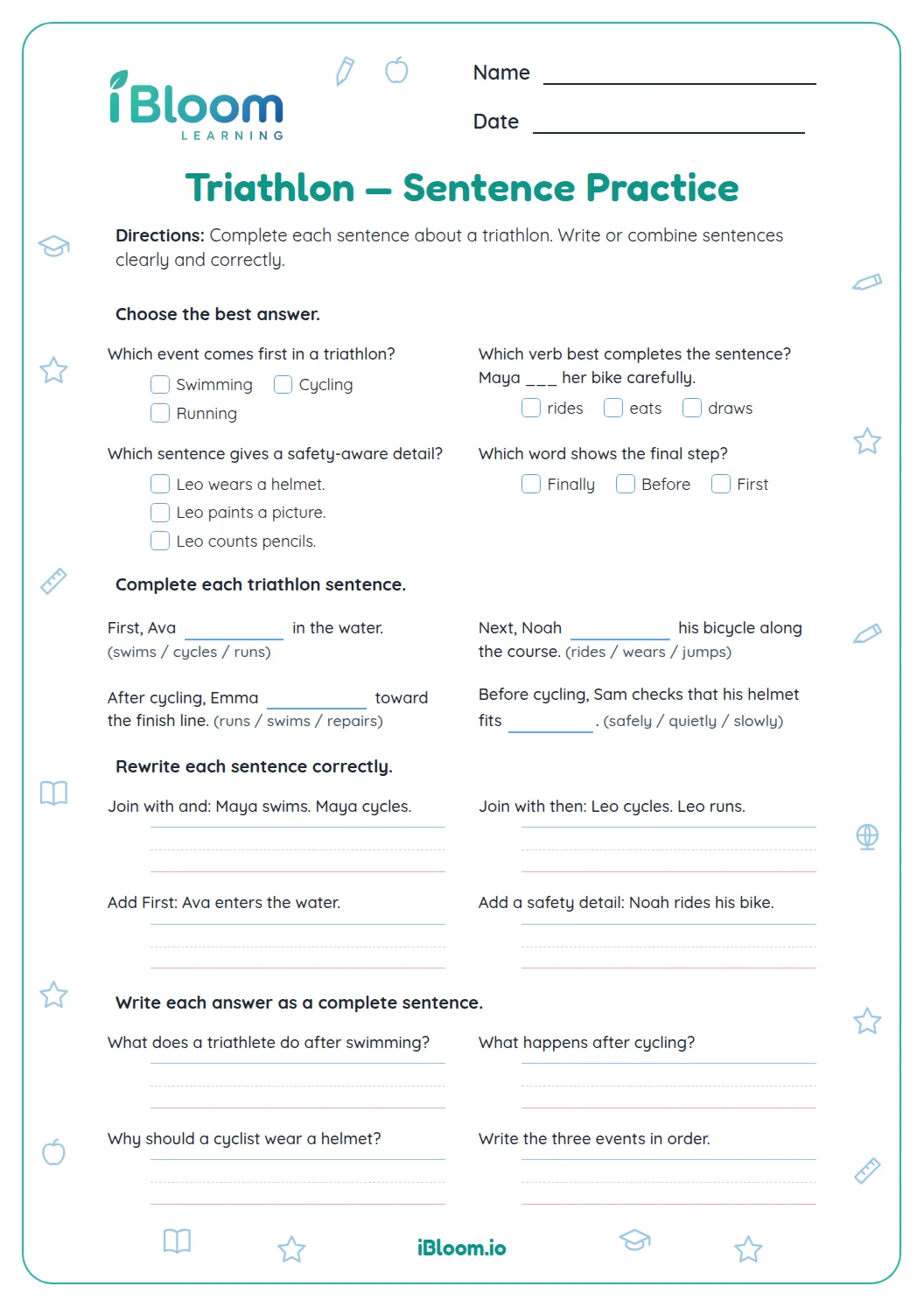
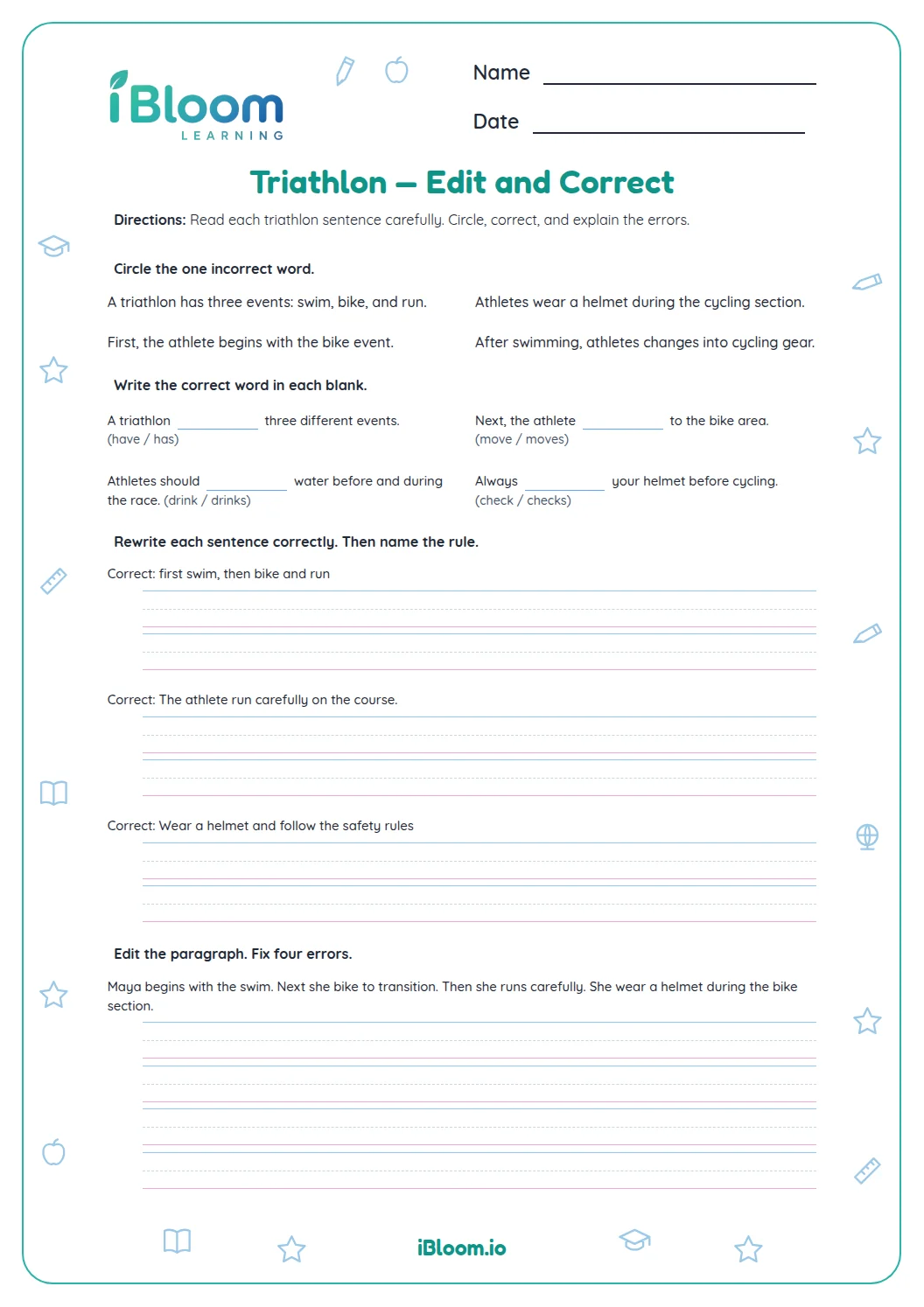
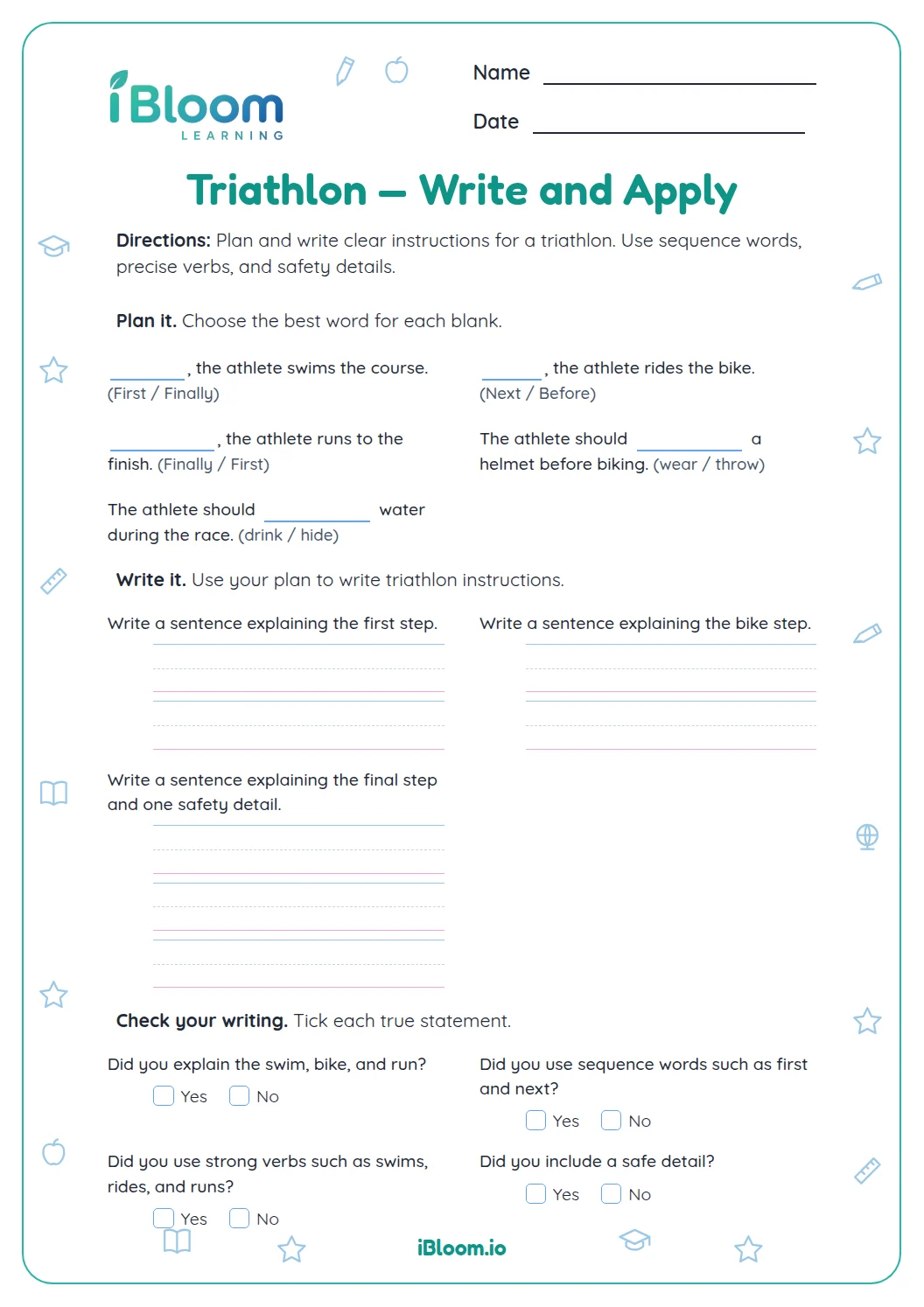
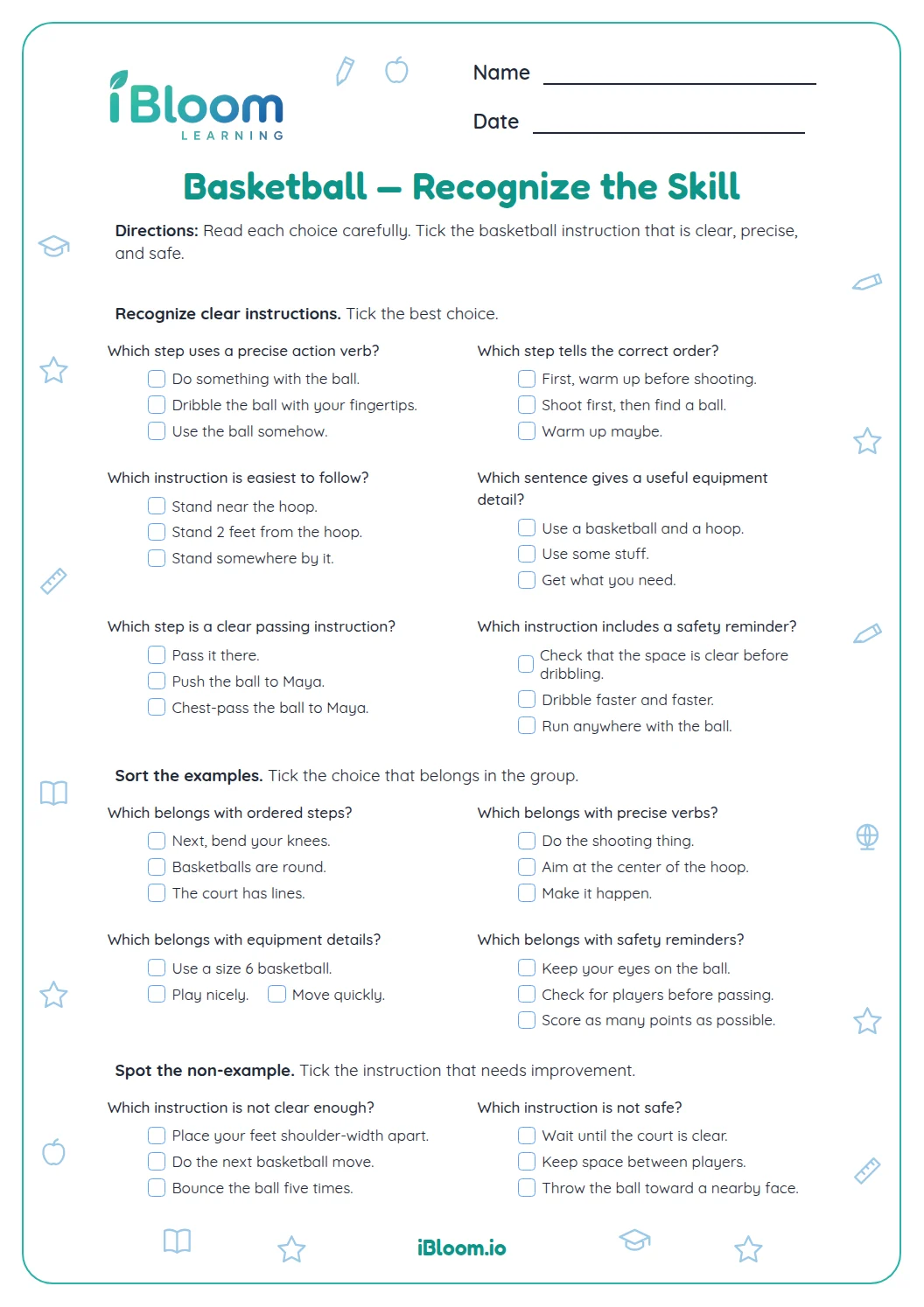
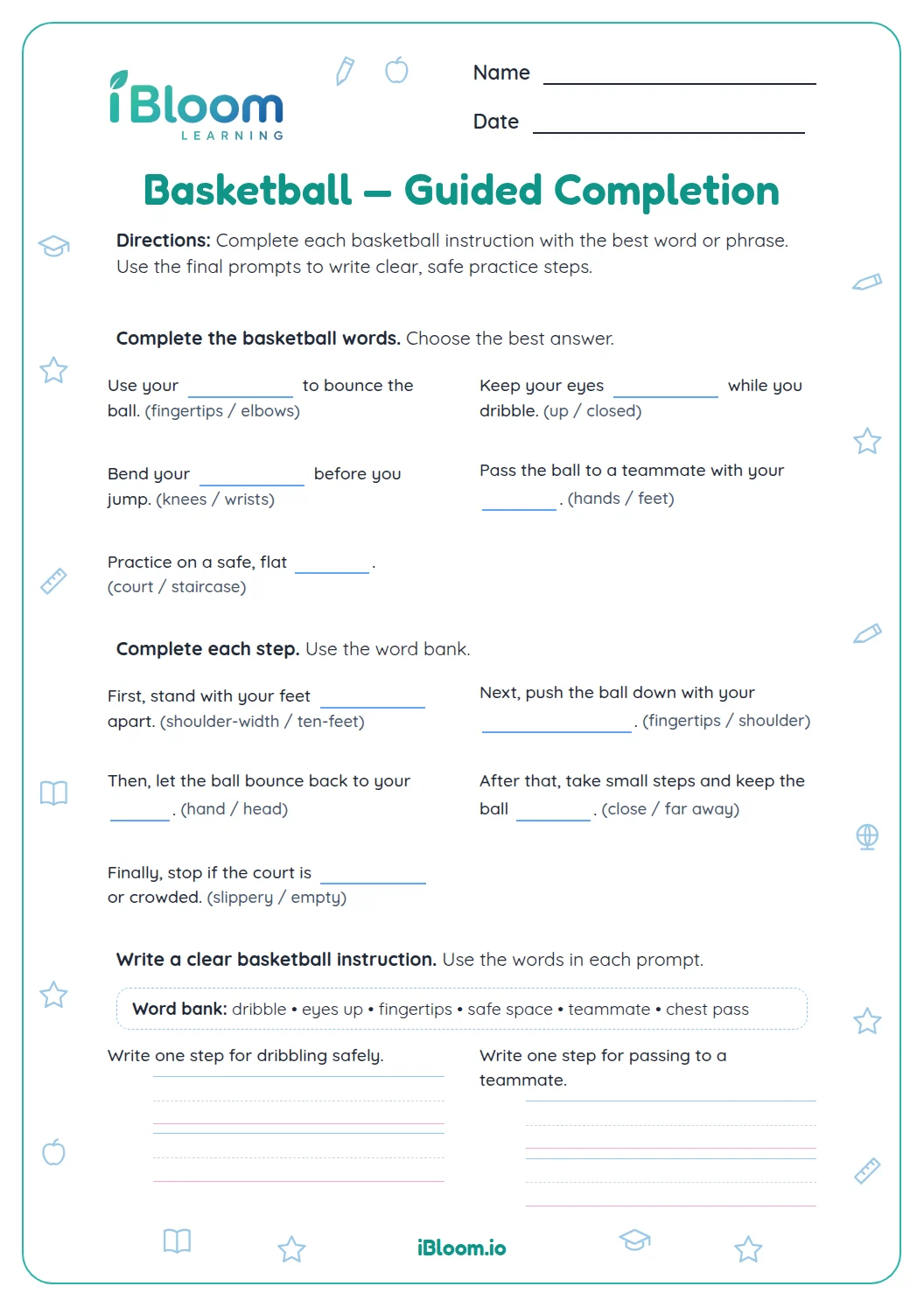
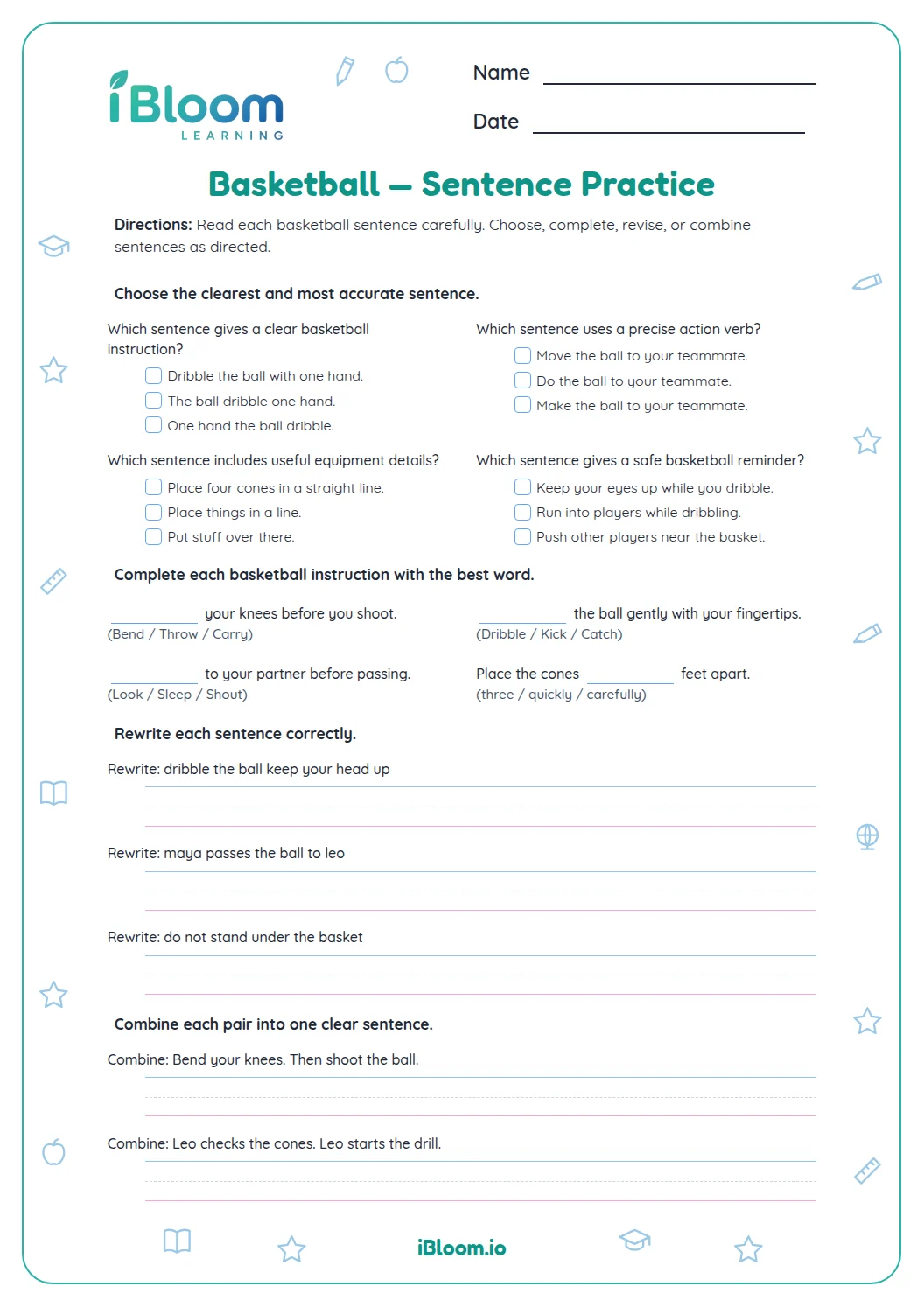
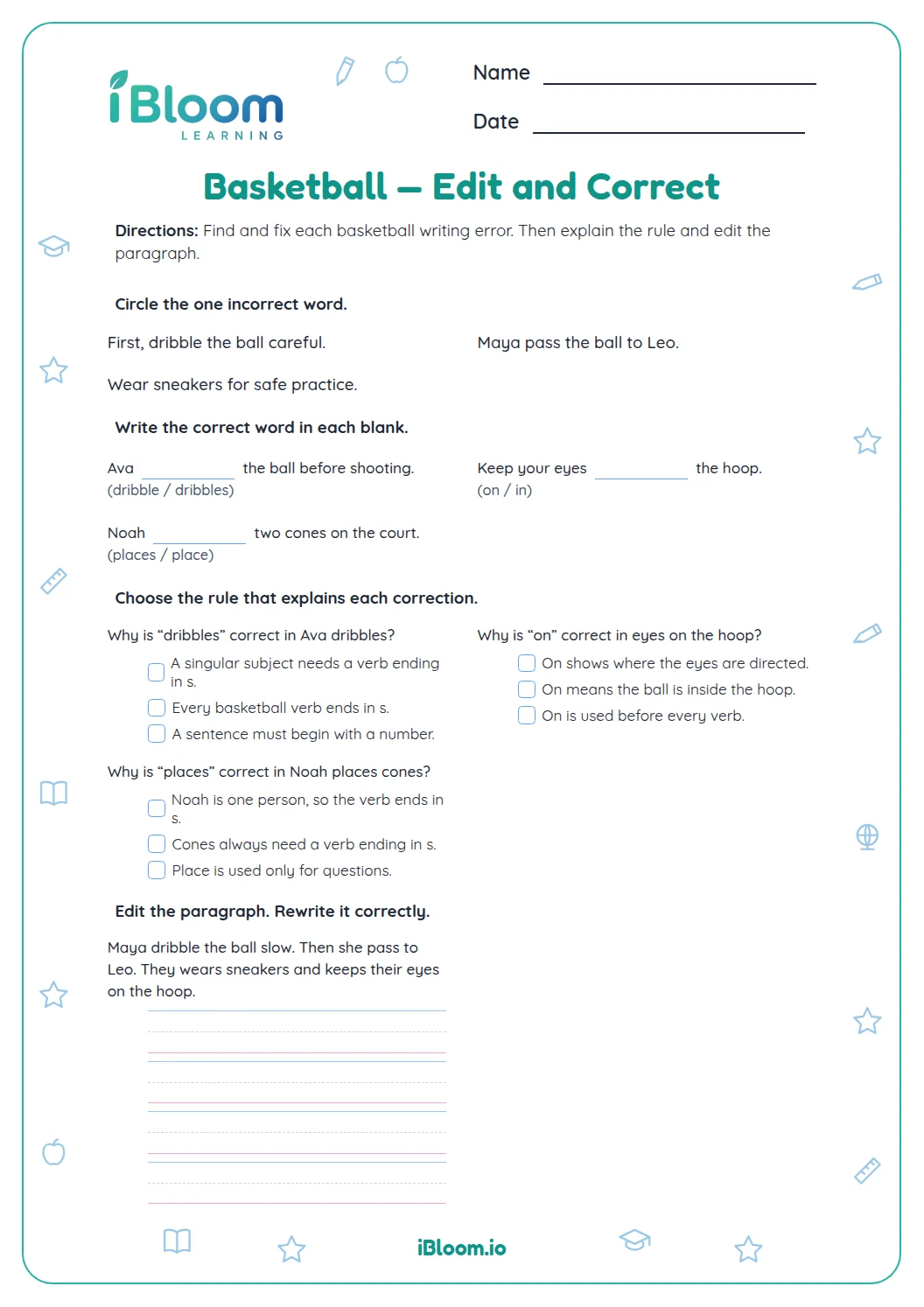
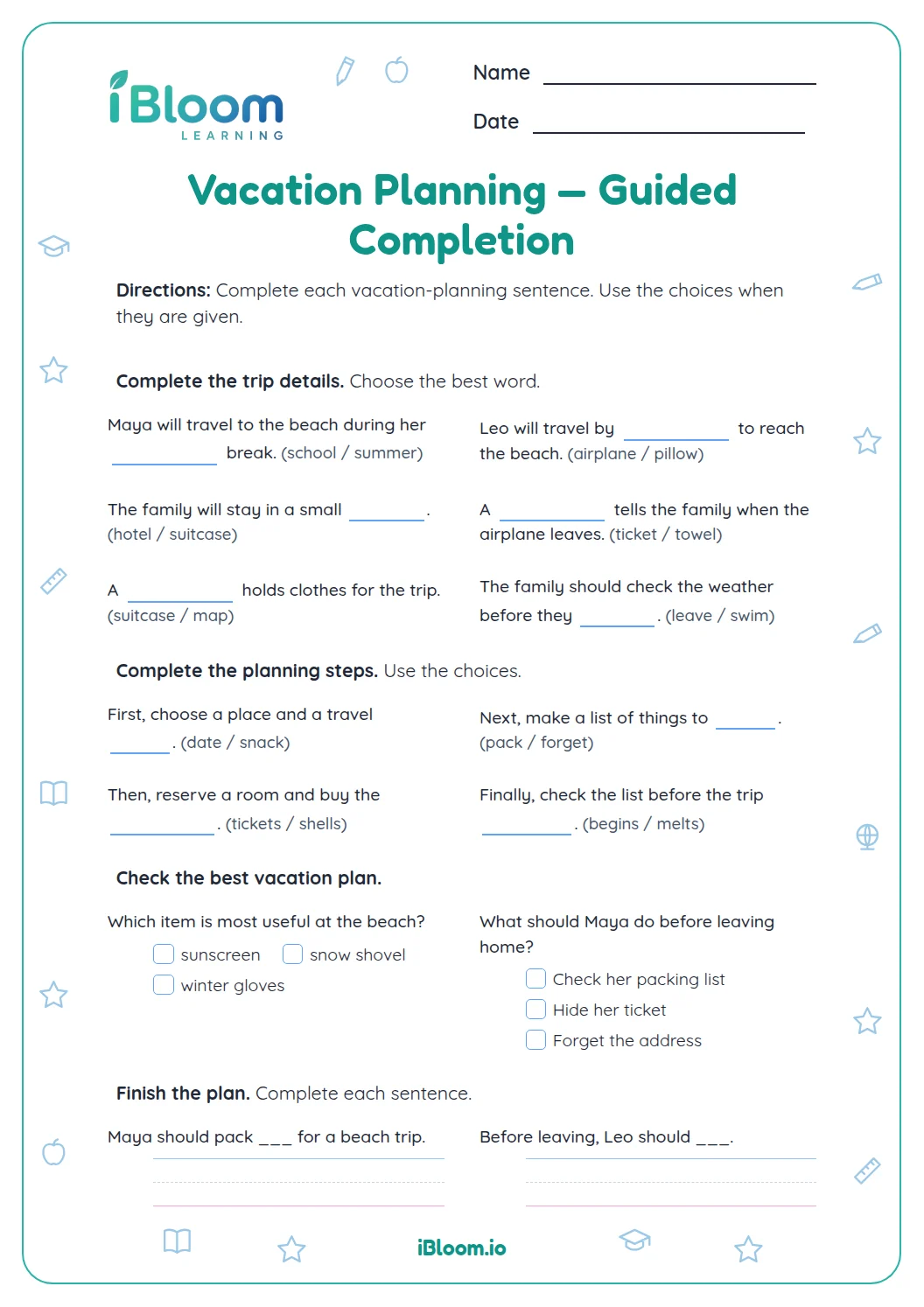
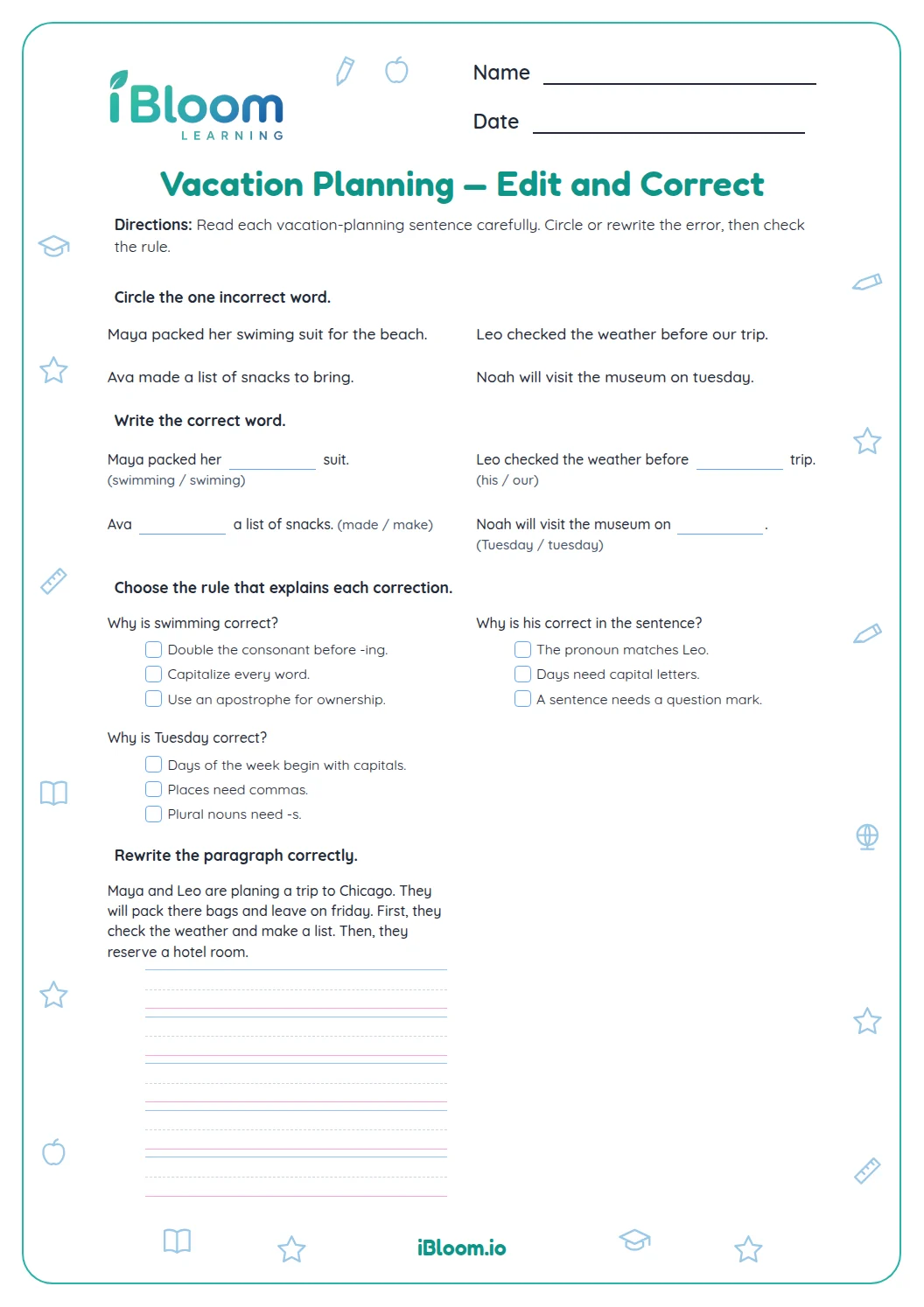
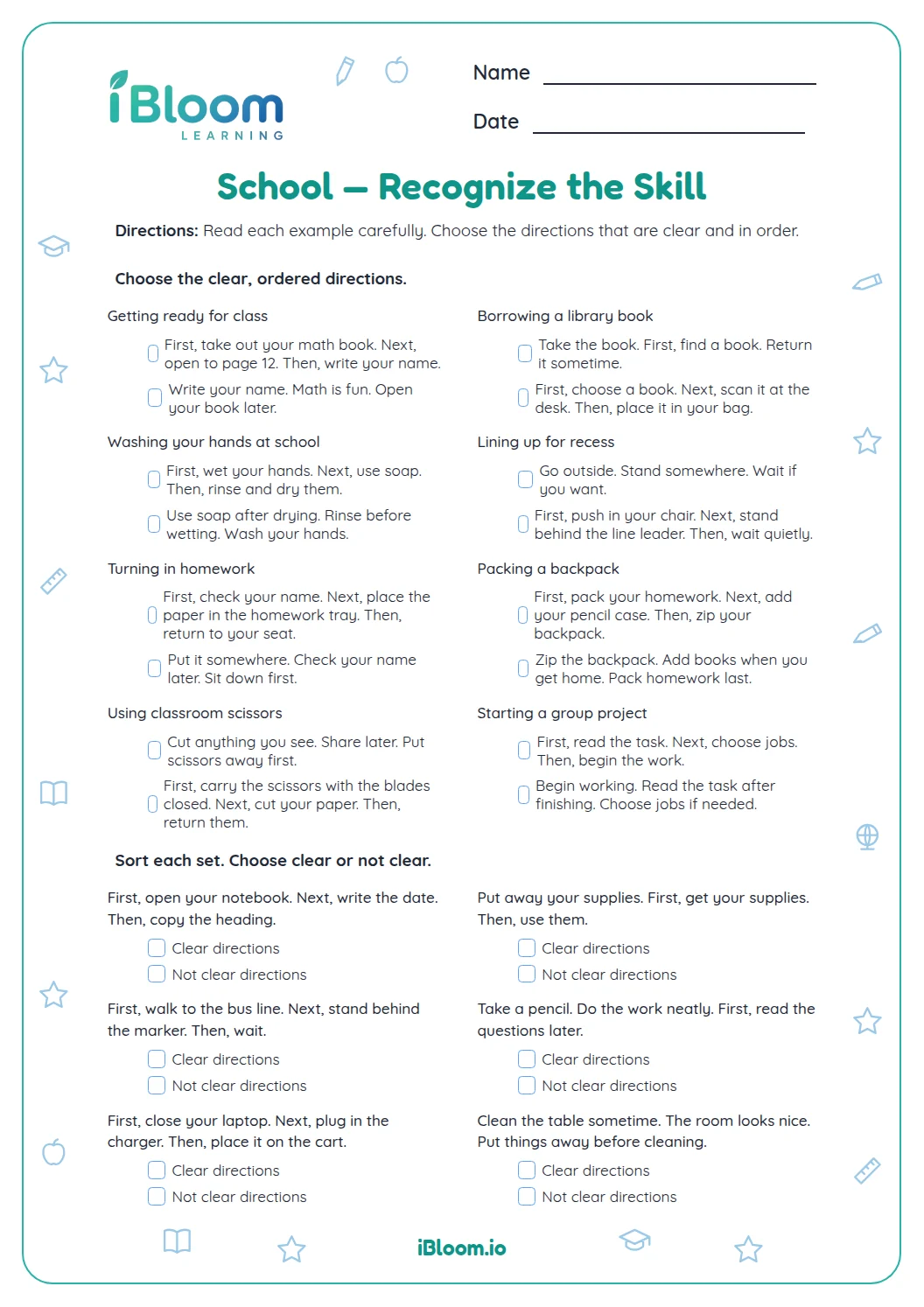
This Grade 4 printable uses triathlon and sports-practice situations to teach instructional writing. Across 16 multiple-choice items, learners identify clear actions, choose useful safety details, put steps in a workable order, and revise vague directions. These choices practice organizing information and communicating it clearly, a focus of Common Core W.4.2. Four worksheet pages and an answer key are included.
Aligned to W.4.2
What makes an instruction clear?
A clear instruction tells the reader what to do. “Set four markers in a line” gives a specific action and arrangement, while “The markers are bright” gives no step to follow.
Which details make a direction useful?
Details should help the reader complete the task safely or accurately. For a running path, keeping it clear of traffic matters more than describing the fence beside it.
How should instructions be ordered?
Put preparation before action and cleanup after use. For timing a lap, start the timer, watch the lap, and record the time. The final part asks learners to replace vague directions with precise wording.
How to use this worksheet
- 1Read the situation and identify the task.
- 2Choose an option that tells the reader a specific action.
- 3Check that added details help with safety or completion.
- 4Put preparation, action, and recording steps in order.
- 5Use the key to review your choices.
Common mistakes and quick fixes
The mistake
Choosing a sentence that describes equipment instead of giving an action.
The fix
Look for a verb that tells the reader what to do.
The mistake
Adding a detail that does not help the task.
The fix
Keep details that improve safety or make the step easier to follow.
The mistake
Putting the action before necessary preparation.
The fix
Check what must happen before the activity can begin.
These instructional writing choices connect to the following Common Core standard.
Choose organized, clear information for instructional writing.
On this sheet:
Show the official wordingHide the official wording
Write informative/explanatory texts to examine a topic and convey ideas and information clearly.
What to practice next
Make more practice
Further reading
Questions parents and teachers ask
What writing skills does this worksheet practice?
It practices writing clear instructions: naming actions, adding useful details, arranging steps, and revising vague directions. The examples use triathlon and sports-practice situations, including relays, running paths, equipment care, and timing a lap. Students judge what a reader needs to do.
How many questions are on the worksheet?
The worksheet has 16 multiple-choice questions in four parts. Students identify clear instructions, select useful details, put directions in order, and improve unclear wording. Each of the four worksheet pages includes an answer key for checking choices. Review one part at a time.
Why do directions need sequence words?
Sequence words help readers know what happens first, next, and last. For timing a lap, the timer must start before the lap is watched and recorded. Students compare sequences and choose one that can be followed from beginning to end.
What counts as a useful detail?
A useful detail helps a reader complete the direction safely or accurately. Keeping a running path clear of traffic supports a safety instruction; unrelated facts about equipment do not help the reader perform the step. The detail should serve the task.
Is an answer key included?
Yes. Answers are marked alongside each worksheet page. Reviewing the key can lead to a short discussion about which verb, detail, or order makes the instruction easier to follow and safer to complete. Ask the student to explain one selection.