




About this worksheet
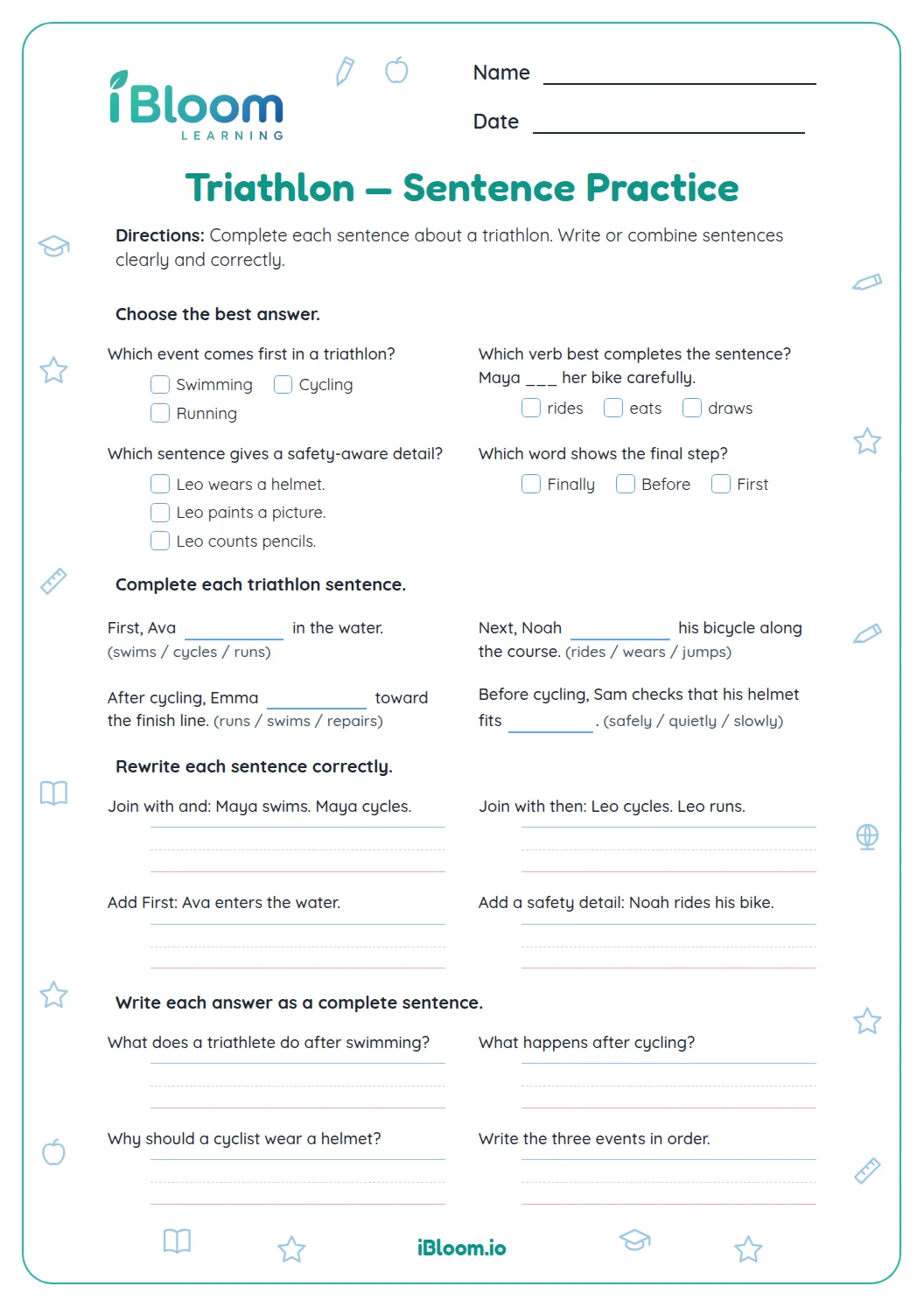
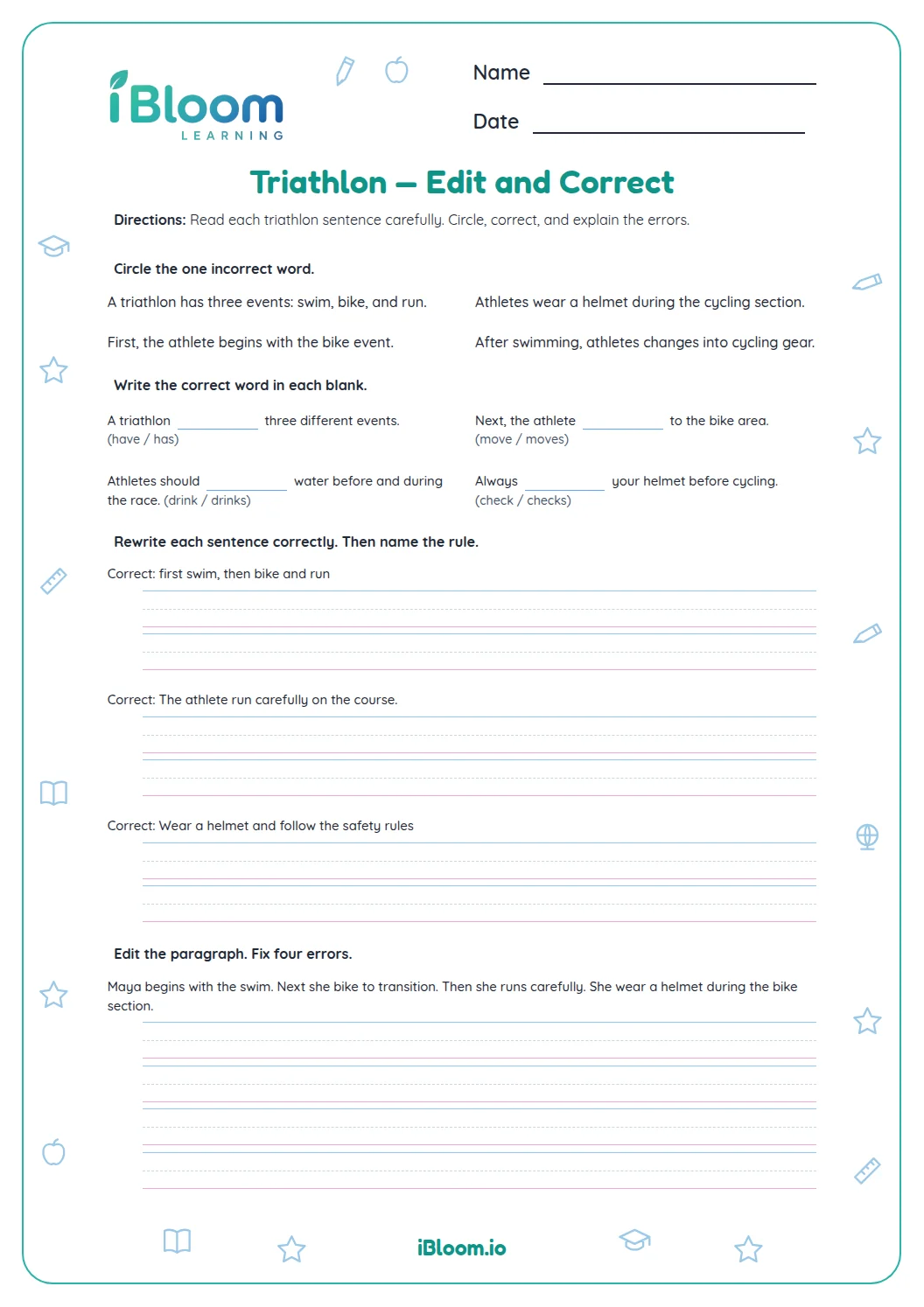
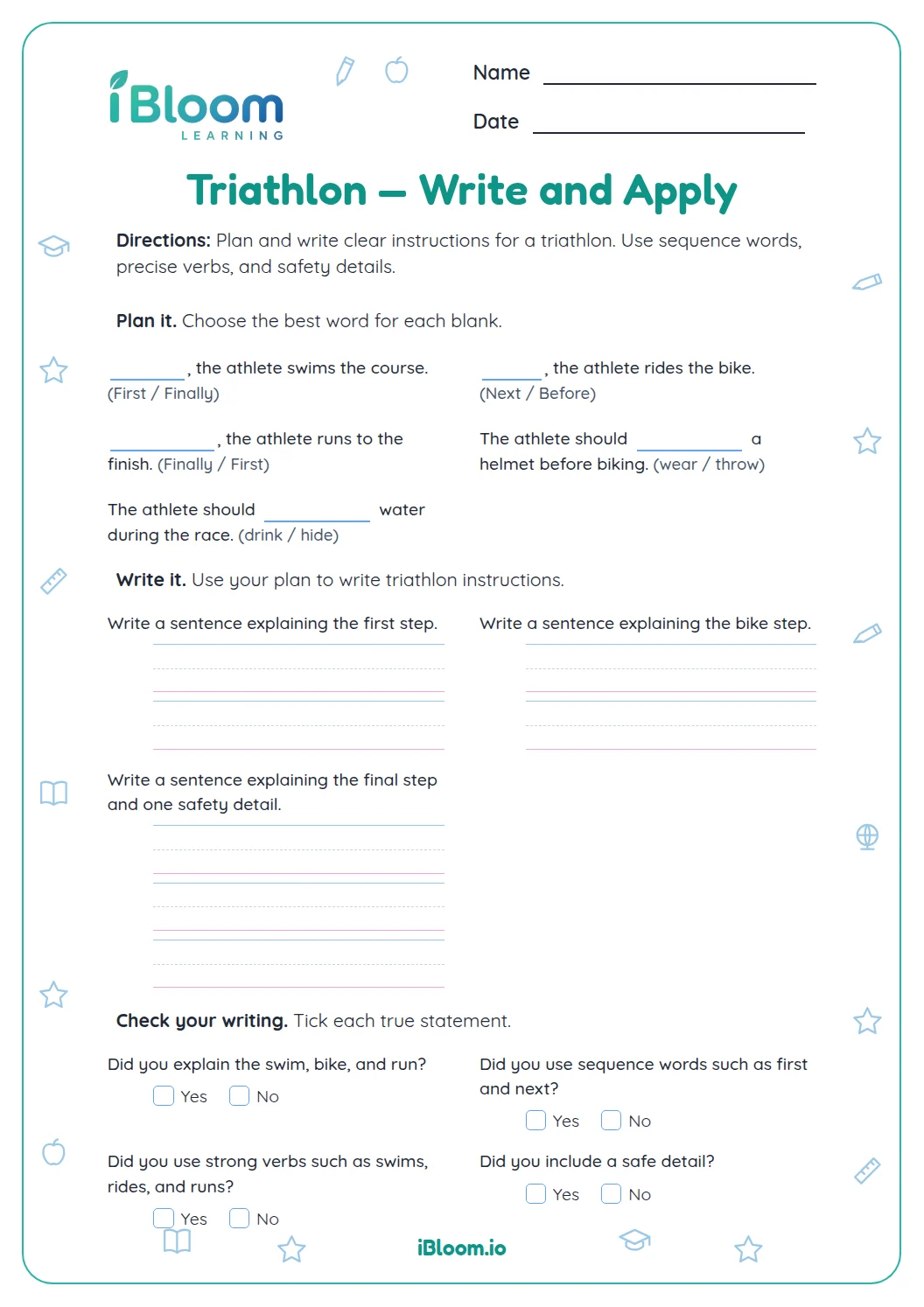
This Grade 4 instructional writing worksheet uses triathlon race-day situations to make directions concrete. Students choose clear goals, event order, gear, safety details, and transitions, then write two short sets of directions. The 14 questions move from recognizing useful instructions to applying event sequence and specific details. A separate answer key lists the choices and sample written directions. The practice connects with Common Core W.4.2 by organizing information clearly for a reader.
Aligned to W.4.2
What makes a direction easy to follow?
A useful direction names a concrete action and, when needed, a specific detail. “Put on a helmet before cycling” tells a reader what to do and when. Questions 2, 5, and 7 ask students to choose directions with clear actions or amounts.
- 1Choose a clear cycling direction.
- 2“Ride to the next marker” names an action and a destination.
How do transition words organize directions?
Sequence words help a reader move through steps in order. First can introduce the swim, then can move to cycling, and next can mark a running step. The event sequence is swim, cycle, run.
- 1Which event comes first?
- 2Swim. A triathlon moves from swim to cycle to run.
How can a writer improve a vague instruction?
Replace a broad phrase with an action the reader can picture. “Get ready” does not say what to gather or do; useful directions name gear and race actions. Questions 12 and 13 ask students to notice and explain what makes a direction clear.
How to use this worksheet
- 1Read each direction and decide whether it names a clear action.
- 2Put the race events in order: swim, cycle, then run.
- 3Notice transition words such as First, Next, and Finally.
- 4For questions 13 and 14, explain what a clear step needs and write a safe running direction.
- 5Use the key to compare your directions with the samples.
Common mistakes and quick fixes
The mistake
Using sequence words but putting the actions in the wrong order.
The fix
Read the directions as if you were doing them and check what must happen first.
The mistake
Writing a vague action such as “get ready.”
The fix
Name the object and action, such as “Tie your sneakers.”
The mistake
Giving an amount without saying what it measures.
The fix
Include the item and amount together, such as “2 cups of water.”
Common Core alignment
This page asks students to sequence and write clear directions for a familiar race-day task.
Organize triathlon directions to explain the steps clearly.
On this sheet: The worksheet practices clear explanations of race steps, with an emphasis on ordered directions and useful details.
Show the official wordingHide the official wording
Write informative/explanatory texts to examine a topic and convey ideas and information clearly.
What to practice next
Make more practice
Further reading
Questions parents and teachers ask
What makes an instructional sentence clear?
A clear instruction names an action the reader can do, such as “Pin on your number.” The worksheet contrasts specific directions with vague phrases such as “Make it nice” or “Get ready,” helping students spot which steps a reader can follow.
Why do sequence words matter?
Words such as first, next, after that, and finally tell a reader when to do each action. This page asks students to identify transitions and write one safe running direction beginning with Next. Those words make the order visible to the reader, while clear action verbs help readers know what to do.
What is the triathlon theme in this worksheet?
The examples use a triathlon, which includes swimming, cycling, and running. Students practice the event order and connect transitions, gear, and safety reminders to each part of race day. The familiar sequence helps make each direction concrete. They also choose a helmet reminder for the cycling leg.
How should a student answer the writing questions?
Question 13 asks students to explain why “Get ready” is unclear and give a clear action. Question 14 asks for one safe running direction beginning with Next. The key gives samples; another sensible action is correct when it follows the requested transition and makes the direction clear.
What is a common problem in instructions?
A direction can be too vague if it does not say what to do or what the reader needs. “Get ready” leaves questions open, while “Tie your sneakers and fill a water bottle” gives actions a reader can follow.
How can I extend this worksheet?
Ask the student to write a short set of triathlon directions with a gear list, ordered swim, cycle, and run steps, and a final safety reminder. Have a partner follow the steps and point out any place that needs a clearer action or transition.