


About this worksheet
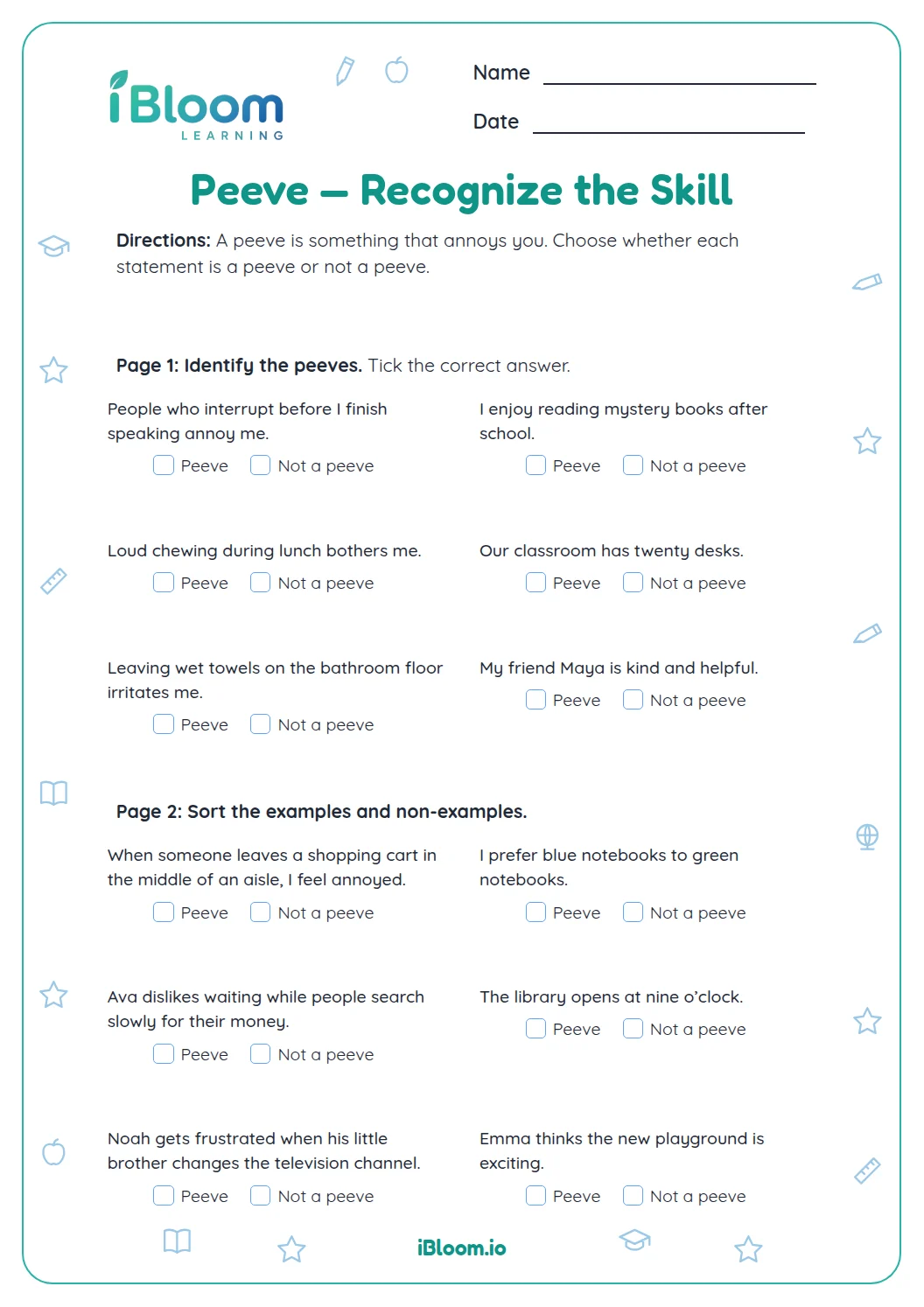
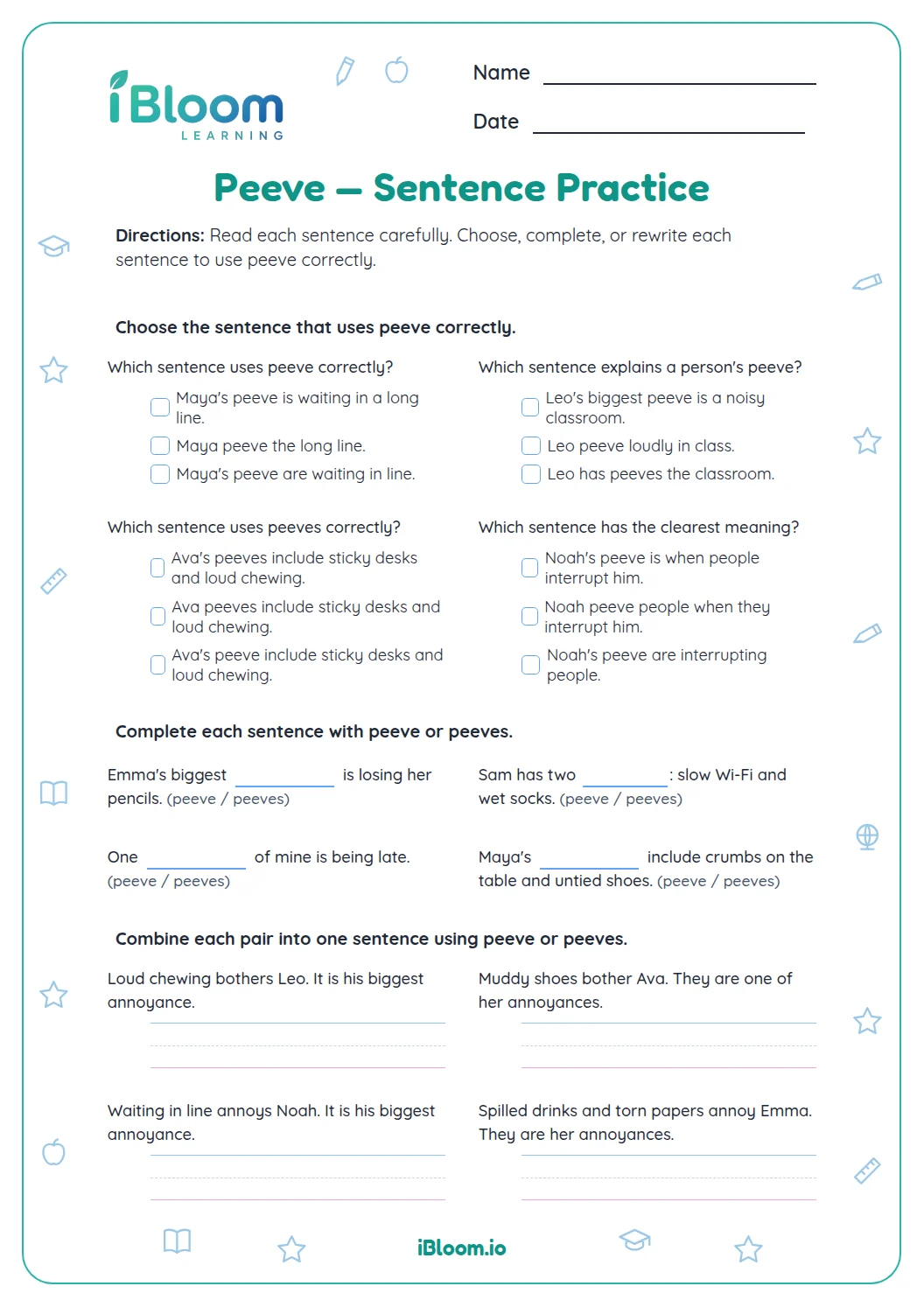
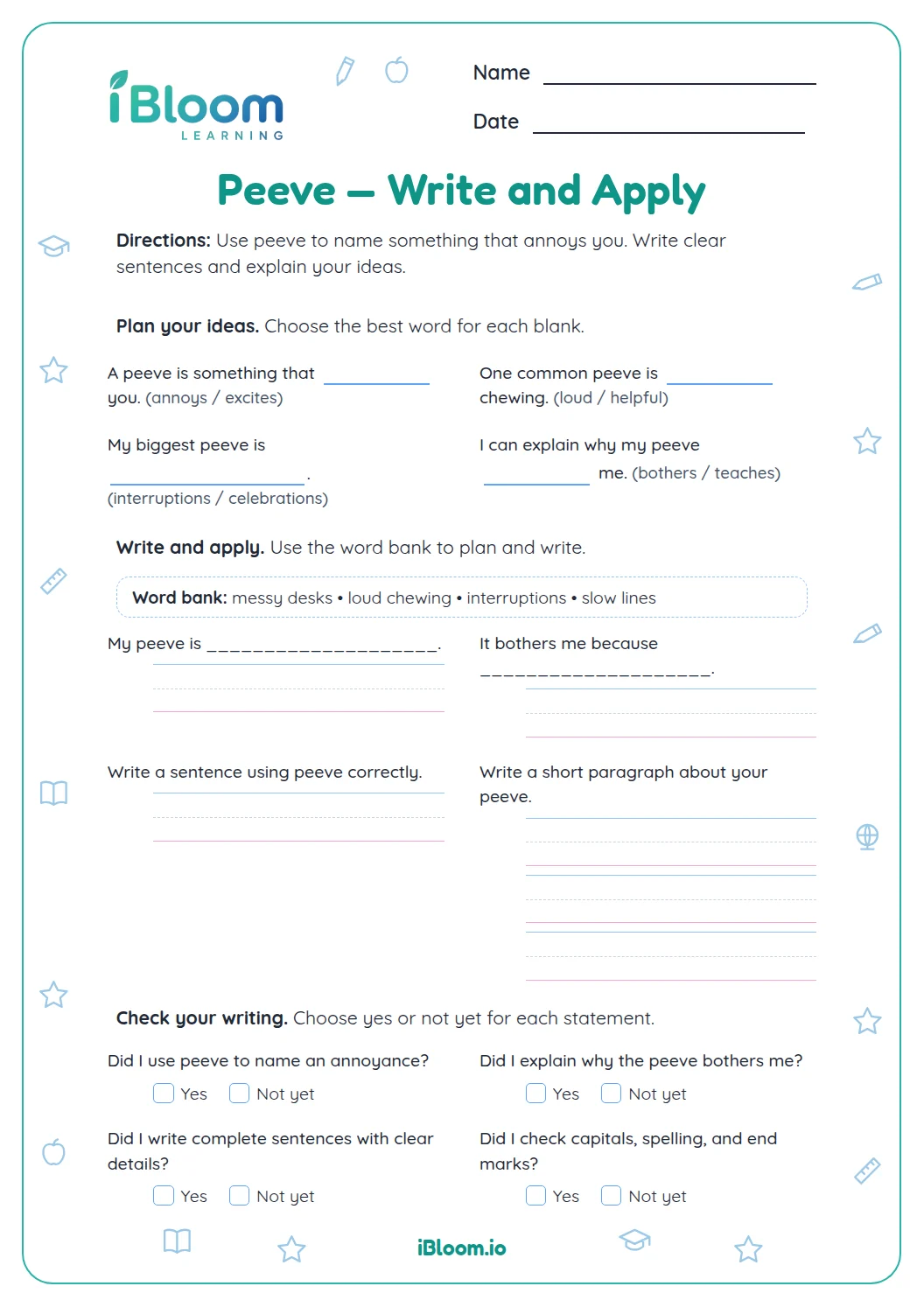
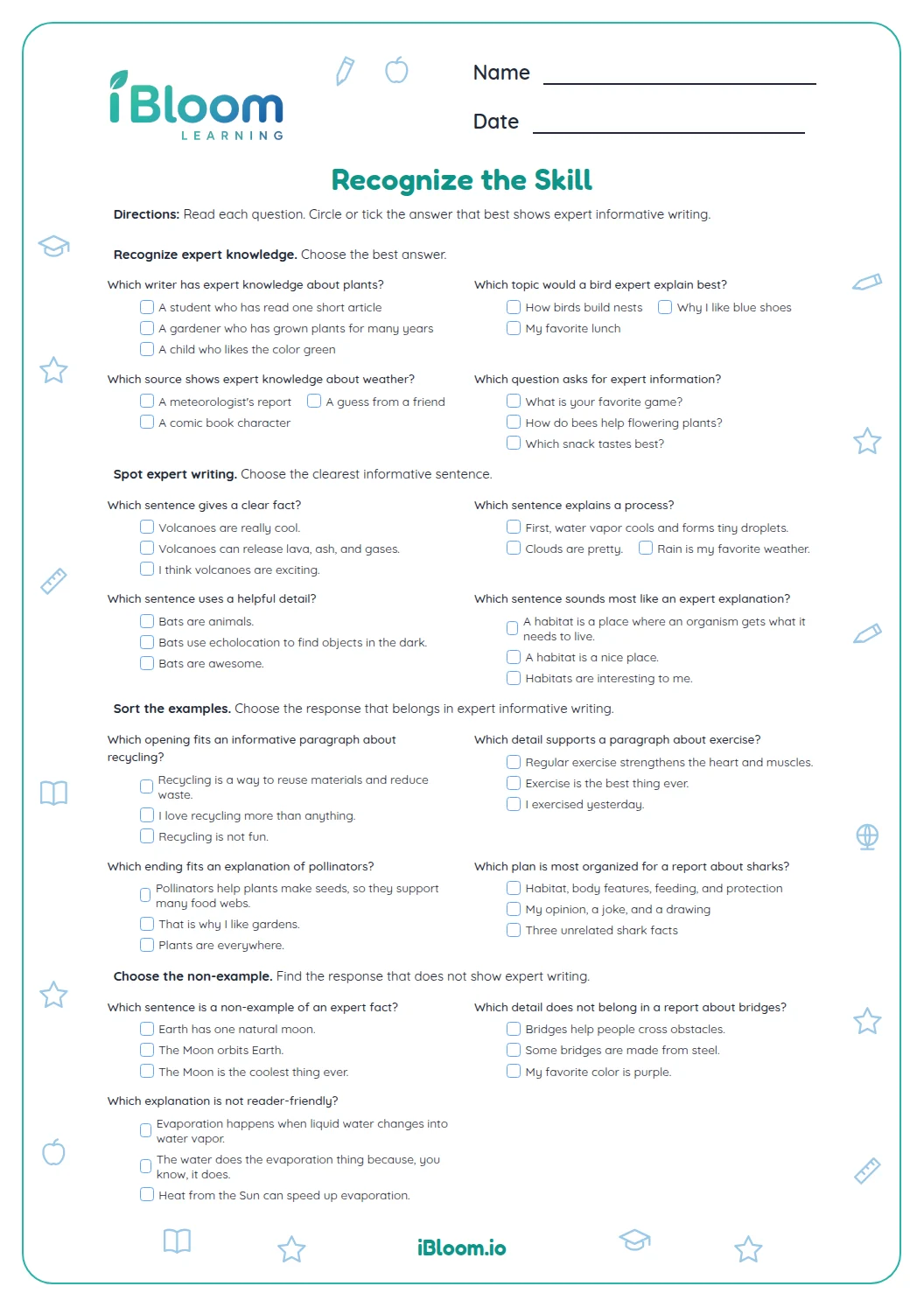
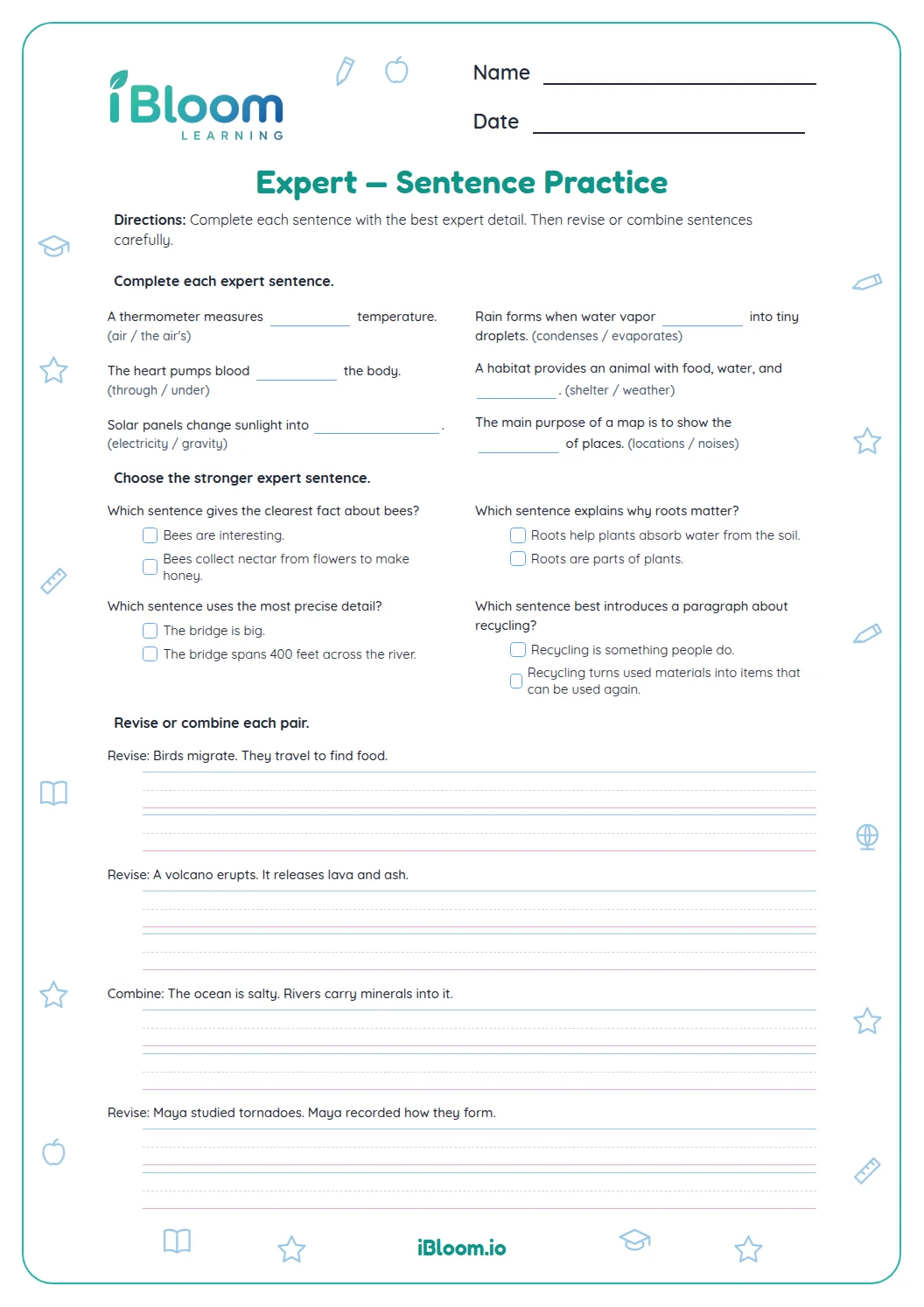
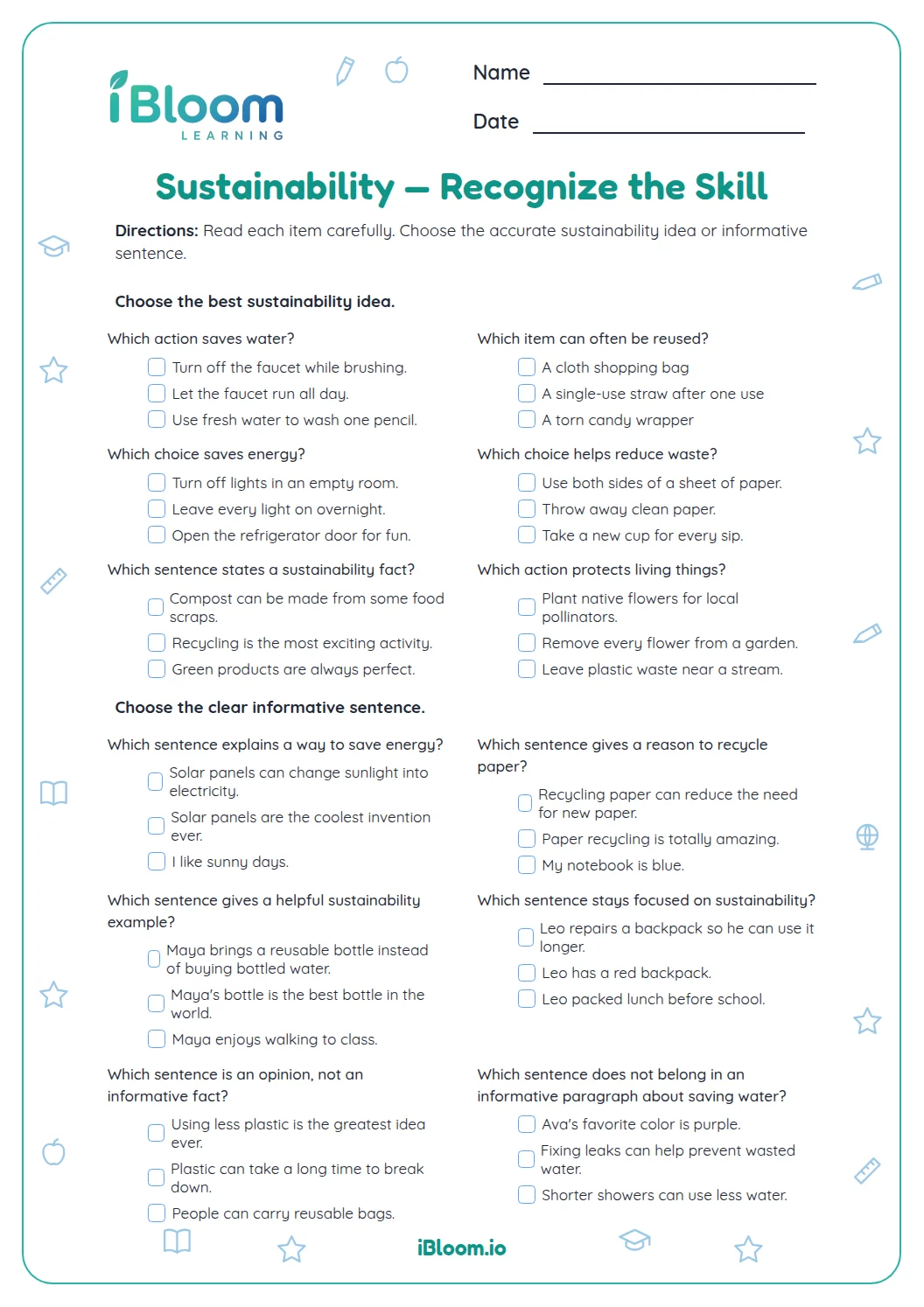
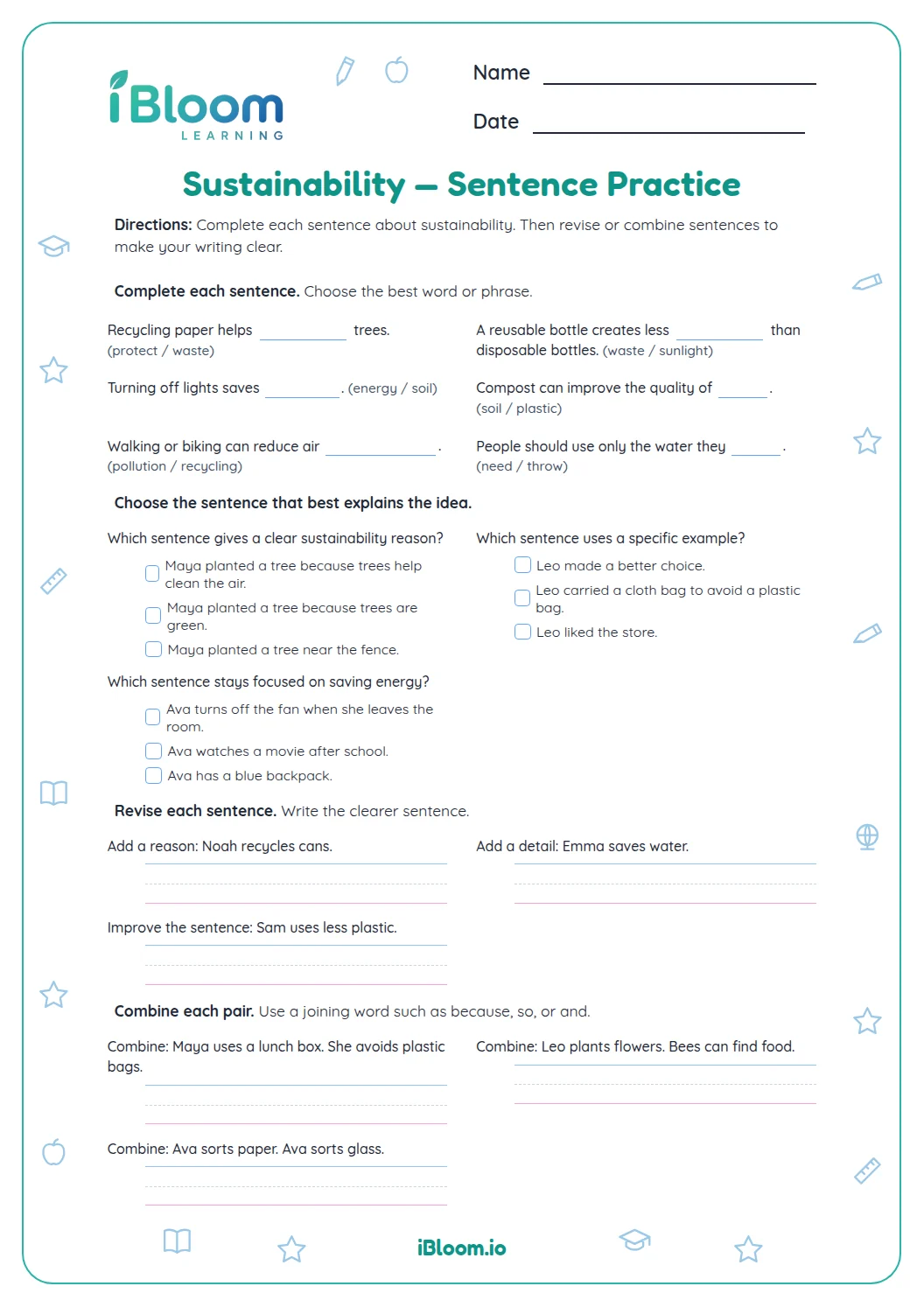
This free Grade 5 worksheet turns the “peeve” prompt into informative writing practice. Students choose topic sentences, concrete details, explanations, transitions and conclusions, then complete short skill checks and write two responses about an everyday annoyance. Part A reviews what belongs in an informative piece; Part B moves from vocabulary to composing. The work aligns with CCSS W.5.2 and W.5.5. A separate key offers sample responses for open questions.
Aligned to W.5.2 and W.5.5
What makes a peeve paragraph informative?
It names a repeated annoyance and explains it with details a reader can picture or check. A useful paragraph has a focused topic sentence, specific evidence, an explanation of why the detail matters, and a closing sentence. A respectful solution keeps the writer focused on improving the situation rather than insulting people.
- 1Topic: Repeated interruptions can make a task harder to finish.
- 2Detail: The same question interrupts the directions three times.
- 3Explanation: This makes it hard to remember the next step.
Which details support an informative topic?
Choose facts tied directly to the topic. “The loading circle stays on the screen for two minutes” gives a specific detail about waiting; “Computers are interesting machines” does not explain the peeve. Linking phrases such as “For example” can introduce evidence.
How can a writer check a short informative draft?
Read the topic sentence, details, explanation and conclusion in order. Ask whether each detail supports the topic and whether the explanation tells why that detail matters. Replace broad opinions with precise observations, then make sure the ending sums up the information.
How to use this worksheet
- 1Read the six choices and notice which ones inform with clear details.
- 2Pick a familiar, school-appropriate peeve to write about.
- 3State the topic in one focused sentence.
- 4Add observable examples or facts that support the topic.
- 5Explain how one detail affects a person or task.
- 6Reread the paragraph and revise its ending to sum up the information.
Common mistakes and quick fixes
The mistake
Listing an opinion such as “it is the worst” instead of explaining the peeve.
The fix
Name the repeated annoyance and add a detail a reader could observe.
The mistake
Giving evidence without explaining why it matters.
The fix
Add a sentence that connects the detail to the effect on a person or task.
The mistake
Ending with a new unrelated complaint.
The fix
Use the last sentence to restate what the details show about the peeve.
Common Core alignment
The writing tasks ask students to explain a focused topic and strengthen a draft.
Write informative text that examines a topic and explains ideas clearly.
On this sheet: Students plan and write an informative paragraph about an everyday peeve using facts, details and explanation.
Show the official wordingHide the official wording
Write informative/explanatory texts to examine a topic and convey ideas and information clearly.
Strengthen writing by planning, revising and editing with support.
On this sheet: Students review whether their topic, facts, explanation and ending fit, then revise a draft.
Show the official wordingHide the official wording
With guidance and support from peers and adults, develop and strengthen writing as needed by planning, revising, editing, rewriting, or trying a new approach. (Editing for conventions should demonstrate command of Language standards 1-3 up to and including grade 5 here .)
What to practice next
Make more practice
Further reading
Questions parents and teachers ask
What skill does this informative writing about a peeve worksheet practice?
A peeve paragraph informs readers by naming a repeated annoyance and explaining it with details and effects. This worksheet starts with eight choices about clear facts and respectful phrasing, then asks students to write a focused sentence and a paragraph with supporting details.
Can my child use the answer key independently?
Yes. The separate answer key lets a child compare each response after trying the page. For an open response, use the sample as one possible answer and check that the response includes the requested detail or reasoning. A child can correct an answer in a different color and explain the change.
How should we work through the harder questions?
Start by reading the section heading and its short direction together. Work one example aloud, naming the clue or strategy, then let the child continue. When an answer is incorrect, return to the prompt and show the step that leads to a correct result instead of simply copying the key.
How long should this printable take?
Plan for about 15 minutes, with extra time if the child explains each choice or writes a full response. The worksheet is designed for one sitting, but it can also be split at the part break. A short pause between sections can help children check their work carefully.
What can we do after finishing this page?
Ask the child to choose one question and explain how they solved it without looking at the key. Then try another worksheet in the same skill sequence for additional practice. A brief conversation about which clue or step was most useful helps connect the printable to future work.