

About this worksheet
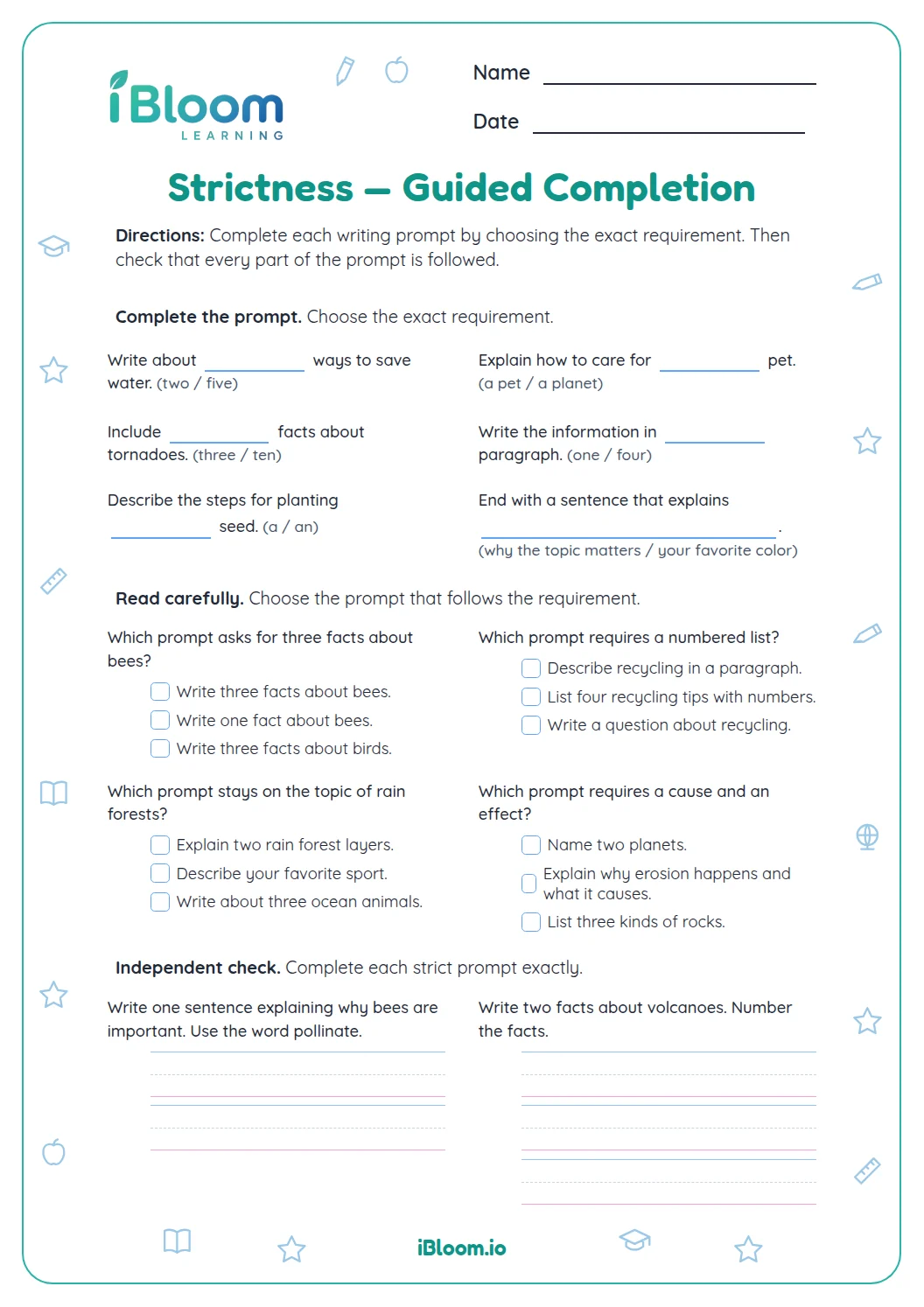
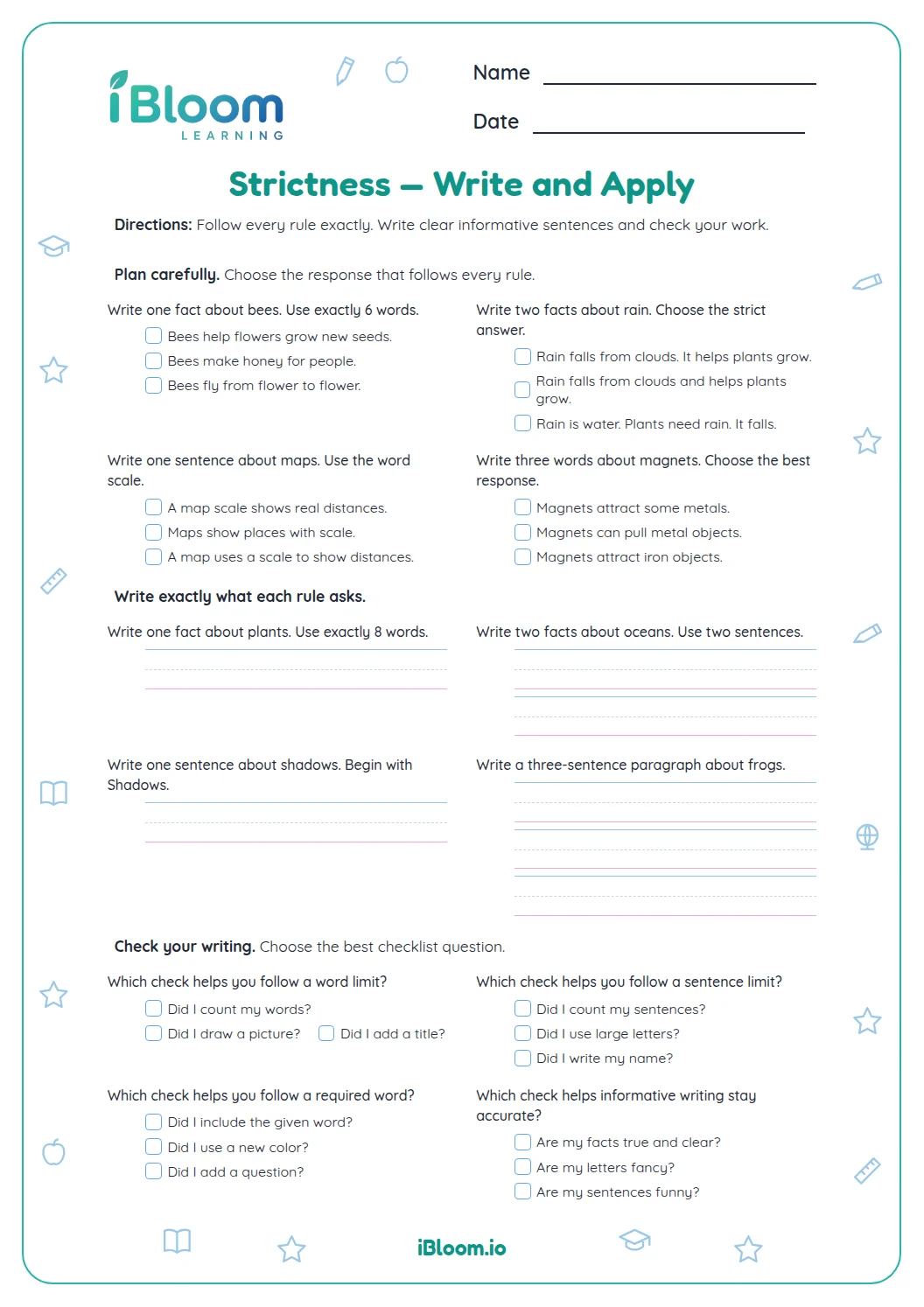
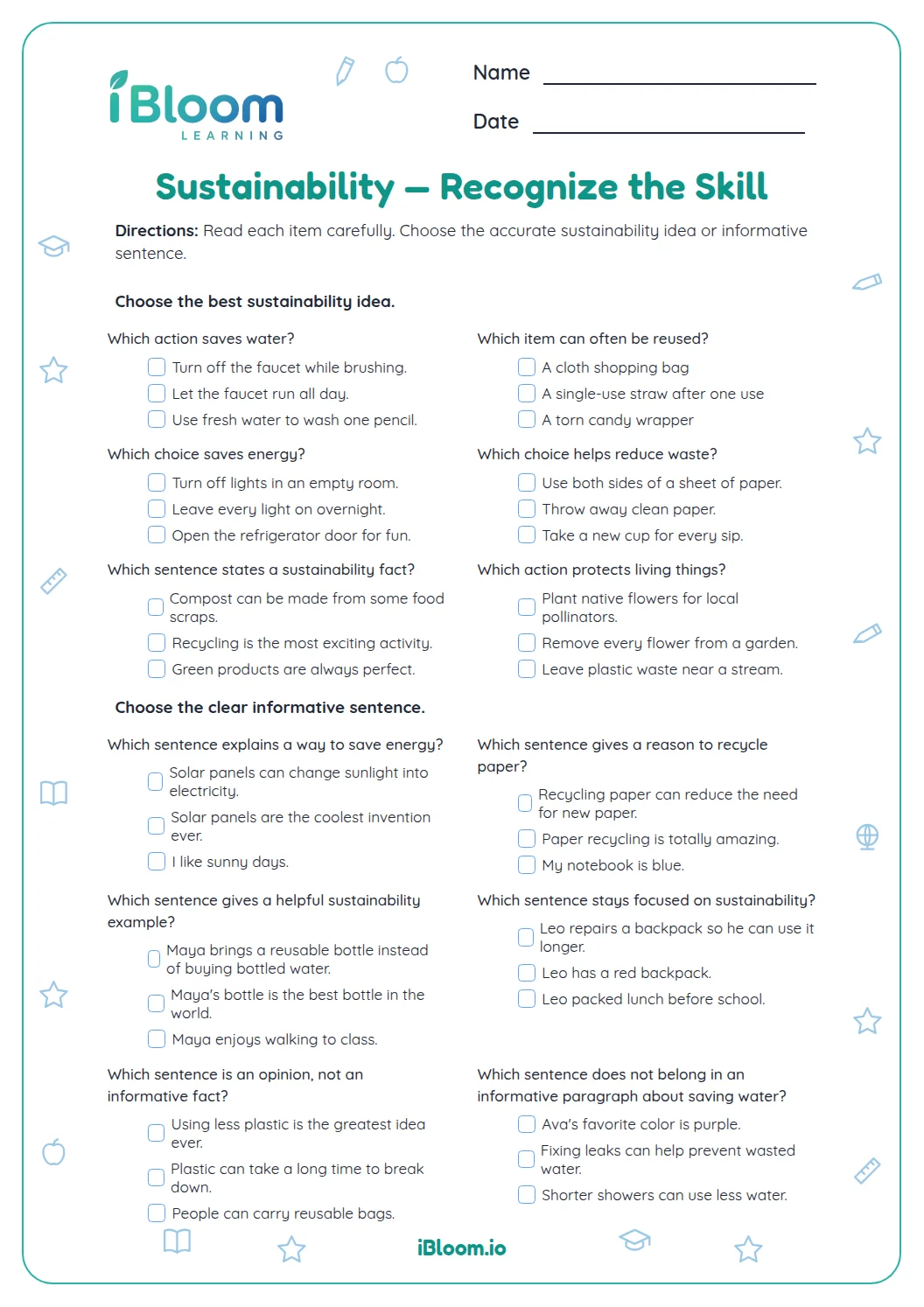
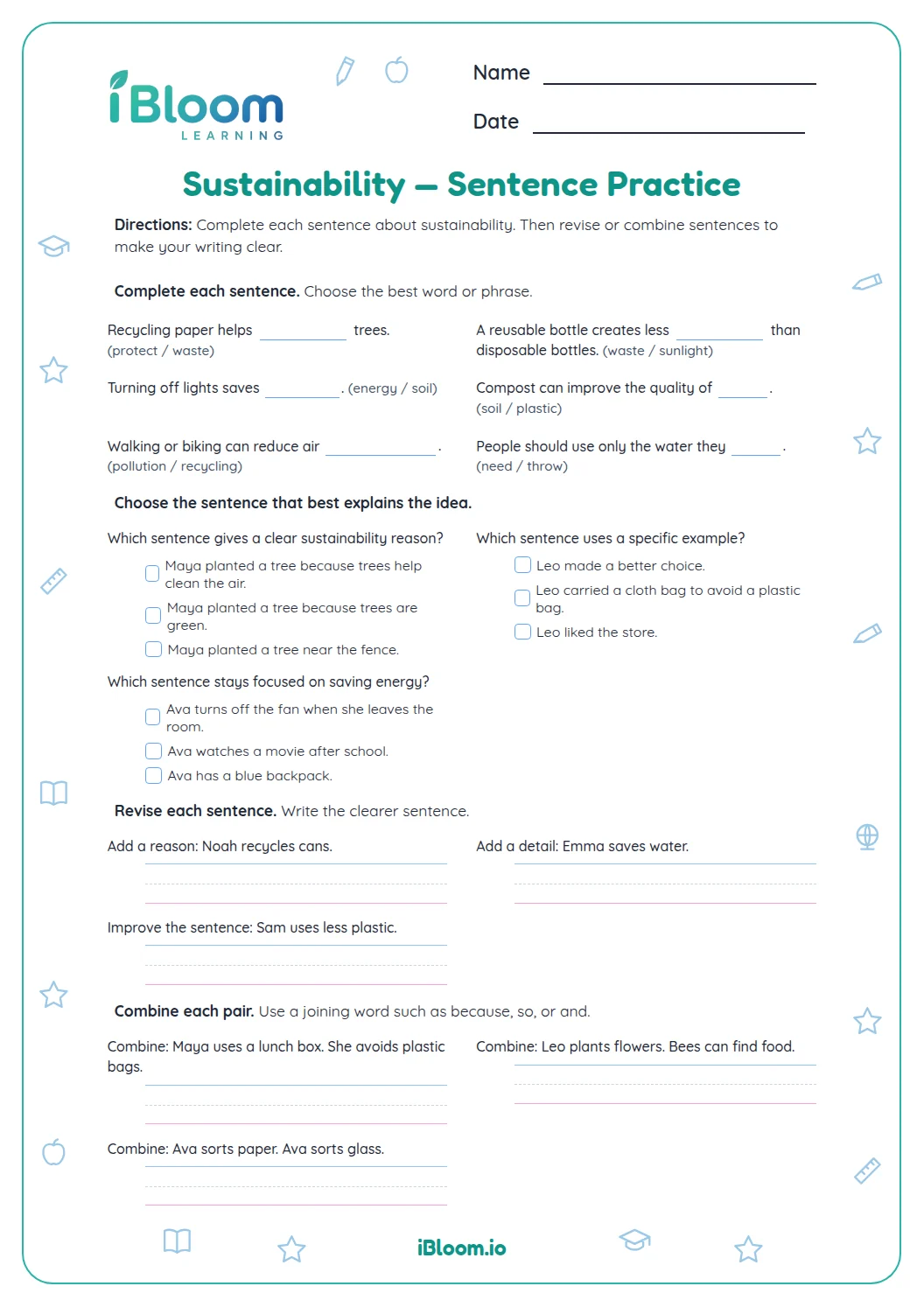
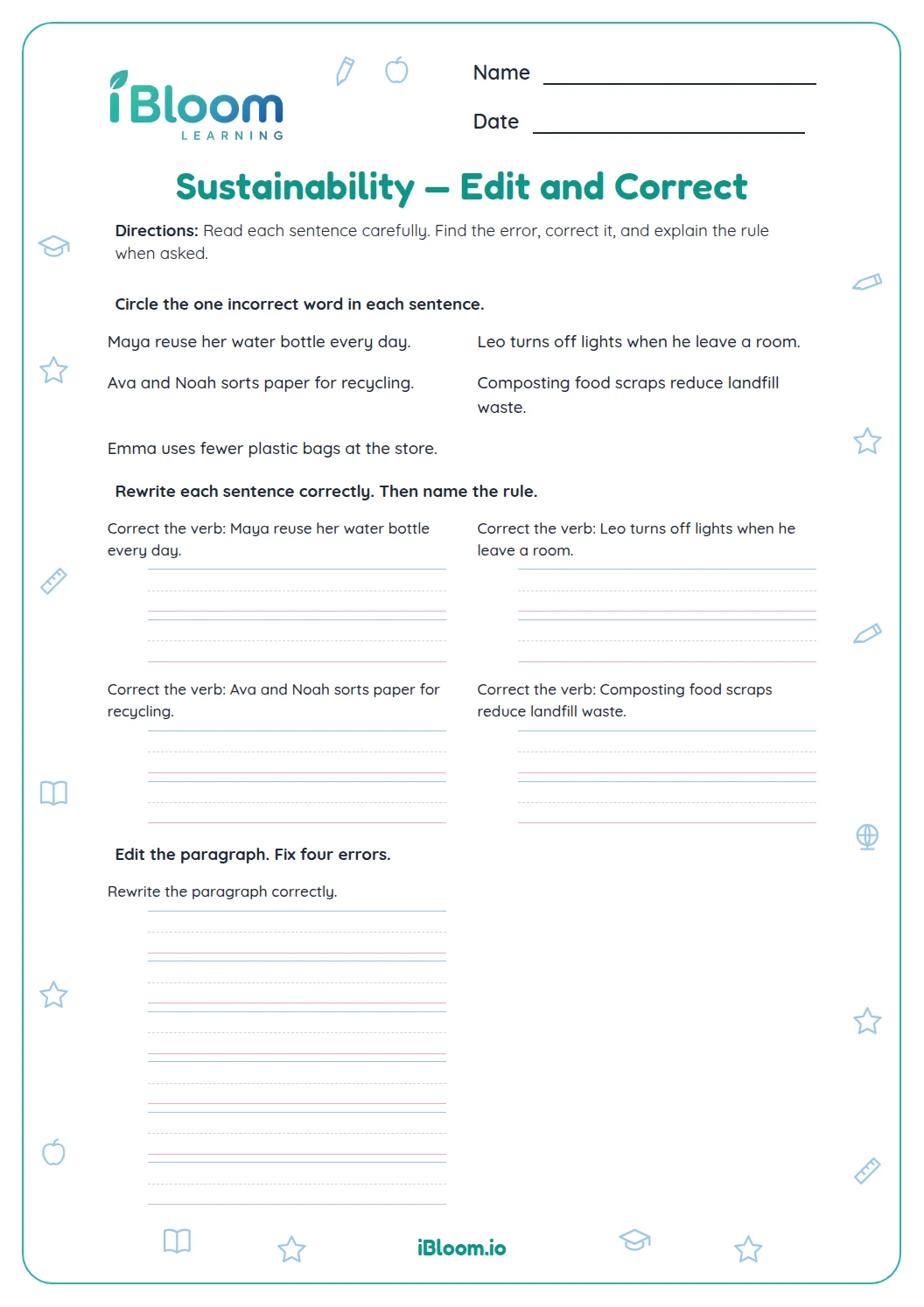
This Grade 5 worksheet builds close reading of writing prompts. Students compare possible responses and select the one that follows every stated requirement, such as giving exactly two reasons, writing three facts, or using a specified number of sentences. Part A starts with short response constraints; Part B combines sentence-count and content requirements. Each item has one response that meets the prompt as written. The answer key identifies the matching choice and helps students name the requirement they checked.
Aligned to W.5.4
What does it mean to follow a prompt strictly?
A strict response meets each requirement the prompt states. A prompt may set a topic, a number of details, a sentence count, or a form such as steps. Extra information can make a response fail when the prompt asks for an exact amount.
Part A asks students to compare three options and select the one that follows all conditions.
- 1“Explain two ways to save water.” The response with two different actions meets the number and topic requirements.
How can you check a number requirement?
Circle words such as one, two, three, and four. Then count the requested ideas or sentences in each response. Do not confuse several details in one long sentence with the exact sentence count requested.
Part B includes paragraph and sentence-count prompts.
- 1A four-sentence recycling paragraph must have four sentences and stay about recycling.
Can extra information make an answer incorrect?
Yes, when a prompt asks for an exact number or a focused response. A third reason does not follow a request for two reasons, even if the extra reason is true. Keep each sentence connected to the question.
Read the prompt again after choosing an option to confirm nothing was added or left out.
- 1For “one cause of soil erosion,” choose the response that names a cause without adding a second explanation.
How to use this worksheet
- 1Read the prompt once for its topic and again for words that set limits.
- 2Underline the number words and circle any requested format, such as steps or sentences.
- 3Check each option against every condition, one at a time.
- 4Count sentences separately from facts or reasons.
- 5Reread the prompt beside your selected response before checking the key.
Common mistakes and quick fixes
The mistake
Choosing a response that is true but too broad.
The fix
Check whether it answers the exact topic and task.
The mistake
Adding more reasons than requested.
The fix
Count the reasons and match the number in the prompt.
The mistake
Counting ideas instead of sentences.
The fix
Mark each sentence-ending period and count the sentences.
Common Core alignment
These standards describe the reading, writing, or language work practiced on this sheet.
Produce clear writing that fits the task, purpose and audience.
On this sheet: Each item evaluates whether a sample response follows the task’s stated requirements.
Show the official wordingHide the official wording
Produce clear and coherent writing in which the development and organization are appropriate to task, purpose, and audience.
What to practice next
Make more practice
Further reading
Questions parents and teachers ask
What does “strictness” mean on this page?
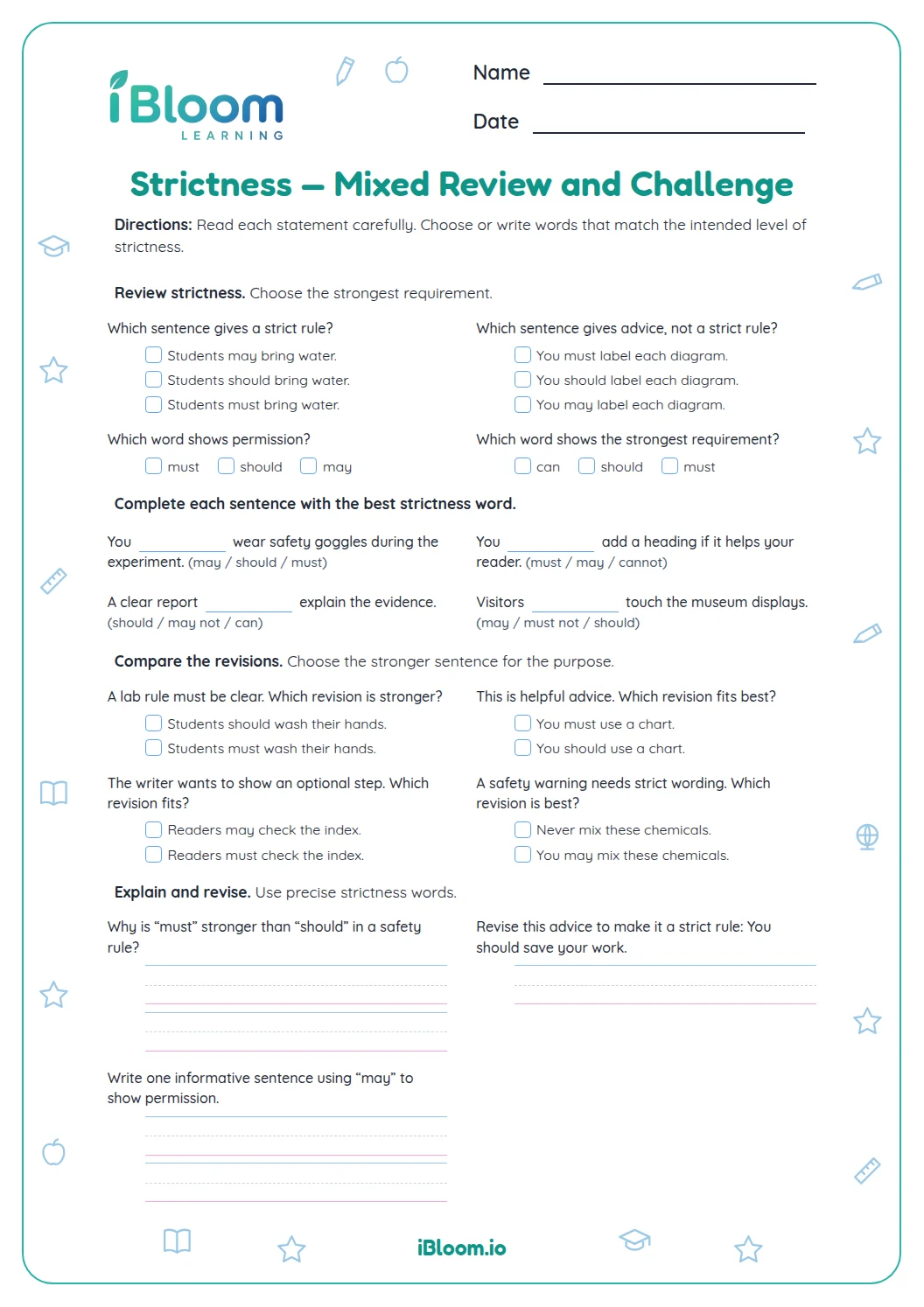
Here, strictness means following every stated requirement in a writing prompt. Students check the topic, how many details or reasons are requested, and any sentence or format limit. An answer can contain true information and still miss the task if it ignores one of those directions.
Can a response include extra facts?
It depends on the prompt. If it asks for exactly two reasons or three facts, extra information does not follow the requested amount. If the prompt gives no number, a relevant detail may help. These items use clear limits so students can practice checking them.
How do I distinguish a sentence count from a detail count?
A sentence ends with punctuation such as a period. A detail is one piece of information. A single sentence can contain multiple details, and several sentences can each express one detail. Check the prompt to see which count it names.
Why are some answer choices almost correct?
The close choices make students check every part of a prompt rather than choose a response because it sounds reasonable. One option may fit the topic but include too many details, or meet the count while missing the requested form.
What should my child do after choosing an answer?
Have them point to the words in the prompt that set the requirements, then show where the selected response meets each one. This short explanation turns the multiple-choice check into a repeatable editing habit for future writing. Students can use the same check while planning, drafting and revising work in any subject.