


About this worksheet
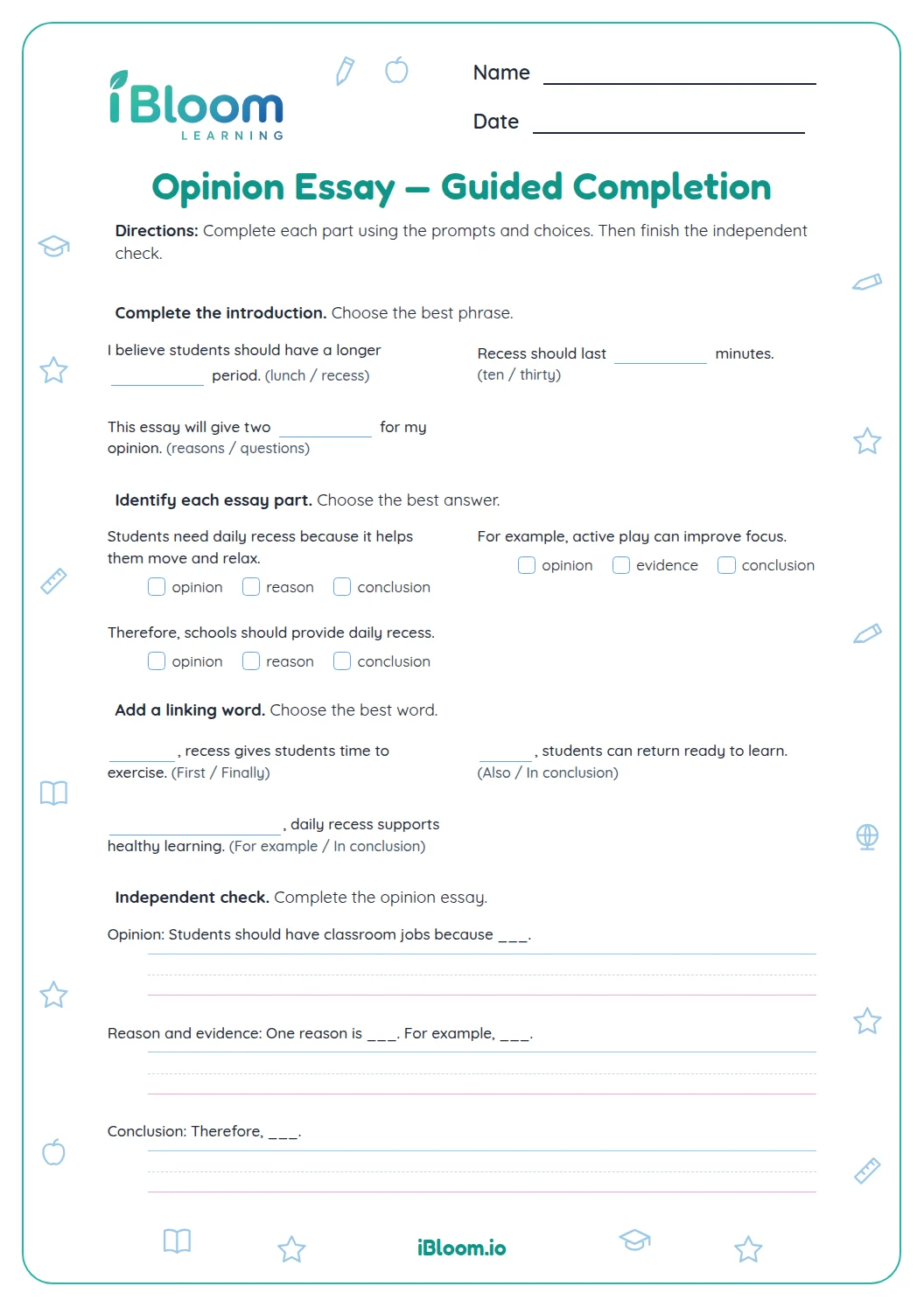
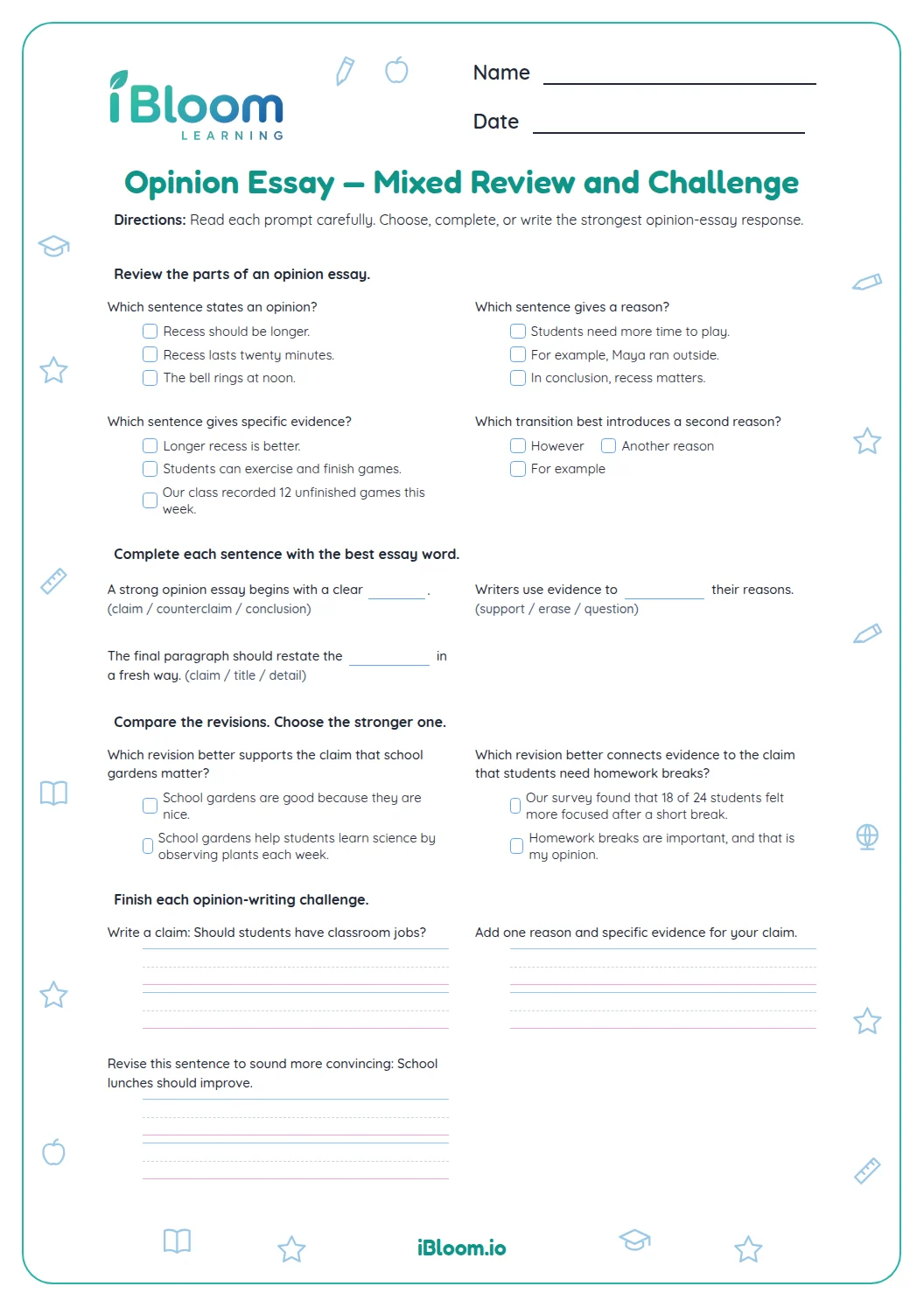
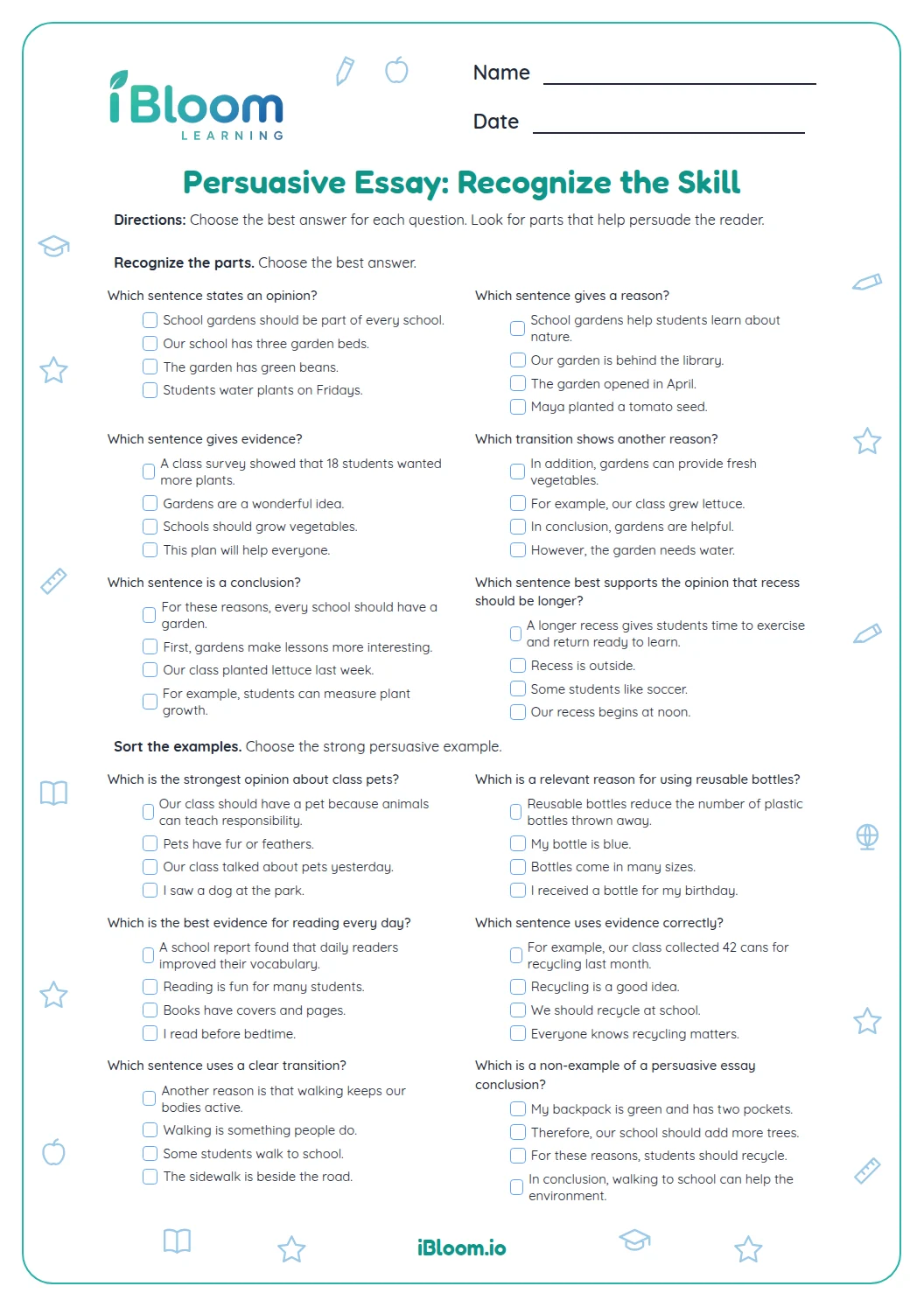
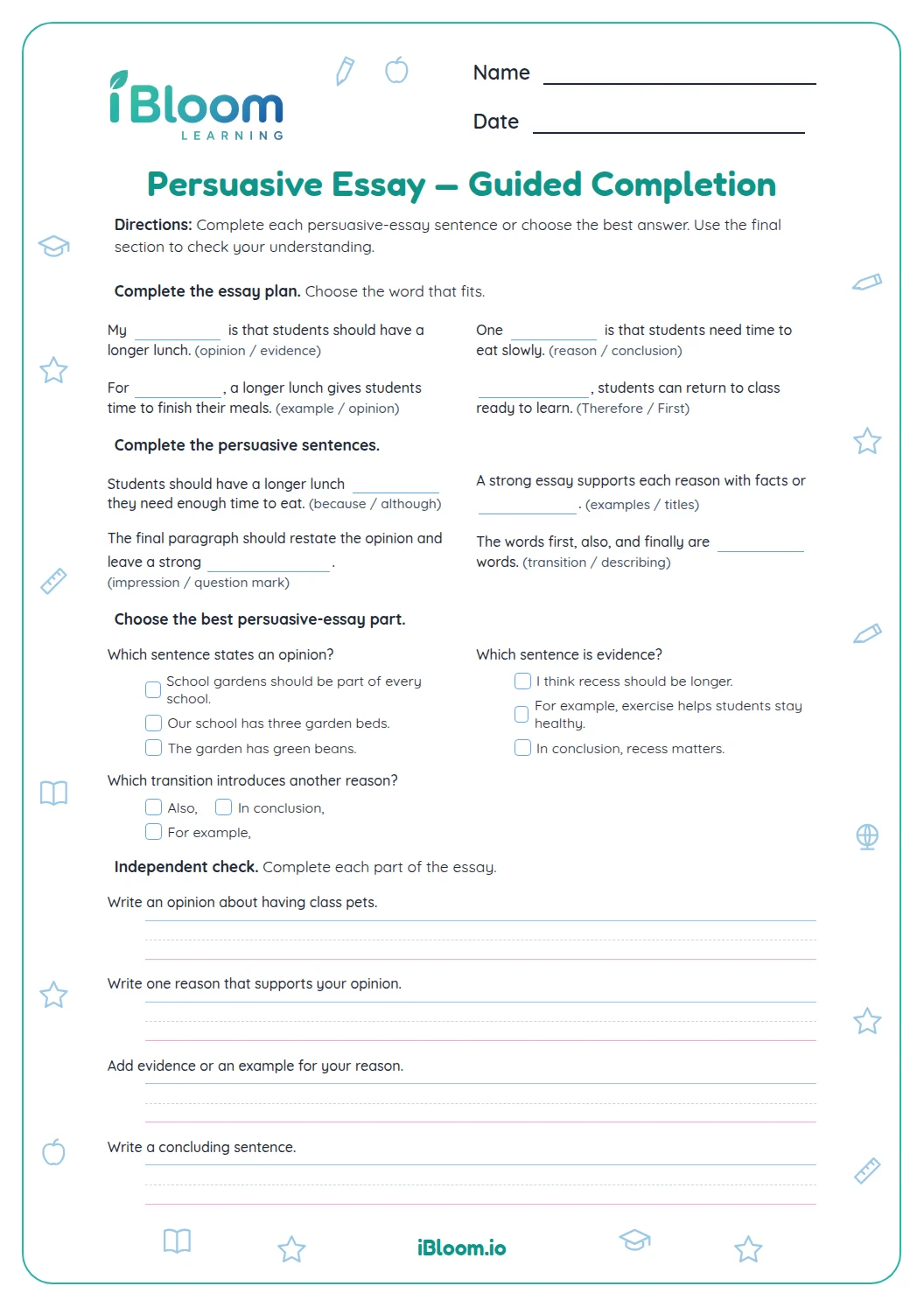
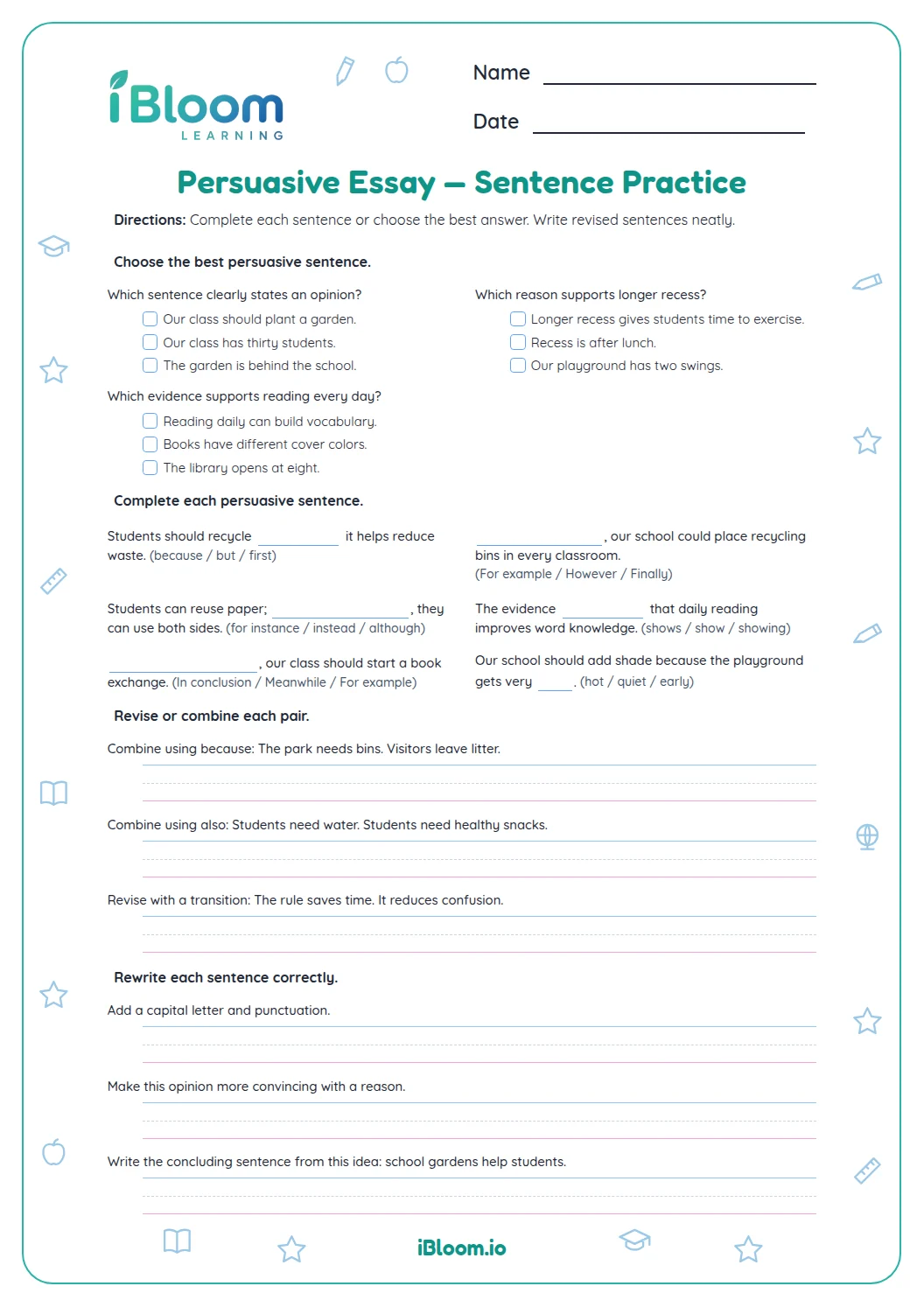
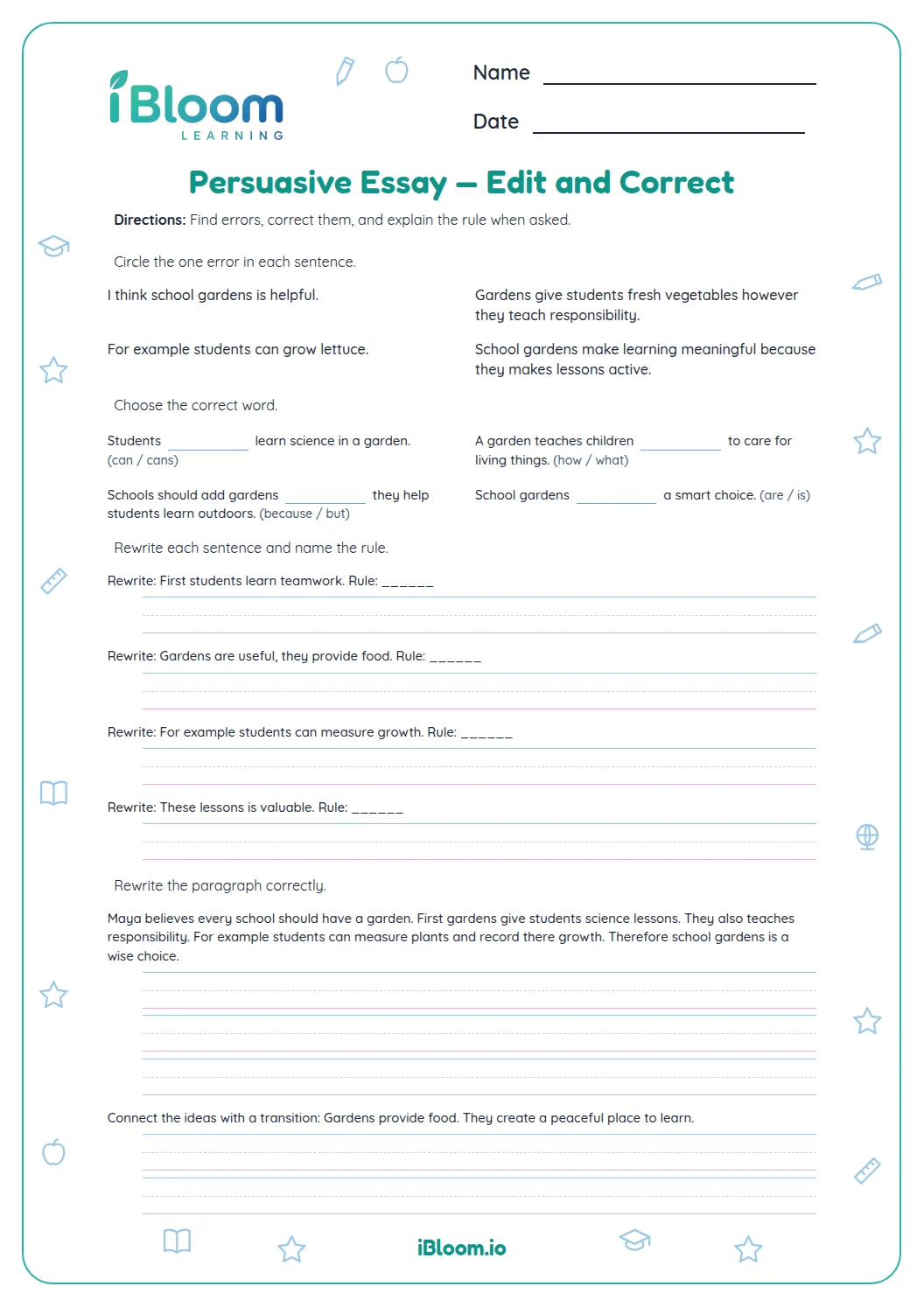
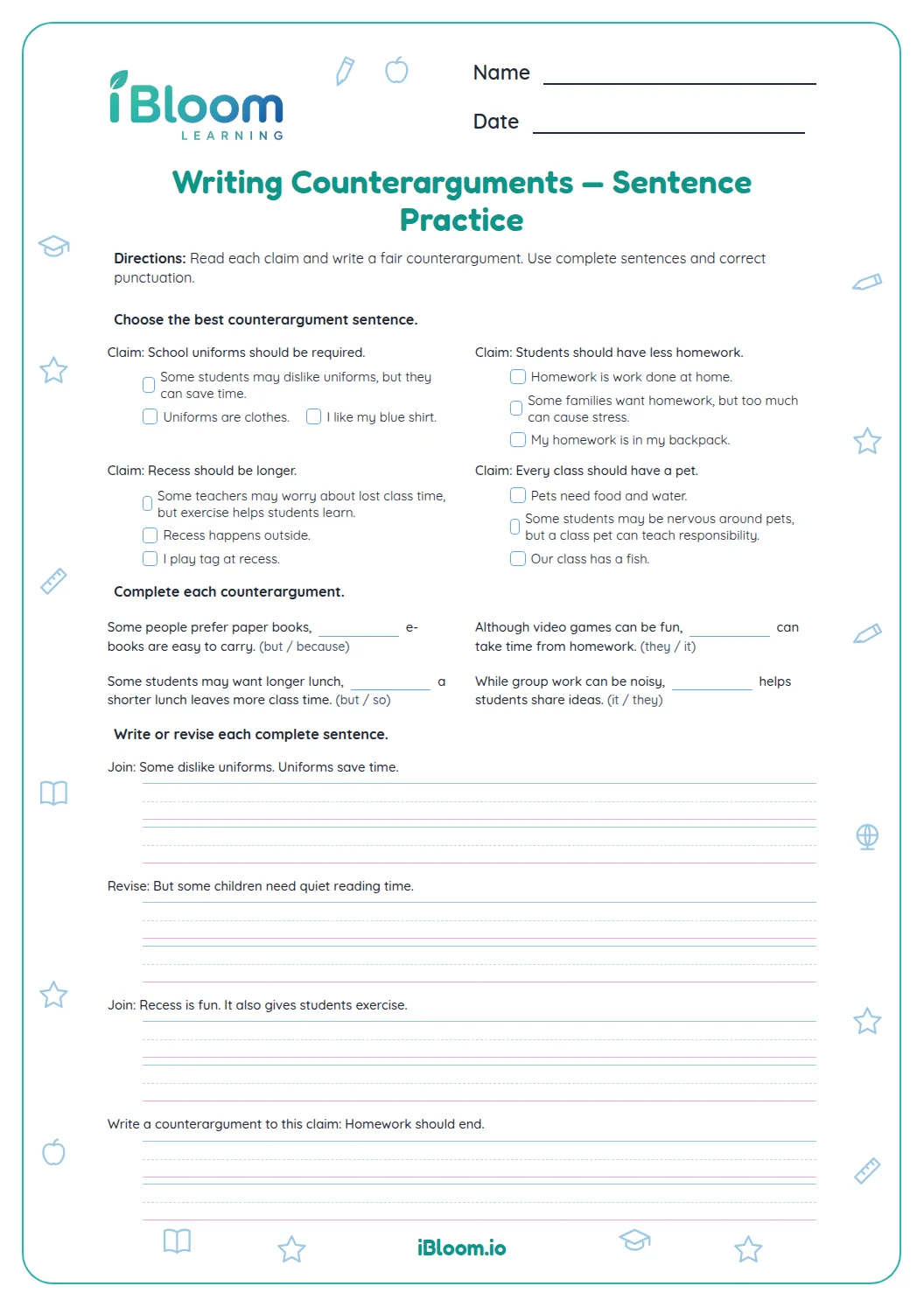
This free printable worksheet helps Grade 5 writers connect opinions, reasons and details at the sentence level. Part A has four linking-word blanks, and Part B adds two more before the sentence-writing tasks. Part C supplies four classroom situations and asks for one-sentence answers that use a specific detail to support an opinion. Part D asks for four final one-sentence connections and revisions. The practice supports Common Core W.5.1.b and W.5.1.c: using supported reasons and linking opinions to those reasons. A separate key gives the four fixed links and sample sentences for the eight written responses.
Aligned to W.5.1.b and W.5.1.c
What does each part ask students to write?
The linking-word tasks in Parts A and B focus on six links: because, therefore, specifically and for example. Each pair includes one link that fits the relationship between the ideas. Part B gives a reason-building task about a reading corner, drying shelf, garden or newsletter.
Part C makes the writing more independent. Children combine two statements with because, connect a reason and recommendation with therefore, replace “It is nice” with useful support, and write a newsletter opinion. The classroom situations are practice scenarios supplied by the worksheet.
How does a detail make a reason more useful?
A detail helps a reader understand the need behind an opinion. “It is good” gives little to consider. The art-club prompt supplies an observable problem, wet paintings on both worktables, that a drying shelf could solve.
- 1Opinion: The art club needs a drying shelf.
- 2Given detail: Wet paintings cover both worktables.
- 3Sample: A drying shelf would free our two worktables.
- 4The detail explains why the shelf would be useful.
How do writers choose between because and therefore?
Because introduces a reason: we need a book basket because it keeps books handy. Therefore introduces a result or recommendation drawn from a reason: the reading corner is full; therefore, we need a seat.
In question 12, the two complete statements can be joined with a semicolon before therefore and a comma after it. Have students read the joined sentence aloud, checking that the recommendation follows from the reason.
How to work through the sheet
- 1Read both ideas in each Part A sentence before choosing a link.
- 2For Part B, underline the supplied detail that supports each opinion.
- 3Write one sentence explaining why that detail matters to the reader.
- 4Combine and revise the Part C sentences while keeping their intended meaning.
- 5Check the eight written answers for complete sentences, logical connections and specific support.
Mistakes to look for and how to fix them
The mistake
Using “although” to introduce a reason that supports the opinion.
The fix
Although signals a contrast. Use because when the second idea explains why the opinion makes sense.
The mistake
Repeating “The art club needs a shelf because it needs a shelf.”
The fix
Use the given detail about wet paintings to explain what problem the shelf would solve.
The mistake
Joining two complete statements with only a comma before therefore.
The fix
In question 12, use a semicolon before therefore and a comma after it to connect the two complete statements.
Common Core alignment
Use supplied classroom details to support reasons for an opinion.
On this sheet: Part B connects each opinion to a specific supporting detail; Part C replaces vague support with a reason.
Show the official wordingHide the official wording
Provide logically ordered reasons that are supported by facts and details.
Use because, therefore and example phrases to connect opinions and support.
On this sheet: Children choose logical links, combine sentences and write an opinion joined to a reason.
Show the official wordingHide the official wording
Link opinion and reasons using words, phrases, and clauses (e.g., consequently, specifically).
What to practice next
Make more practice
Further reading
Questions parents and teachers ask
Do students write a full opinion essay here?
Students practice the sentences that carry an opinion and its support. They complete six linking-word blanks and write eight one-sentence responses using supplied ideas or details. After checking the sheet, they can choose a topic and arrange several of their sentences into a paragraph for a later essay.
Are the classroom details real research evidence?
The details are supplied practice scenarios, such as wet paintings covering two worktables. Students use those details as information within the scenario when writing support. For a real essay about their own school, they should gather accurate observations or sources instead of presenting these practice details as local facts.
Must the written answers match the sample key exactly?
No, the eight written responses can use different wording if they meet the prompt and preserve the meaning. Check that a specific reason or detail supports the opinion and that any required linking word appears correctly. The six linking-word blanks have fixed answers listed on the key.
What is the difference between therefore and specifically?
Therefore introduces a result or recommendation that follows from a reason. Specifically narrows a general point to a precise detail. On this sheet, the art club’s need leads to a shelf recommendation, while the garden’s science practice is made specific by naming the measurement of plant growth.
How can I help a student who writes vague reasons?
Ask what the reader would need to know to understand the recommendation. In question 13, “It is nice” gives little support for labeling bins. The supplied idea that labels make supplies easier to find explains a useful result. Have the student connect that result to the opinion.