

About this worksheet
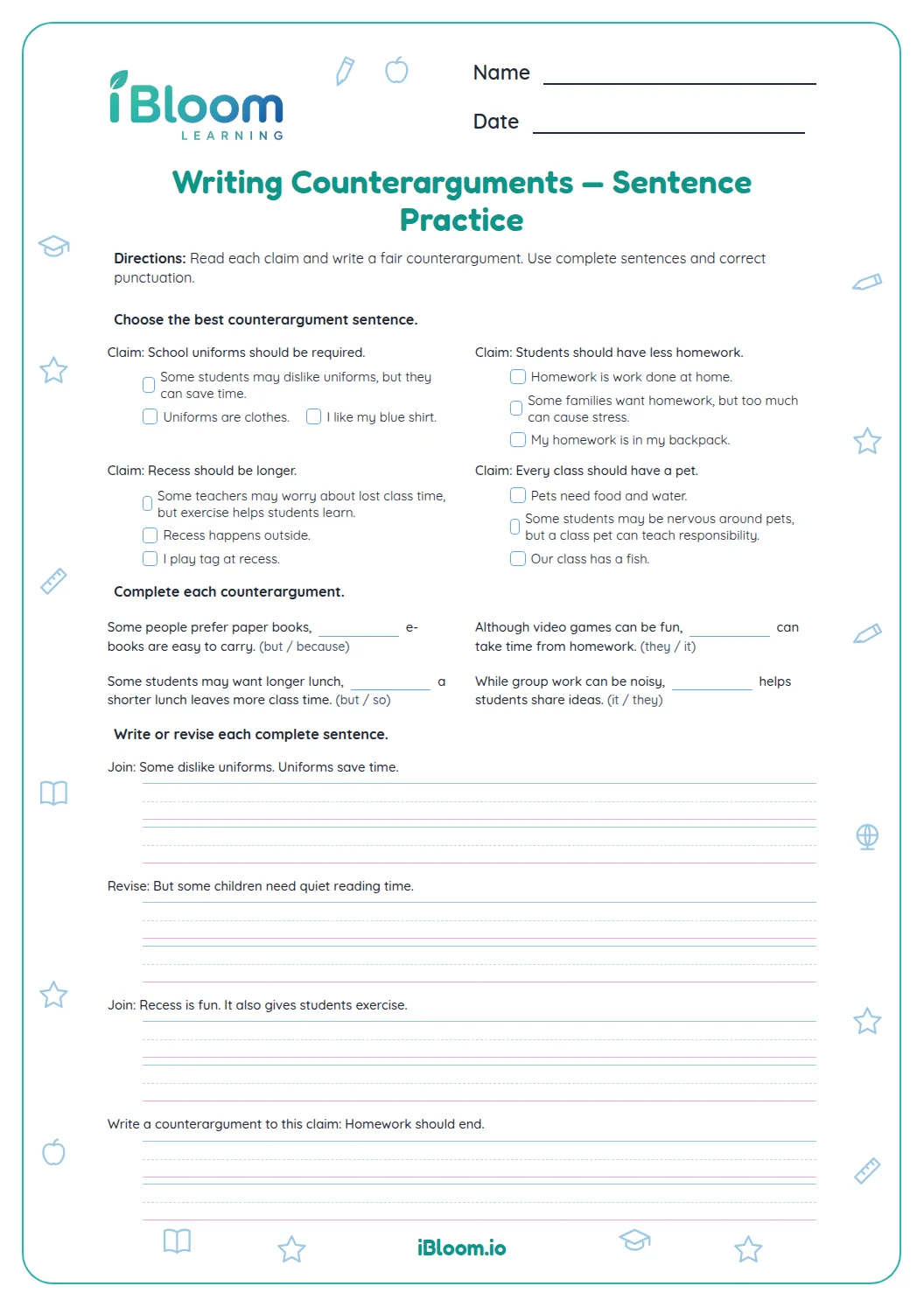
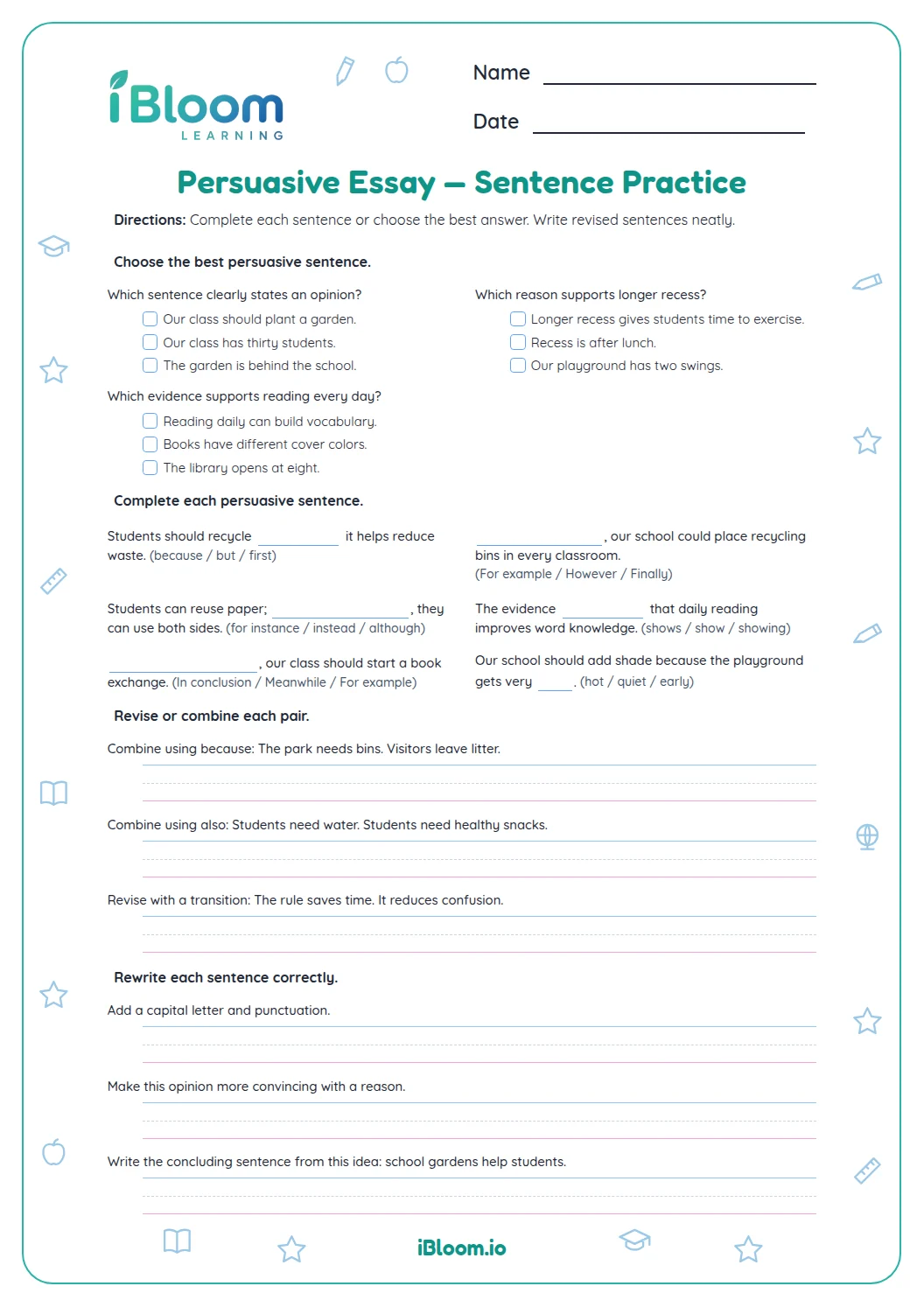
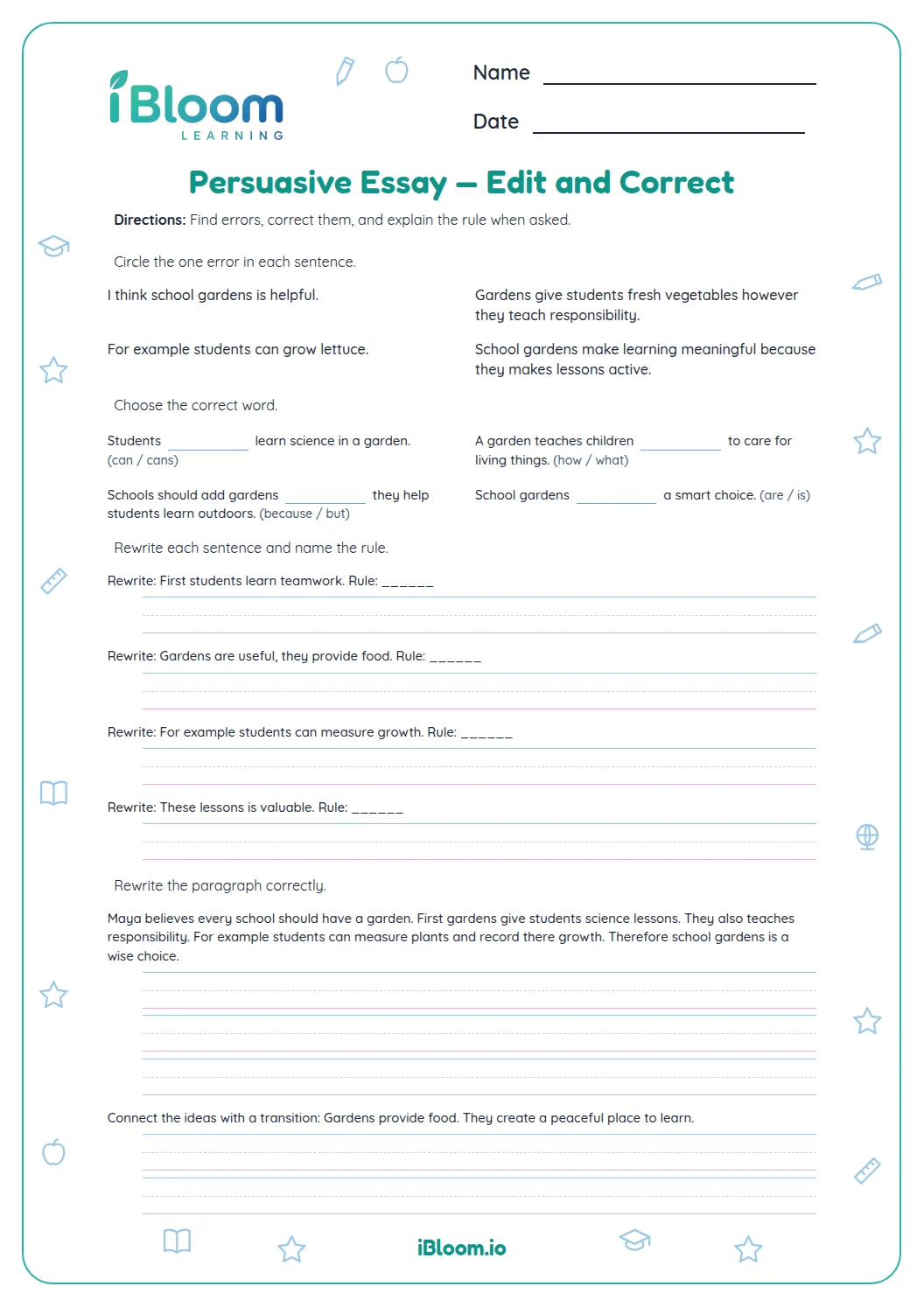
This Grade 5 writing worksheet helps students edit counterarguments and rebuttals so each response is fair, clear, and supported. Children identify an opposing view, choose replies that address its reason, and select edits that improve punctuation and wording. Fourteen multiple-choice questions move from recognizing each side to evaluating a reasoned response. A separate answer key lists the correct choice for each item.
Aligned to W.5.1.b
What is a counterargument?
A counterargument gives a different point of view from the writer’s opinion. It is strongest when stated accurately and respectfully, without making fun of people who hold it. Questions 1 and 3 ask students to tell an opposing view from a rebuttal or an unfair attack.
- 1“Some students say recess should be longer.”
- 2This names a different view: a counterargument.
- 3It does not yet explain why the writer disagrees.
How does a rebuttal answer an opposing view?
A rebuttal responds to the reason behind an opposing view. A useful response may acknowledge a concern, then add a reason or evidence that supports the writer’s position. “However” can signal a turn, but the reasoning after it still needs to address the concern.
How can you edit a response to make it stronger?
Check whether the opposing view is fair, whether the response answers it, and whether punctuation makes the relationship between ideas clear. Questions 9–14 ask students to select clear edits and responses; the key identifies the strongest choice.
How to use this worksheet
- 1Read the sentence and identify whose view it expresses.
- 2Check whether a response addresses the opposing reason.
- 3Look for a specific fact or detail instead of a vague claim.
- 4Edit punctuation where two complete ideas meet.
- 5Keep the other view respectful, then state a clear reason for your reply.
Common mistakes and quick fixes
The mistake
Attacking the people who hold the opposing view.
The fix
Describe the concern neutrally, then answer the idea with a reason.
The mistake
Using “however” without a real response after it.
The fix
Make the next clause address the reason in the counterargument.
The mistake
Adding a vague statement such as “It is better.”
The fix
Include a concrete detail, example, or explanation that supports the reply.
Common Core alignment
The written responses practice supporting an opinion with relevant reasons and details.
Support an opinion with logically ordered reasons and details.
On this sheet: Students practice giving a reasoned response to an opposing view and supporting an opinion with a relevant reason or detail.
Show the official wordingHide the official wording
Provide logically ordered reasons that are supported by facts and details.
What to practice next
Further reading
Questions parents and teachers ask
What is the difference between a counterargument and a rebuttal?
A counterargument gives a reason someone might disagree with the writer’s claim. A rebuttal answers that reason with relevant thinking or evidence. Question 1 asks children to choose an opposing view to the recess claim; question 2 asks them to choose a response to it.
Does a rebuttal have to start with “however”?
No. “However” is one useful transition, but a rebuttal can begin in other ways. The important part is that it responds to the reason in the opposing view. Question 5 asks students to recognize a signal word, while later items focus on the response itself.
How can a writer make a counterargument fair?
State the concern without insulting the people who hold it. “Some families worry that a later start could change bus schedules” names a concern respectfully. Question 3 asks children to distinguish a fair opposing view from a dismissive one.
What makes a rebuttal stronger than “That idea is wrong”?
A stronger rebuttal responds to the concern with a relevant reason. For the concern that gardens take lesson time, measuring plant growth during math directly answers it. Question 4 asks children to select that kind of connected reply.
Are the written answers exactly the same as the key?
The key gives the best answer for each selected-response item. Students can discuss other reasonable revisions too, provided the opposing view remains fair, punctuation is clear, and the reply addresses the concern. The printed choices offer a consistent way to check each item.
How many questions are on this worksheet?
There are 14 selected-response questions about identifying opposing views, choosing fair rebuttals, and editing sentences. The questions move from recognizing each side of an argument to selecting clear replies and punctuation fixes. A separate answer key lists the correct choices.