

About this worksheet
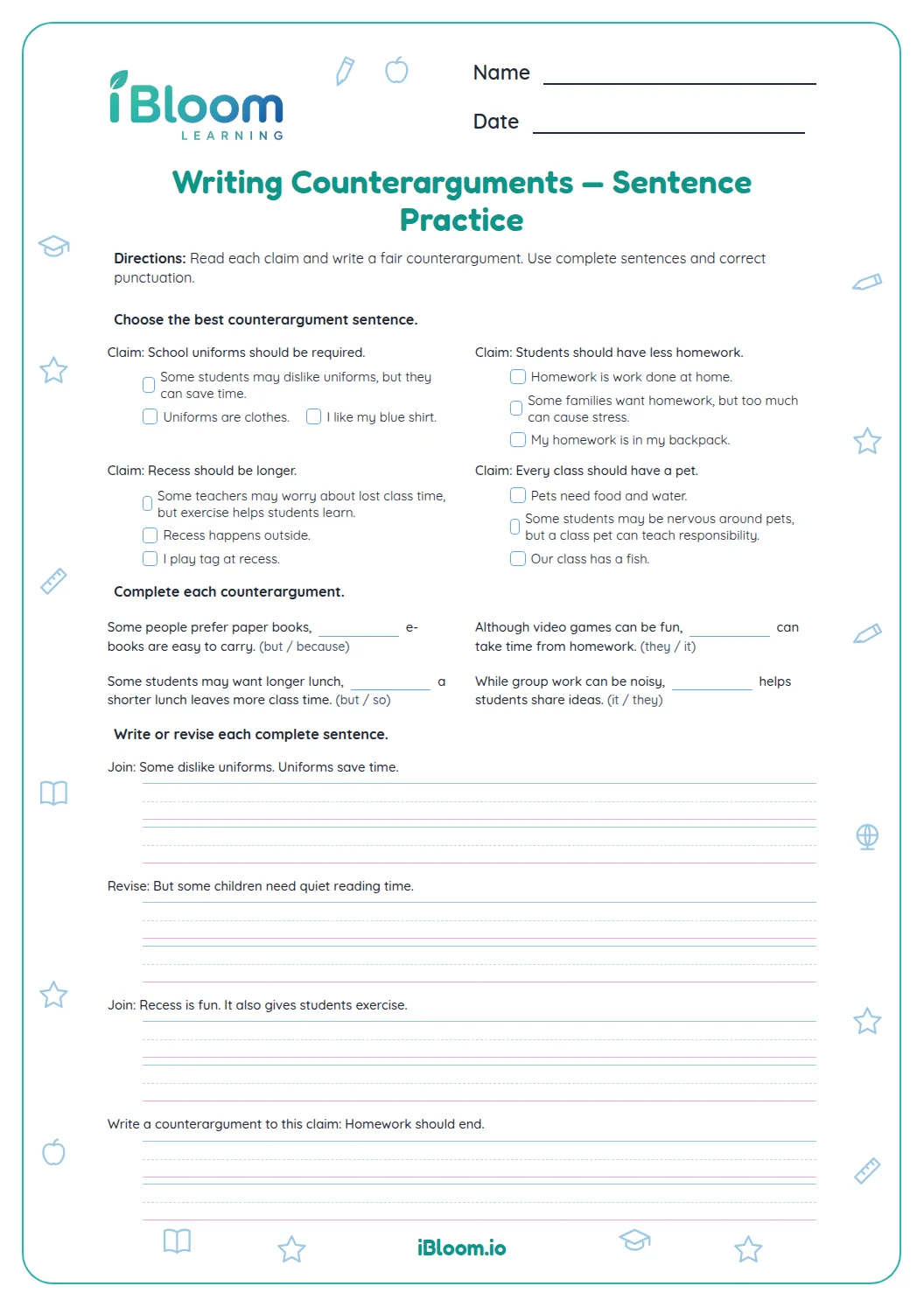
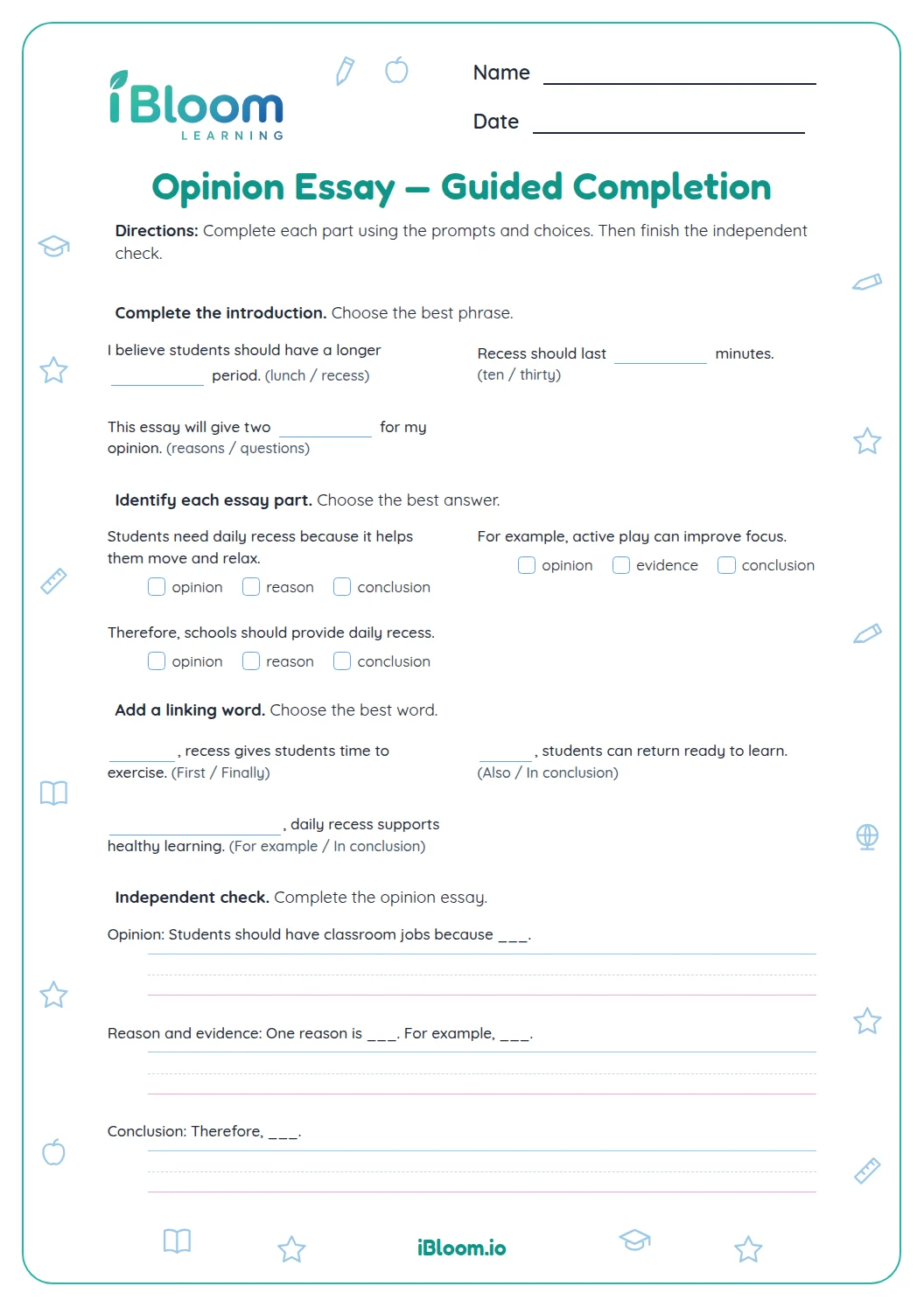
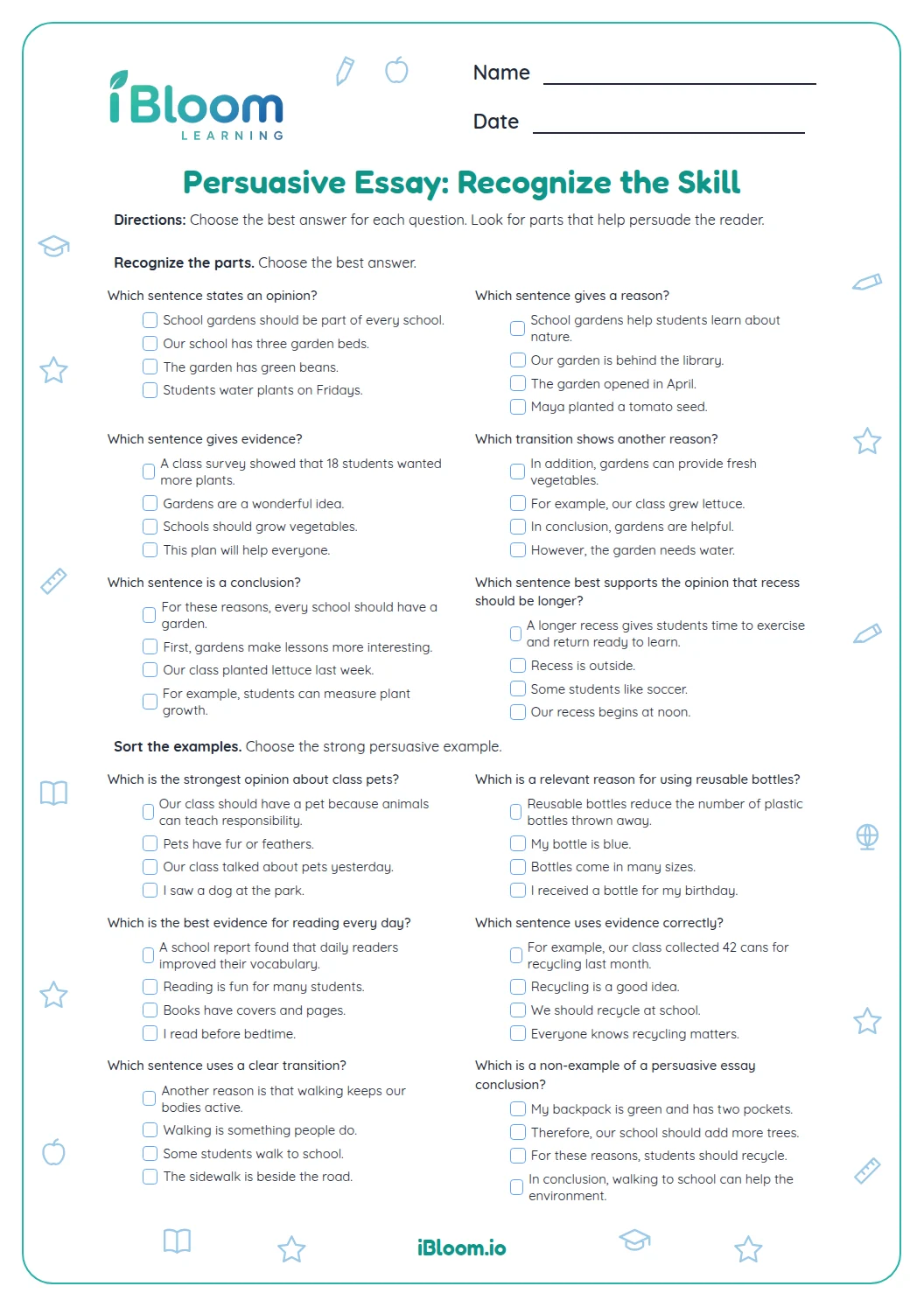
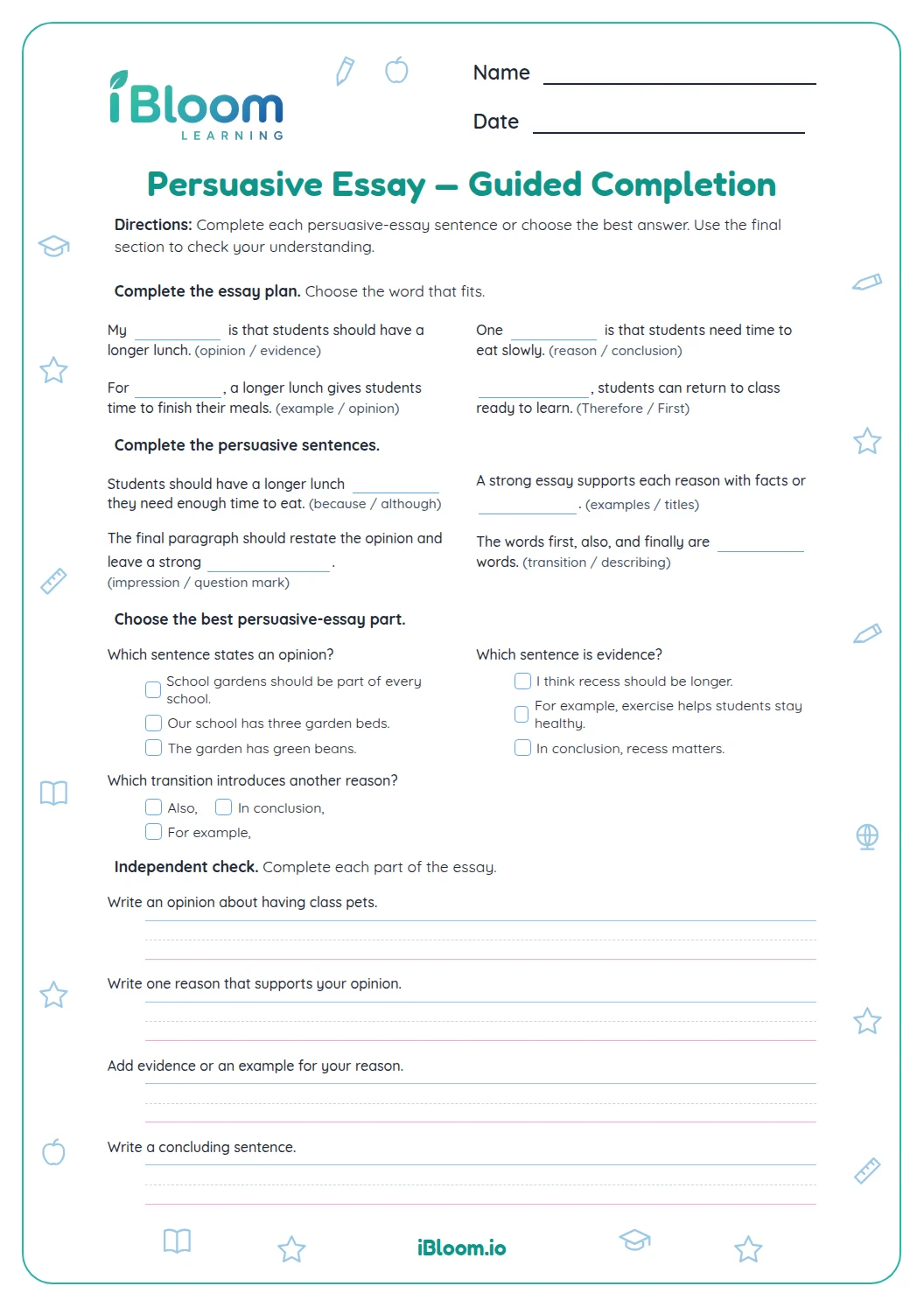
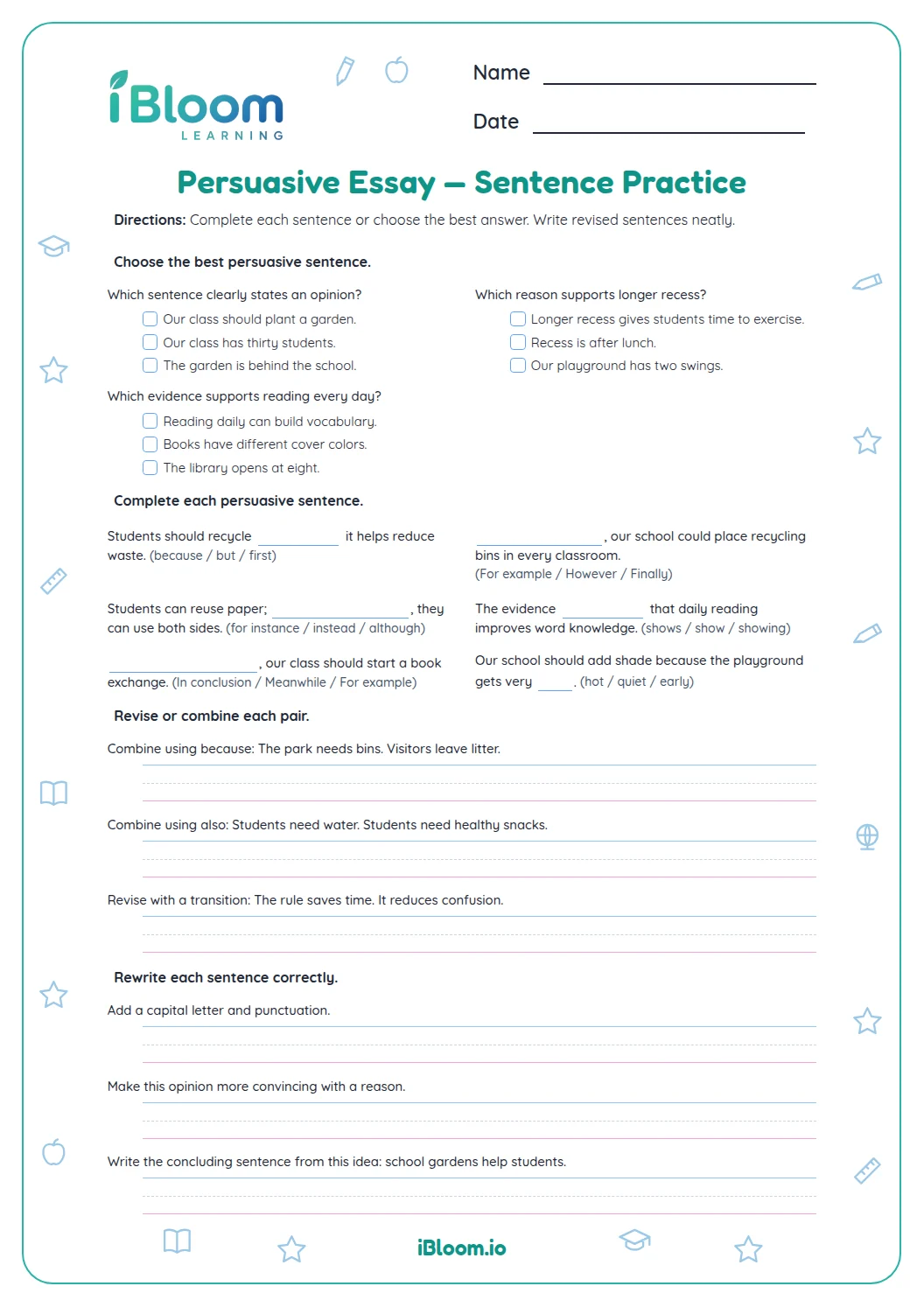
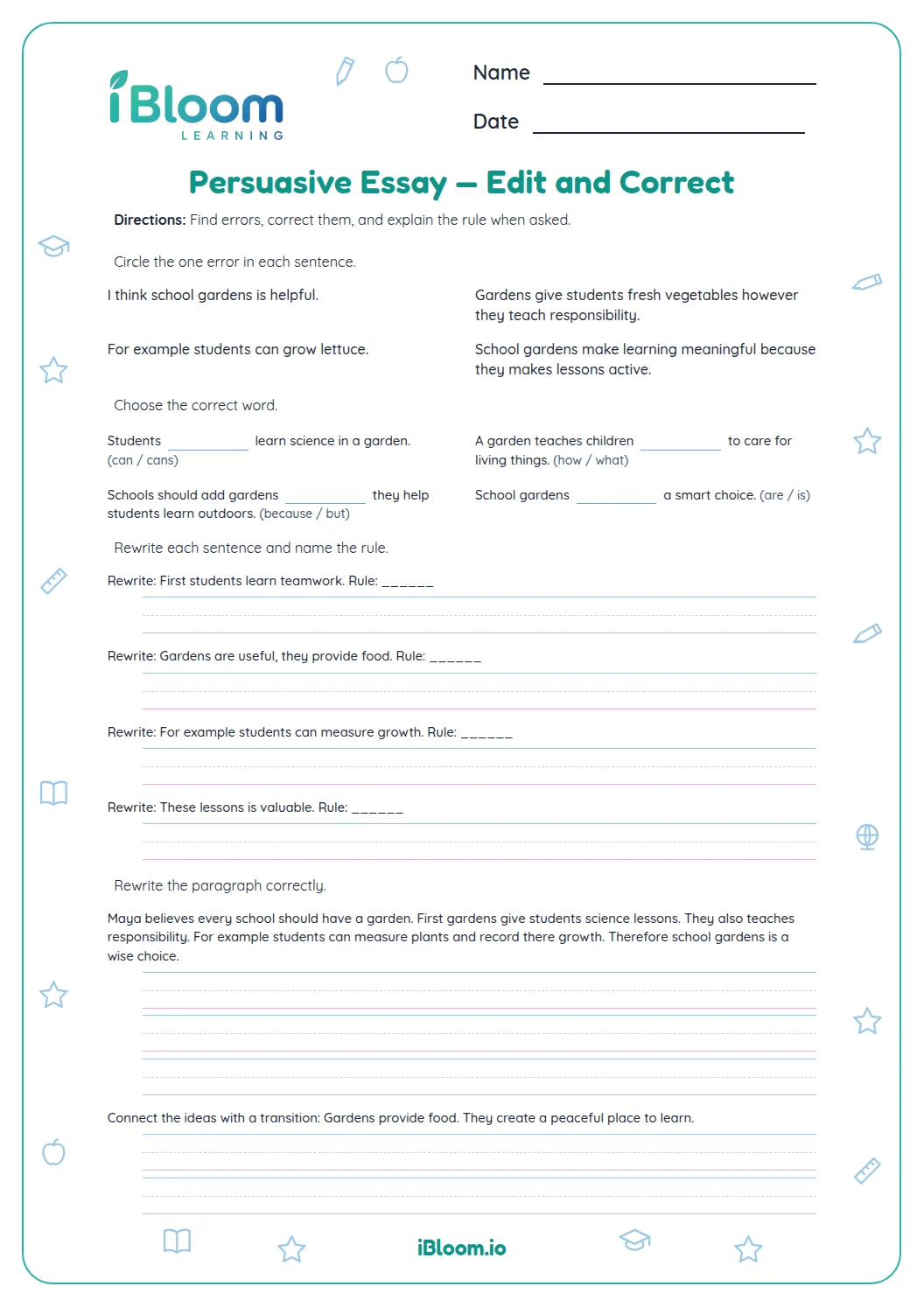
This free Grade 5 worksheet builds counterargument reasoning through 14 questions. Learners identify a viewpoint that challenges a claim, choose replies that address concerns, and write one response to a field-trip cost concern. The separate answer key gives the correct choices and a sample response.
What is a counterargument?
A counterargument is a reasonable concern that challenges a claim. A writer who supports a class garden might recognize that gardens need time and care. Naming the concern helps a writer answer the idea instead of simply repeating the original opinion.
How can a writer answer a counterargument?
After identifying the concern, select a reply that answers it with a reason or workable plan. A response such as “Take turns watering” addresses the time needed for a garden.
- 1Claim: Our class should grow a garden.
- 2Concern: Gardens take time to tend.
- 3Choose a practical response.
- 4Answer: Take turns watering.
What does this worksheet ask writers to do?
Part A distinguishes another point of view from supporting facts. Part B applies the same reasoning by matching concerns with relevant replies. Question 14 asks learners to write one sentence answering a field-trip cost concern.
How to use this worksheet
- 1Read the claim and concern as separate ideas.
- 2In Part A, choose a sentence that challenges the claim.
- 3In Part B, check whether the reply answers the stated concern.
- 4Look for a relevant reason or a workable plan.
- 5For question 14, answer the cost concern with a realistic free-trip plan.
- 6Use the key to check each choice and compare the written answer with its sample.
Common mistakes and quick fixes
The mistake
Repeating the original opinion instead of answering the concern.
The fix
Name the concern and add a reason or plan that addresses it.
The mistake
Using an unrelated reason.
The fix
Check that the response solves or answers the specific concern in the prompt.
The mistake
Making the opposing view sound silly.
The fix
State a fair, reasonable concern before explaining your response.
What to practice next
Make more practice
Questions parents and teachers ask
What makes a counterargument reasonable?
A reasonable counterargument gives a concern that could matter to someone reading the claim. “Gardens take time to tend” is a real concern about a class garden. A strong response addresses that concern with a relevant reason or workable plan instead of dismissing it.
What is a good answer to question 6?
Question 6 asks learners to answer the concern that a garden takes time to tend. “Take turns watering” is the best choice because it gives a practical plan. The other choices describe gardens but do not answer who will care for them.
How is a counterargument different from a supporting reason?
A supporting reason gives a point in favor of the writer’s claim. A counterargument gives a point that challenges the claim. Writers can make an opinion more complete by recognizing the concern and selecting a reply that addresses it with sound reasoning.
Can learners write a different response than the key?
The answer choices include reasonable replies to common concerns about classroom activities. Ask the learner to explain why the chosen reply addresses the exact concern. For example, taking turns watering answers the time concern more directly than saying gardens have flowers.
How many questions are on the worksheet?
There are 14 questions across two worksheet pages: 13 multiple-choice questions and one written response. Part A builds recognition of another point of view; Part B matches concerns with relevant replies. Question 14 asks for a free-trip plan, and the answer key gives a sample.