

About this worksheet
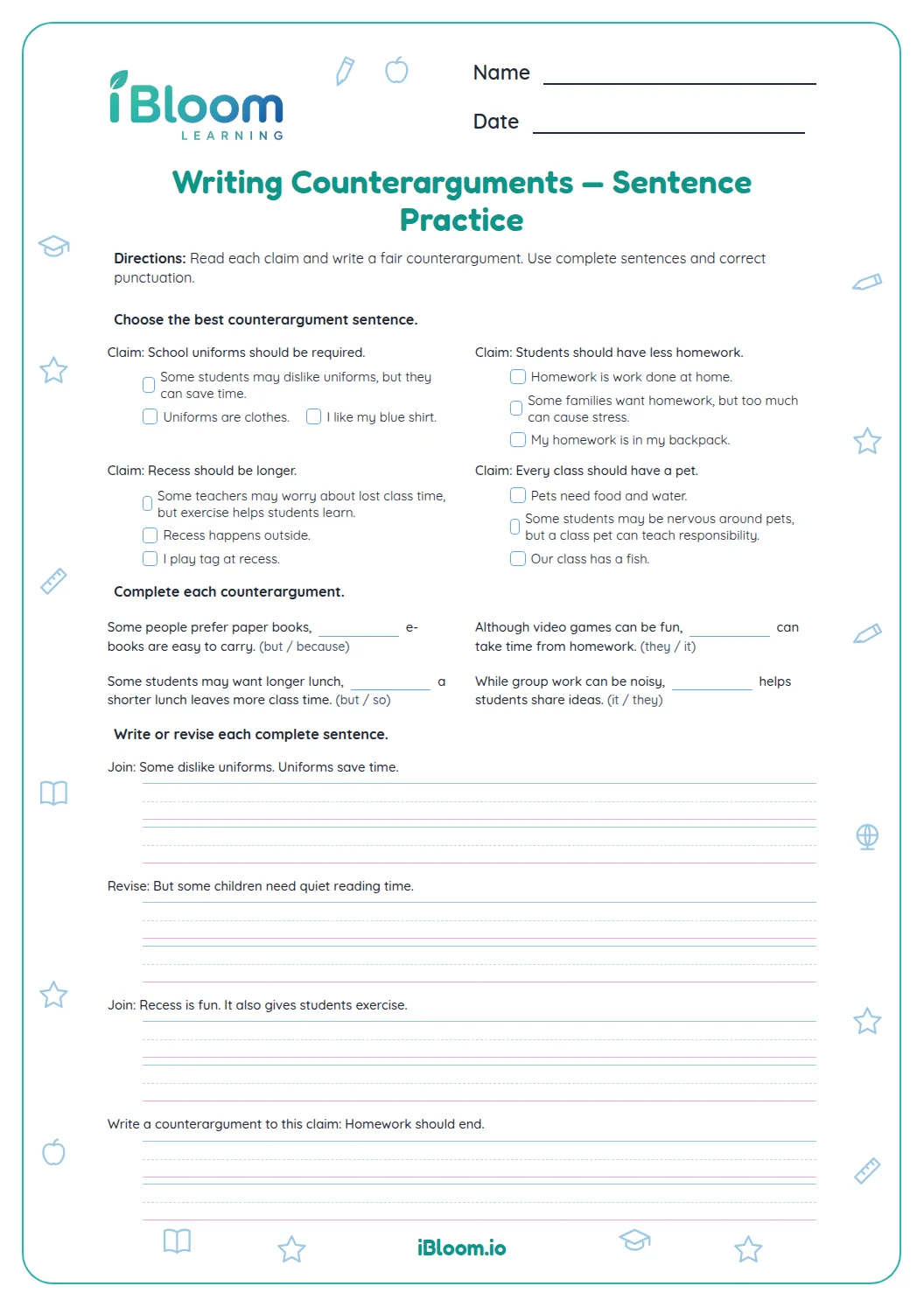
This Grade 5 writing worksheet helps students recognize fair counterarguments and answer concerns with relevant reasons. Thirteen choice questions build toward two written responses about a class art day and a later school start. The work practices opinion writing aligned with CCSS W.5.1, and a separate answer key includes sample responses.
Aligned to W.5.1
What is a counterargument?
A counterargument is a reasonable view that challenges a writer’s claim. It should raise a concern about the proposal rather than repeat a supporting point or add an unrelated fact.
- 1Claim: A school should add a garden.
- 2Concern: A garden may take time away from recess.
- 3The concern challenges the plan, so it is a counterargument.
How can a response stay respectful?
Name the concern fairly, then give a relevant reason or information in reply. “Some people worry about cost; families could share supplies” recognizes the concern and offers a connected answer.
What will students write?
The final two questions ask for a response about a class art day and a counterargument to a later school start. The key shows one possible answer for each; other reasoned responses can also fit.
How to use this worksheet
- 1Read the claim and identify what concern challenges it.
- 2Check whether a reply acknowledges the concern fairly.
- 3Use a relevant reason or evidence to answer it.
- 4For open responses, compare your idea with the sample and check that it stays respectful.
Common mistakes and quick fixes
The mistake
Calling an unrelated detail a counterargument.
The fix
Ask whether the detail challenges or raises a concern about the claim.
The mistake
Dismissing the other view.
The fix
Restate the concern in words its speaker would recognize.
The mistake
Giving a reply that does not answer the concern.
The fix
Add a relevant reason or information tied to that concern.
Common Core alignment
Children practice writing opinion responses with relevant reasons.
Answer opposing views with relevant reasons tied to an opinion.
On this sheet: The final responses ask students to state a fair opposing view and give a relevant reply that supports a position.
Show the official wordingHide the official wording
Write opinion pieces on topics or texts, supporting a point of view with reasons and information.
What to practice next
Make more practice
Further reading
Questions parents and teachers ask
What is a counterargument?
A counterargument is a reasonable concern or opposing view about a claim. For example, someone may support a school garden while recognizing that it could take time away from recess. The first three questions ask students to distinguish a real concern from a supporting detail.
How should a writer answer an opposing view?
A writer can show that the concern is understood, then answer it with a relevant reason or piece of information. On this worksheet, sharing supplies answers a cost concern, while teacher guidance answers a concern about choosing books that are too difficult.
Are the written answers the only possible answers?
No. The answer key gives sample responses for questions 14 and 15, but other answers can work if they state a fair concern and answer it respectfully. Check that the response stays connected to the class art day or later start topic and gives a reason.
What makes an opposing view fair?
A fair opposing view raises a concern that someone could reasonably have about the claim. “A garden may take time away from recess” challenges the proposal; “students can observe plants” supports it instead. The worksheet asks children to notice that difference before writing.
How many questions are on the worksheet?
There are 15 questions in four parts: 13 multiple-choice questions and two written responses. The questions move from identifying concerns to judging replies and composing a response. Allow about 30 minutes, including time to plan the final answers.