






About this worksheet
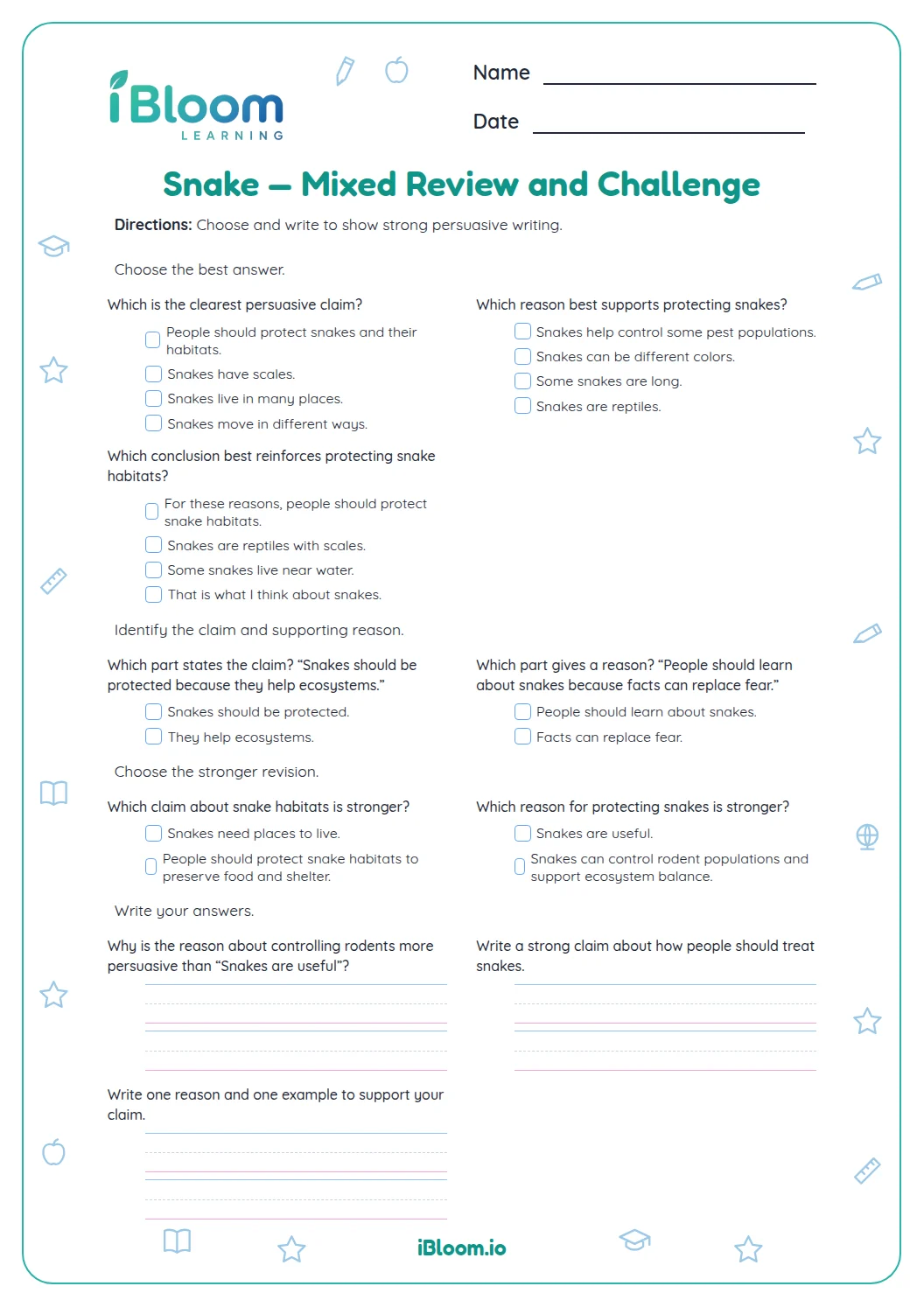
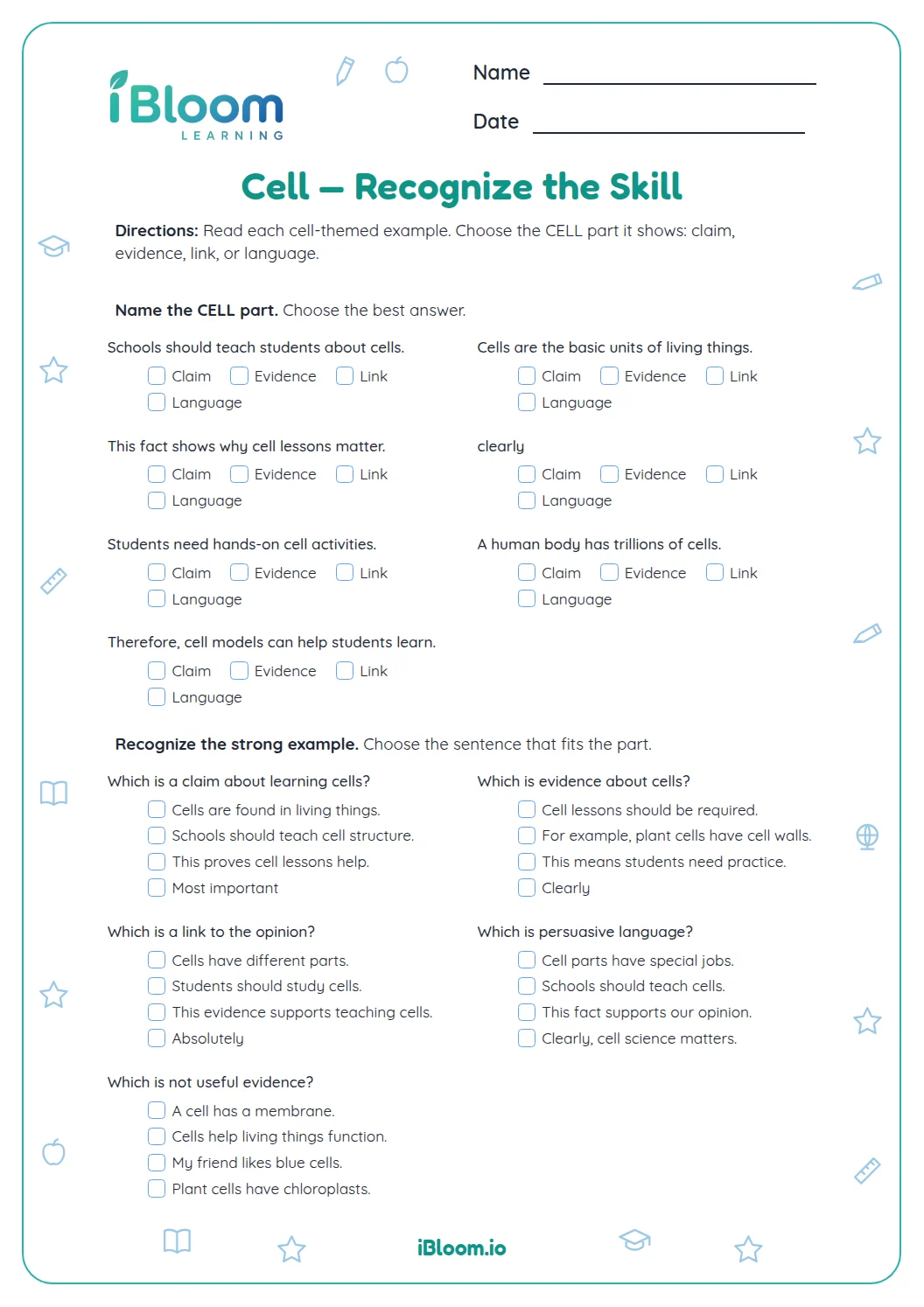
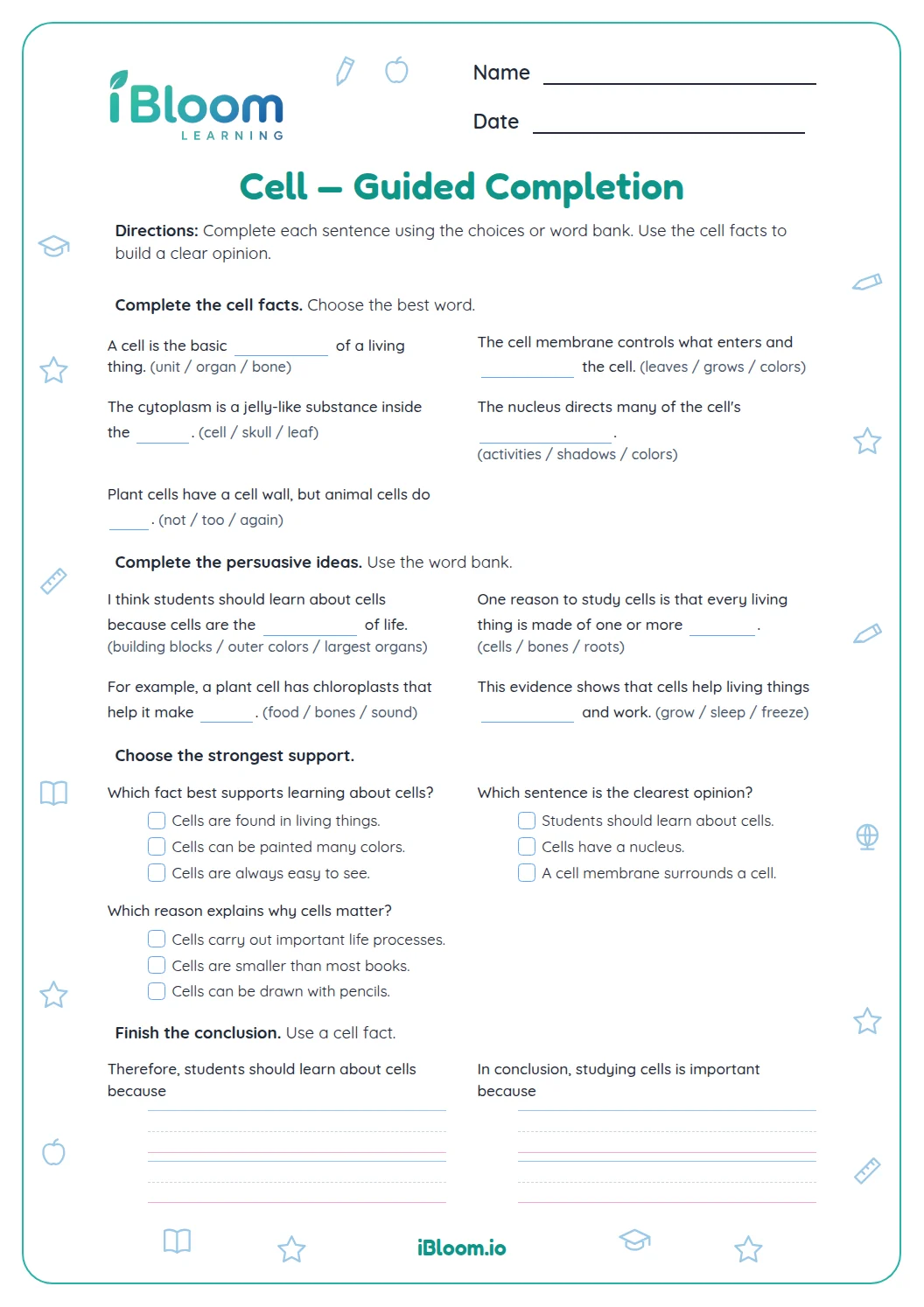
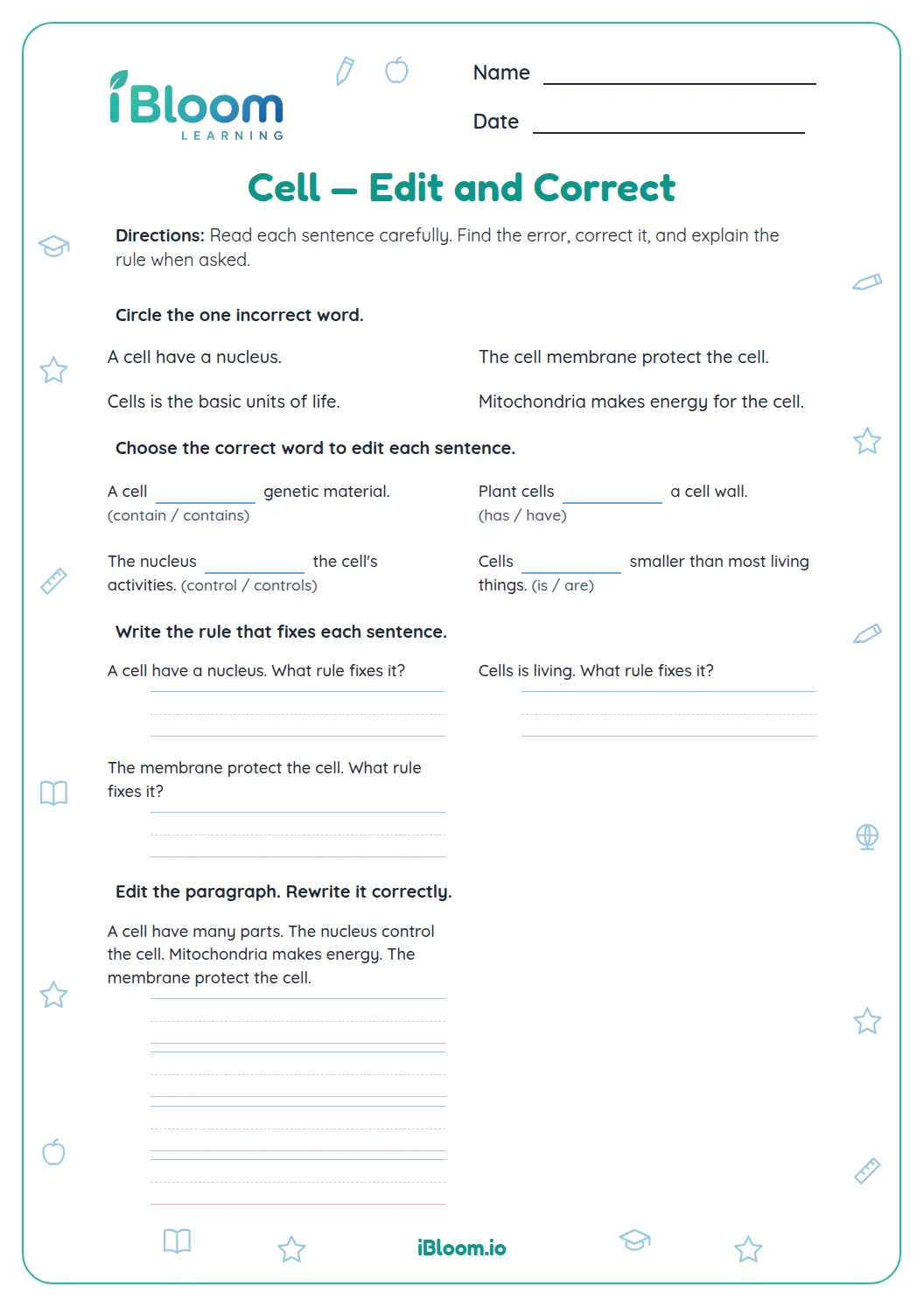
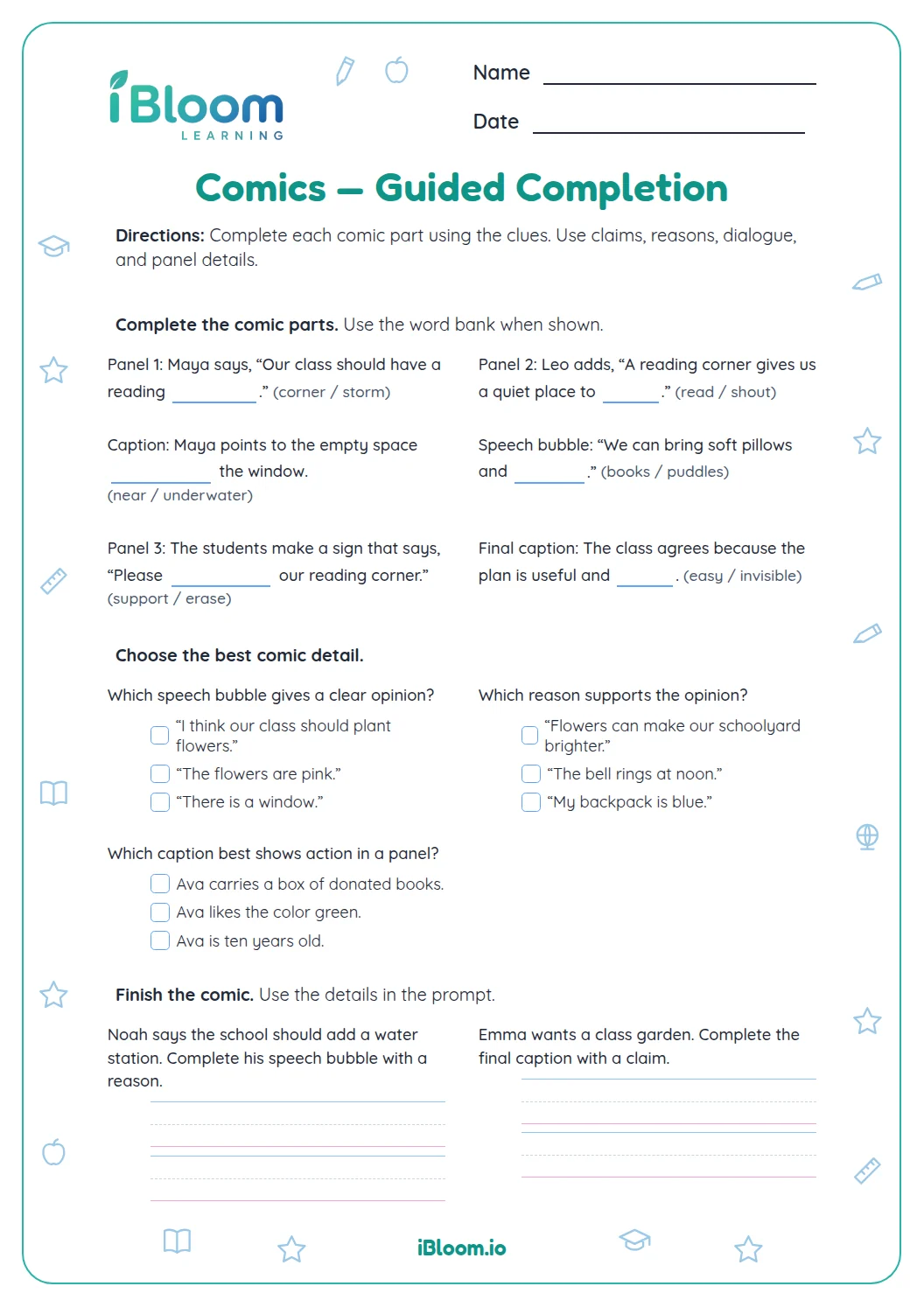
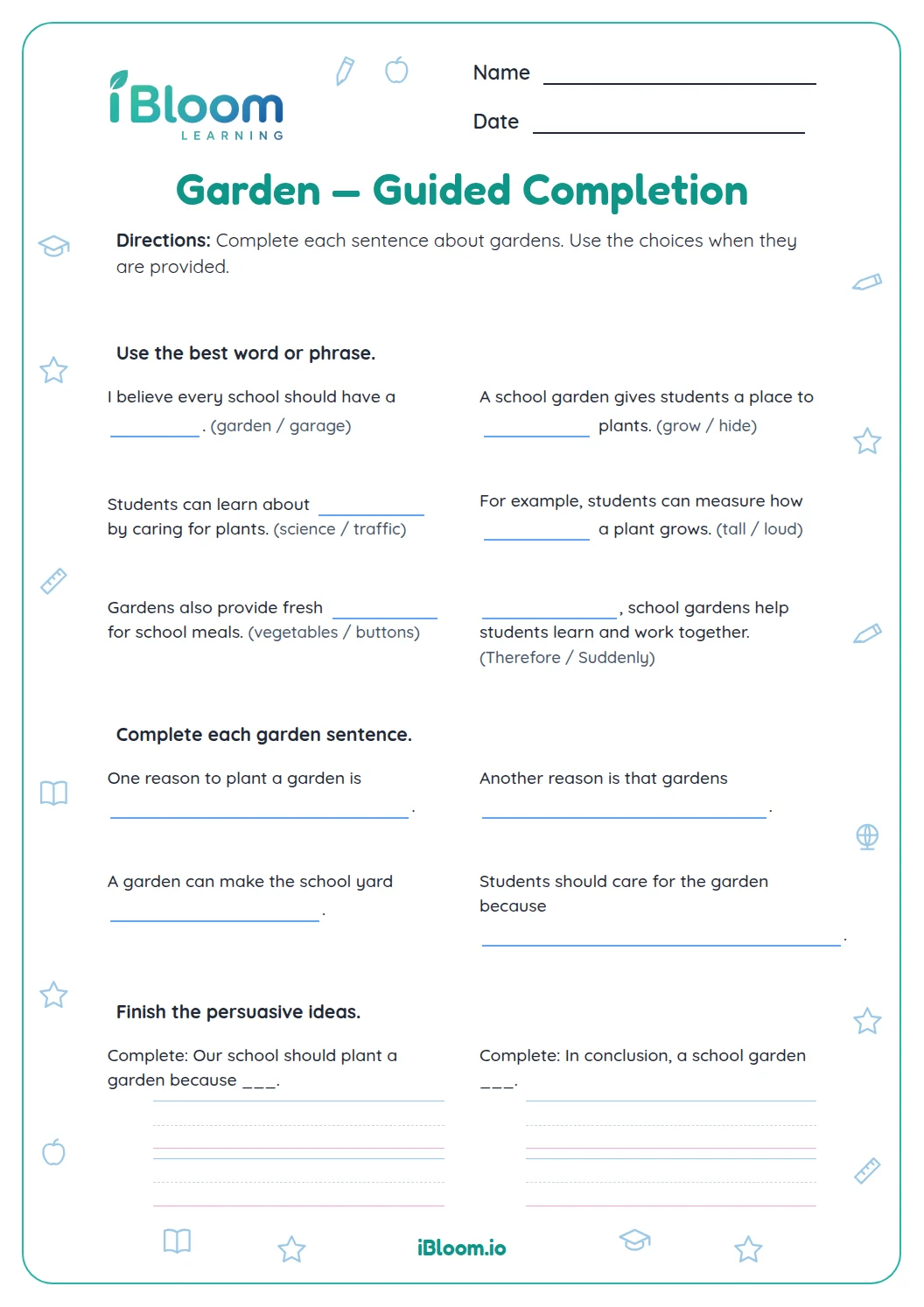
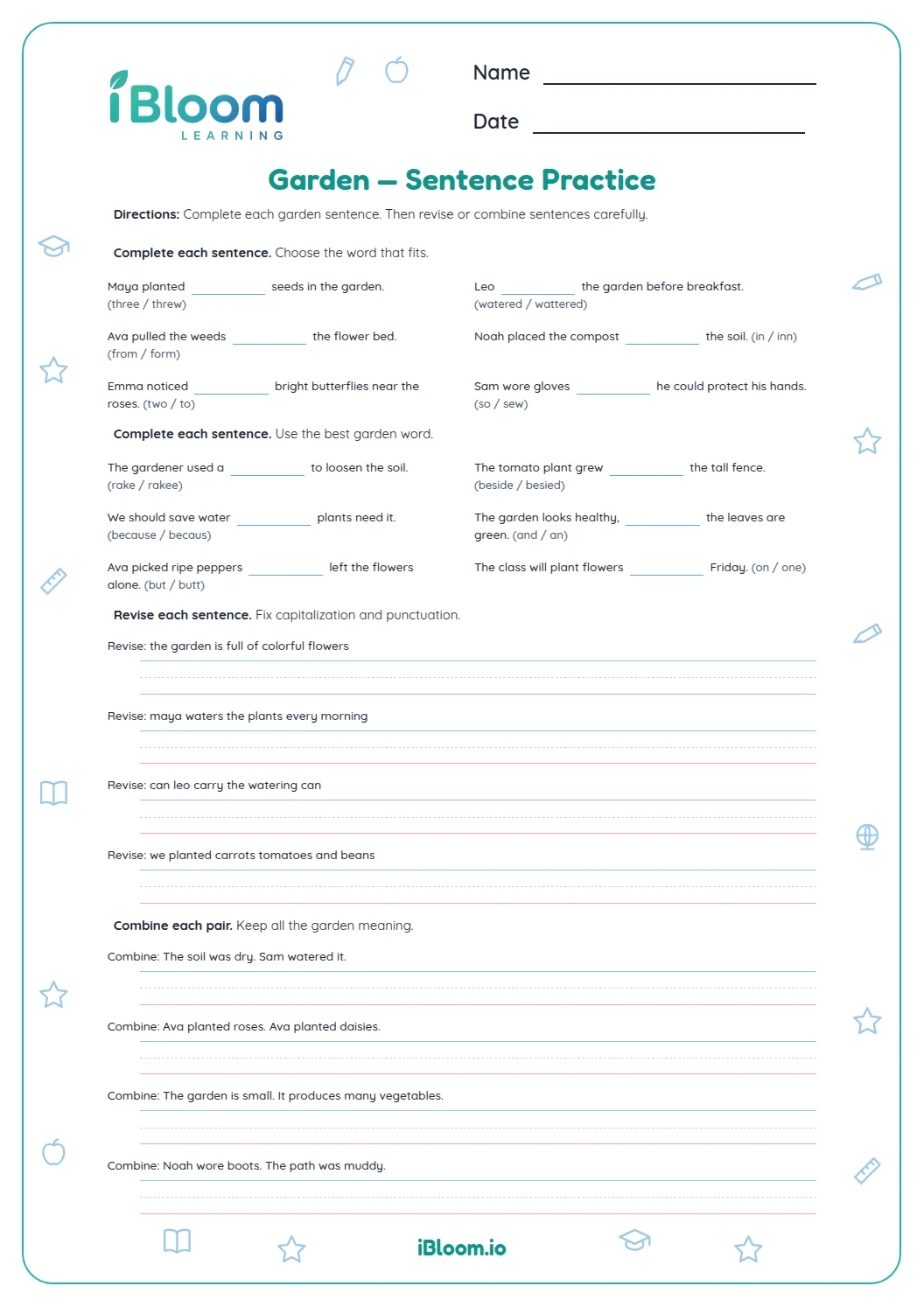
This Grade 5 printable practices persuasive writing about snakes through 14 concise fill-in questions. Students complete claims, reasons, evidence, linking words, and revised persuasive sentences. The answer key lists each target word or mark. It practices Common Core W.5.1.
Aligned to W.5.1
What will students practice on this sheet?
Fourteen short fill-ins build a snake-focused opinion: students name a claim, add a reason and evidence, use linking words, and complete sentence revisions. The two parts keep the work compact while returning to the same persuasive skill.
- Part A: claim, reason, evidence, and linking words
- Part B: sentence clarity, punctuation, and support
How do a claim, reason, and evidence work together?
A claim states what the writer believes. A reason explains why; evidence adds a detail that can support the reason. Linking words show how the ideas connect.
- 1Claim: Protect snake habitats.
- 2Reason: They provide food and shelter.
How can students check a persuasive sentence?
Check that the sentence makes a clear point and that its linking word matches the relationship. “Because” gives a reason; “but” signals contrast; “so” introduces a result. Reread the completed sentence for meaning and punctuation.
How should the answer key be used?
The key gives a target word or punctuation mark for each blank. For open-ended reasoning, use the sheet’s choices and examples as a guide; the final fact question asks for a specific snake-related supporting detail.
Work through the persuasive sentences
- 1Read the full sentence around each blank.
- 2Decide whether the blank needs a claim term, reason, evidence, or connector.
- 3Check that the connector matches the ideas.
- 4Use a capital and ending mark where needed.
- 5Reread the whole sentence before checking the key.
Common mistakes and quick fixes
The mistake
Choosing a fact, such as “Snakes have scales,” as a claim.
The fix
Ask whether the sentence states what the writer thinks people should do or believe.
The mistake
Calling “Snakes are useful” specific evidence.
The fix
Add a checkable example, such as a kind of food some snakes eat.
The mistake
Using “because” when the second idea gives a contrast.
The fix
Read both clauses aloud and choose a connector that matches their relationship.
Curriculum alignment
Students select and build an opinion with reasons and information.
Write opinion pieces supported by reasons and information.
On this sheet: Students select claims and support, connect reasons, and draft persuasive sentences.
Show the official wordingHide the official wording
Write opinion pieces on topics or texts, supporting a point of view with reasons and information.
What to practice next
Make more practice
Further reading
Questions parents and teachers ask
What is the difference between a claim and a reason?
A claim states what the writer believes or wants readers to accept. A reason explains why that claim makes sense. On this sheet, “Protect snake habitats” is a claim, and the idea that habitats provide food and shelter is a supporting reason.
What counts as evidence in an opinion paragraph?
Evidence is a specific fact or example that supports a reason. The worksheet uses the detail that some snakes eat mice that damage crops. This gives a reader something concrete to connect to the claim about protecting habitats.
How should students choose a linking word?
First decide how the two ideas relate. Use because to give a reason, but to show contrast, and so to show a result. Read the whole sentence after filling the blank to make sure the connection sounds logical.
Does the worksheet ask students to write a full paragraph?
No. The 14 questions are short fill-ins about claims, reasons, evidence, sentence revision, and linking words. This keeps the practice focused on building and checking persuasive sentences; the key lists a target answer for every blank. Students can review the example before moving to the next part.
How can a student check a persuasive sentence?
Check that it states a clear opinion or supports one with a reason or fact. Then reread the sentence for a logical connector, a capital at the beginning, and an ending mark. The answer key gives the intended completion for each item.