


About this worksheet
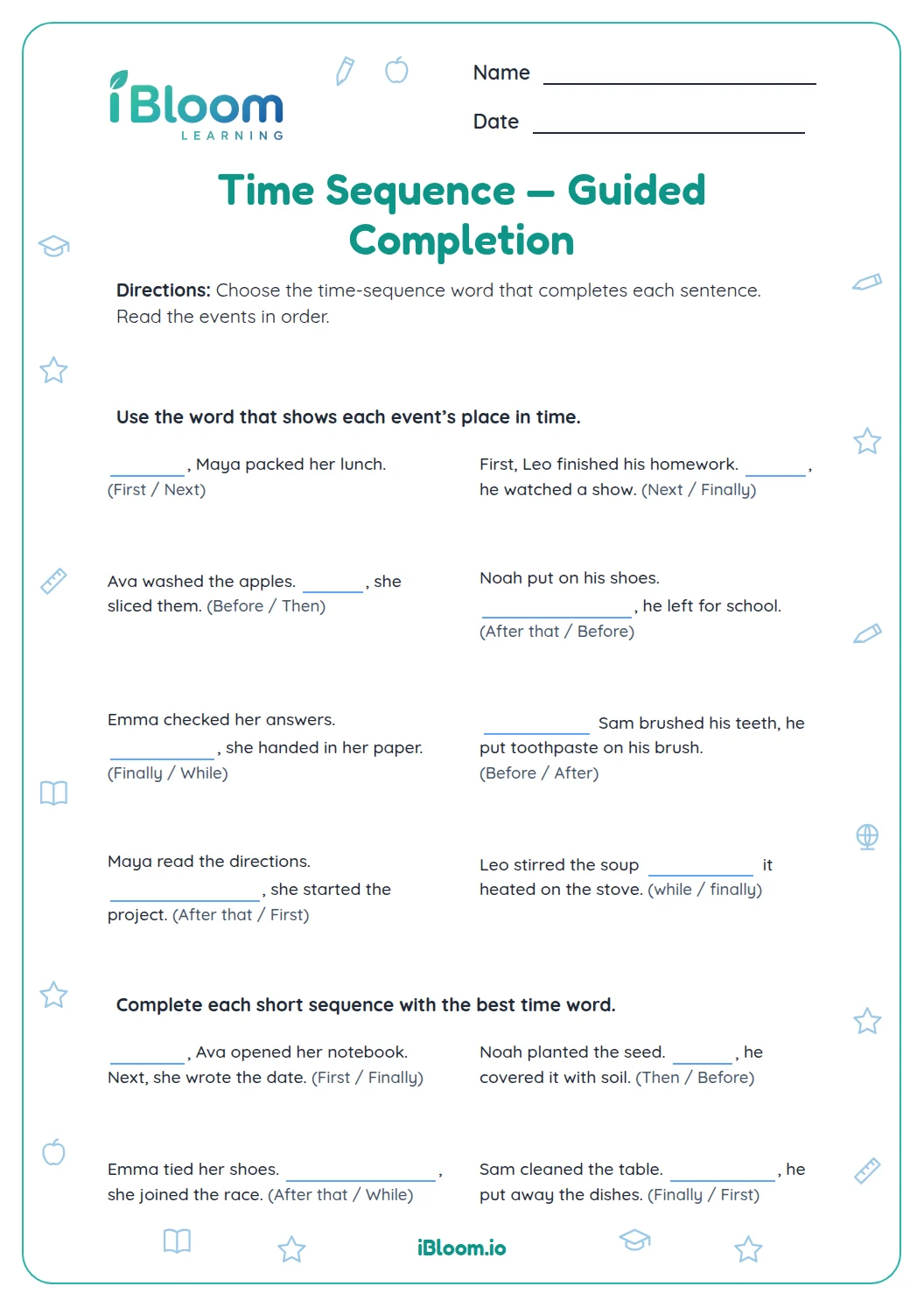
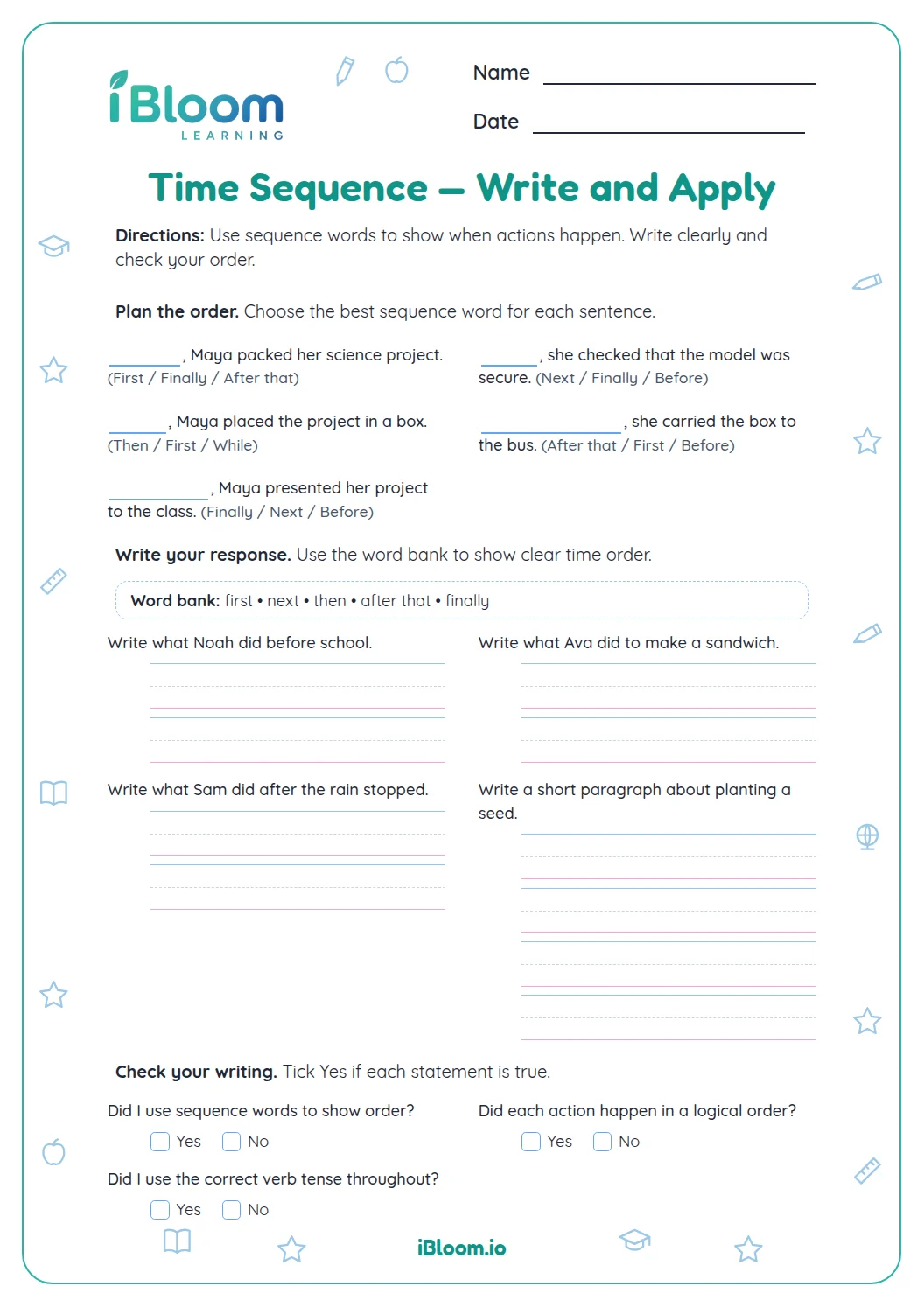
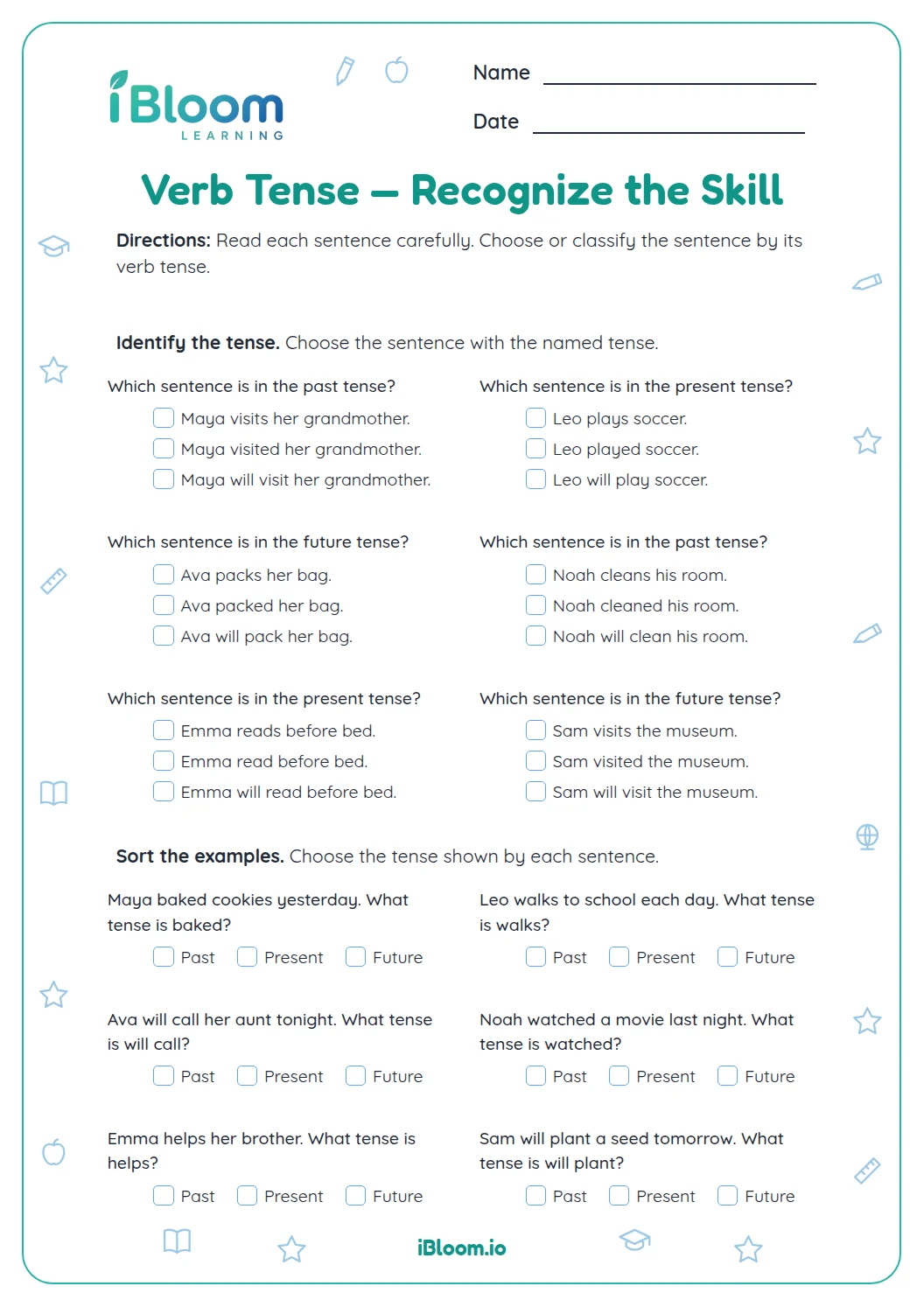
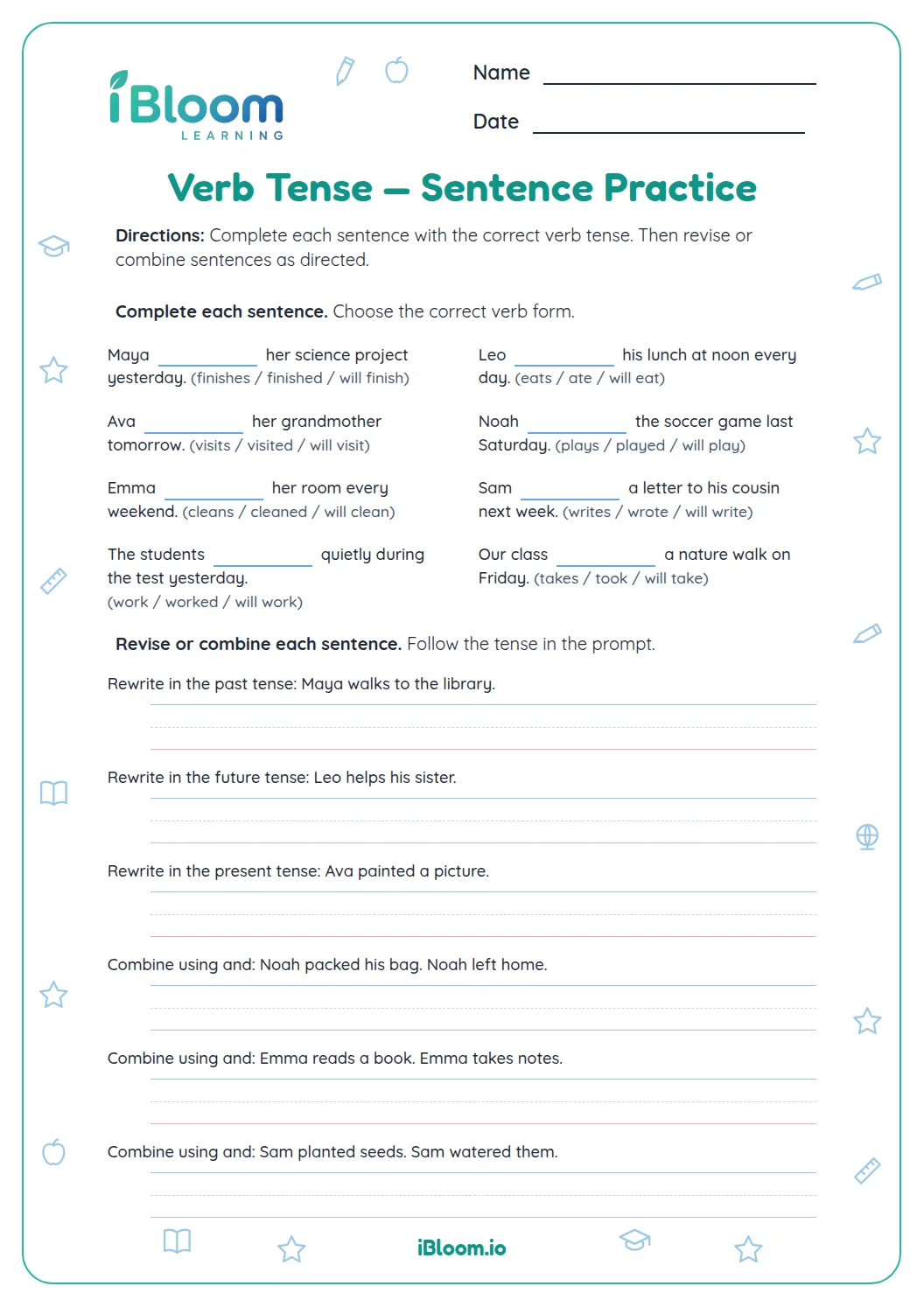
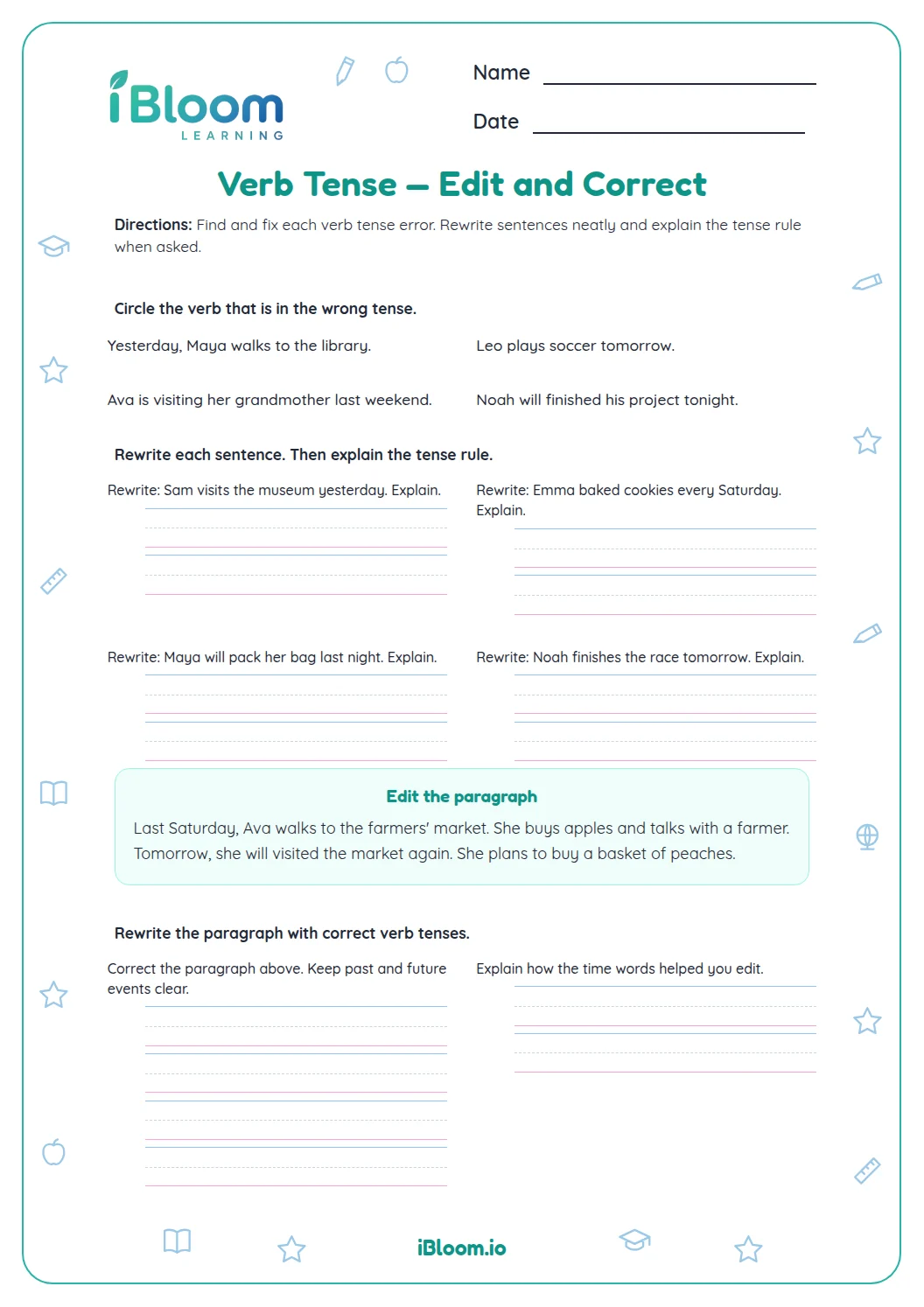
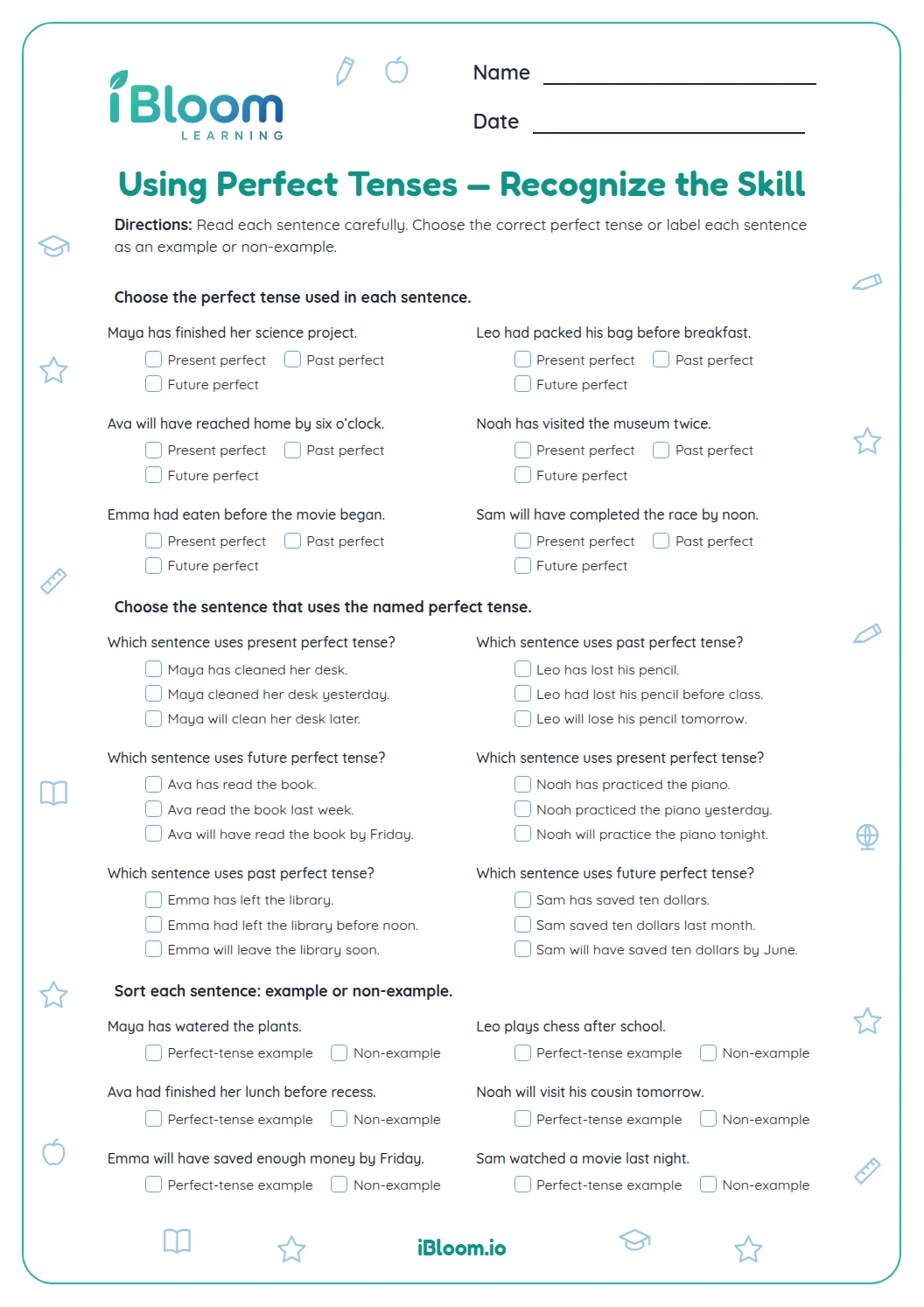
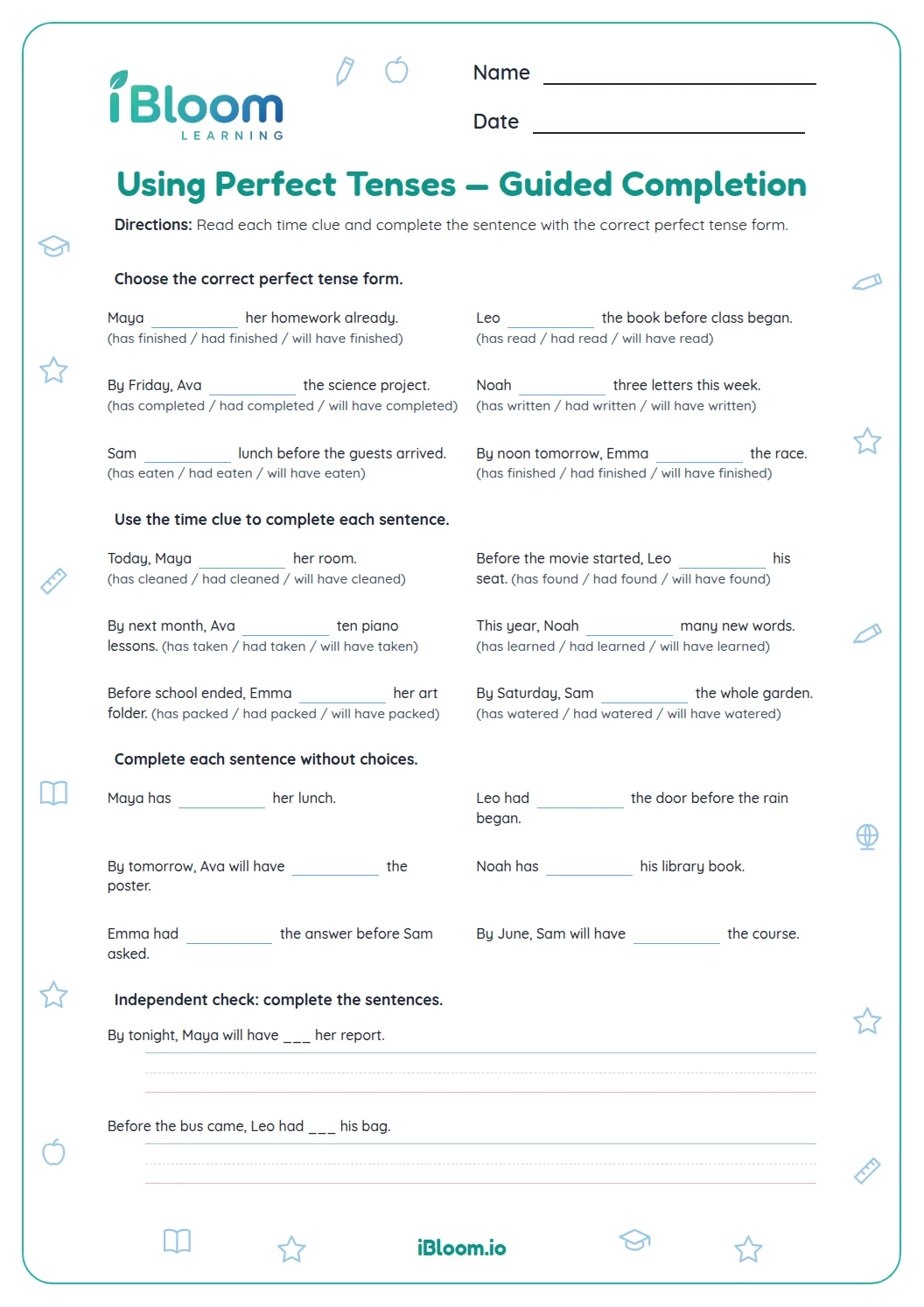
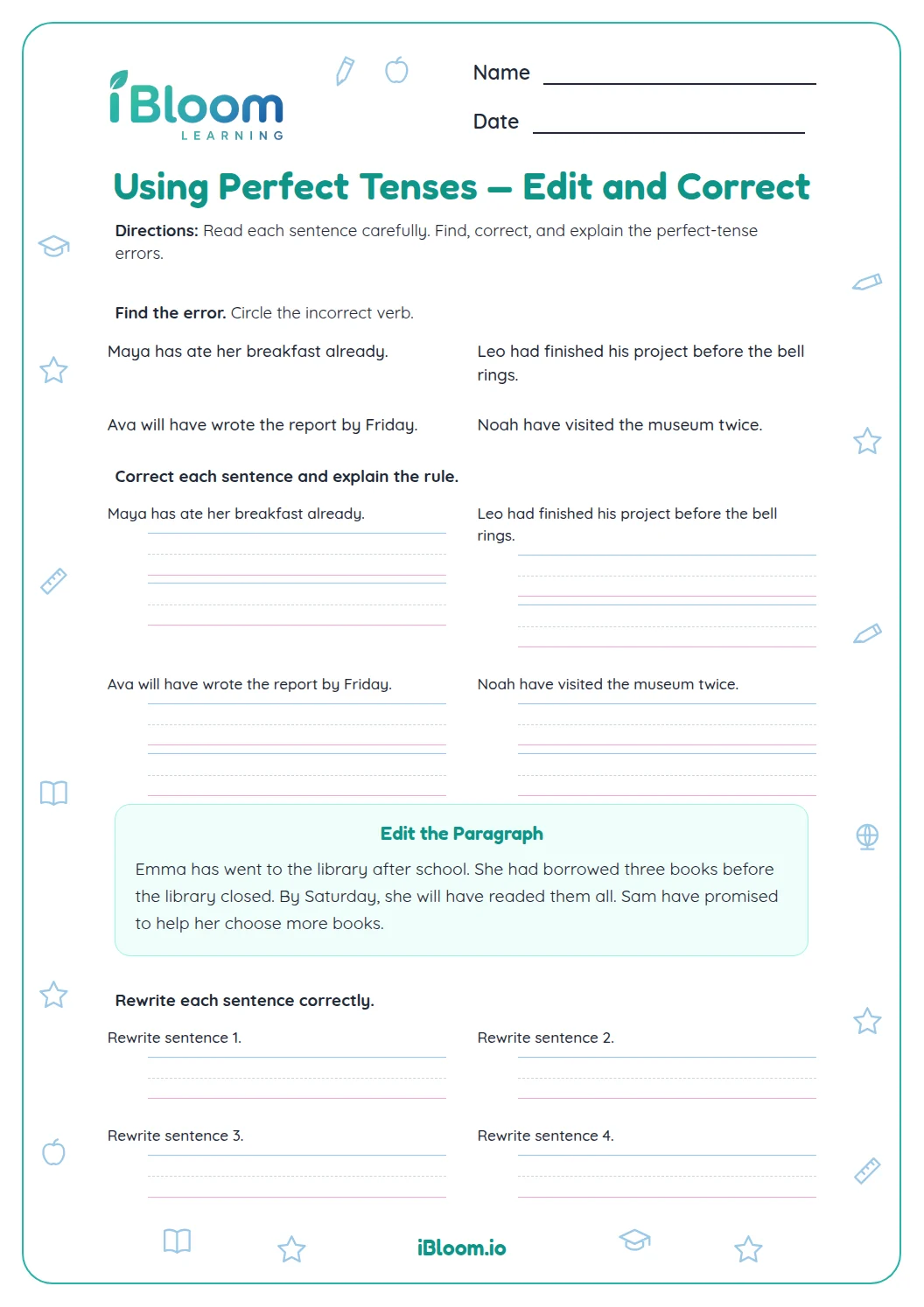
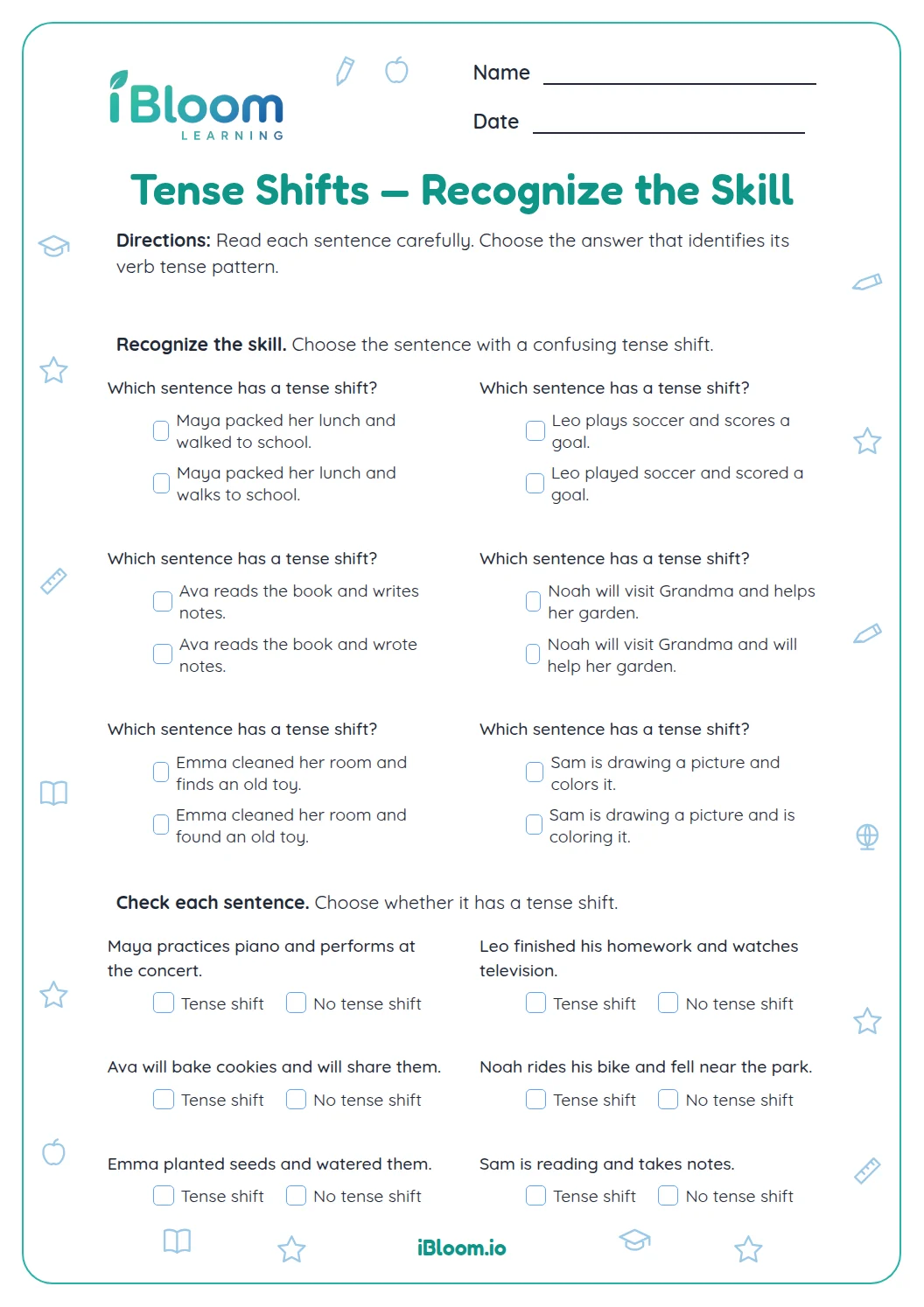
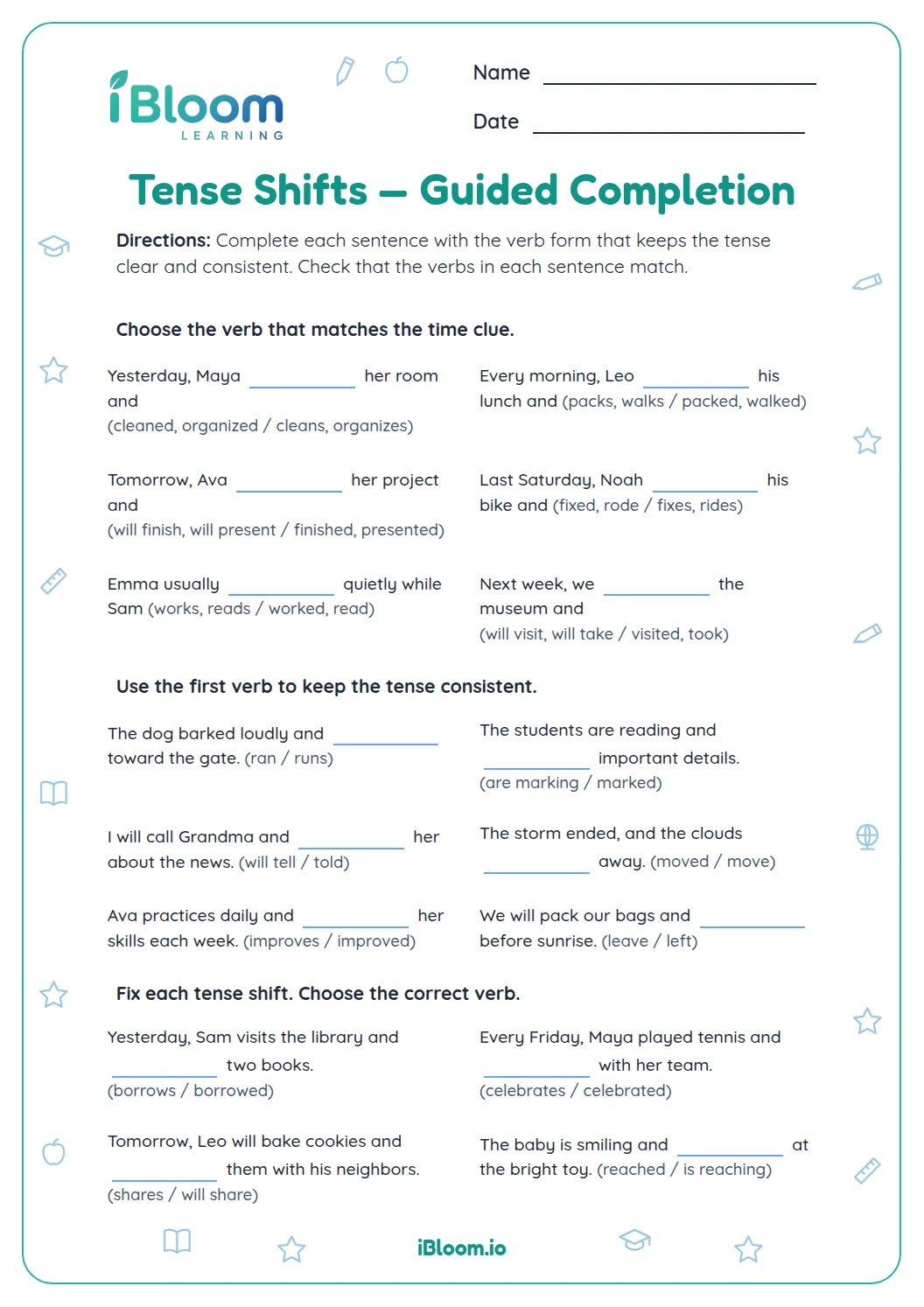
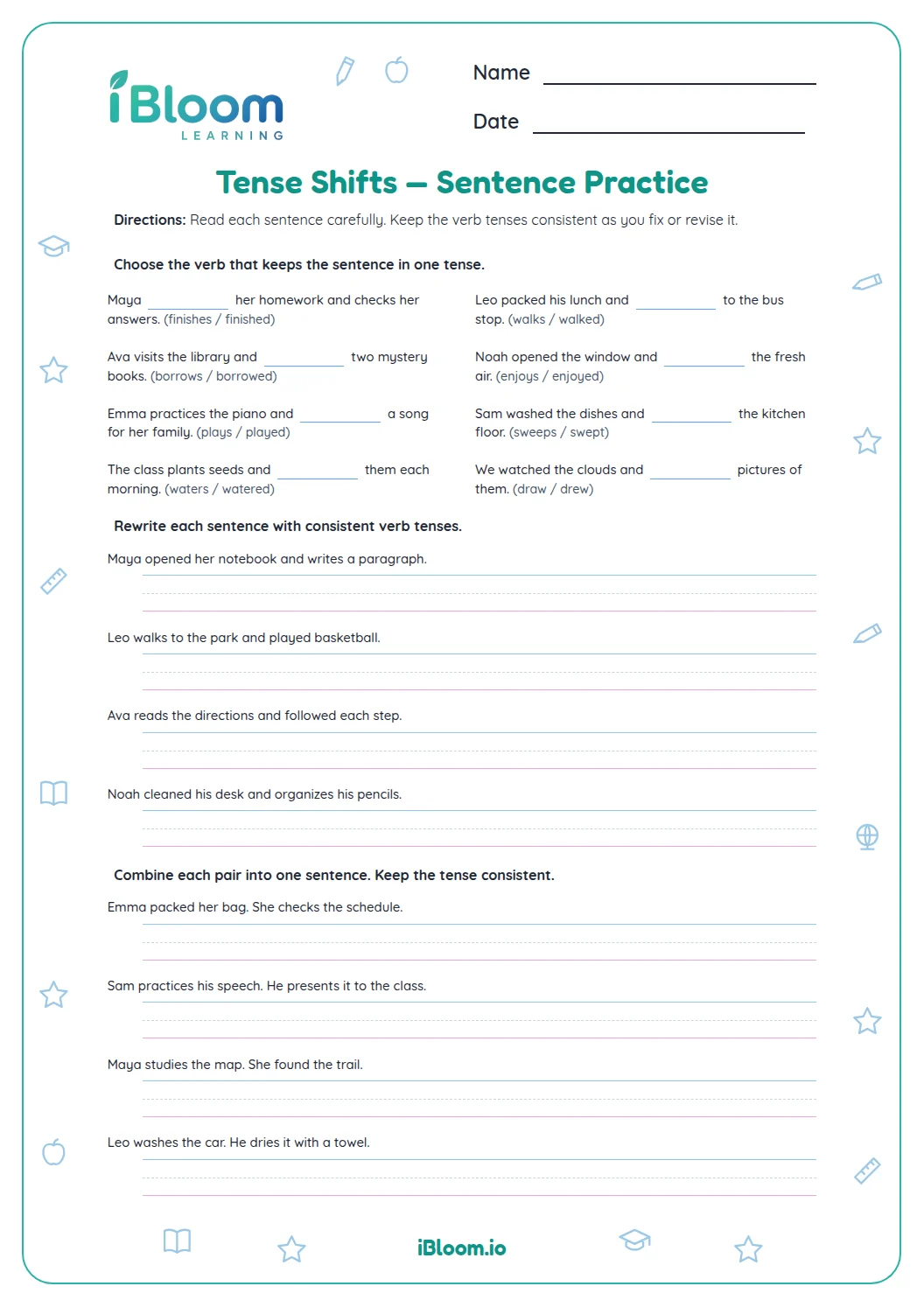
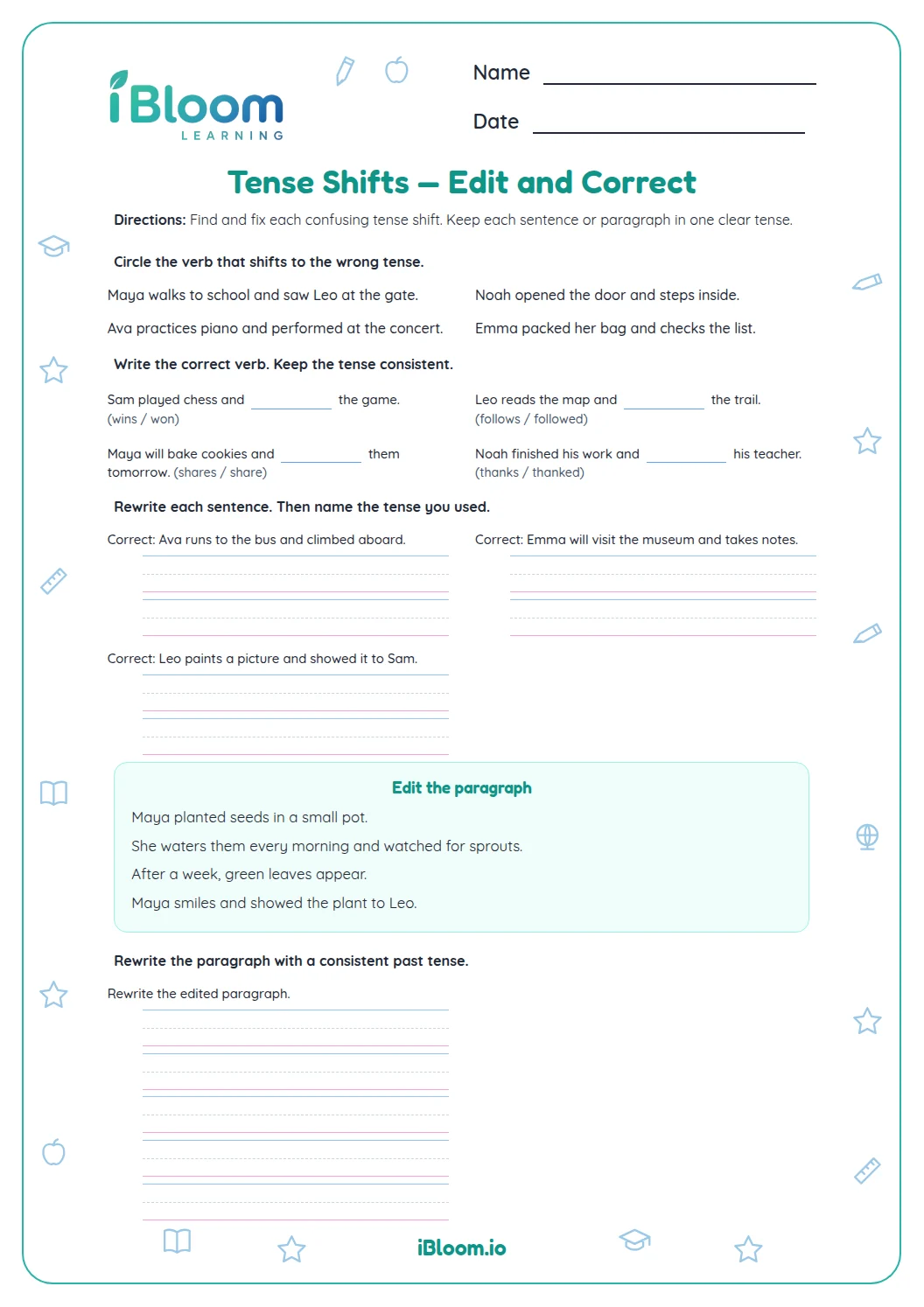
This Grade 5 grammar worksheet gives students 14 sentence-completion and editing items about verb time and event sequence. They use simple past and past perfect forms with time clues such as before and by the time, then edit sentences whose verb forms make the timeline unclear. The page practices Common Core standards L.5.1.c and L.5.1.d and includes a two-page answer key.
Aligned to L.5.1.c and L.5.1.d
What does the worksheet cover?
Fourteen items move from completing sentences with simple past or past perfect to correcting sentences that show two past events. The time clues make the intended order clear.
The worksheet includes a four-item word-choice section, one completion item, and a sequence-editing section.
- Part A: show earlier and later actions in a sentence
- Part B: choose verb forms that fit clear time clues
- Part C: complete a simple-past sentence
- Part D: complete past-event sequences
How do verb tense and sequence work together?
Verb tense helps show when an action happened. When describing two past events, past perfect can mark the earlier action and simple past the later one: “Maya had finished homework before she watched TV.” Time words such as before and by the time help readers follow the sequence.
When editing, scan both the time words and every verb. Correcting just one verb may leave the sequence confusing if another verb still points to a different time.
How to use this worksheet
- 1Underline the time clue in each sentence.
- 2Identify which event happened first and which happened later.
- 3Use had plus a past participle for an earlier past event when the prompt asks for past perfect.
- 4Reread the completed sentence to make sure the timeline is clear.
Common mistakes and quick fixes
The mistake
Changing one verb but leaving another verb in a conflicting time.
The fix
Check every verb in the sequence against the time clues.
The mistake
Assuming sequence words alone fix a tense shift.
The fix
Keep the verbs consistent with the timeline, then use first, next, or after that to clarify order.
The mistake
Using a past participle without had when past perfect is requested.
The fix
Build past perfect with had plus the past participle, as in had finished.
Curriculum alignment
Students use verb tense to express time and order, and edit shifts that obscure a sequence.
Use verb tense to convey various times, sequences, states, and conditions.
On this sheet: Students use past perfect and simple past forms to show the order of events.
Show the official wordingHide the official wording
Use verb tense to convey various times, sequences, states, and conditions.
Recognize and correct inappropriate shifts in verb tense.
On this sheet: Students edit sentences whose verb forms do not communicate the intended time sequence.
Show the official wordingHide the official wording
Recognize and correct inappropriate shifts in verb tense.*
What to practice next
Make more practice
Further reading
Questions parents and teachers ask
What does the past perfect tense show?
The past perfect uses had plus a past participle, as in “had finished.” It can show that one past event happened before another past event. In “Maya had finished homework before she watched TV,” finishing came first and watching came later.
When should a writer use simple past?
Use simple past for a completed past action when the order is already clear or when describing the later event. “Maya had finished homework before she watched TV” uses past perfect for the earlier action and simple past for the later action.
Do sequence words replace verb tense?
No. Words such as before, after, and then show event order, while verb tense helps show when actions happened. Writers should check both so the timeline is easy to follow and the verb forms do not shift without a reason.
What grade is this editing page for?
This page is designed for Grade 5. It has 14 items about simple past, past perfect, and the order of past events, with time clues in each sentence. A separate two-page answer key gives the intended verb form for every item.
How does the worksheet make the event order clear?
Each sentence includes a time clue such as before or by the time, and the prompt names the tense to use. Students identify the earlier and later actions, then complete the sentence with simple past or past perfect so the reader can follow the timeline.