


About this worksheet
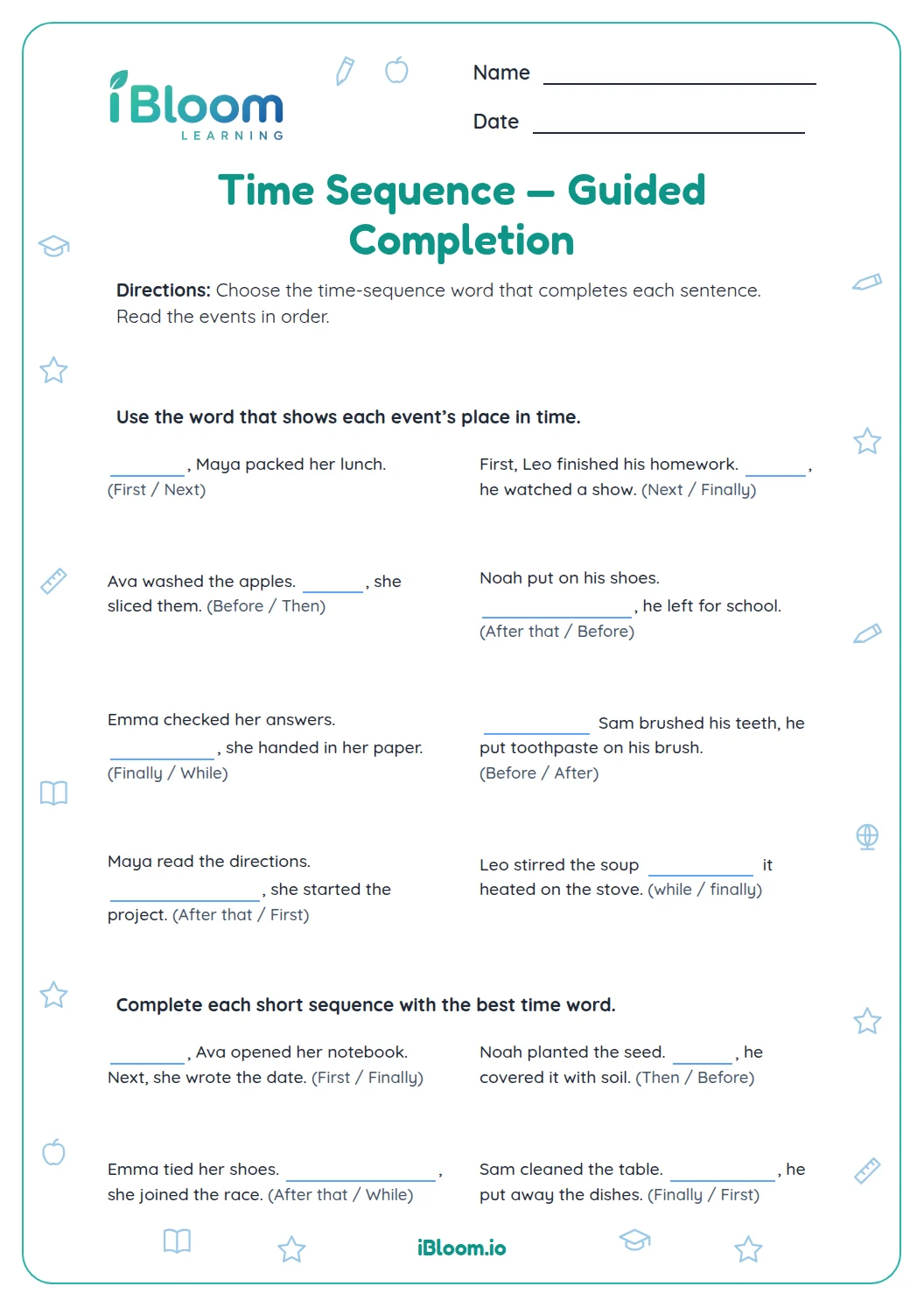
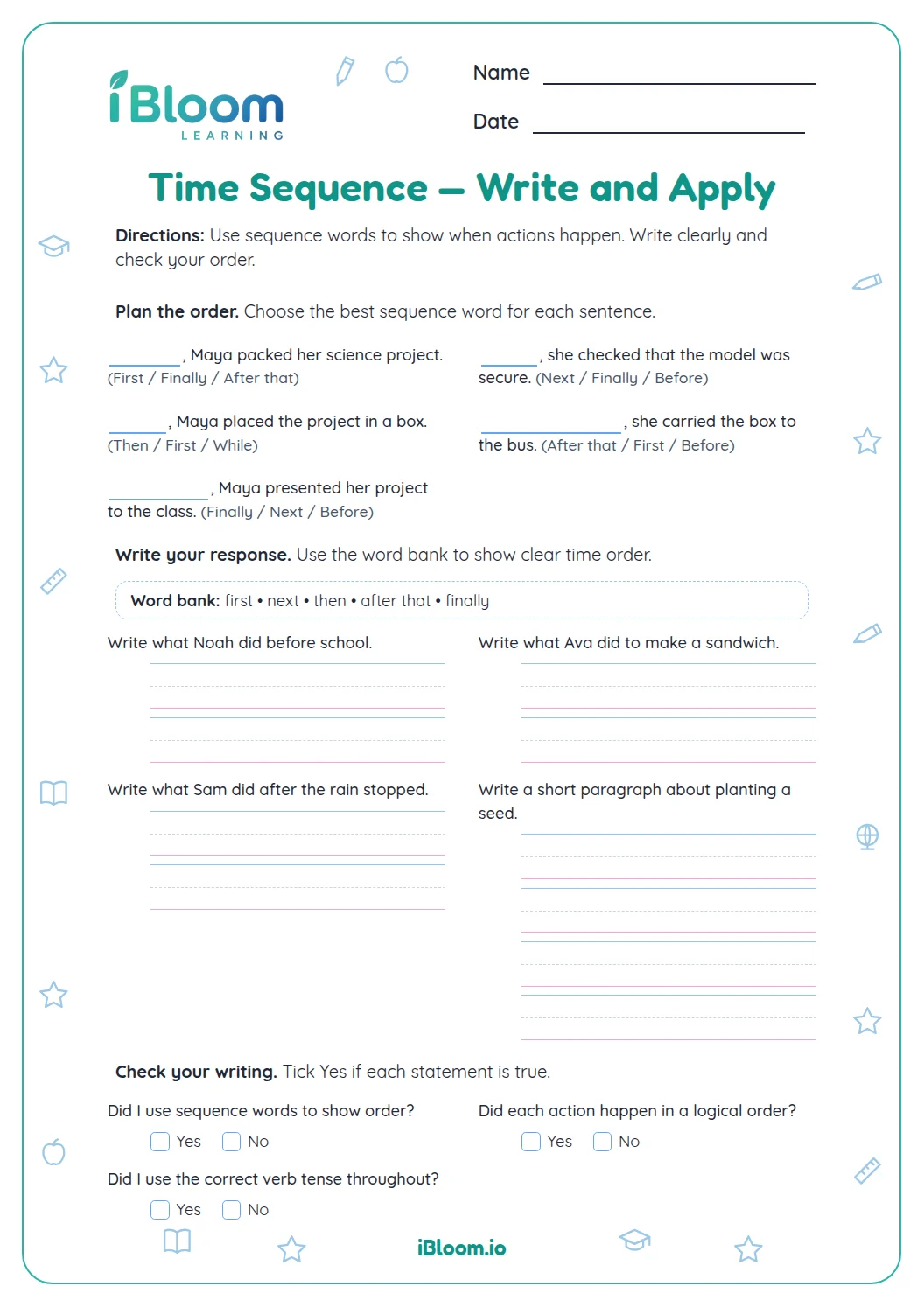
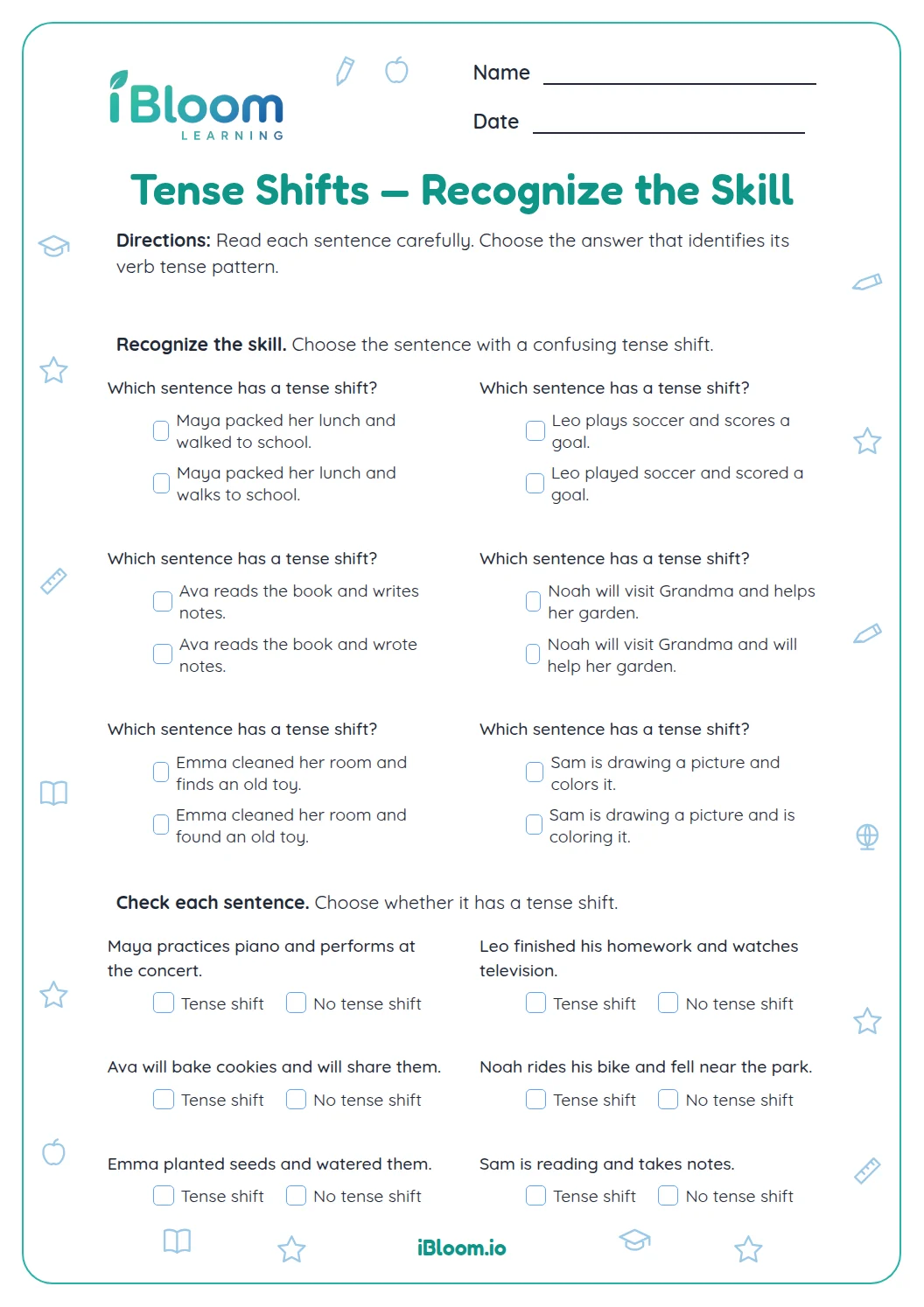
This free printable Grade 5 worksheet helps students recognize words that signal time order. Four short sentences ask them to circle a sequence word. Two choices identify First and Next, and eight more questions use before, after, and then to connect events. Students practice following the time relationship even when the earlier event is mentioned later in the sentence. This work supports Common Core W.5.3c by connecting transitions to event sequence. The separate answer key marks each circled word and correct choice.
Aligned to W.5.3c
Which words signal time order?
First marks a beginning, next and then move to a following event, and finally signals a last or long-awaited step. Before and after relate one event to another. All six words appear in the worksheet.
In Part A, children circle one sequence word per sentence. In Part B, they identify the opening signals First and Next.
Does the first event mentioned always happen first?
No. Question 9 mentions watering before it mentions filling the can. The words Before that tell readers to put filling first in the actual sequence.
- 1Ava watered the plant. Before that, she filled the can.
- 2Earlier: Ava filled the can.
- 3Later: Ava watered the plant.
- 4Choose She filled the can.
How do children choose before or after?
Find the two events and put them in order. In question 11, mixing comes first and baking follows, so Emma baked after mixing. In question 12, packing comes first, so Sam packed before walking.
Have students reread each completed sentence. The chosen word must preserve the event order stated in the prompt, rather than merely sound familiar.
How to use this worksheet
- 1Read the four circling sentences and mark one time clue in each.
- 2Identify First and Next in Part B.
- 3In Part C, name the two events before choosing an answer.
- 4Use before or after to put the events in their stated order.
- 5Check each response with the key and explain the time clue aloud.
Mistakes to discuss
The mistake
Circling packed instead of before.
The fix
Packed names an action; before tells its time relationship to school.
The mistake
Choosing watering first in question 9 because it is mentioned first.
The fix
Before that points back to an earlier action: filling the can.
The mistake
Choosing after for Sam’s packing in question 12.
The fix
He packs, then walks. He packs before walking.
Common Core alignment
Recognize and choose time transitions that connect events in order.
On this sheet: Children recognize sequence signals and choose before or after to connect events accurately.
Show the official wordingHide the official wording
Use a variety of transitional words, phrases, and clauses to manage the sequence of events.
What to practice next
Make more practice
Further reading
Questions parents and teachers ask
Which time-sequence words are included?
The worksheet includes before, after, then, finally, First, and Next. Students circle the first four in short sentences and identify the other two in multiple-choice questions, including two more about event order and the last step. The Part C uses these time relationships to order actions and choose words that connect events accurately.
What should students circle in Part A?
Each of the four sentences has one time-sequence word to circle: before, after, then, or finally. Students should leave the action verbs unmarked. Ask which word gives a clue about when the action occurs, then have them read the sentence aloud with that word emphasized.
Why did Ava fill the can before watering?
The sentence says Before that after mentioning watering. That refers to the watering event, so filling the can occurred earlier. Students should follow the stated time clue rather than assume that events are listed in order. Saying “First she filled; then she watered” checks the answer.
How is before different from after?
Before places one action earlier than another; after places it later. Question 11 says Emma mixed and then baked, so she baked after mixing. Question 12 says Sam packed and then walked, so he packed before walking. Reread both completed sentences to confirm those relationships.
How can we check answers without guessing from everyday routines?
Use the time words in the sentence as evidence. For question 10, before explicitly puts turning off the light ahead of falling asleep. For question 8, Next puts breakfast after waking. Students should name that clue before checking the marked choice on the answer key.