

About this worksheet
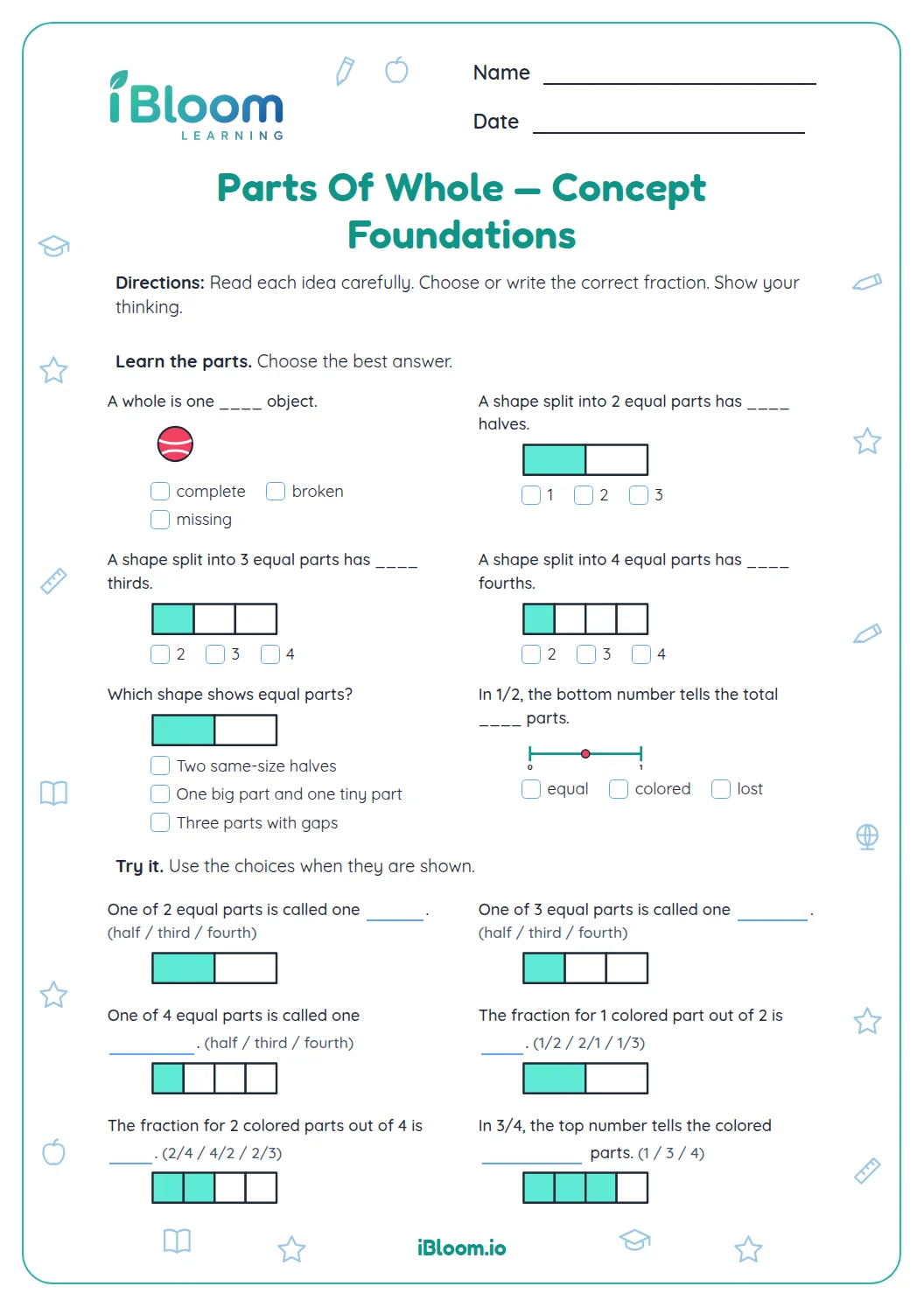
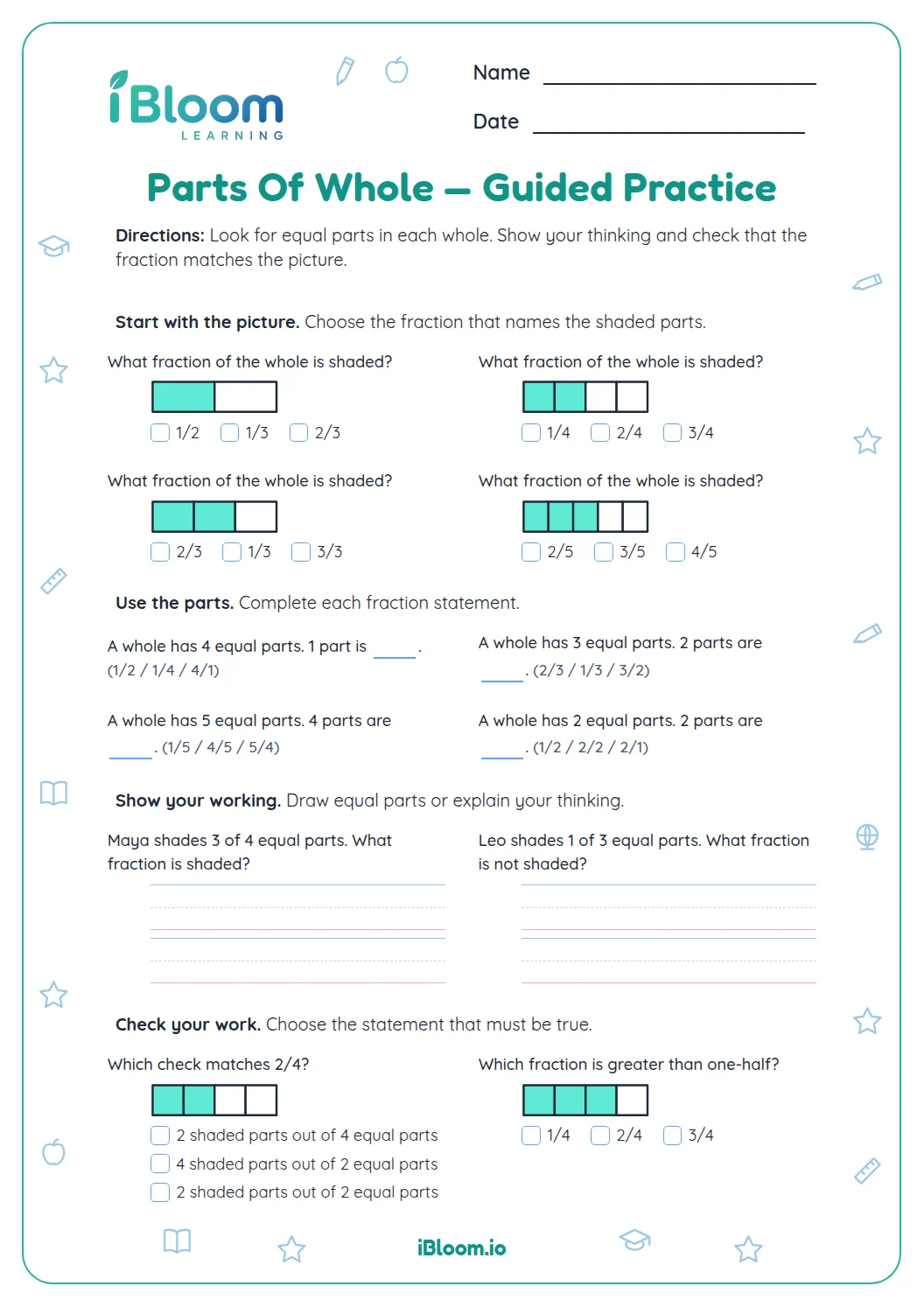
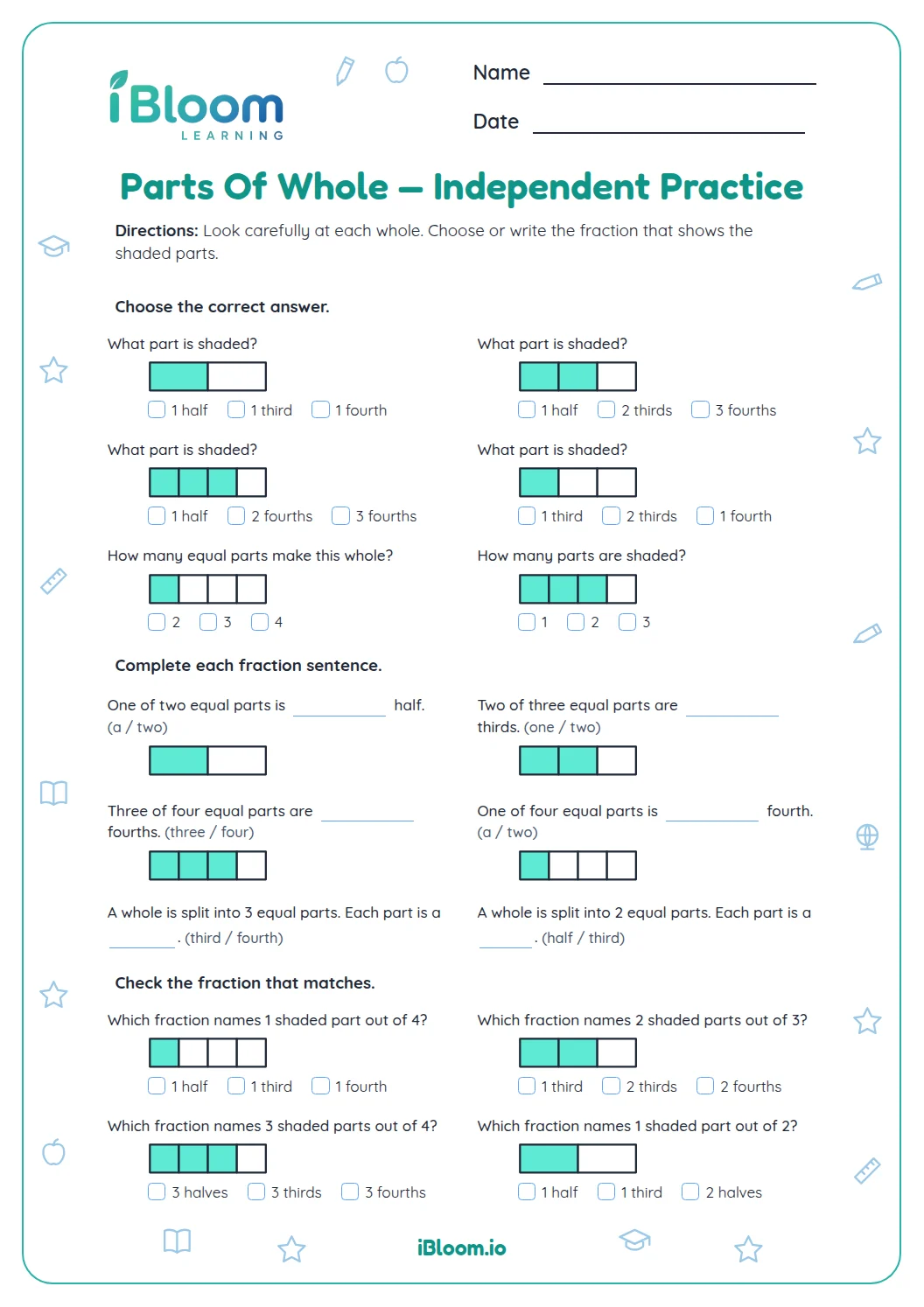
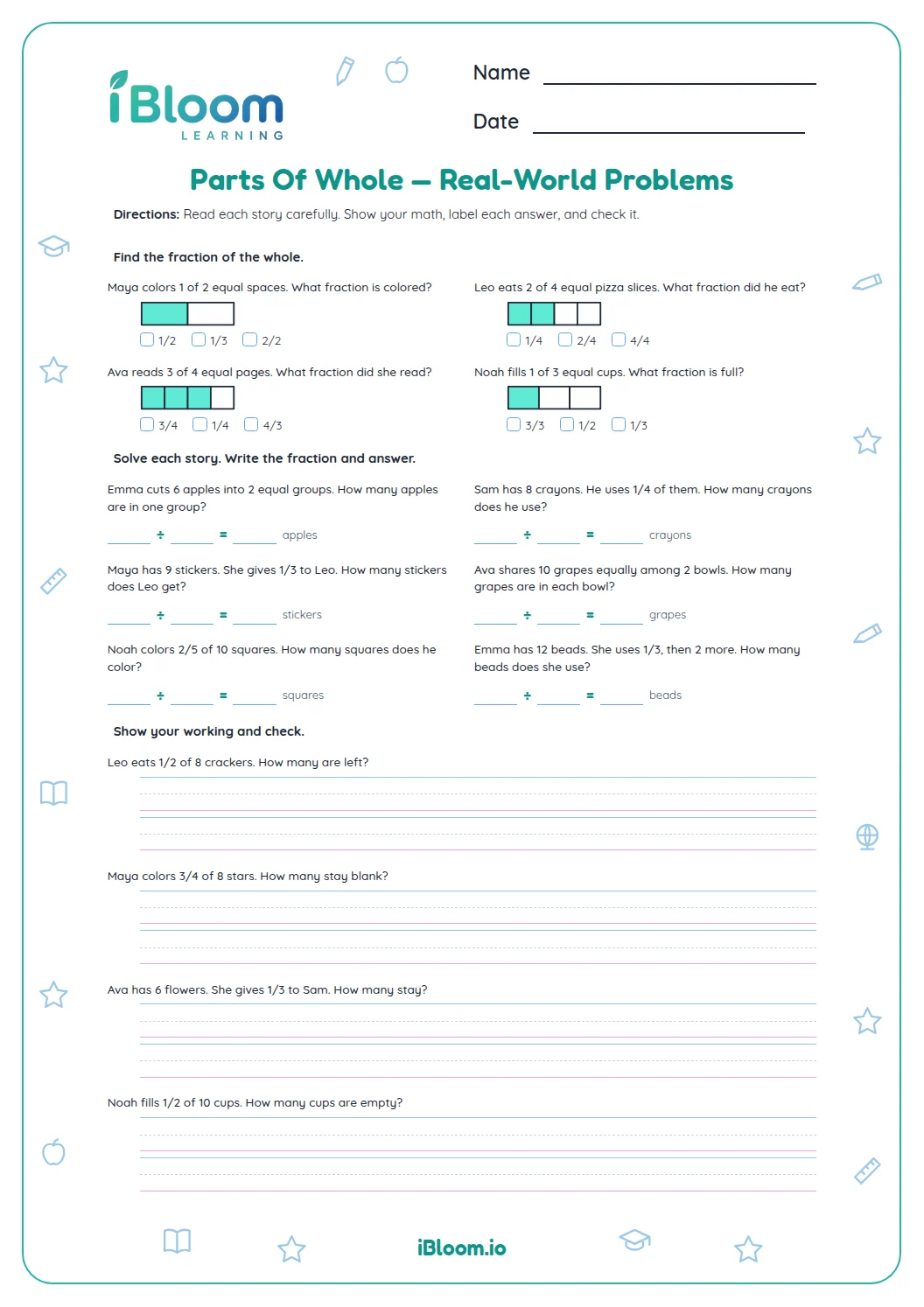
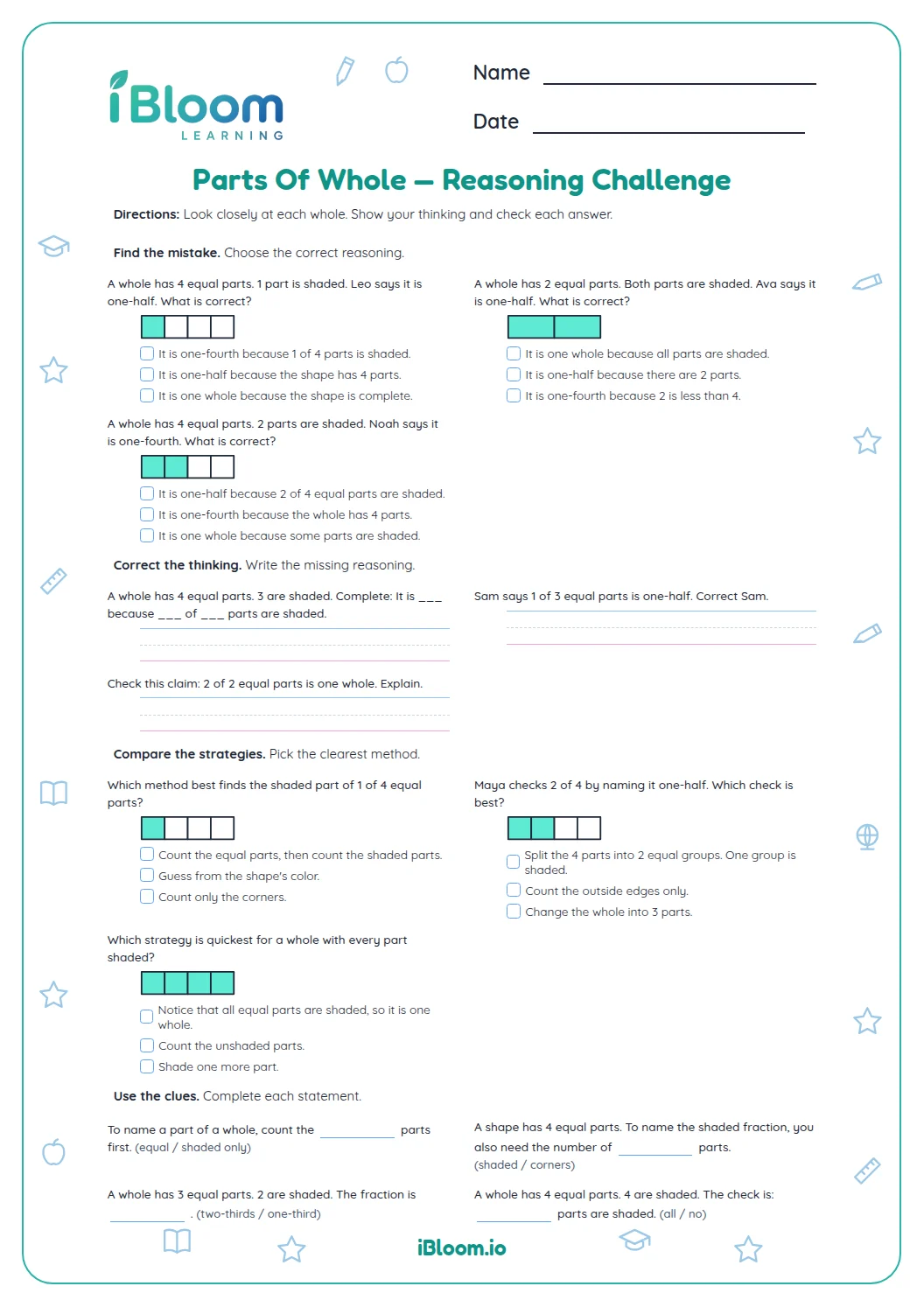
This free printable Grade 1 worksheet helps children connect equal parts of a whole with fraction words and numbers. Across 14 questions, learners read shaded circle, bar, and square models, name fractions with halves and fourths, and draw and label two equal-part models. The separate answer key shows the fraction answers and what each drawing should include.
Aligned to 1.G.A.3
What makes a fraction model fair?
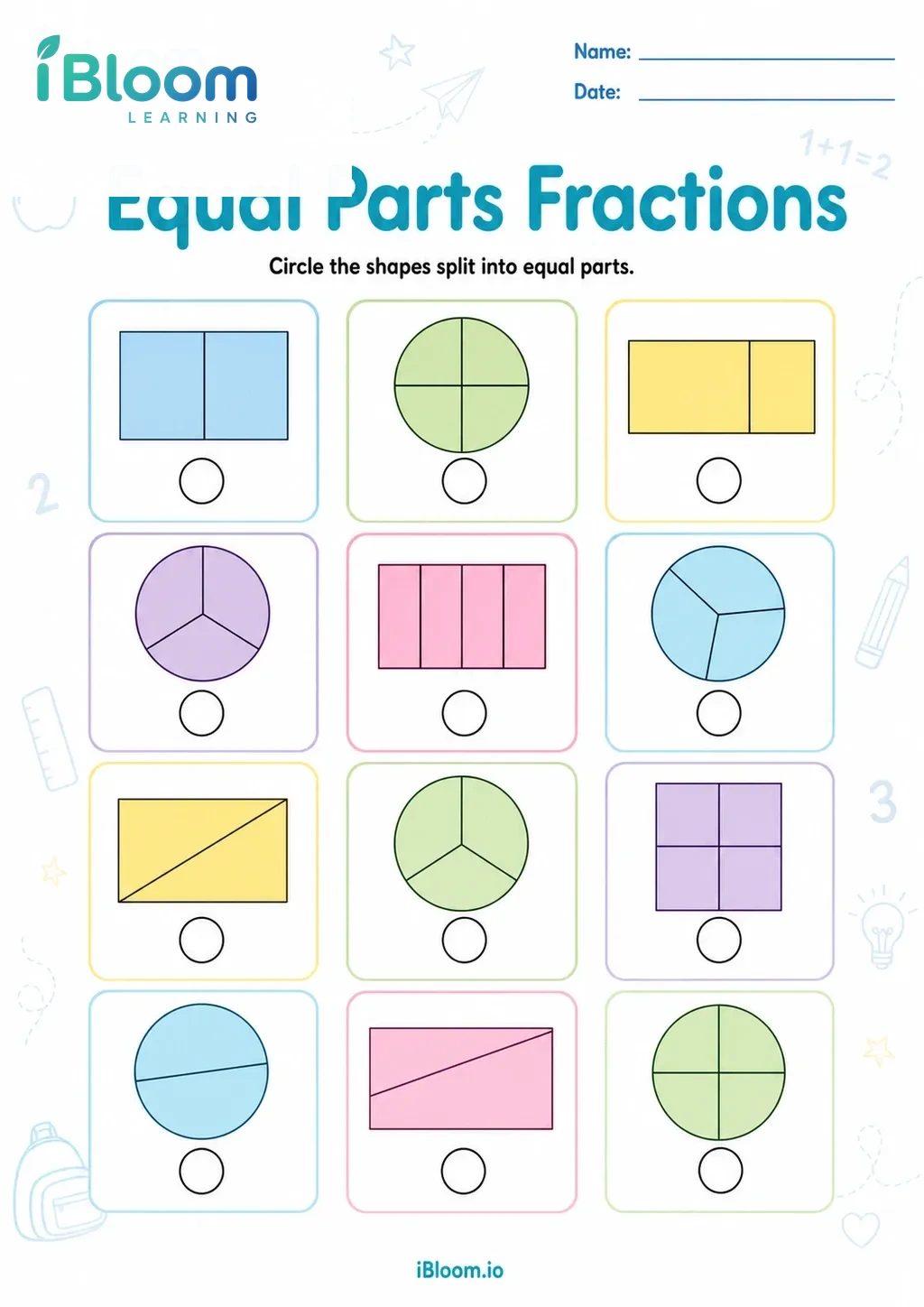
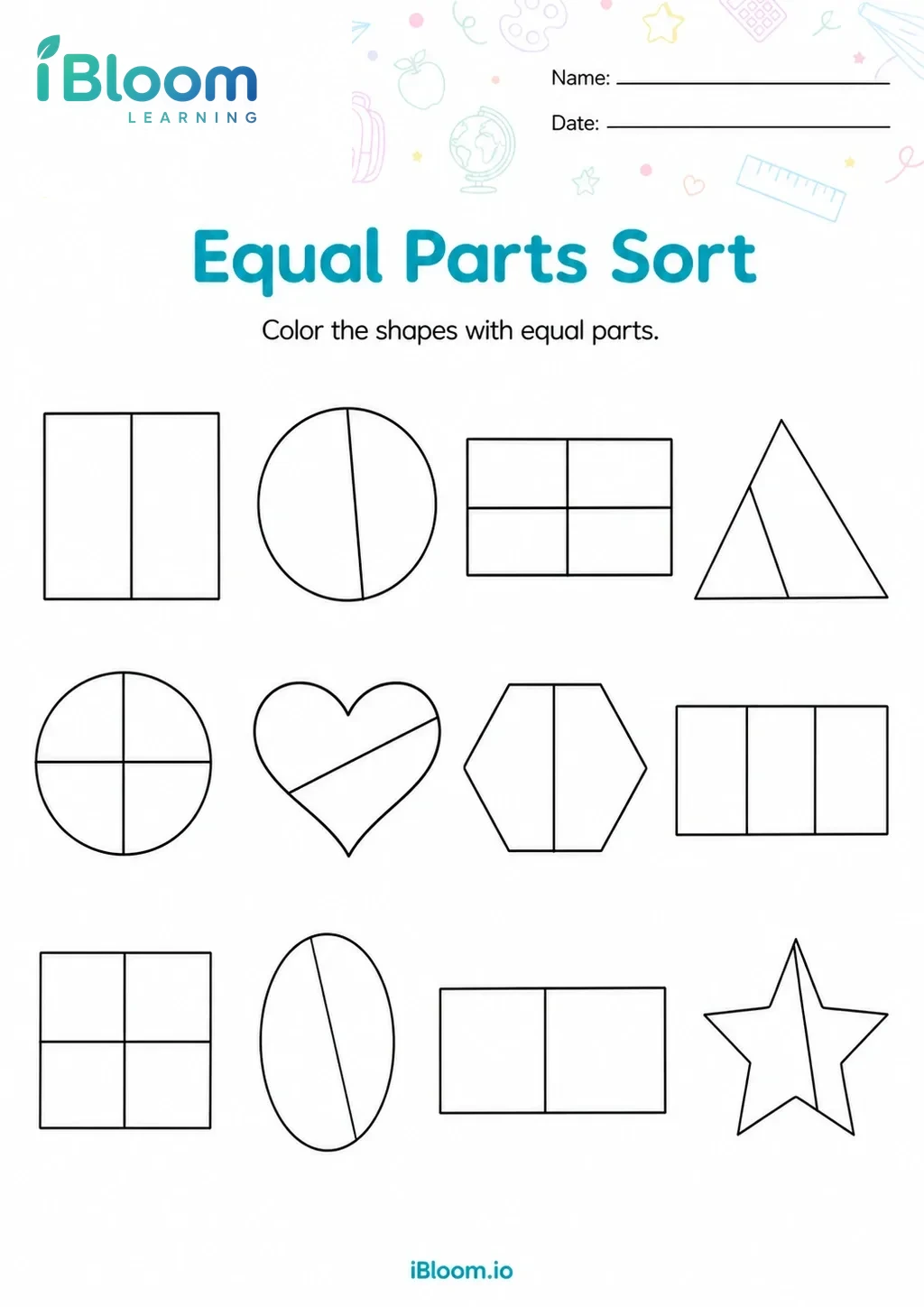
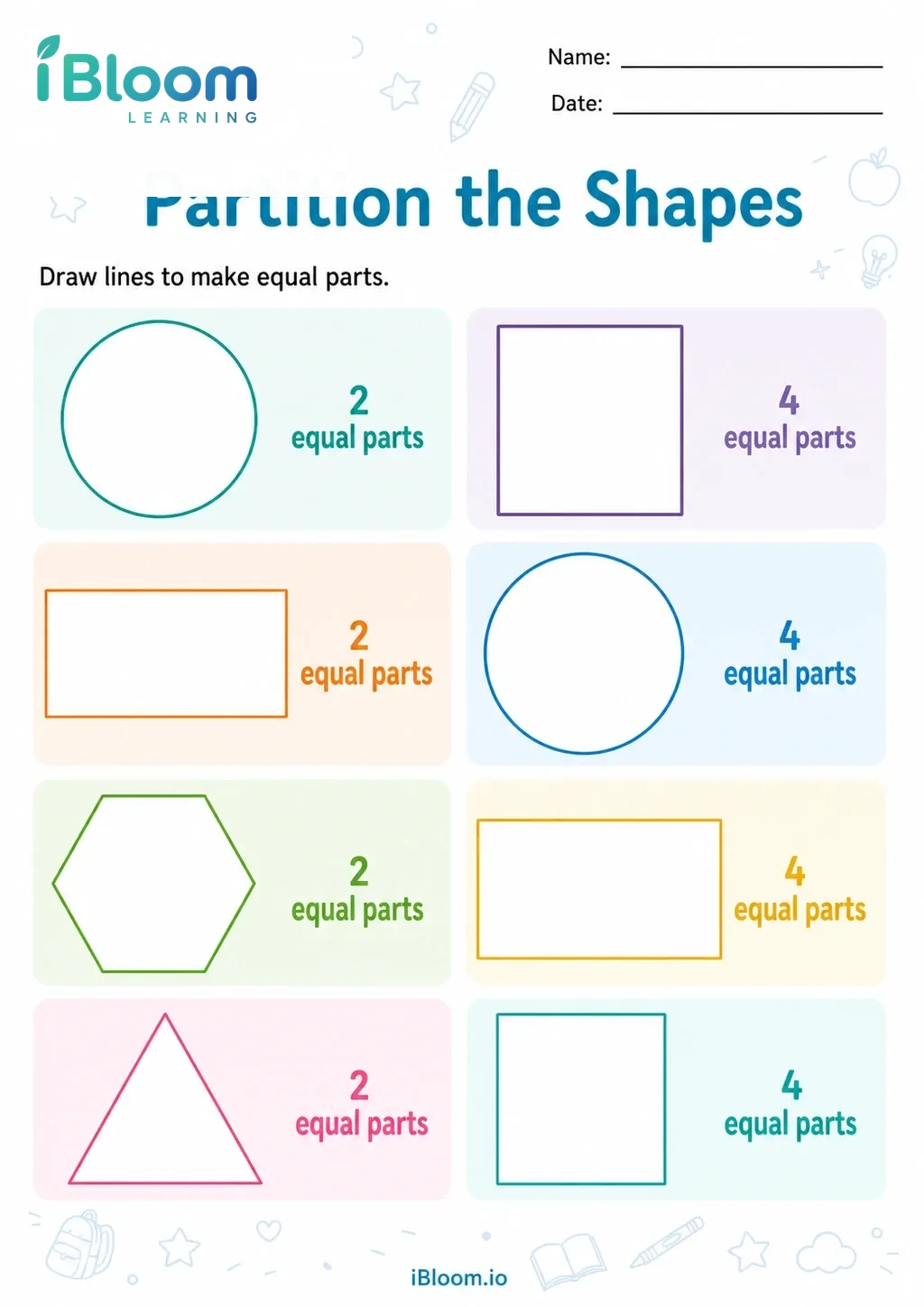
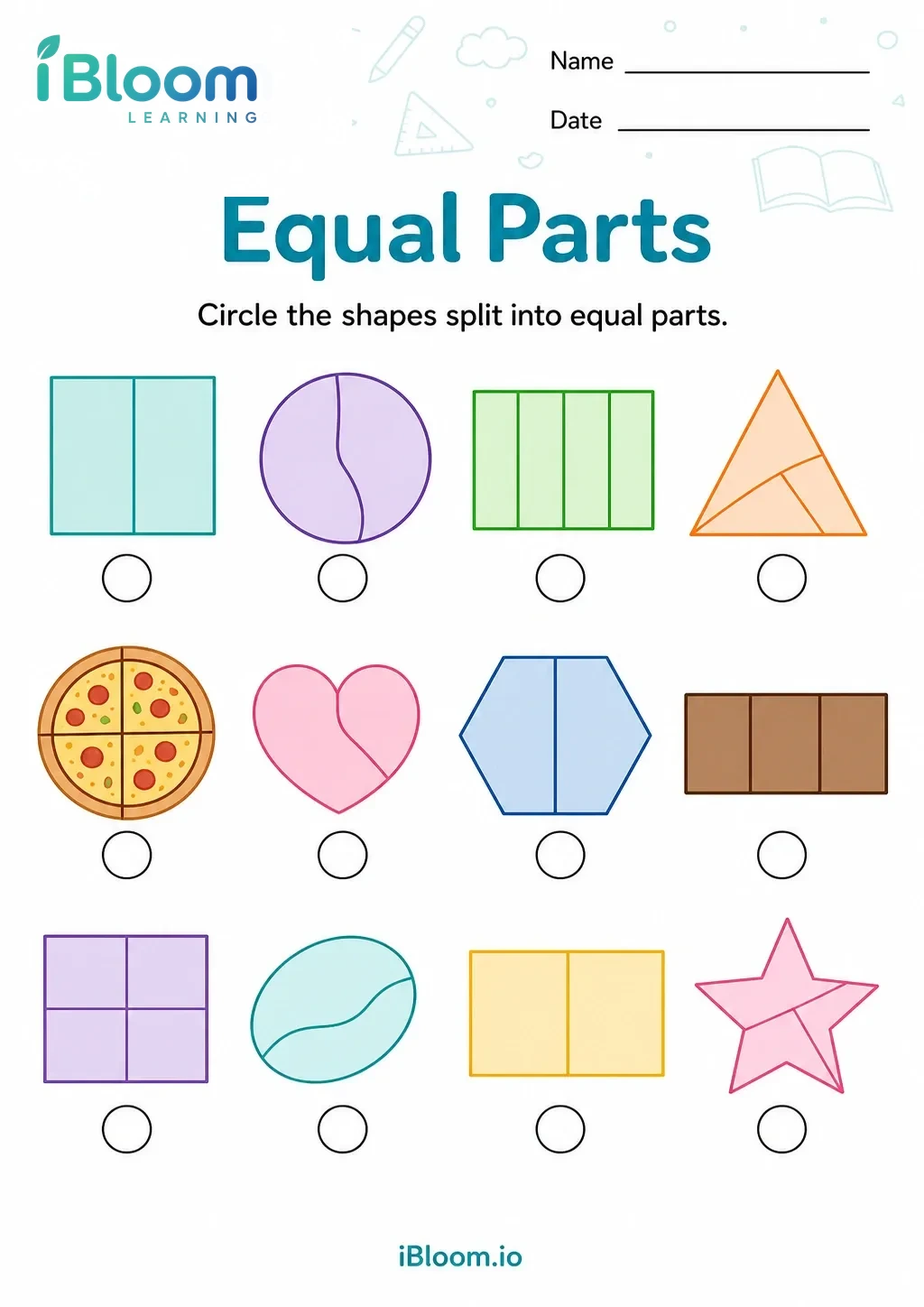
The whole must be split into equal shares. A circle split into two equal pieces shows halves; one shaded piece is one half. A shape split into four equal pieces shows fourths.
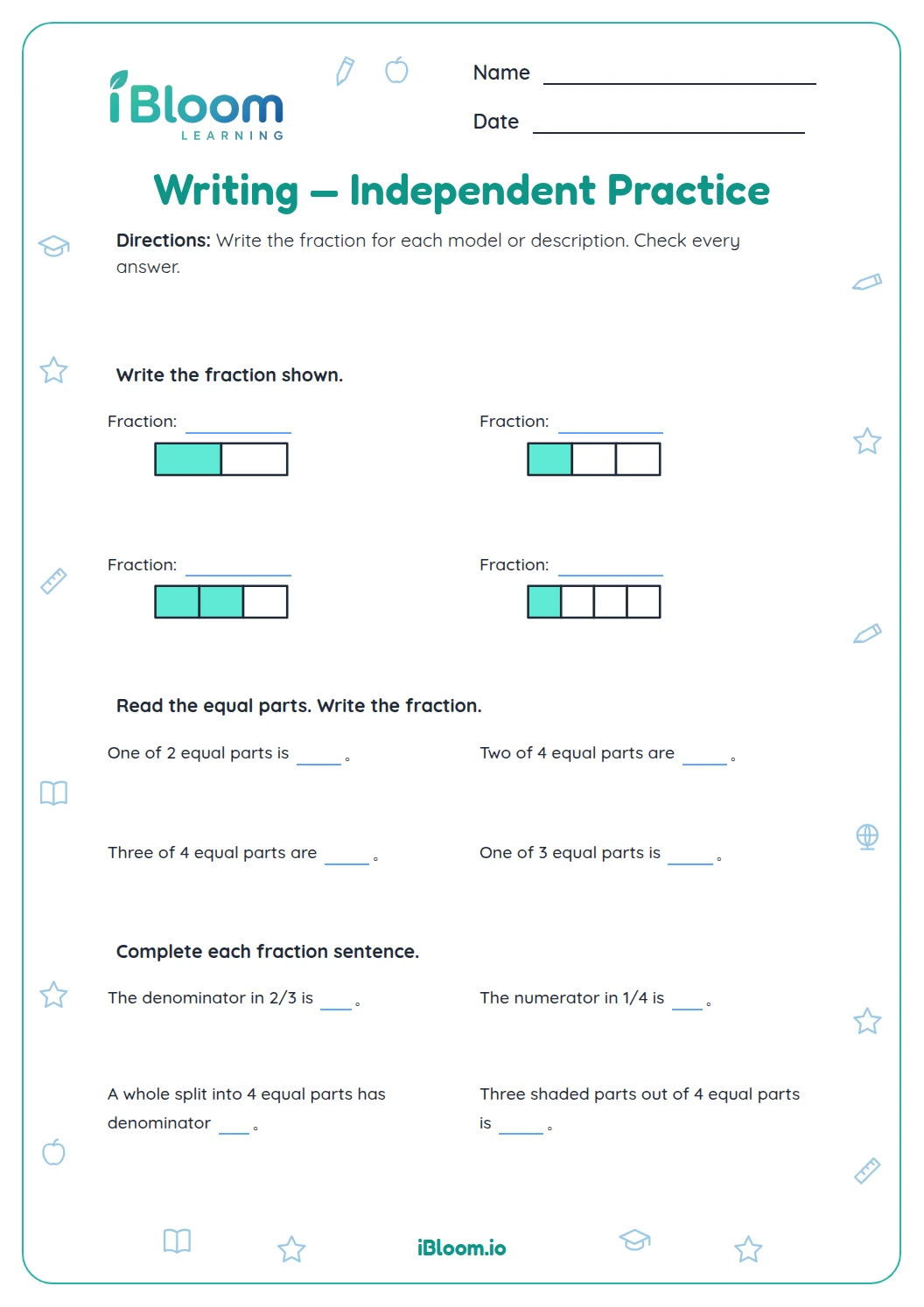
For question 3, three of four equal parts are shaded, so the fraction is 3/4. Count the shaded pieces for the top number and all equal pieces for the bottom.
How do fraction words match the numbers?
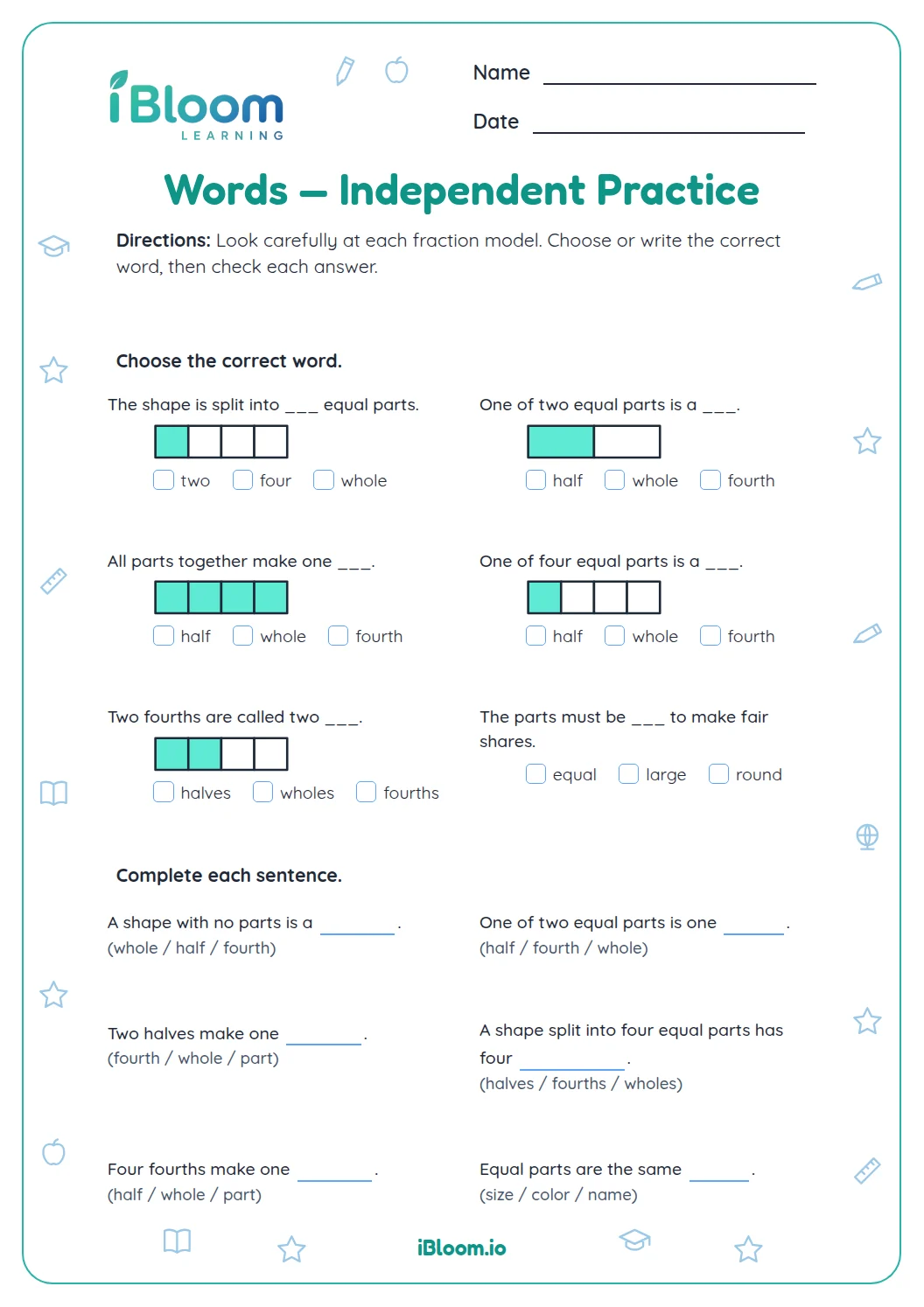
One of two equal parts is one half, or 1/2. One of four equal parts is one fourth, or 1/4. Two of four parts can be called two fourths, keeping the count visible.
What models appear on the page?
The 14 questions begin with shaded circle, bar, and square models. Children then write fractions for equal shares and finish by drawing and labeling one half and three fourths. The answer key lists the numeric answers and describes the two drawings.
How to use this worksheet
- 1Count every equal part in the whole.
- 2Count the shaded parts separately.
- 3Say “fourths” when the whole is divided into four equal pieces.
- 4Use the answer key to check both the number and the fraction name.
Common mistakes and quick fixes
The mistake
Counting only the shaded pieces for both numbers.
The fix
Count all equal pieces for the bottom number.
The mistake
Calling unequal pieces fourths.
The fix
Check that the model divides the whole into same-size parts.
The mistake
Saying “half” when one of four parts is shaded.
The fix
Count the total parts before choosing the name.
Common Core alignment
This worksheet practices the skill described in the standards below.
Name equal parts as halves or fourths in circles and rectangles.
On this sheet: Name equal parts as halves or fourths in circles and rectangles.
Show the official wordingHide the official wording
Partition circles and rectangles into two and four equal shares, describe the shares using the words halves, fourths, and quarters, and use the phrases half of, fourth of, and quarter of. Describe the whole as two of, or four of the shares. Understand for these examples that decomposing into more equal shares creates smaller shares.
What to practice next
Make more practice
Further reading
Questions parents and teachers ask
What does the bottom number tell us?
It tells how many equal parts make the whole. In a model split into four equal pieces, the bottom number is 4. Count the shaded pieces for the top number, then read the fraction as fourths. This gives the learner another chance to explain the idea clearly.
Is one of two equal parts a half?
Yes. A whole split into two equal shares has halves, and one share is one half. If both shares are shaded, the model shows two halves, which make one whole. This gives the learner another chance to explain the idea clearly.
Why must the pieces be equal?
Fractions describe equal shares of one whole. If the pieces have different sizes, counting one piece as one fourth would be misleading because each share would not have the same value. This gives the learner another chance to explain the idea clearly.
How do we name a model with three of four pieces shaded?
Count three shaded pieces and four equal pieces altogether. The number is 3/4, read as three fourths. Question 3 uses this kind of model for practice. This gives the learner another chance to explain the idea clearly. This gives the learner another chance to explain the idea clearly.
Can two fourths also be called a half?
Two fourths cover half of a whole, but this worksheet practices naming the actual shaded pieces as fourths. Saying two fourths keeps the count of the four equal parts clear. This gives the learner another chance to explain the idea clearly.
Does the worksheet include an answer key?
Yes. The key gives fraction numbers for the model questions and matching fraction words for the choice questions. It can be used after the learner finishes each part. This gives the learner another chance to explain the idea clearly. This gives the learner another chance to explain the idea clearly.