


About this worksheet
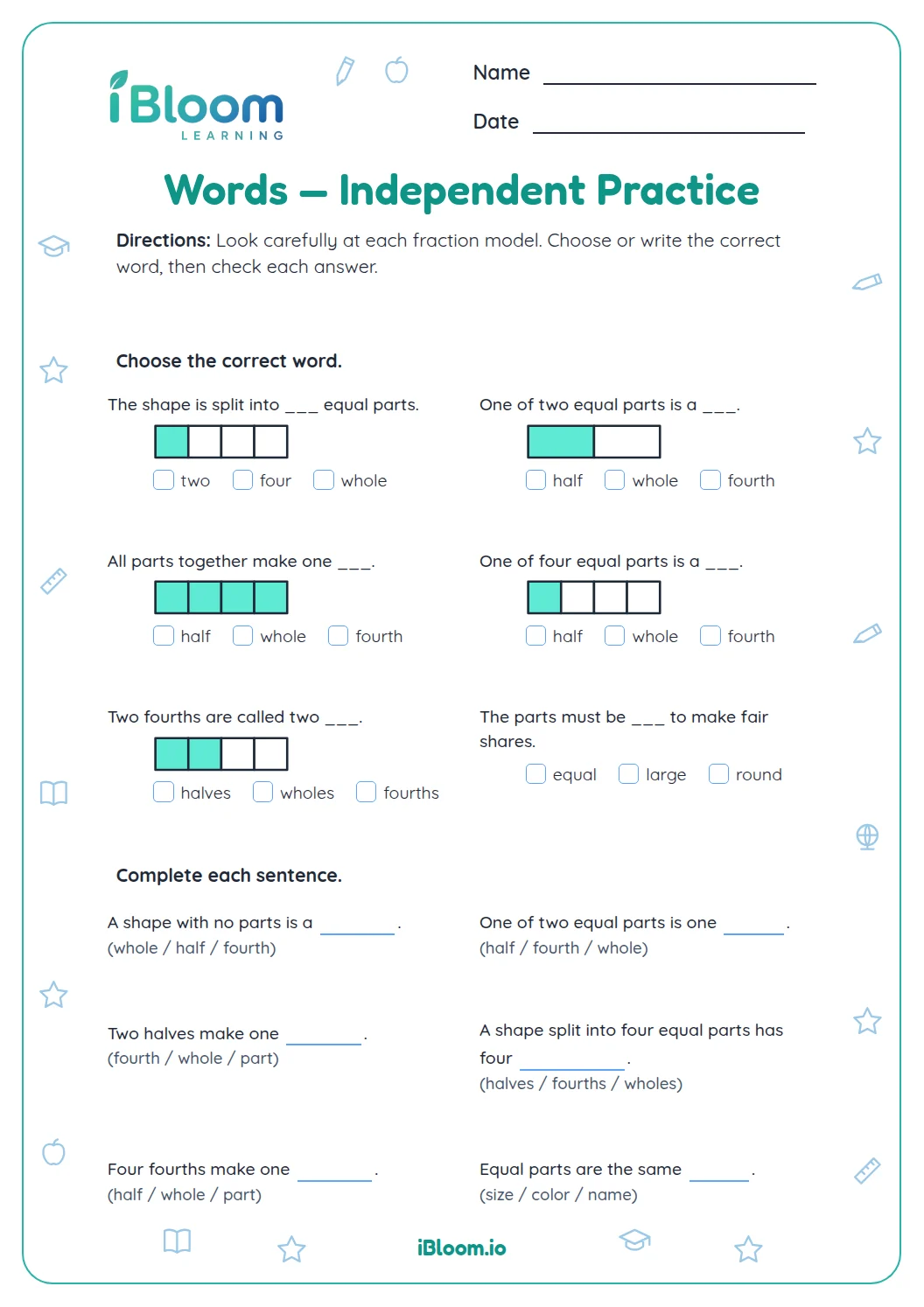
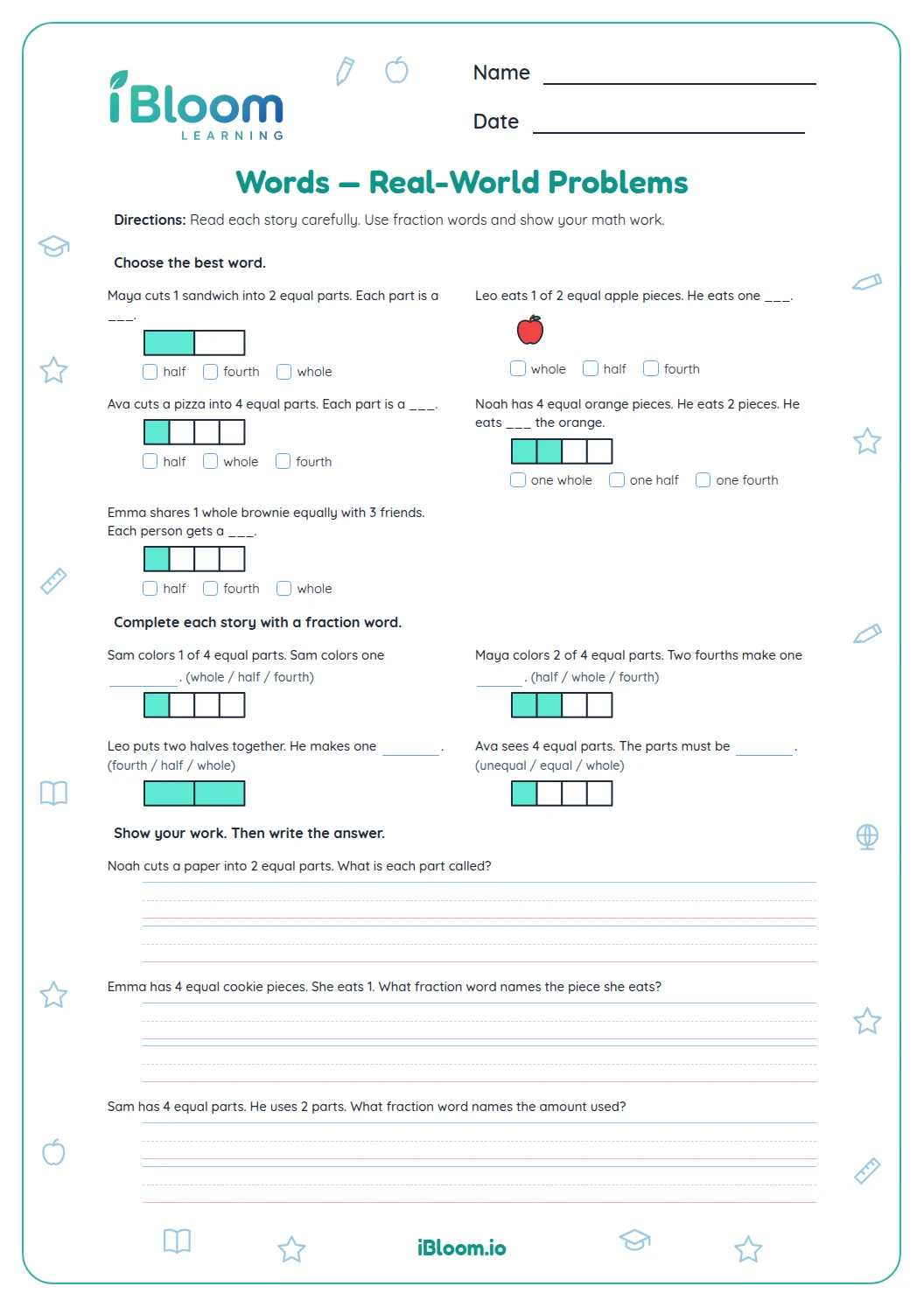
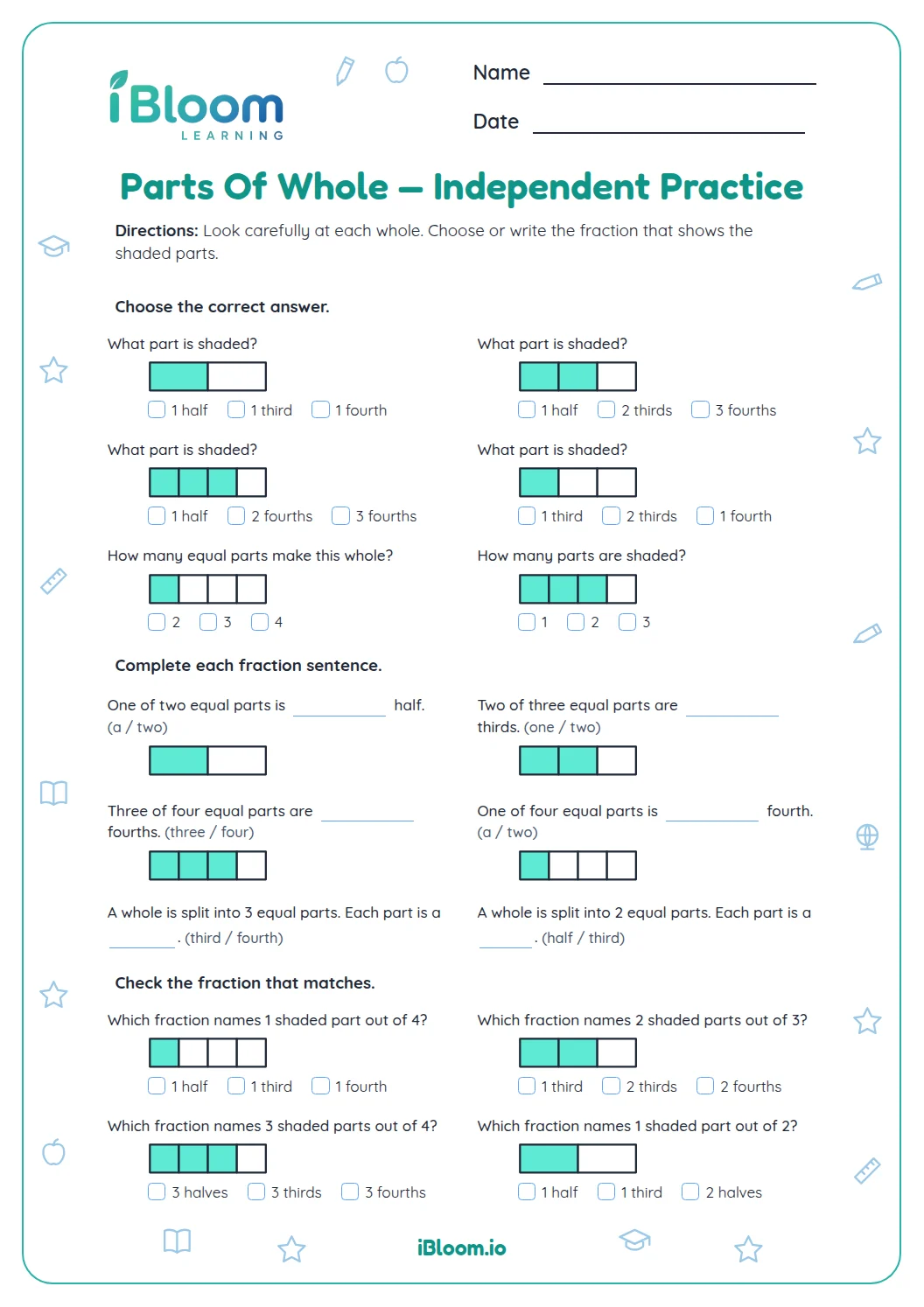
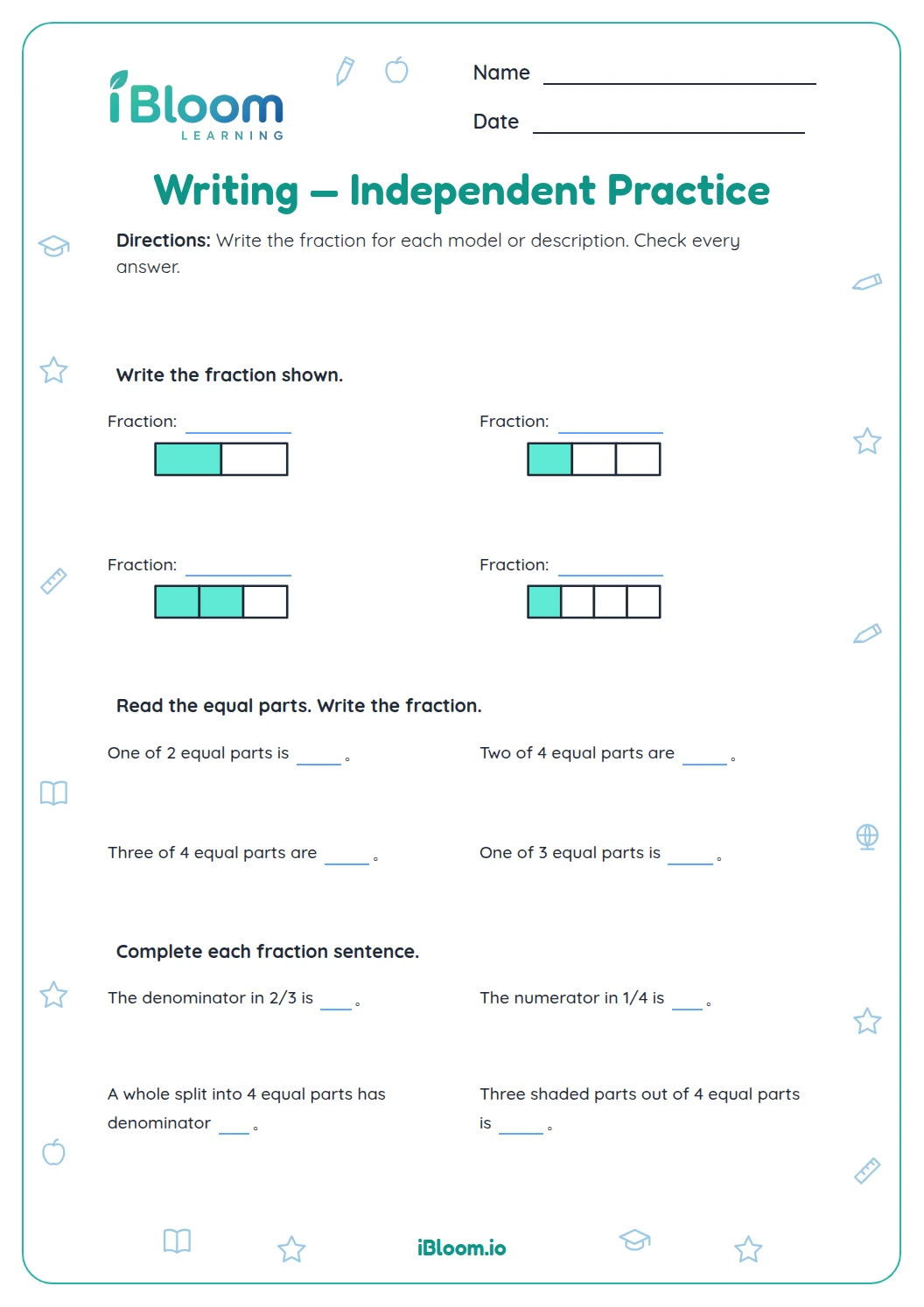
This free printable Grade 1 worksheet connects fraction words with equal shares of shapes. Part A has four circle and rectangle models: children choose the word for one shaded share. Part B has eight completions about halves, fourths, quarters, wholes and share size. Part C asks children to draw and label two equal shares and then four equal shares. The fourteen questions practice Common Core 1.G.A.3 by naming and partitioning circles and rectangles. Read the part directions together before children begin. A separate answer key identifies the correct choices and describes what the drawings should show.
Aligned to 1.G.A.3
What do half, fourth and quarter mean?
A half is one of two equal shares of a whole. A fourth is one of four equal shares. Quarter is another name for a fourth, so a shape divided into four equal pieces can be described using either word.
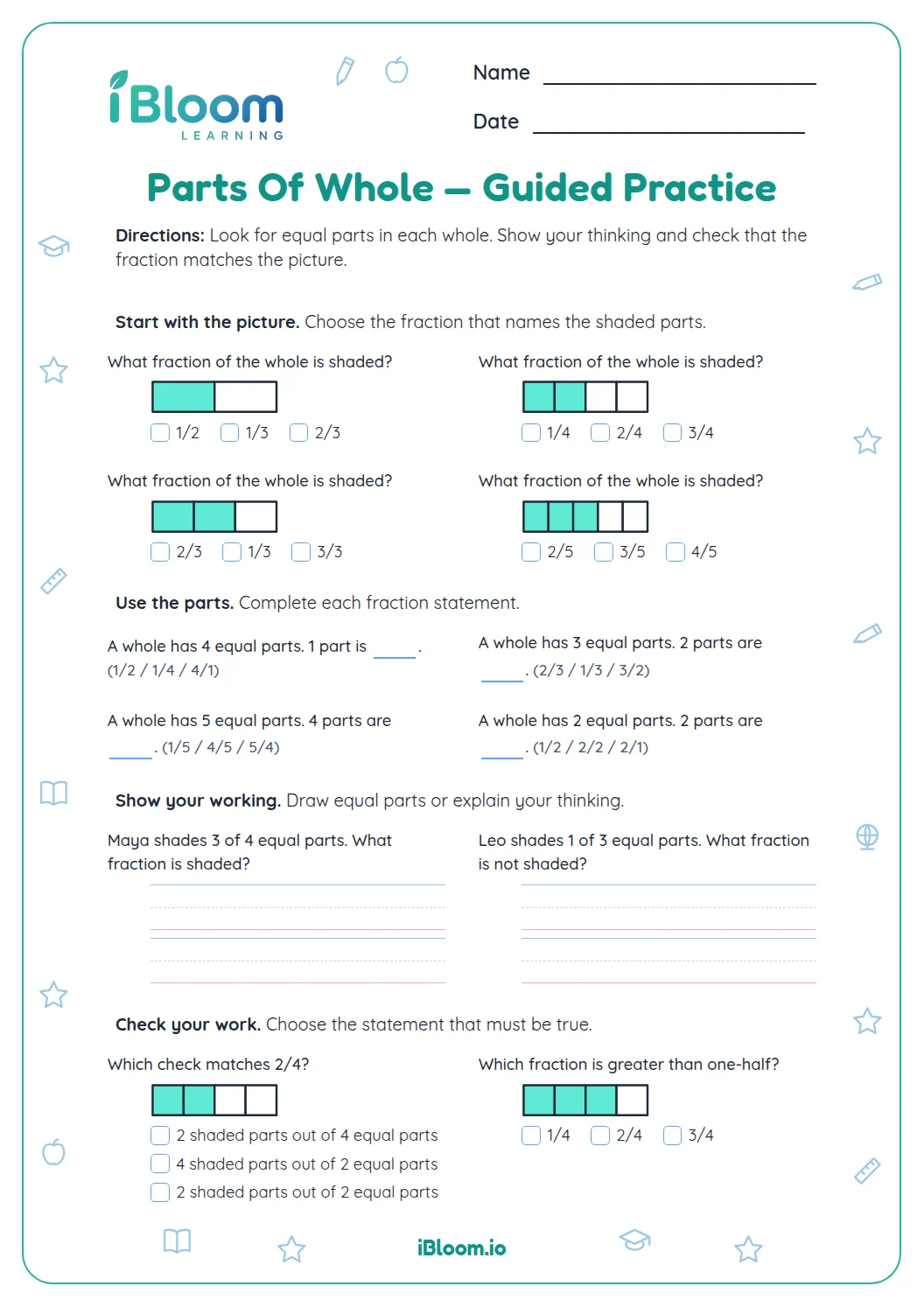
In Part A, the number of equal shares tells children the size of the shaded share. They should count all the parts before naming the one that is shaded.
- 1The circle has four equal shares.
- 2One share is shaded.
- 3One of four equal shares is a fourth.
- 4Choose fourth.
How do the words connect a share to the whole?
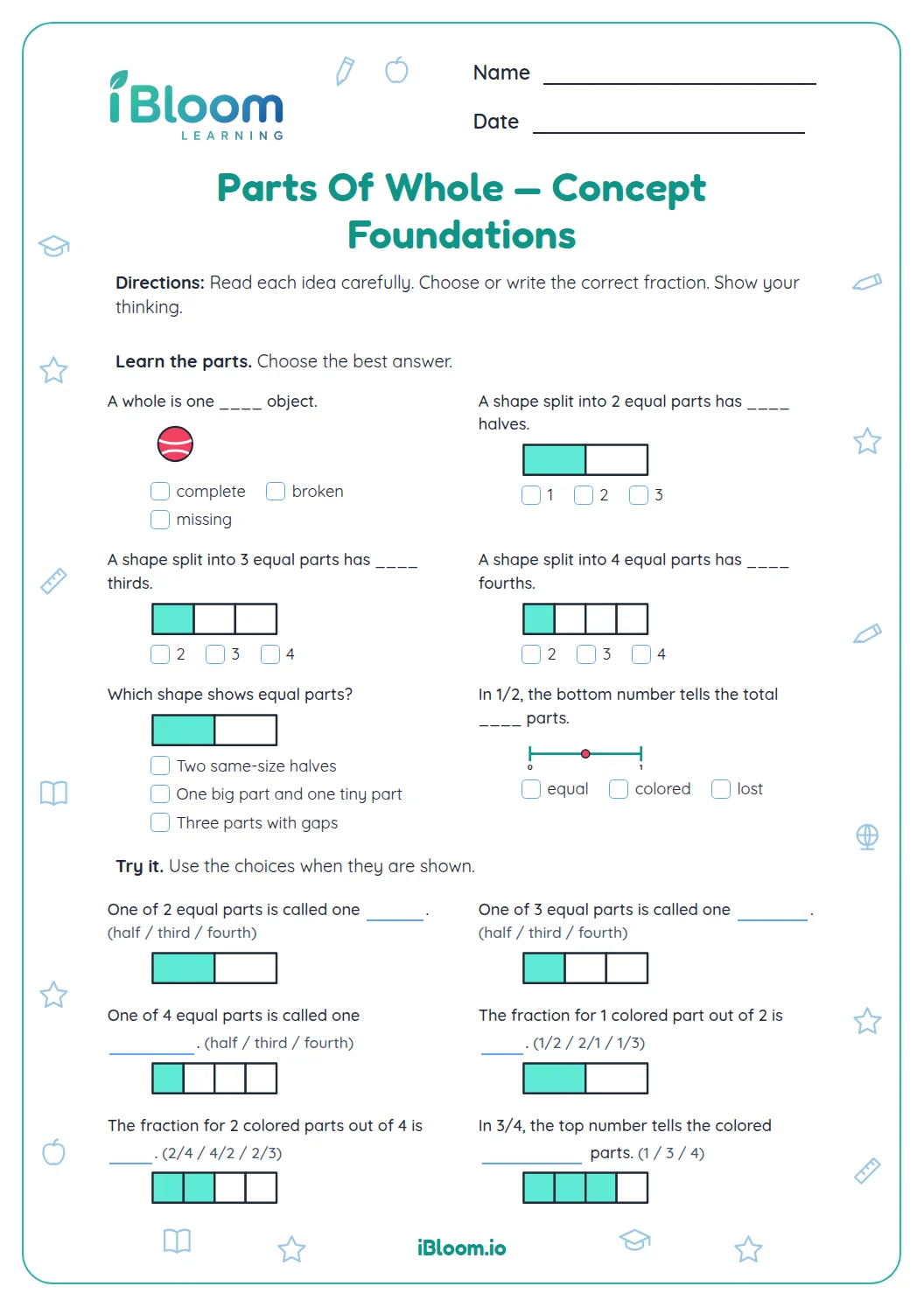
Part B connects share names to a whole: two halves and four fourths make one whole. The other completions name one of two or four equal shares and compare their size. Children can point to a model while saying these sentences.
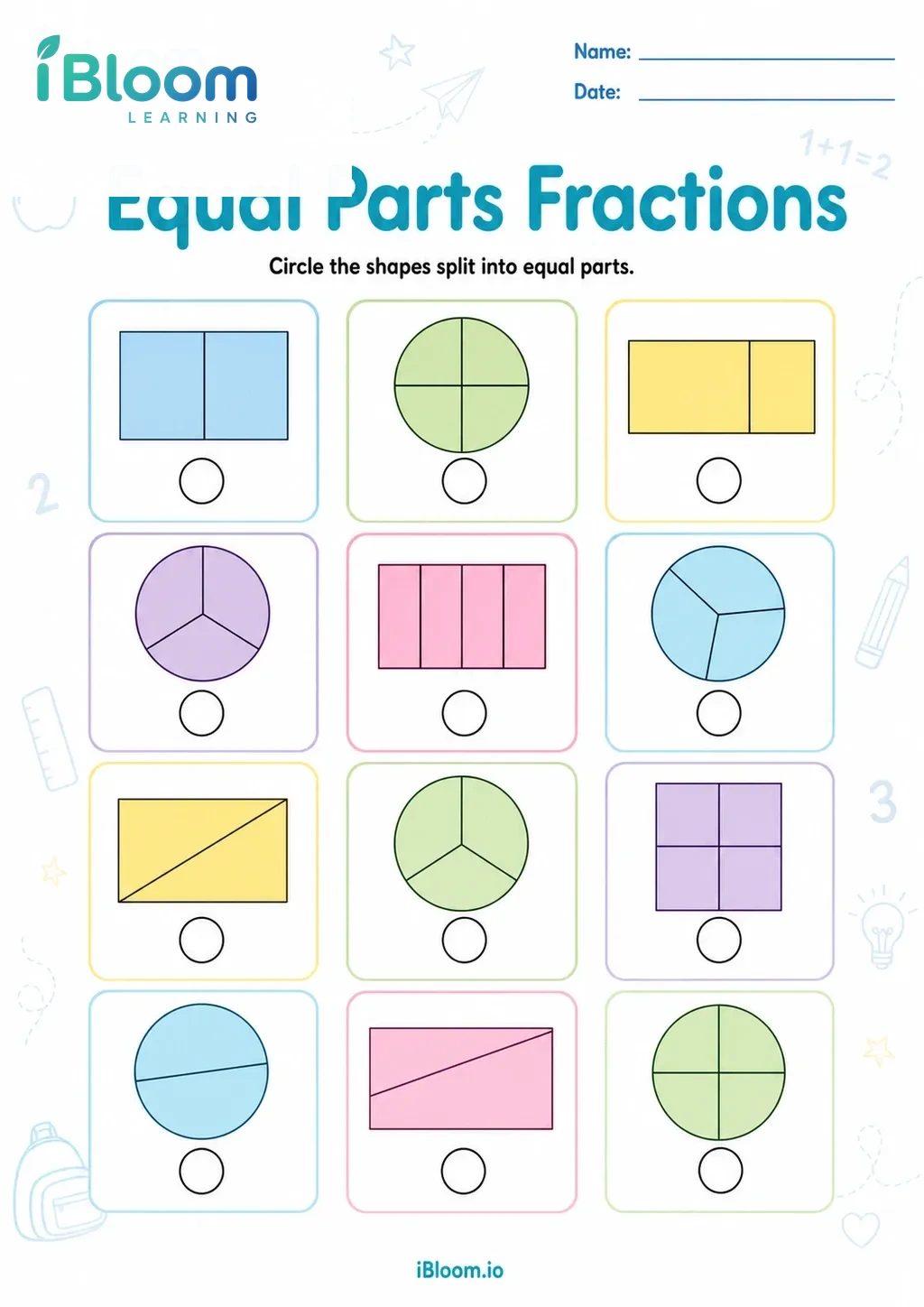
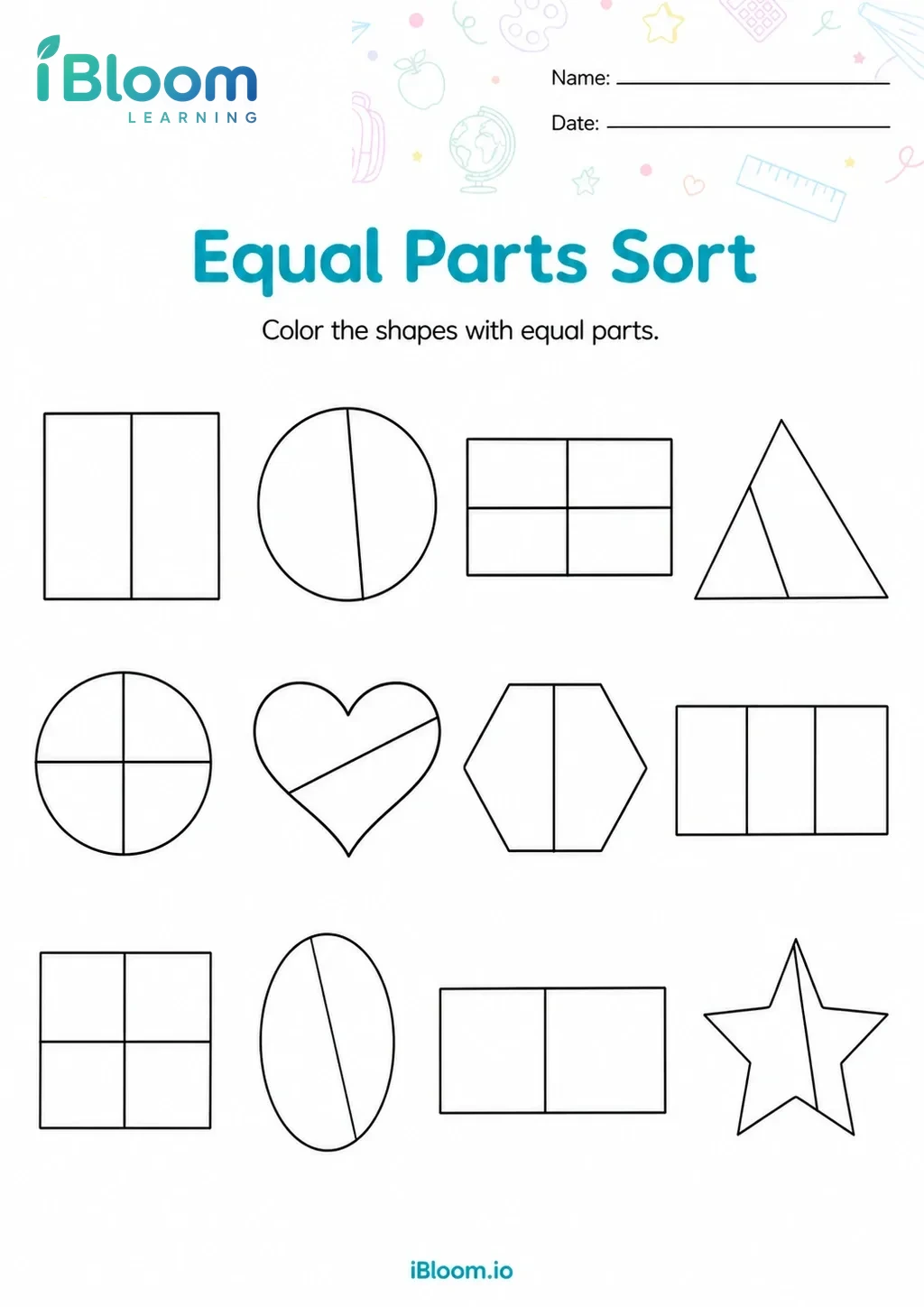
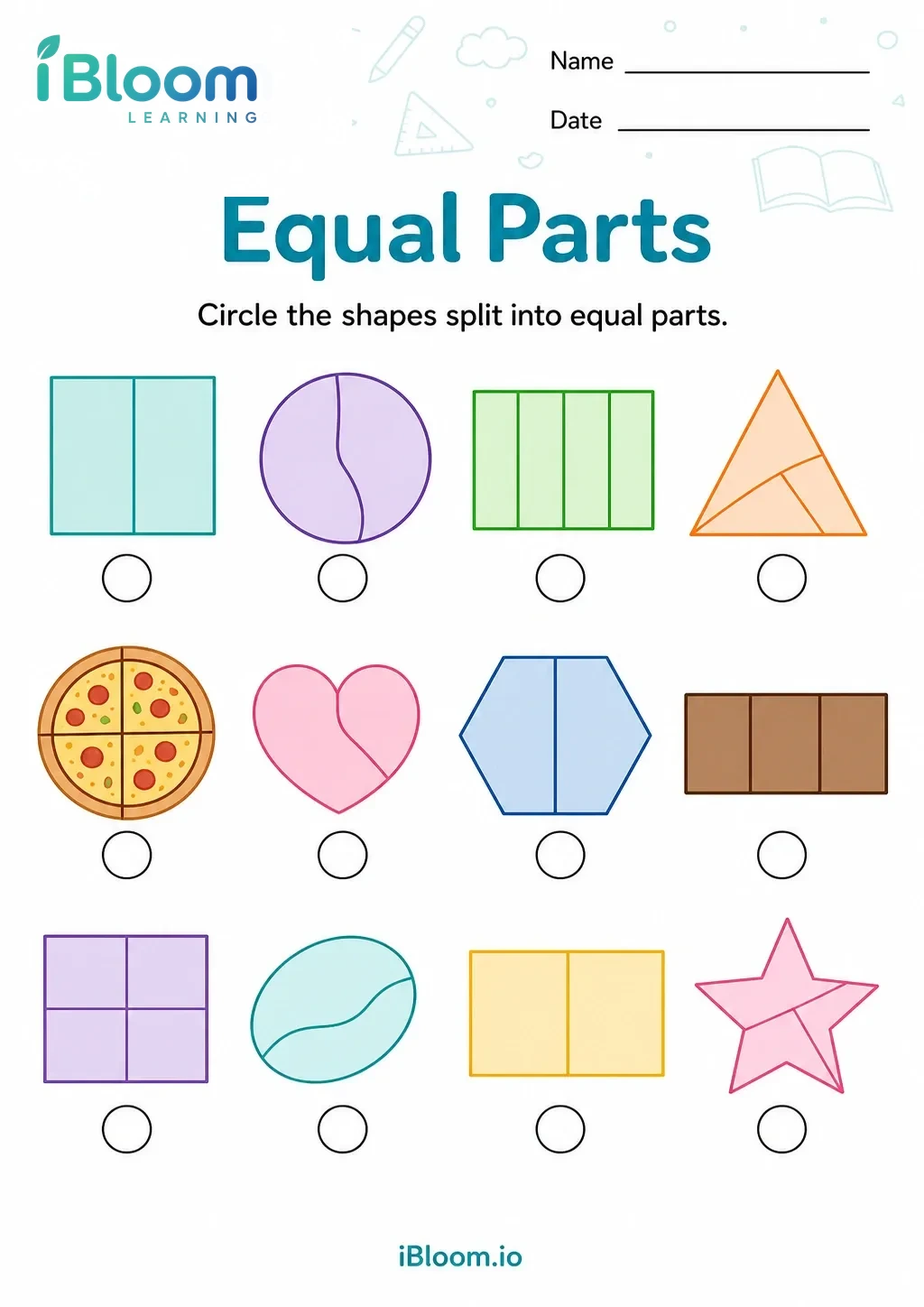
The last completion asks for “equal.” Having two pieces is not enough to call each a half: both pieces must have the same size.
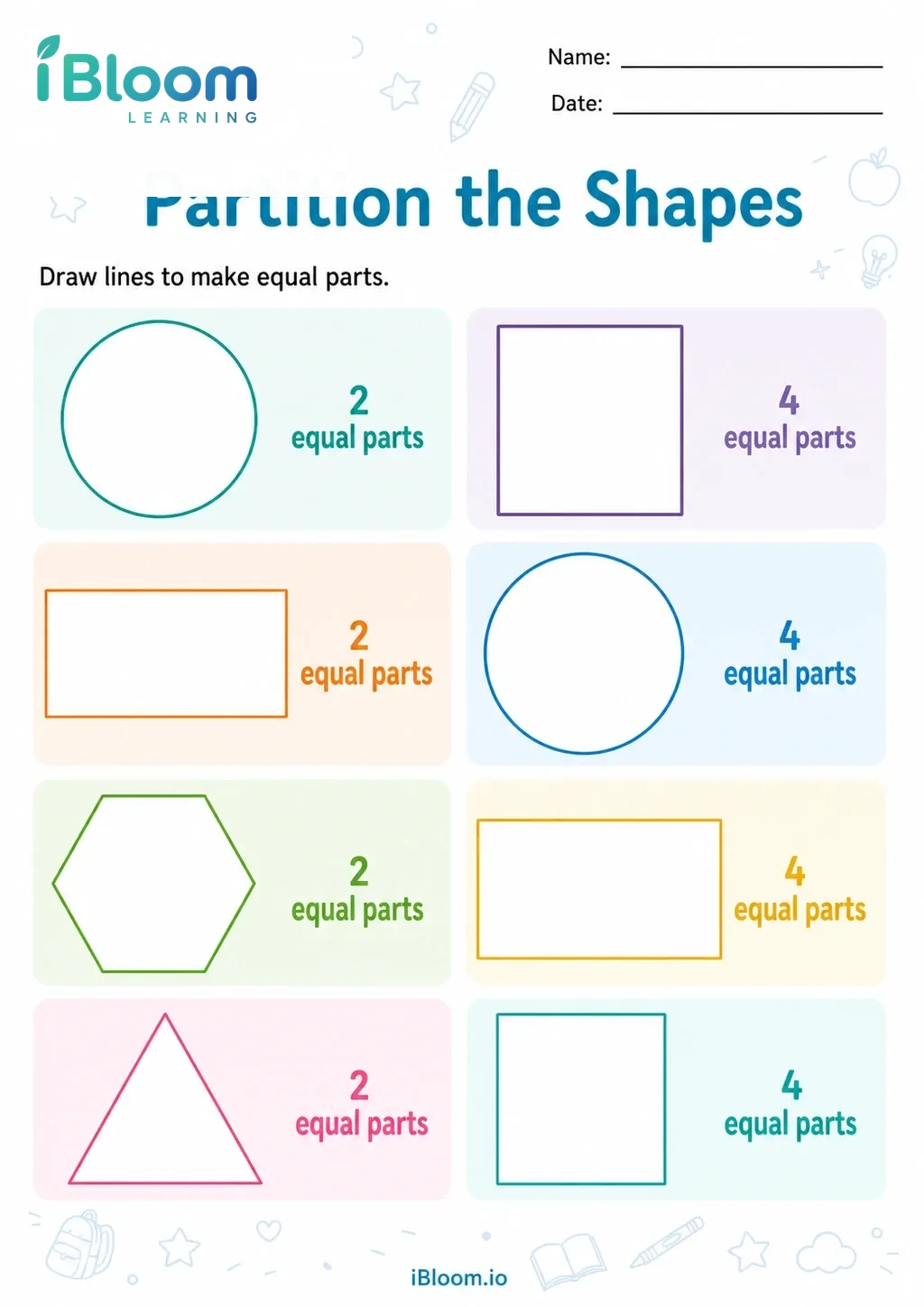
How should I check the two drawings?
For question 13, look for one rectangle divided into two equal parts, with each labeled half. For question 14, look for one rectangle divided into four equal parts, with each labeled fourth.
Accept different valid partitions. Four equal strips or a two-by-two grid both divide a rectangle into fourths. The important checks are equal size, the correct number of parts and the requested labels.
How to use this worksheet
- 1Say half, fourth and quarter, then point to the equal shares in the first two models.
- 2Read Part A’s directions and let the child name each shaded share.
- 3Complete the Part B sentences, using the models to count shares when helpful.
- 4Read each drawing prompt and ask the child to plan where the dividing lines will go.
- 5Check the labels and equal sizes, then use the answer key to review all fourteen responses.
Mistakes to check and ways to help
The mistake
Calling one shaded part a half whenever only one part is shaded.
The fix
Count every equal part in the whole shape first: one of four is a fourth.
The mistake
Treating quarter and fourth as different sizes.
The fix
Point to one share in a four-part model and name it both ways.
The mistake
Drawing two unequal pieces and labeling both half.
The fix
Adjust the dividing line so the two parts have equal size before labeling them.
Common Core alignment
Name halves, fourths and quarters, and draw equal shares of rectangles.
On this sheet: Students name shaded shares, describe how shares make a whole, and partition their own rectangles.
Show the official wordingHide the official wording
Partition circles and rectangles into two and four equal shares, describe the shares using the words halves, fourths, and quarters, and use the phrases half of, fourth of, and quarter of. Describe the whole as two of, or four of the shares. Understand for these examples that decomposing into more equal shares creates smaller shares.
What to practice next
Make more practice
Further reading
Questions parents and teachers ask
Which fraction words does this sheet teach?
The sheet uses half, halves, fourth, fourths, quarter, equal and whole. Children first name a single shaded share in four models. They then complete statements about shares and wholes, and finally draw rectangles divided into halves and fourths with a word label on each part.
Are a fourth and a quarter the same amount?
Yes, a fourth and a quarter name the same amount: one of four equal shares of a whole. Question 4 asks children to choose quarter for one shaded share. Question 7 reinforces the connection by asking them to complete the sentence “A fourth is also a ___.”
Why must the shares be equal?
Equal size is part of what makes each share a half or a fourth. Two unequal pieces are two parts, but they are not two halves. In Part C, help the child compare the size of each drawn part before adding the labels half or fourth.
Do children have to write fraction symbols?
The answers on this sheet use words or whole-number counts of shares. Children choose half, fourth or quarter, complete short statements and label drawings. Saying the fraction words while pointing to the models helps connect the names with the size of a share and the whole shape.
What if my child draws fourths differently from mine?
Accept any rectangle divided into four equal shares and labeled as requested. Four equal strips and a two-by-two grid are both valid. Ask the child to count the parts and explain how they know the shares have equal size, then compare the drawing with the key’s description.