


About this worksheet
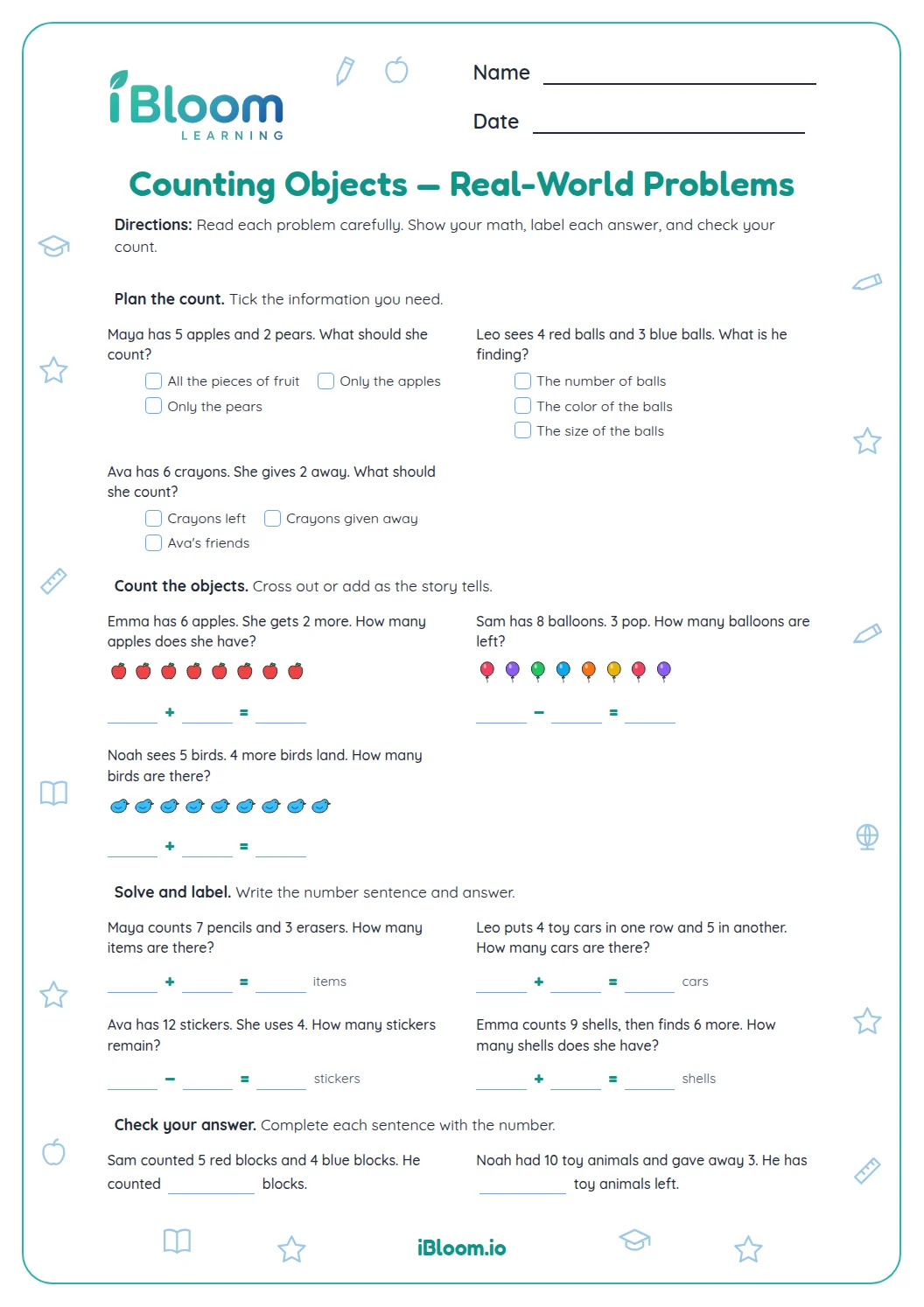
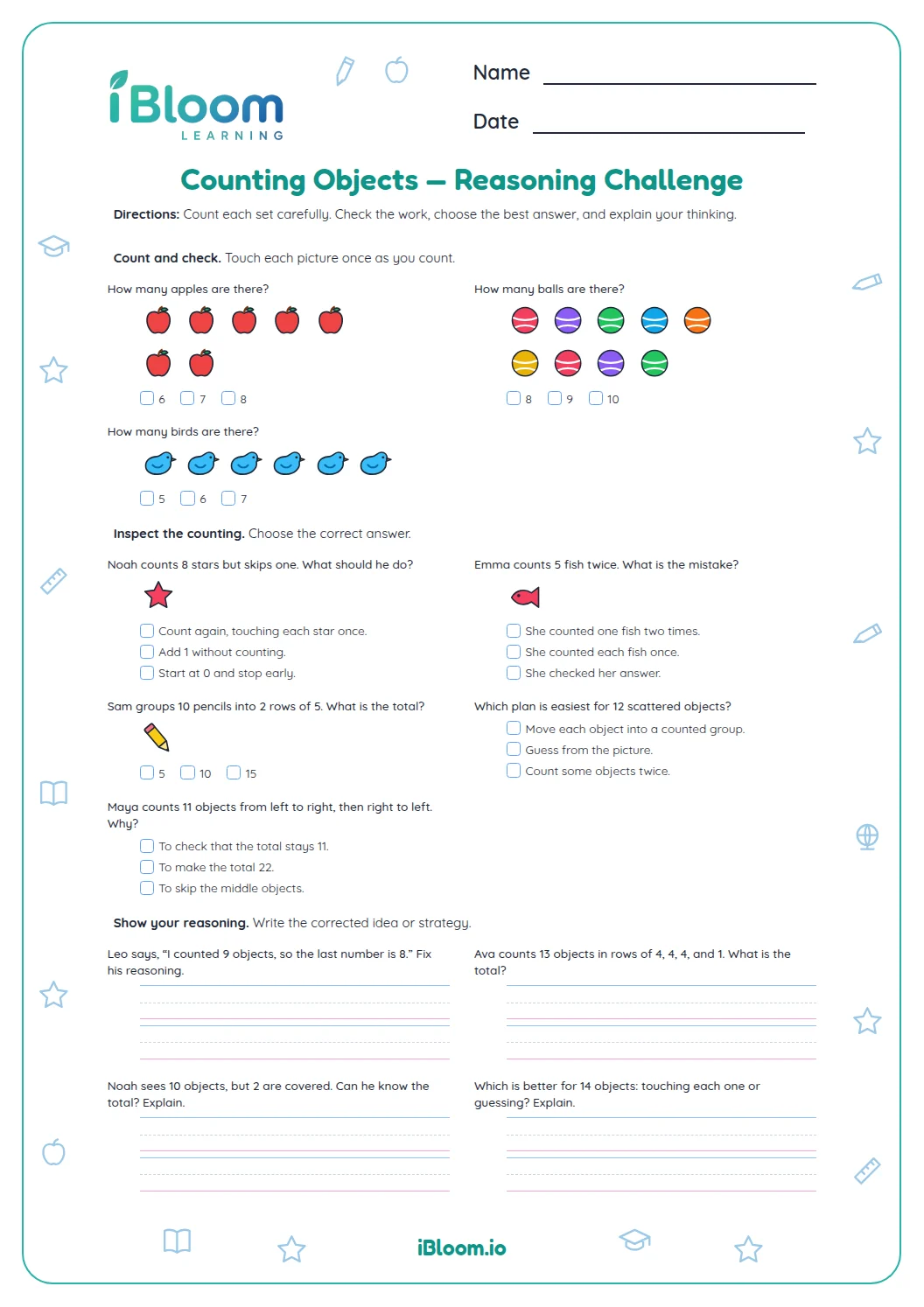
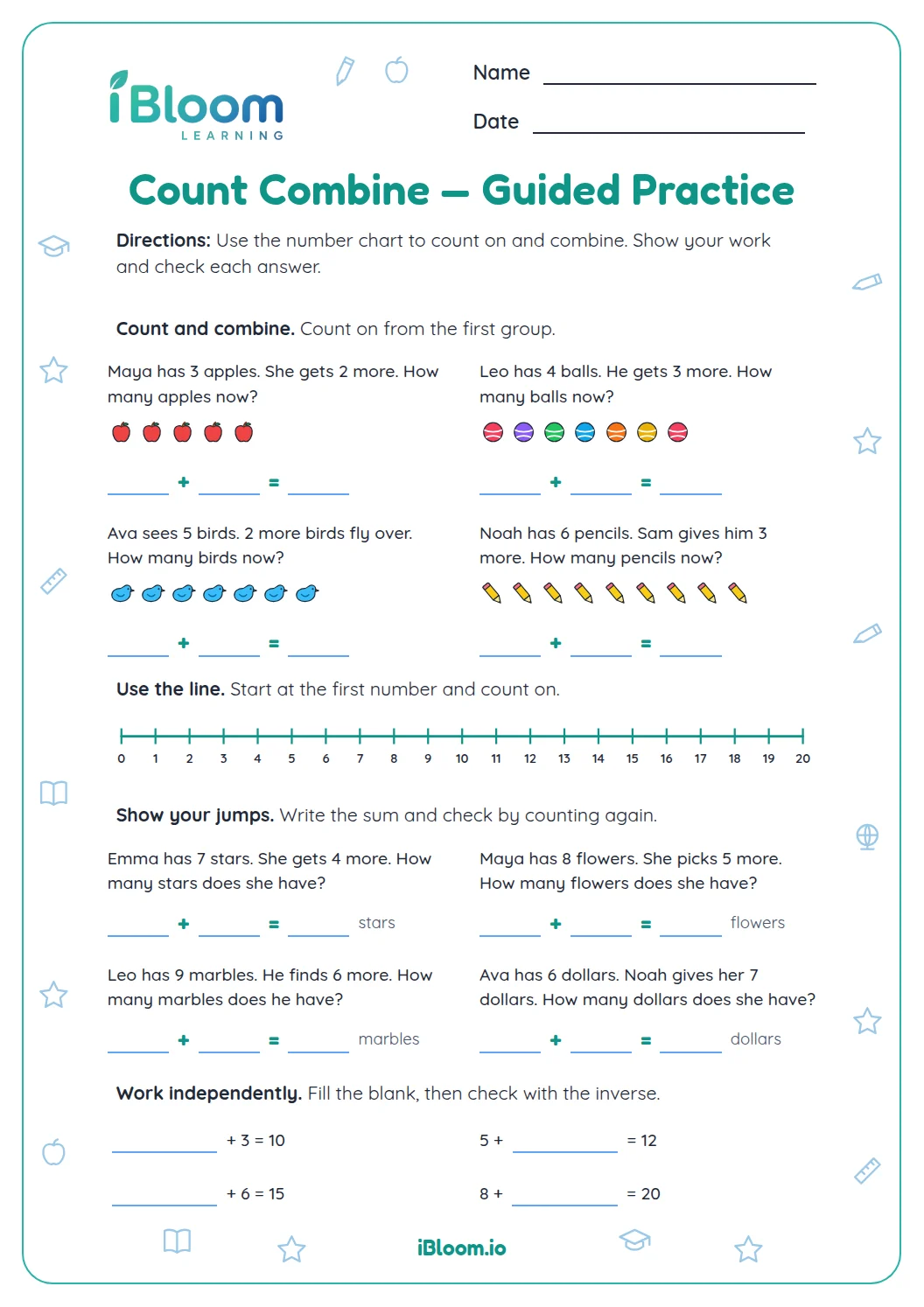
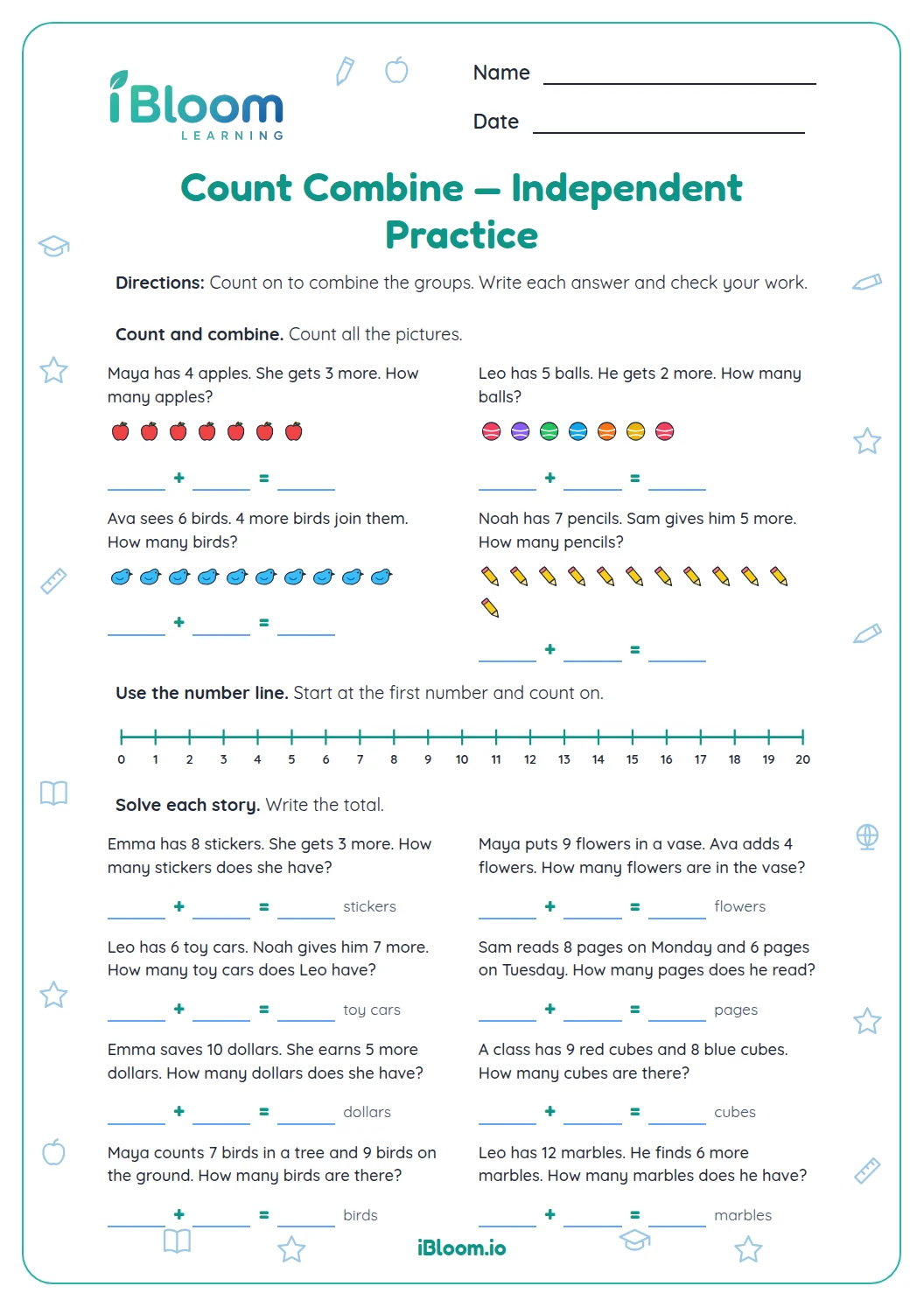
This free Grade 1 printable practices counting objects and connecting a counted total to a number. Six illustrated groups ask learners to count groups from 6 to 15, followed by missing-number sequences and short addition or subtraction stories. Each picture group is shown in the worksheet, and a separate answer key is included.
What skill does this sheet practice?
Point to each picture once as you count. The groups include apples, suns, fish, books, pears, and stars.
The ladybug theme keeps the counting page playful.
What is on the worksheet?
Sixteen items count illustrated groups through 15, complete number sequences, and apply counting in short addition and subtraction stories.
- Part A counts six illustrated groups.
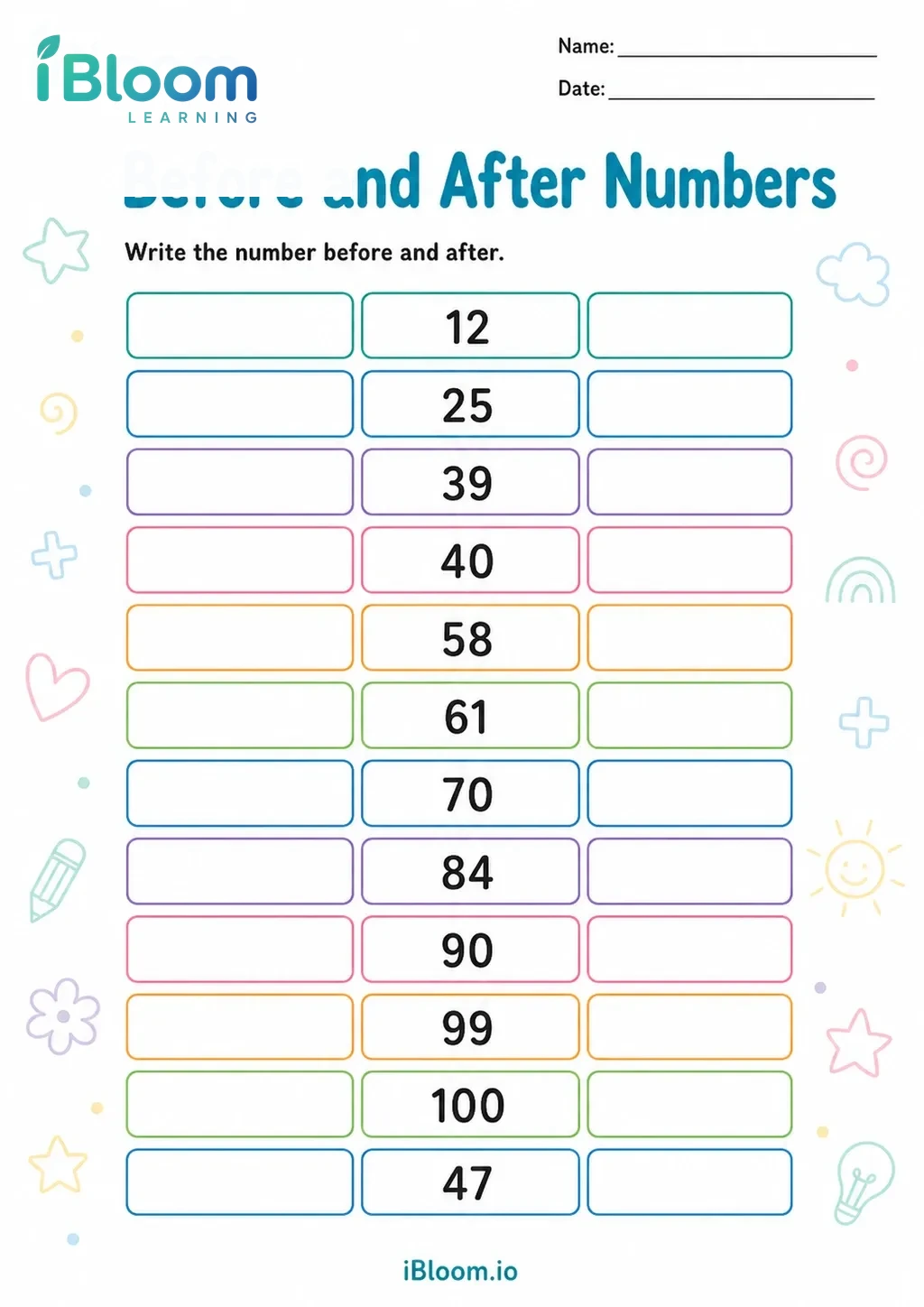
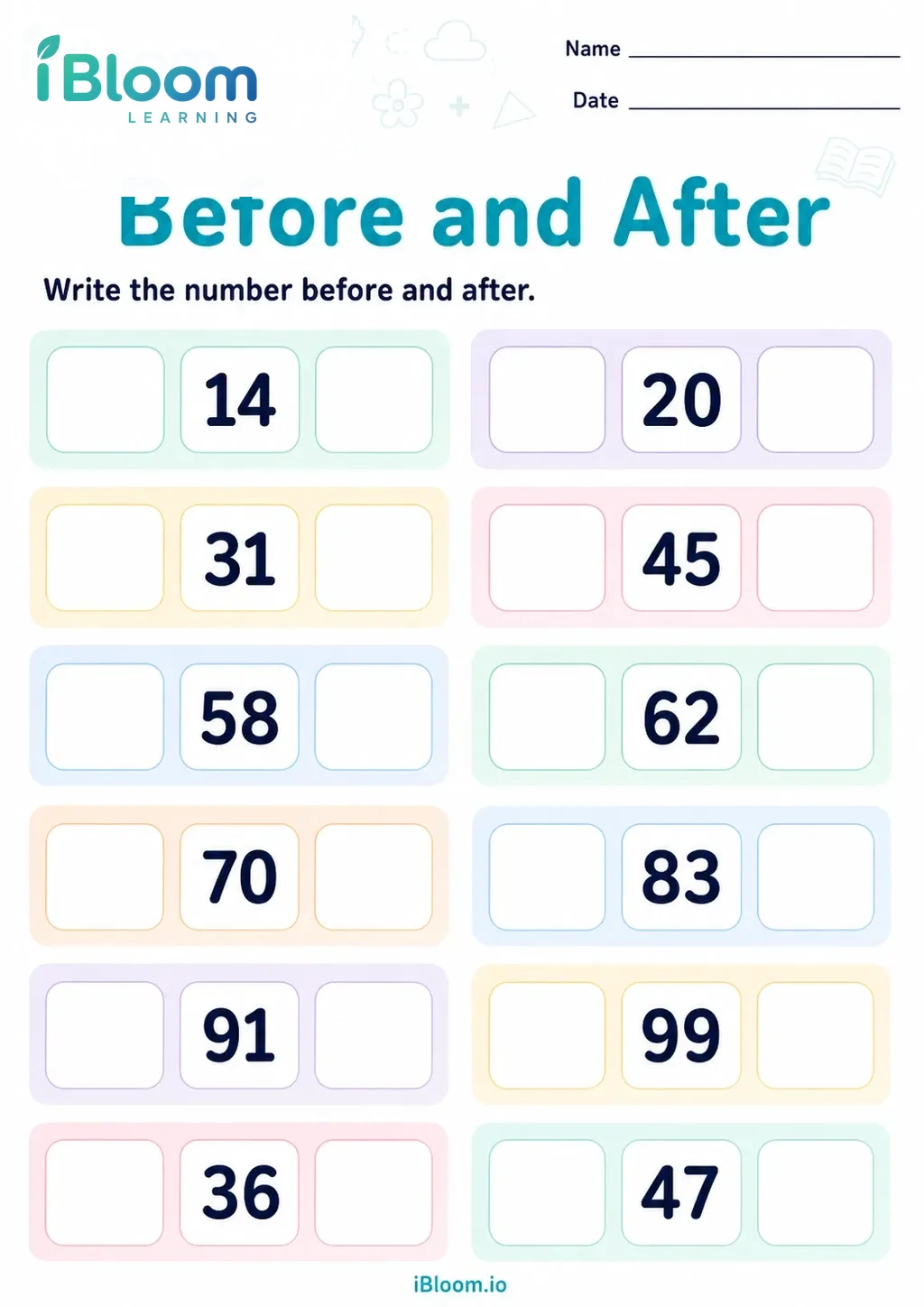
- Part B completes number sequences within 20.
- Part C solves addition and subtraction stories and extends the count to 50.
- The answer key is separate from the student pages.
How can an adult support practice?
For picture groups, point to each object once and say one number. For a sequence, say the known numbers aloud to find the gap.
Use the story wording to decide whether the total increases or decreases.
How to use this worksheet
- 1Count each pictured group once, pointing to objects as you say the numbers.
- 2Complete the missing-number sequences by counting forward or backward.
- 3Read each number story and solve within 20.
- 4Check answers with the separate key and recount any picture group that needs another look.
Common mistakes and quick fixes
The mistake
Counting one picture twice or skipping it.
The fix
Point to or mark each picture once as you count.
The mistake
Starting a sequence at the wrong number.
The fix
Read the numbers already printed, then continue by ones.
The mistake
Adding when a story describes objects going away.
The fix
Notice whether the group grows or gets smaller before choosing an operation.
What to practice next
Make more practice
Questions parents and teachers ask
How many questions are on this printable?
The worksheet has 16 questions across three parts. Six ask learners to count pictured objects, followed by number sequences and stories. A separate answer key lets families check each response after the learner finishes. Recounting a group is a useful way to double-check the total.
What does this Grade 1 worksheet practice?
This Grade 1 worksheet practices counting pictured groups, continuing number sequences, and solving short addition and subtraction stories. The page begins with illustrated sets, then moves to written number patterns and equations. The answer key supports checking after independent work.
Is an answer key included?
Yes. A separate answer key follows the worksheet pages. Keep it aside while the learner works, then use it to check responses and discuss a particular step when an answer differs. A child can recount a group if a total differs, then check one-to-one pointing as they go.
How can I help if a learner gets stuck?
Ask the learner to explain the first step aloud and point to the information they used. For a picture group, point once to every object and say one counting number for each. Let them try again with that clue before showing a complete solution.
Can this be used for independent practice?
Yes. The worksheet is labeled for independent practice, and its directions are printed on the page. An adult may demonstrate the first example if needed; the answer key can be used afterward to review the work. The written number stories complement the illustrated counting groups.