


About this worksheet
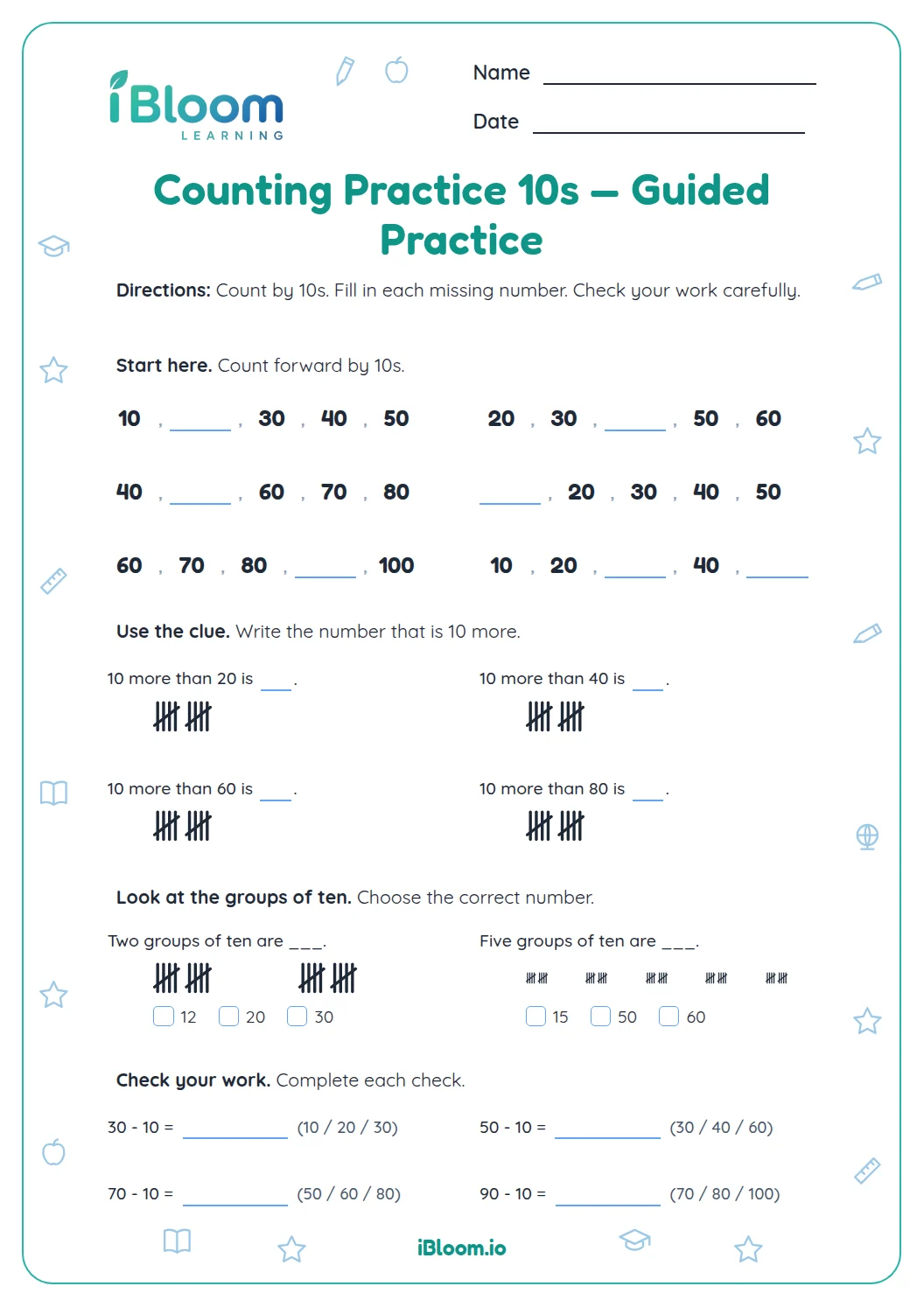
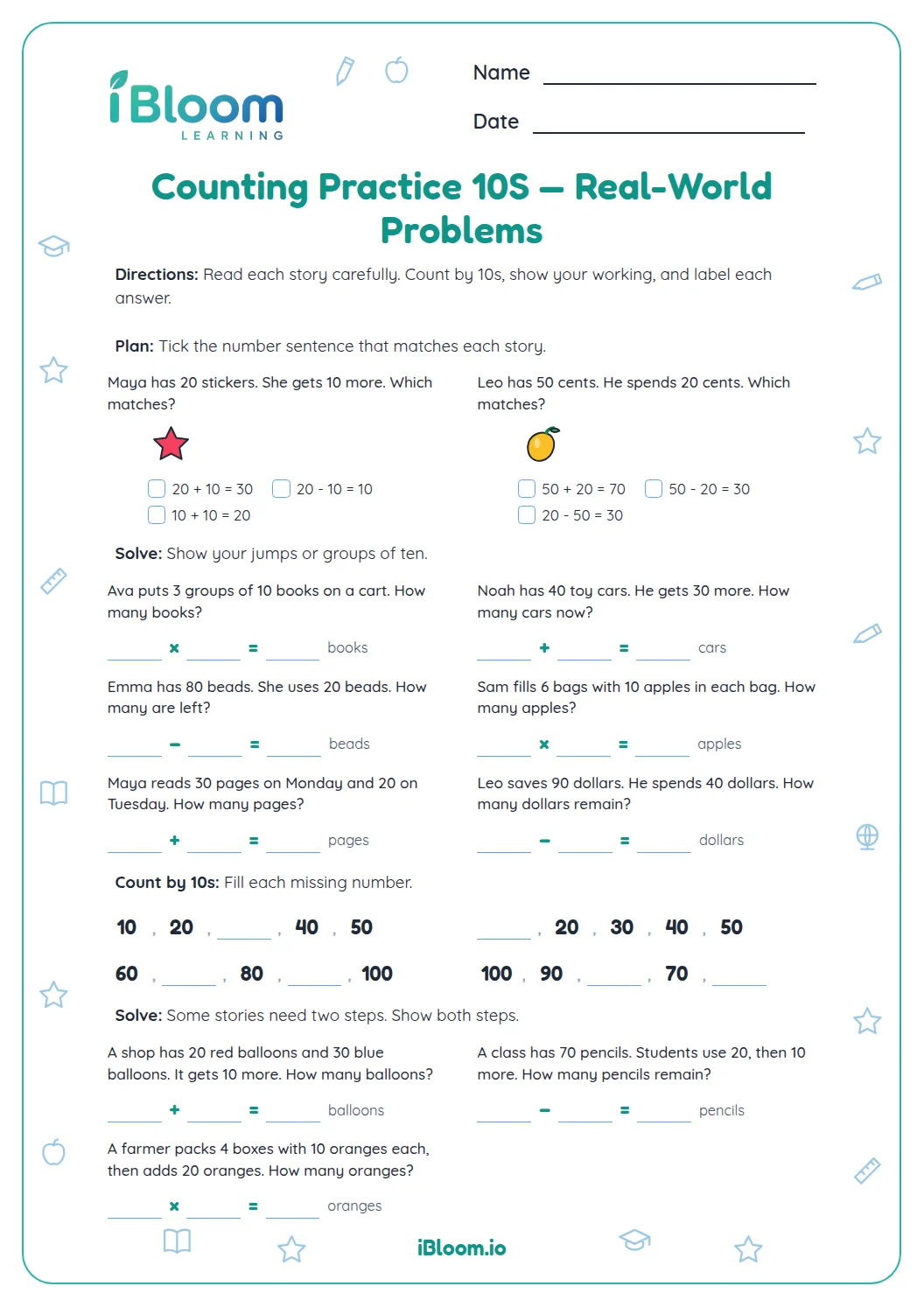
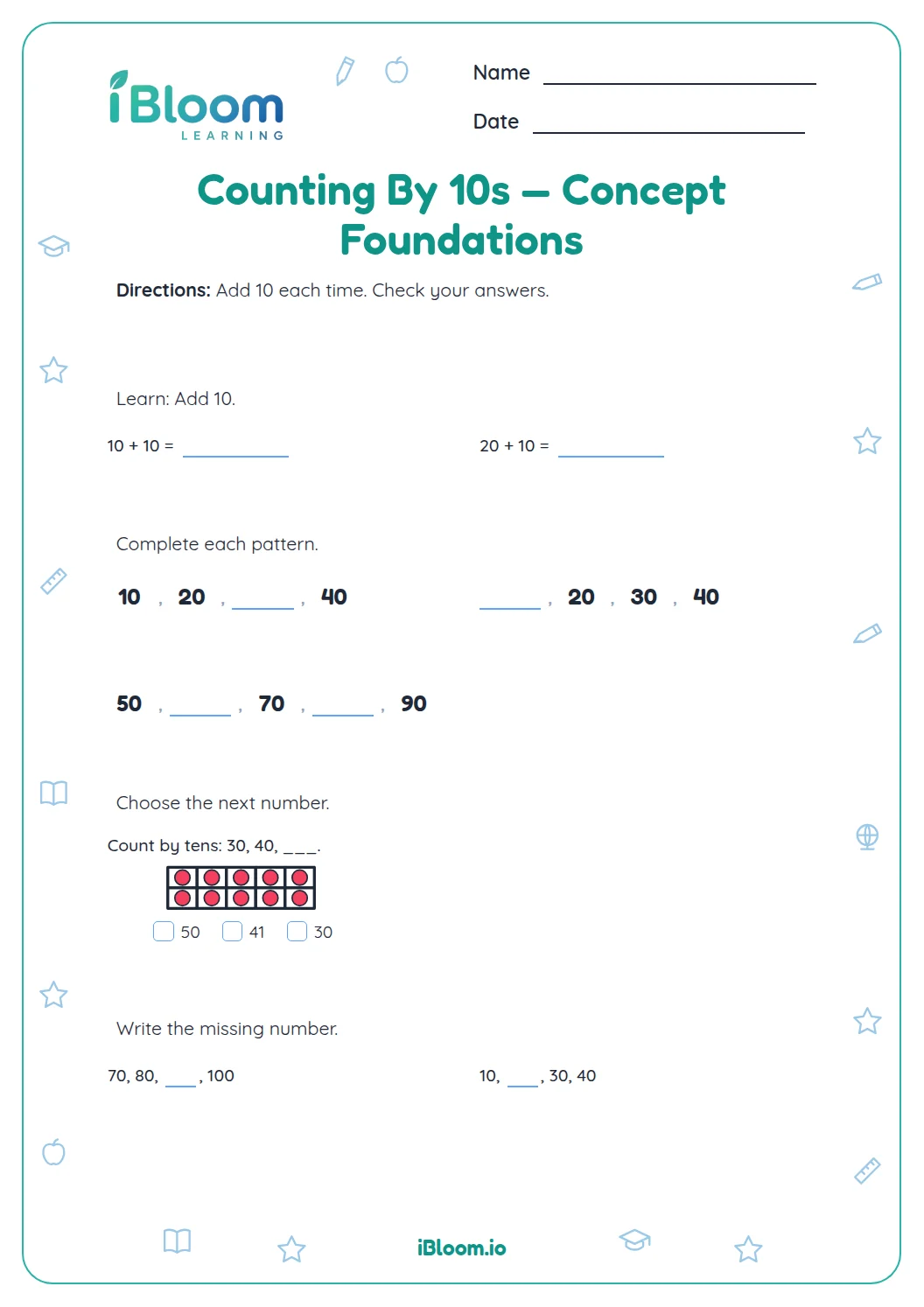
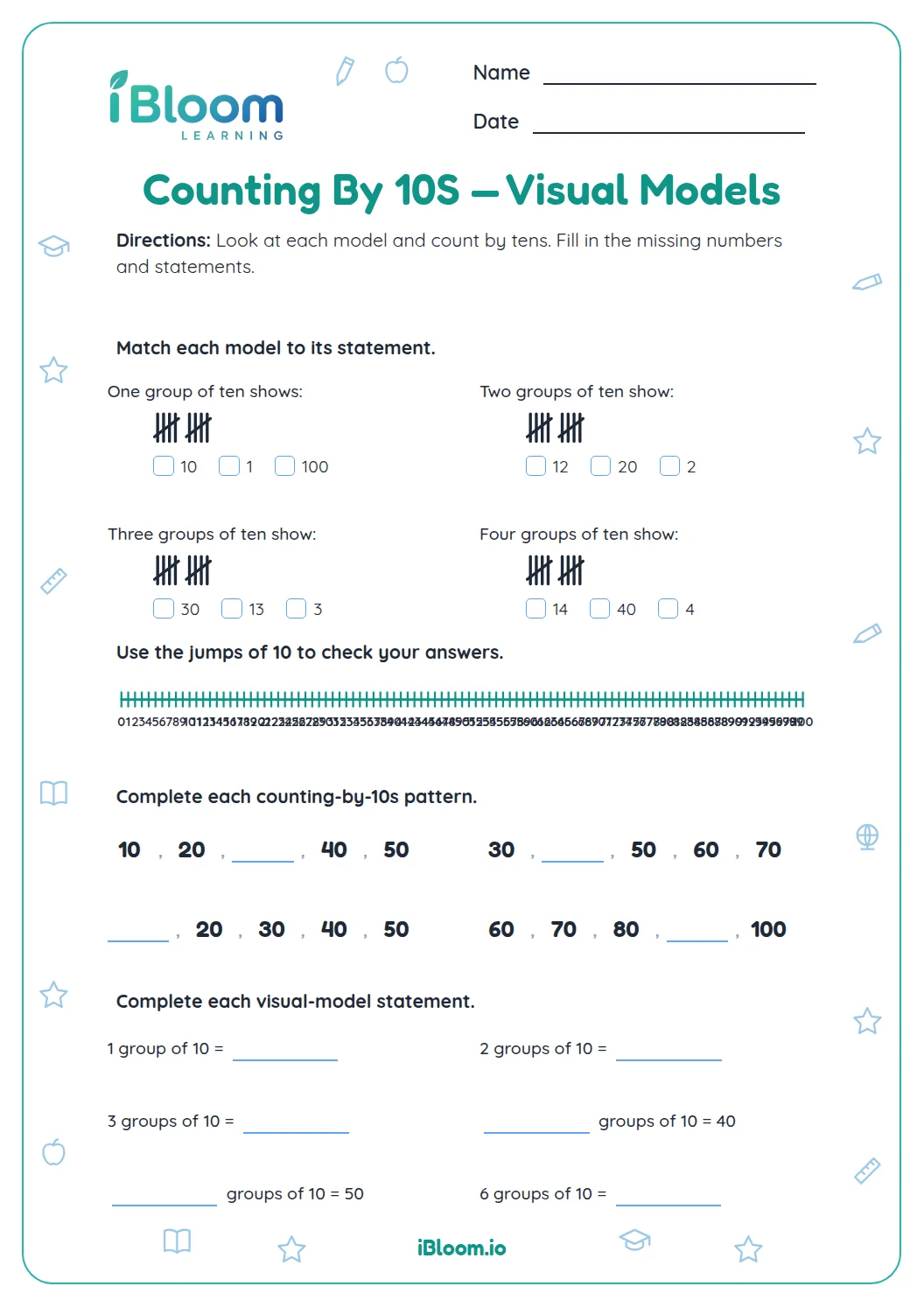
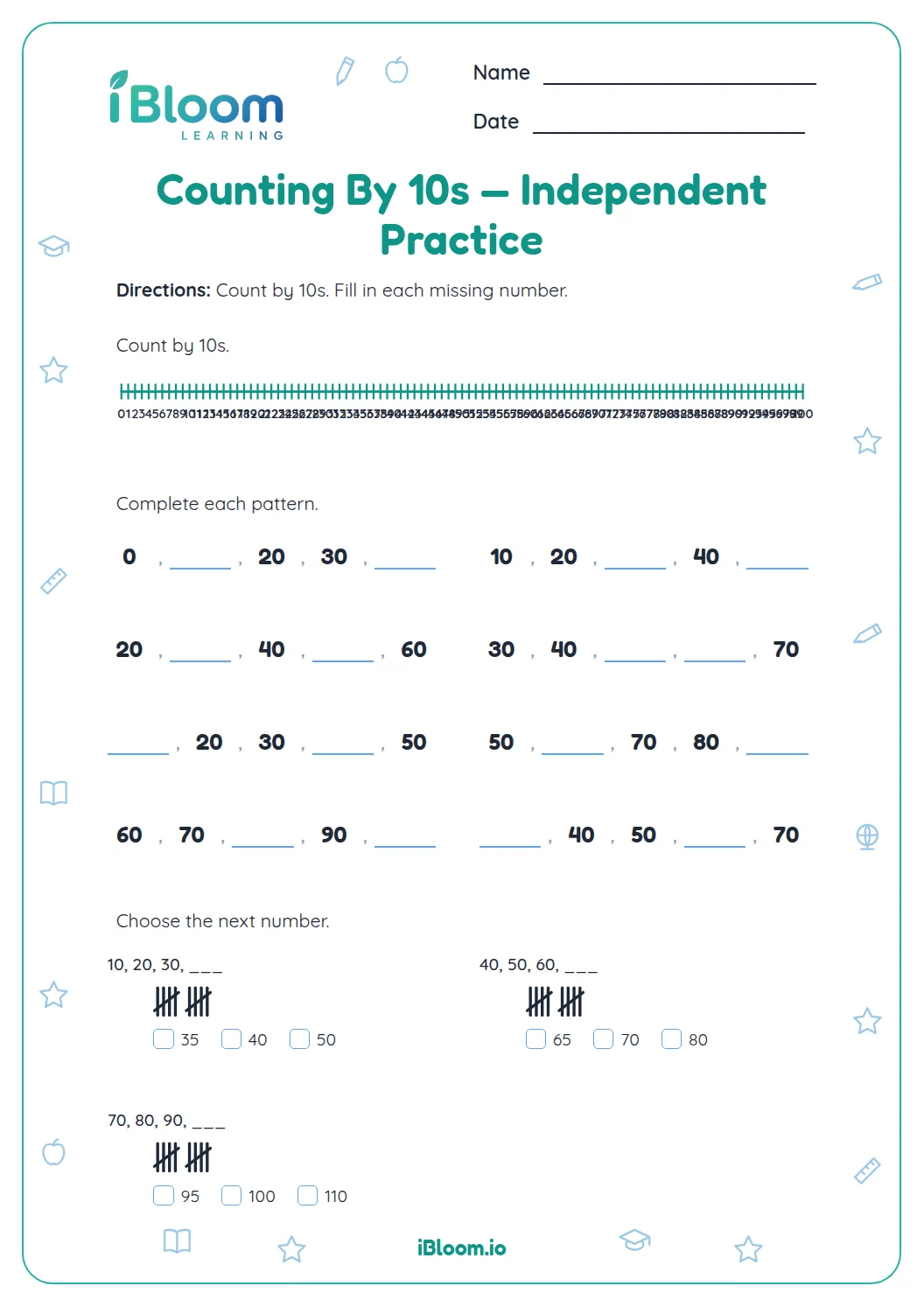
This Grade 1 worksheet practices counting by tens with decade numbers through 100. Students fill missing terms in forward sequences, choose a next number, count backward, and connect groups of ten to a total. These activities practice reading, writing, and working with numerals in a counting sequence (CCSS.1.NBT.A.1). A printable answer key is included.
Aligned to CCSS.1.NBT.A.1
What patterns are included?
Parts A and B fill missing numbers in forward patterns. Part C asks students to choose the next decade number, and Part D counts backward by tens. The final questions connect ten at a time to equal groups.
How can a student check a pattern?
Say the numbers aloud and check that each jump changes the total by ten. For example, 40, 50, 60 moves forward by ten each time, so the next number is 70.
Standards alignment
This worksheet gives students practice with the skill named below.
Counts decade numbers forward and backward by tens.
On this sheet: The questions on this worksheet directly practice this skill.
Show the official wordingHide the official wording
Count to 120, starting at any number less than 120. In this range, read and write numerals and represent a number of objects with a written numeral.
What to practice next
Questions parents and teachers ask
Does the worksheet count to 100?
Yes. The patterns use decade numbers from 10 through 100. Students fill missing terms while keeping the jump of ten steady. Read each sequence aloud to check the direction and size of each jump. The sheet includes both a missing term and next-number choices.
Does it include backward counting?
Yes. One part moves from larger decade numbers to smaller ones by tens. For example, 100, 90, 80, 70 decreases by ten at each step. Students fill in the missing number in similar patterns, then check the neighboring terms.
What standard does it practice?
It practices CCSS.1.NBT.A.1 by asking students to read and write numerals in counting sequences. The worksheet focuses on decade numbers through 100 and equal jumps of ten, in both directions. The last items connect groups of ten to totals.
How can a child check a missing number?
Look at the numbers before and after the blank. Decide whether the sequence moves forward or backward, then add or subtract ten. Saying the full sequence aloud can reveal a skipped decade or a direction error. Check that both neighboring jumps are equal.
What does the answer key include?
The key supplies each missing decade number, the correct multiple-choice option, and totals for the groups-of-ten questions. For those final questions, connect each group to ten objects to check the total. Students can count tens aloud as another check.