




About this worksheet
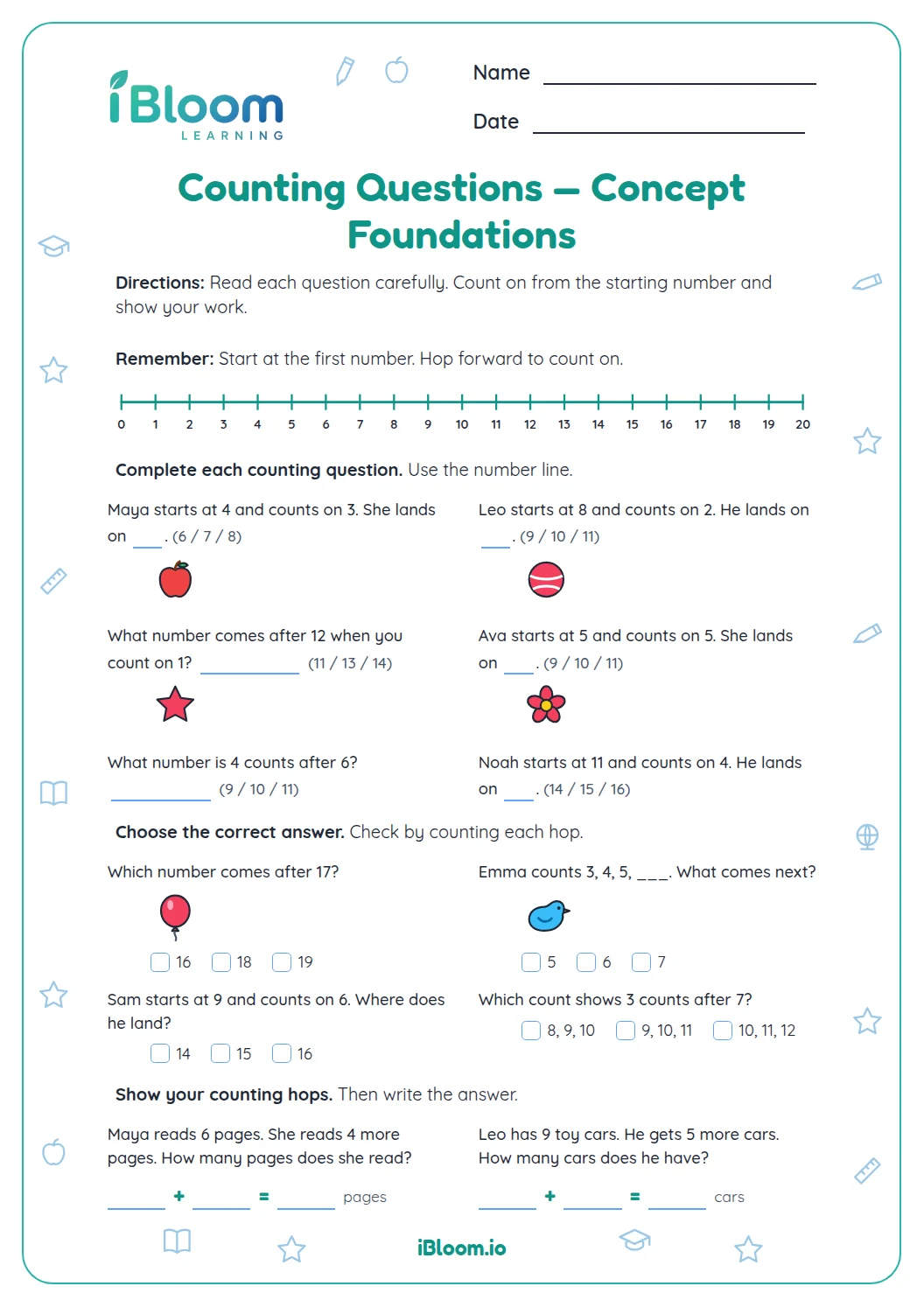
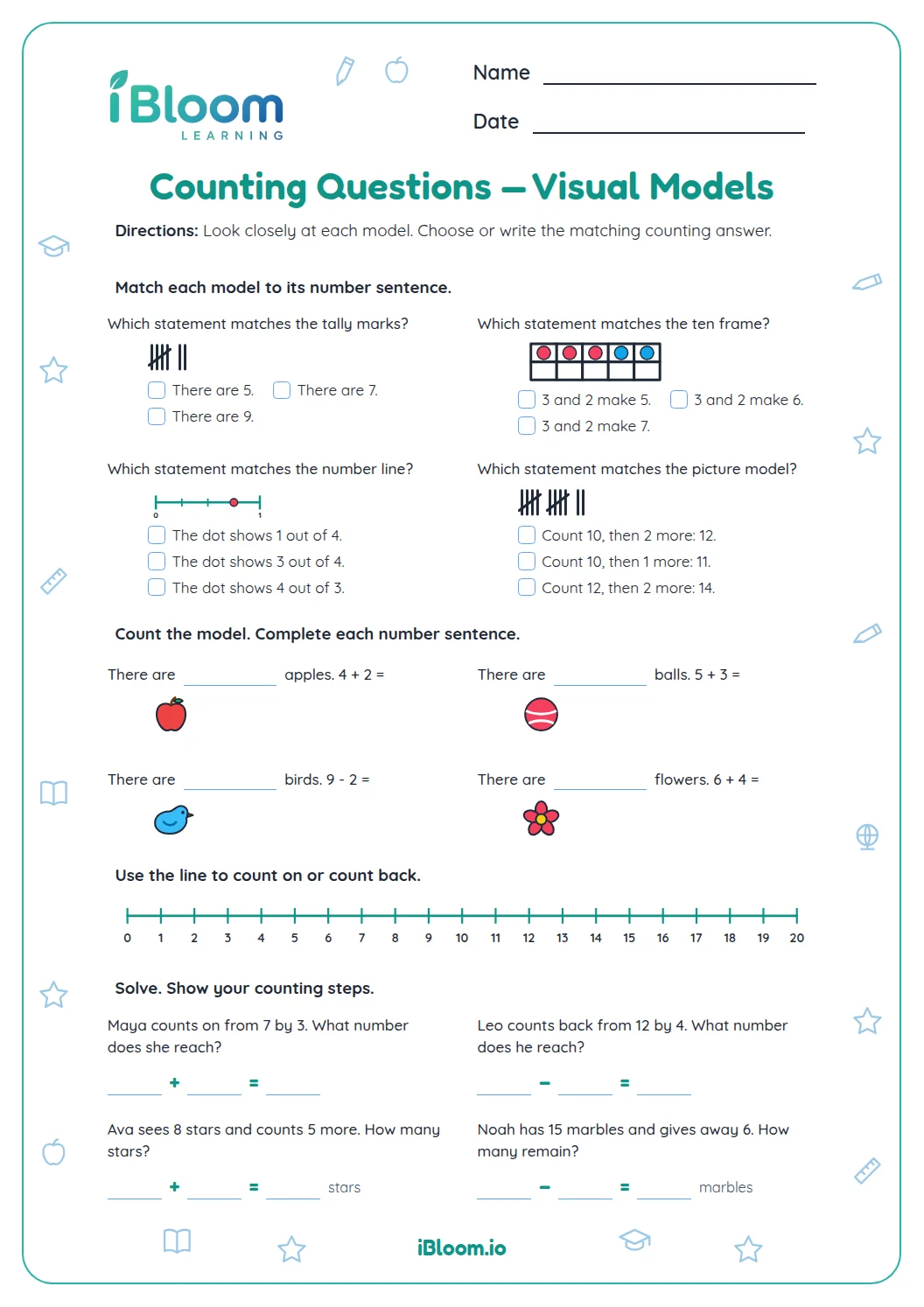
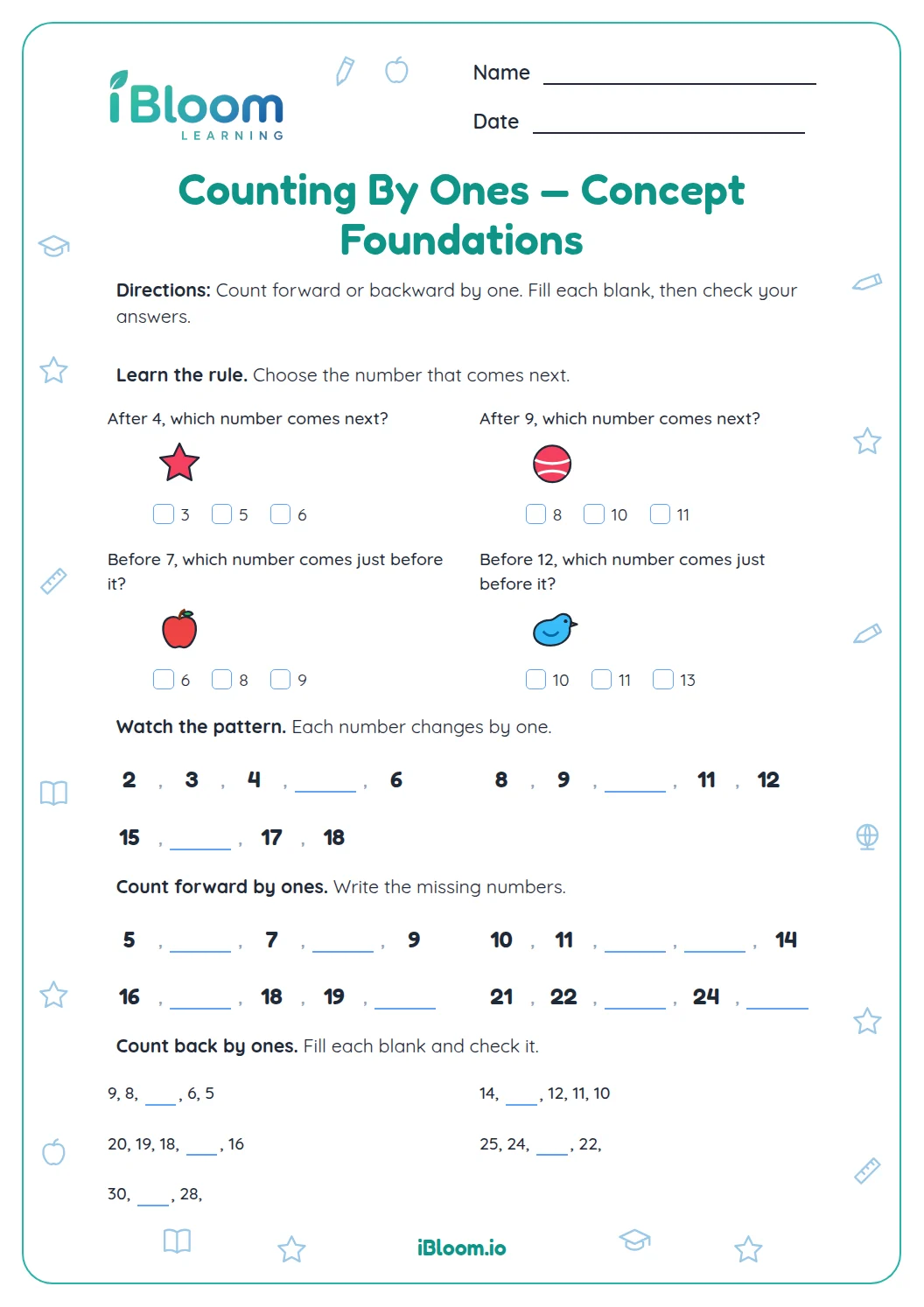
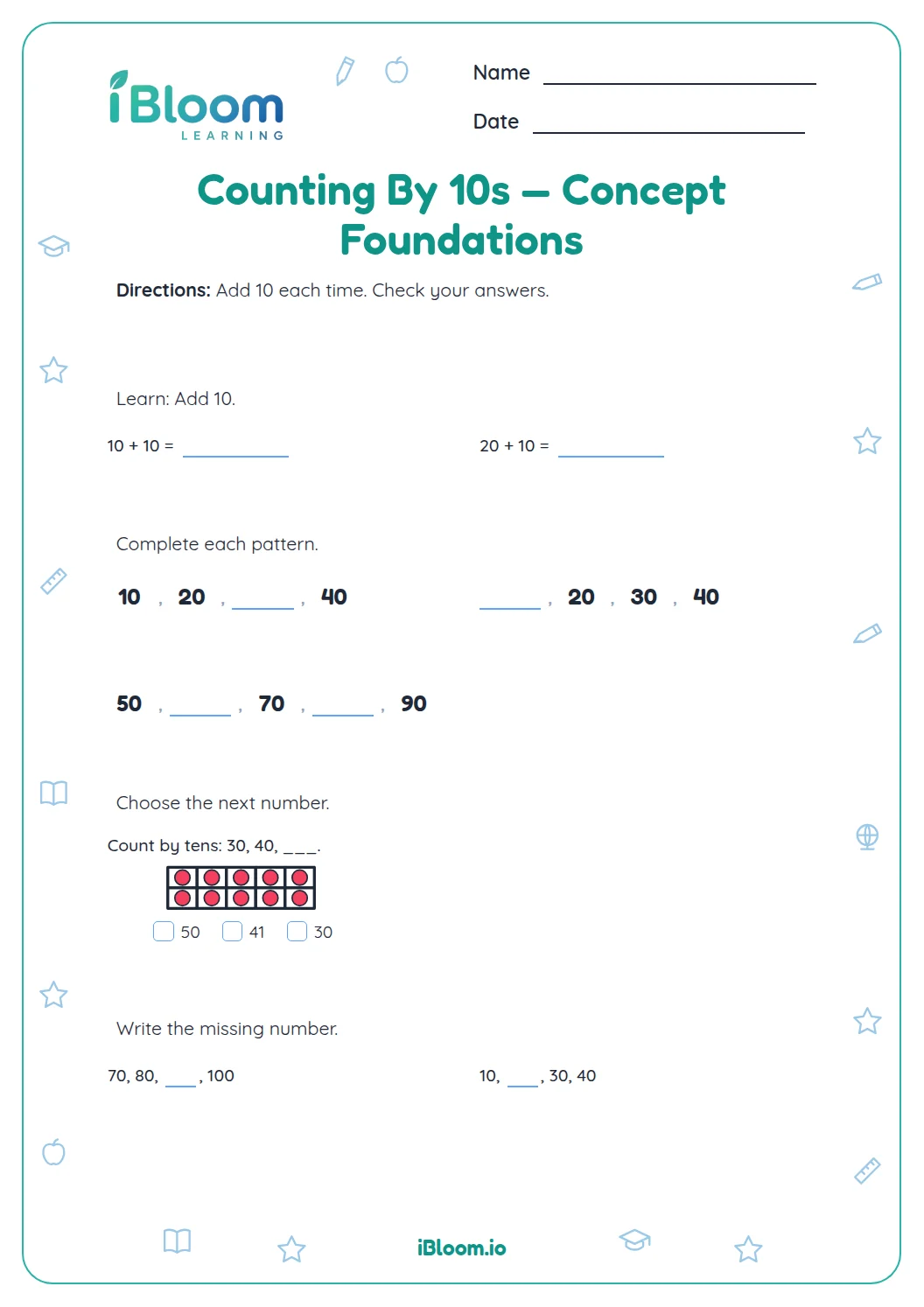
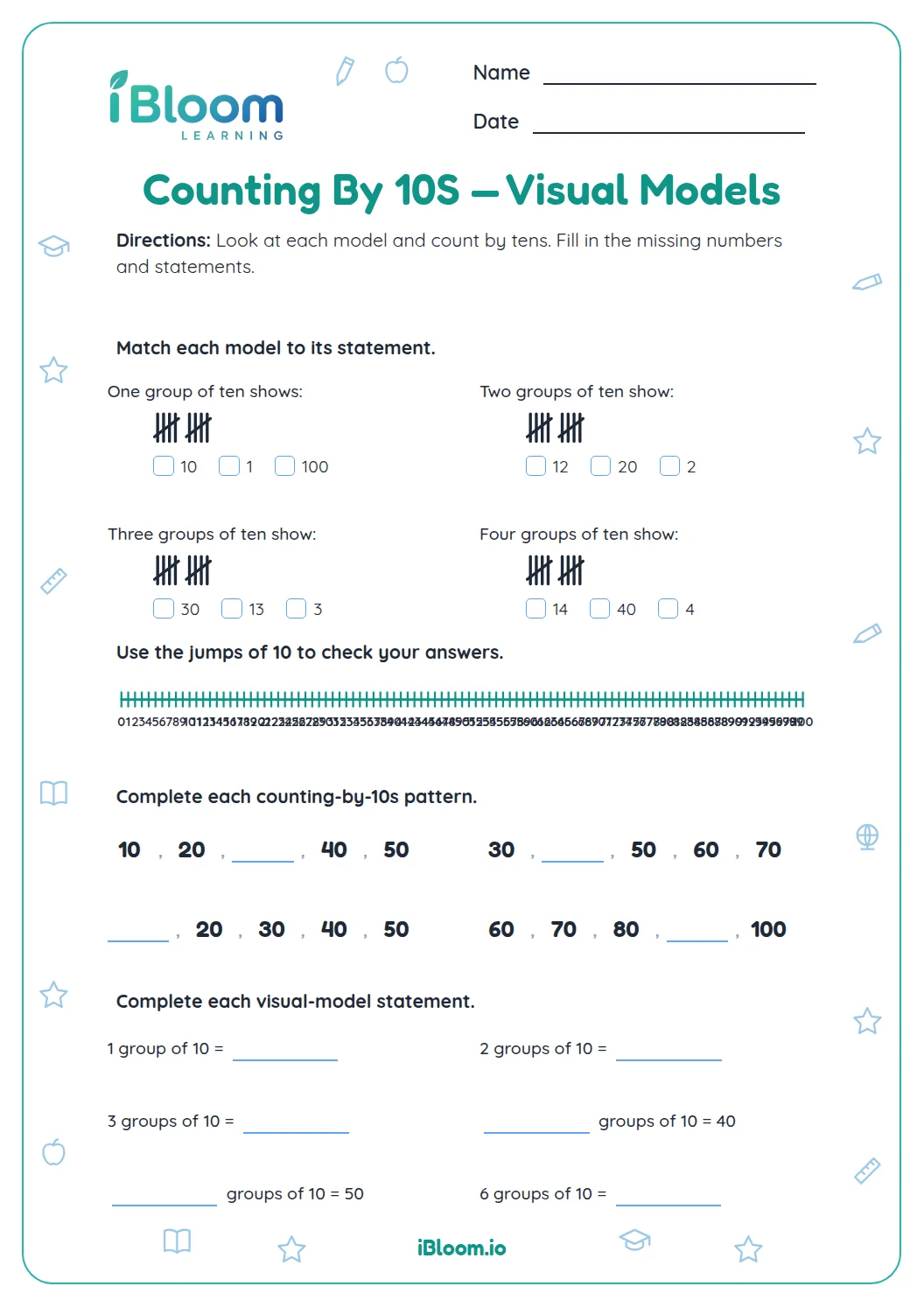
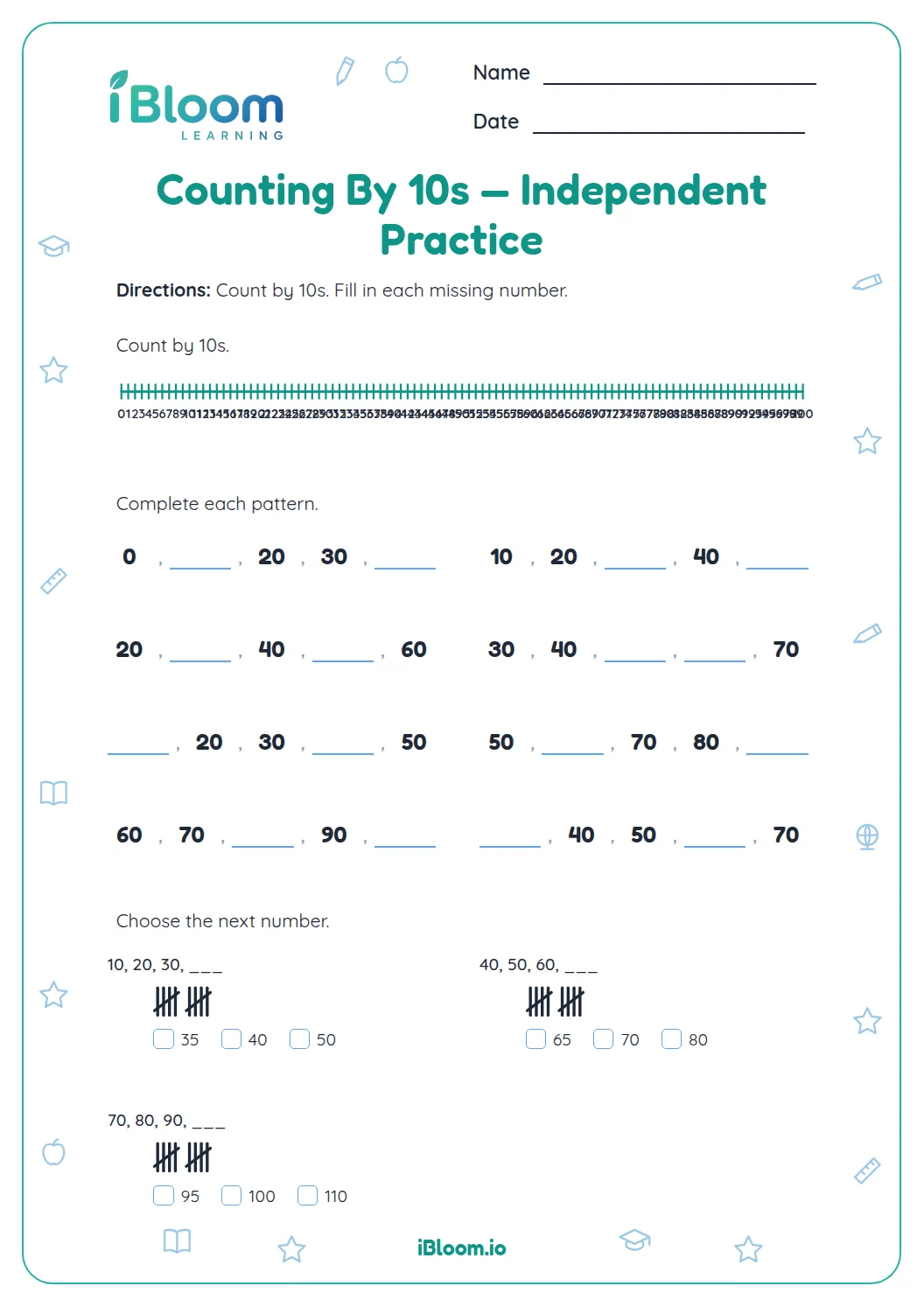
Children use number-chart patterns to count forward or backward, find neighbors, compare two-digit numbers, and notice the ten-step between rows. Drawn tally marks, number lines, and ten-frames give children visual items to read as they practice.
Aligned to 1.NBT.A.1 and 1.NBT.C.5
How do number patterns help with counting?
A number chart organizes numerals in counting order. Moving one place changes the number by one; moving a row in a chart with ten numbers per row changes it by ten.
- 135 + 10 = 45
- 2Adding one ten changes the tens digit by one.
What does this worksheet ask students to do?
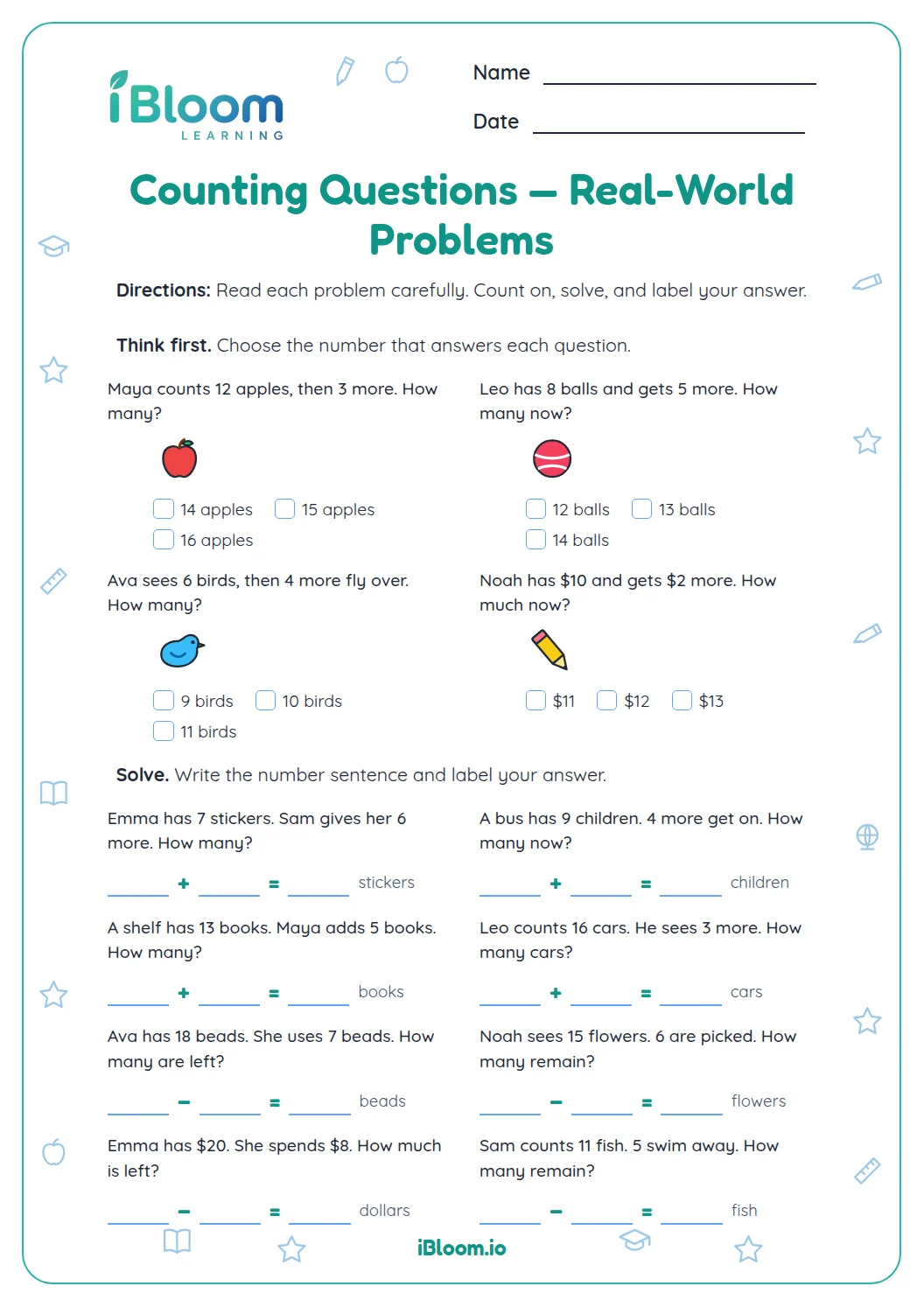
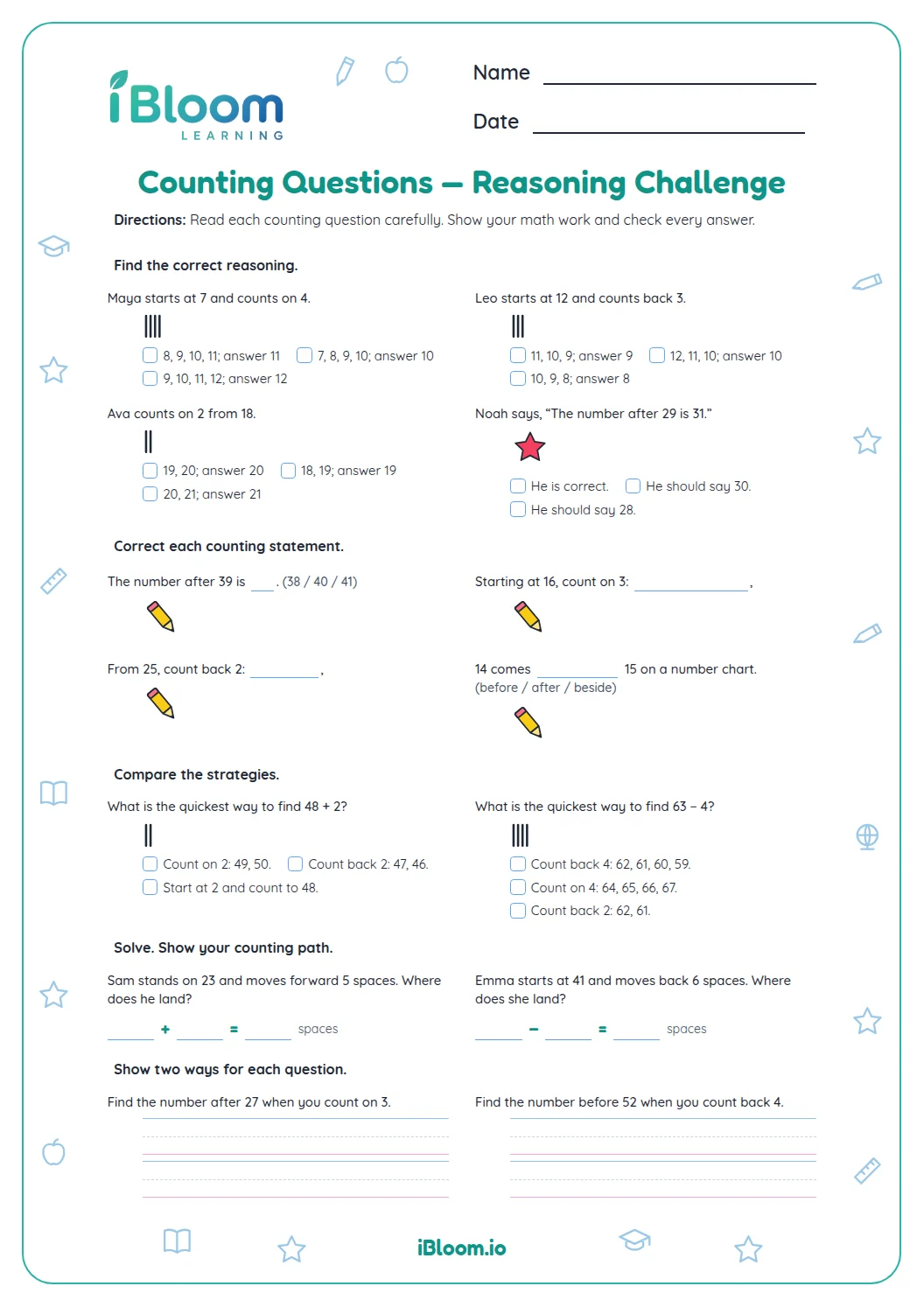
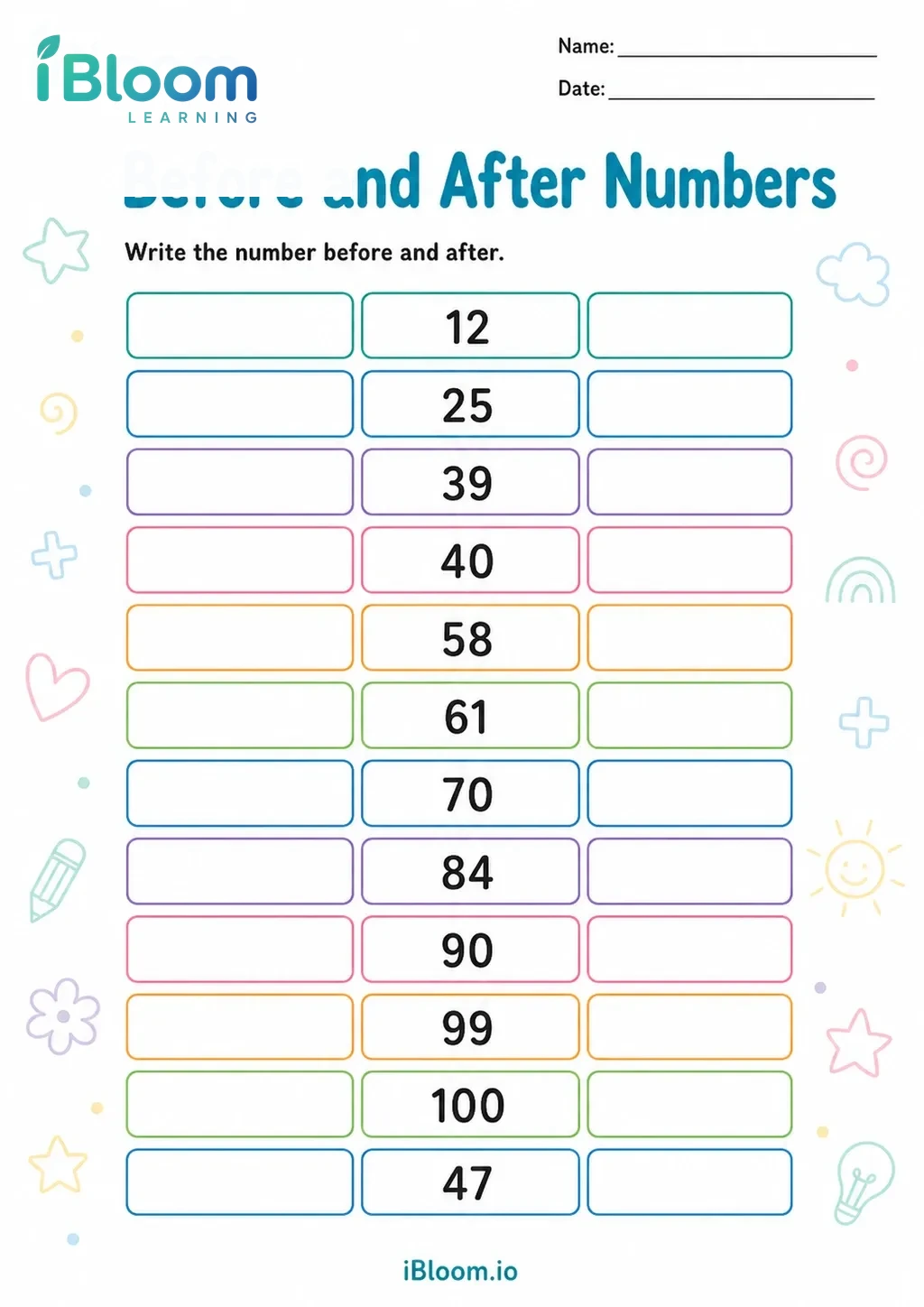
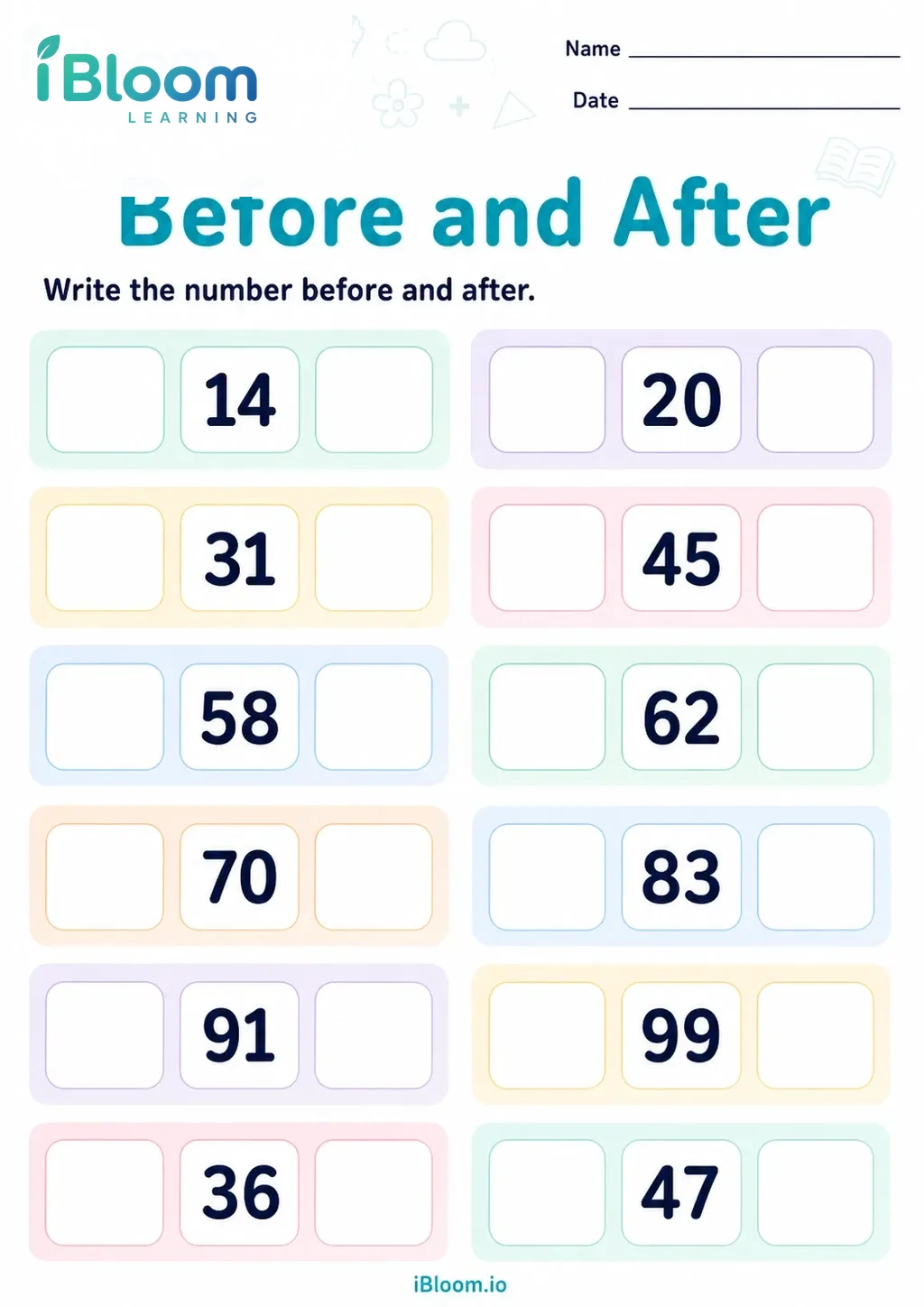
Sixteen items move from counting sequences and number order to ten-more or ten-less questions and visual counting models.
- Read the whole prompt before writing an answer.
- Use the separate answer key to check completed work.
How can an adult support practice?
Have the learner say the counting pattern aloud, then explain how the tens change when adding or subtracting ten.
How to use this worksheet
- 1Count aloud along a row before beginning.
- 2For a tens move, look at the tens digit and keep the ones digit.
- 3Check each answer by counting or reversing the move.
Common mistakes and quick fixes
The mistake
Rushing and overlooking a direction or important detail.
The fix
Read the whole item, mark the information you need, then check that the answer fits.
The mistake
Stopping after getting an answer without checking it.
The fix
Use the inverse operation, reread the sentence, or compare the response with the prompt.
Curriculum alignment
This worksheet practices the following Common Core skills.
Count to 120 and read and write numerals.
On this sheet: Counting sequences and missing-number items practice reading and writing numbers within 120.
Show the official wordingHide the official wording
Count to 120, starting at any number less than 120. In this range, read and write numerals and represent a number of objects with a written numeral.
Mentally find 10 more or 10 less.
On this sheet: Two items ask students to find ten more or ten less.
Show the official wordingHide the official wording
Given a two-digit number, mentally find 10 more or 10 less than the number, without having to count; explain the reasoning used.
What to practice next
Make more practice
Further reading
Questions parents and teachers ask
What skills are on this worksheet?
The 16 Grade 1 questions practice counting forward and backward, filling missing numerals, finding ten more or ten less, ordering numbers, and reading simple visual models. The work spans two worksheet pages with a separate answer key. The examples and separate answer key make it easy to review each response together.
How does a number chart help with counting?
Each position follows a predictable counting order. On a chart arranged in rows of ten, moving right adds one and moving down adds ten. Students can use those patterns to predict missing numbers and check their answers. The examples and separate answer key make it easy to review each response together.
Does the worksheet include pictures or models?
Yes. The final section uses tally marks, number lines, and a ten-frame so students read a visual representation as well as numeral sequences. Each prompt asks about the model printed with that question. The examples and separate answer key make it easy to review each response together.
How can I help without giving the answer?
Ask the child to say the numbers before and after the blank, or to describe what changes when ten is added. For a model question, have them count or trace the groups and then write the numeral. The examples and separate answer key make it easy to review each response together.
What can students practice next?
When counting by ones and tens feels familiar, the related practice pages can focus on counting before and after, counting by tens, or extending number patterns. Choose a page that matches the pattern your child is ready to revisit. The examples and separate answer key make it easy to review each response together.