





About this worksheet
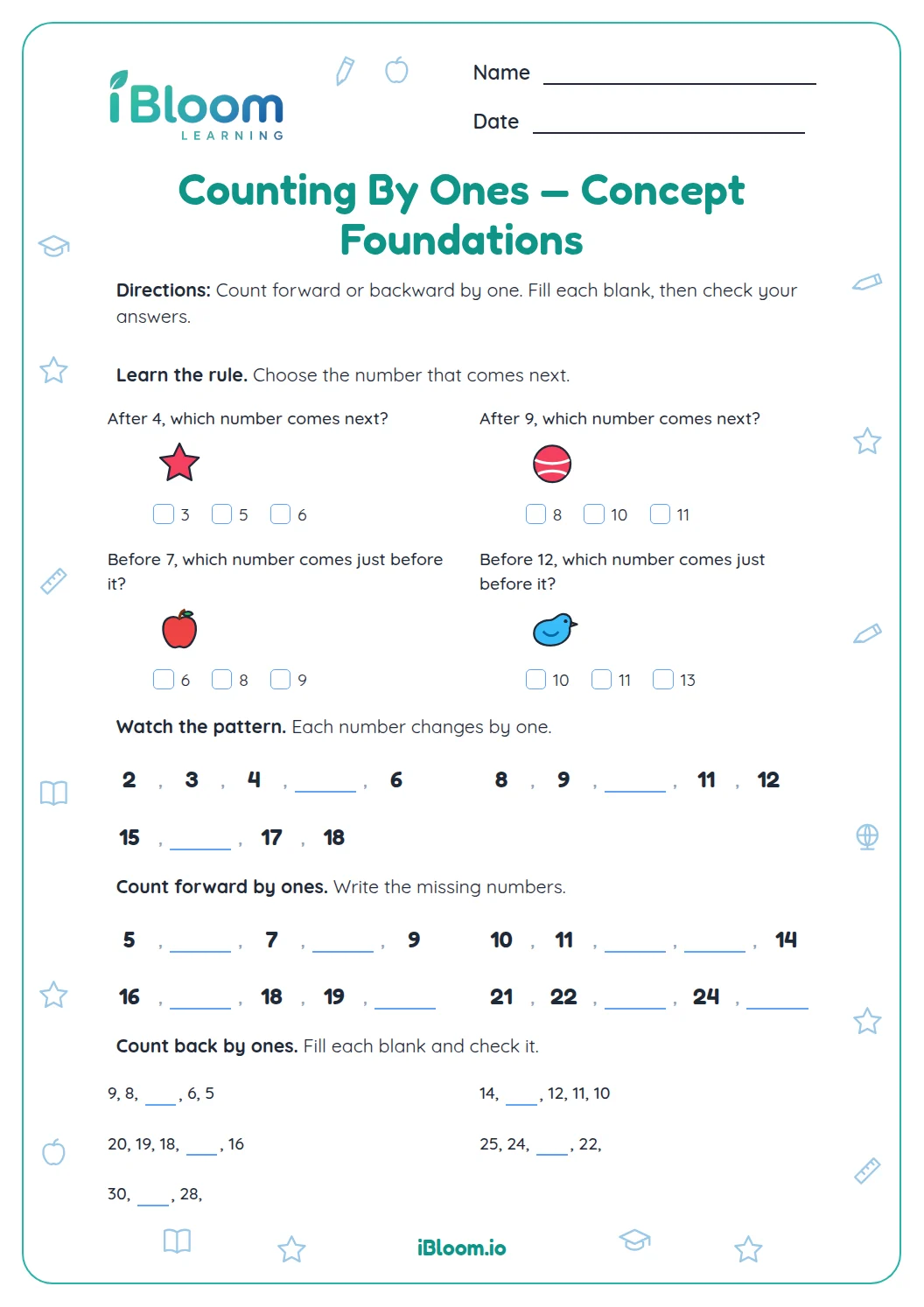
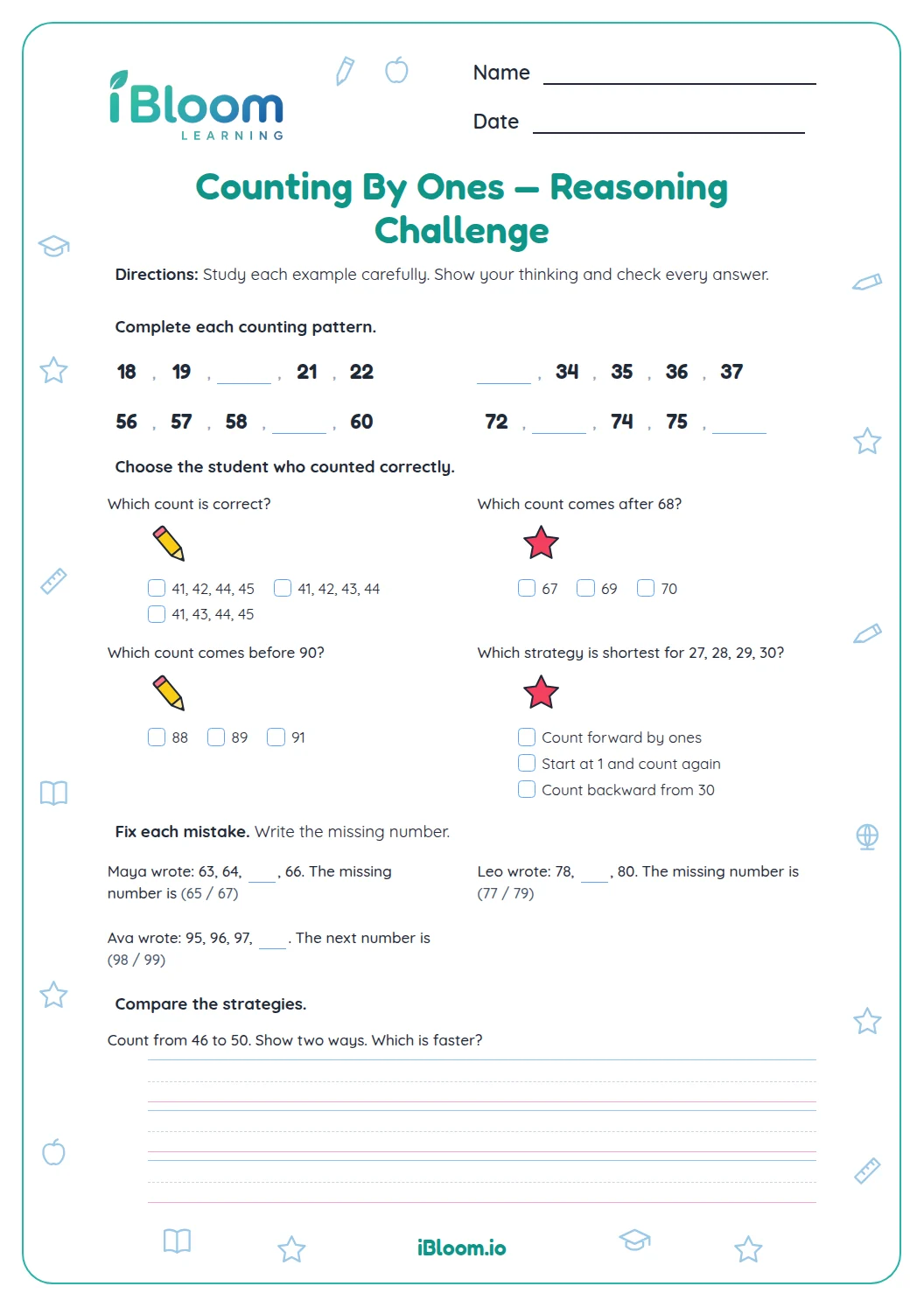
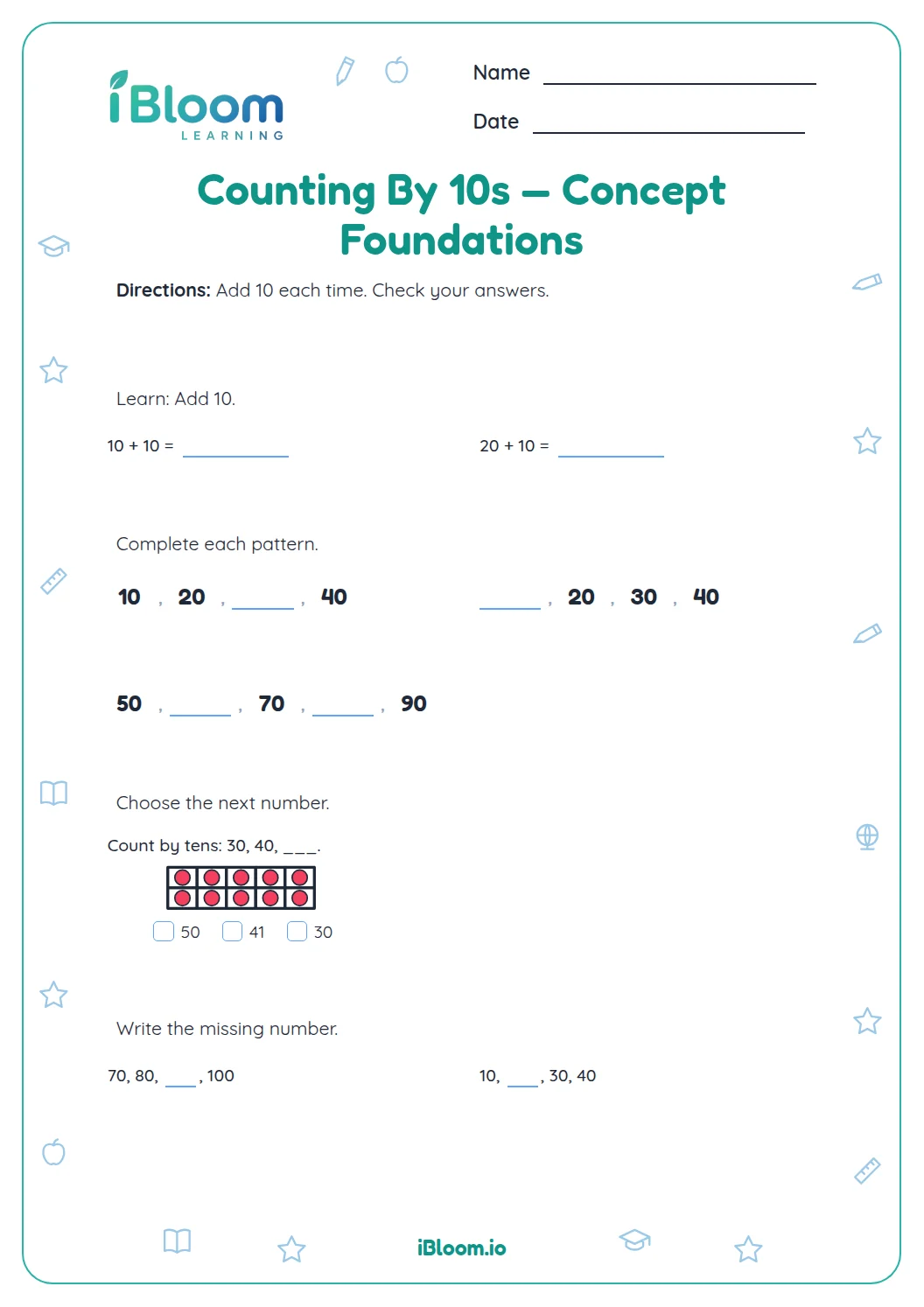
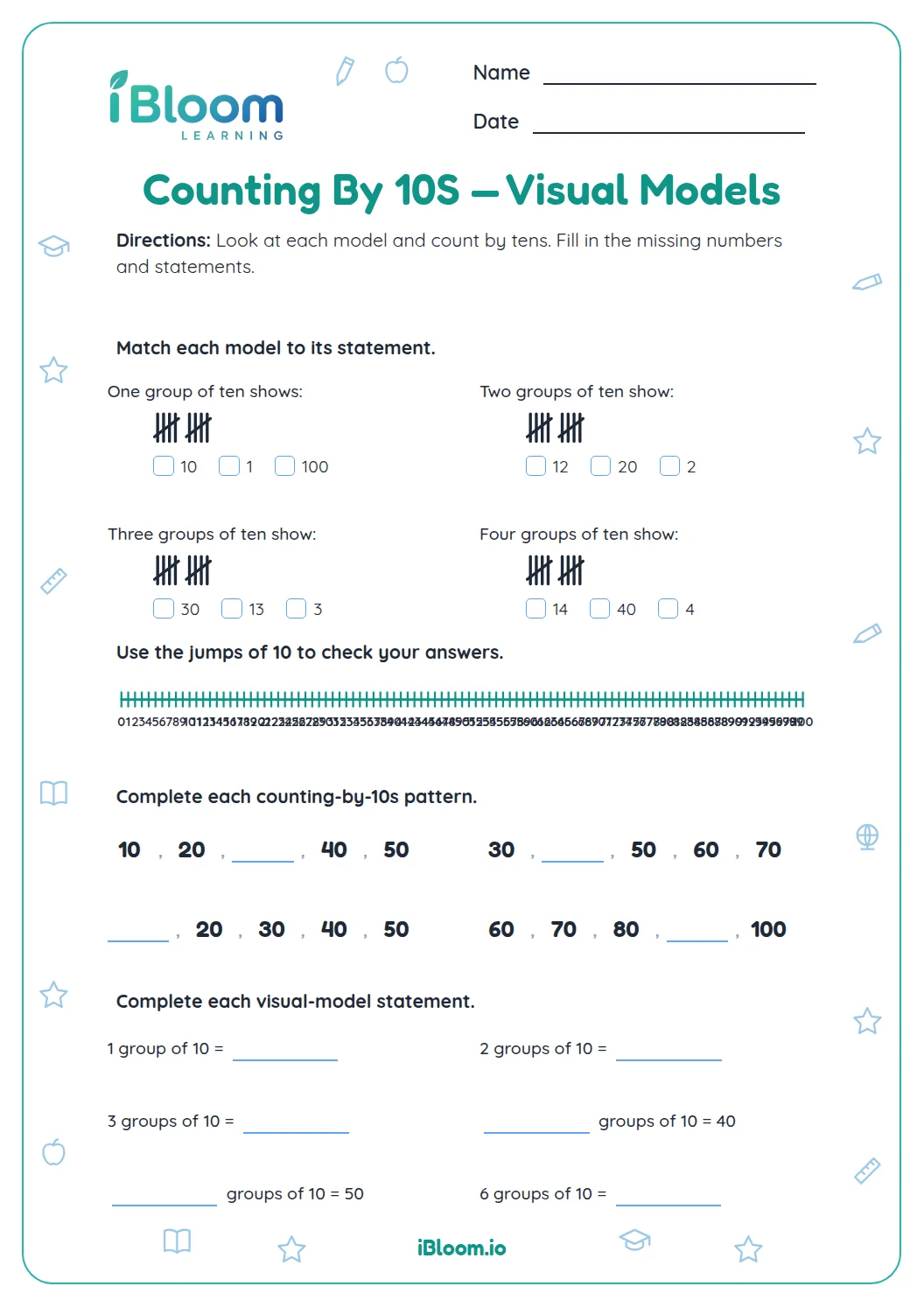
This Grade 1 printable pairs four ten-frame models and four countable picture groups with six compact counting questions. Children count by ones, name neighboring numbers, and fill sequence gaps. The 14 answers appear in a separate key.
Aligned to 1.NBT.A.1
How do ten frames show a number?
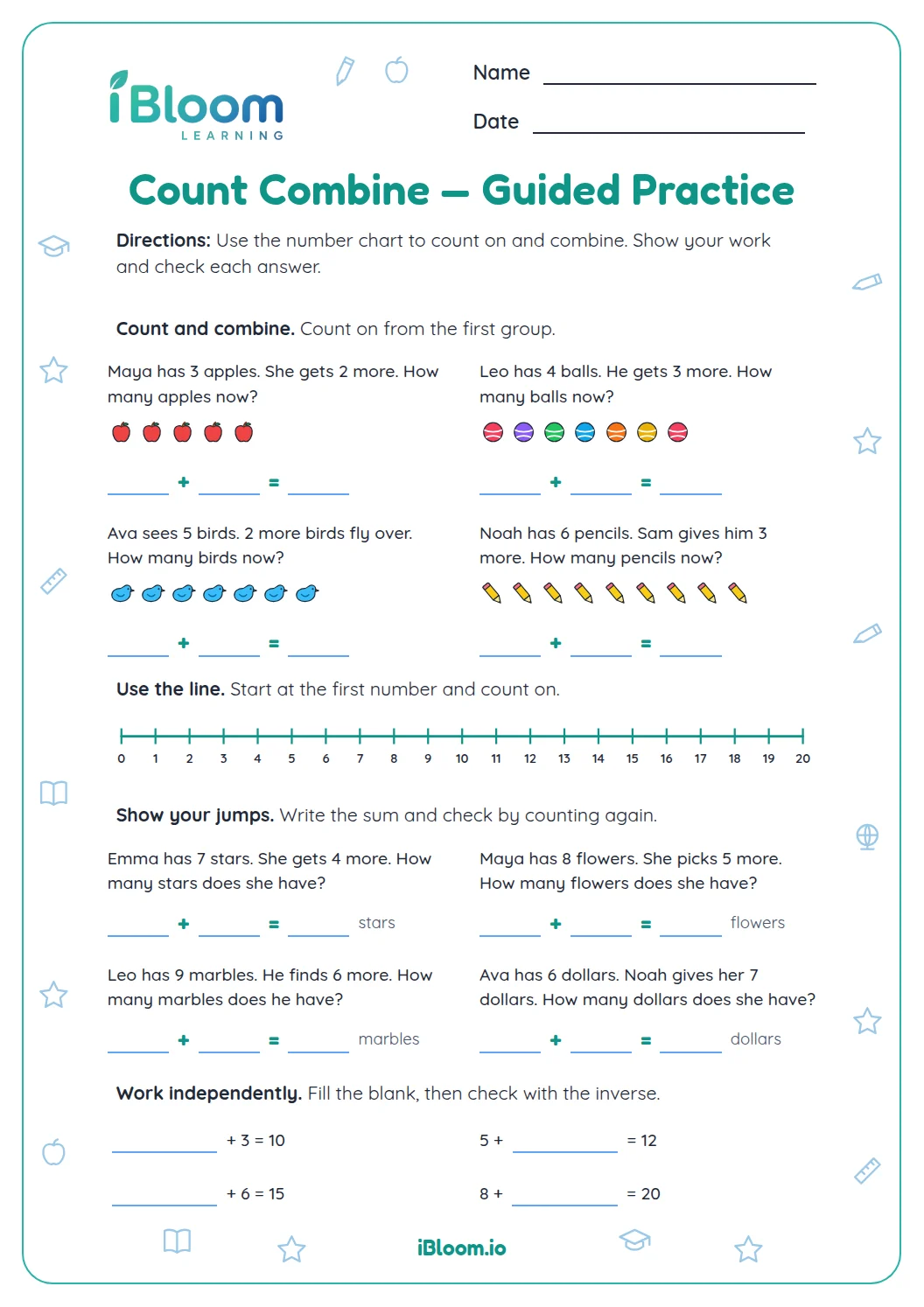
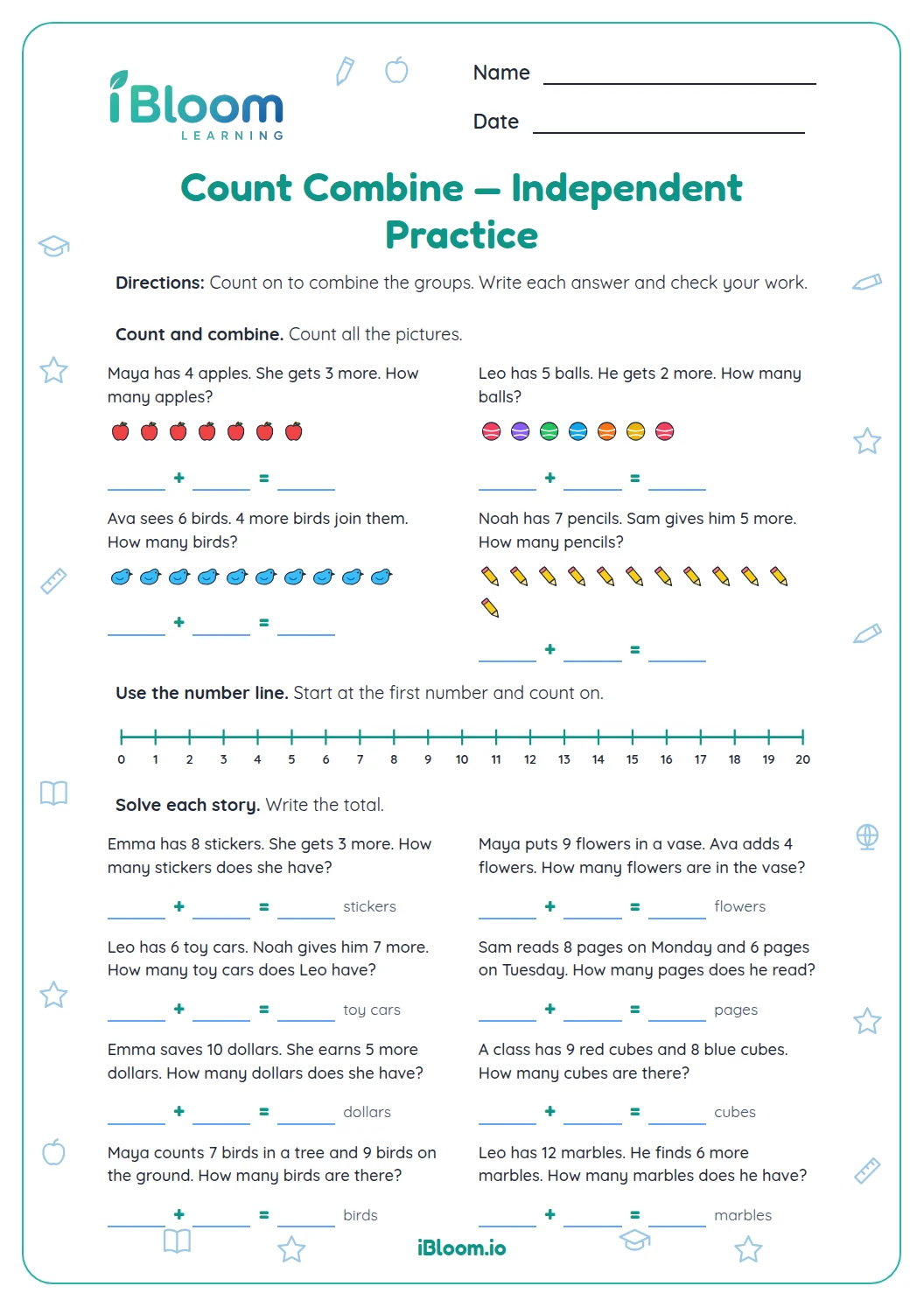
The first eight items show groups of countable objects. Count each object once and write the total as a numeral.
How do you fill a counting gap?
Say the numerals in order, one at a time. In question 12, the number before 46 is 45, so the sequence reads 45, 46, 47, 48.
- 1___, 46, 47, 48
- 2Count back one from 46: 45.
- 3Answer: 45
How can you find a neighboring number?
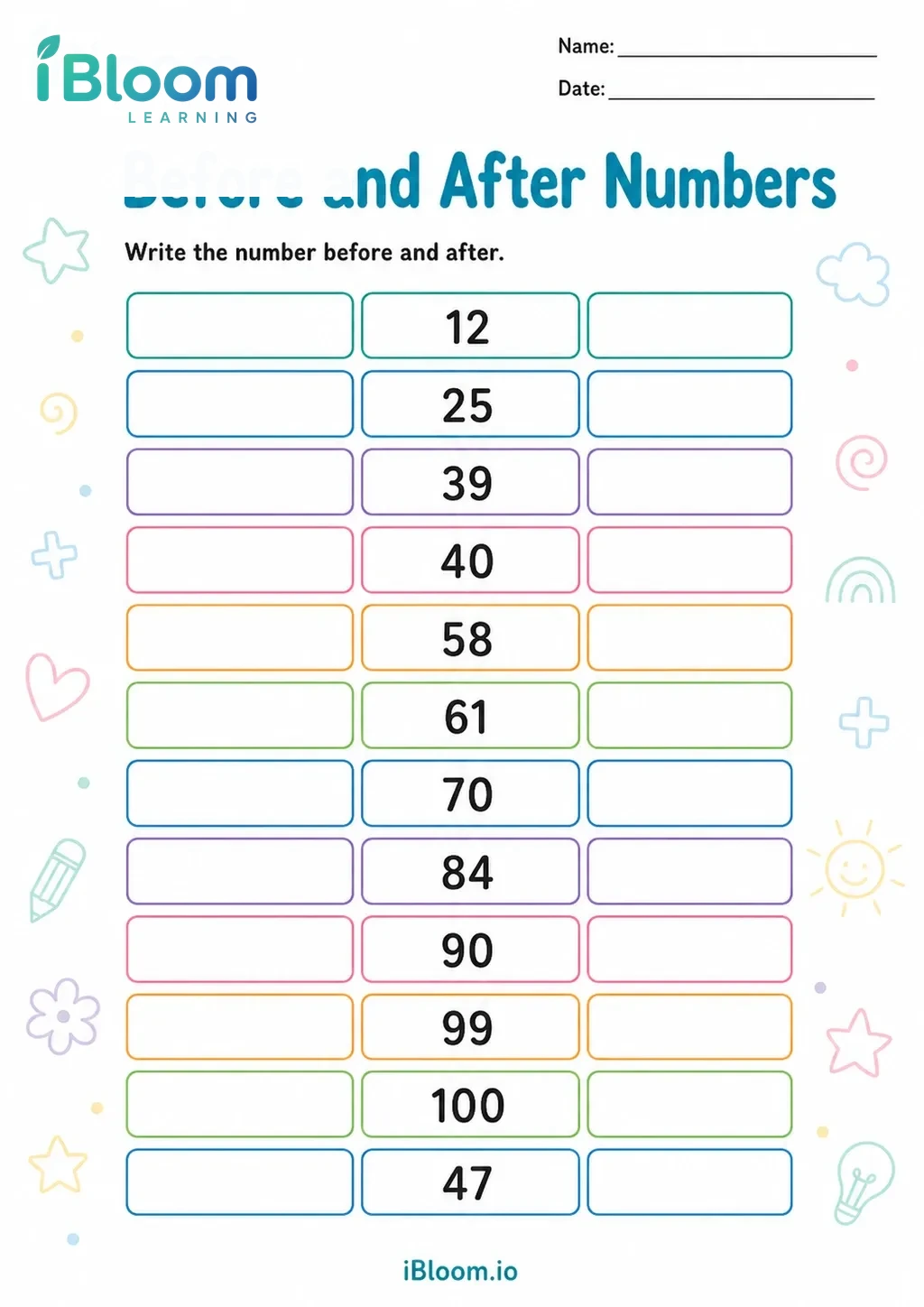
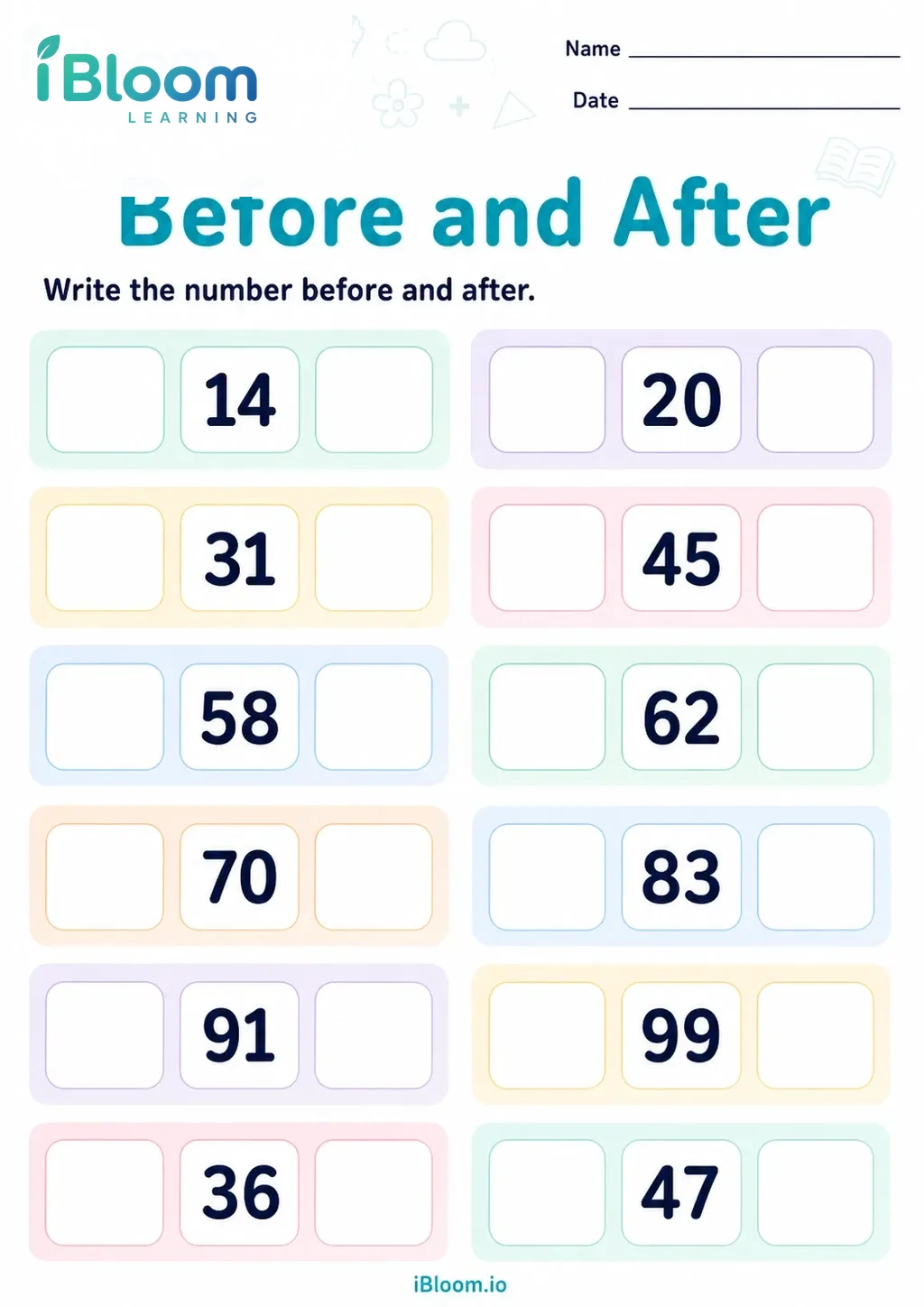
Move one step forward for “after” and one step back for “before.” To find the number between 74 and 76, count 74, 75, 76.
How to use this worksheet
- 1Count each counter once in every ten frame.
- 2Write the numeral shown by the counters.
- 3Read each sequence aloud in order.
- 4Use one step forward or back to find a neighbor.
- 5Check all 14 answers with the key.
Common mistakes and quick fixes
The mistake
Counting one counter twice.
The fix
Touch each counter once as you count.
The mistake
Skipping a numeral in a sequence.
The fix
Say the numbers aloud in order before writing.
The mistake
Mixing up before and after.
The fix
Before is one less; after is one more.
Curriculum alignment
Read numerals and count forward by ones through the number sequences and models.
On this sheet: Count forward by ones from varied starting points and read the resulting numerals.
Show the official wordingHide the official wording
Count to 120, starting at any number less than 120. In this range, read and write numerals and represent a number of objects with a written numeral.
What to practice next
Make more practice
Further reading
Questions parents and teachers ask
How many questions are on the worksheet?
There are 14 questions in three parts: eight visual counting models, three neighboring-number questions, and three missing-number sequences. A separate answer key gives every answer in the same order as the worksheet. Children can complete one part at a time and check afterward.
What models will children count?
The first eight items show groups of familiar pictured objects. Children count each picture once and write the total as a numeral. The objects appear in countable rows so learners can follow each group and keep track of the items already counted.
What number range does it use?
The pictured groups show 2 through 9 objects. Other questions use numerals through 93. Children count by ones, name neighboring numbers, and fill three short sequences in order. Each picture group has a different amount to count, so the totals vary.
How do ten frames help with counting?
A ten frame arranges counters in a regular pattern, while a picture group shows countable objects. Children can count each item by ones and check that they counted every counter or picture exactly once before writing the total.
Is an answer key included?
Yes. The separate answer key lists all 14 answers. Children can recount a ten frame or read a completed sequence aloud to check an answer before using the key. The key follows the worksheet question order and makes checking straightforward.