


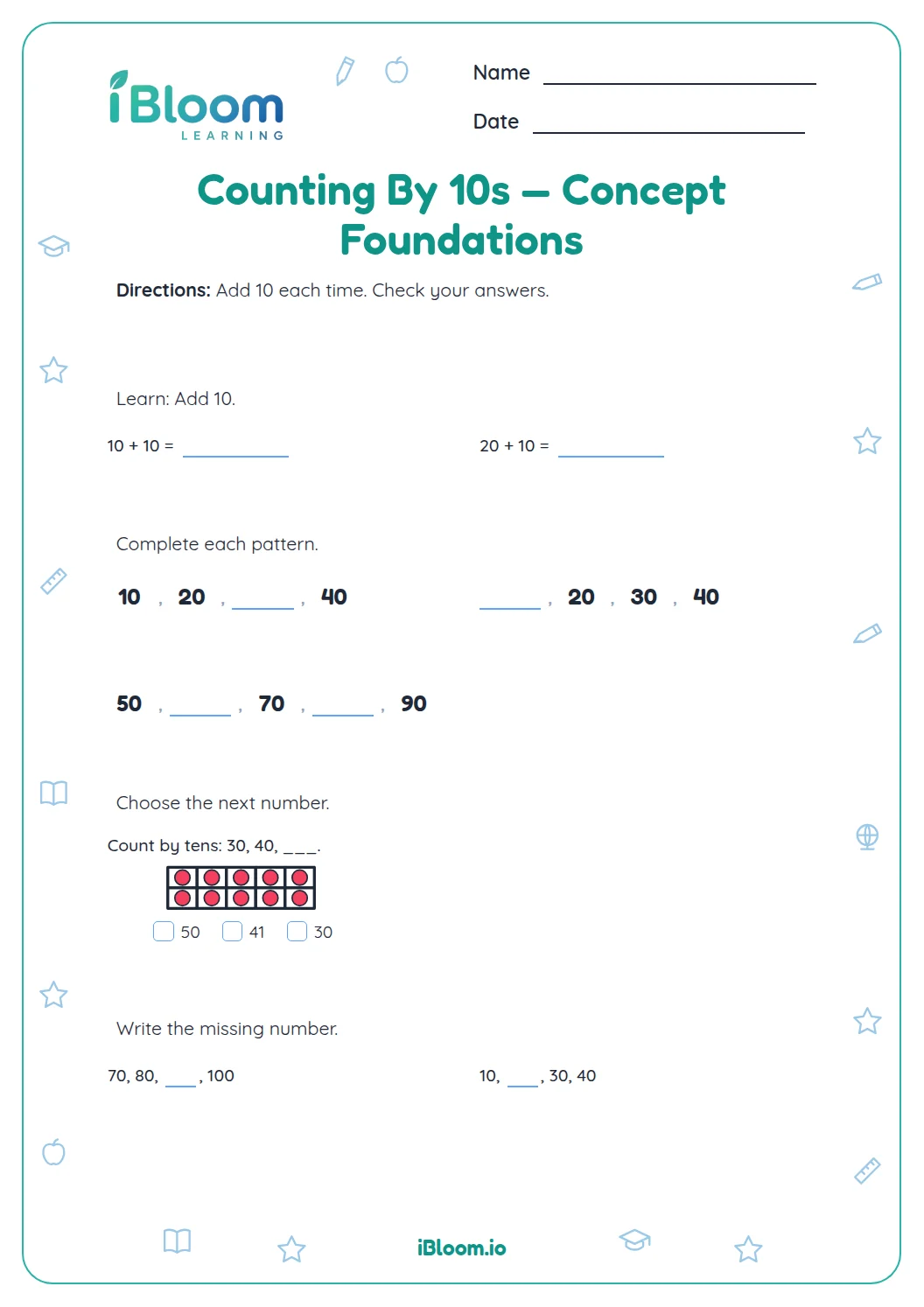
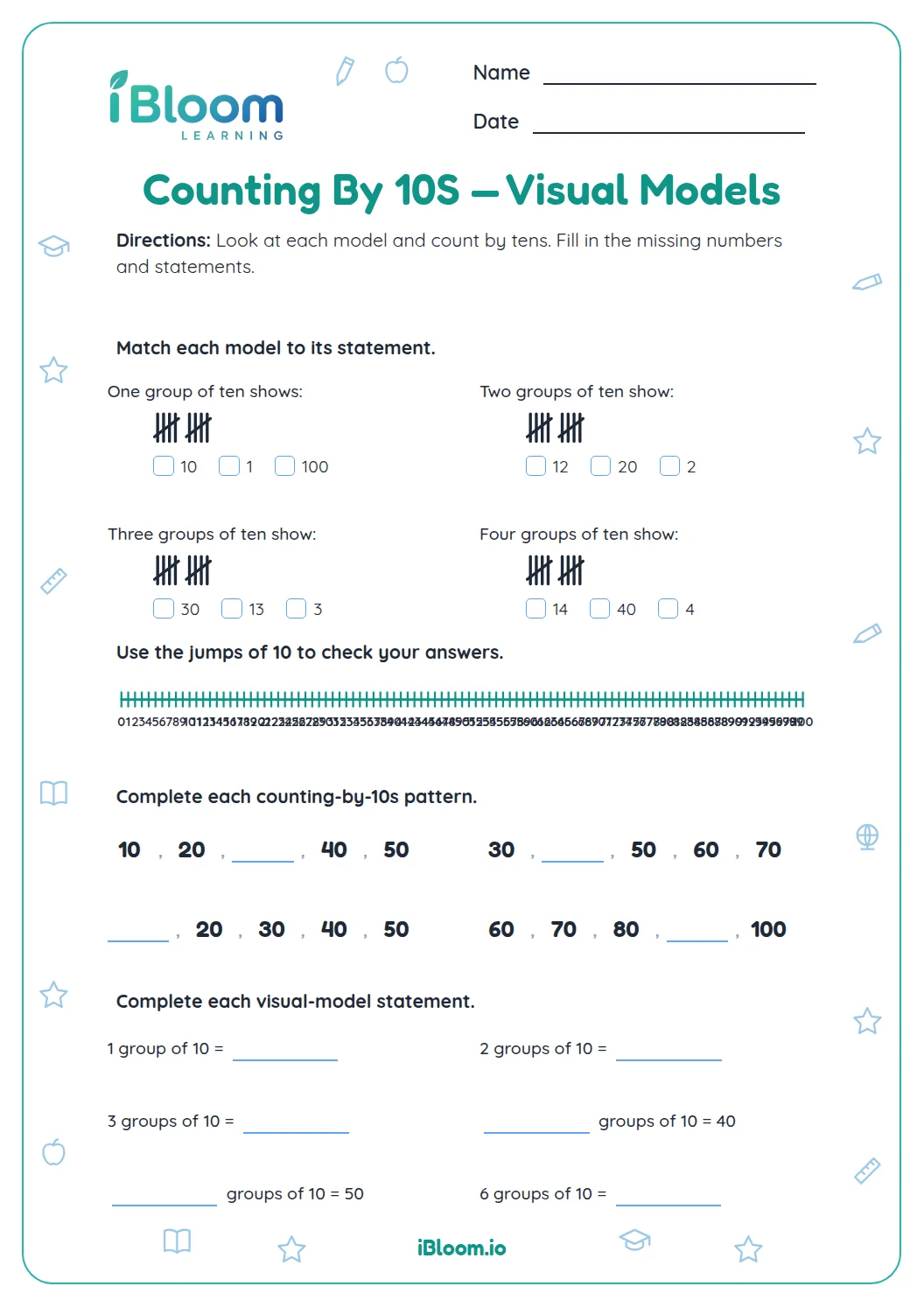
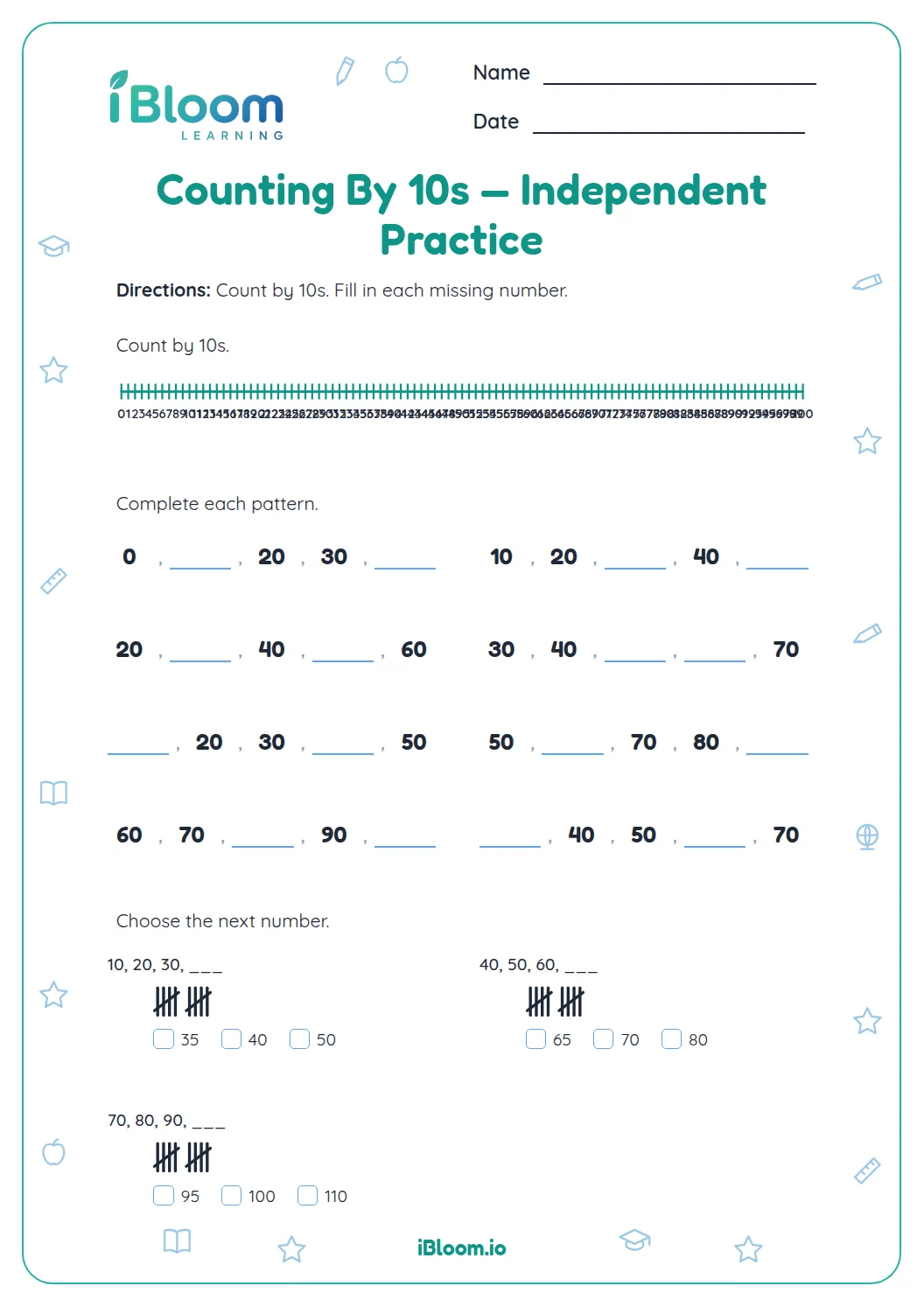


About this worksheet
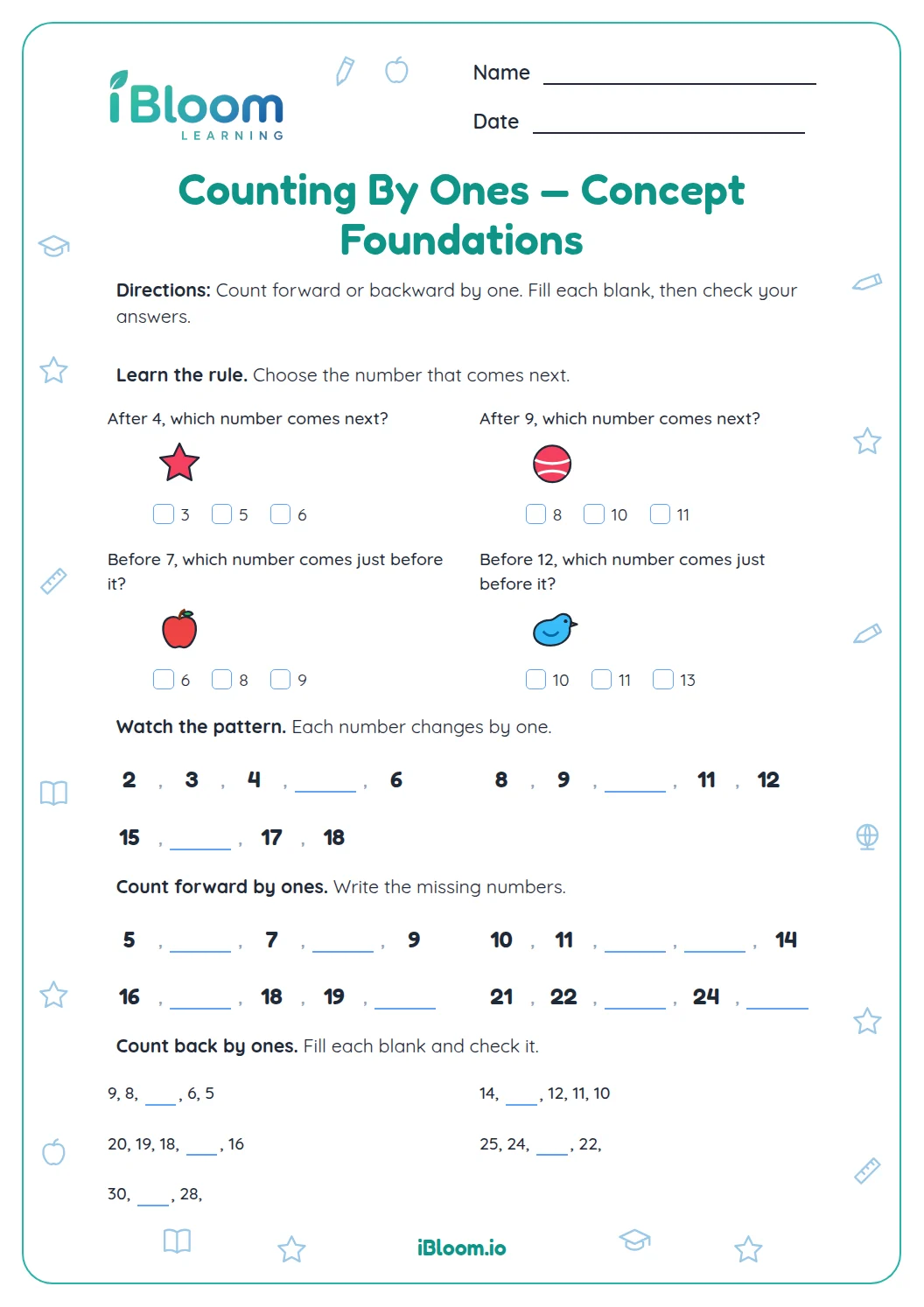
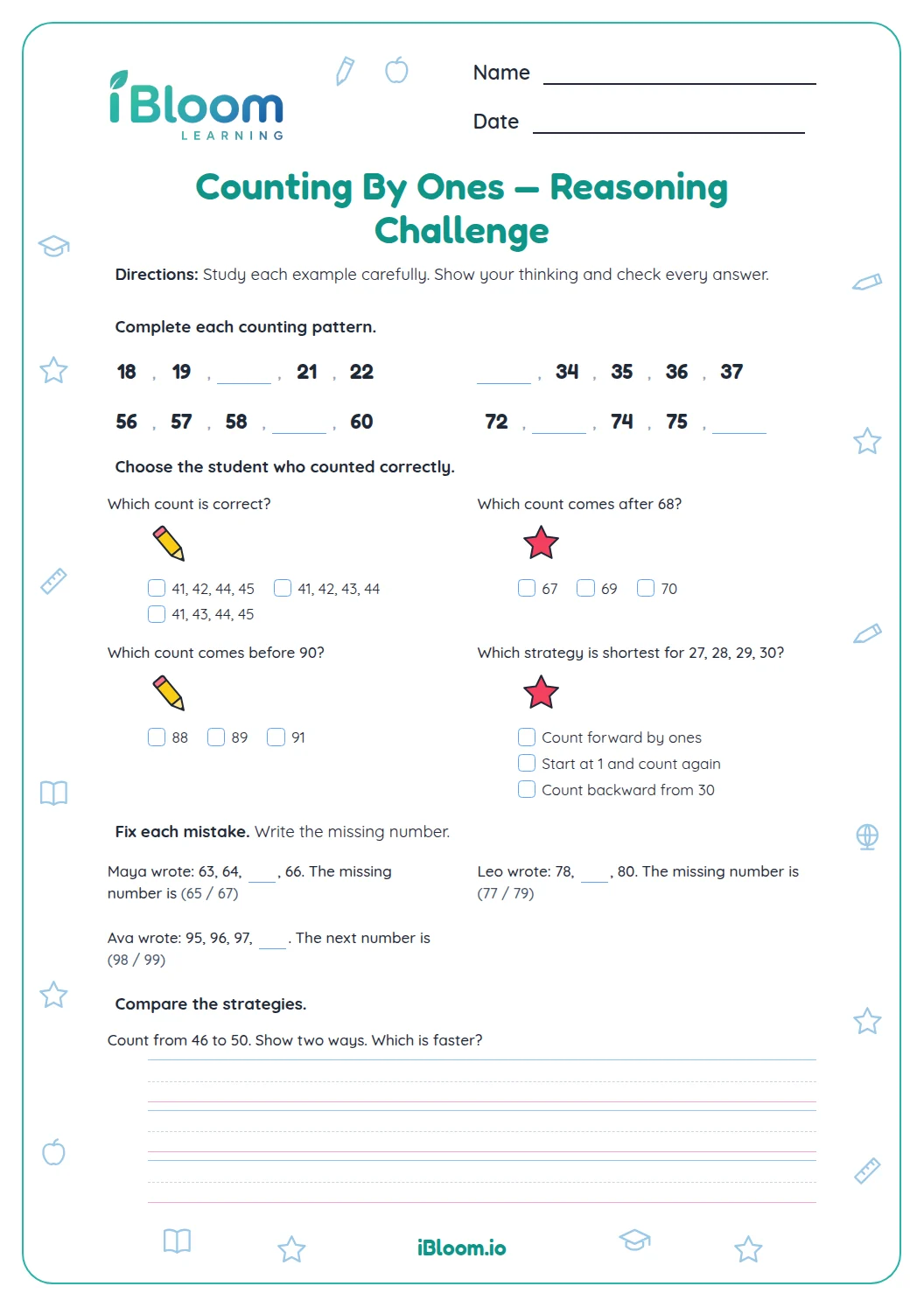
This Grade 1 worksheet gives students 14 opportunities to count by ones, continue number sequences, and use addition or subtraction in short stories. The problems include counting forward and backward, joining or taking away small groups, and finding a missing number in a sequence. A separate answer key shows the completed sequences and story equations.
Aligned to 1.NBT.A.1
What kinds of counting practice are included?
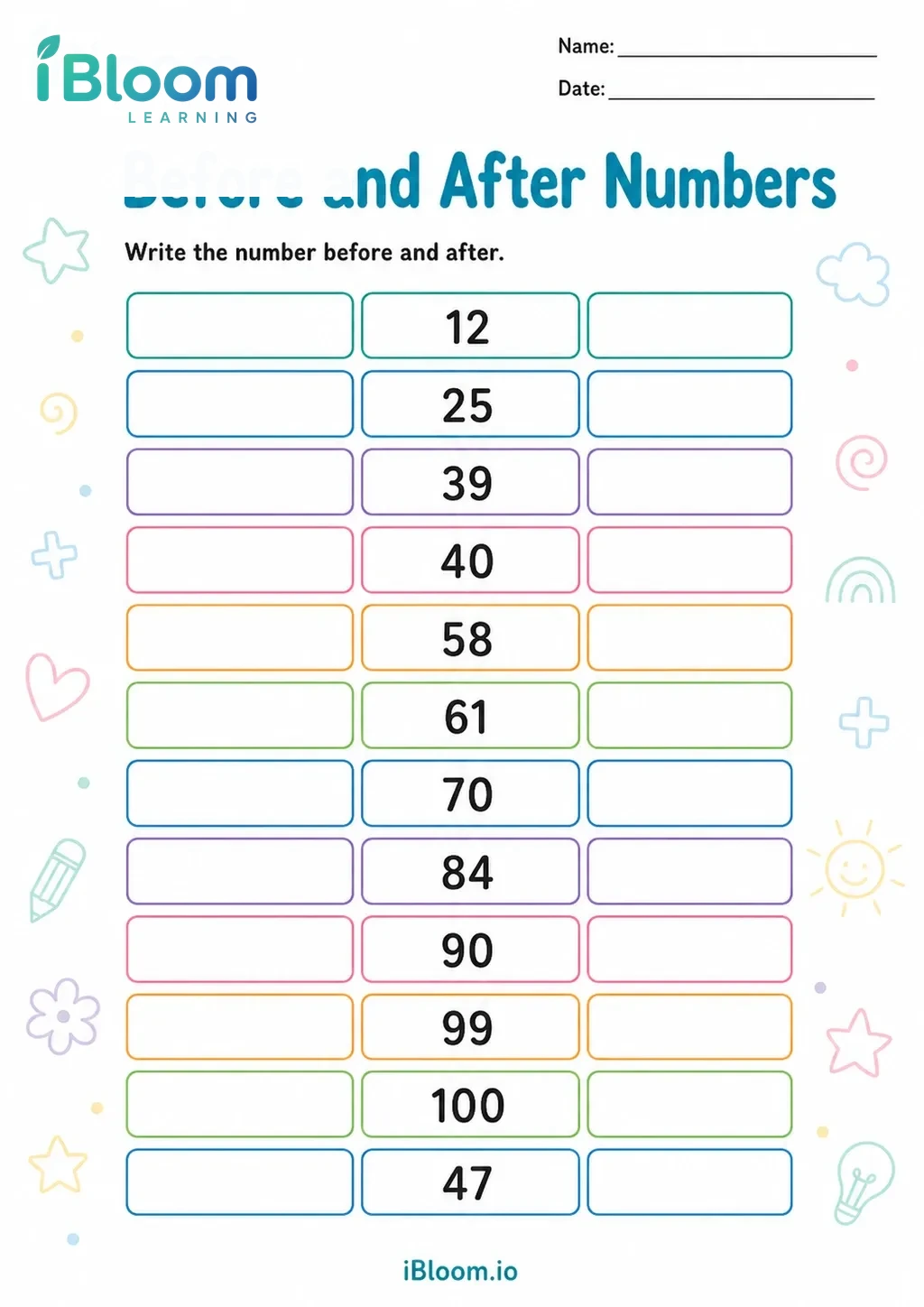
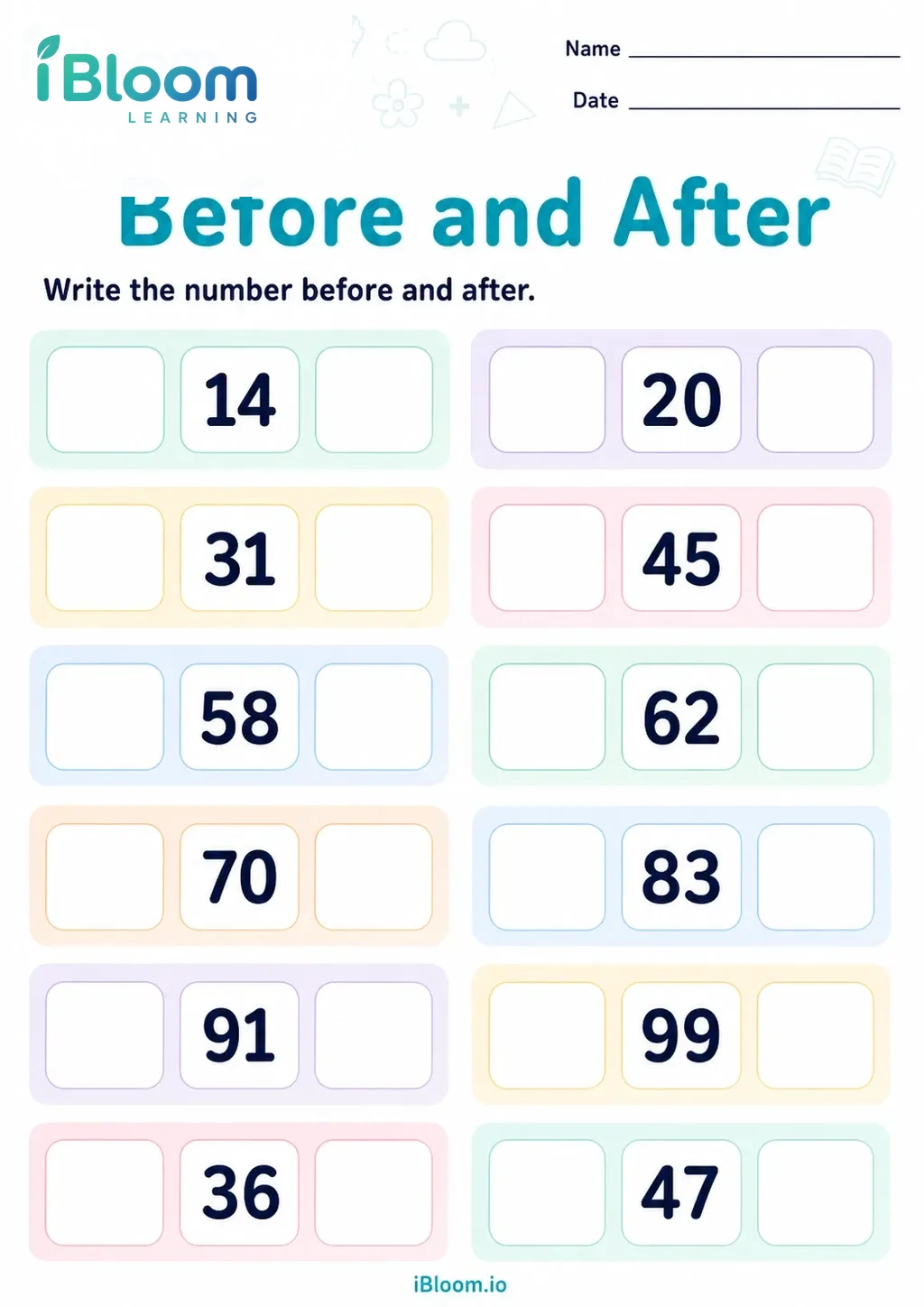
Students count forward or backward by ones, then apply counting to small addition and subtraction stories. The final items return to number sequences with picture cues.
- Questions 1–3: fill a missing number in a sequence
- Questions 4–6: choose the next, previous, or missing count
- Questions 7–14: solve addition and subtraction stories
How can a student find a missing number?
Read the numerals in order and say the count aloud. Notice whether it moves forward or backward, then check that both sides of the blank differ by one.
- 1Question 1: 34, 35, ___, 37
- 2Count forward by ones: 34, 35, 36, 37.
- 3The missing numeral is 36.
How to use this worksheet
- 1Read the story or number sequence.
- 2Decide whether the count moves forward or backward.
- 3Count one step at a time.
- 4For a story, check whether items are added or taken away.
- 5Write the numeral and name what it counts.
Common mistakes and quick fixes
The mistake
Skipping a number in a sequence.
The fix
Say each number aloud and point once per number.
The mistake
Counting backward when the story adds items.
The fix
Notice whether the group grows or gets smaller.
The mistake
Writing a total that is outside the story.
The fix
Start with the stated amount and count only the change.
Common Core alignment
This page practices the listed Common Core skill through the questions on the worksheet.
Count forward and backward by ones and read the numerals in the sequence.
On this sheet: Sequence questions ask students to read, write and continue counts by ones; story items apply counts within 20.
Show the official wordingHide the official wording
Count to 120, starting at any number less than 120. In this range, read and write numerals and represent a number of objects with a written numeral.
What to practice next
Make more practice
Further reading
Questions parents and teachers ask
What does counting by ones mean?
Counting by ones means moving to the next whole number each time. When counting forward, add one; when counting backward, take away one. This worksheet uses short sequences such as 34, 35, blank, 37 and story problems with small totals.
Are there addition and subtraction stories too?
Yes. The first and final sections include simple stories with totals or amounts left within 20. Students can count on or back, draw their own marks, or write a number sentence in the work space. Each answer is a whole number that fits the story.
How can I help if my child skips a number?
Have your child say the sequence slowly while touching one mark or number for each spoken count. For a missing number, start at the number before the blank and continue one step at a time. Then check that the number after the blank follows by exactly one.
What is in the answer key?
The separate key fills every missing number and gives each story answer. For a story answer, ask your child to say what the number counts, such as books or birds. Matching the number to the named objects helps connect the count to its meaning.
How many problems and pages are included?
There are 14 questions: six number-sequence or neighbor questions and eight short stories using counts or sums within 20. The worksheet uses two pages, followed by a separate two-page answer key. Its key gives each missing number and story answer, with units where the story names them.
Can students use a number chart while they work?
A number chart can help students find the number before or after a given numeral, especially when crossing a decade such as 29 to 30. The worksheet also works with oral counting or a row of counters. Encourage students to explain which direction they counted.