




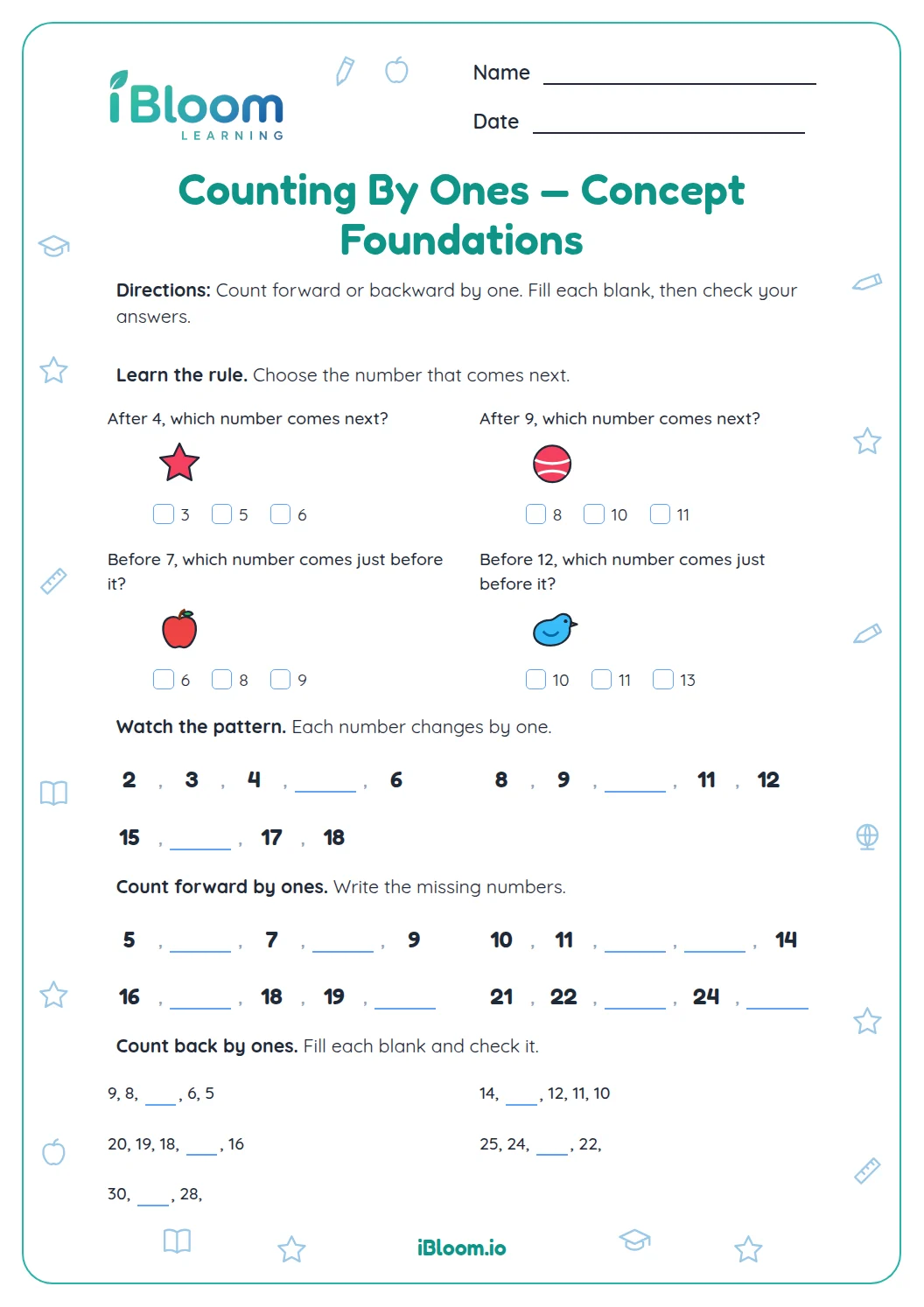


About this worksheet
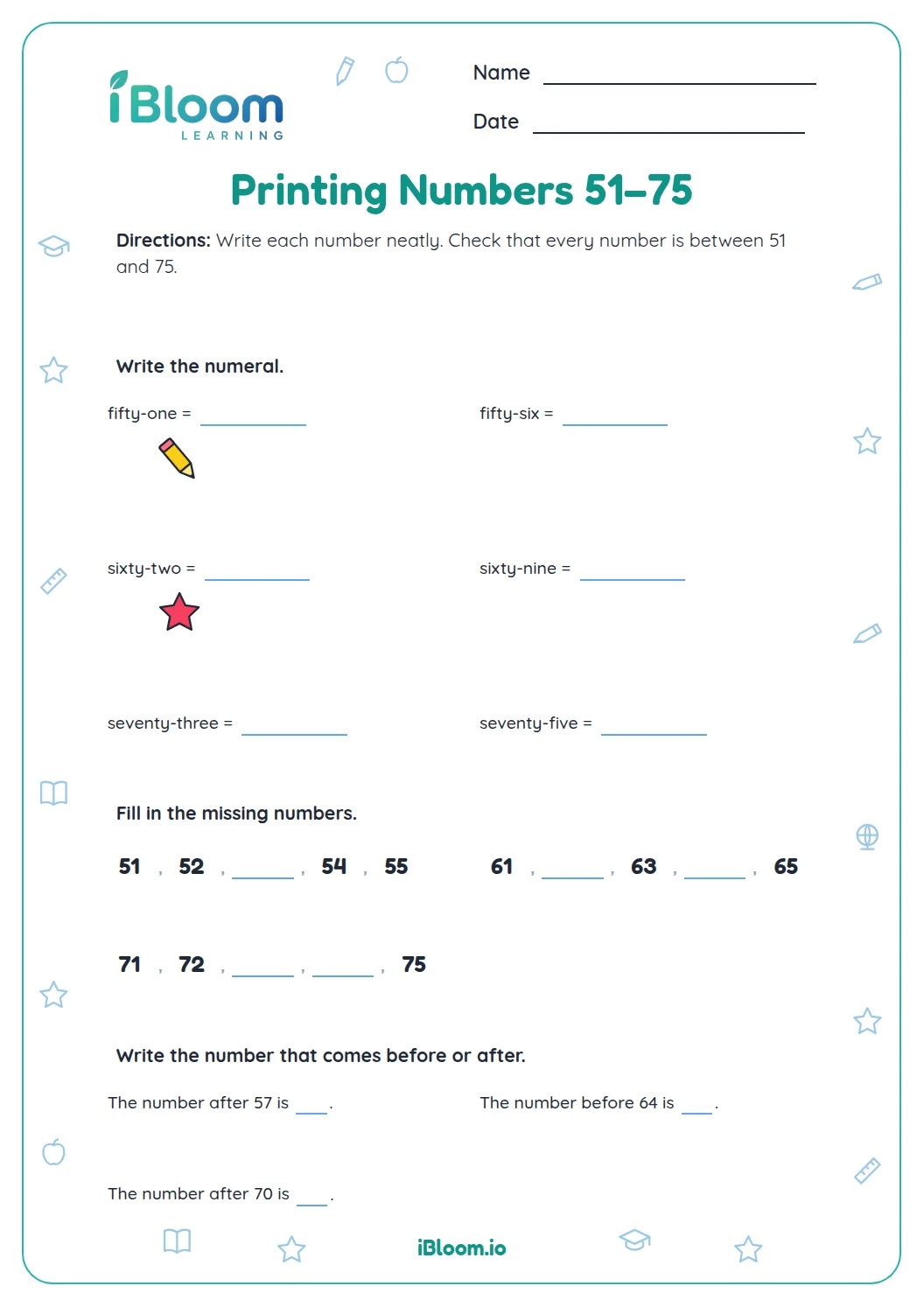
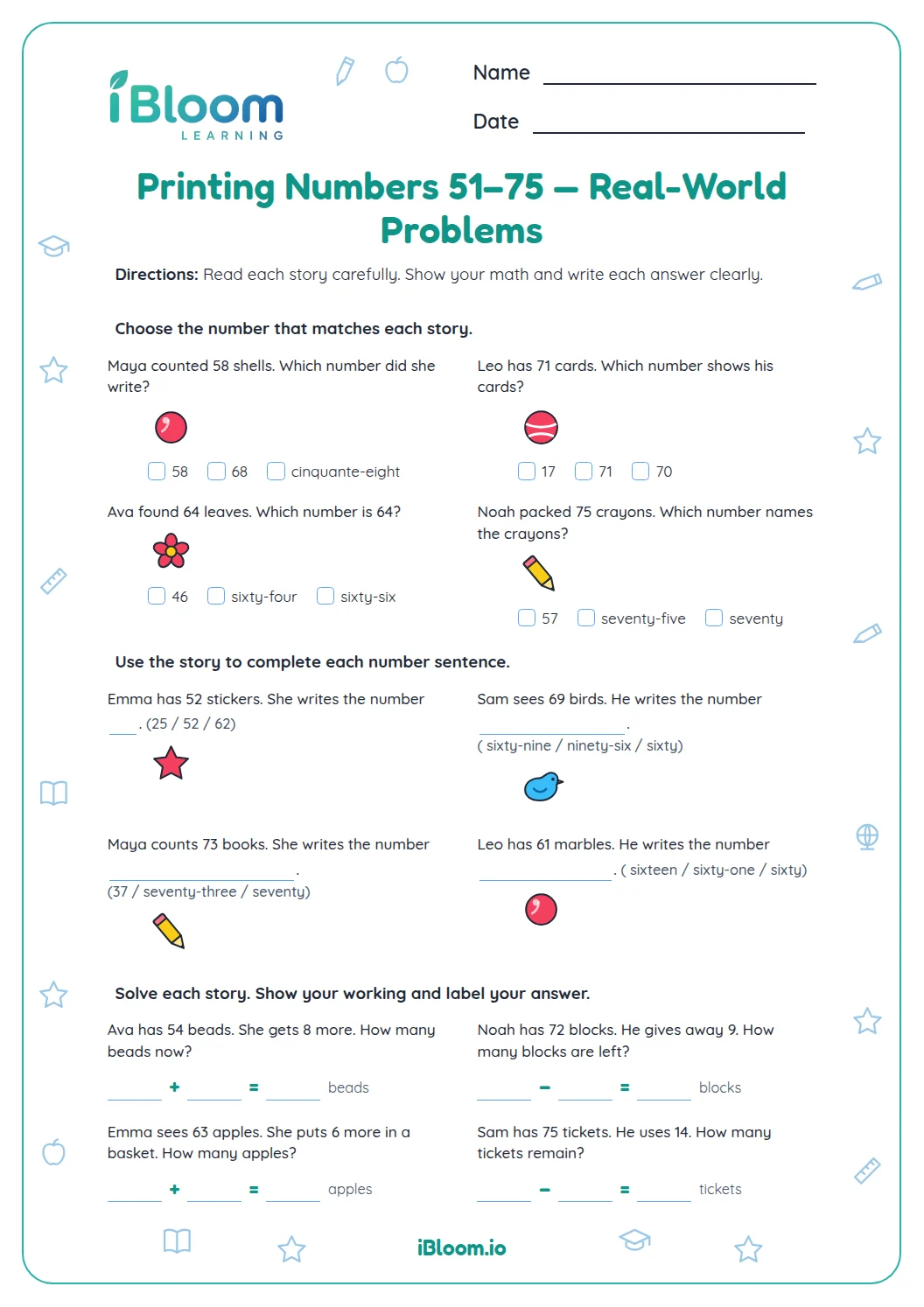
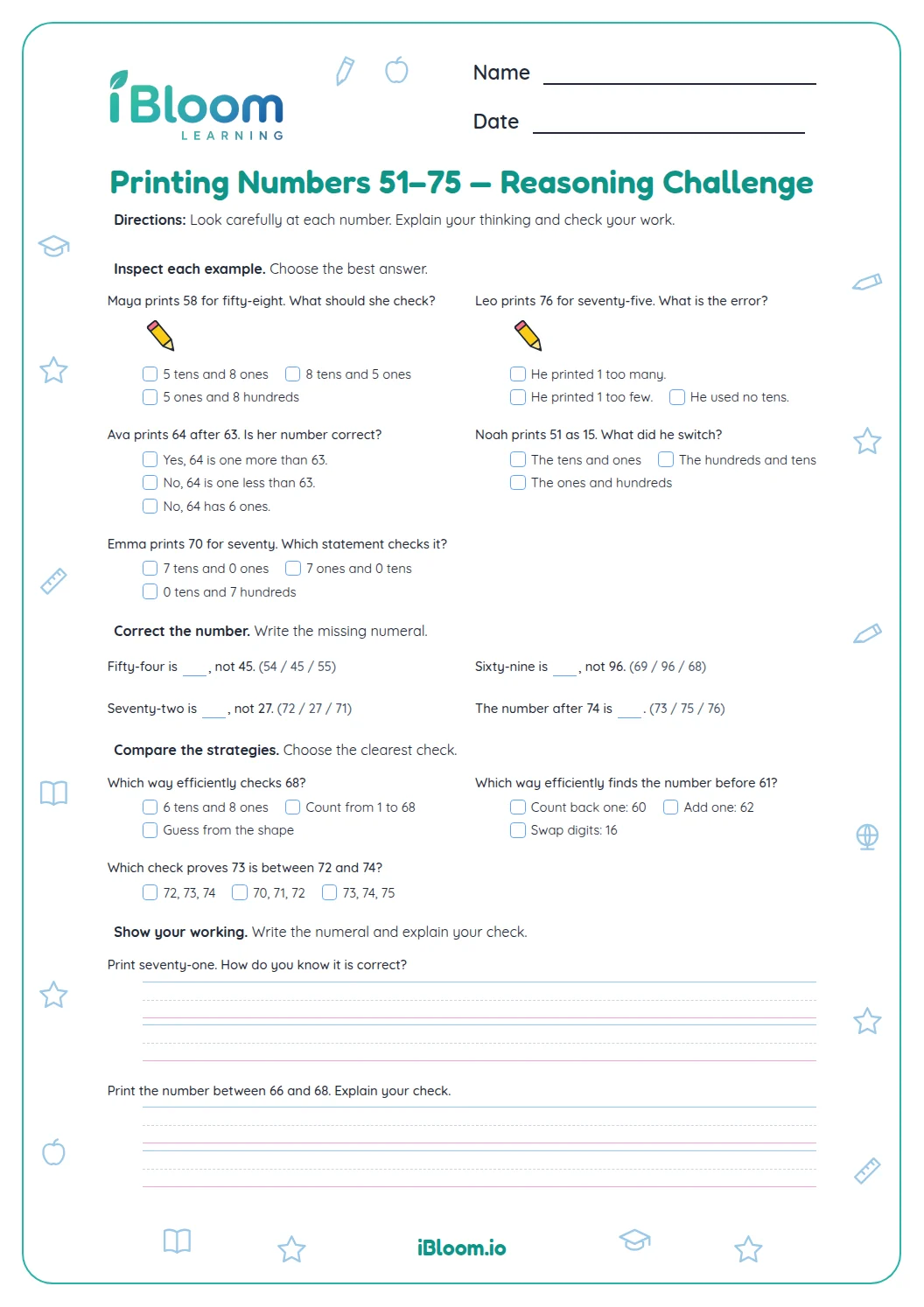
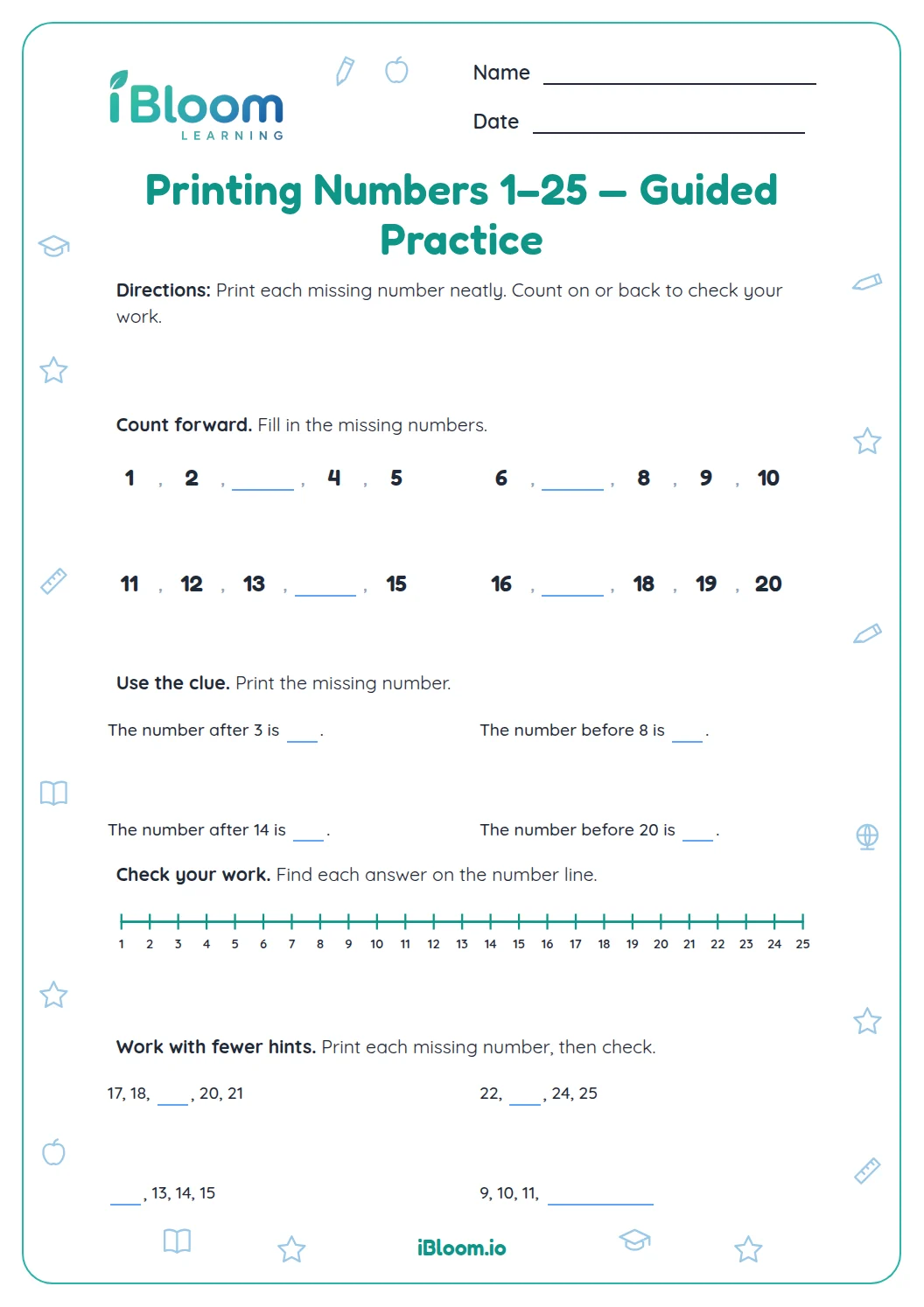
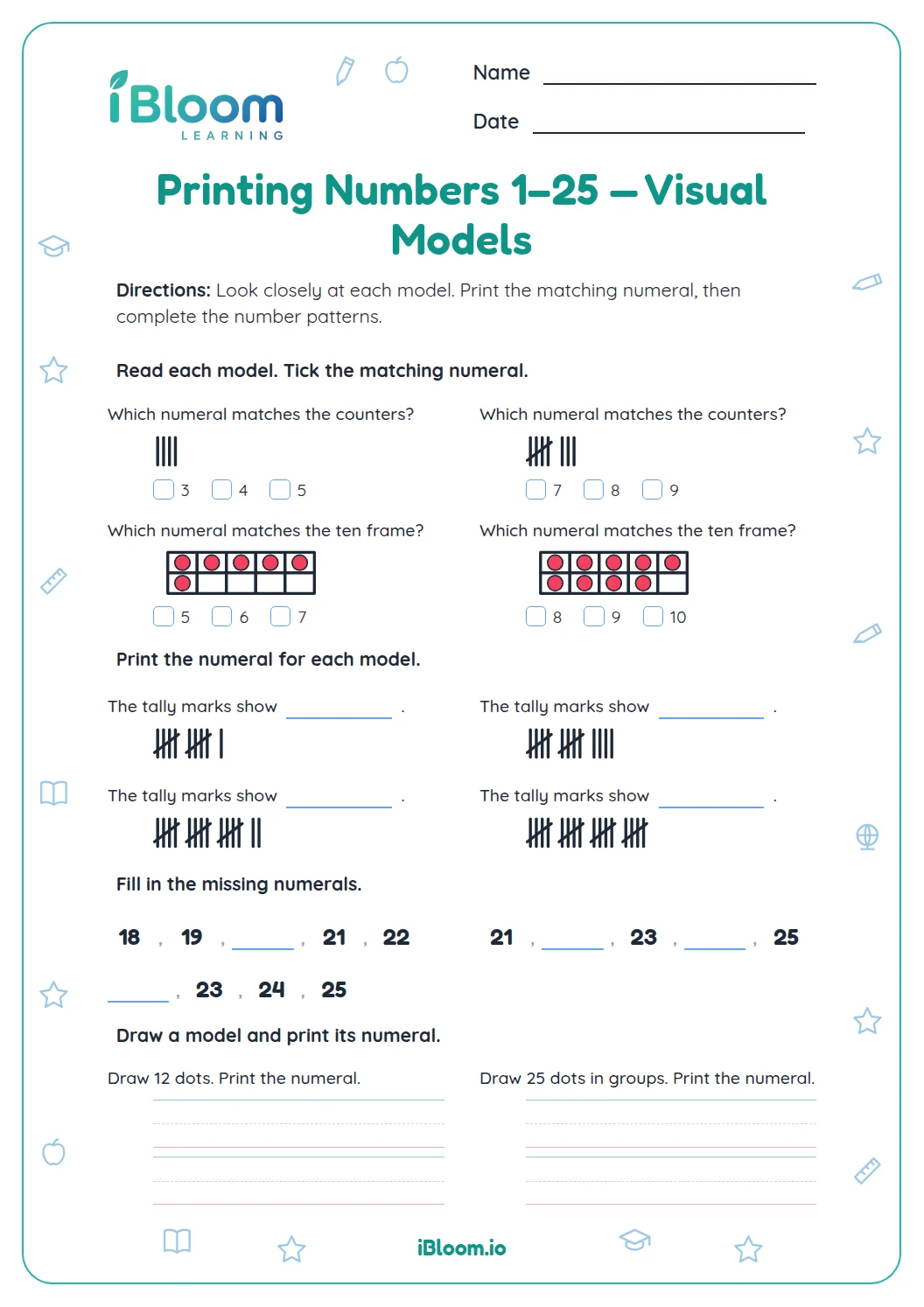
This Grade 1 printable gives children practice writing every number from 51 through 75. Across 25 short prompts, students use a number that comes before or after a given numeral, then write named numerals directly. The sequence clues support careful digit order and attention to tens boundaries such as 59 to 60 and 69 to 70. The template uses answer lines for independent printing rather than the old number-chart layout. A separate answer key lists each target numeral.
How can children write numbers from 51 to 75?
Say the number, then write its digits in order. The tens digit shows how many groups of ten; the ones digit shows the extra ones. In this range, every number has five, six, or seven tens.
- 1The number after 50
- 2Say “fifty-one,” then write the digits 5 and 1.
- 3Answer: 51
How does the counting sequence help?
A number after another is one more. A number before is one less. Counting forward and backward can help children check which numeral belongs in a blank.
Which numbers will students practice?
The 25 prompts cover every number from 51 through 75. Early items use the number before or after; later items name the numeral for direct printing practice.
How to use this worksheet
- 1Read the whole clue before writing.
- 2Say the number aloud to hear the tens and ones.
- 3Write the tens digit first and ones digit second.
- 4For before and after clues, count one step back or forward.
- 5Check that each numeral is within 51 through 75.
Common mistakes and quick fixes
The mistake
Reversing the digits, such as writing 15 for 51.
The fix
Say “fifty-one” and write the five tens before the one.
The mistake
Changing the tens when only the ones increase.
The fix
Count one number at a time; 58 is followed by 59.
The mistake
Skipping a number at a tens boundary.
The fix
Check that 59 is followed by 60 and 69 by 70.
What to practice next
Make more practice
Questions parents and teachers ask
Which numbers are on the page?
The worksheet covers every numeral from 51 through 75 in 25 prompts. Children use before and after clues for part of the range and print named numerals directly for the rest. The target range begins at 51 and ends at 75, with no gaps in the named numerals.
Is this a tracing worksheet?
No. The template provides answer lines for writing rather than a tracing font. Children form each numeral themselves and use the clue to decide which two digits belong in the blank. A child can use the blank lines to practice writing each answer clearly.
How can I help with number reversals?
Have the child say the number aloud and name the tens first. For 63, say “six tens and three ones,” then write 6 before 3; compare the written numeral with the spoken number. The spoken number helps connect the tens value to the first written digit.
Why are there before and after questions?
Those prompts connect numeral writing with the counting sequence. Children can count forward or backward one step to find the target, then write that numeral on the answer line. After finding the target, have the child say it once before writing to reinforce the sequence.
How many items are included?
There are 25 short prompts covering the complete range from 51 to 75. The answer key lists the expected numeral for each item in the same order as the worksheet. The before and after clues complement direct prompts to give several ways to produce numerals in range.
What should a child do at 59 or 69?
Count across the tens boundary: 59 is followed by 60, and 69 is followed by 70. Saying the sequence aloud helps the child notice that the tens digit changes after the ones reach nine. For example, say “sixty, sixty-one” after 59, then write 60 with a six in the tens place.