


About this worksheet
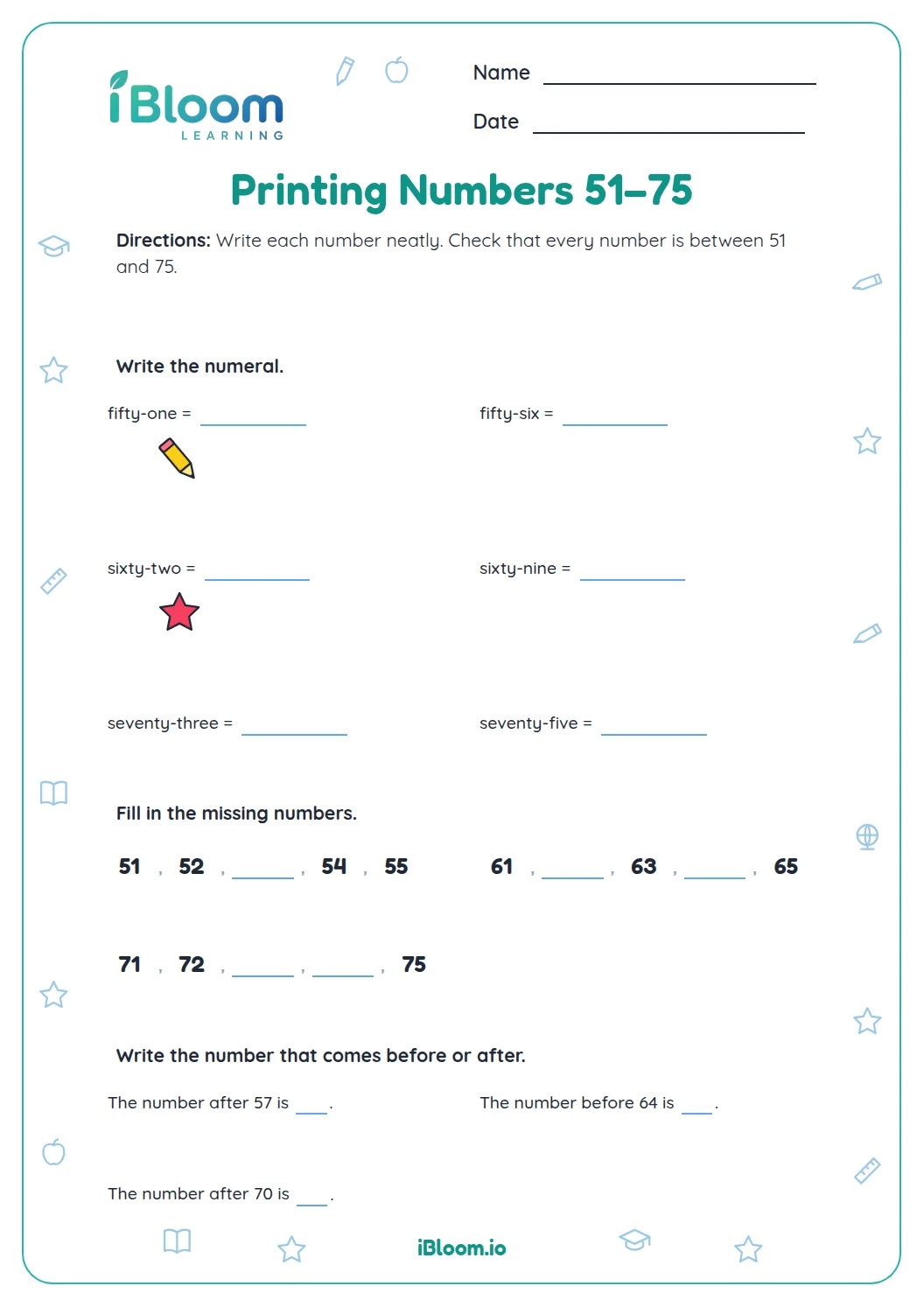
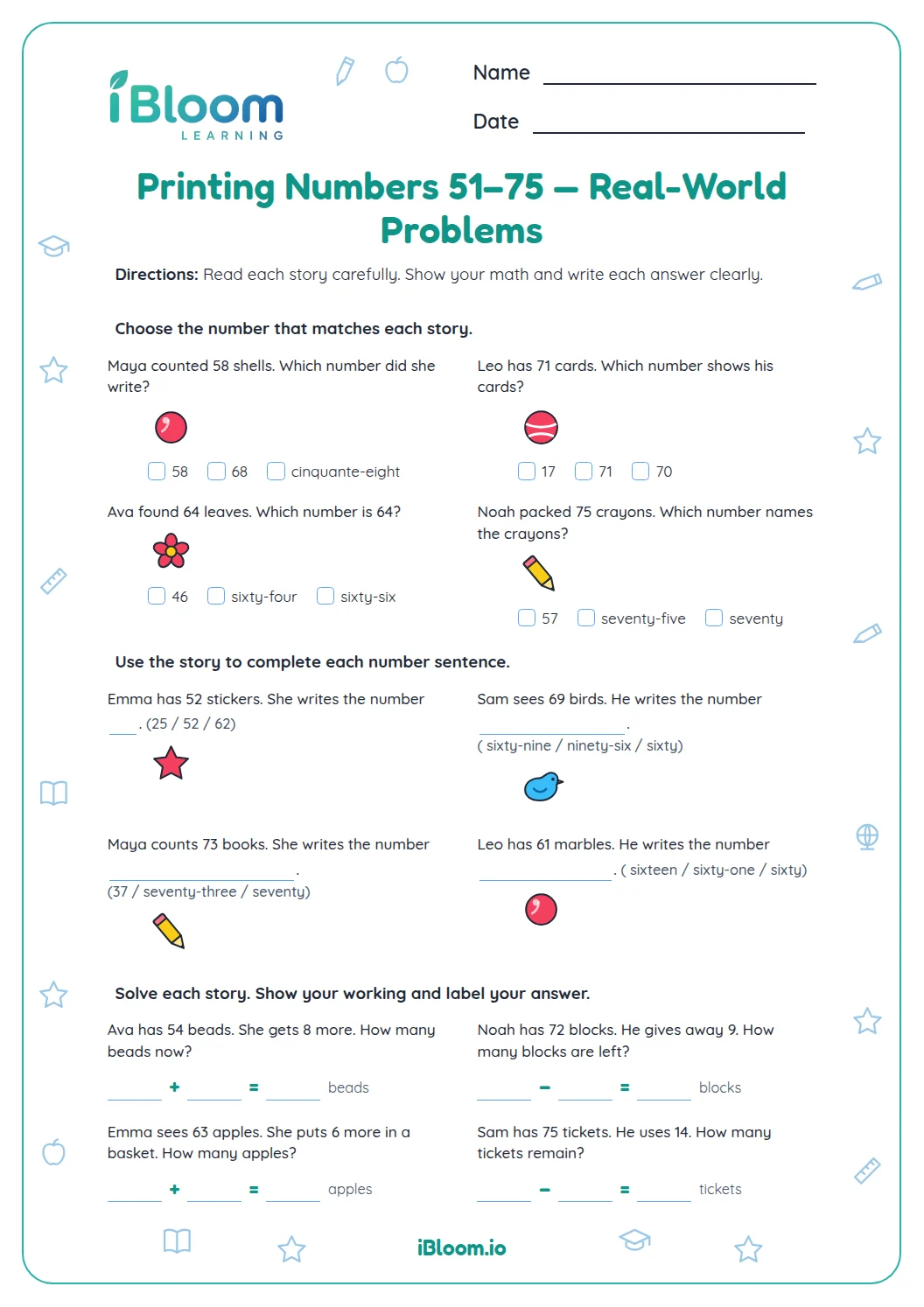
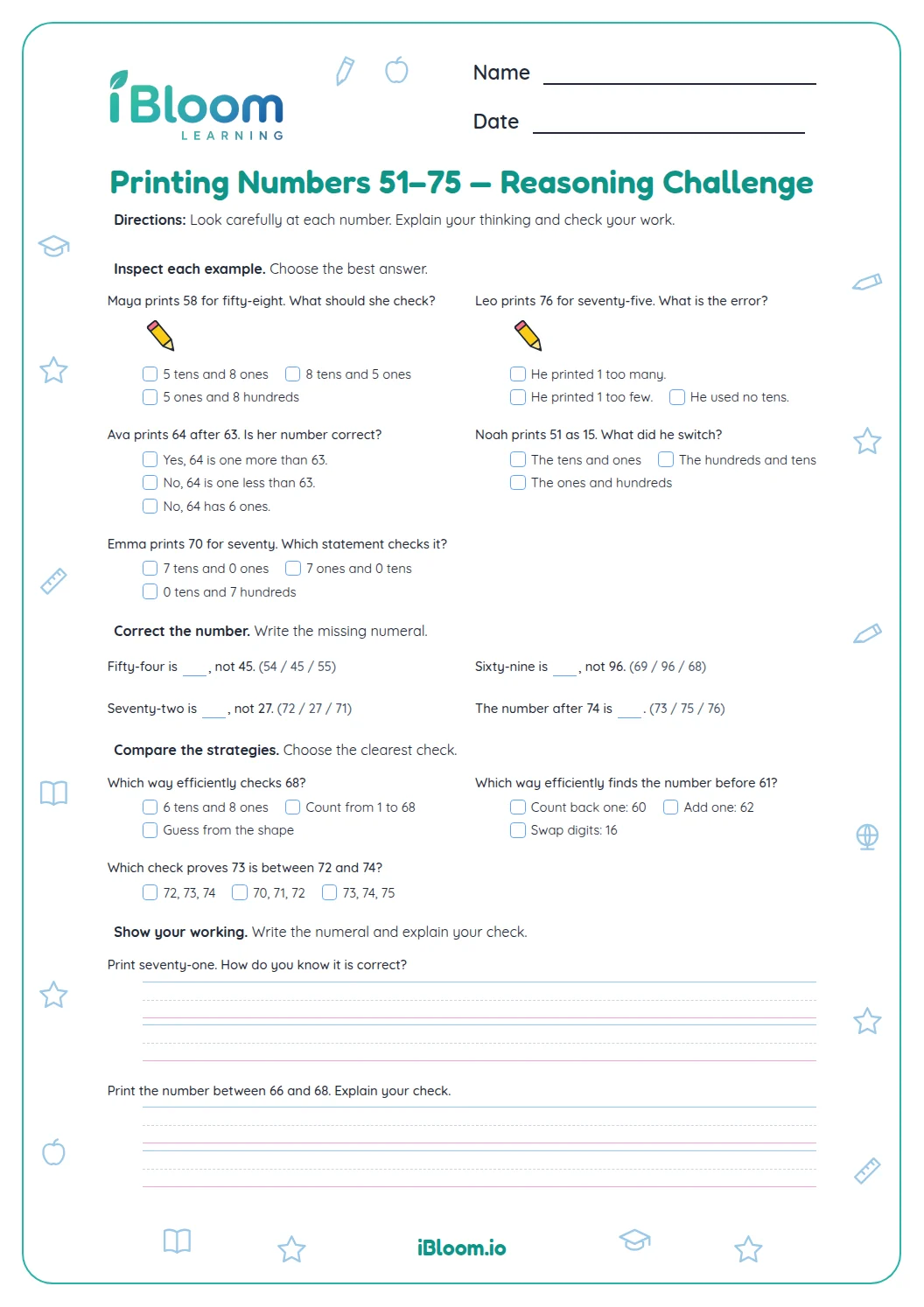
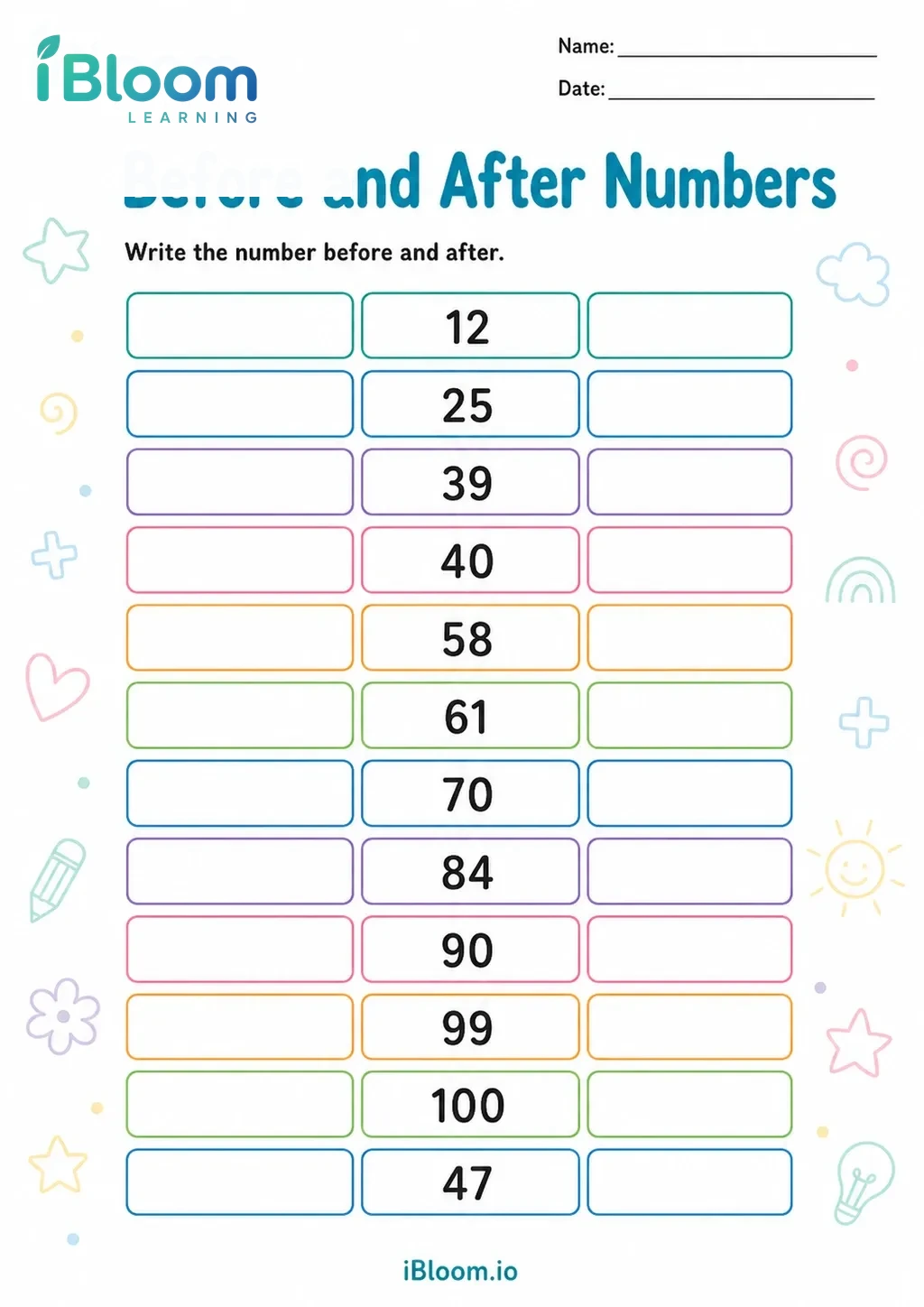
This Grade 1 printable practices reading and writing numerals from 51 through 75. Children fill short counting runs and read base-ten block models, connecting each numeral with its tens and ones. The 17 questions practice CCSS 1.NBT.A.1, with a separate answer key for checking.
Aligned to 1.NBT.A.1
How do children fill a counting run?
Say the numbers in order and listen for the missing spot. In question 1, 51, ___, 53 counts by ones, so the missing numeral is 52.
- 151, ___, 53
- 2Count on: 51, 52, 53
- 3Write 52 in the blank.
How do the blocks connect to a numeral?
A long block stands for one ten and a small cube stands for one one. Question 10 has five tens and one one, which makes 51.
What is included in the printable?
There are 17 questions in two parts: nine counting runs and eight base-ten models. Together, the runs include every numeral from 51 through 75. A separate key gives the answers.
How can I use this page?
- 1Read the counting run aloud before filling the blank.
- 2For a block model, count tens first and ones second.
- 3Say the full number as you write it.
- 4Use the answer key to check each numeral.
Common mix-ups and helpful fixes
The mistake
Skip one number when counting.
The fix
Point to each printed numeral and count forward one step at a time.
The mistake
Read 6 tens as 6.
The fix
Count the tens by tens: 10, 20, 30, and so on.
The mistake
Write only the ones digit.
The fix
Say the tens and ones together before writing the two-digit numeral.
Common Core alignment
This sheet practices reading and writing numerals within the Grade 1 counting sequence.
Read and write numerals and represent quantities through 120.
On this sheet: Children read and write numerals from 51 through 75 and connect them to base-ten blocks.
Show the official wordingHide the official wording
Count to 120, starting at any number less than 120. In this range, read and write numerals and represent a number of objects with a written numeral.
What to practice next
Make more practice
Further reading
Questions parents and teachers ask
Which numbers are practiced?
The worksheet covers the full range from 51 through 75. The counting runs include every numeral in that range, and the block models give extra practice reading selected tens-and-ones combinations. Children can say each sequence aloud before filling the blank.
How should a child read the base-ten drawings?
Each long rod represents one ten, and each small cube represents one one. Count the rods by tens, then add the cubes. For example, five rods and one cube make 51. The model and numeral show the same quantity in two ways.
Does the sheet include an answer key?
Yes. The two-page answer key gives the missing numeral for each counting run and the number represented by each block model. Let the child finish the worksheet first, then use the key to check responses and revisit any counting or place-value mix-ups.
What does 1.NBT.A.1 mean here?
The Grade 1 standard asks children to count to 120 and read and write numerals in that range. This page focuses on 51 to 75 and links numerals to pictured quantities with base-ten blocks. The worksheet focuses on writing, not calculation.
How long might the practice take?
About 15 minutes is a reasonable estimate for these 17 short questions. Children may need extra time to count the blocks or say each number run aloud. The two parts can also be done in separate sittings, with the answer key used after each part.