





About this worksheet
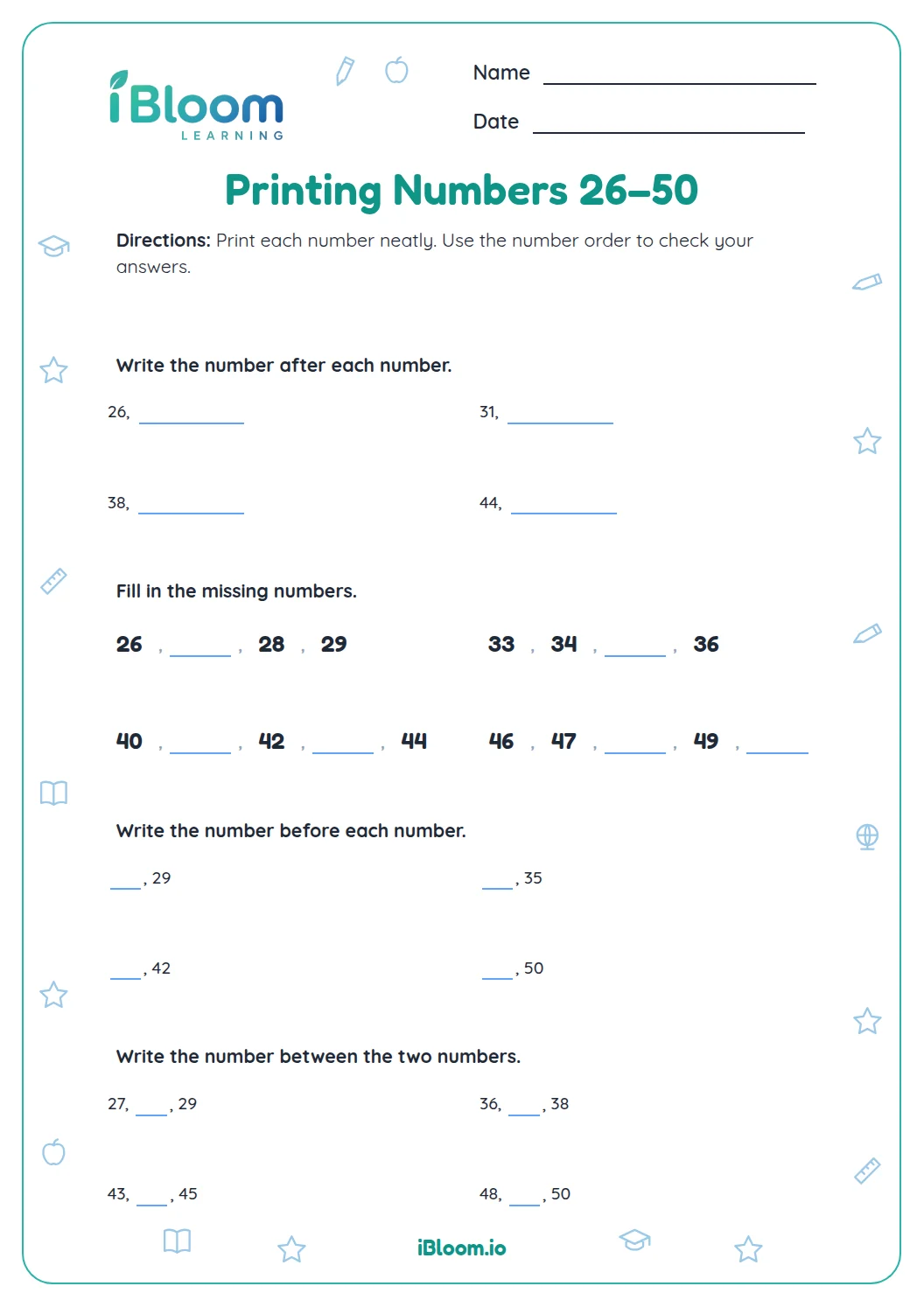
This Grade 1 worksheet gives guided practice reading and writing numbers from 26 through 50. Five counting rows cover the full range, followed by number-name and before-and-after questions. The sequence helps children connect spoken counting with written numerals and supports CCSS 1.NBT.A.1. There are 15 questions and a separate answer key, with hyphenated number names for clear US spelling.
Aligned to 1.NBT.A.1
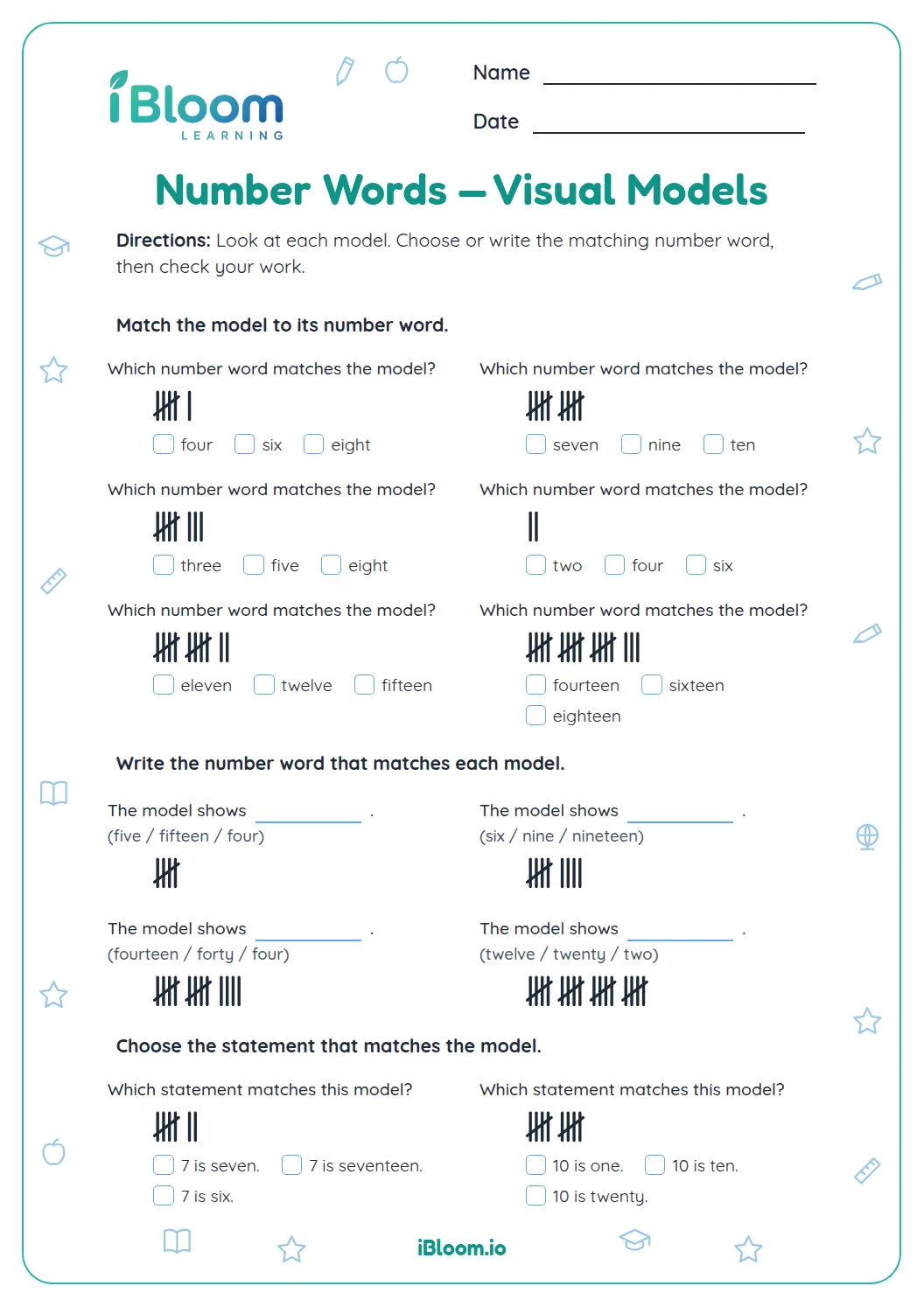
How do the numbers continue from 26 to 50?
The first part uses five short counting rows. Each row fills one missing numeral, and together the rows include every number from 26 through 50.
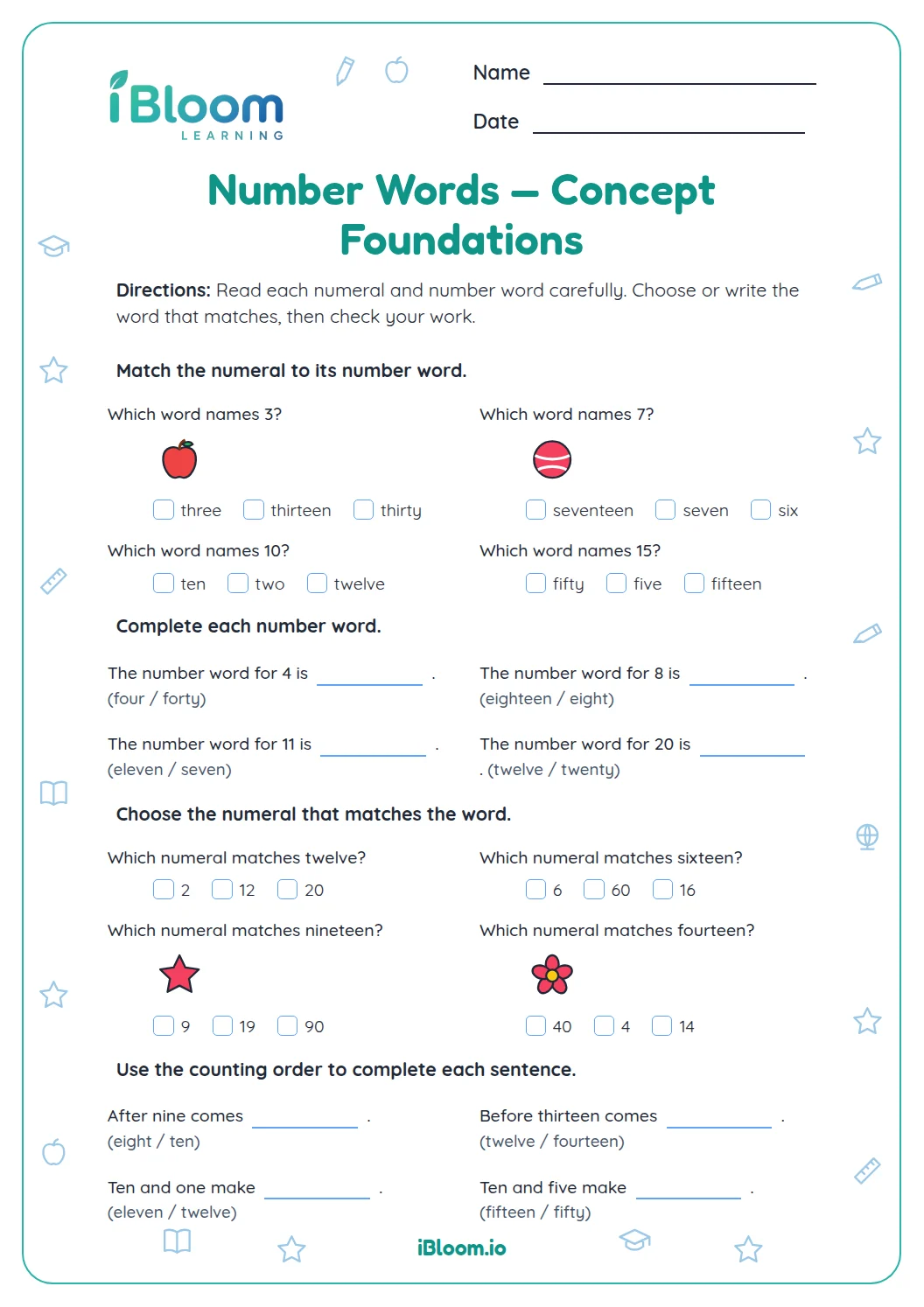
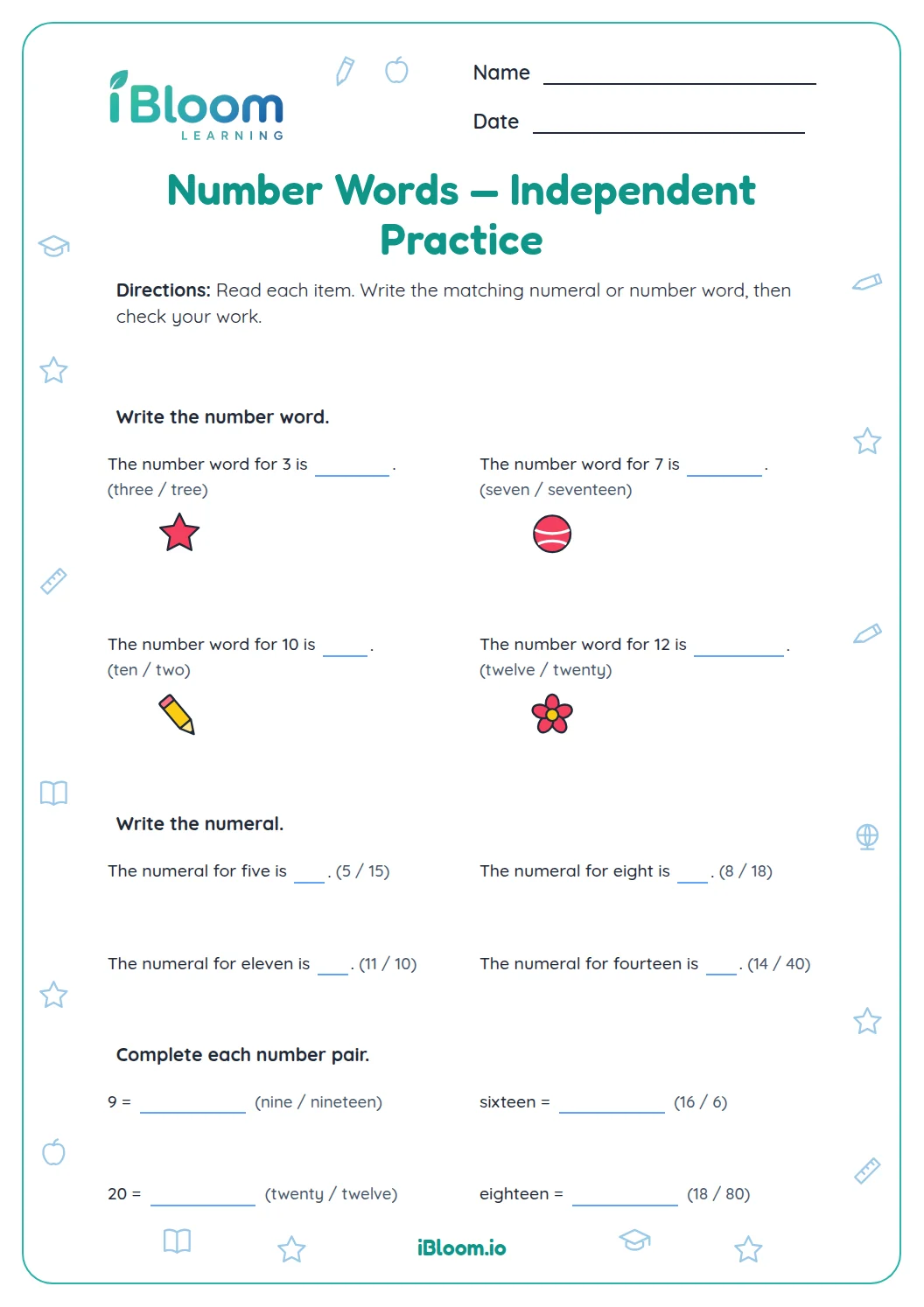
How do numerals connect with number names?
Students read selected numerals as words and turn number names back into numerals. Saying the number aloud can help keep the tens word and ones word in order.
- 1For 34, say “thirty-four,” then write the number name with a hyphen.
How can children check a written number?
Use the counting sequence to check before and after questions. Read the result aloud and see whether it fits between the neighboring numbers.
How to use this worksheet
- 1Count through each row from left to right.
- 2Write the numeral that belongs in the empty place.
- 3Say each selected number aloud before spelling its name.
- 4Turn the written number names into numerals in Part C.
- 5Check before-and-after answers by counting one step at a time.
Mistakes to watch for
The mistake
Reversing the tens and ones digits.
The fix
Say the tens word first, then write the ones digit.
The mistake
Leaving out the hyphen in a number name such as thirty-eight.
The fix
Use a hyphen in compound number names from twenty-one through ninety-nine.
The mistake
Skipping a number while filling a row.
The fix
Start at the left and say every number in order, including the given ones.
Common Core alignment
The questions build numeral reading and writing within the Grade 1 counting sequence.
Count from different starting numbers and read and write numerals.
On this sheet: Students count within the 26–50 range and read or write the numerals and number names.
Show the official wordingHide the official wording
Count to 120, starting at any number less than 120. In this range, read and write numerals and represent a number of objects with a written numeral.
What to practice next
Make more practice
Further reading
Questions parents and teachers ask
What number range does this page cover?
The worksheet practices every number from 26 through 50. Five counting rows span the full range, and the remaining questions add number-name writing and before-or-after practice. The printed row provides nearby numerals that help children check their count. It includes every numeral in that interval.
Why are there missing numbers in rows?
A row gives a short count sequence with one numeral missing. Filling the gap helps children connect the spoken count to the written numerals and notice how the sequence continues. Filling a single gap keeps attention on the count sequence rather than copying.
Should number names use hyphens?
Yes. Standard US spelling uses a hyphen for compound number names such as twenty-six, thirty-four, and forty-nine. The answer key uses this format. The key models these spellings for the selected numerals on this page. The examples on the page follow that spelling pattern.
What if a child reverses the digits?
Have the child say the number name, identify the tens amount first, then write the ones digit. For example, forty-two has four tens and two ones, so it is written 42. Say the tens first and then the ones to keep the written digits in order.
How can I check the before-and-after answers?
Say the nearby counting sequence aloud. For a number before 37, count up to 37 and name the number just before it; for a number after 45, continue one count. Counting one step at a time makes the neighbor relationship easy to verify.
What can we practice next?
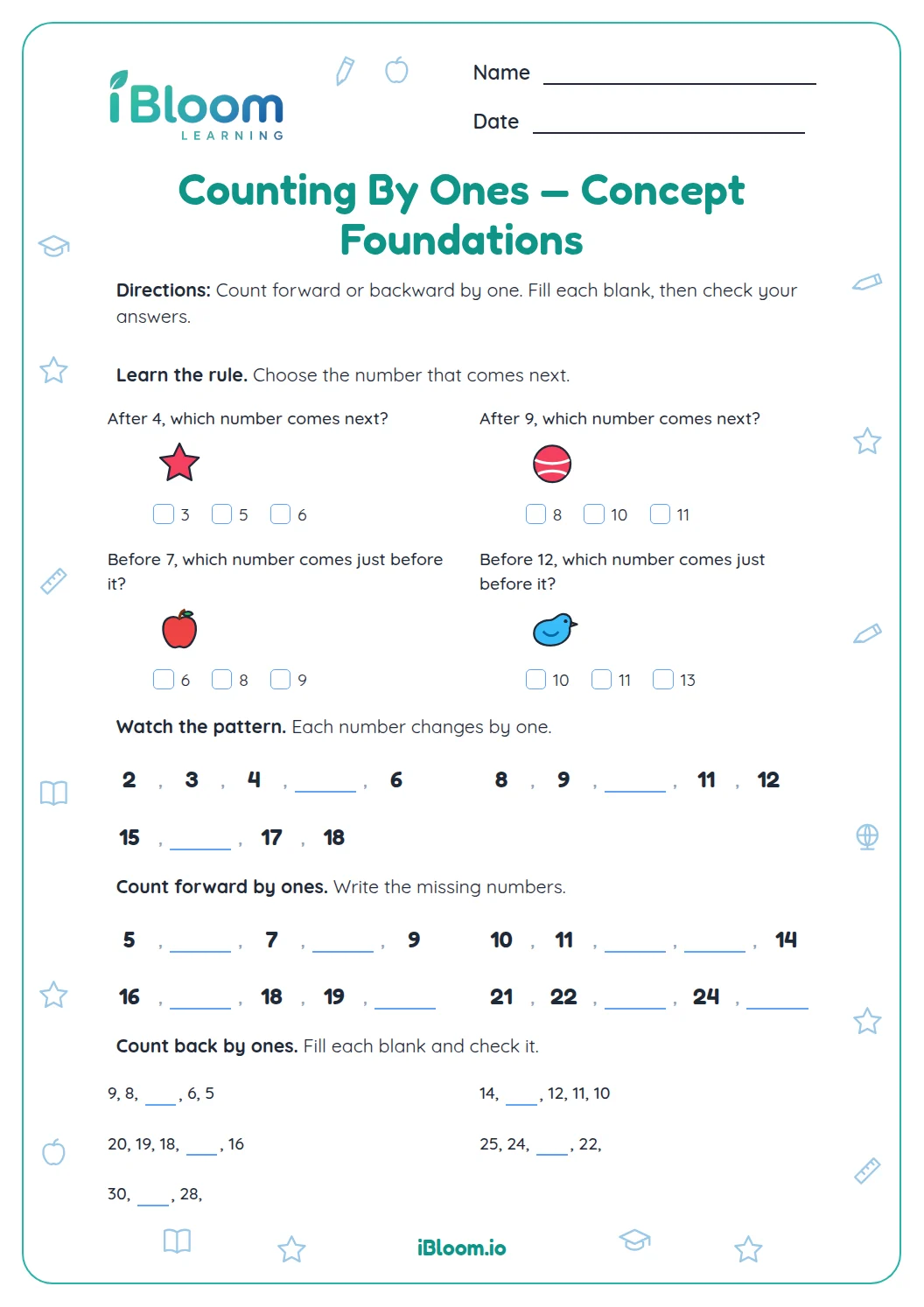
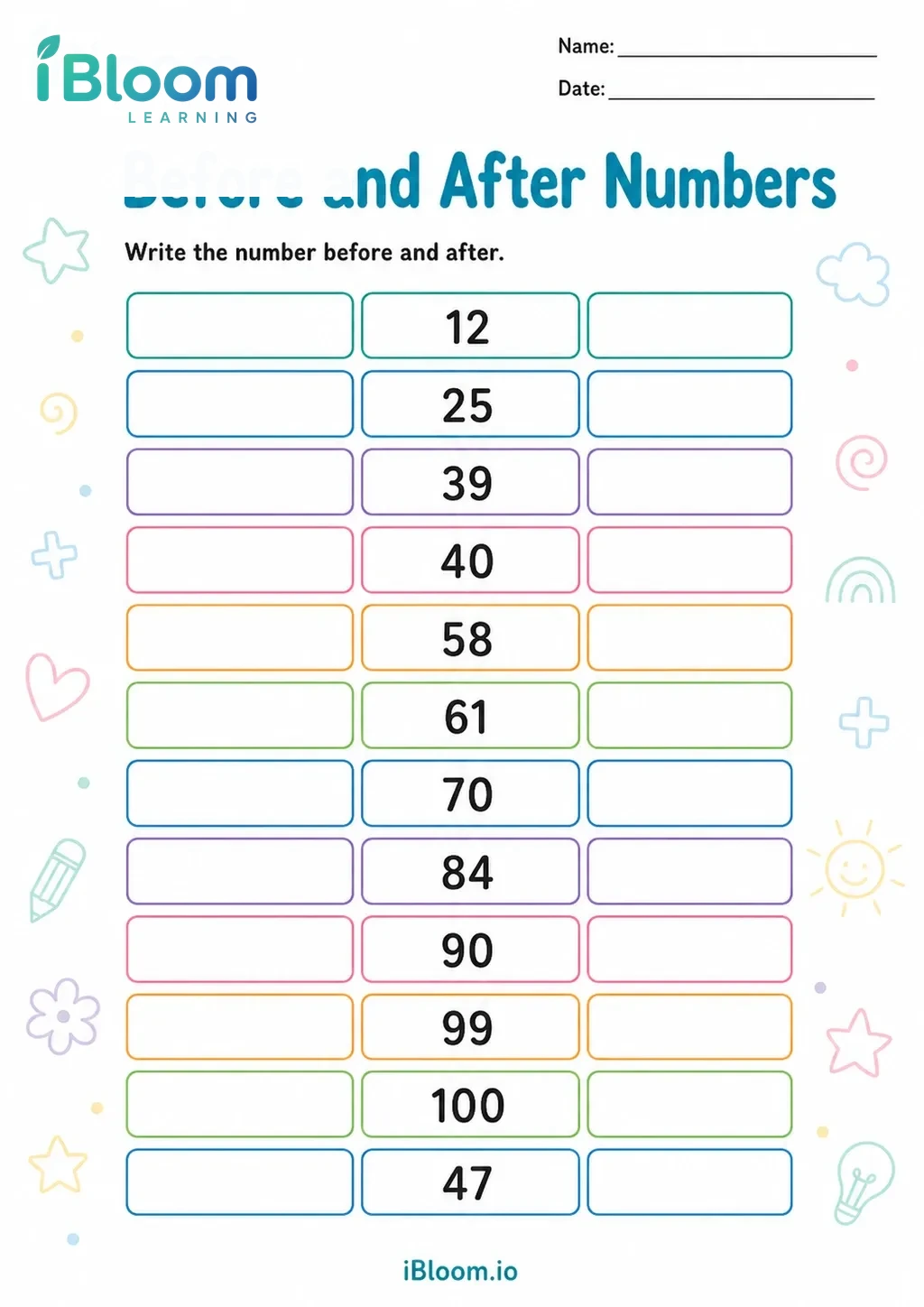
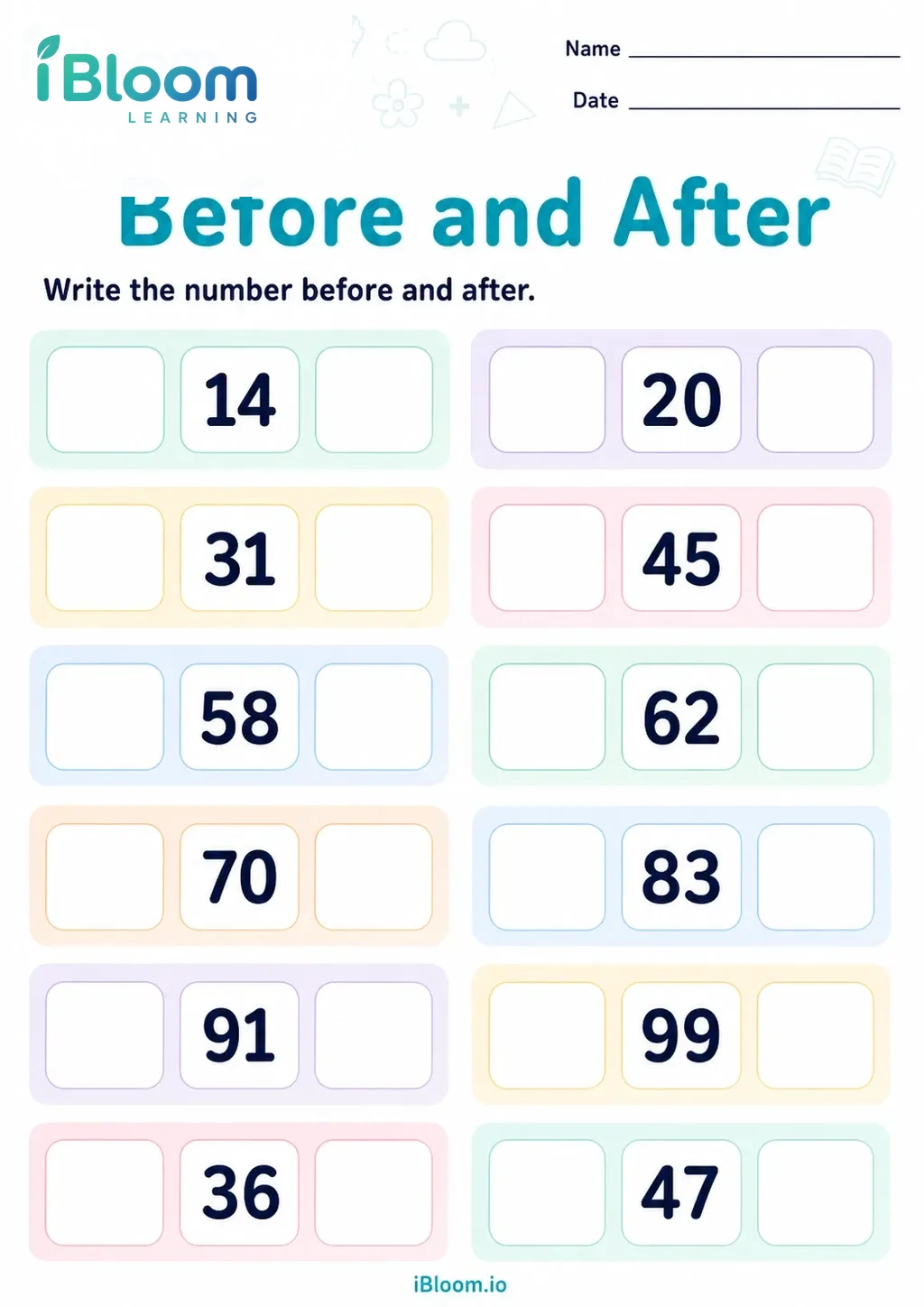
Counting By Ones and Counting Before After extend the same sequence skill. The number-word worksheets offer more practice connecting spoken numbers with written numerals. Both options let students continue with numerals across familiar counting ranges. These links give students another way to practice the same sequence.