
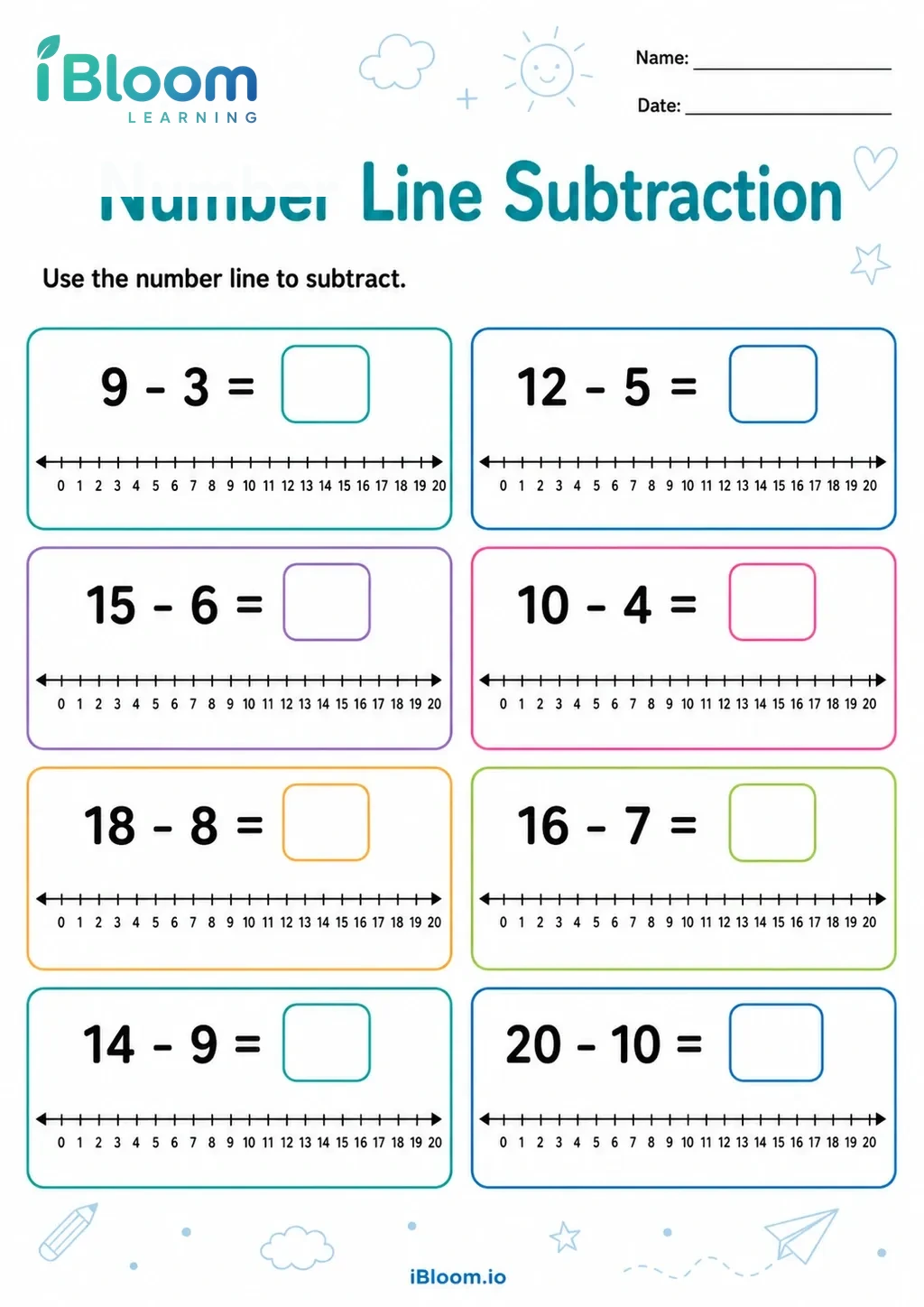
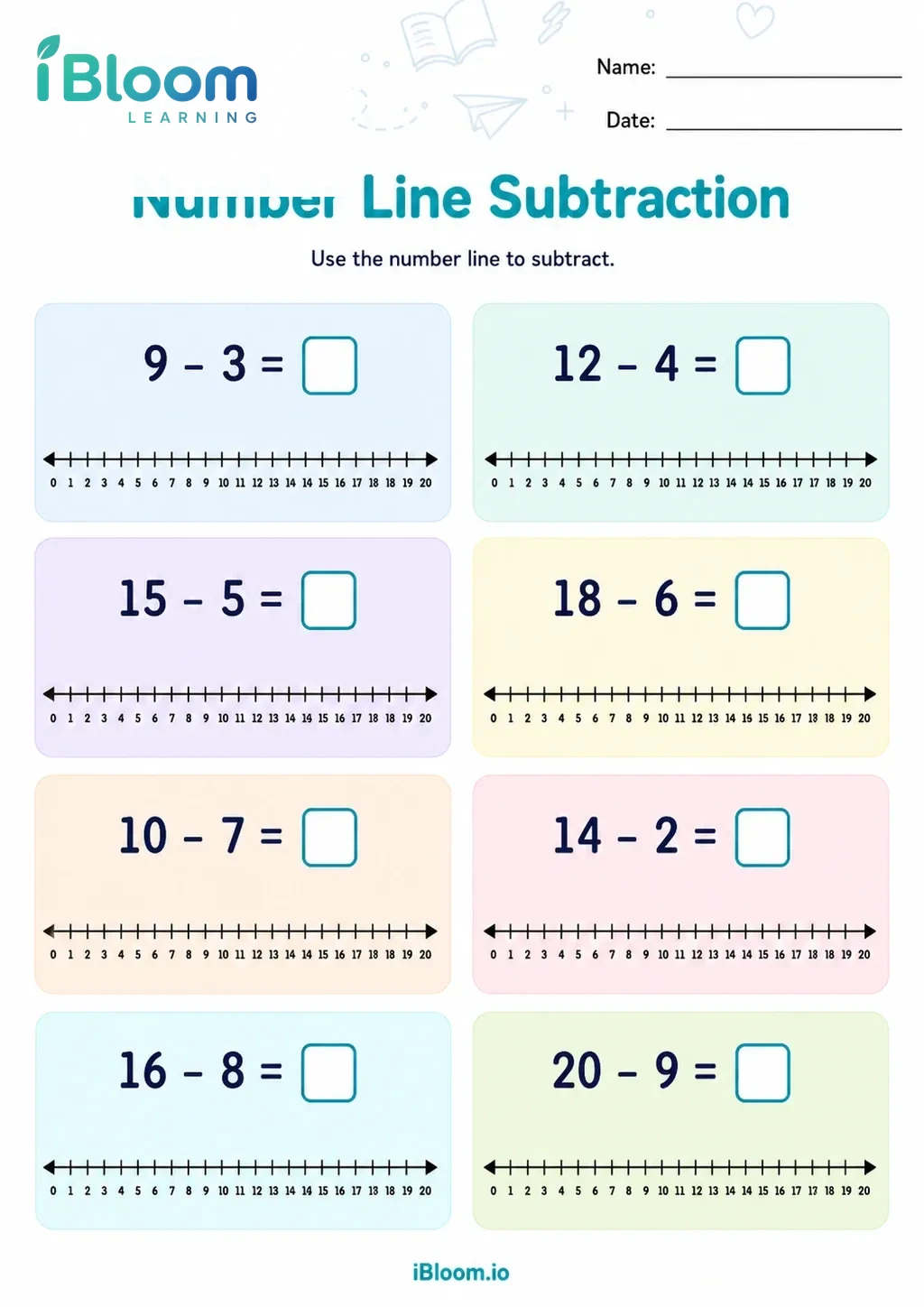
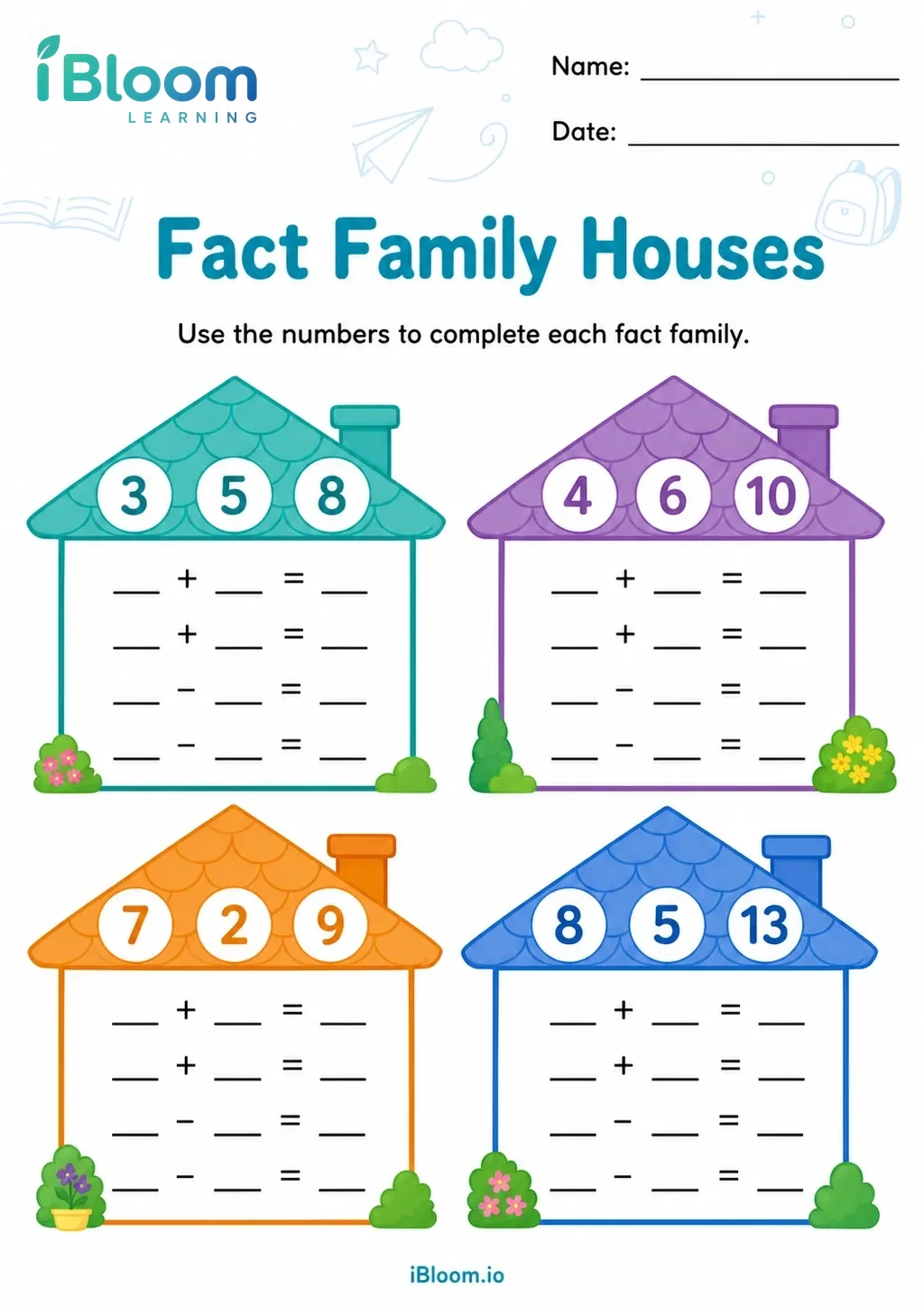
About this worksheet
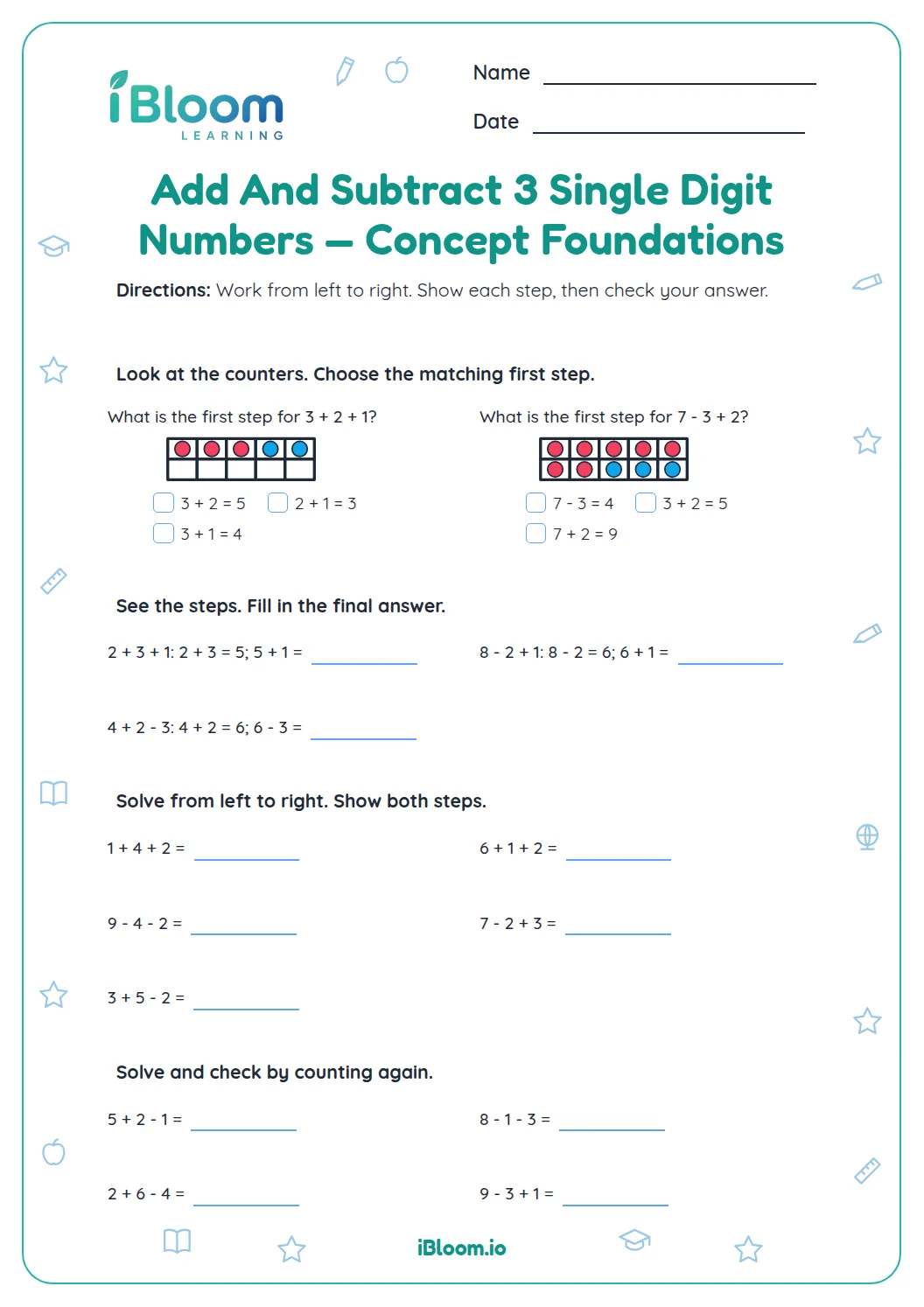
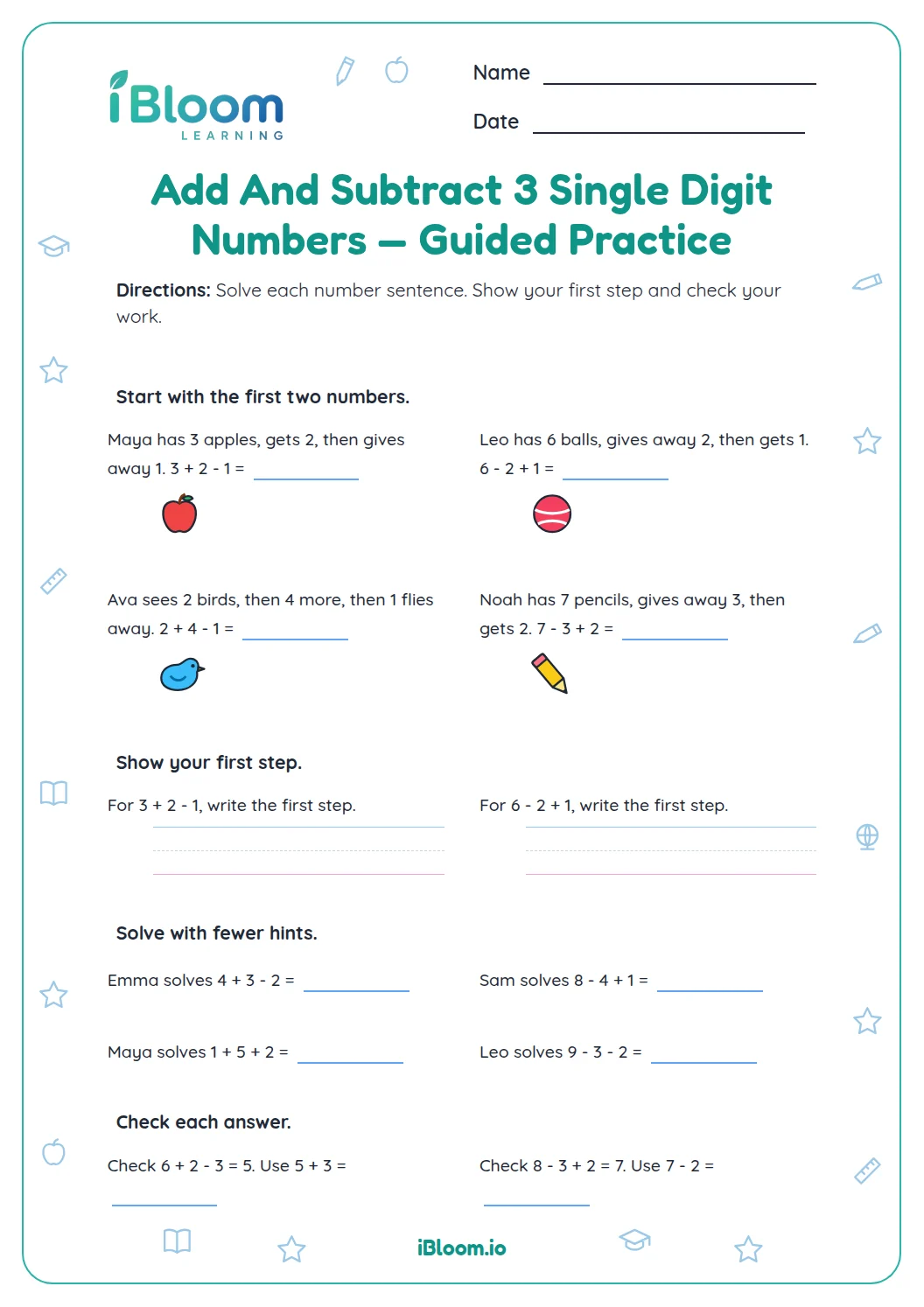
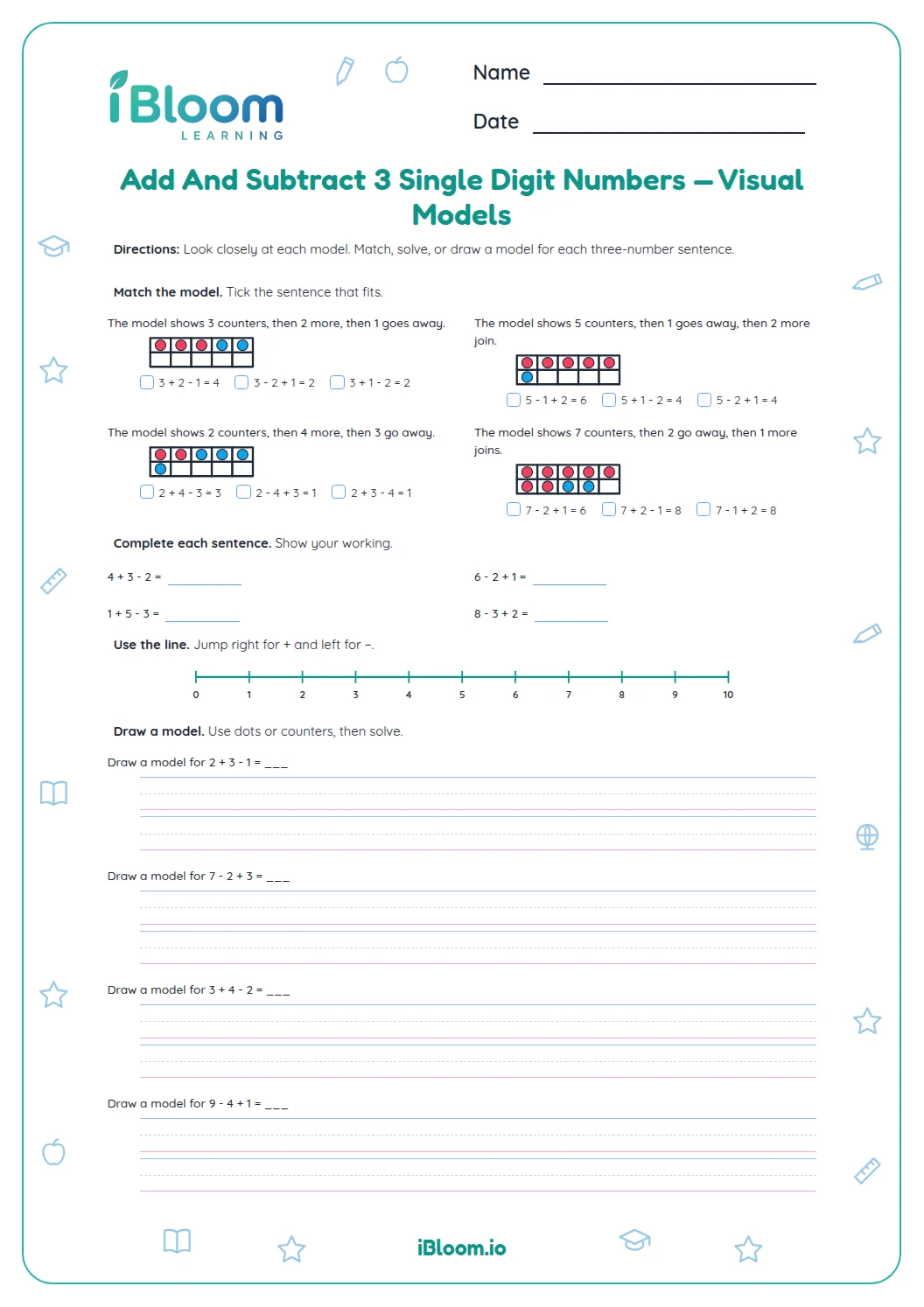
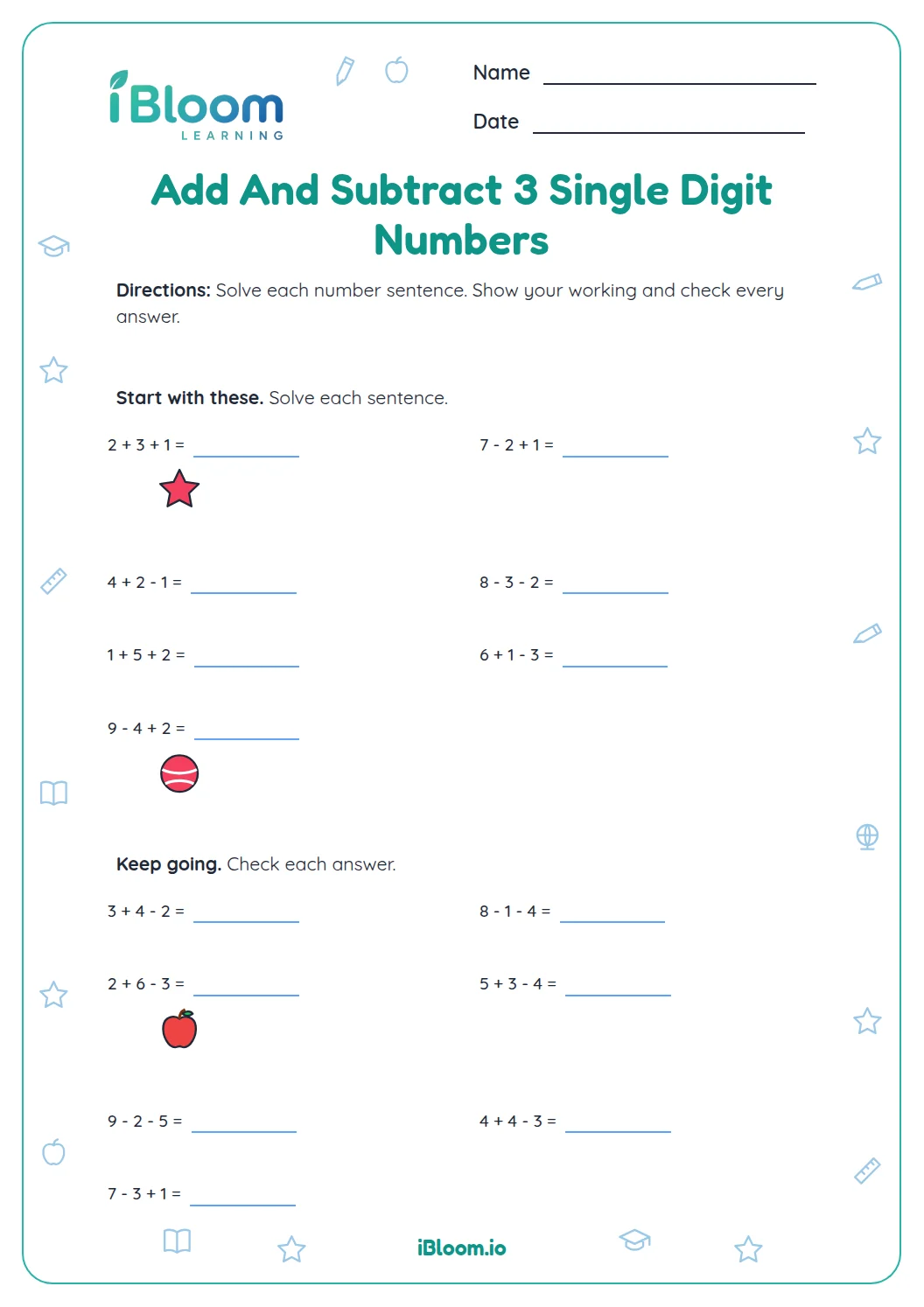
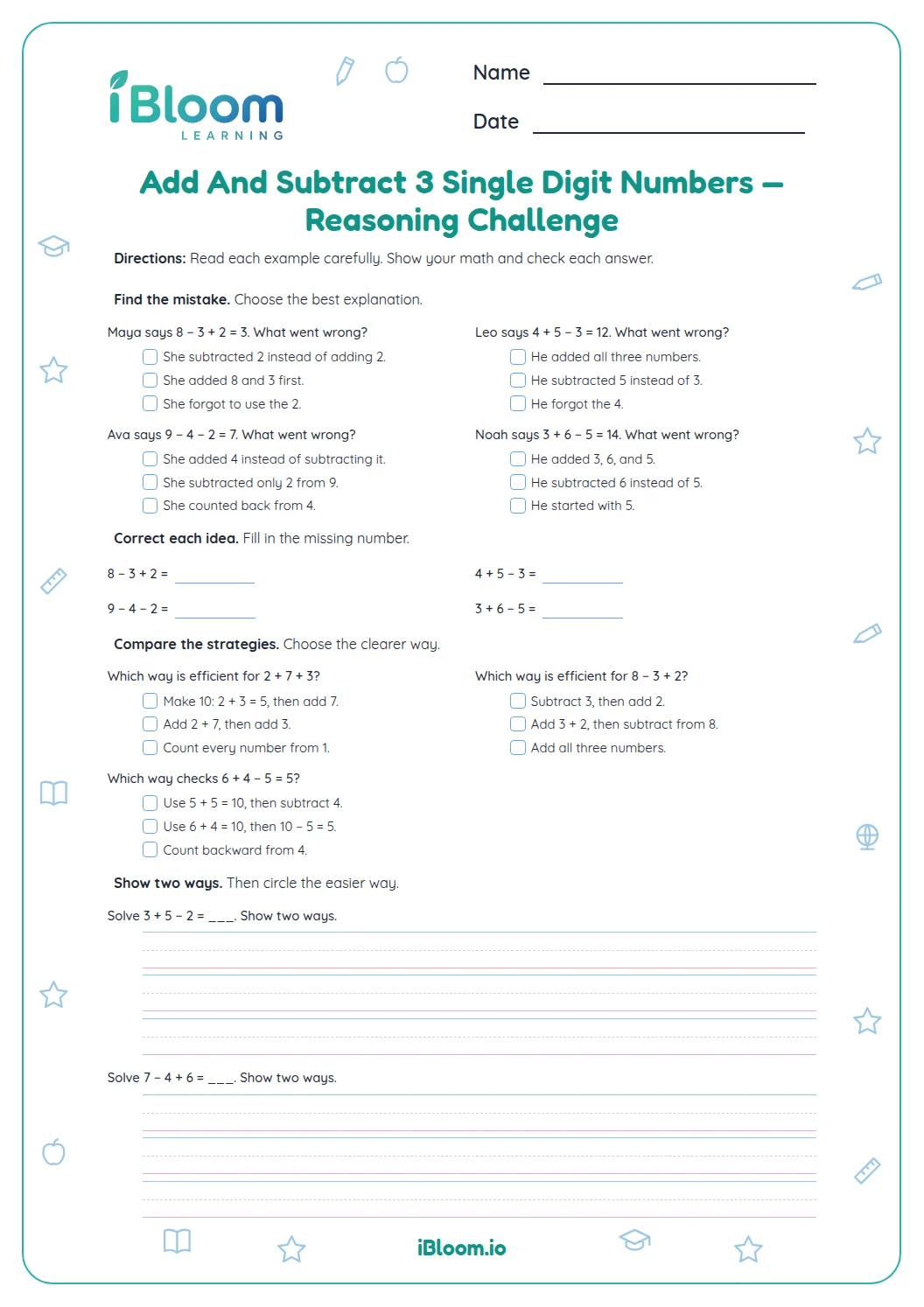
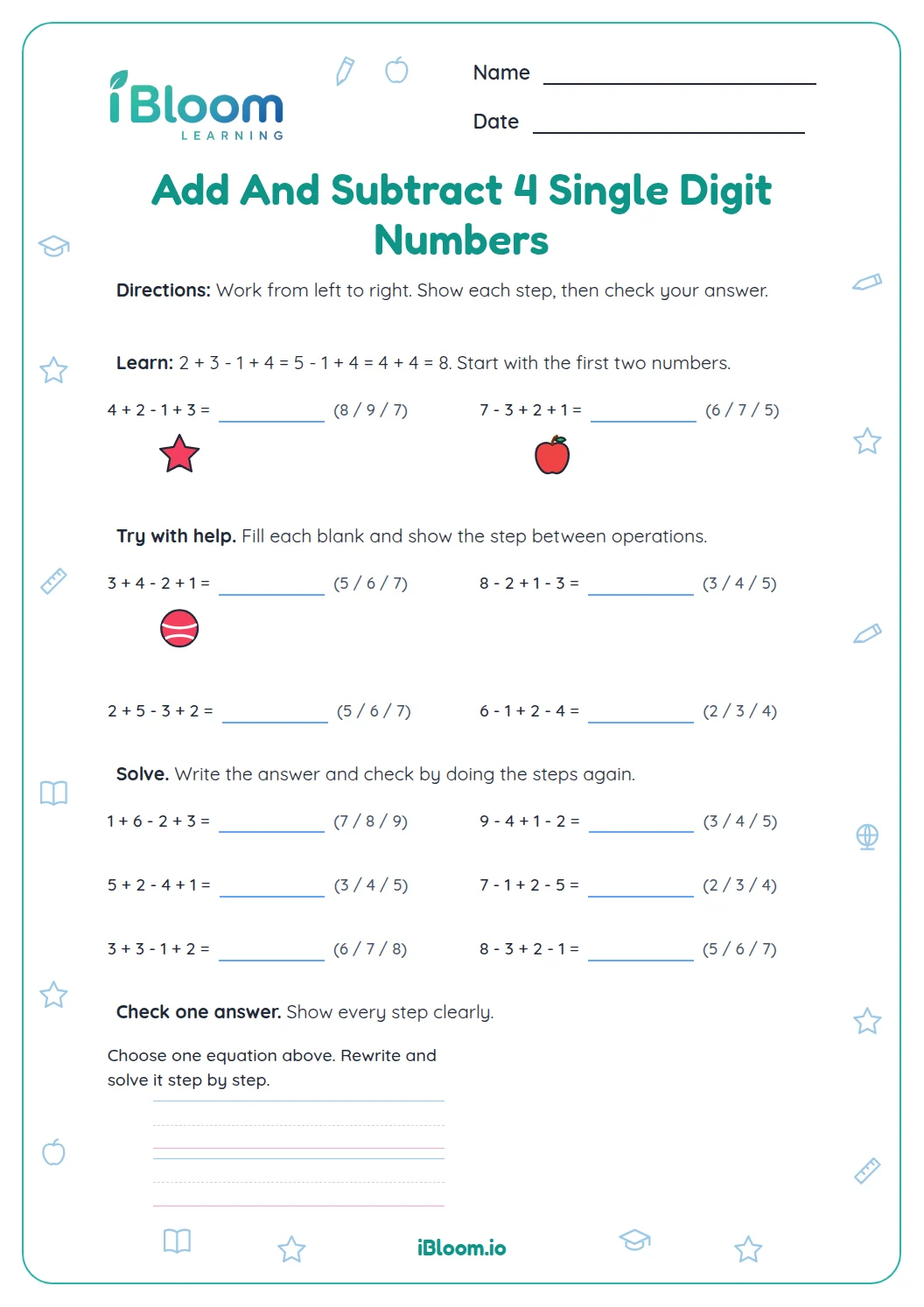
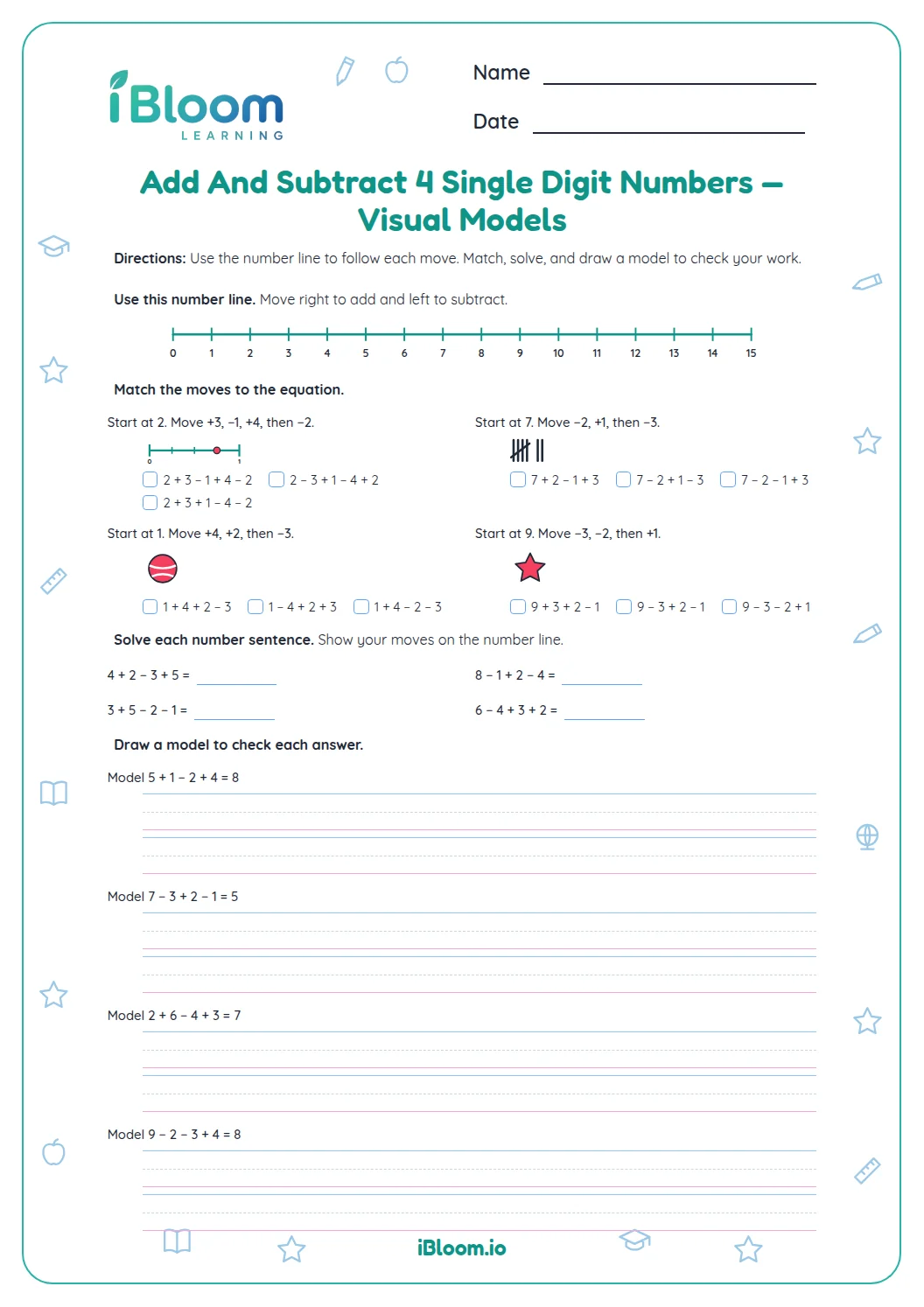
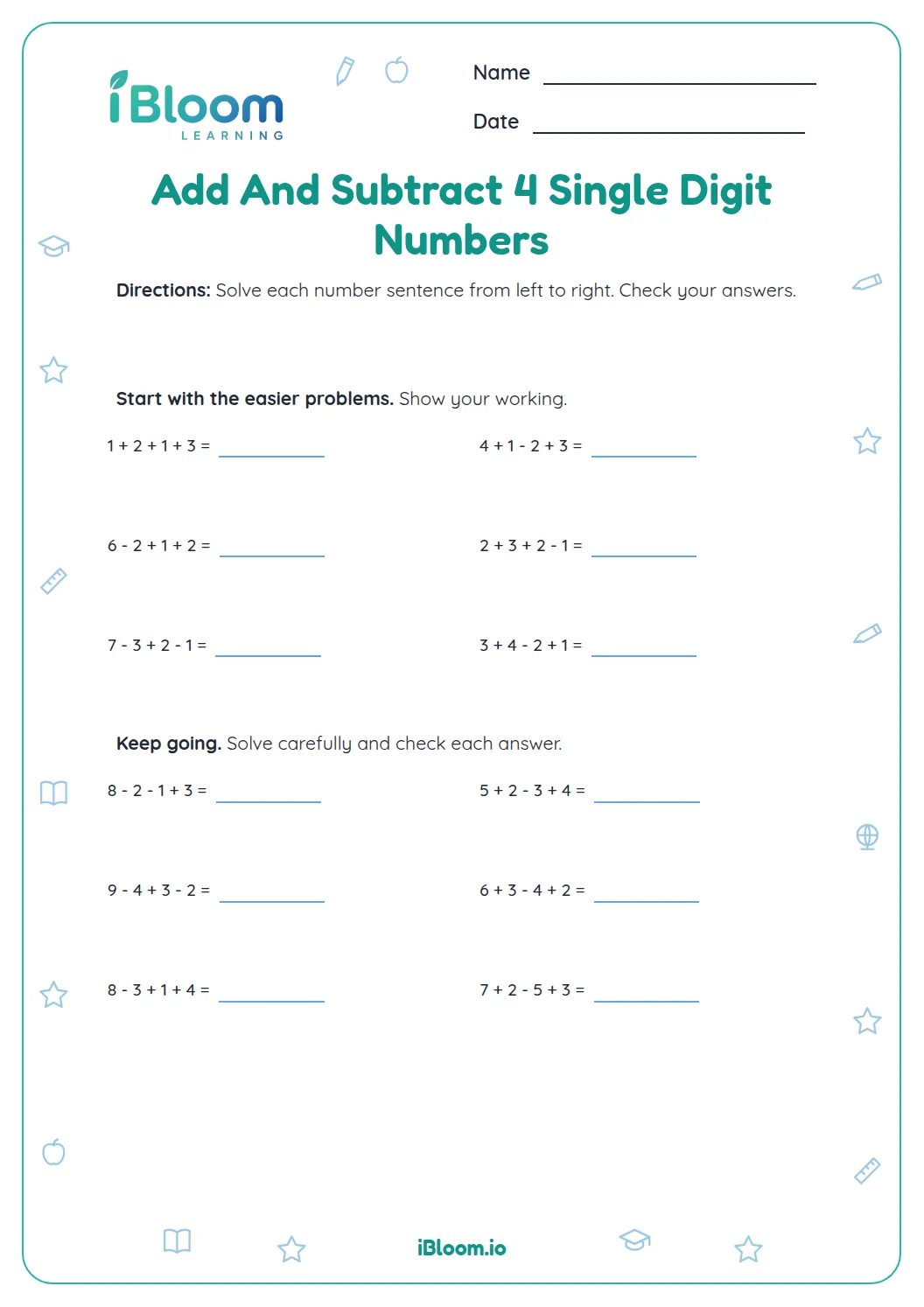
This free printable Grade 1 worksheet practices solve stories with three single-digit numbers and addition or subtraction. It has 16 questions across 4 worksheet pages, with a separate answer key. Use three-number stories about toys, food, animals, and classroom objects to decide when to add or subtract.
Aligned to 1.OA.A.1
How do you choose the operations in a story?
Notice what happens to the amount. Getting more means add; giving away or taking some means subtract. Keep the actions in the order they occur.
- 14 red beads + 3 blue beads + 2 green beads
- 24 + 3 + 2 = 9 beads
What if a story changes direction?
Some stories add first and subtract later, or subtract before adding. Update the amount after each action. For 9 birds, 3 fly away and 2 return: 9 − 3 + 2 = 8.
How can you check a story answer?
Write the number sentence in the same order as the story. Check that the answer is reasonable and name the object being counted.
How to work through this sheet
- 1Read the story and identify the starting amount.
- 2Mark each action as more or fewer.
- 3Write the operations in the order the actions happen.
- 4Solve one step at a time and write the object name.
- 5Use the key to check both the number and the story meaning.
Common mistakes and quick fixes
The mistake
Adding when the story says some are given away.
The fix
Giving away means the amount gets smaller, so subtract.
The mistake
Changing the order of the actions.
The fix
Write each operation in the order it appears in the story.
The mistake
Giving a number with no label.
The fix
Add the object name, such as 8 birds or 5 balloons.
Common Core alignment
This worksheet gives practice with the listed Common Core skill.
Solve addition and subtraction story problems within 20.
On this sheet: Each short story is represented by an addition or subtraction equation.
Show the official wordingHide the official wording
Use addition and subtraction within 20 to solve word problems involving situations of adding to, taking from, putting together, taking apart, and comparing, with unknowns in all positions, e.g., by using objects, drawings, and equations with a symbol for the unknown number to represent the problem.
What to practice next
Make more practice
Further reading
Questions parents and teachers ask
What does “three single-digit numbers” mean here?
Each story uses three one-digit amounts in its number sentence. Children may need to add all three or add and subtract as events happen. For example, the bead story combines 4 red, 3 blue, and 2 green beads. Children can write 4 + 3 + 2 and find 9 beads altogether.
How should a child decide whether to add or subtract?
Look at what happens to the group. Getting more or returning items increases it; giving away, eating, or taking items away decreases it. Getting an item back increases the group, while giving it away decreases the group. The story’s action words help children choose the operation at each step.
Why does the order of the story matter?
The amount changes after each action. For example, with 9 birds, 3 fly away and then 2 return: 9 − 3 + 2 = 8. Question 2 first subtracts 3 birds from 9, then adds the 2 that return. Keeping the actions in order gives 8 birds.
Should children write the object name too?
Yes. Each story asks how many of something remain or are there, so writing “8 birds” or “5 balloons” connects the answer to the situation. The answer should match what the story counts. A number sentence and a label make the result easier to check against the situation.
How many stories are on the worksheet?
There are 16 story problems on four worksheet pages, with a separate four-page answer key. The stories use small whole-number amounts appropriate for Grade 1 addition and subtraction practice. The questions use short stories about objects, animals, and food. The answer key gives each result so an adult can review the operation and final amount.