

About this worksheet
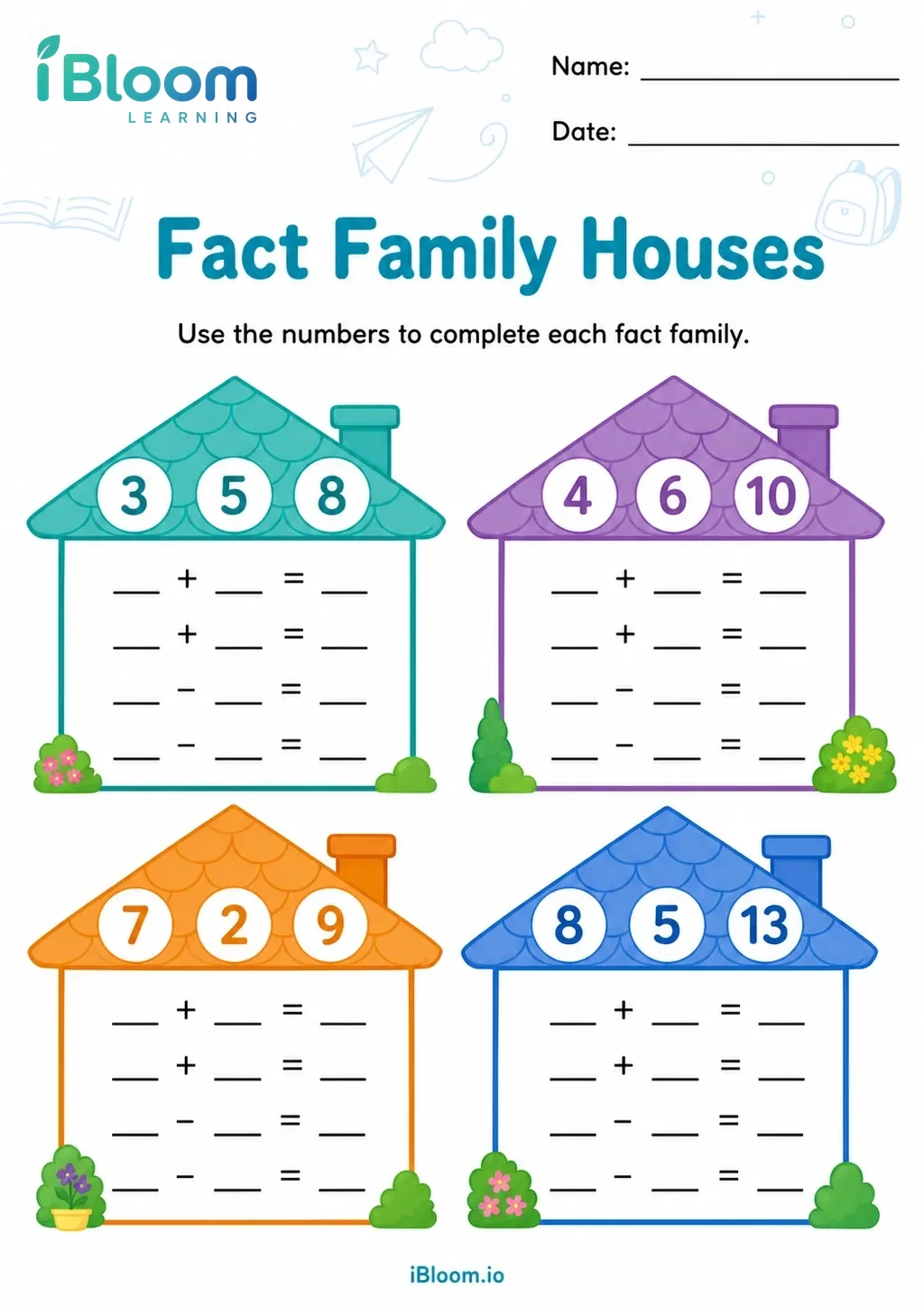
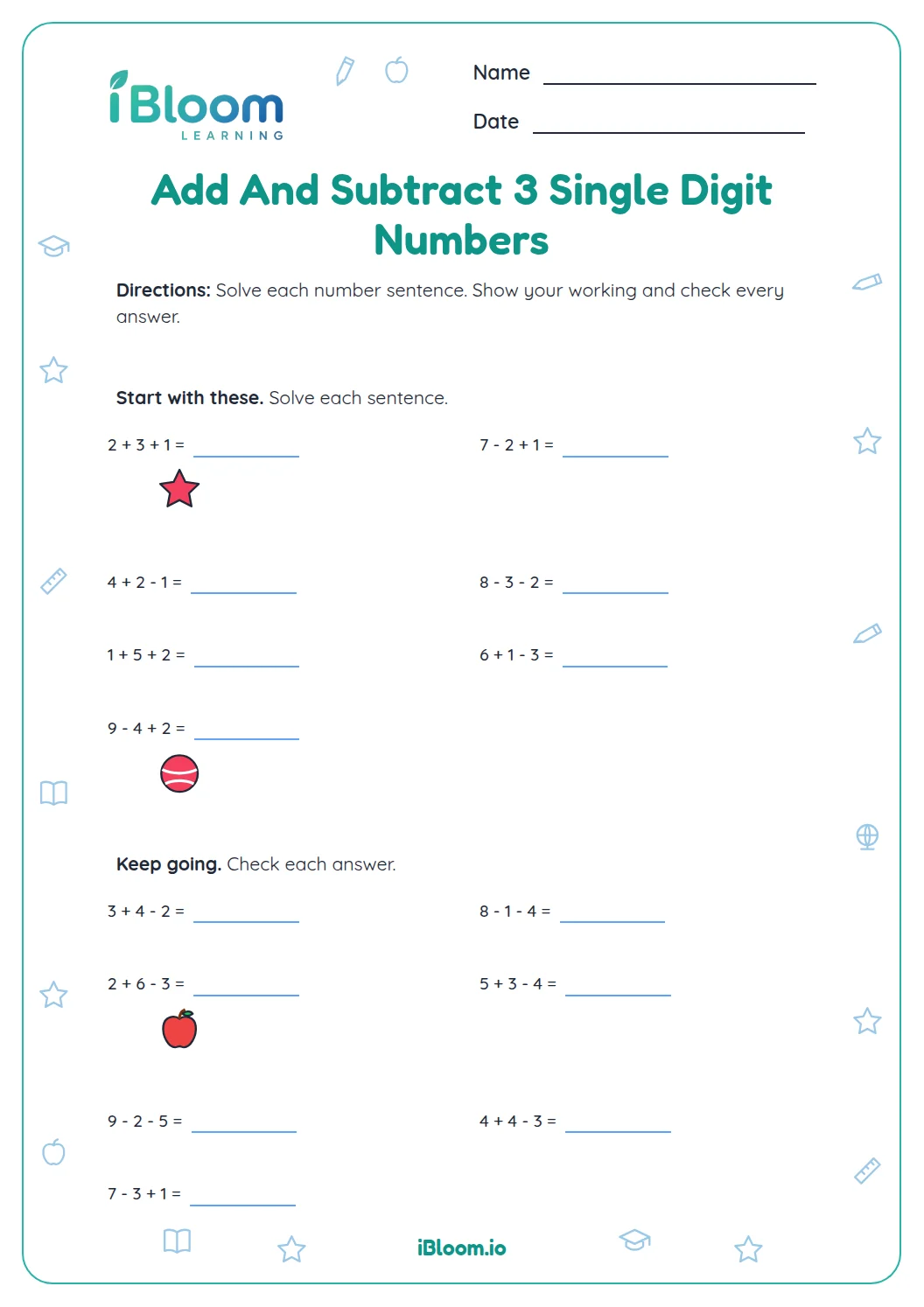
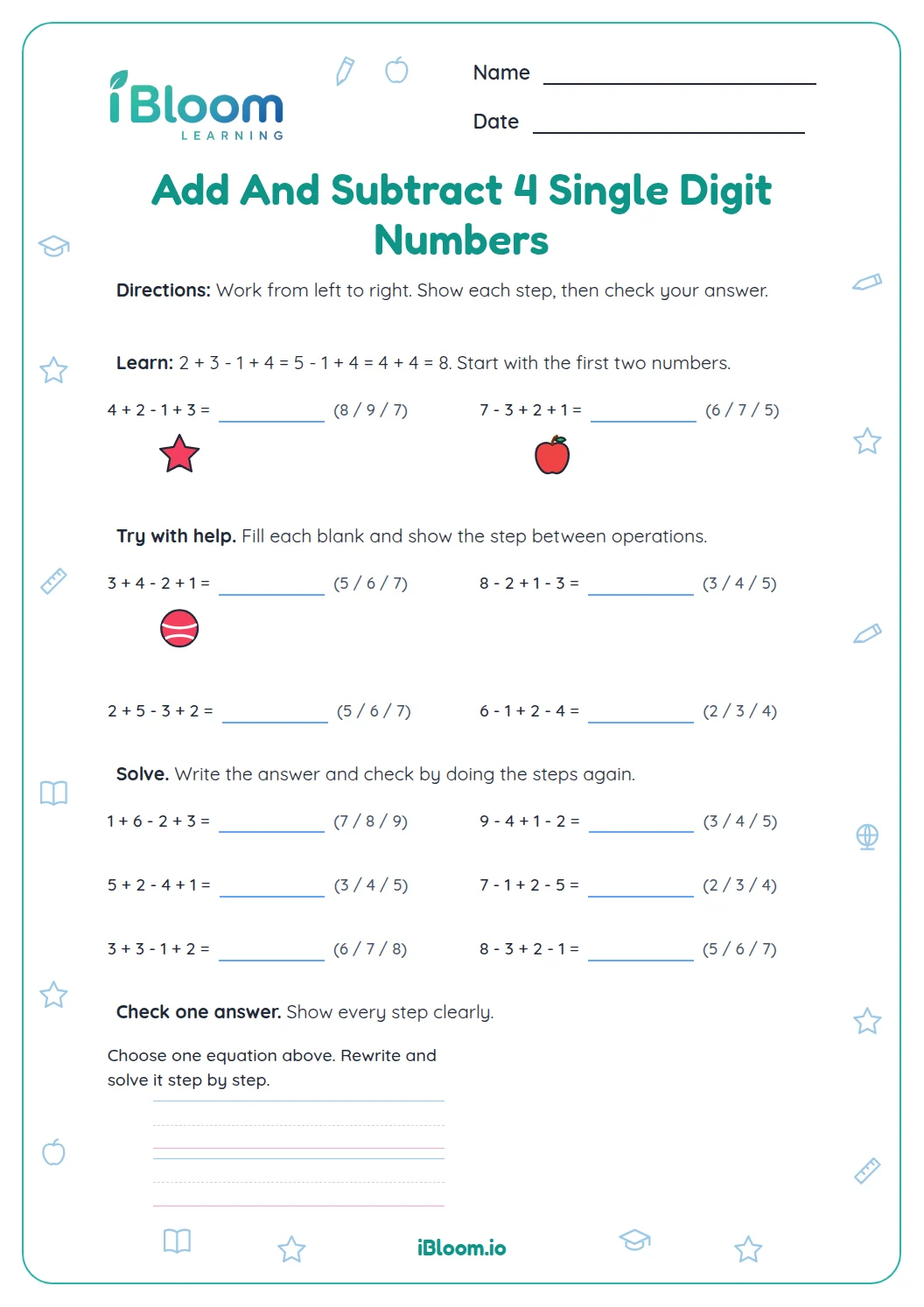
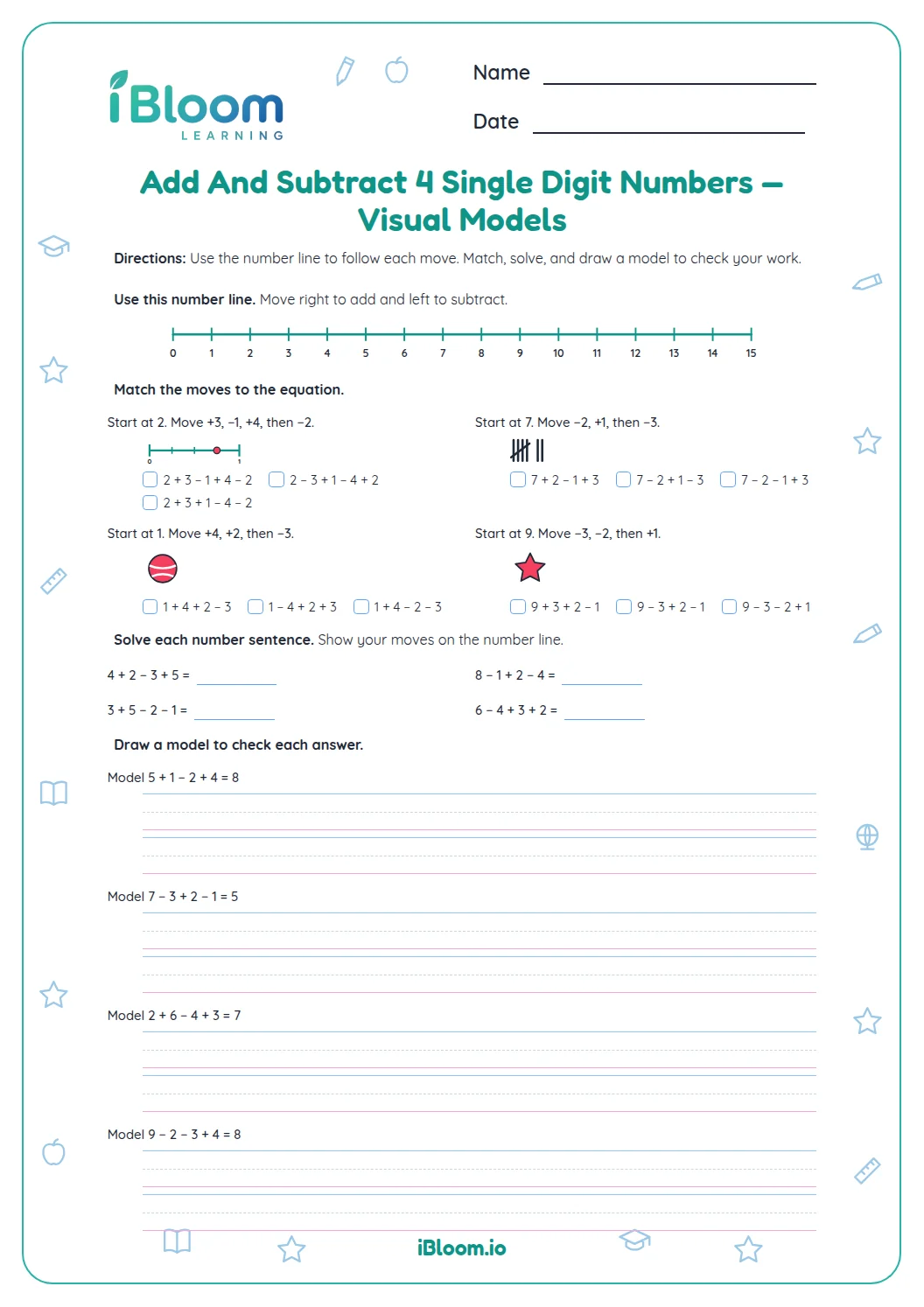
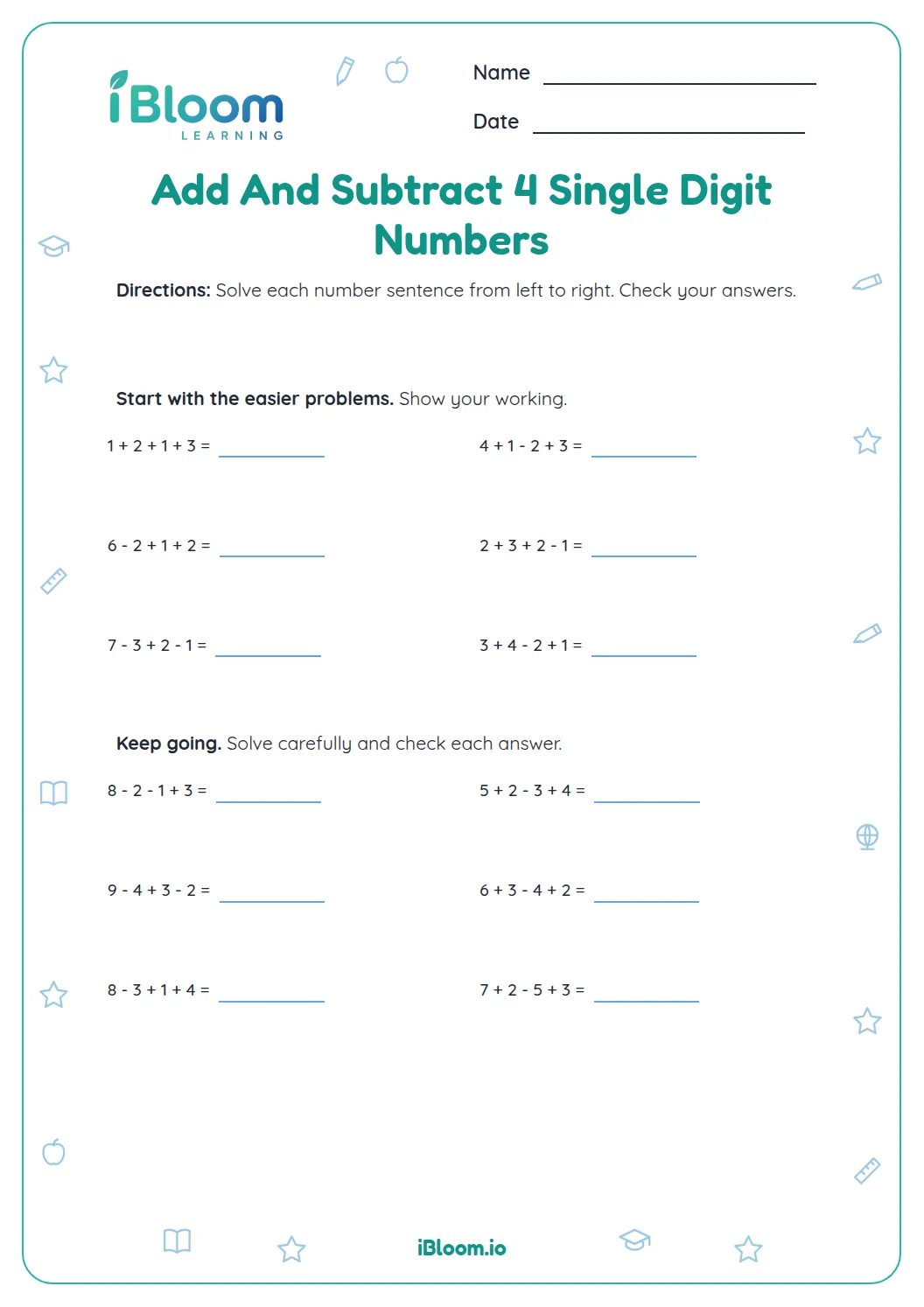
This Grade 1 printable uses number bonds to connect a whole with its two parts. Children find missing parts, then complete addition and subtraction equations using the same numbers. The 16 questions stay within 10 and include a separate answer key for checking the related facts.
How can a child get started with addition and subtraction fact families?
A number bond shows how two parts make a whole. In the first drawing, 5 is the whole and 2 is one part, so the missing part is 3: 2 + 3 = 5. The later equations use those same relationships.
- 1Whole 5; part 2; missing part ___
- 2Answer: 3, because 2 + 3 = 5.
How does the practice build?
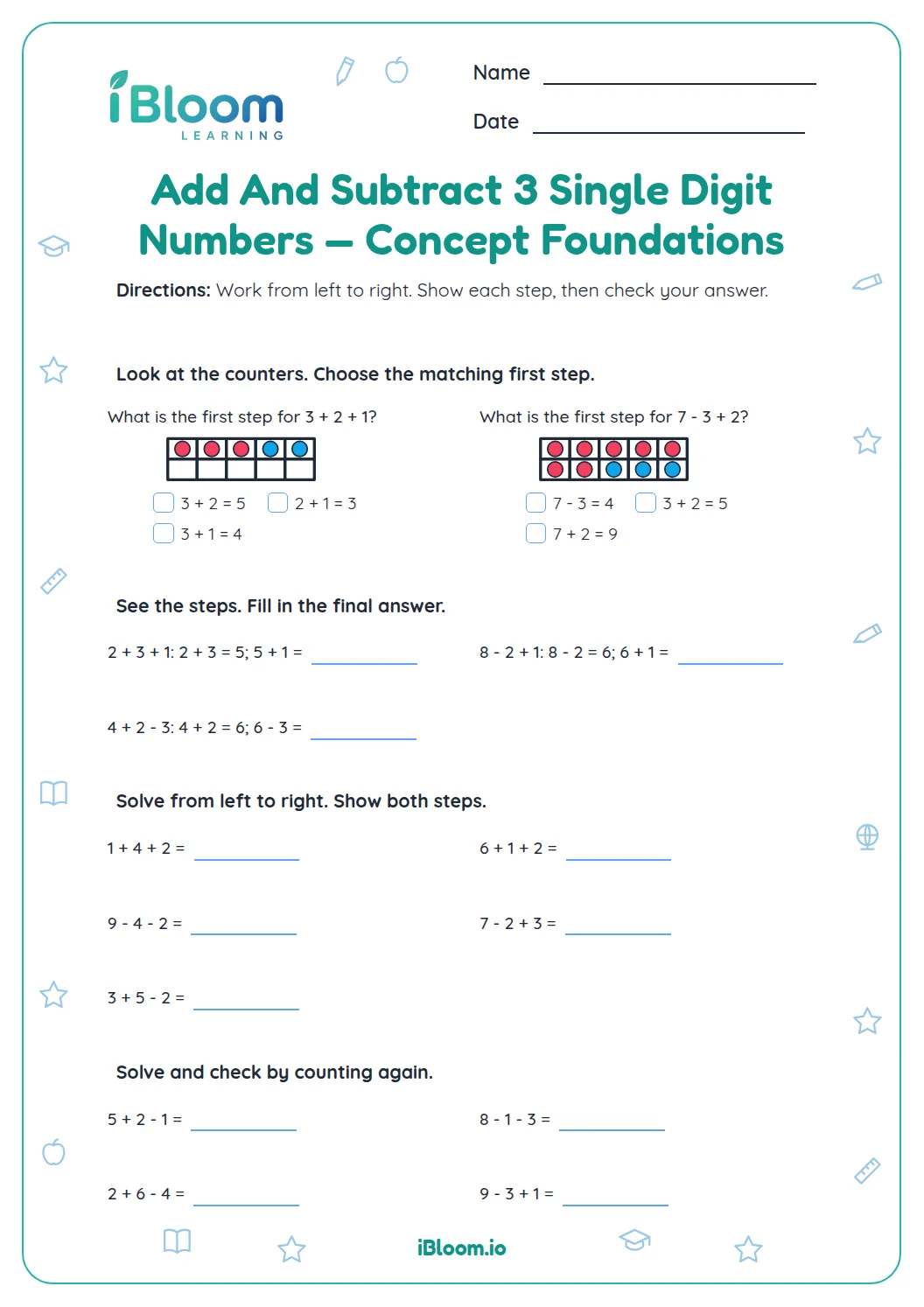
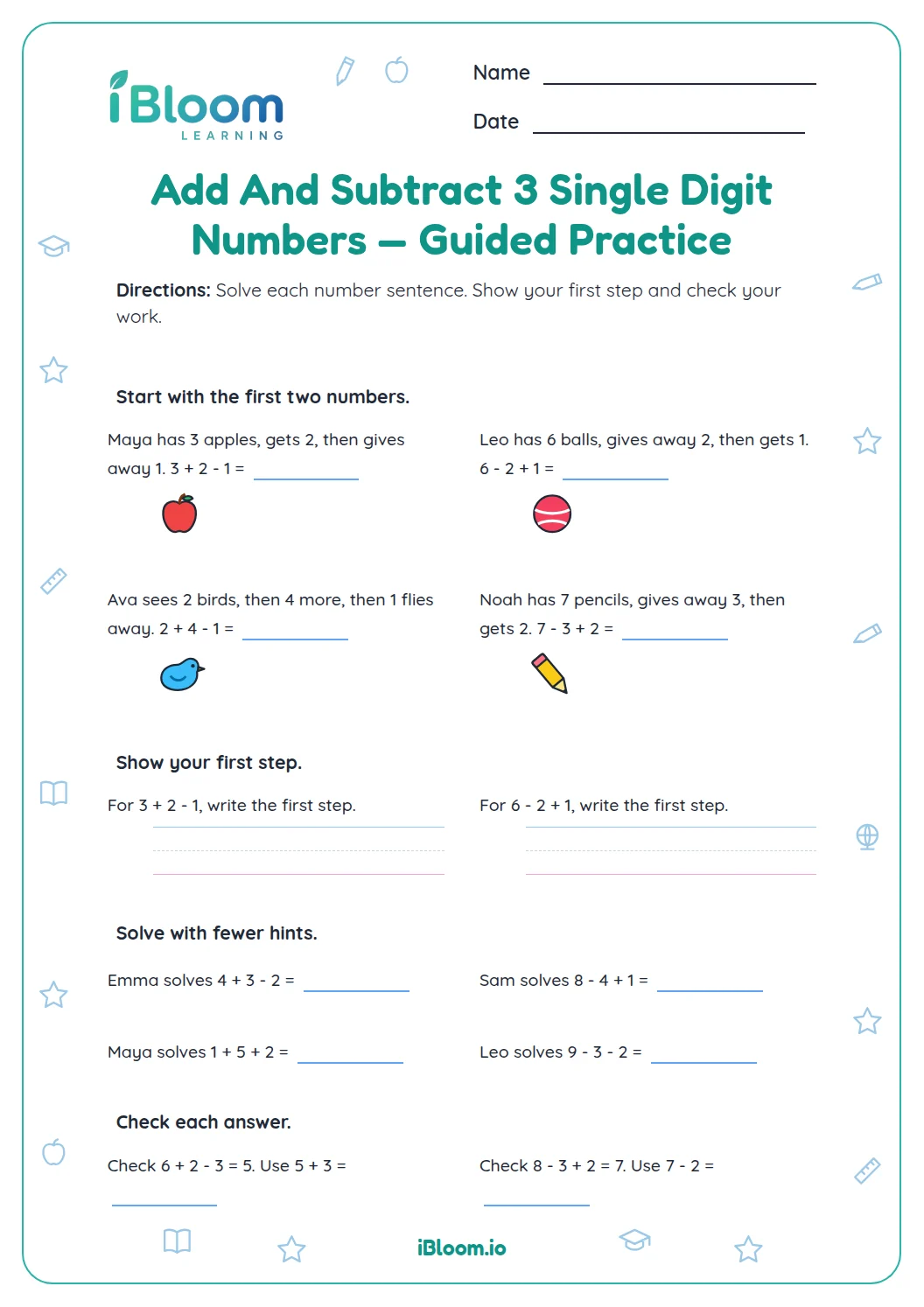
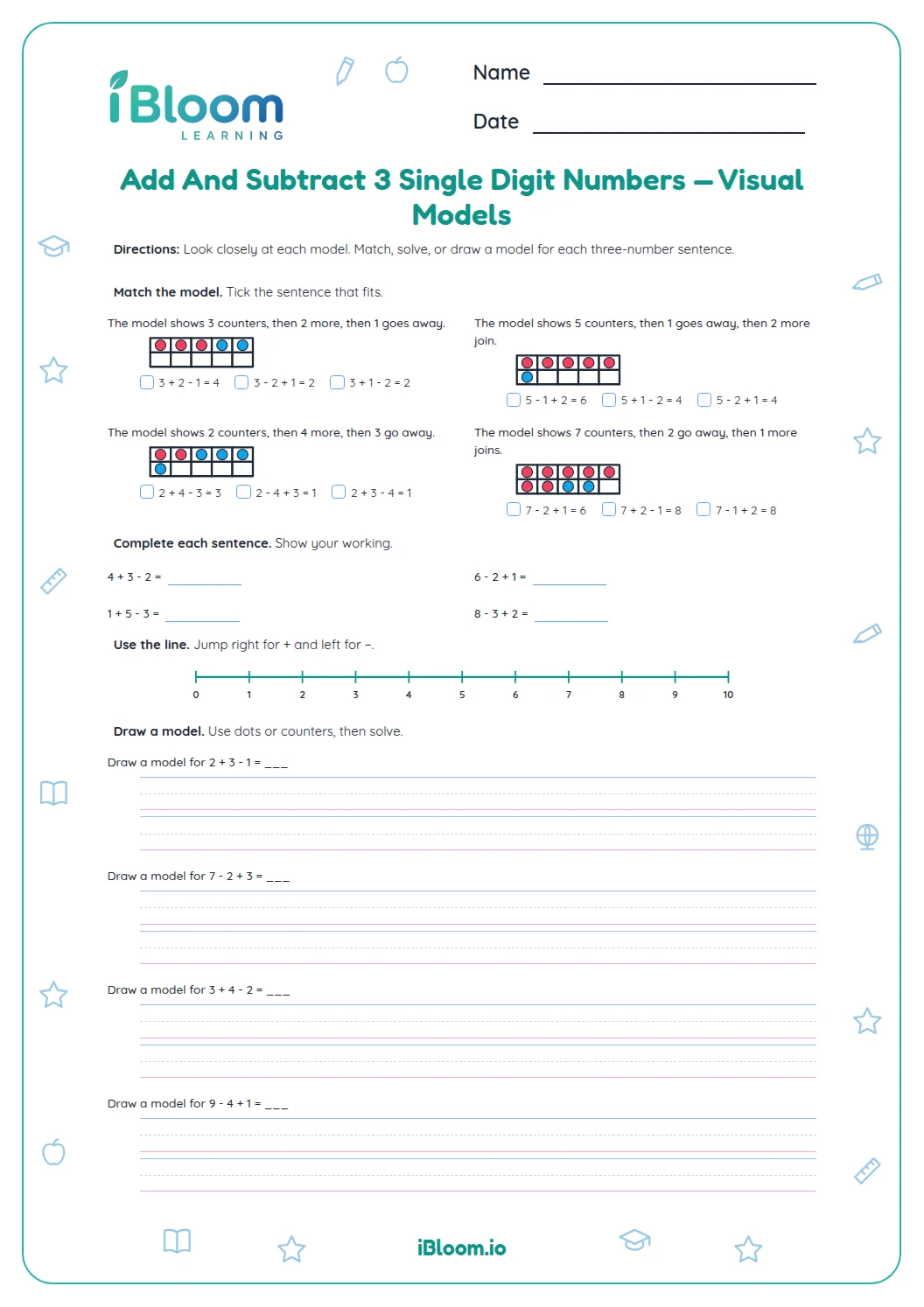
Later items ask learners to apply addition and subtraction fact families in a fresh context. Encourage careful reading and a check of each answer before moving on.
How should we review the answer key?
Compare one response at a time with the key. For a missed answer, ask the child to explain the clue or step that changes the answer, then try a similar item again.
How to use the worksheet
- 1Read the sheet directions together.
- 2Complete the first item aloud as a warm-up.
- 3Let the learner work through the next part independently.
- 4Ask the learner to check a response using the skill clues.
- 5Use the answer key to review and revisit any missed item.
Common mistakes and quick fixes
The mistake
Adding the known part to the whole.
The fix
Find the missing part by subtracting the known part from the whole.
The mistake
Changing the numbers between related facts.
The fix
Keep the same whole and two parts in each fact family.
The mistake
Writing the whole as a part.
The fix
Check that the two parts add to make the whole.
What to practice next
Make more practice
Questions parents and teachers ask
What skill does this worksheet practice?
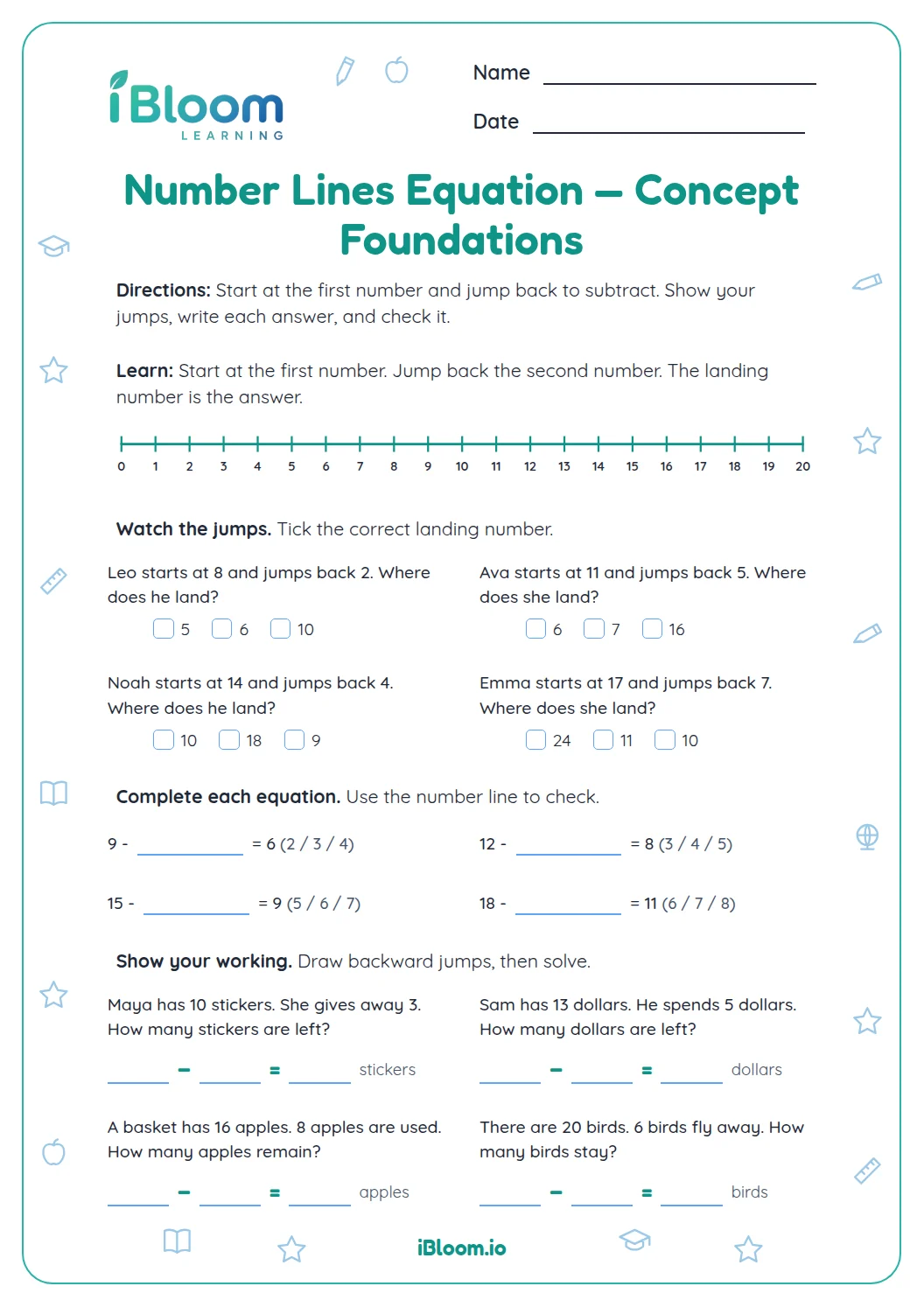
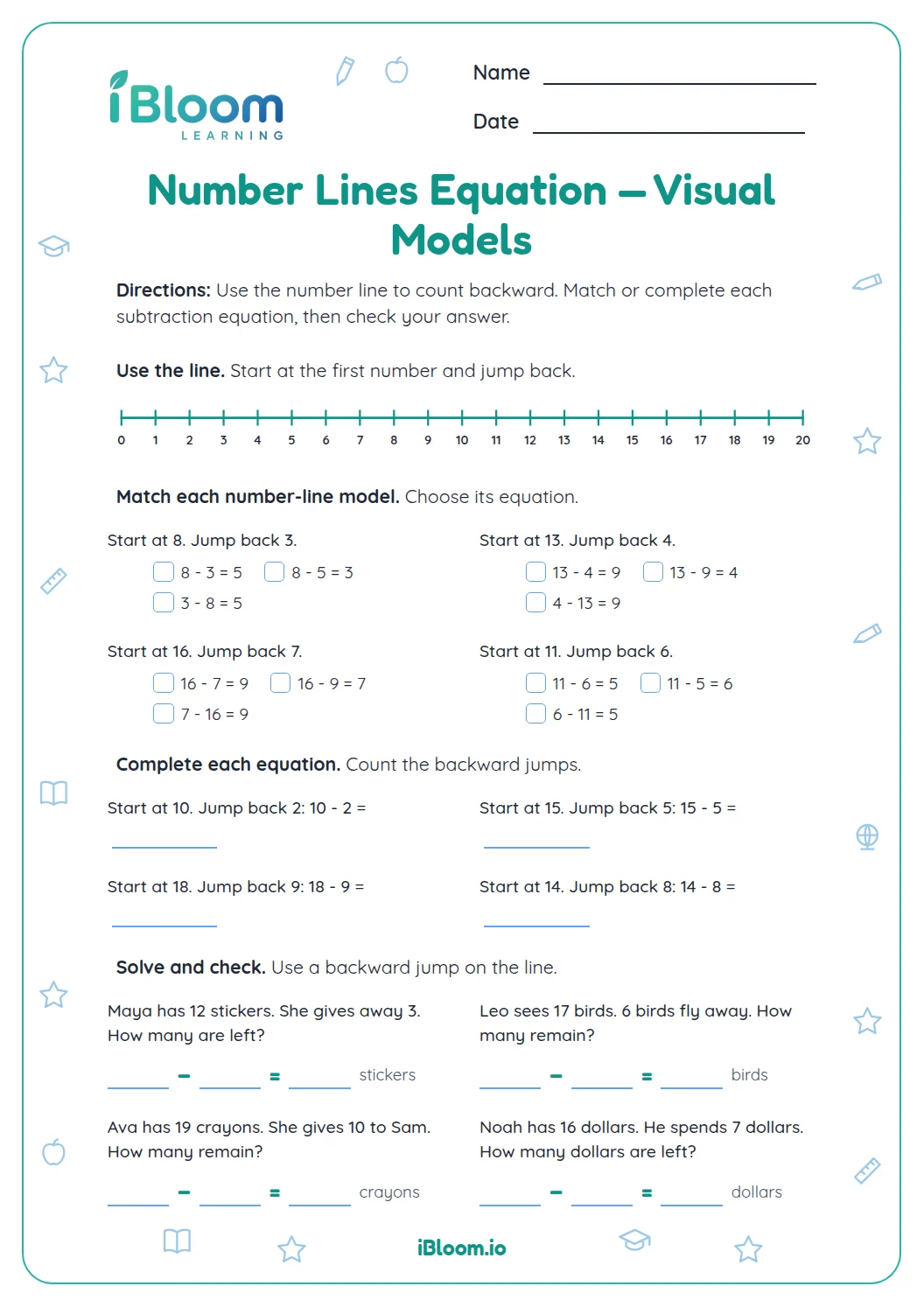
It practices addition and subtraction fact families with 16 printable questions. Children find a missing part in number bonds, complete related addition facts, and use subtraction to find a part. The separate answer key supports a quick review after the child tries each part.
Is an answer key included?
Yes. A separate answer key page lists the answers for the worksheet. Use it after the learner has tried the questions, then discuss any answer that needs another look. For written work, accept a response that follows the prompt and uses relevant details.
How long will the worksheet take?
Plan for about 20 minutes, including time to read the directions and check the work. A child may need more or less time depending on familiarity with the skill. Pause between parts if that helps the learner stay focused and explain each answer.
Can I use this page at home?
Yes. Print the worksheet for home practice or use it in a classroom small group. Read the first direction together, then let the child complete the questions at a comfortable pace. The answer key is useful for checking work afterward.
What should I do when an answer is missed?
Ask the child to point to the clue or calculation that supports a different answer. Work through that step together, and then have the child complete the remaining questions independently. A short explanation can show whether the skill is becoming clearer.