




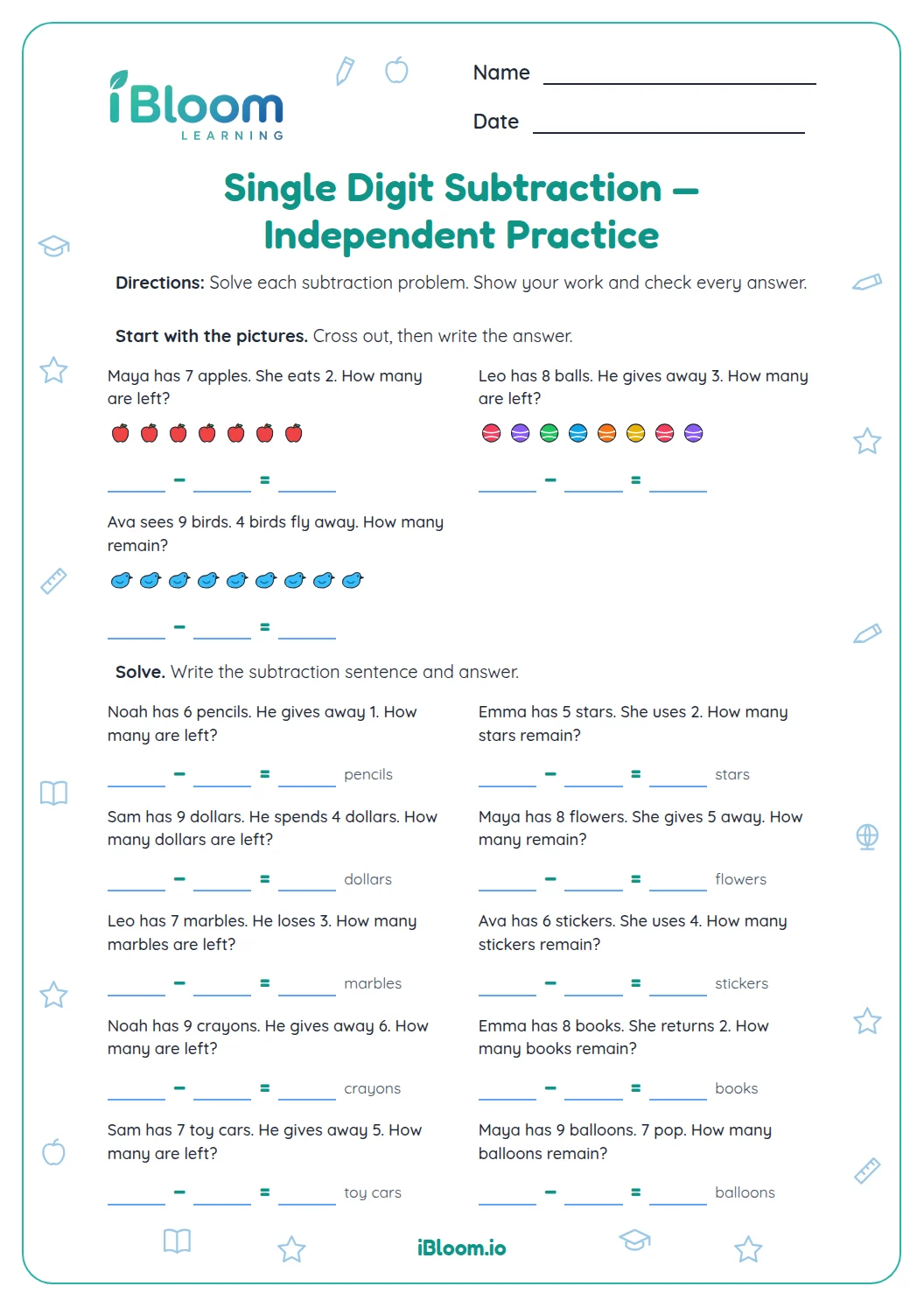
About this worksheet
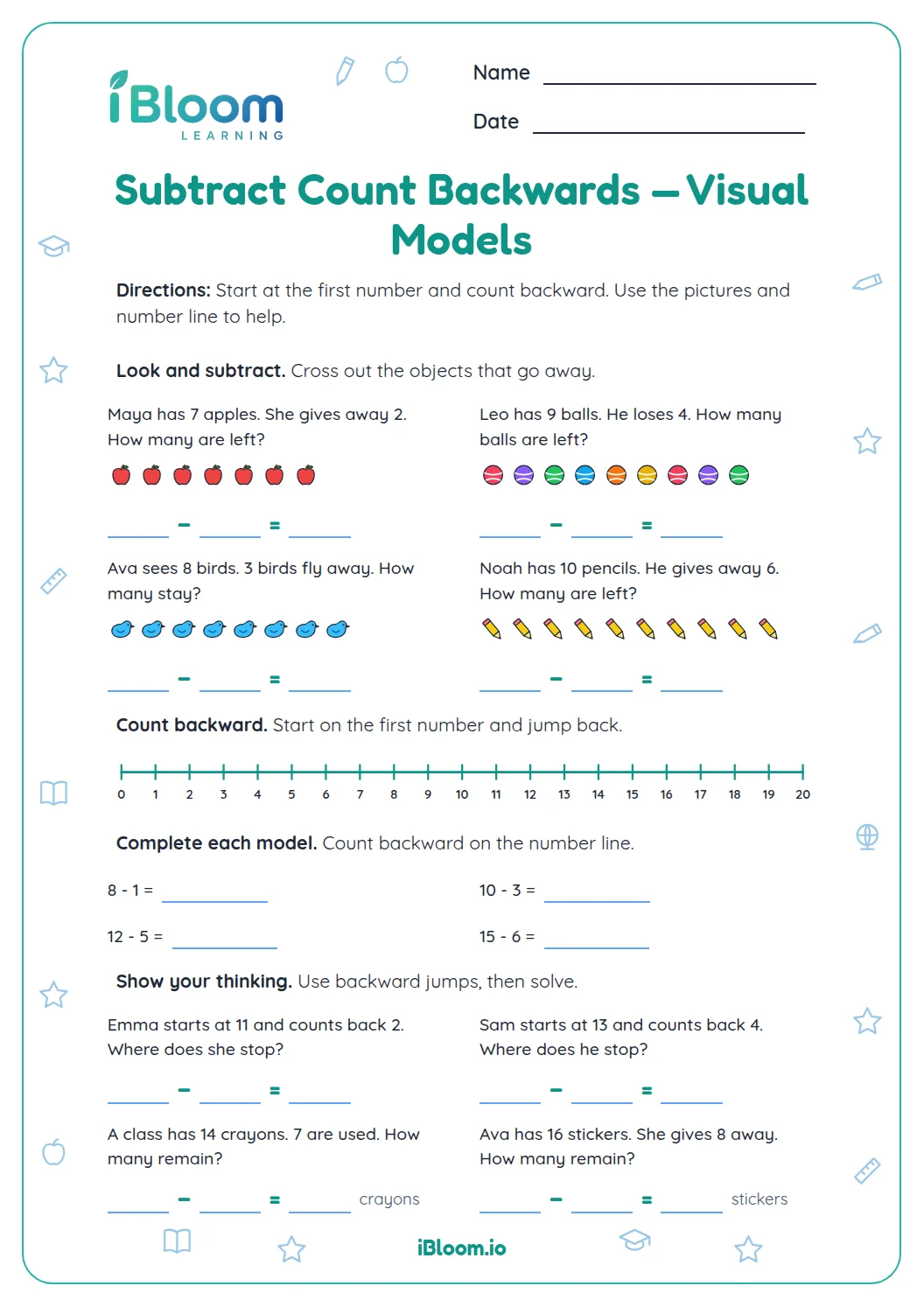
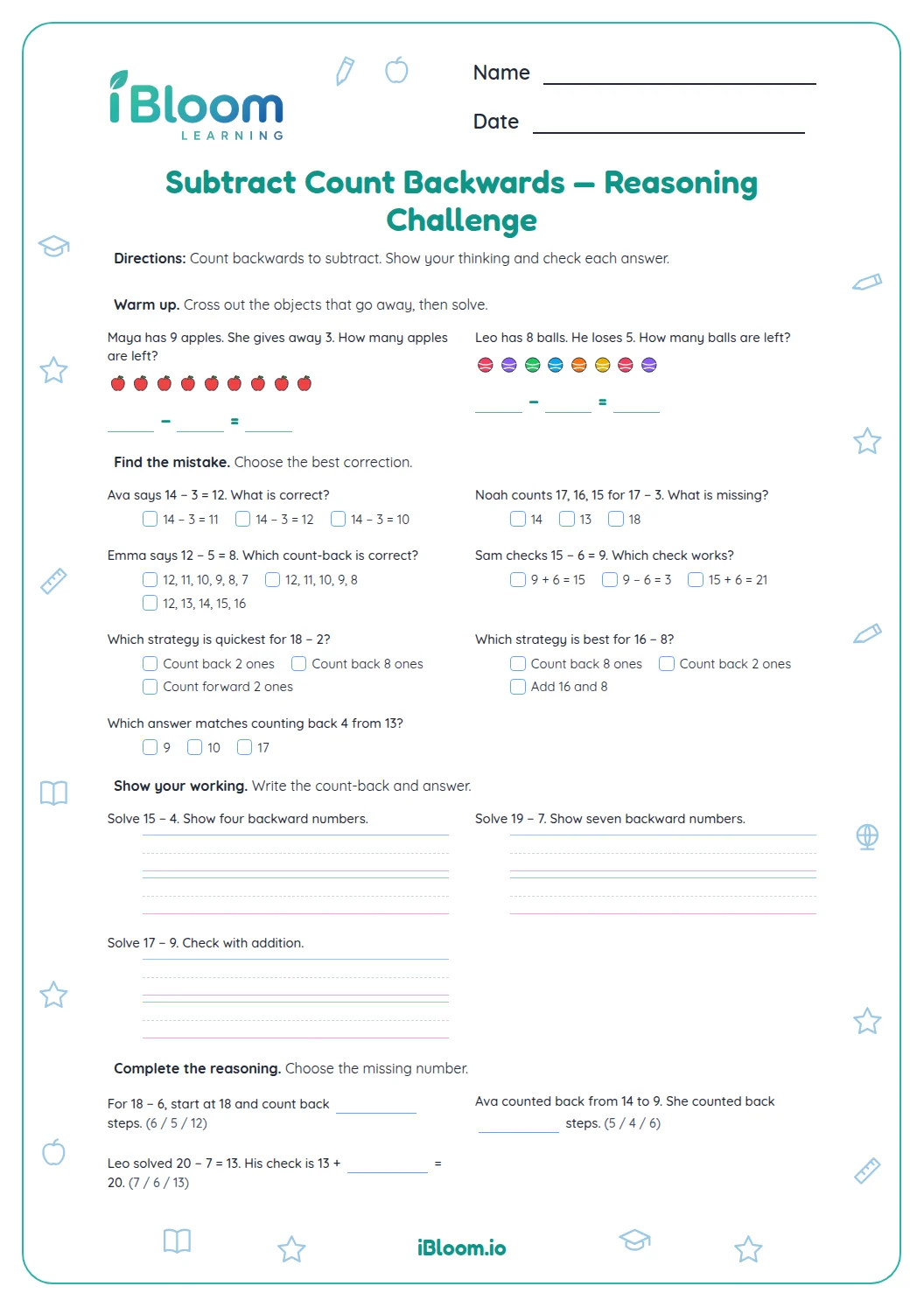
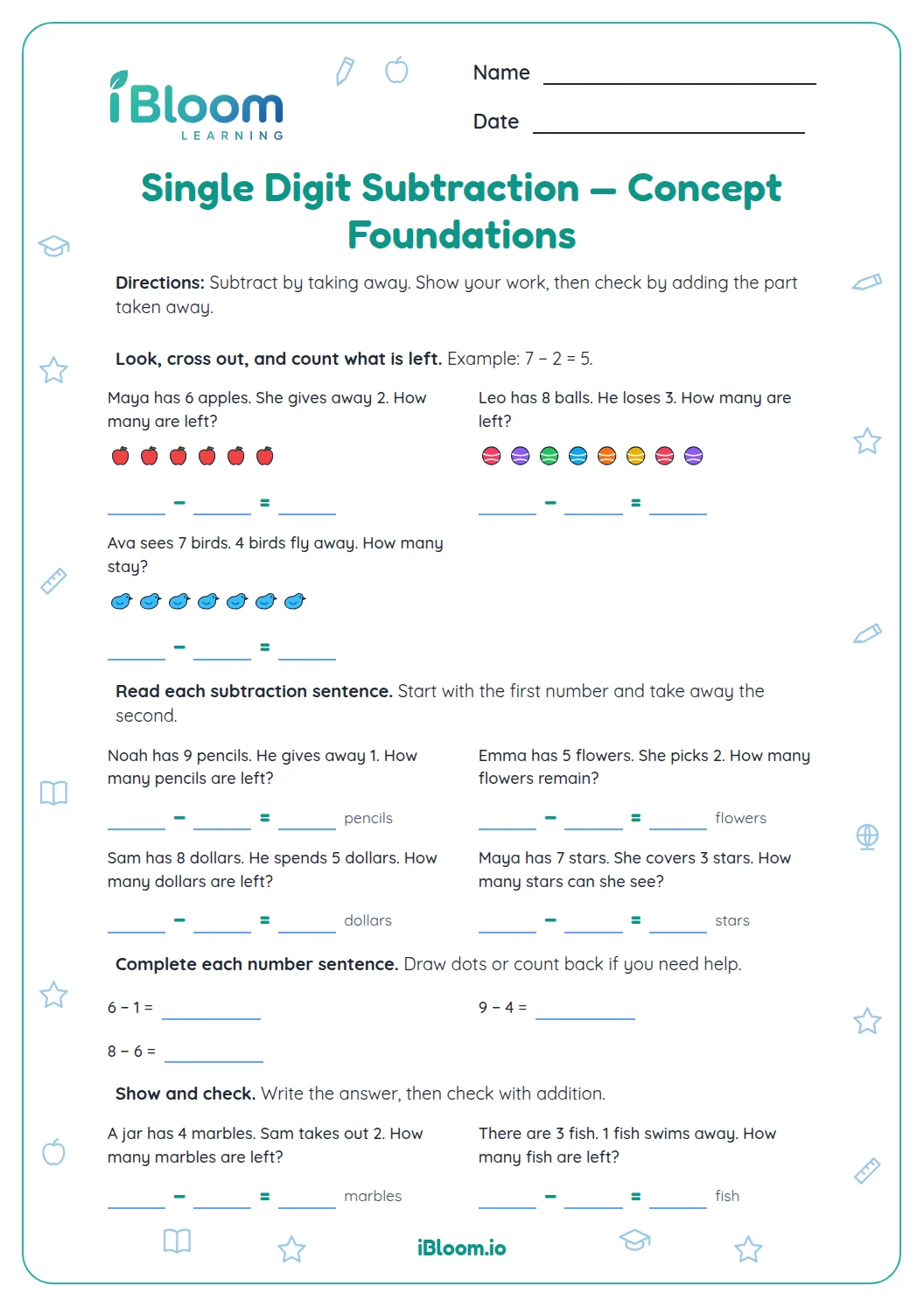
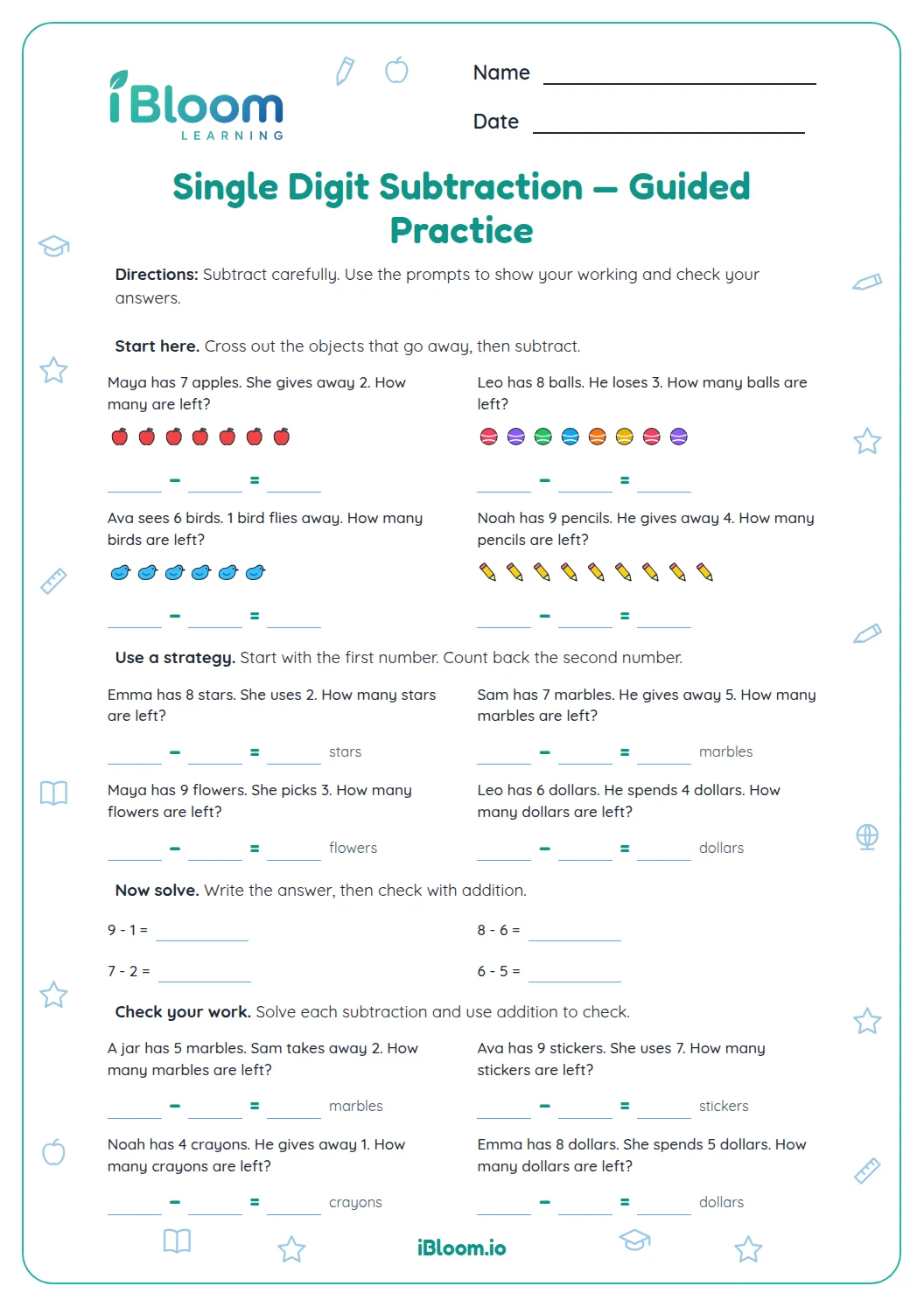
This free Grade 1 worksheet gives children 15 short take-from stories to solve by counting backward. The first set uses totals through 10; the second reaches 20. Each item gives a short blank for the number left. The practice aligns with CCSS 1.OA.A.1, which includes solving subtraction word problems within 20. An answer key gives a concise result for each story.
Aligned to 1.OA.A.1
How does counting backward solve a take-away story?
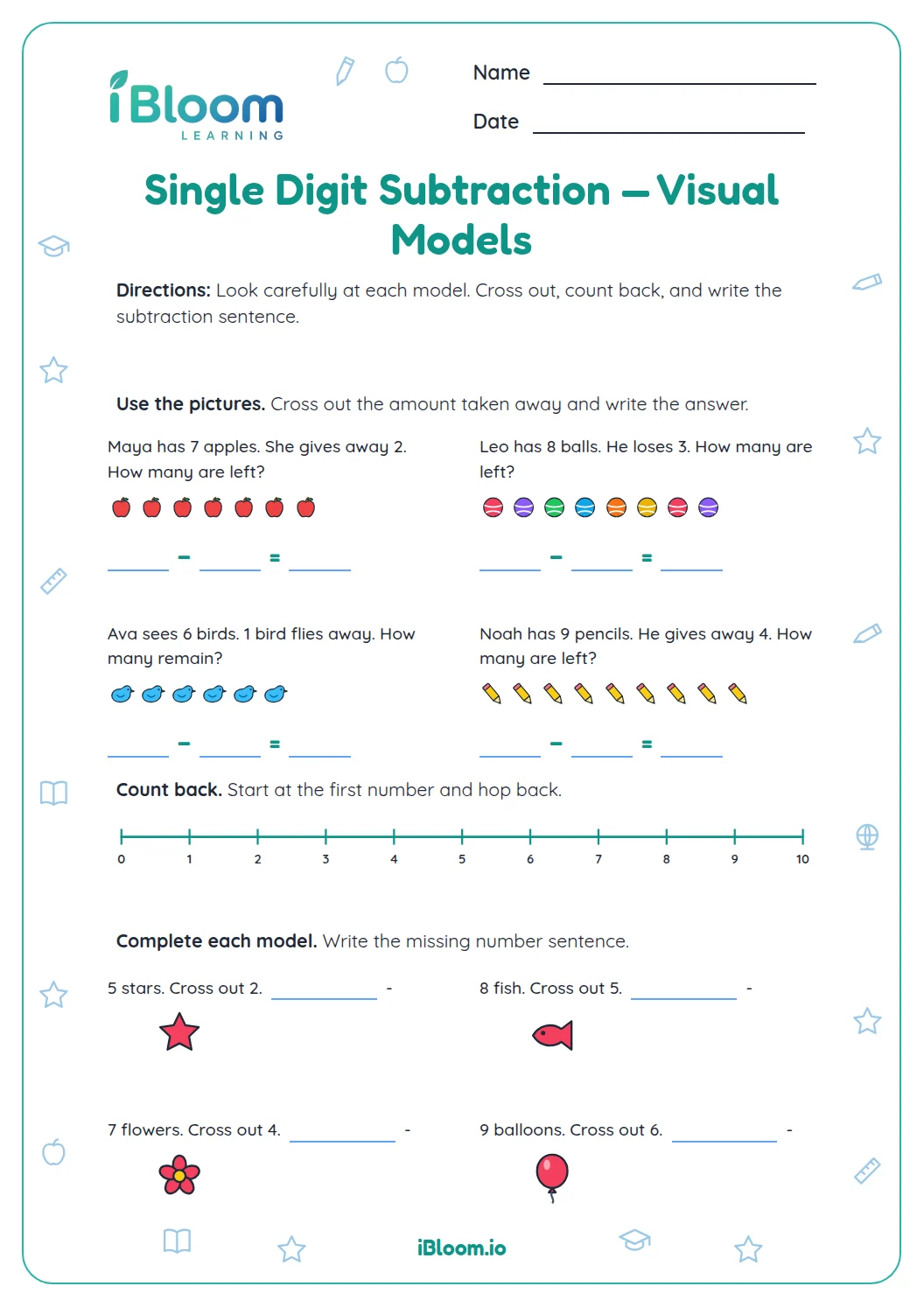
The starting total is the number to begin on. The amount taken away tells how many backward moves to make. The number where the count lands is what remains.
In question 1, Nora starts with 9 crackers and eats 3. Count 8, 7, 6: three moves back from 9 land on 6.
- 19 crackers − 3 eaten = 6 crackers left.
How do the two groups build practice?
Part A uses totals no greater than 10. Part B extends the strategy to totals through 20, with a final group of short blanks for independent practice.
Read each story carefully before deciding which number is the total and which number tells how many to remove.
How can a child check a subtraction answer?
Count backward again, this time one move at a time. The number of moves should match the amount taken away. An addition check works too: add the amount left to the amount removed.
How to use this worksheet
- 1Read the first story aloud and identify the starting total.
- 2Underline or say how many were taken away.
- 3Start at the total and count backward one number for each item removed.
- 4Write the number that remains in the blank.
- 5Check by adding the removed amount to the amount left.
Counting-back slips and fixes
The mistake
Counting the starting number as move one.
The fix
Keep the start number in place; the first move lands on the next lower number.
The mistake
Making too many or too few backward moves.
The fix
Track one move for every item taken away, using fingers or tally marks.
The mistake
Reporting the amount removed instead of the amount left.
The fix
Ask, “What is still there?” and check that answer plus the removed amount equals the start.
Common Core alignment
These Grade 1 story problems practice subtraction within 20 using a count-back strategy.
Solve take-from story problems within 20 using subtraction strategies.
On this sheet: Each item is a take-from story with a total and a known amount removed.
Show the official wordingHide the official wording
Use addition and subtraction within 20 to solve word problems involving situations of adding to, taking from, putting together, taking apart, and comparing, with unknowns in all positions, e.g., by using objects, drawings, and equations with a symbol for the unknown number to represent the problem.
What to practice next
Make more practice
Further reading
Questions parents and teachers ask
How does this worksheet practice counting backward?
Each story names a total and an amount taken away. The student starts at the total, counts back by the amount removed, and writes how many remain. For example, 9 crackers minus 3 eaten leaves 6 crackers. Reread the prompt and use the answer key to check how the clue supports the response.
How many problems are on the pages?
There are 16 story problems in two groups. The first group keeps totals at 10 or less, and the second uses totals through 20 so children can practice counting back across a wider range. Reread the prompt and use the answer key to check how the clue supports the response.
Does a child need to write an equation?
The response space is sized for working and a short answer. A child may write a subtraction equation, make small counting marks, or count aloud from the total; the goal is to use counting back to find what remains. Reread the prompt and use the answer key to check how the clue supports the response.
What is a common counting-back error?
A common slip is saying the starting total as the first number counted back. If a story says 9 minus 3, start on 9 and make three backward moves: 8, 7, 6. The landing number is the answer. Reread the prompt and use the answer key to check how the clue supports the response.
What should we practice next?
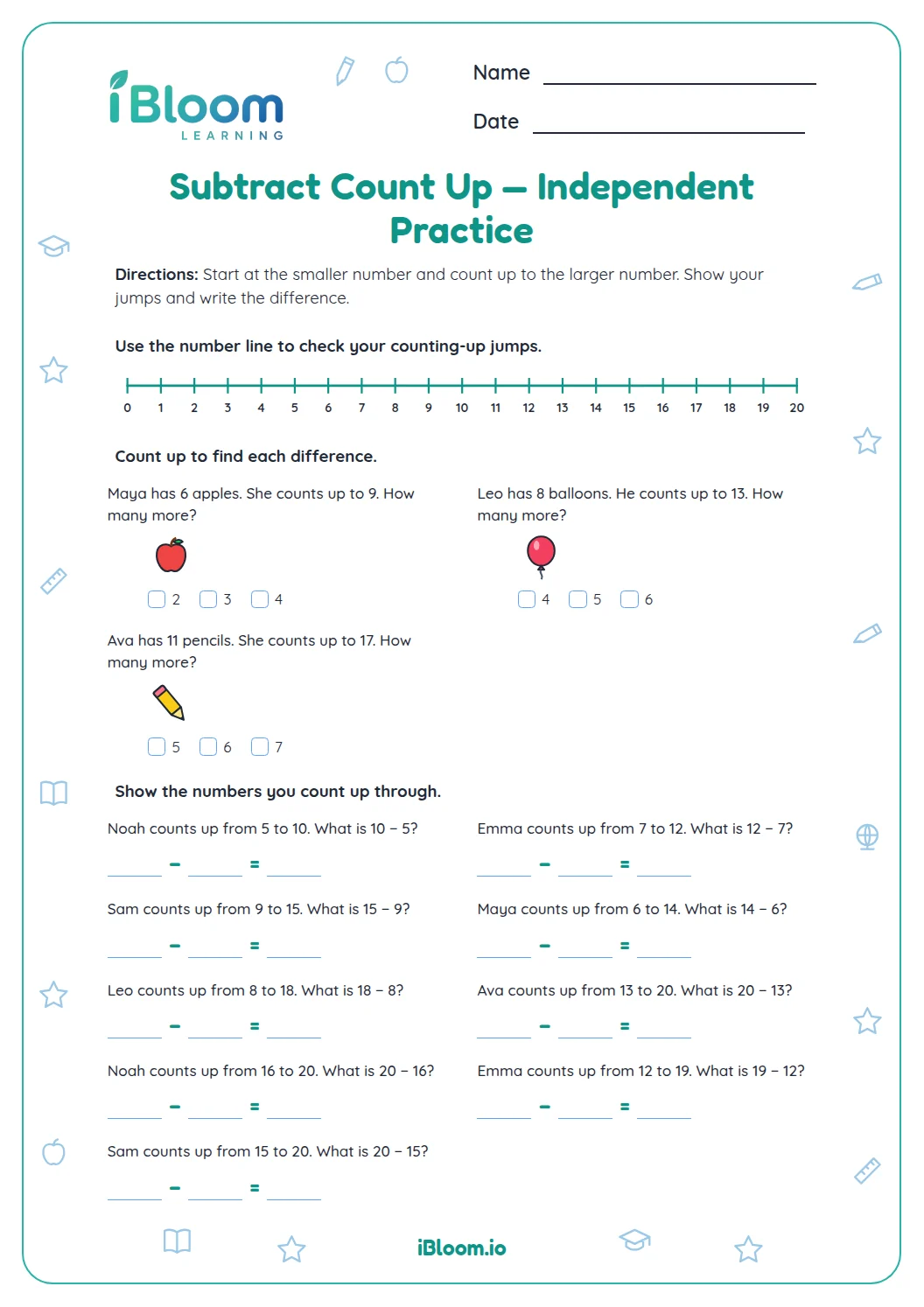
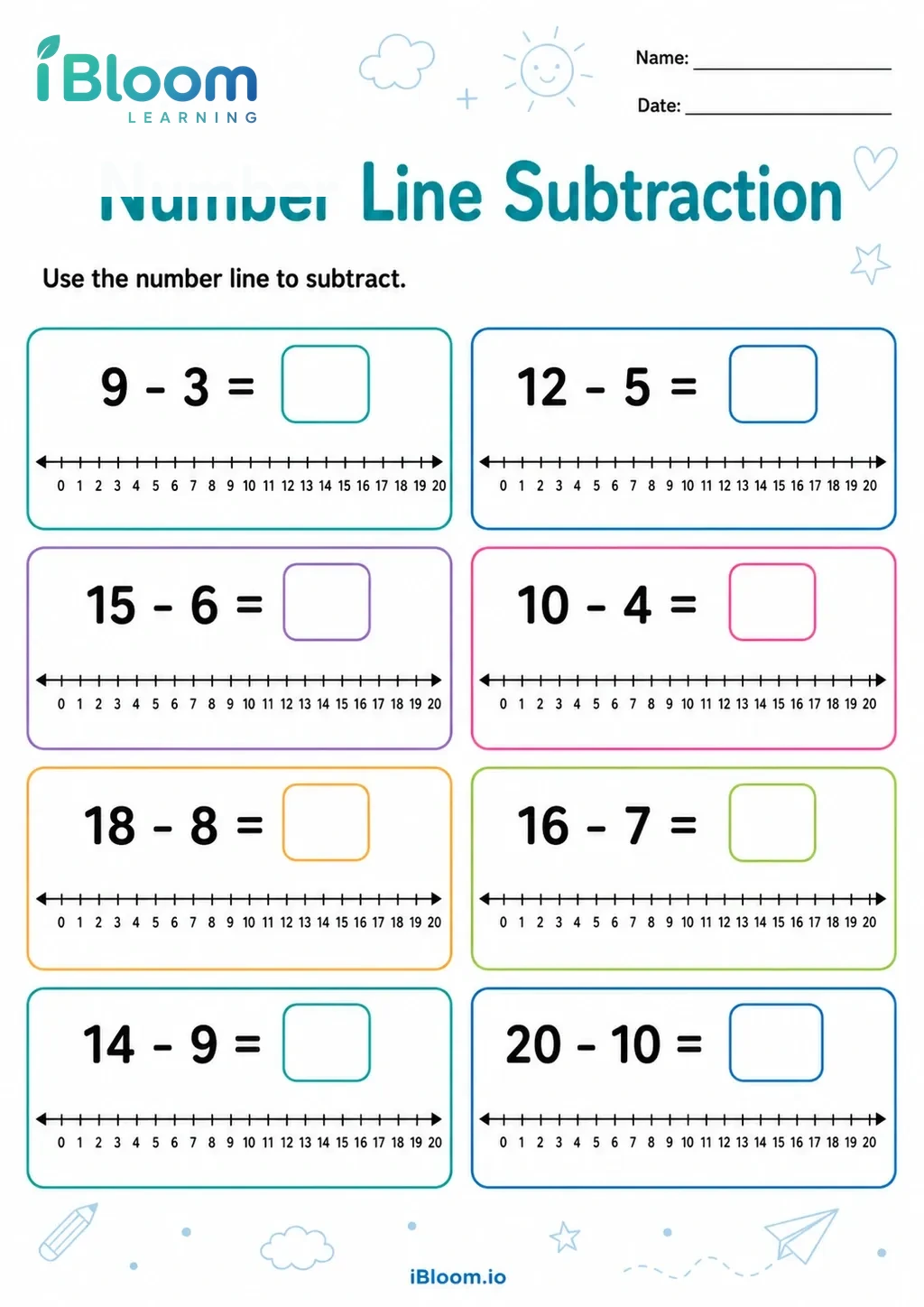
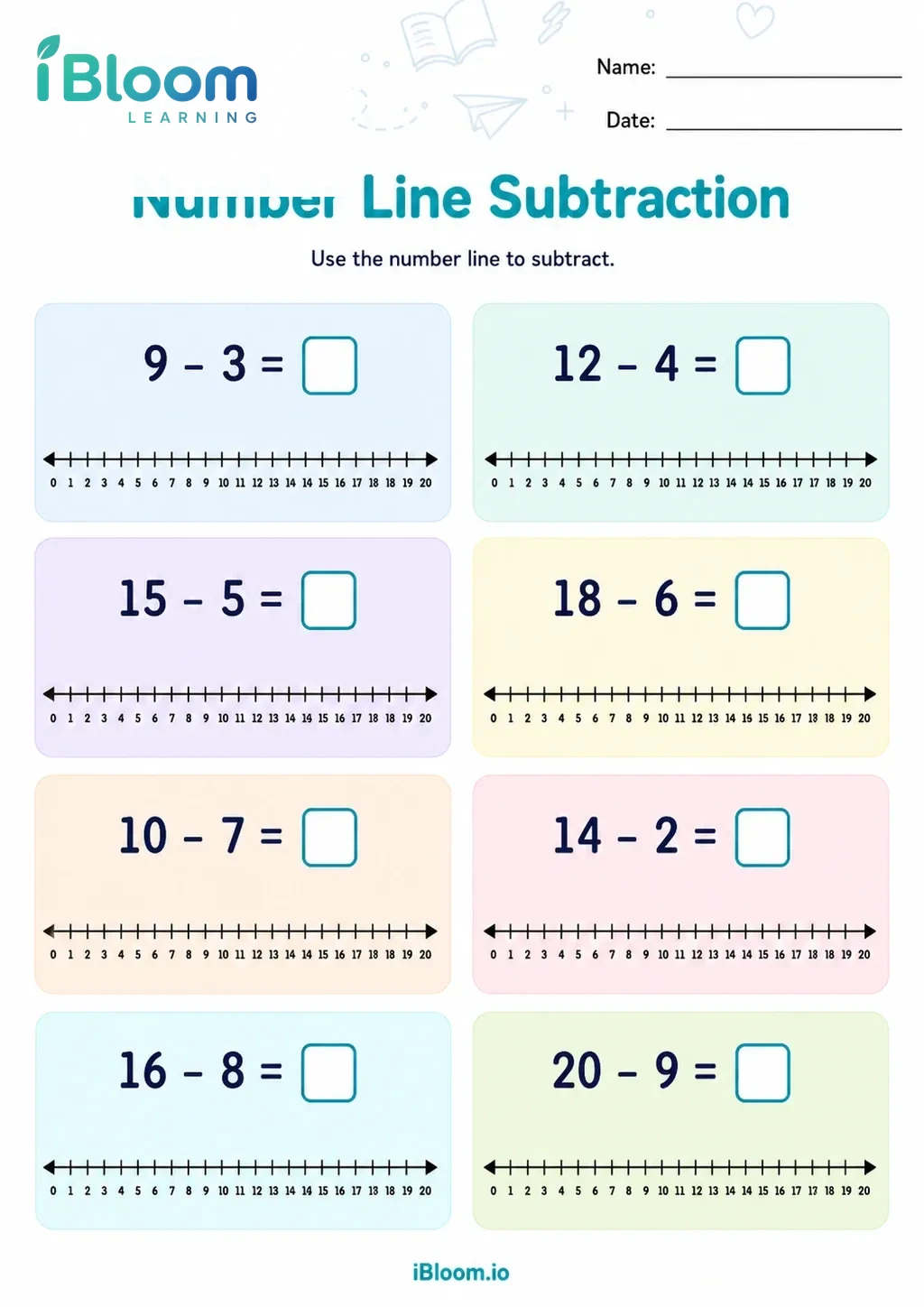
Try a number-line subtraction page after these stories. A number line makes each backward move visible, while count-up subtraction offers another way to find the difference between two amounts. Reread the prompt and use the answer key to check how the clue supports the response.