


About this worksheet
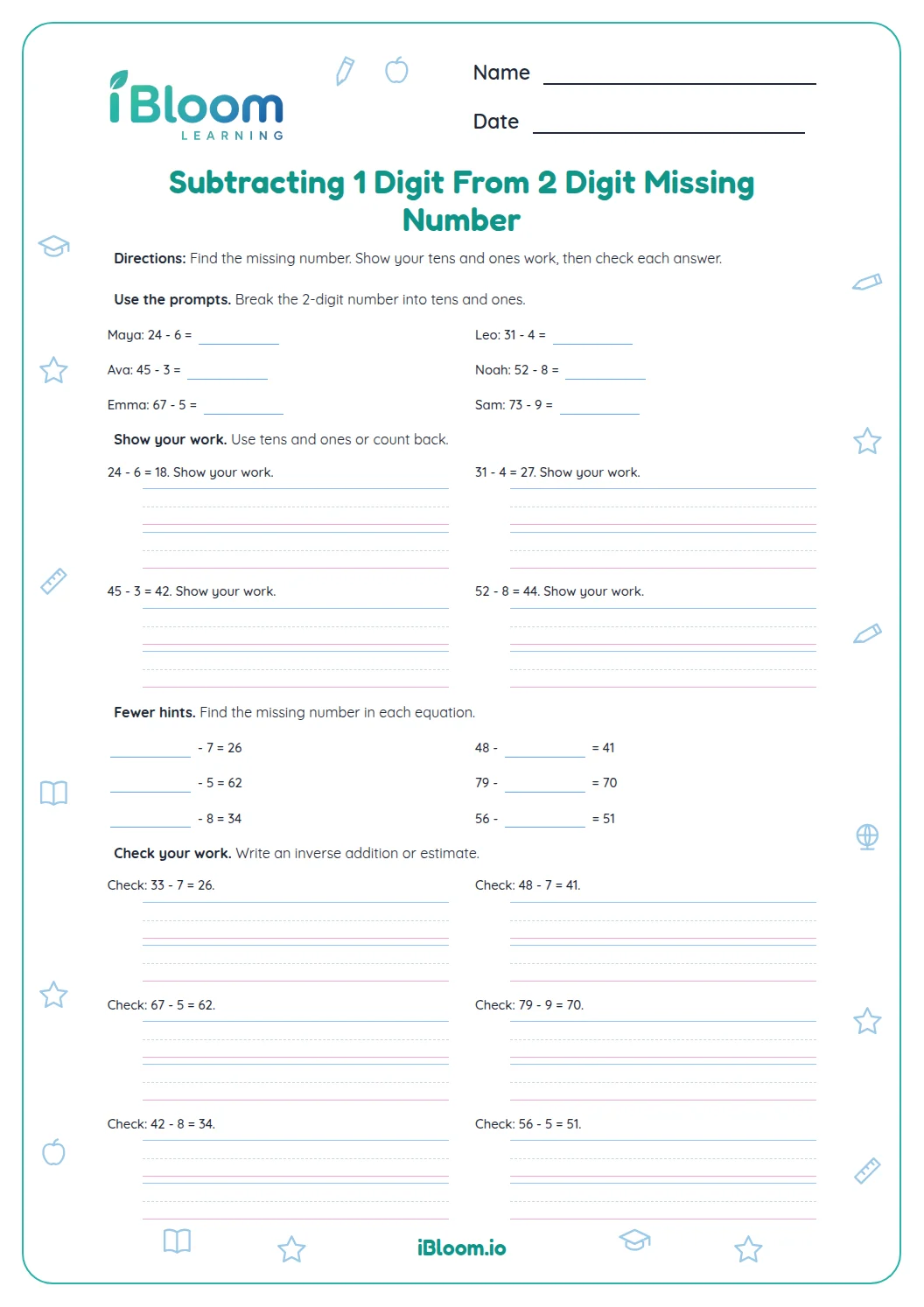
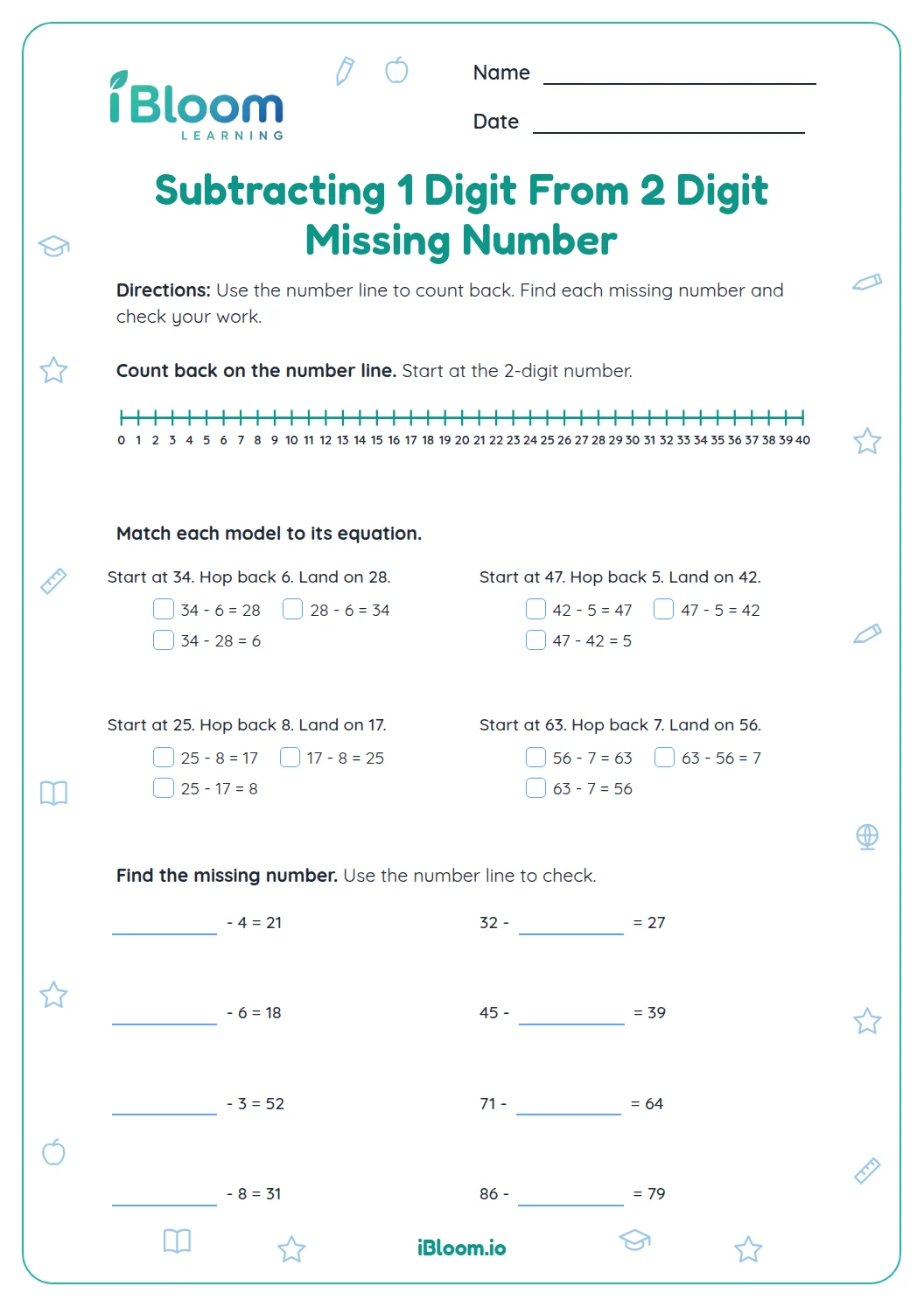
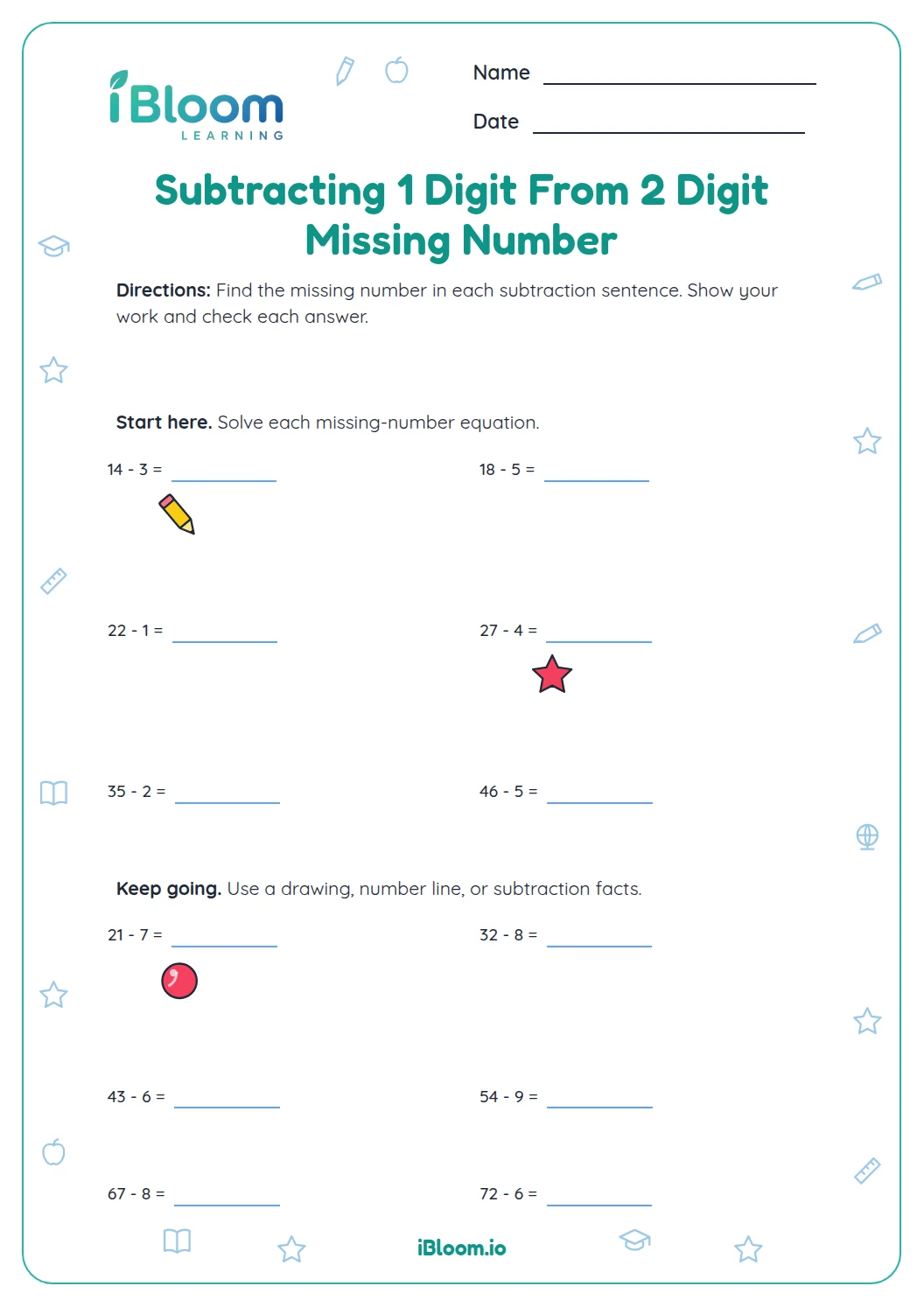
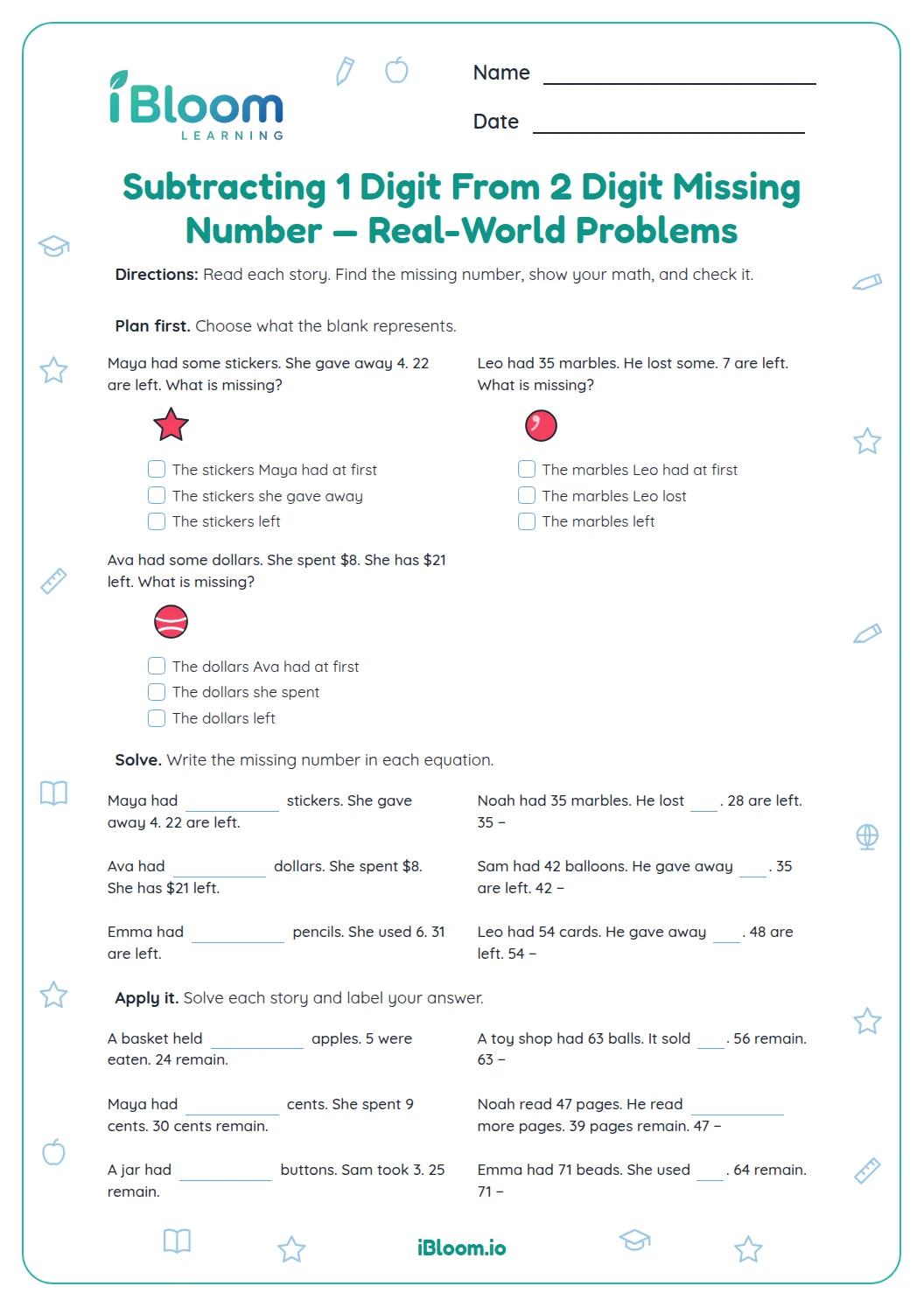
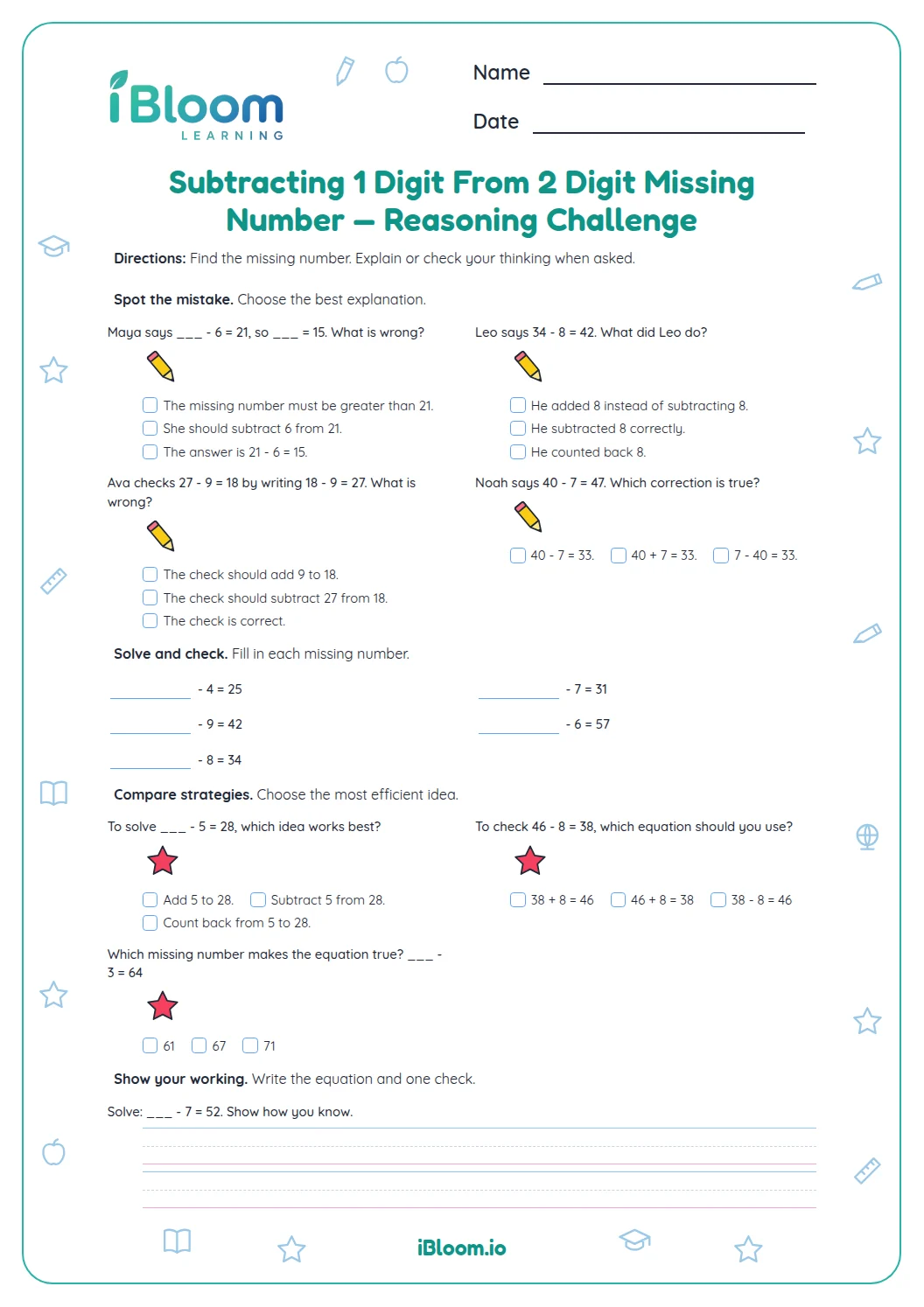
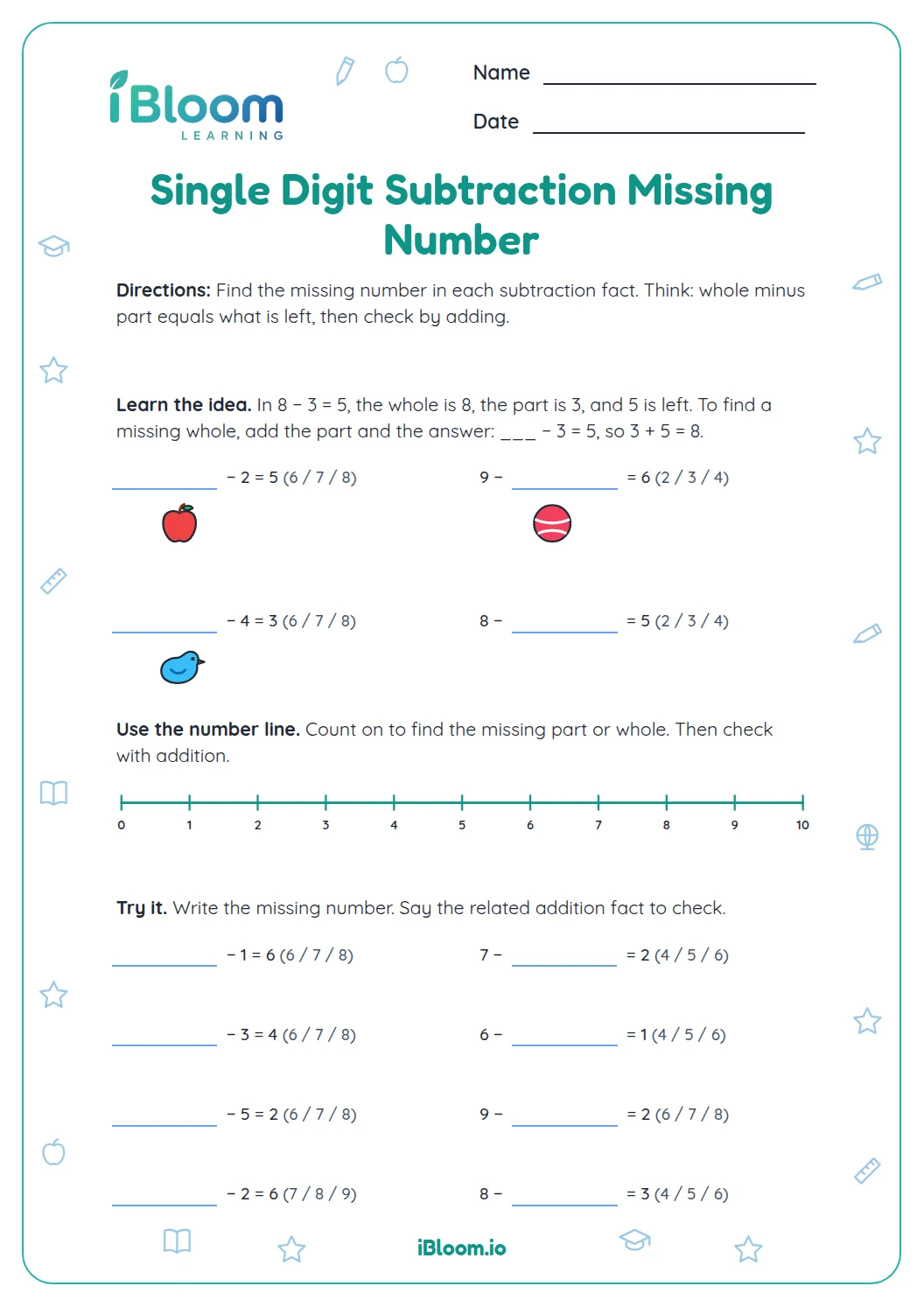
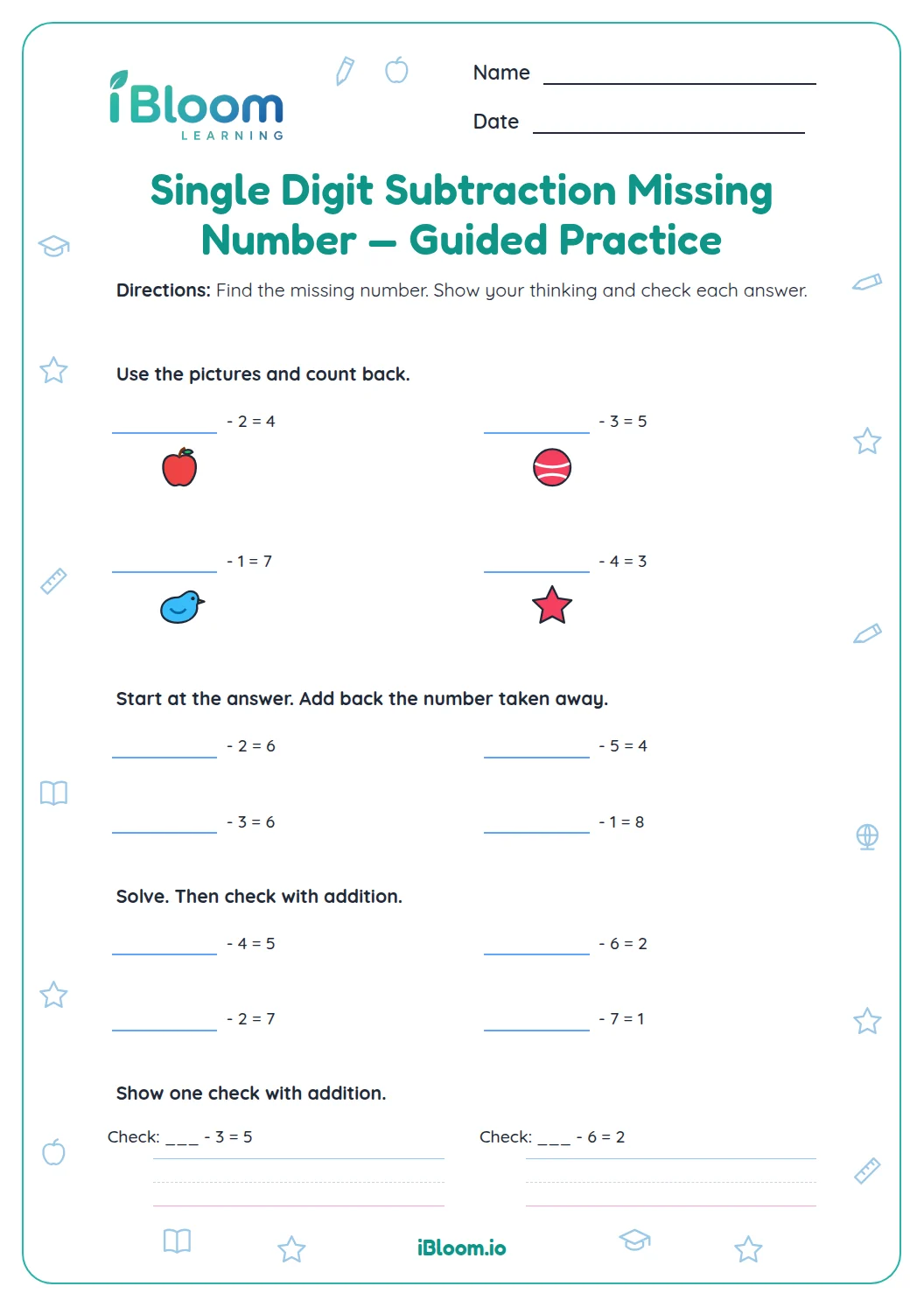
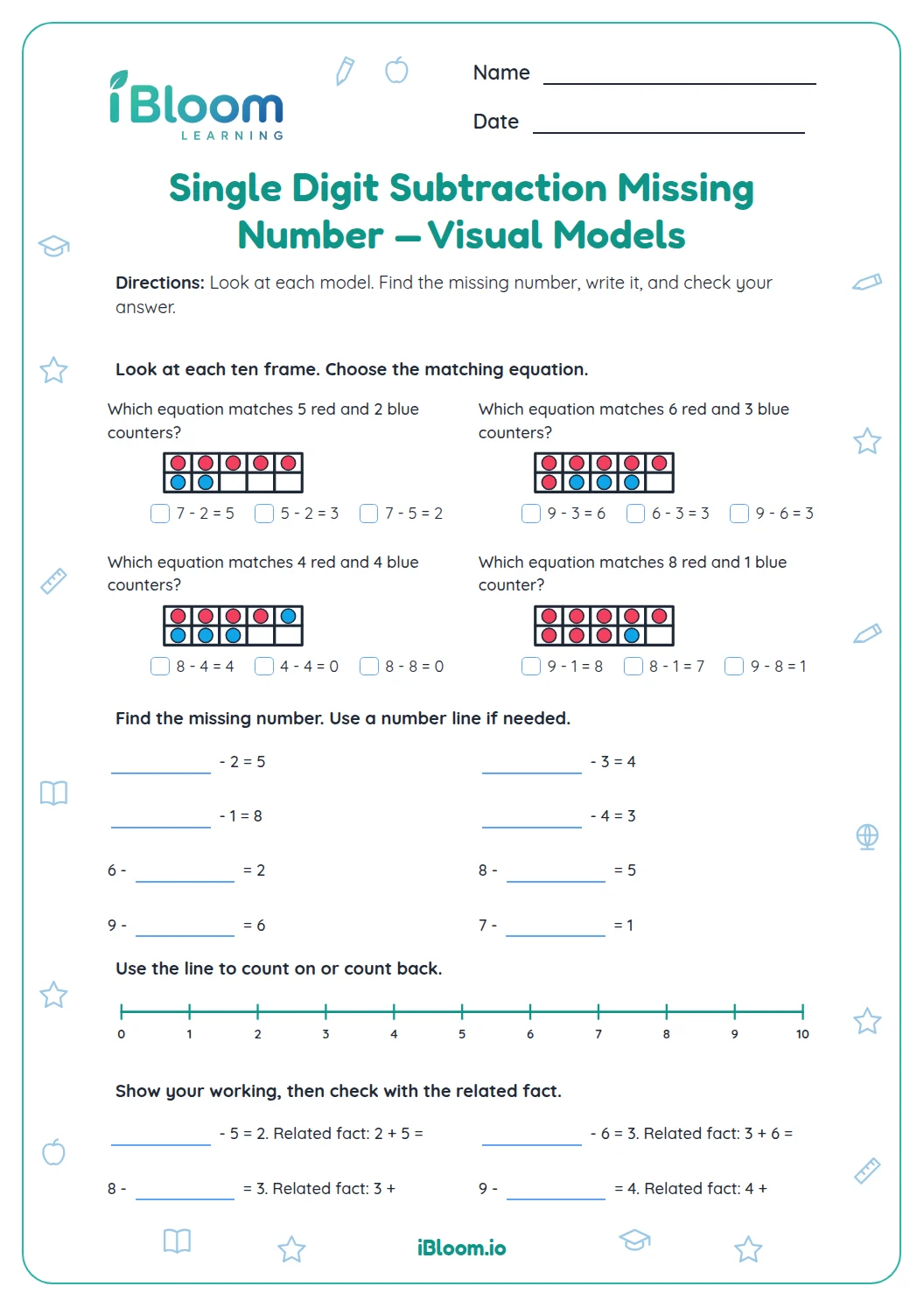
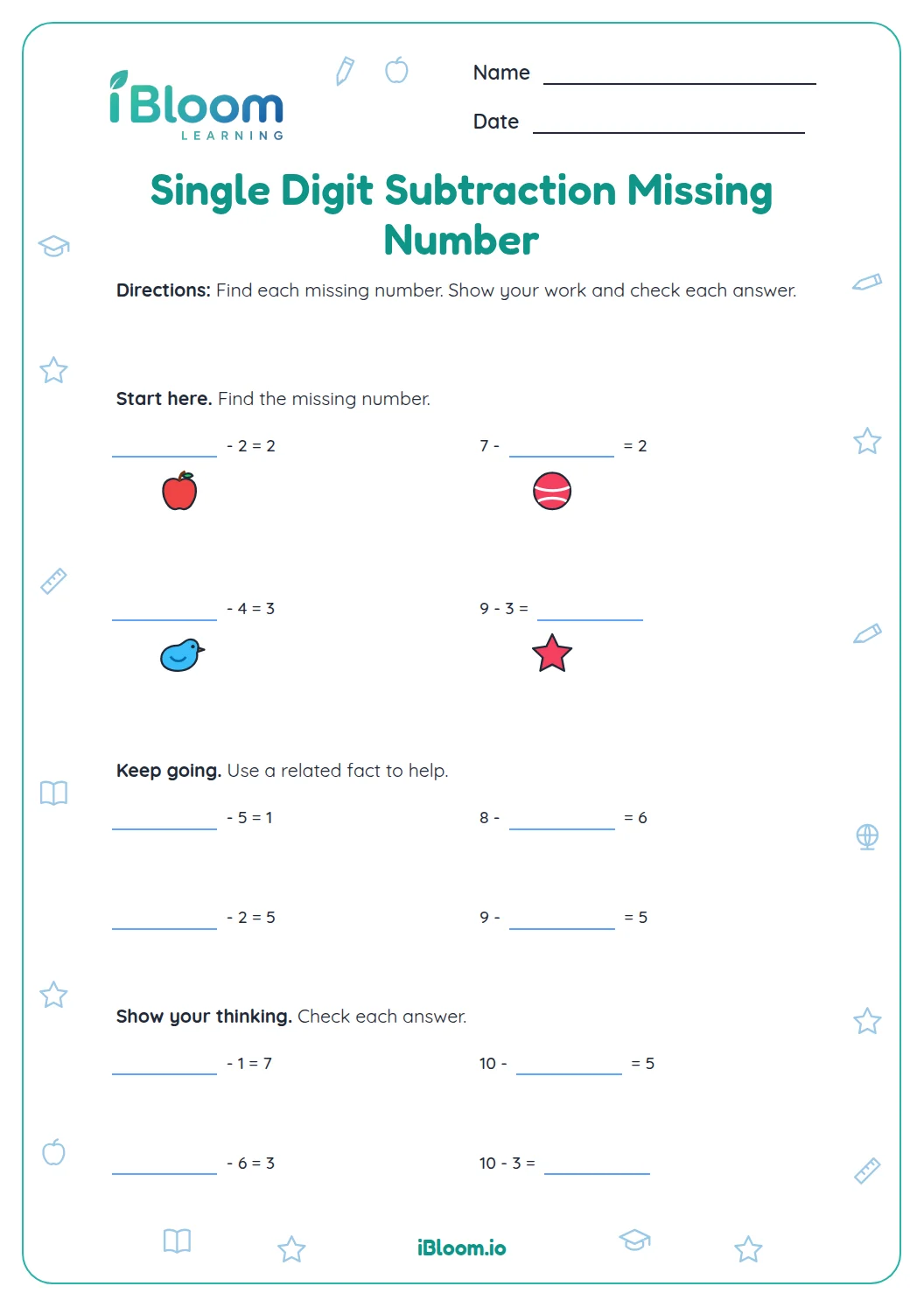
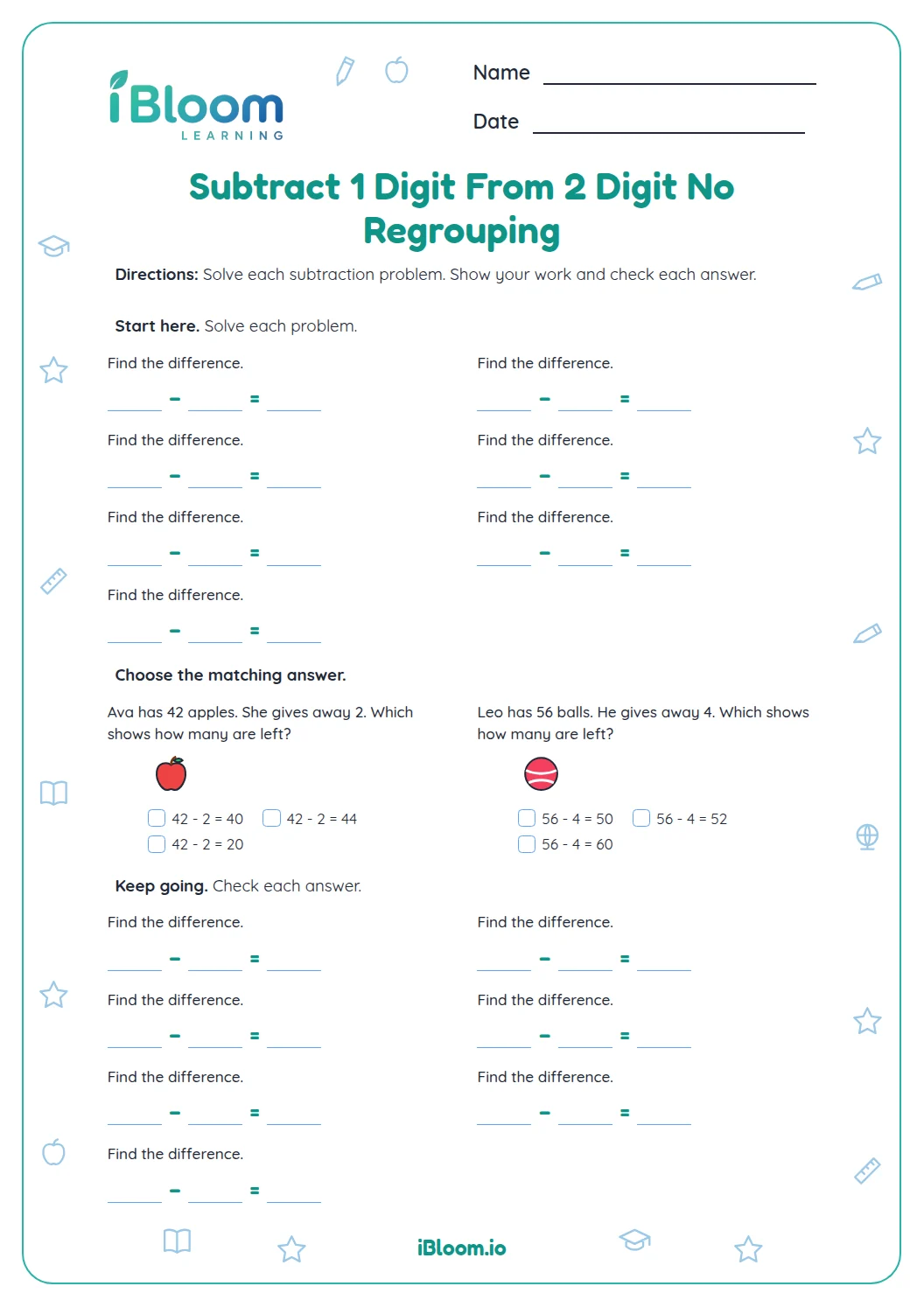
This free Grade 1 worksheet gives children 14 short subtraction stories with a missing number in different positions. The story contexts keep the quantities within 20 as students work with teen numbers and one-digit subtraction. It practices CCSS 1.OA.A.1: solving addition and subtraction word problems within 20 with unknowns in different positions. The answer key lists every missing number.
Aligned to 1.OA.A.1
How do you find a missing starting amount?
If 16 balloons were up and ten remain, the number that floated away is the missing part. The missing number is 6; adding 6 and 10 checks the story.
The first group uses a missing starting number. Read the subtraction sign and known numbers before choosing an operation.
- 1Four apples were eaten; nine remain. How many were there first?
- 2___ − 4 = 9; 9 + 4 = 13, so there were 13 apples.
How can addition check a missing part?
If 16 balloons were up and ten remain, the number that floated away is the difference between 16 and 10. The missing number is 6; adding 6 and 10 checks the story.
For a missing difference, subtract the known part from the whole. Check by adding the difference and the subtrahend.
- 116 − ___ = 10
- 210 + 6 = 16, so six balloons floated away.
What should you check before finishing?
For a question about what remains, subtract the part taken away from the starting amount. Put the answer in the story equation and check that the starting amount is recovered when you add.
How to use this worksheet
- 1Read the story and name the amount at the start, the part taken away and what remains.
- 2Name the known whole and part.
- 3Use subtraction or a related addition fact to find the blank.
- 4Write the number in the blank.
- 5Substitute it back and check both sides.
Common mistakes and quick fixes
The mistake
Subtracting the wrong number from the whole
The fix
Use addition to identify which part is missing before calculating.
The mistake
Putting the difference in the blank when the subtrahend is missing
The fix
Check the blank’s position; the unknown may be the amount taken away.
The mistake
Skipping the check
The fix
Add the difference and the subtrahend to see whether they make the starting number.
Common Core alignment
These standards describe the skills practiced in the questions below.
Solve short subtraction stories within 20 with the unknown in different positions.
On this sheet: Each short story asks students to use a subtraction equation with the missing number in a different position.
Show the official wordingHide the official wording
Use addition and subtraction within 20 to solve word problems involving situations of adding to, taking from, putting together, taking apart, and comparing, with unknowns in all positions, e.g., by using objects, drawings, and equations with a symbol for the unknown number to represent the problem.
What to practice next
Make more practice
Further reading
Questions parents and teachers ask
How many questions are on this page?
There are 14 short story problems in two parts. Part A asks for a missing starting amount. Part B asks for a missing part or difference. Every amount stays within 20, and the separate key lists the missing number for each equation.
How can addition help with subtraction?
Addition can reveal a missing part. In 16 − ___ = 10, ask what number added to 10 makes 16. The missing number is 6. Adding 6 and 10 checks the subtraction equation. This way of thinking keeps the whole and the two parts connected, even when the blank moves to a different place.
Are the problems right for Grade 1?
The questions use teen numbers and one-digit subtraction, with every amount within 20. Children focus on finding an unknown part in a story and checking the equation with addition. The different blank positions help them see what is known and what they need to find.
What does the answer key include?
The answer key lists the number that makes each subtraction equation true. Replace the blank with the keyed number and check that both sides match. Ask your child to read the story and equation aloud, then add the difference and the part taken away to recover the starting number.
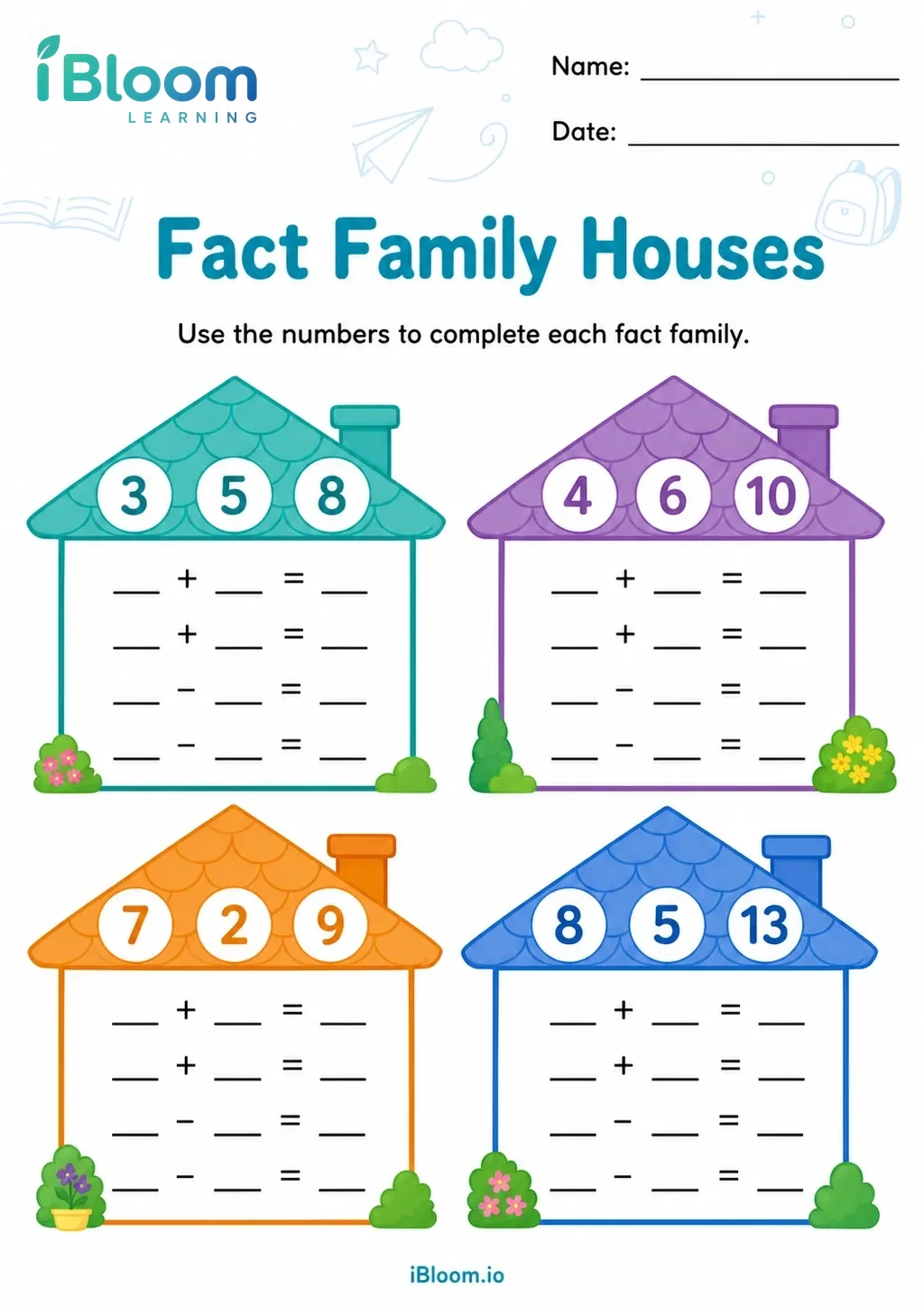
What should my child try next?
A fact-family page connects addition and subtraction in groups of related equations. After that, a two-digit minus one-digit page gives more practice using the same subtraction relationship. The linked fact-family activity helps children see both operations in one set of facts, then try another missing-number page.