




About this worksheet
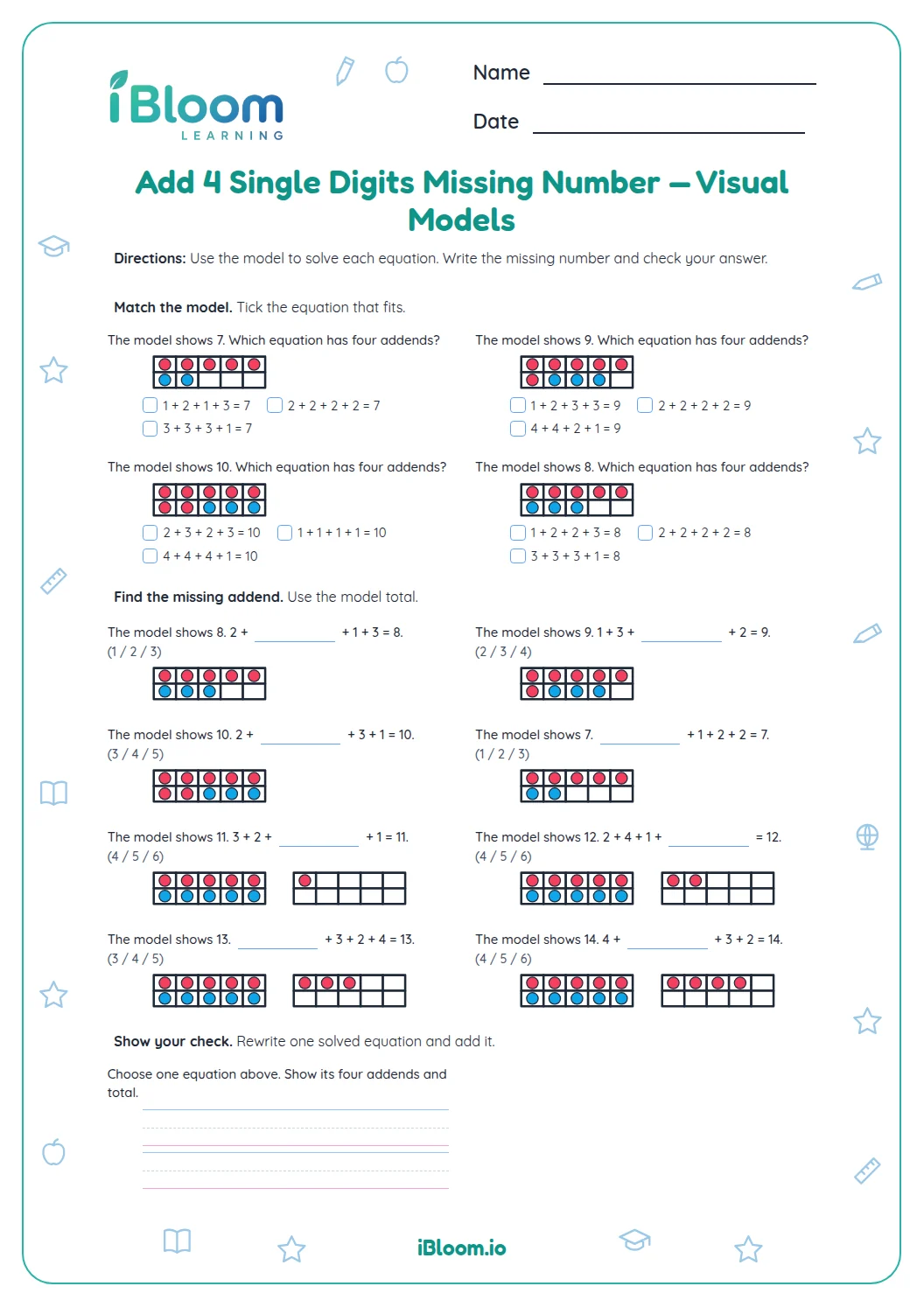
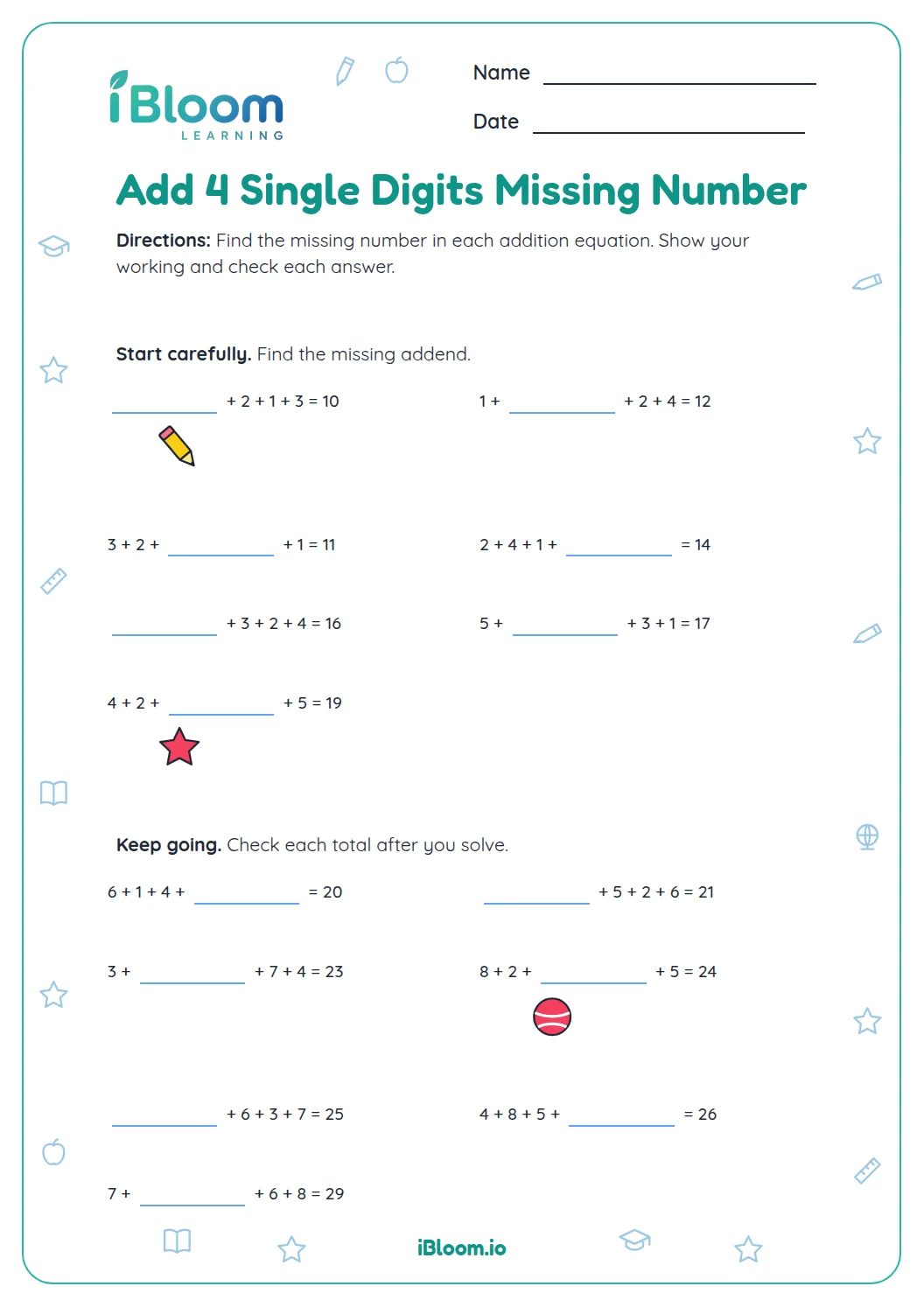
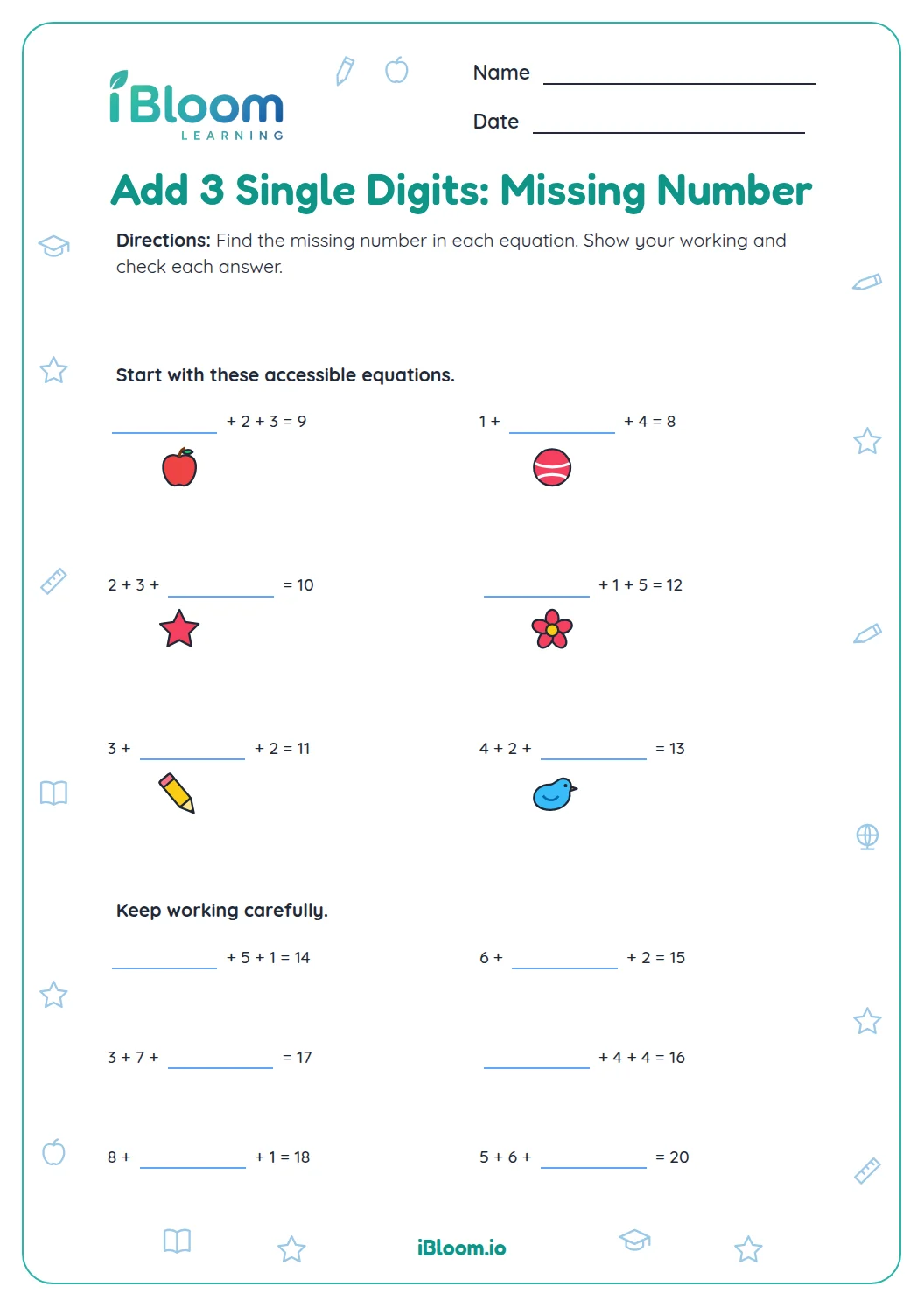
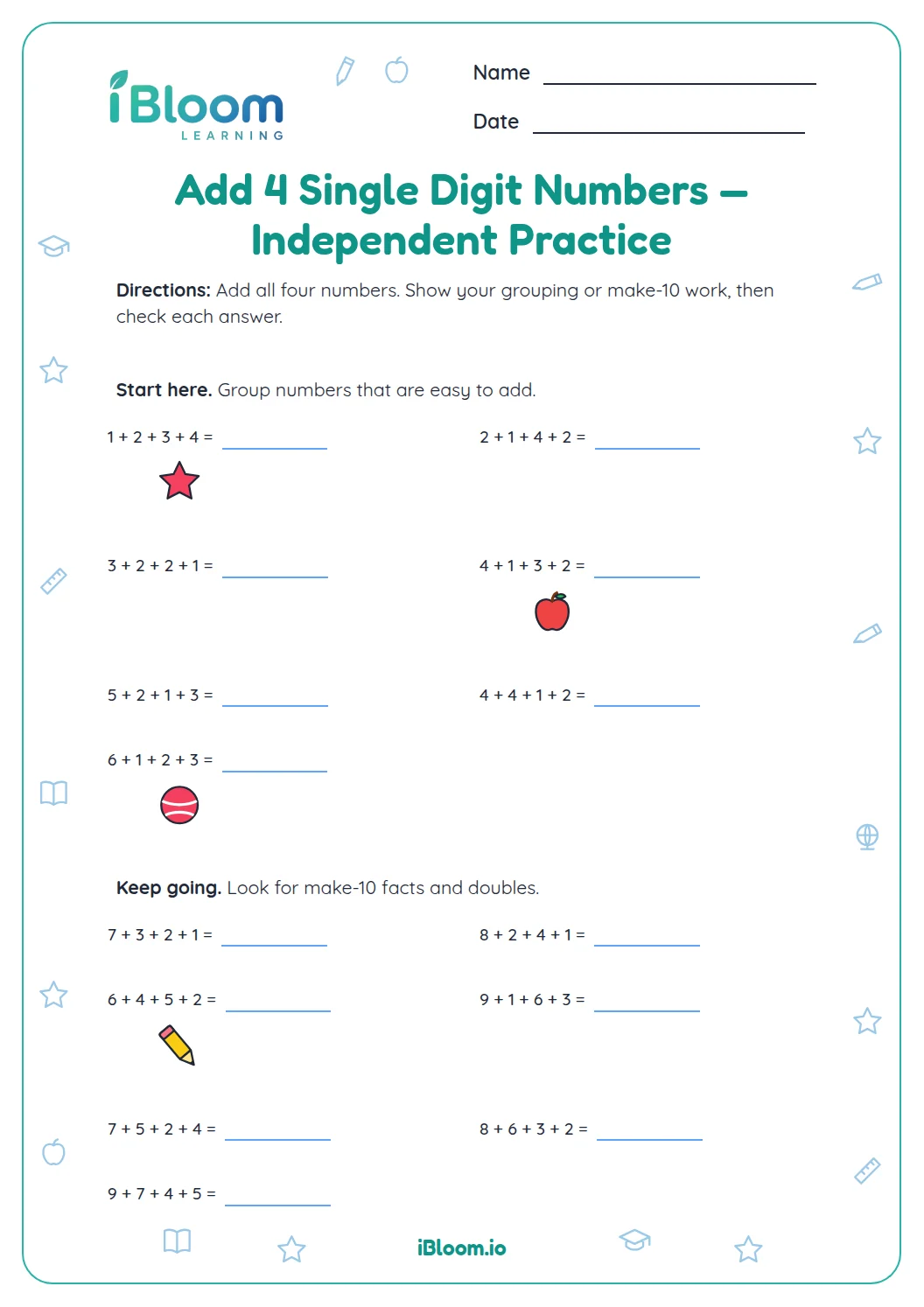
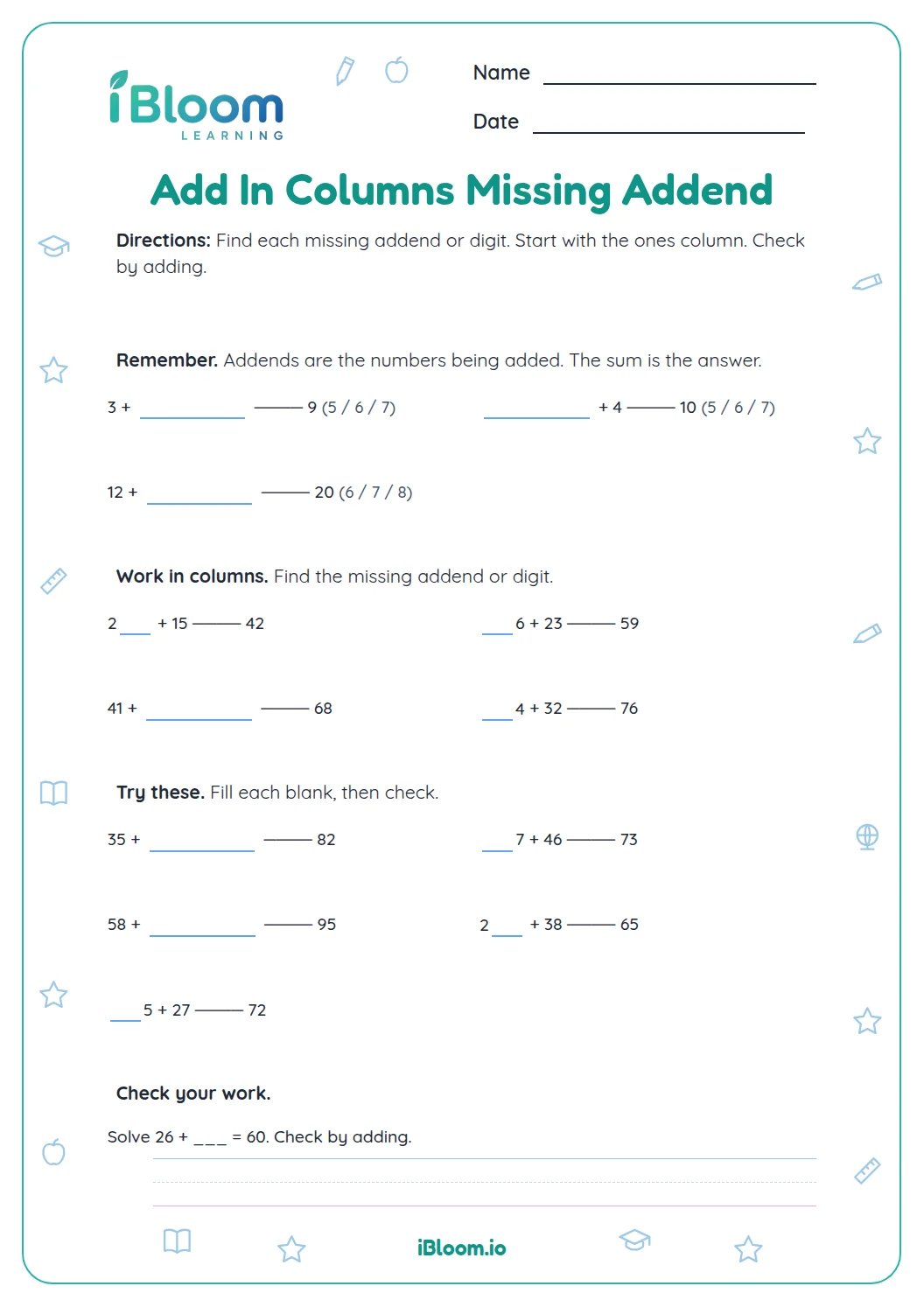
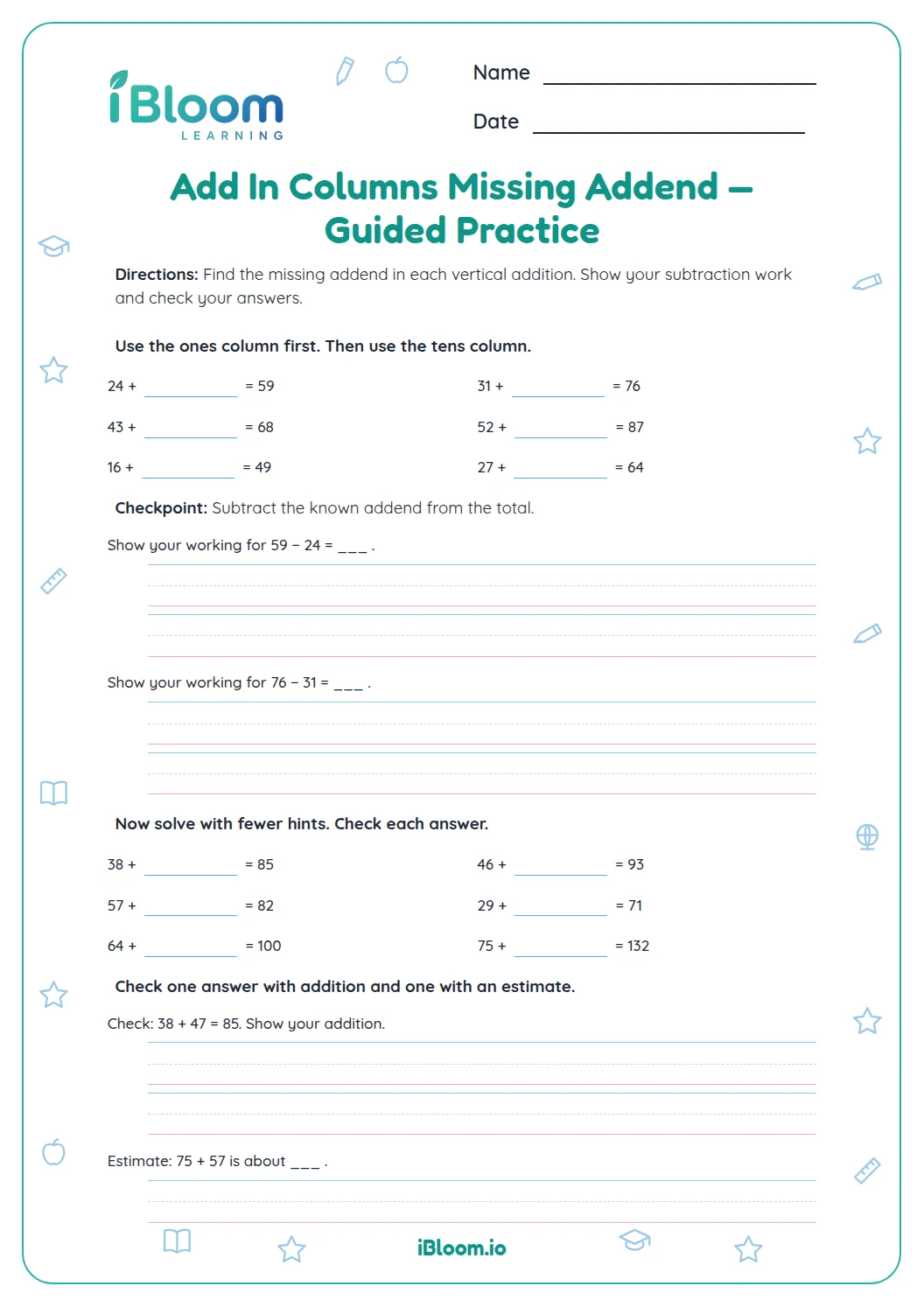
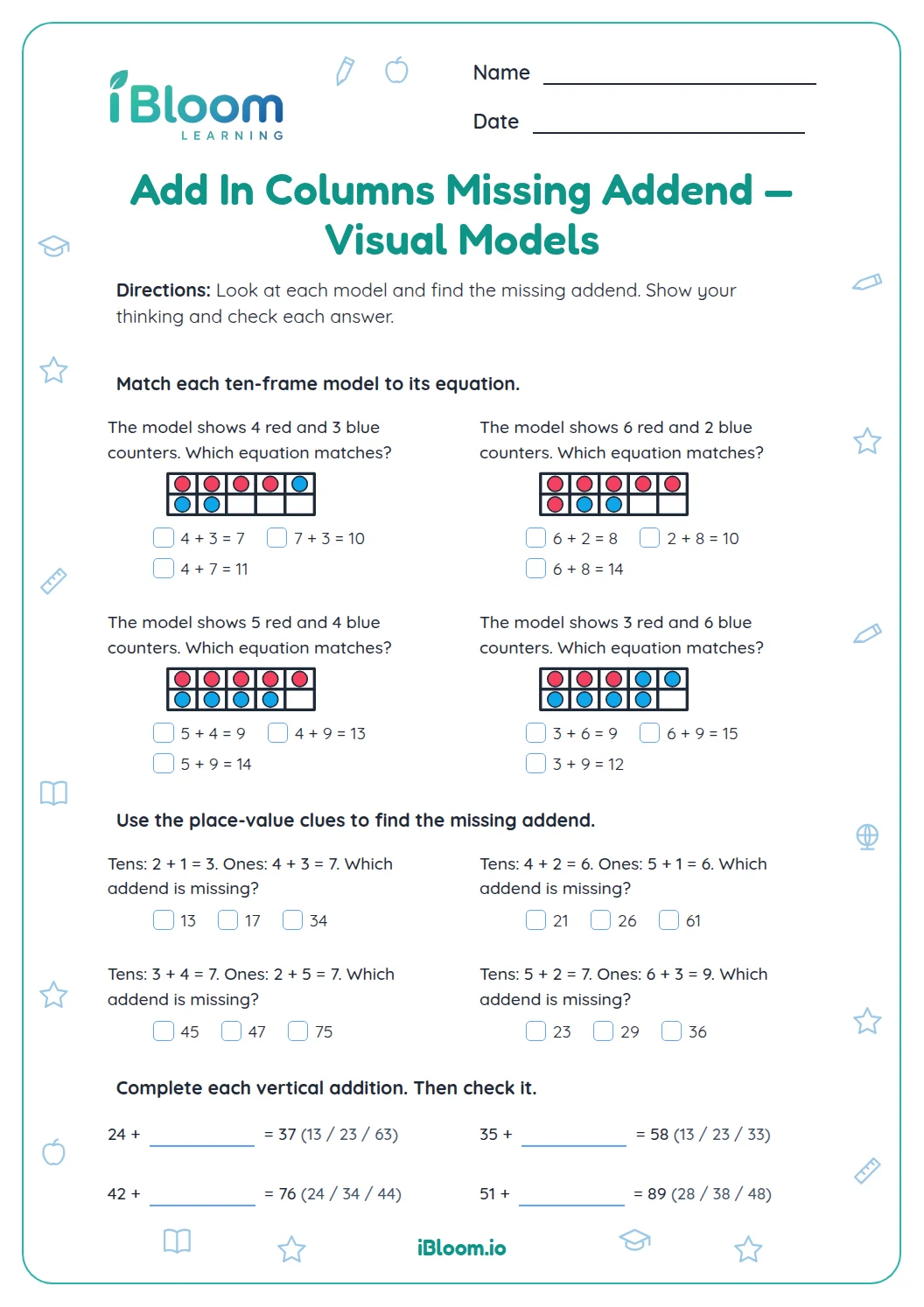
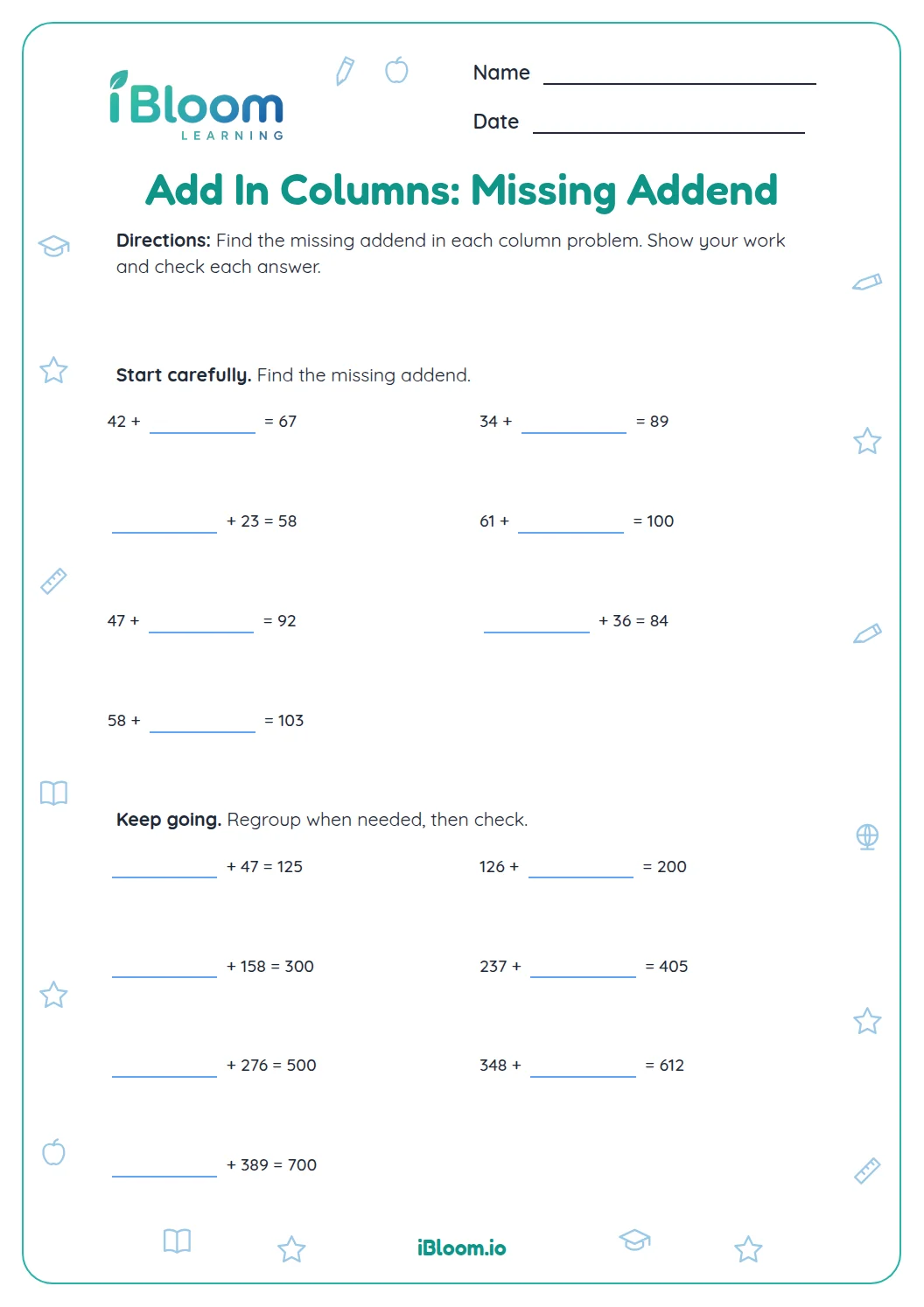
This Grade 2 worksheet asks students to find a missing one-digit addend in four-number sums. Students solve equations, use number bonds and counters, and explain how addition and subtraction check a result. The separate answer key includes missing values and sample reasoning for open responses. The practice supports 2.OA.B.2 through addition and subtraction within 20.
Aligned to 2.OA.B.2
What does a missing addend tell us?
The four addends combine to make the total. Add the known values, then find how much more is needed.
How can I check a sum?
Add all four numbers to confirm the total. A subtraction check can also compare the total with the known addends.
How to use this worksheet
- 1Read the part heading and direction before you begin.
- 2Solve each item in order, showing work when it helps.
- 3Reread your answer and check that it answers the prompt.
- 4Use the separate key to review each response.
Common mistakes and quick fixes
The mistake
Subtracting only one known addend from the total.
The fix
Add all three known addends first, then subtract their sum.
The mistake
Stopping after finding the blank without checking.
The fix
Add all four addends and compare the result with the stated total.
The mistake
Confusing a part with the whole in a number bond.
The fix
Find the circle that shows the total, then combine the two parts to make it.
Common Core alignment
This worksheet provides focused practice with a grade-level Common Core skill.
Use addition and subtraction within 20 to solve fluently and find missing addends.
On this sheet: Students use addition facts and related subtraction to find a missing one-digit addend in four-addend equations.
Show the official wordingHide the official wording
Fluently add and subtract within 20 using mental strategies. By end of Grade 2, know from memory all sums of two one-digit numbers.
What to practice next
Make more practice
Further reading
Questions parents and teachers ask
What is a missing addend?
A missing addend is a number that belongs in an addition equation. Add the numbers that are shown, then find how much more is needed to reach the total. For 3 + 2 + ___ + 1 = 10, the missing number is 4.
How do I solve question 3?
The known addends in question 3 are 6, 1, and 2, which total 9. The full sum is 15, so subtract 9 from 15. The missing addend is 6; adding all four numbers checks the result. This also confirms the total.
Can question 14 have different answers?
Yes. The two missing one-digit numbers must add to 7 because the other addends total 5 and the full sum is 12. For example, 3 and 4 work, as do 2 and 5. Check that both numbers are different and each is one digit.
How many questions are on the page?
There are 16 questions in four parts: eight equations, four visual model questions, and four reasoning prompts. A separate answer key shows each missing value and gives sample responses where students explain or create an equation. Use it to check the work after solving.
How does a number bond help?
A number bond links a whole to two parts. If the whole is 12 and one part is 4, the missing part is 8 because 4 and 8 combine to make 12. This shows the same relationship as a missing-addend equation.