








About this worksheet
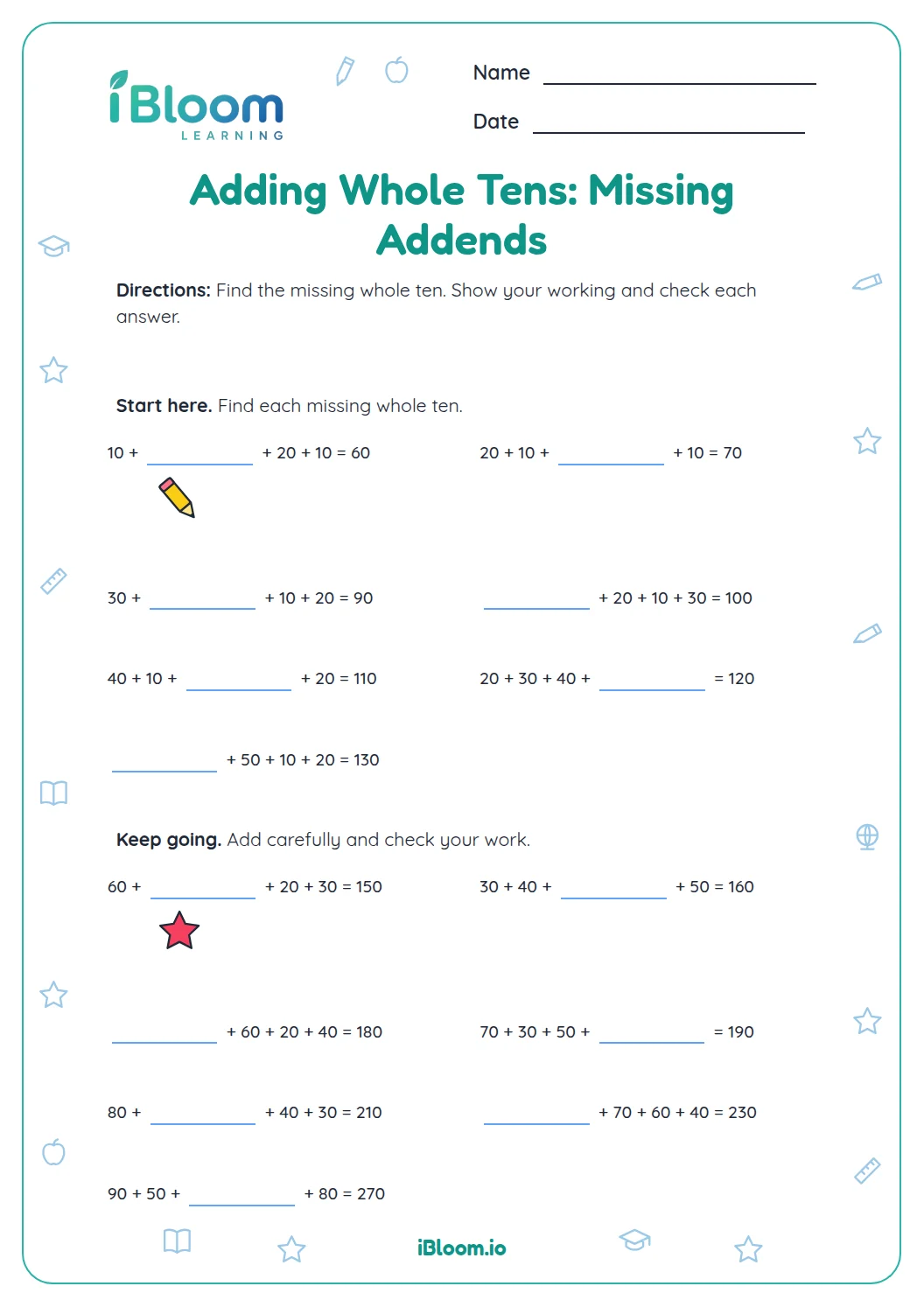
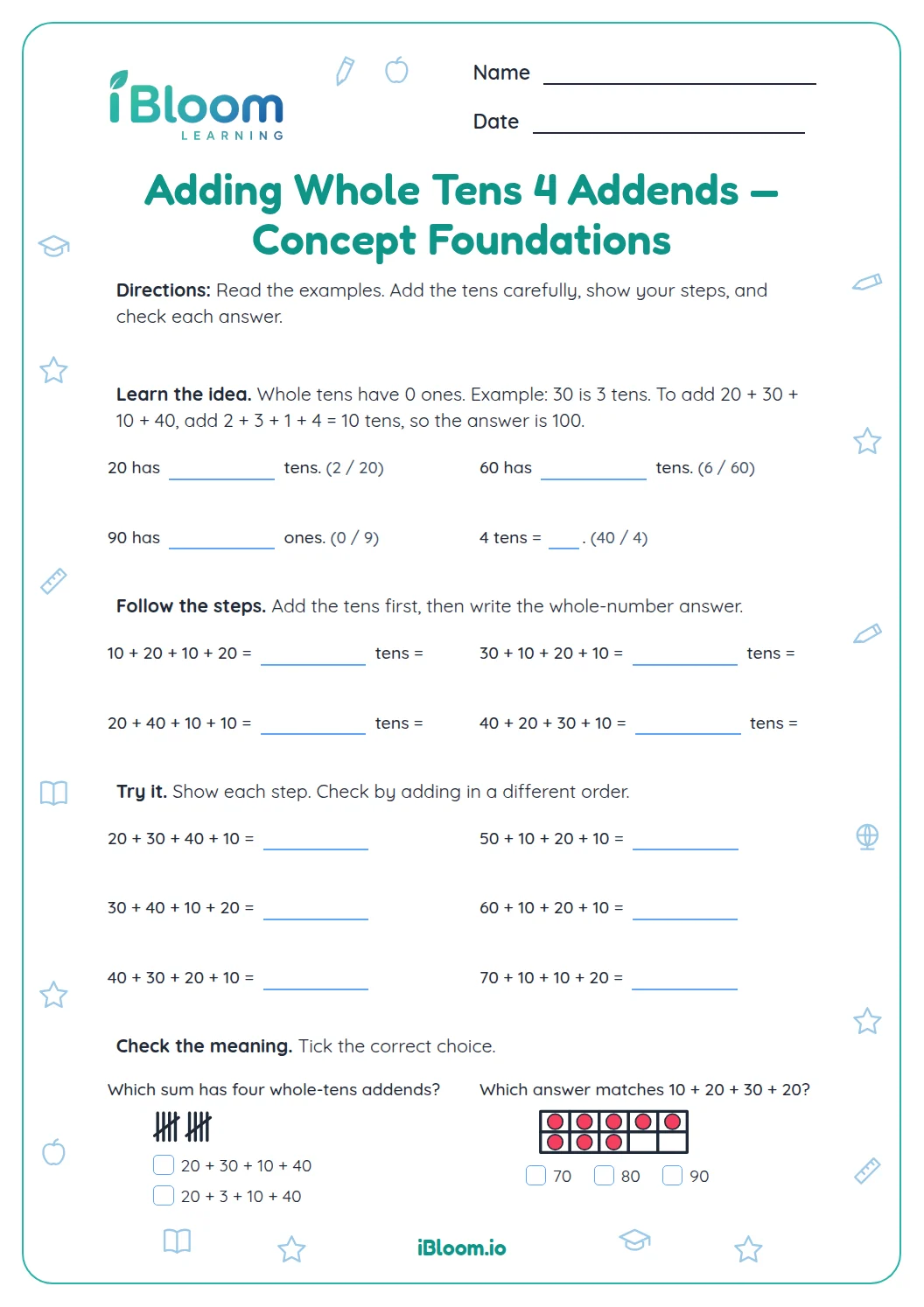
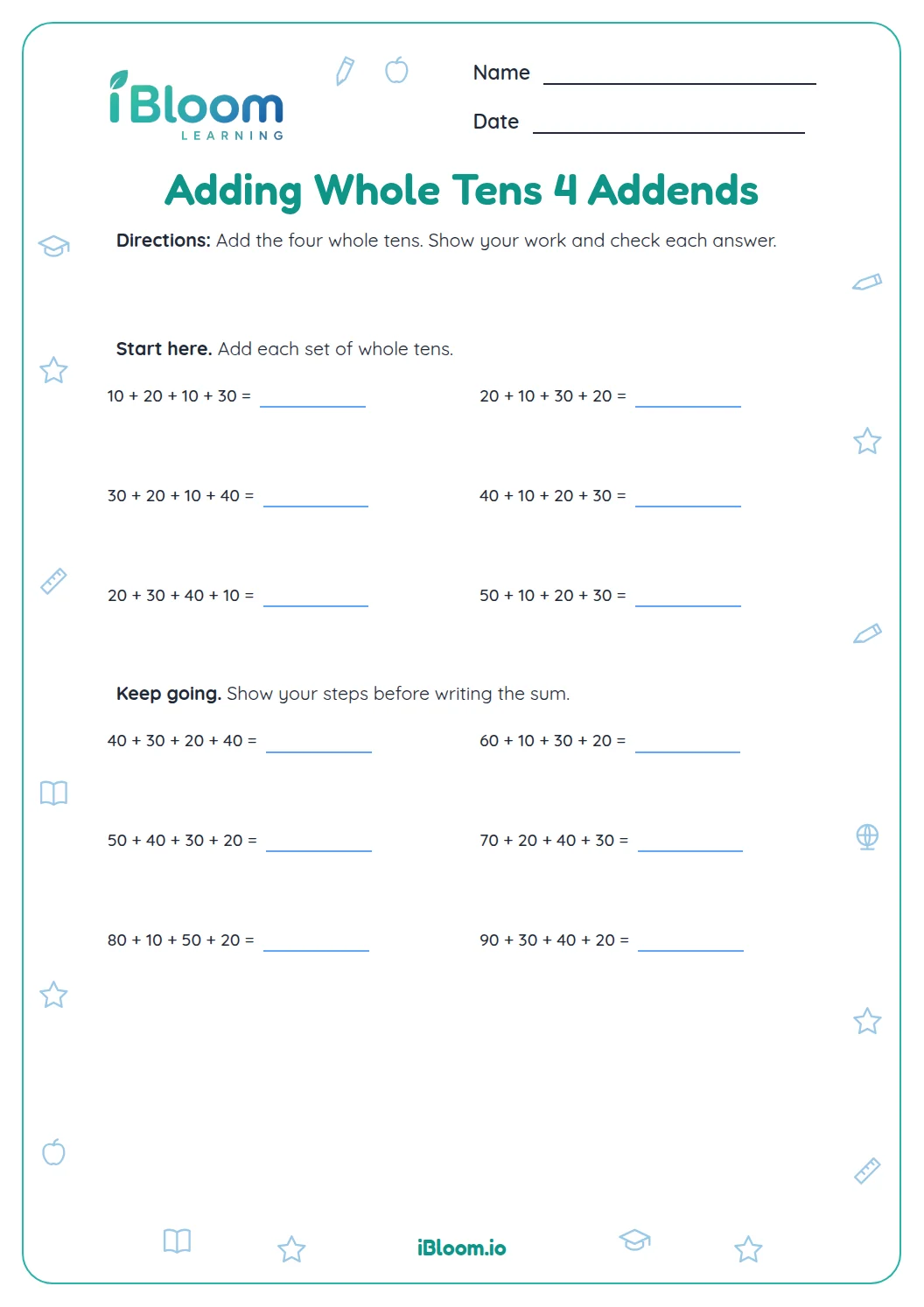
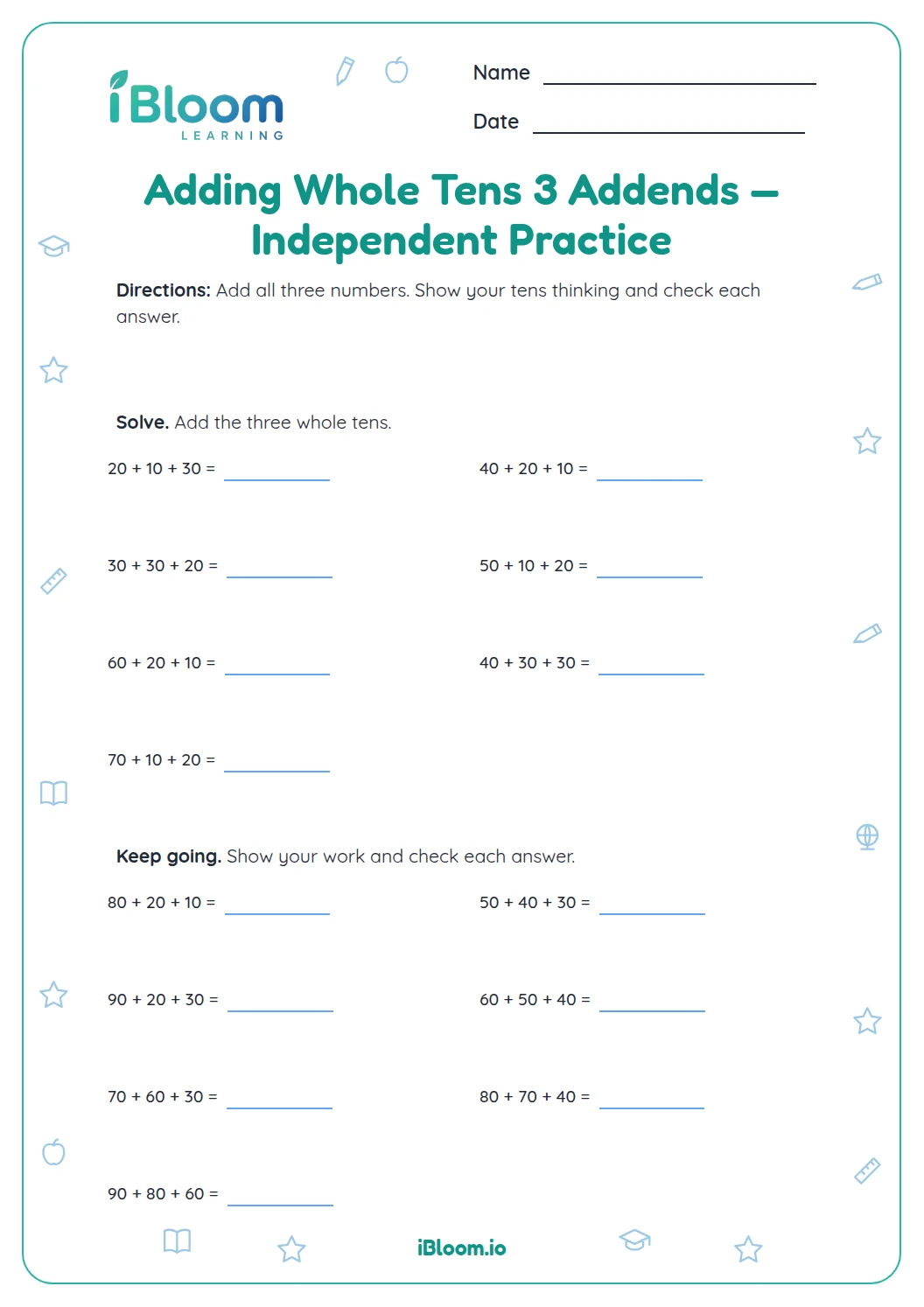
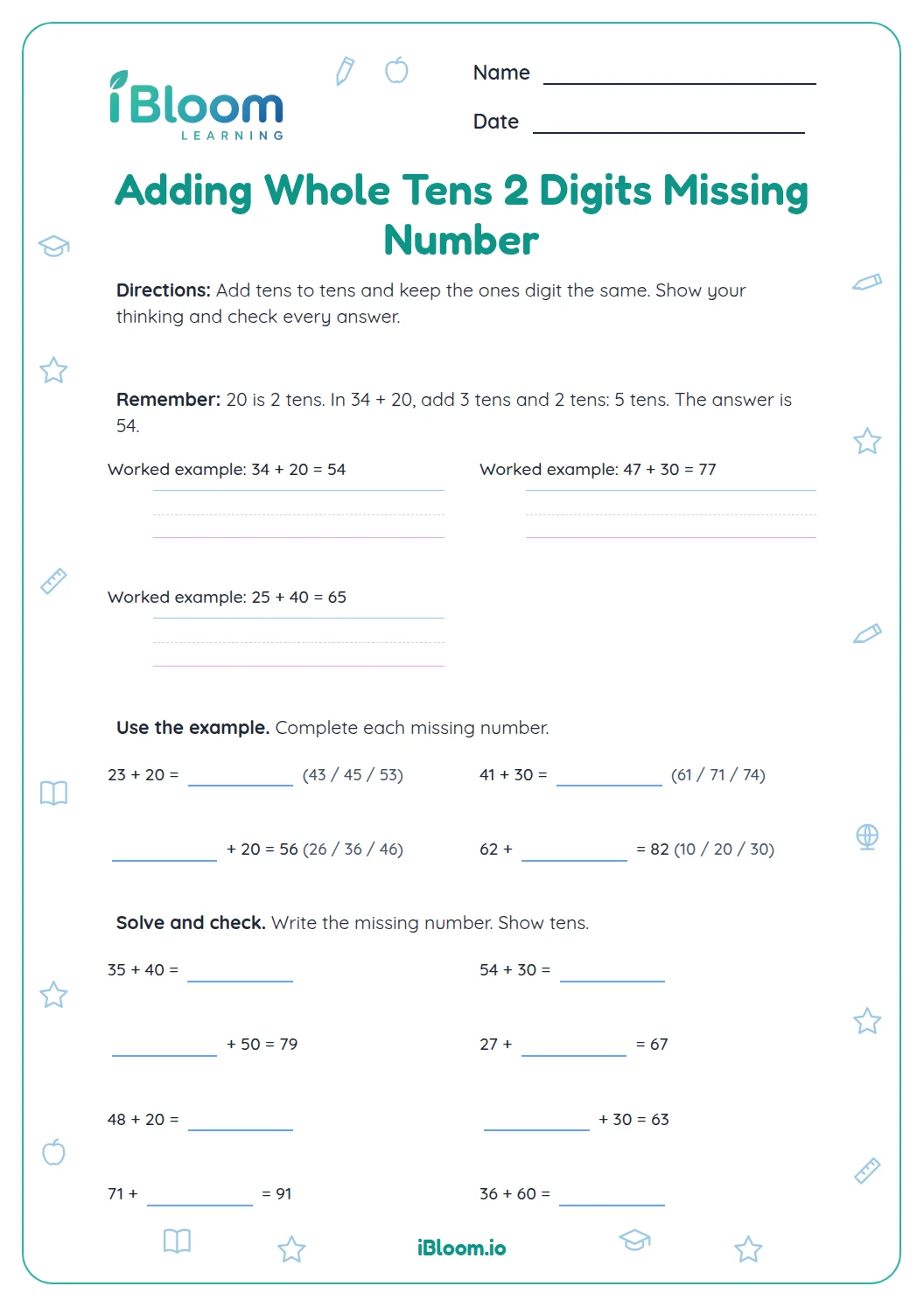
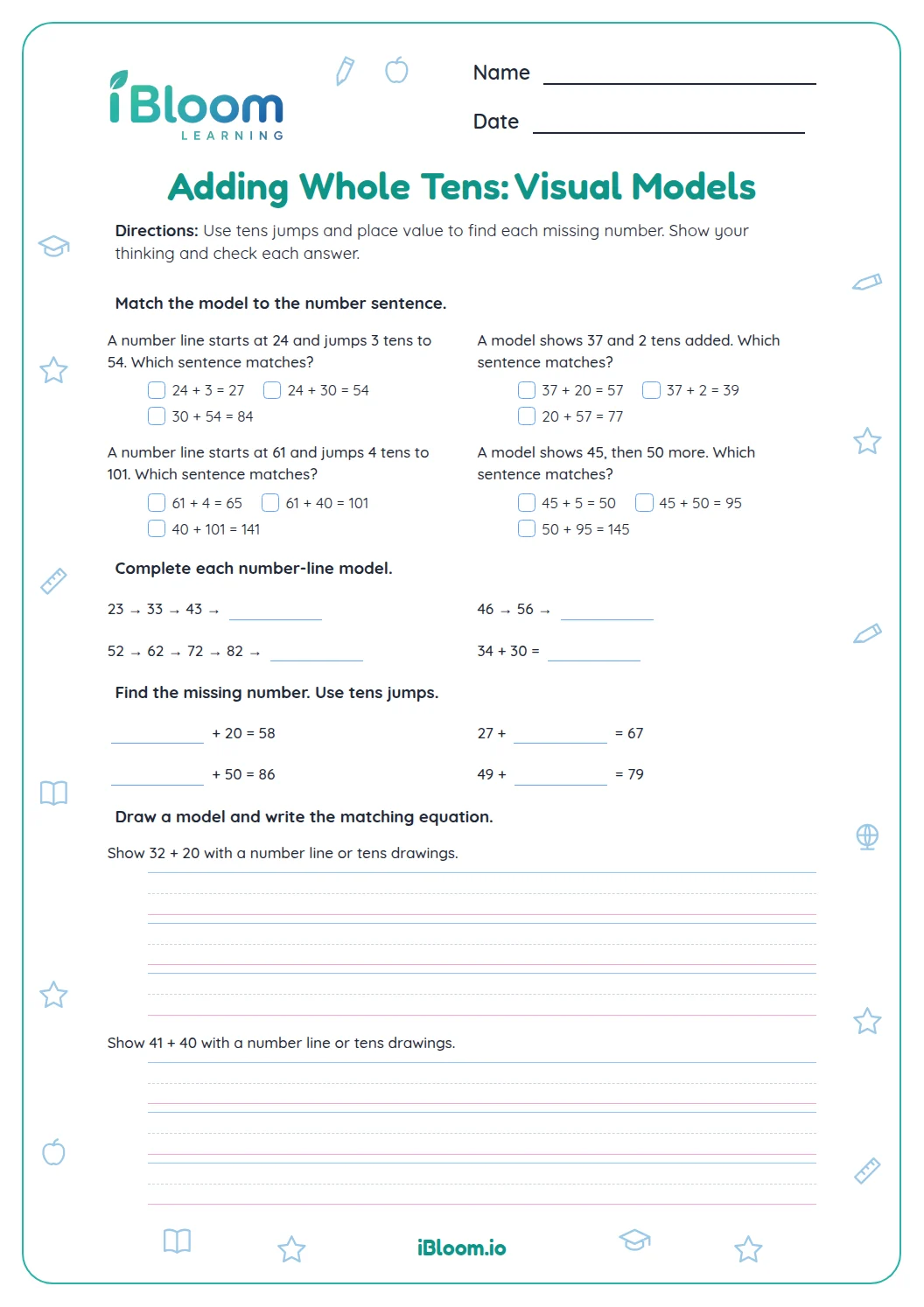
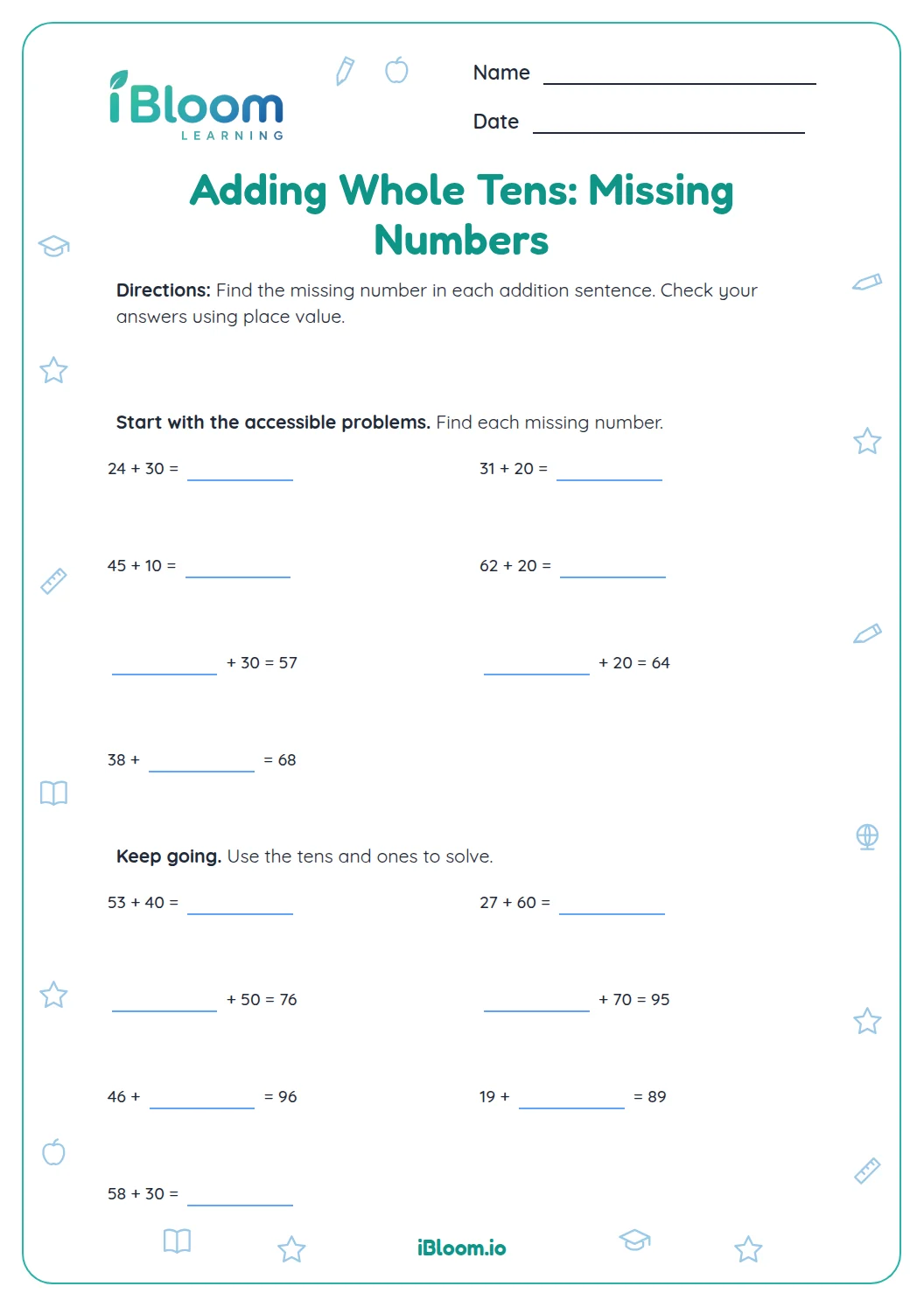
This Grade 2 addition worksheet focuses on four whole-tens addends with one missing number in each equation. Students add the known tens, compare that sum with the total, and determine the missing tens. The 16 problems use multiples of ten and totals within 100. The answer key lists each missing value. This work aligns with Common Core 2.NBT.B.6, which asks students to add up to four two-digit numbers using place-value strategies and properties of operations.
Aligned to 2.NBT.B.6
How can you find the missing tens?
Combine the three known addends first. Subtract their sum from the total or count up by tens to find the blank. In Question 2, 40 + 10 + 10 = 60; 20 more makes 80.
- 1Question 2: 40 + ___ + 10 + 10 = 80. The known addends total 60, so the missing addend is 20.
How can you check an equation?
Put the missing number in its place and add all four tens. If the sum matches the printed total, the equation is true.
Why are whole tens useful?
Whole tens can be counted or combined by place value. For example, 20 + 30 is five tens, or 50.
How to use this worksheet
- 1Read the total at the right.
- 2Add the three visible tens and write the subtotal.
- 3Count up by tens or subtract the subtotal from the total.
- 4Replace the blank and add all four terms to check.
Common mistakes and quick fixes
The mistake
Adding the visible numbers but forgetting the total.
The fix
Find the subtotal, then ask how much more is needed.
The mistake
Writing the subtotal as the missing number.
The fix
Check whether it makes the four addends reach the total.
The mistake
Counting one extra or one fewer ten.
The fix
Count tens carefully and verify the final sum.
Common Core alignment
This page practices the skills named in the standard below.
Add four two-digit whole tens and use the total to find a missing addend.
On this sheet: Add four two-digit whole tens and use the total to find a missing addend.
Show the official wordingHide the official wording
Add up to four two-digit numbers using strategies based on place value and properties of operations.
What to practice next
Make more practice
Further reading
Questions parents and teachers ask
How many problems are there?
The answer key gives the missing addend for each of the 16 equations. Students can check a response by substituting it into the equation and adding all four whole tens to see whether the printed total is reached. This also reinforces checking an addition sum.
Do students need subtraction?
Yes. Every addend and total is a whole ten, so each missing value is also a multiple of ten. Children can reason in groups of ten and then replace the blank to check the complete addition equation. This keeps the numbers manageable.
Are answers multiples of ten?
Yes. Every addend and total is a whole ten, so each missing value is also a multiple of ten. Children can reason in groups of ten and then replace the blank to check the complete addition equation. This keeps the numbers manageable and makes counting by tens useful.
Should students show work?
The directions ask students to show their working and check each answer. A useful method is to add the three known terms, find the difference to the total, and then add all four terms after filling in the blank.
What does the answer key show?
The answer key gives the missing addend for each of the 16 equations. Students can check a response by substituting it into the equation and adding all four whole tens to see whether the printed total is reached.