





About this worksheet
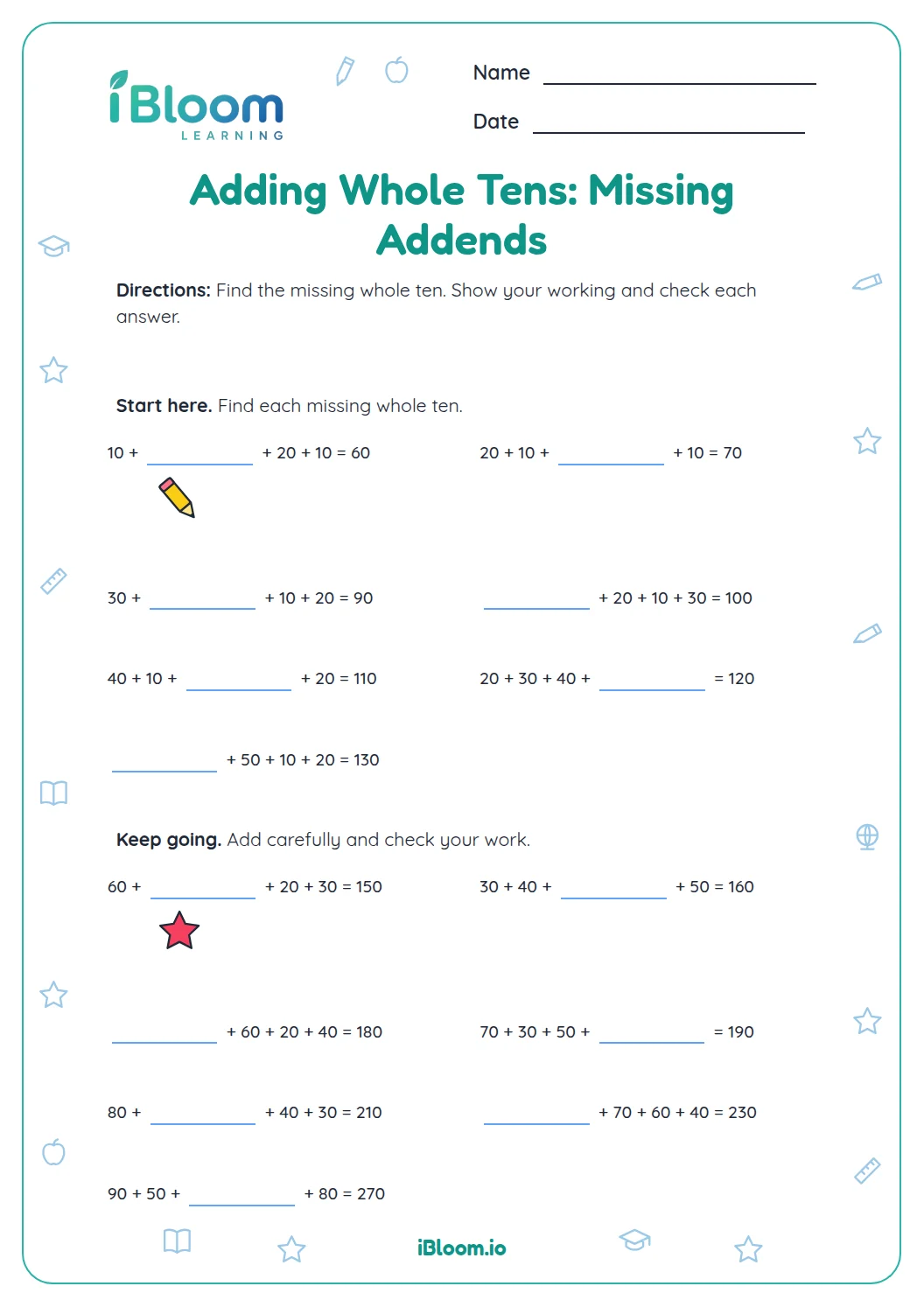
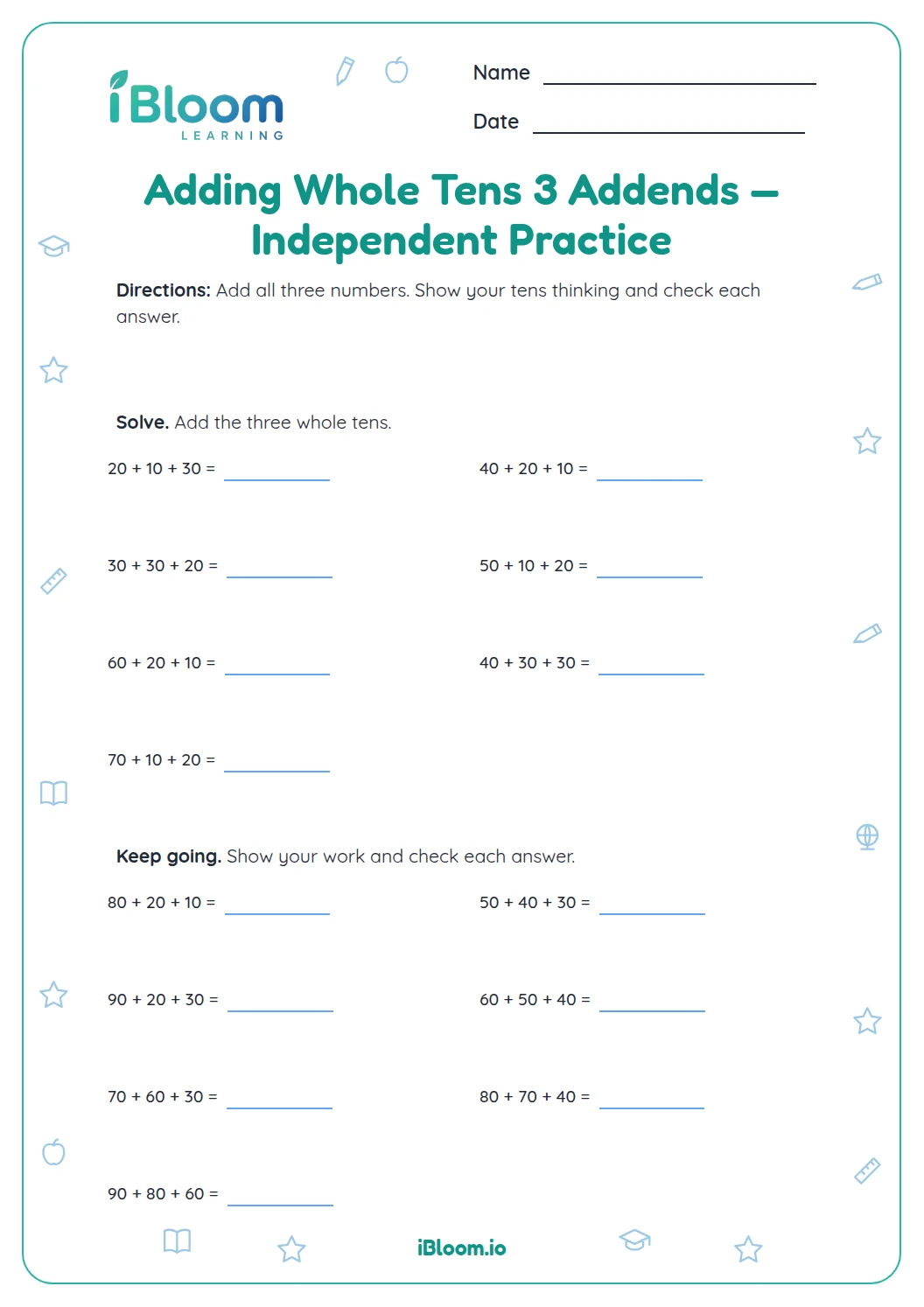
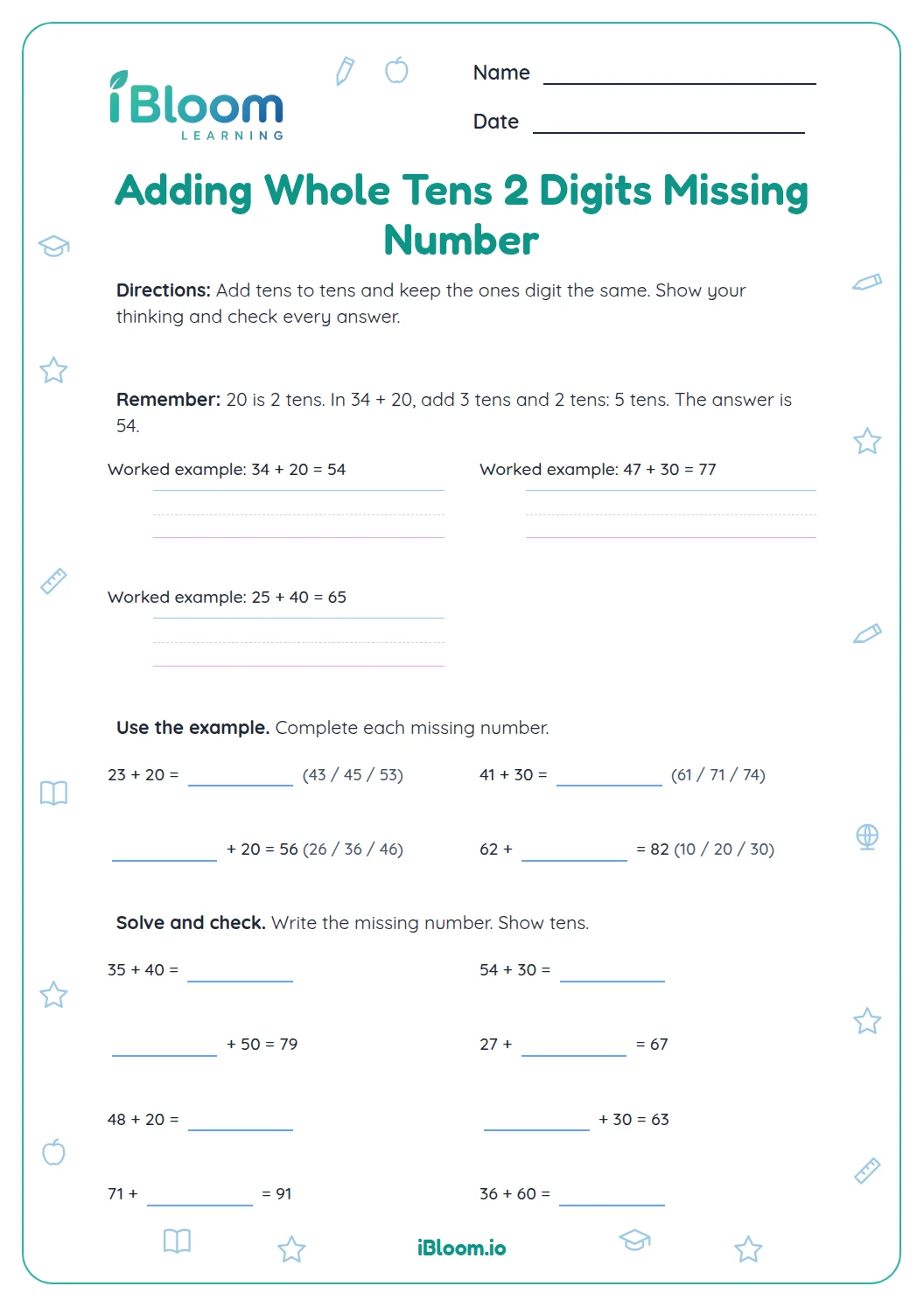
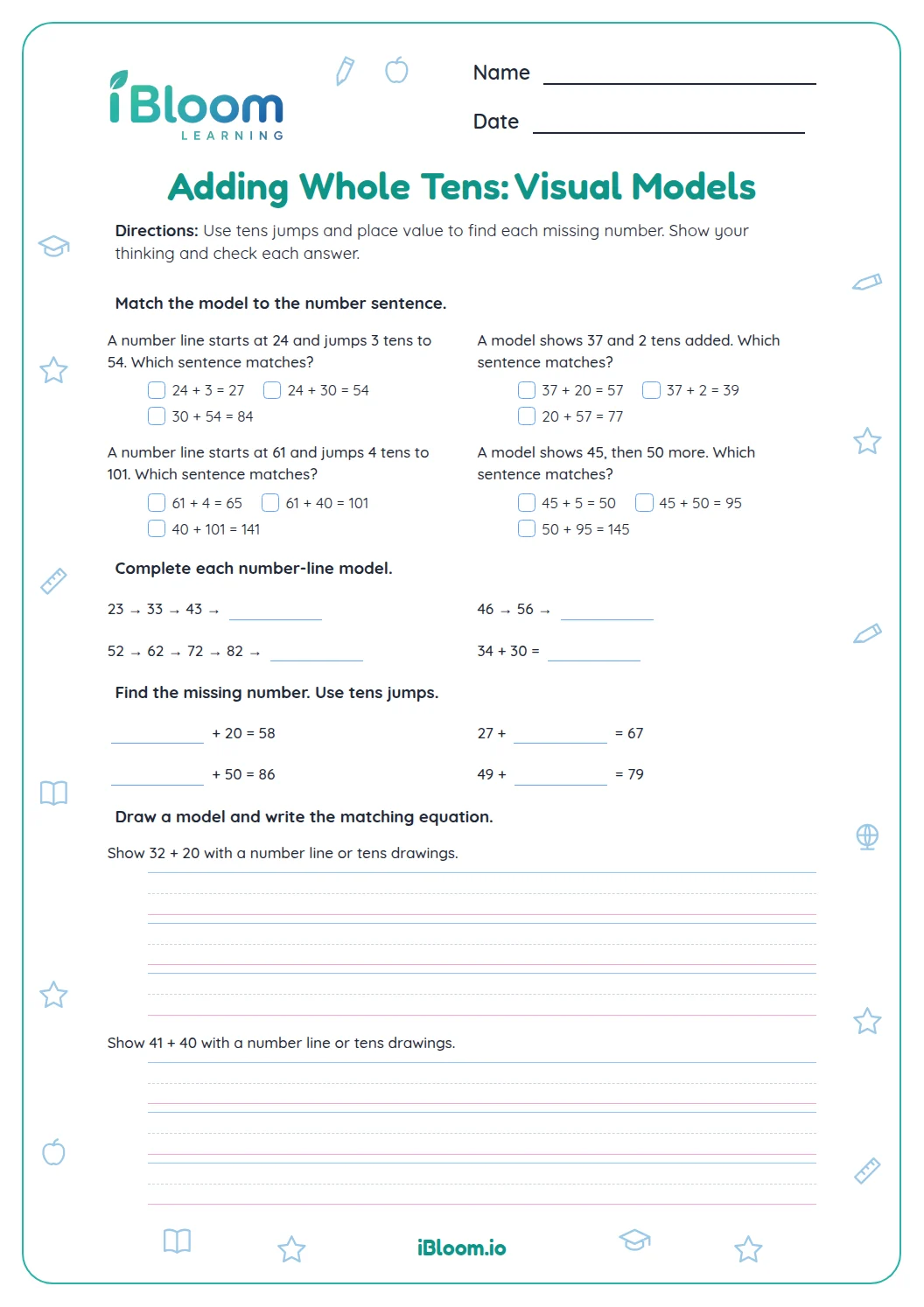
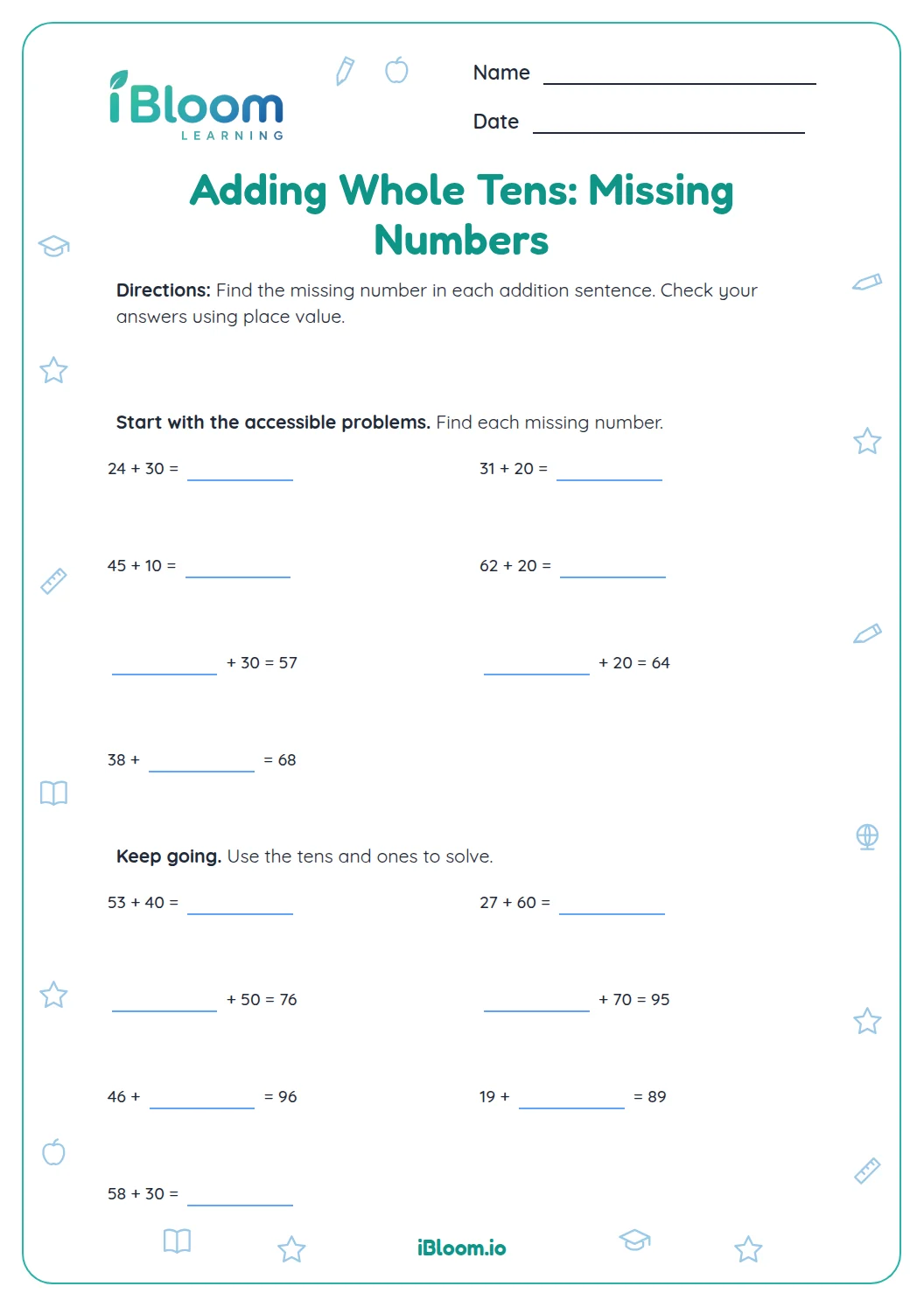
This Grade 2 printable practices finding a missing whole-ten addend and adding four addends. Students complete missing-number equations, calculate totals, solve two short situations, and correct a mistaken sum. The answer key shows the expected numbers and reasoning.
Aligned to 2.NBT.B.6
How do you find the missing whole ten?
Add the values that are already present. Subtract that subtotal from the target sum. Since each addend is a multiple of ten, the missing amount should also be a whole ten.
- 120 + 30 + 40 + ___ = 120
- 220 + 30 + 40 = 90; 120 − 90 = 30
How can grouping make four addends easier?
Pair addends that make a friendly total, such as 40 + 60 and 30 + 70. Adding the two pairs can be easier to track than combining each addend one at a time.
How can a student check a total?
Question 15 names three addends: 10, 20, and 30. They total 60, so 40 is the fourth addend needed to make 100. Question 16 asks for the total of 40, 20, 50, and 30, which is 140.
How can students work through the page?
- 1Read the target total before calculating.
- 2Add only the numbers that are given.
- 3Find the difference between the target and the subtotal.
- 4Group pairs of tens when adding four numbers.
- 5Check by adding in a different order.
Common mistakes and quick fixes
The mistake
Forgetting one of the four addends.
The fix
Point to each addend once while combining or pairing them.
The mistake
Subtracting the subtotal from an addend.
The fix
Subtract the known subtotal from the target sum.
The mistake
Writing 5 instead of 50 for five tens.
The fix
Keep the zero because the amount is five groups of ten.
Students add four whole tens and use known addends to find a missing amount.
On this sheet:
Show the official wordingHide the official wording
Add up to four two-digit numbers using strategies based on place value and properties of operations.
What to practice next
Make more practice
Further reading
Questions parents and teachers ask
What does “whole tens” mean here?
A whole ten is a number such as 20, 50 or 120 that ends in zero. The problems use whole tens so students can focus on combining groups of ten and reasoning about missing amounts. The answer key lists the missing addends and sums.
How many questions are on the printable?
There are 16 questions across two worksheet pages, followed by an answer key. Students find missing addends, add four whole tens, solve two short situations, and find another missing addend in a four-addend total. The key lists answers in question order so an adult can check each result.
Should students add left to right?
They can, but pairing addends may make the work easier to track. In 40 + 30 + 50 + 20, for instance, 40 + 60 and 30 + 20 make two simple totals. Any order is fine as long as each addend is counted once.
What if the missing amount is not a whole ten?
Recheck the total and every known addend. All values on this worksheet are whole tens, so each correct missing amount is also a whole ten. A non-ten result signals a calculation to revisit. Compare the known subtotal with the target total before writing the difference.
What should students practice next?
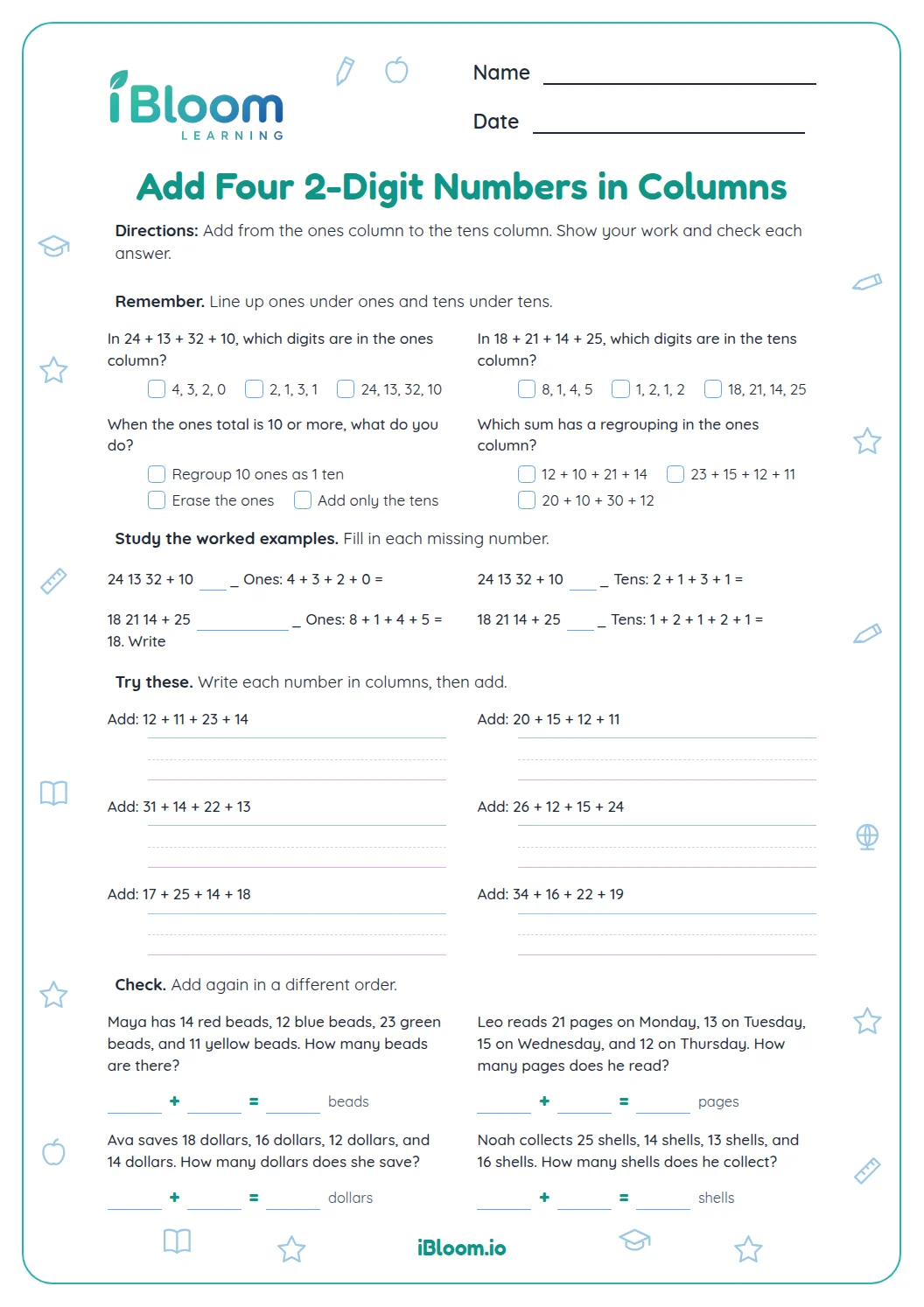
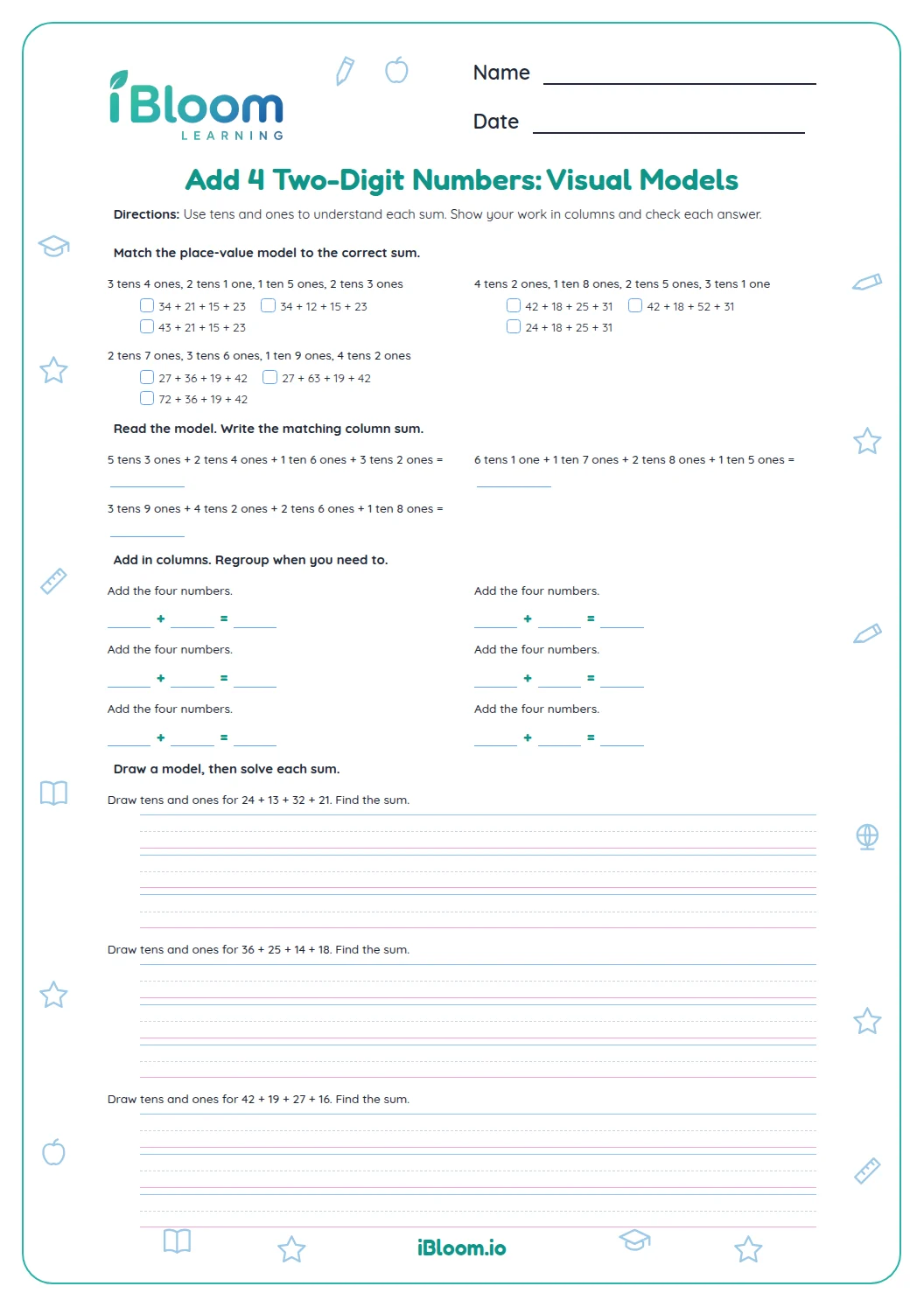
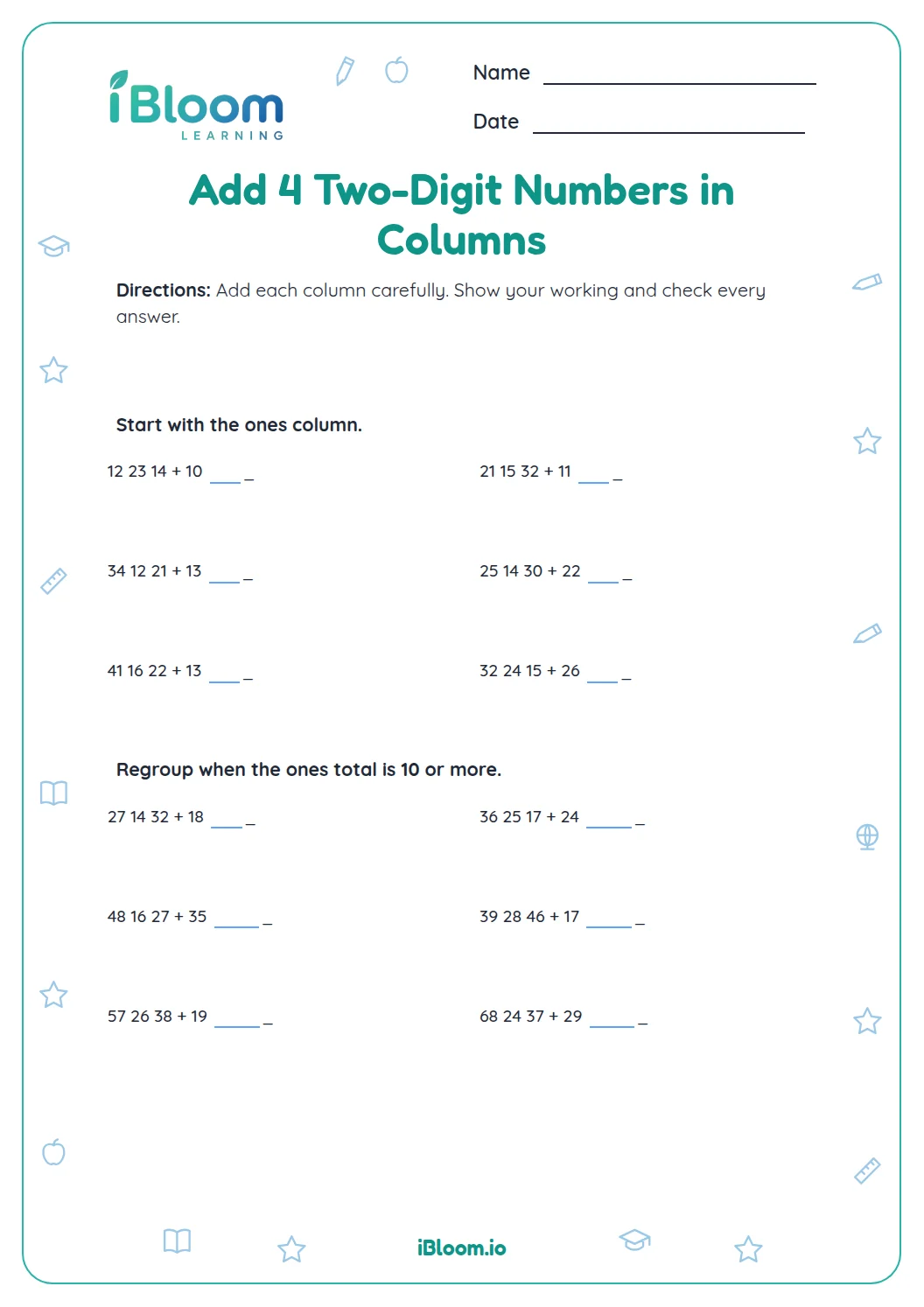
Students can begin with three-addend whole-ten sums, then try four two-digit addends in columns. The linked practice extends the same addition strategy to larger numbers and place-value recording, while keeping the work organized in manageable steps for independent practice.