

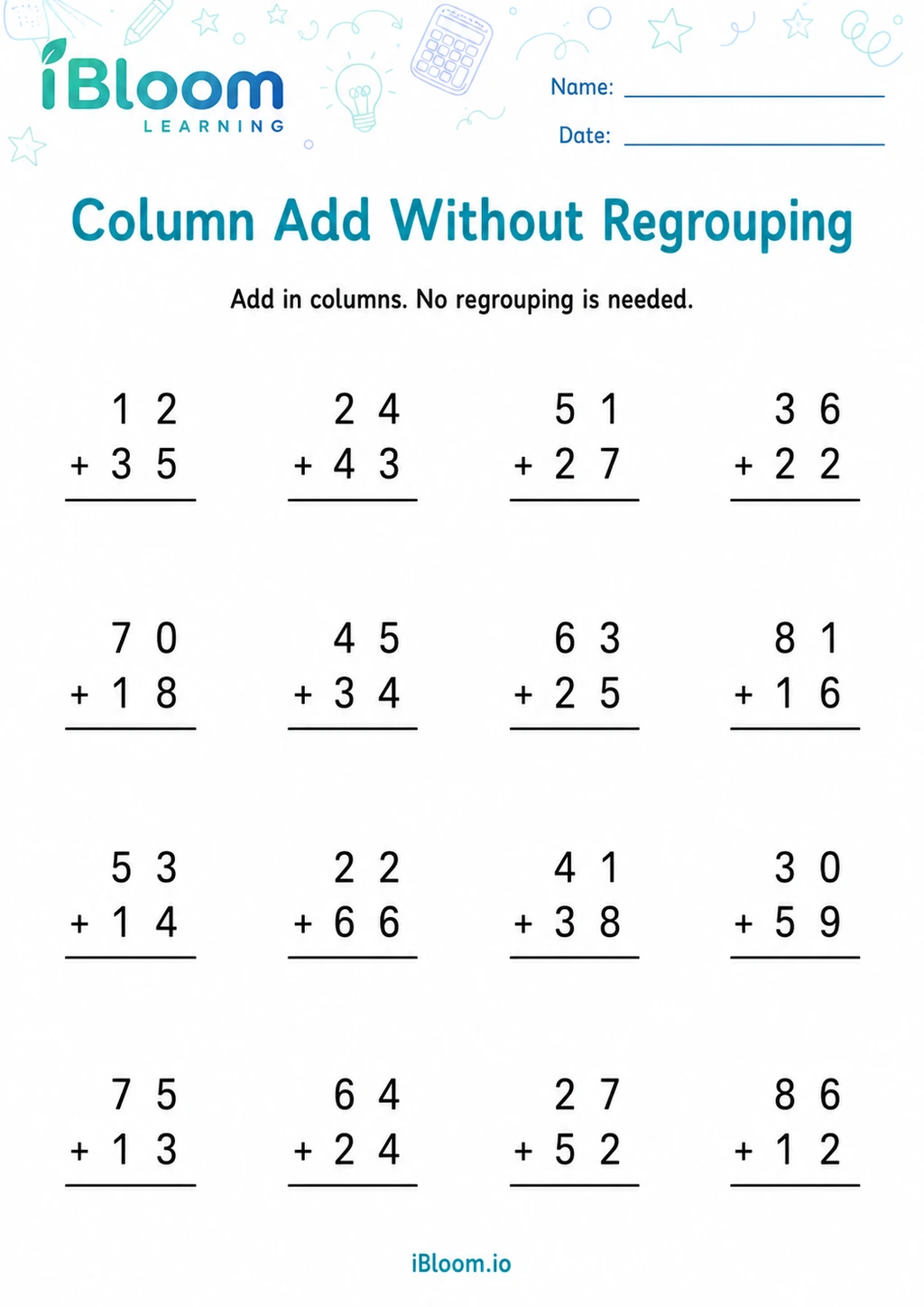
About this worksheet
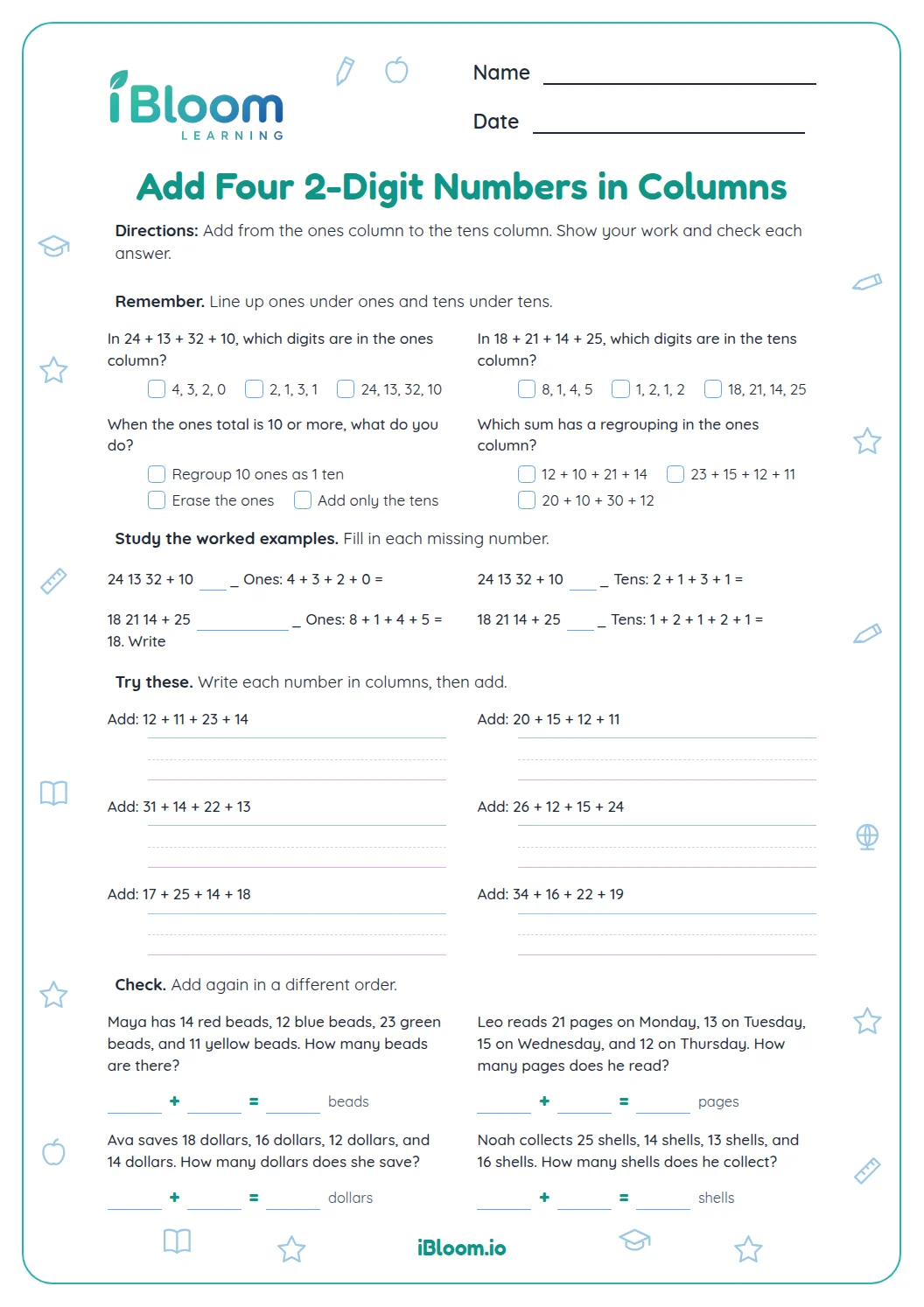
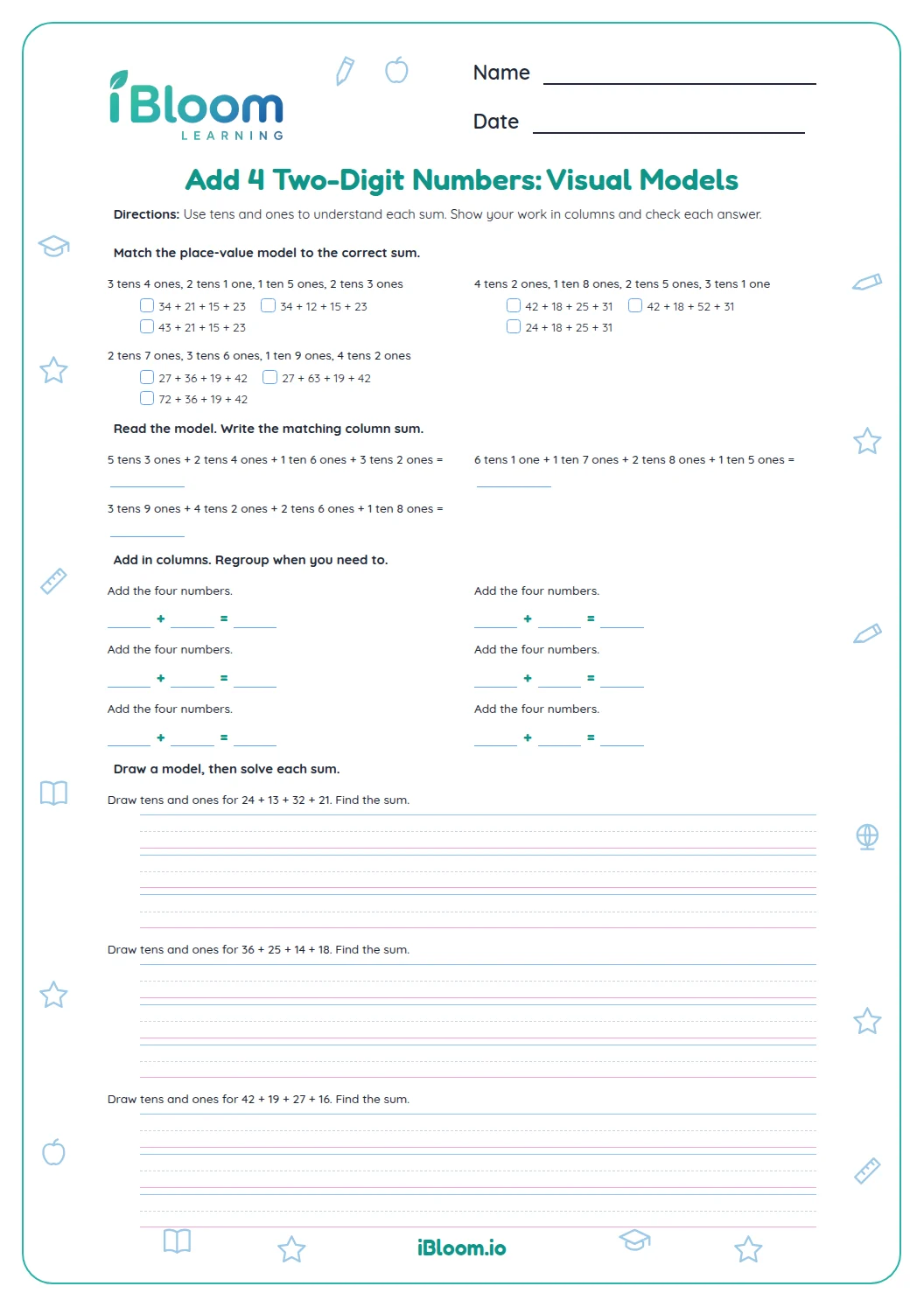
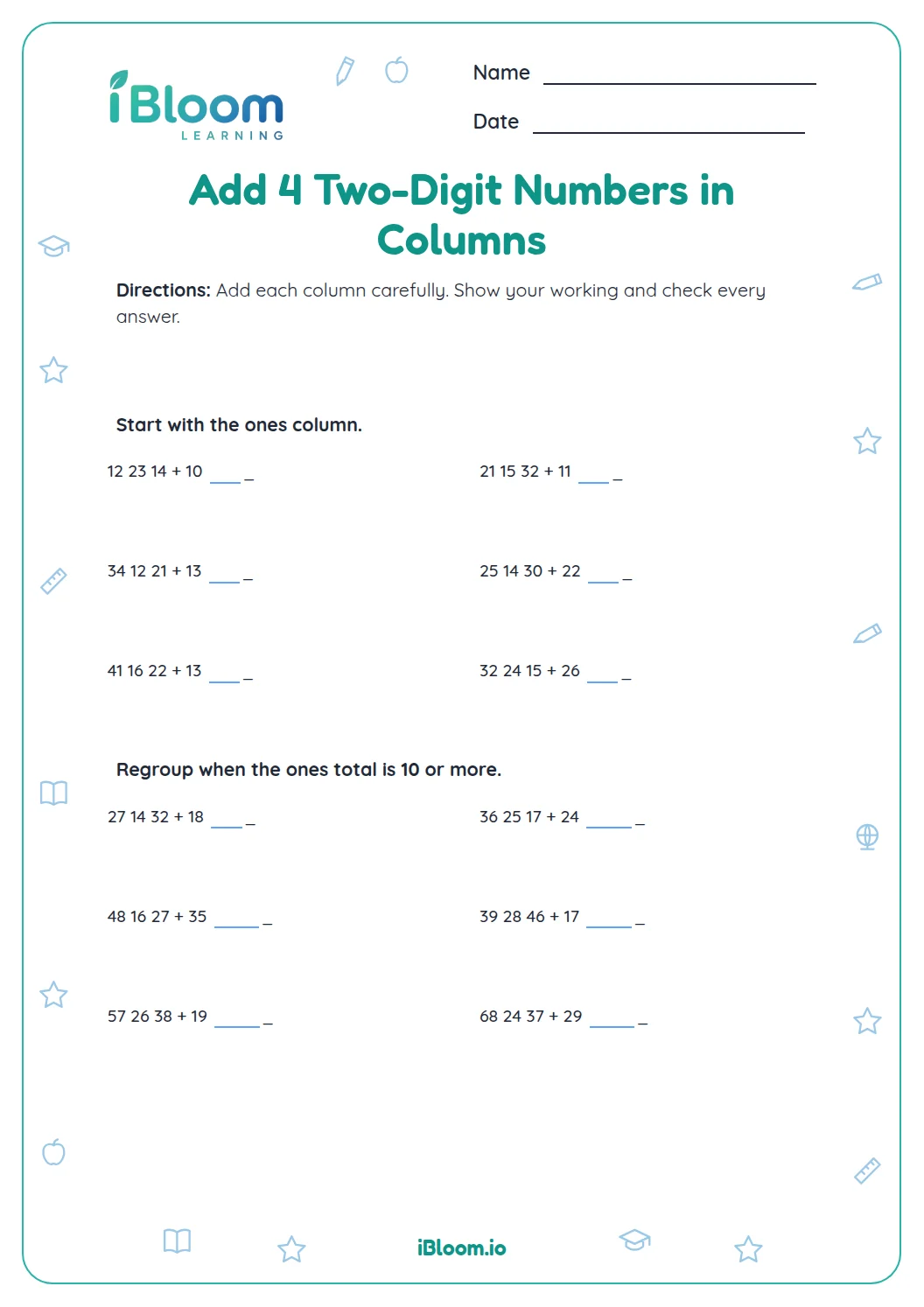
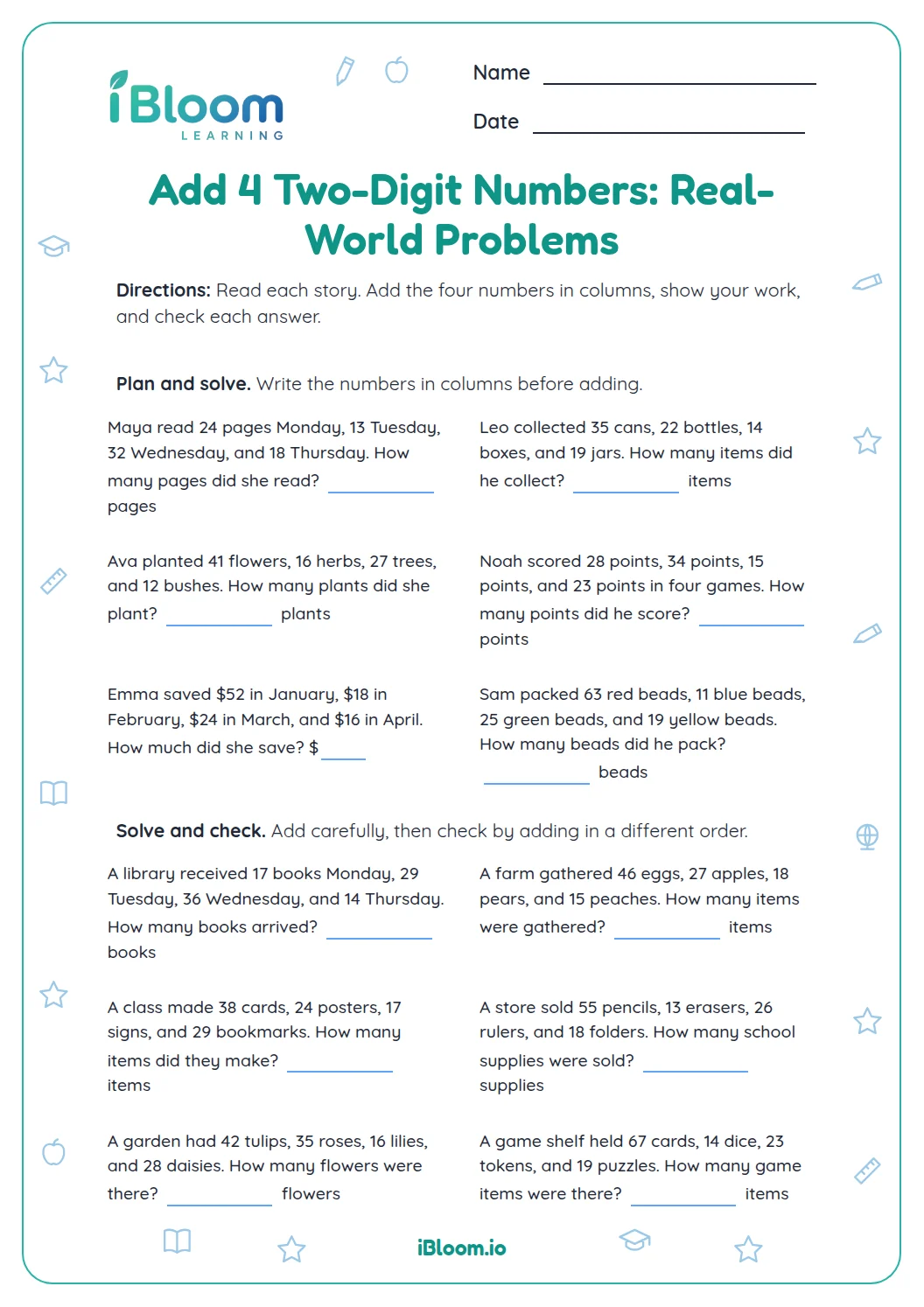
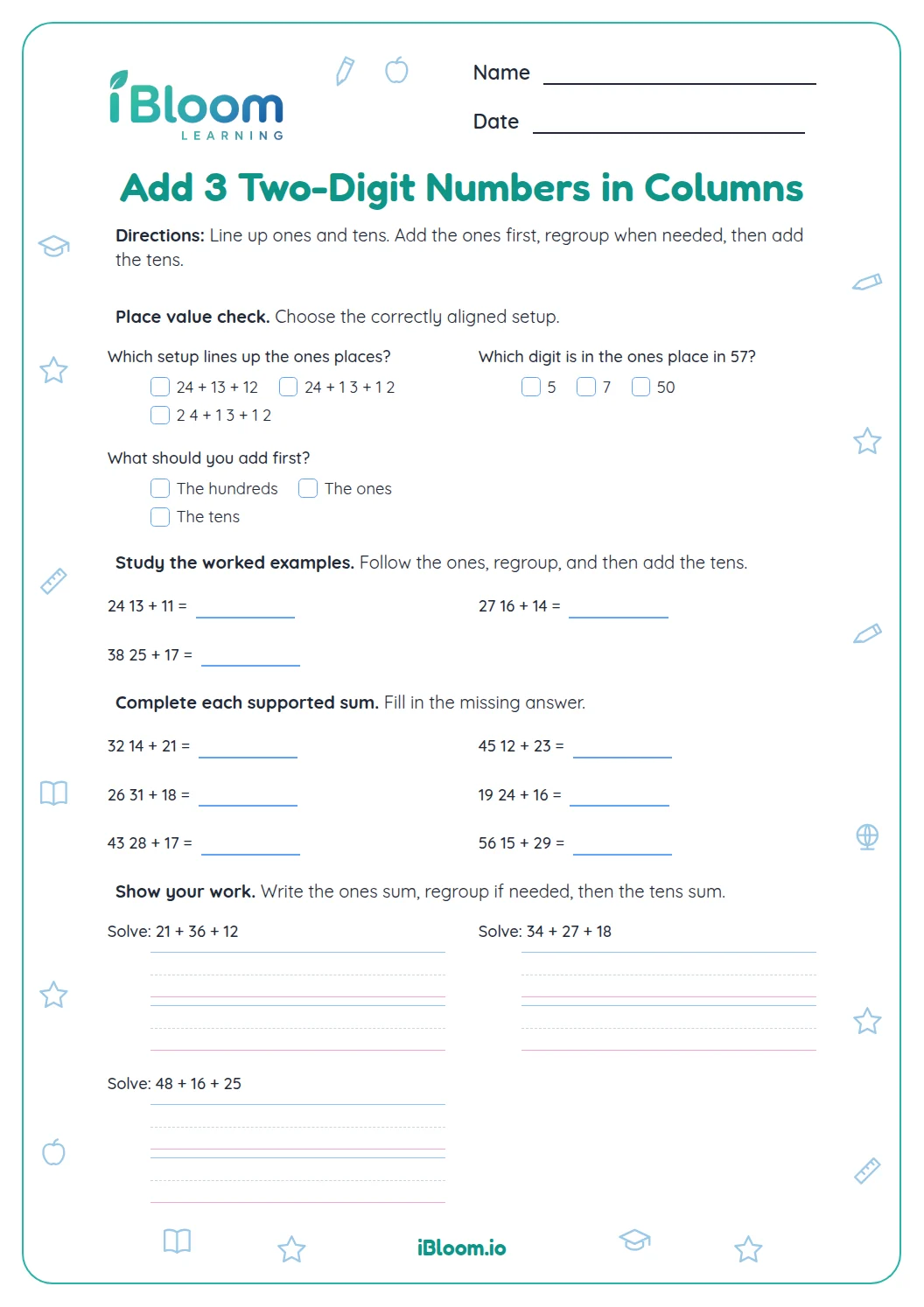
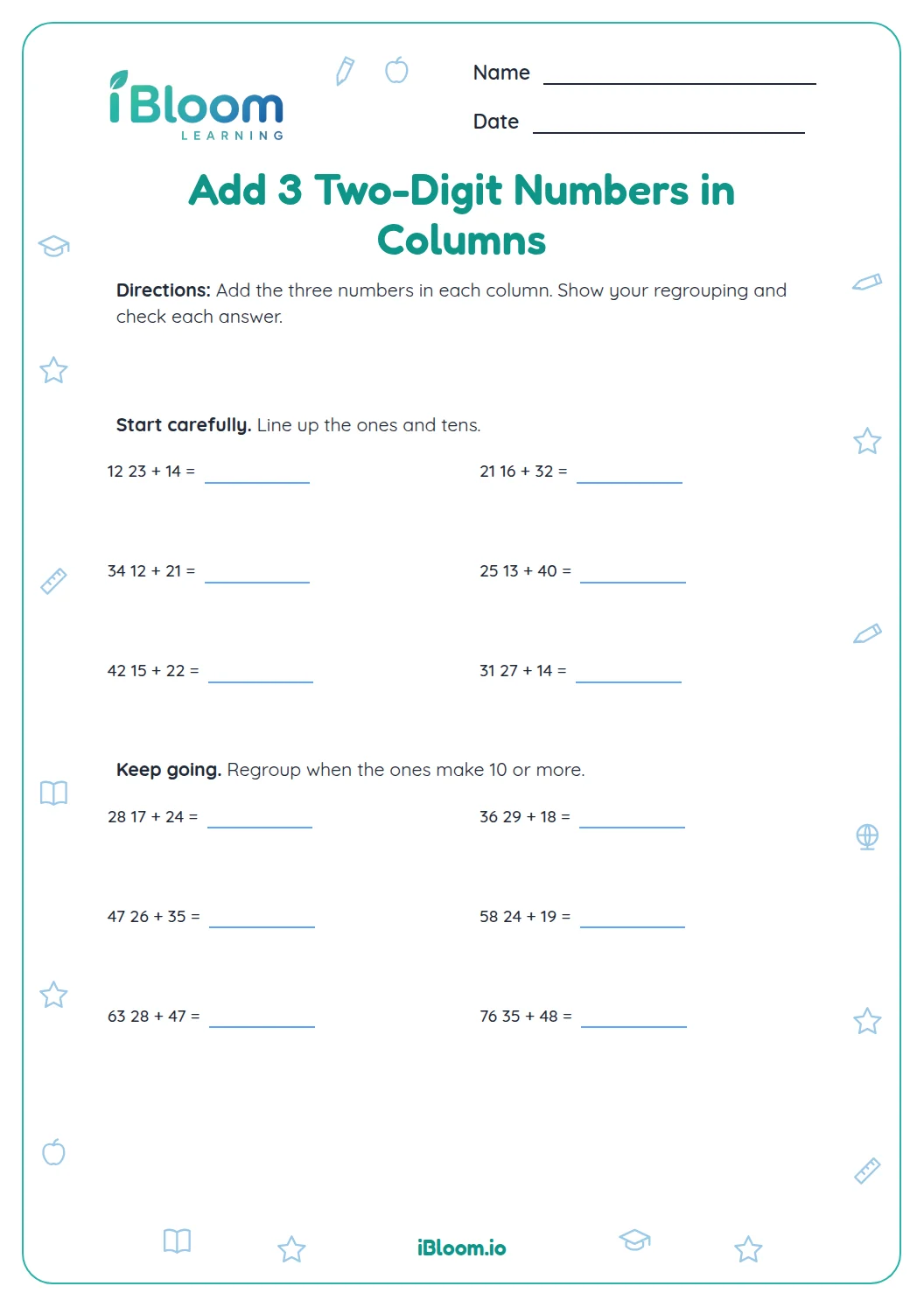
This Grade 2 worksheet gives 16 problems with four two-digit addends in each. Learners set up the addends in columns, add the ones and tens, and regroup when needed. The last part encourages choosing a helpful order before adding. It practices CCSS 2.NBT.B.6, and a two-page answer key is included.
Aligned to 2.NBT.B.6
How does column addition help?
Line up the ones digits and the tens digits in separate columns. Add the ones first. If they make 10 or more, regroup a ten before adding the tens. Each item on this sheet has four two-digit addends.
- Part A: set up sums and add by place value.
- Part B: regroup ones into a ten.
- Part C: choose a helpful order, then add in columns.
How can a learner add four numbers in columns?
For 26 + 17 + 35 + 12, combine ones and tens while keeping place values aligned.
- 126 + 17 + 35 + 12
- 2Ones: 6 + 7 + 5 + 2 = 20 ones
- 3Regroup 20 ones as 2 tens.
- 4Tens: 2 + 1 + 3 + 1 + 2 regrouped tens = 9 tens
- 5Total: 90
When is a helpful order useful?
Pair numbers that make a friendly total, such as 18 and 32 or 55 and 15 when available. Keep each addend intact, then record the final sum in columns.
How to use this worksheet
- 1Write the four addends vertically.
- 2Align each ones digit and tens digit.
- 3Add the ones and regroup a ten if needed.
- 4Add the tens, including any regrouped ten.
- 5Check the total with the answer key.
Common slips and quick fixes
The mistake
Putting a tens digit in the ones column.
The fix
Line up digits by place value, not by the left edge of the number.
The mistake
Forgetting to add a regrouped ten.
The fix
Write the carried ten above the tens column and include it.
The mistake
Adding only three of the four addends.
The fix
Mark each addend after including it in the column sum.
Common Core alignment
Add four two-digit numbers using place value and properties of operations.
On this sheet: The questions directly practice this skill.
Show the official wordingHide the official wording
Add up to four two-digit numbers using strategies based on place value and properties of operations.
What to practice next
Make more practice
Further reading
Questions parents and teachers ask
How should my child set up each problem?
Write the four addends one under another. Line up the ones digits in one column and the tens digits in another. This makes it easier to see when the ones total needs to be regrouped as tens. The worksheet provides space to record the column work.
What does regrouping mean in these problems?
Regrouping means trading 10 ones for 1 ten. For example, if the ones digits total 20, write 0 in the ones place and add 2 tens to the tens column. Then add all the tens, including any new tens. Learners can write the regrouped digit above the next column.
Why does each problem have four addends?
The title skill is adding four two-digit numbers. Each question keeps that structure while varying the addends, regrouping needs, and opportunities to choose a convenient order. Learners include all four numbers in every total. The practice also builds attention to each place value.
What does “choose a helpful order” mean?
It means arranging the addends mentally or on paper to make a pair that is easy to add, such as numbers that total 50 or 100. The learner still includes all four addends and records the final sum in columns.
What is on the answer key?
The two answer-key pages list the correct total for each of the 16 problems. Learners can compare their written column work with the total and revisit any place-value or regrouping step that changed the answer. The key is separate from the practice pages.