
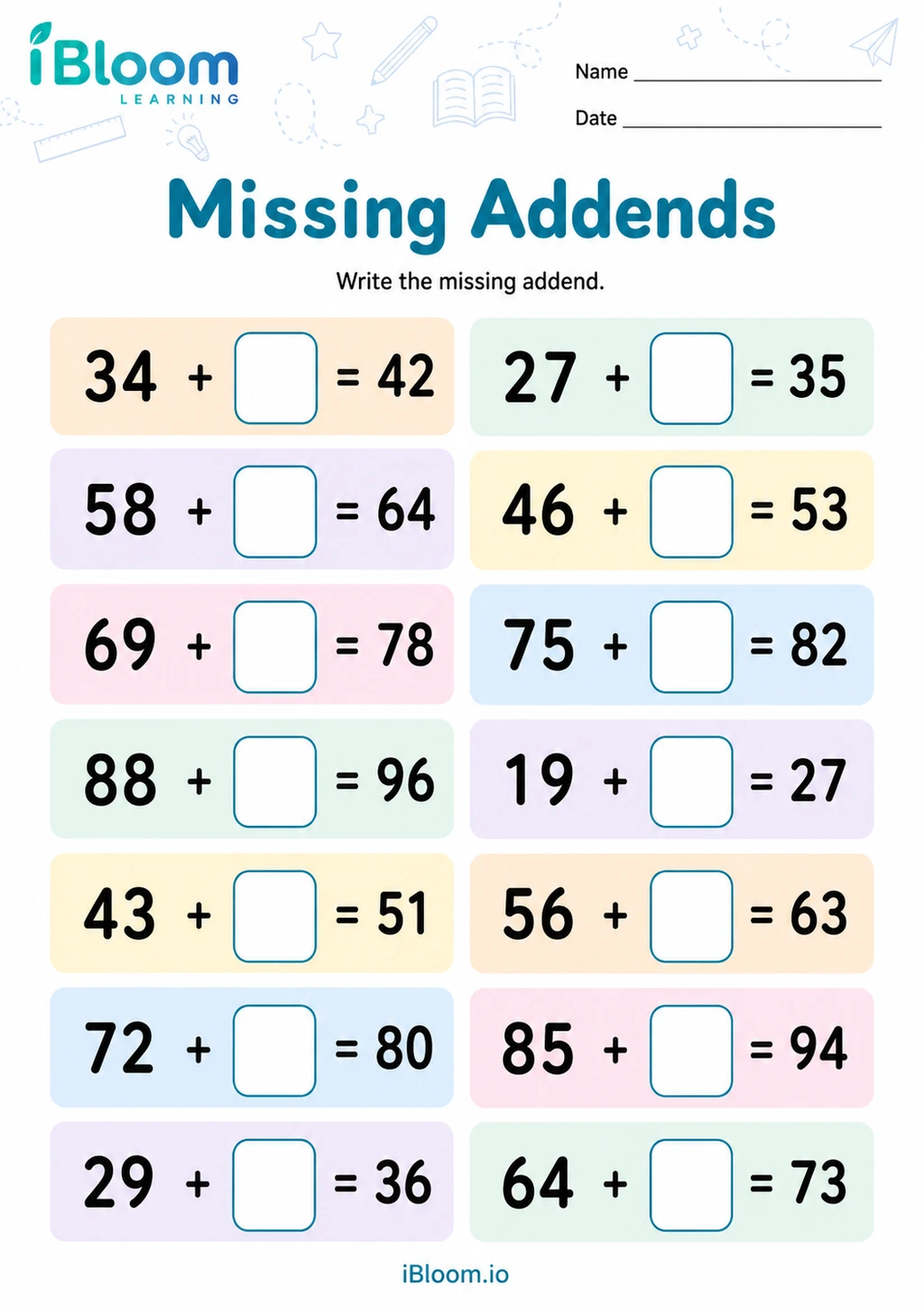
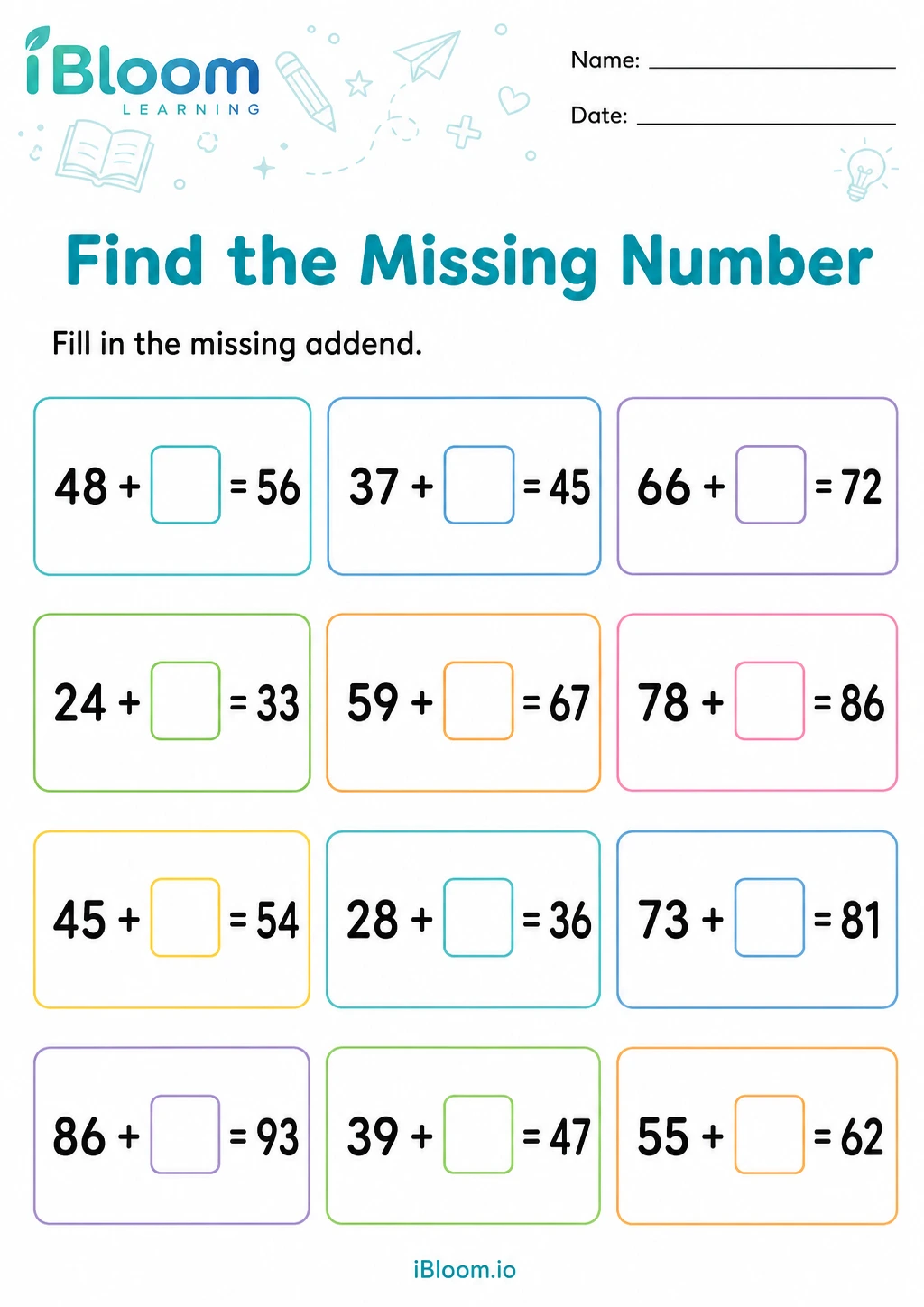
About this worksheet
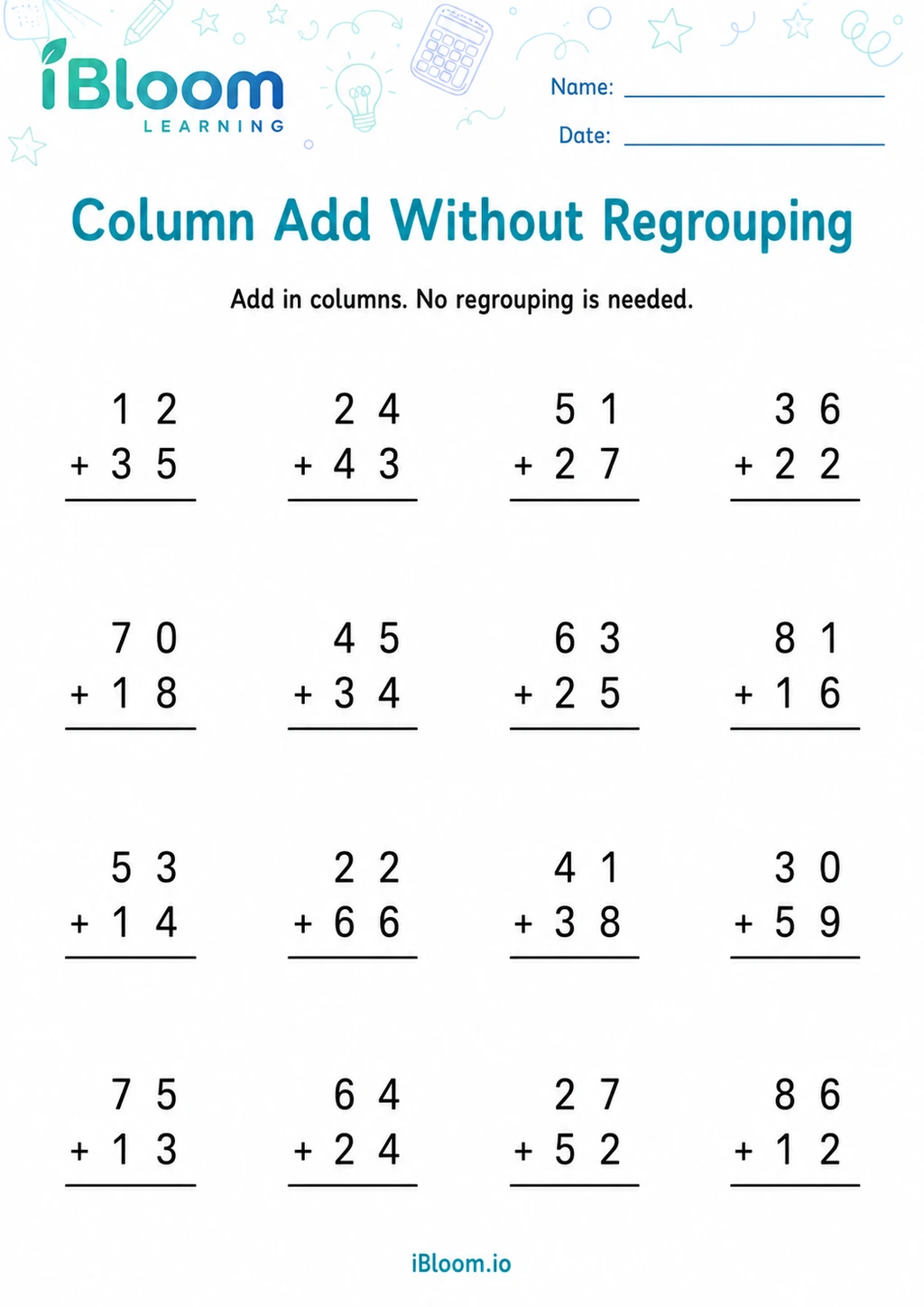
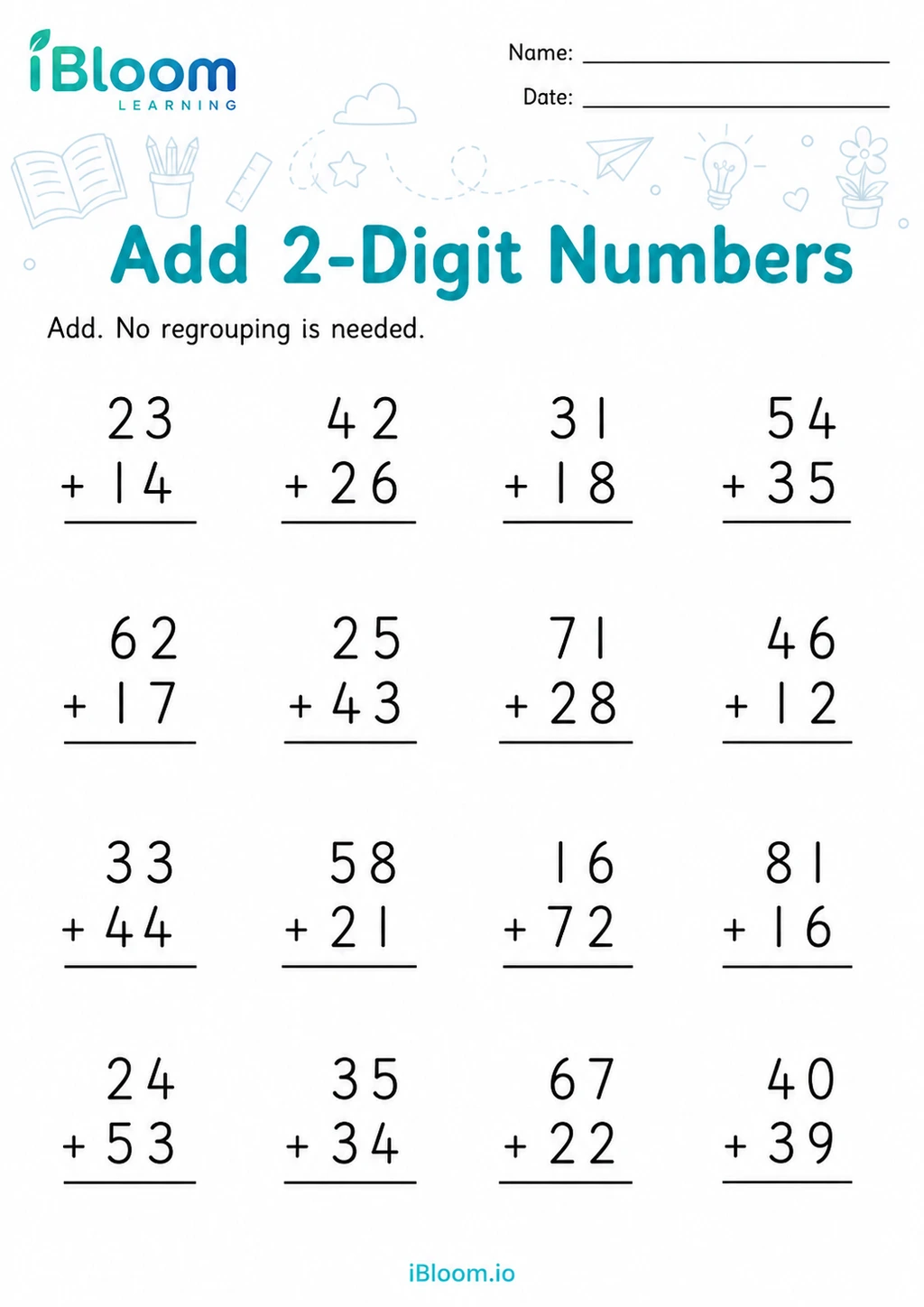
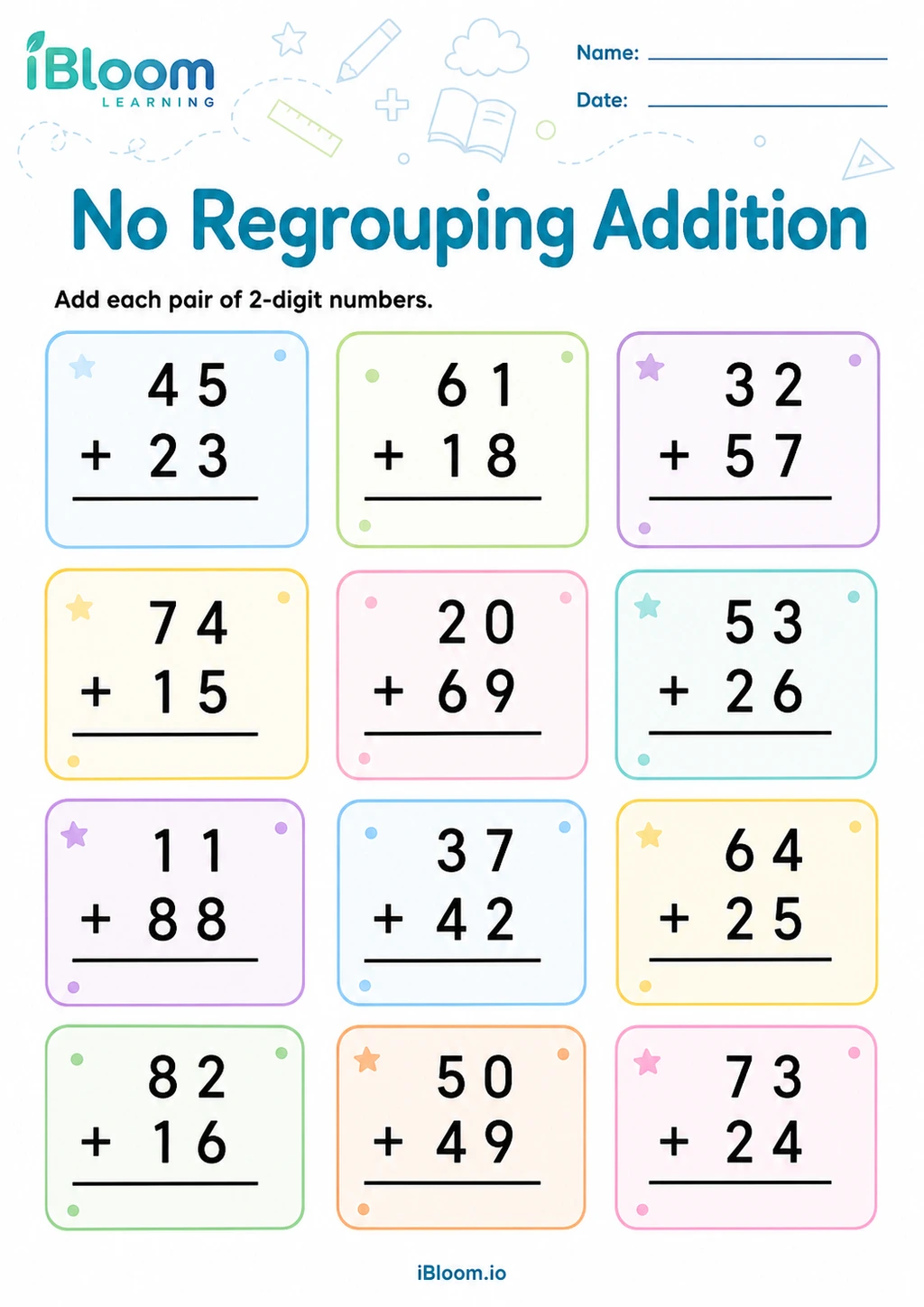
This Grade 2 printable provides 16 two-digit addition problems. Each sum has aligned tens and ones columns so learners can add each place without regrouping, then check all answers with the separate key.
Aligned to 2.NBT.B.5
How should students approach add two-digit numbers in columns?
Each problem adds two two-digit numbers without making a new ten. Set the digits in matching tens and ones places, add the ones, then add the tens.
For example, 34 + 25 combines 4 ones with 5 ones and 3 tens with 2 tens, for a total of 59. The sums stay within 100.
- 134 + 25 = 59
- 2Ones: 4 + 5 = 9; tens: 3 + 2 = 5.
- 3The ones total stays below 10, so no regrouping is needed.
What will the two parts practice?
Part A contains questions 1–8; Part B contains questions 9–16. Every item is a two-digit column-addition problem with no regrouping, and the answer key lists all 16 sums.
- Part A: establish the method and record each answer.
- Part B: continue the same skill with a fresh set of examples.
- Use the answer key to review a calculation that needs another try.
How can I guide the practice?
- 1Line up the ones digits and tens digits.
- 2Add the ones digits first.
- 3Write the ones total in the ones place.
- 4Add the tens digits and record the tens total.
- 5Check that each column total is less than 10 and compare with the key.
Common slips and how to check them
The mistake
Adding a tens digit to an ones digit.
The fix
Keep each column aligned by place value before you add.
The mistake
Writing the whole ones sum in the ones place.
The fix
Check that the ones total is less than 10 on this no-regrouping page.
The mistake
Forgetting to include one addend’s tens.
The fix
Add the tens column after finding the ones total.
Common Core alignment
This worksheet practices the Common Core skill listed here.
Add within 100 by using place value and strategies based on place value.
On this sheet: The questions directly practice add two-digit numbers in columns.
Show the official wordingHide the official wording
Fluently add and subtract within 100 using strategies based on place value, properties of operations, and/or the relationship between addition and subtraction.
What to practice next
Make more practice
Further reading
Questions parents and teachers ask
How many questions are on the worksheet?
There are 16 questions, divided into two parts of eight. The separate answer key lists one answer for every item, so an adult can check the whole set or review a few questions at a time. Students may complete one part per sitting.
What skill does this page practice?
The page focuses on add two-digit numbers in columns. Each question uses the same core idea with a new example, giving students repeated practice with the numbers and language used for this skill. Adults can ask learners to explain one answer aloud.
Should students show their work?
Yes. Have students write their steps beside each problem or use scratch paper, especially when aligning digits or reasoning about a missing value. Showing the steps makes it easier to find where a calculation changed. The key supports that review after students finish.
How can I use the answer key?
Let the learner finish a group before checking it. If an answer differs, return to the question and check the operation, place values, and arithmetic. This review helps the student correct the step instead of simply copying the answer.
How long will the worksheet take?
Plan for about 20 minutes, including time to read prompts and check work. The pace will vary with familiarity, so it is fine to pause between the two parts and complete the second set later. A short break can make the practice easier to manage.