
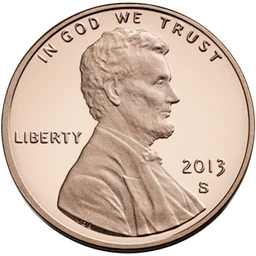
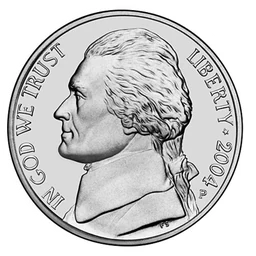
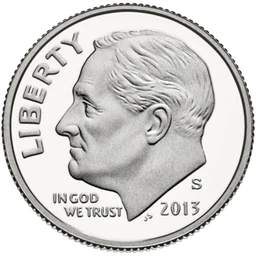
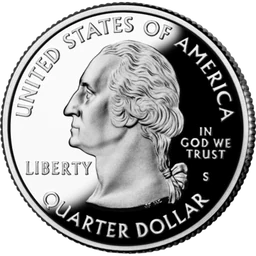


About this worksheet
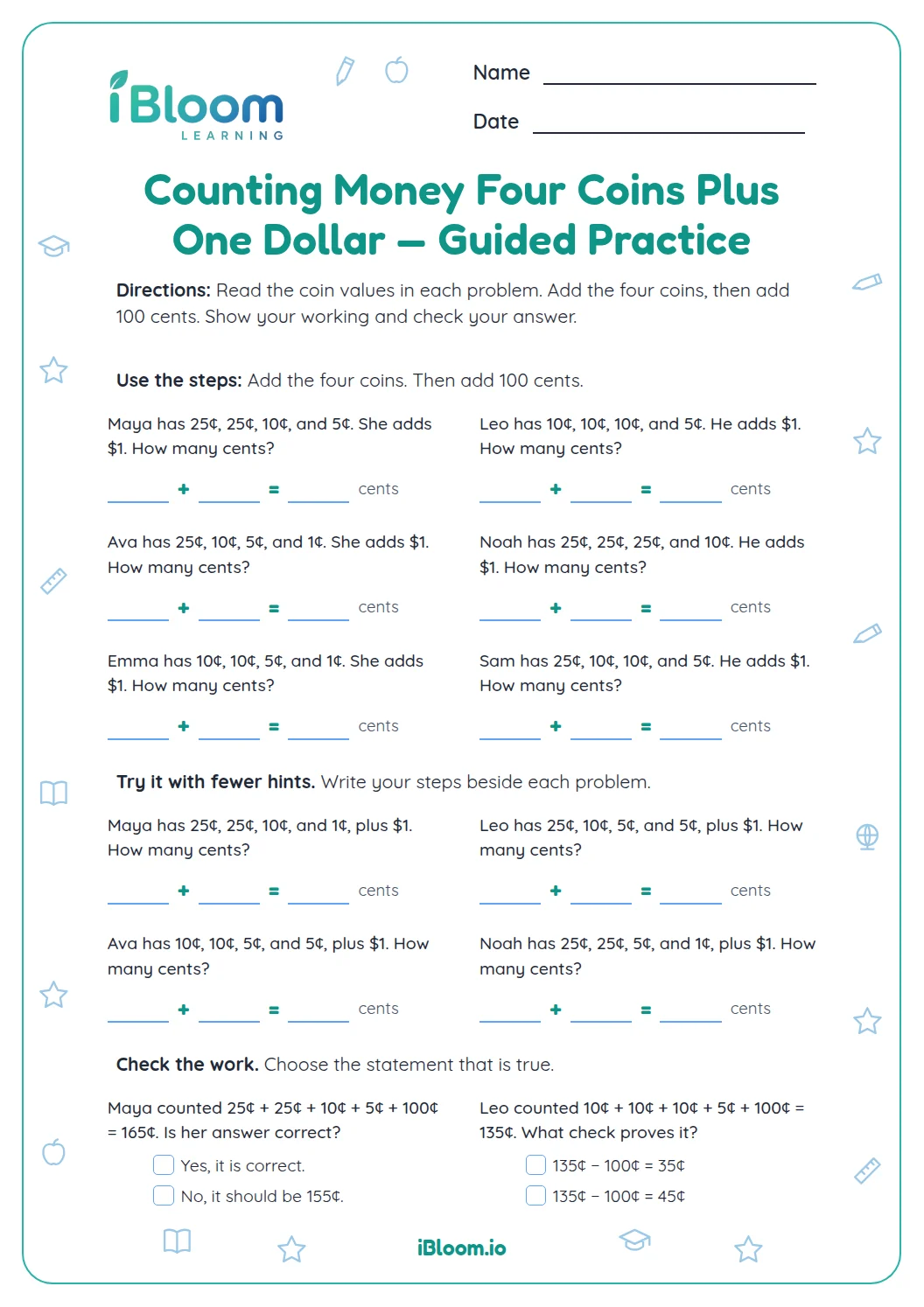
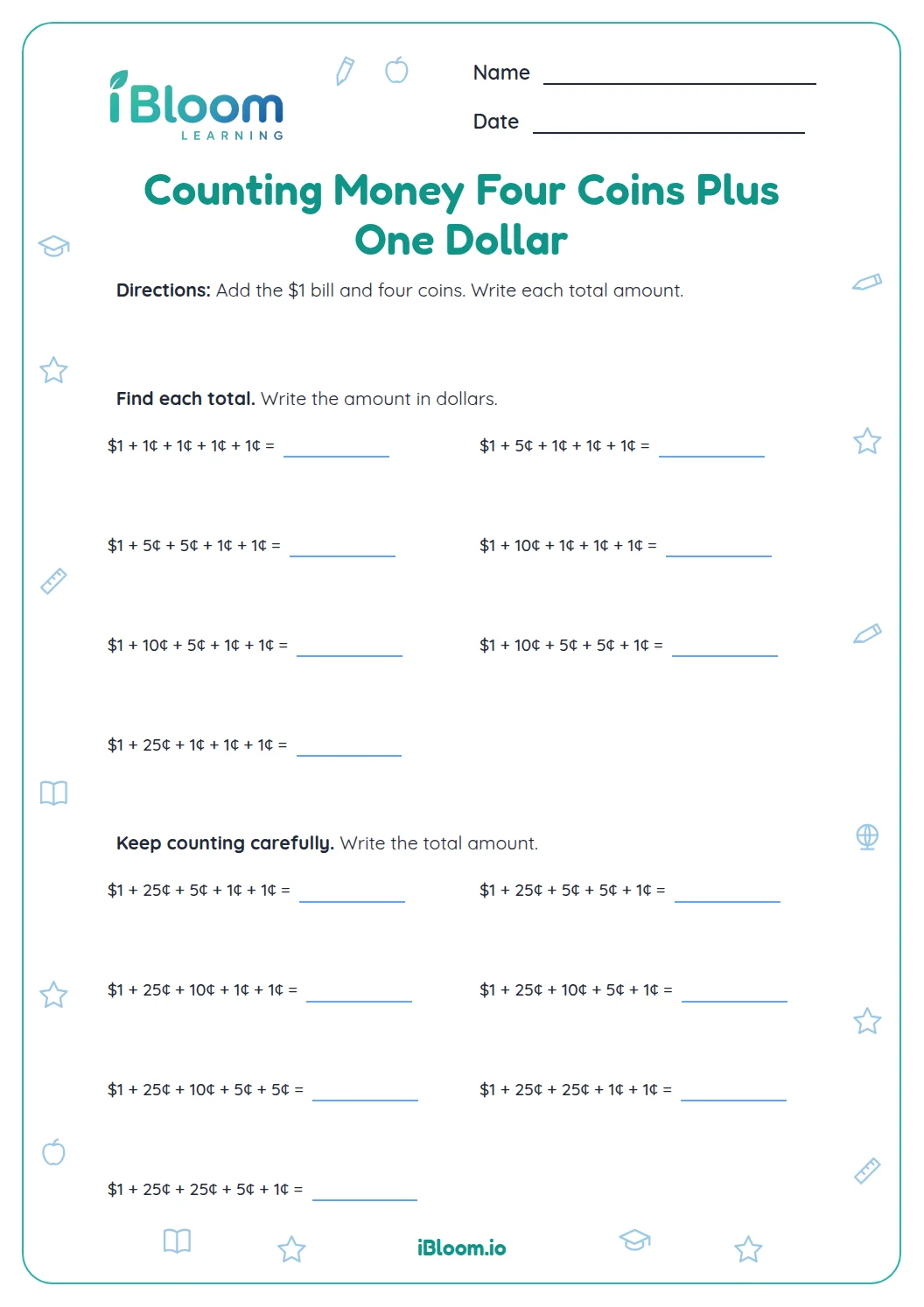
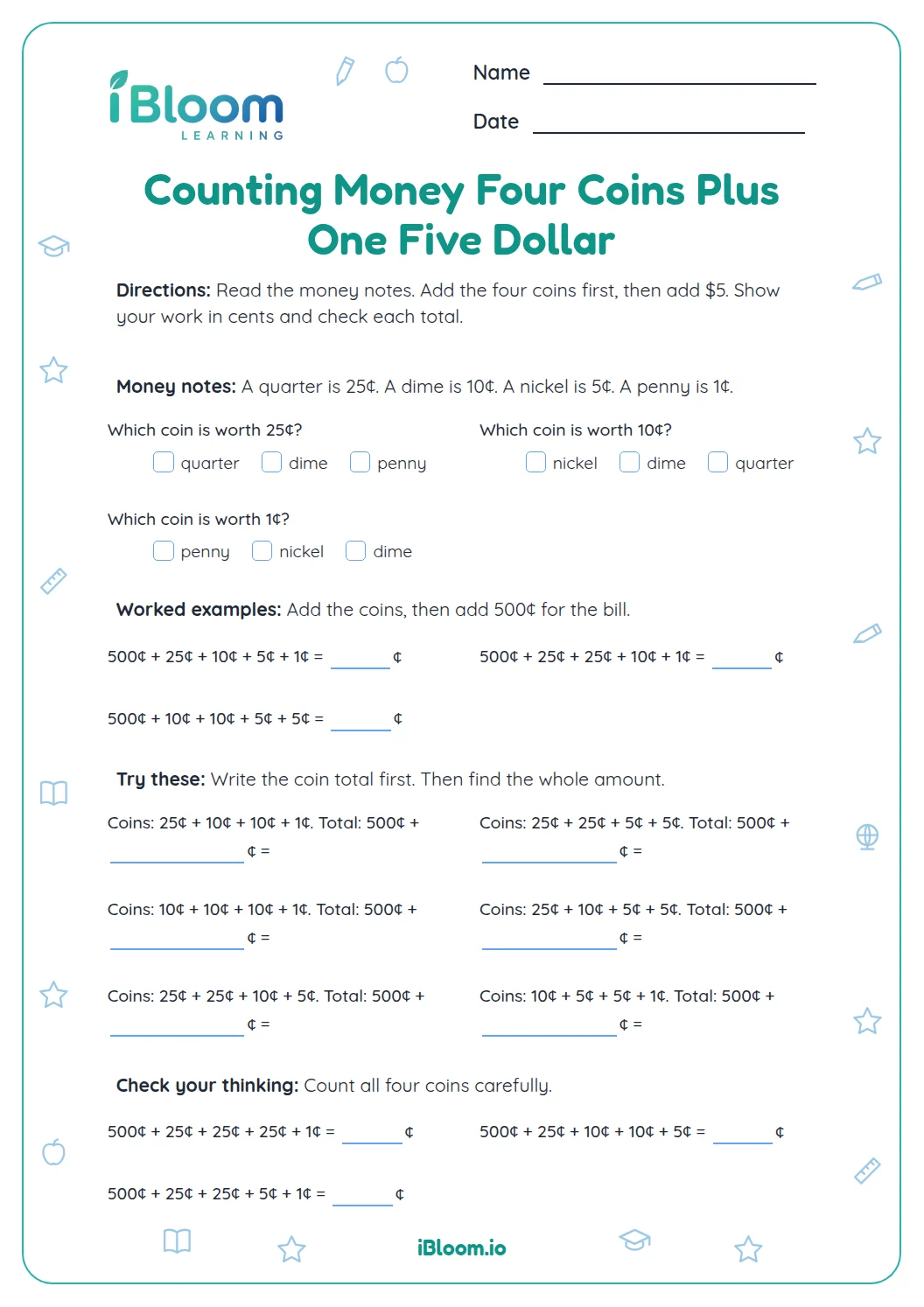
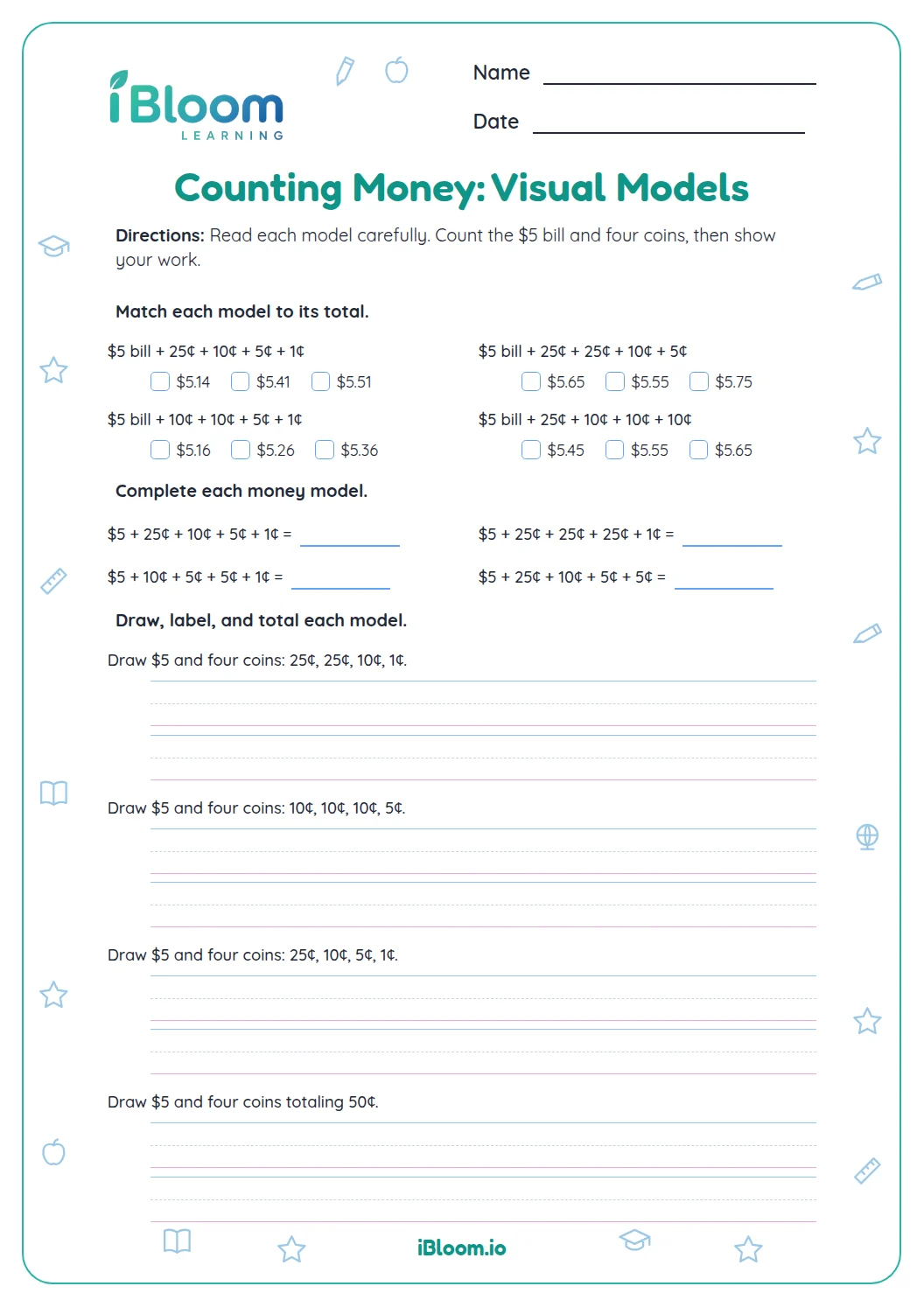
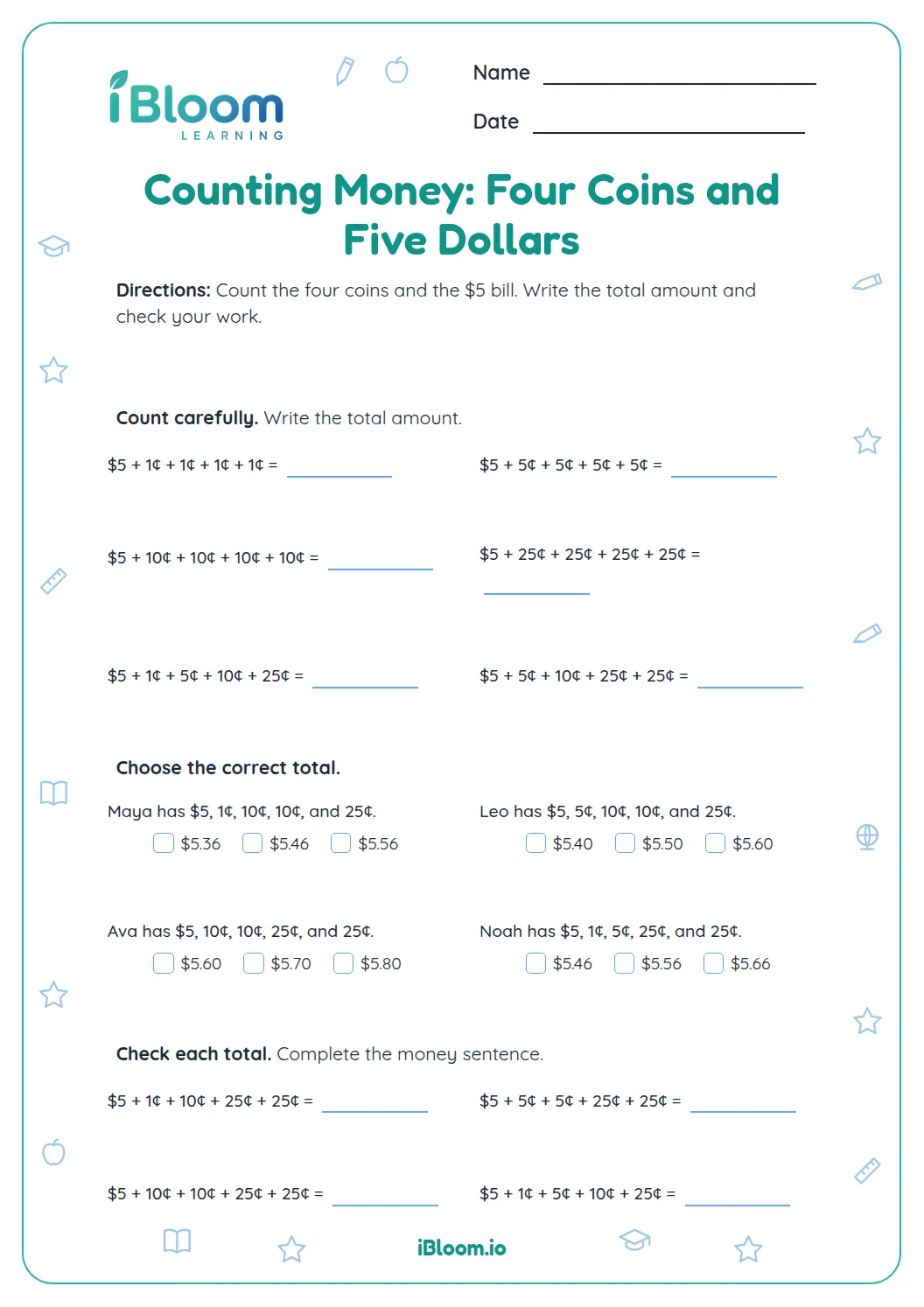
This Grade 2 worksheet shows four US coins in each of 16 problems. Children add the pictured coin values, include one dollar, and write each total in dollars and cents. The practice aligns with CCSS 2.MD.C.8, and a separate answer key makes checking straightforward.
Aligned to 2.MD.C.8
How do children find the value of a coin set?
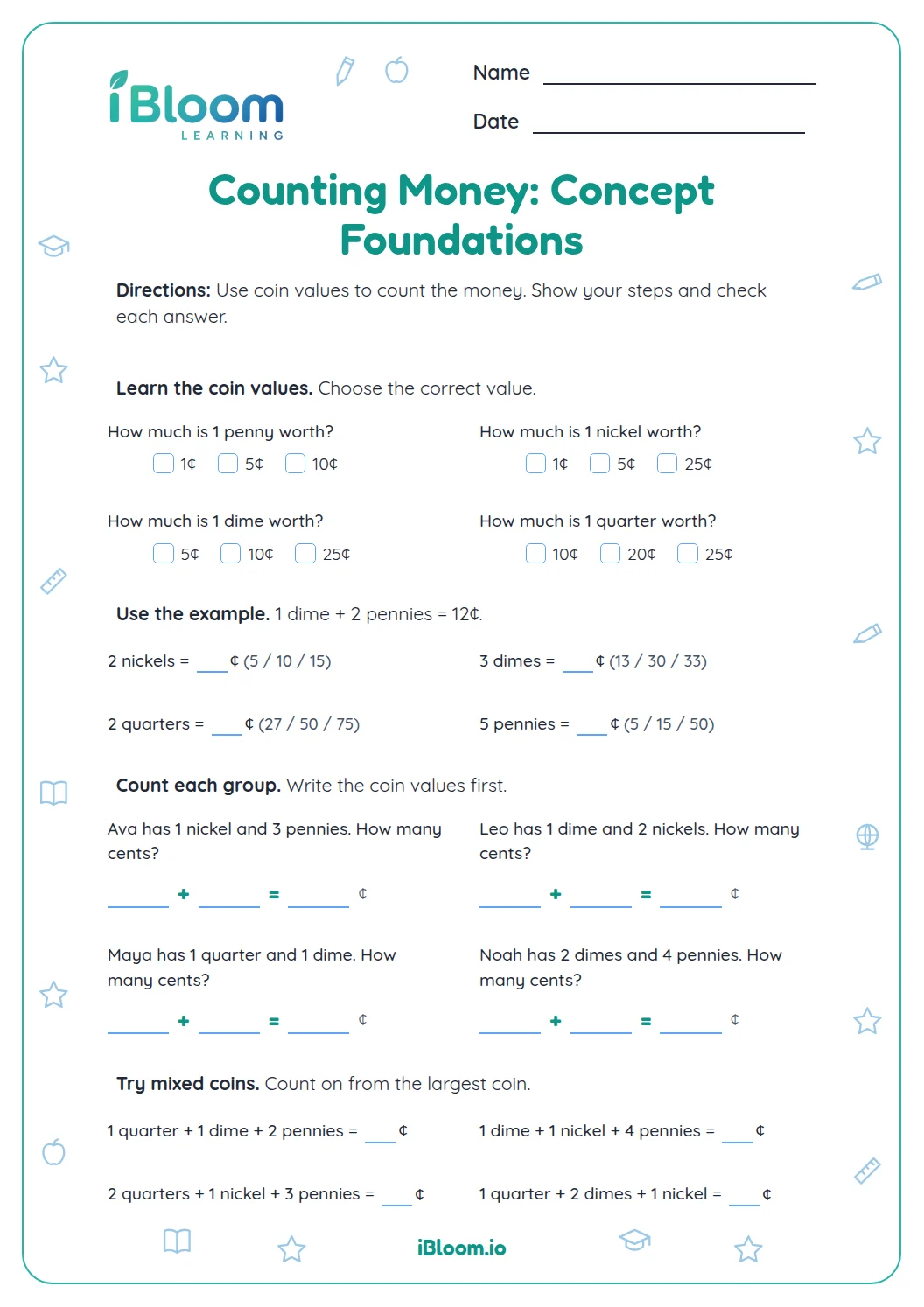
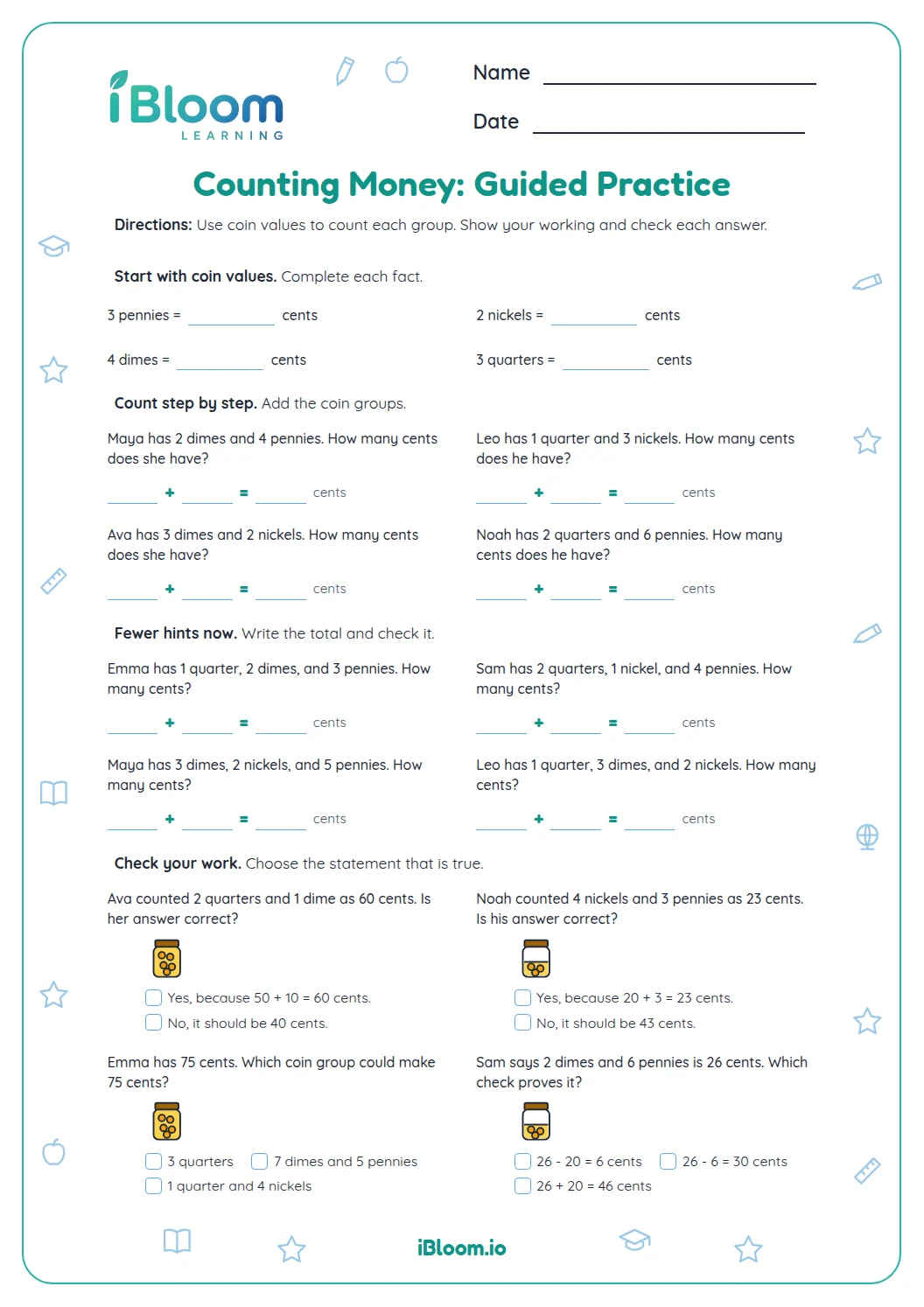
Start with the value of each coin: a penny is 1¢, a nickel is 5¢, a dime is 10¢, and a quarter is 25¢. Add the four coin values, then add 100¢ for the dollar bill. Writing the coin subtotal first can prevent a missed coin.
How does one problem work?
For a quarter, dime, nickel, and penny, add 25¢ + 10¢ + 5¢ + 1¢ = 41¢. Add the $1 bill: 100¢ + 41¢ = 141¢, or $1.41. The pictured coin set and number sentence show the same total.
- 1Quarter + dime + nickel + penny
- 225¢ + 10¢ + 5¢ + 1¢ = 41¢
- 3100¢ + 41¢ = 141¢
- 4Answer: $1.41
What coin combinations are included?
The 16 questions show pennies, nickels, dimes, and quarters in changing four-coin combinations. Each also includes one dollar in the number sentence. Children add the coins and write the full amount using dollars and cents.
How to use this worksheet
- 1Name each coin and recall its value before adding.
- 2Add the four coin values in cents.
- 3Add 100 cents for the dollar bill.
- 4Write the amount with a dollar sign and two cent digits.
- 5Use the separate key to check each total.
Common mistakes and quick fixes
The mistake
Counting the dollar bill as one cent.
The fix
Write $1 as 100¢ before combining it with the coin subtotal.
The mistake
Skipping a coin in the picture.
The fix
Touch or point to each of the four coins as you say its value.
The mistake
Writing 141¢ as $1.41 incorrectly or as $1.4.
The fix
Group each 100 cents as one dollar, then write two digits for cents.
Curriculum alignment
Use the coin values and dollar notation to solve each amount.
Solve money word problems with dollar bills and coins.
On this sheet: Each equation represents four coin values and a dollar bill, with answers written using dollars and cents.
Show the official wordingHide the official wording
Solve word problems involving dollar bills, quarters, dimes, nickels, and pennies, using $ and ¢ symbols appropriately.
What to practice next
Make more practice
Further reading
Questions parents and teachers ask
Do all questions include a dollar bill?
Yes. Every question shows exactly four coins and includes one $1 bill in the number sentence. Add the four coin values first, then include 100 cents for the bill. The answer key gives each total in dollar notation so you can check the coin addition and final amount.
Which coin values should my child know?
The worksheet uses pennies, nickels, dimes, and quarters. Their values are 1¢, 5¢, 10¢, and 25¢. Children can point to each pictured coin, name its value, and add the four amounts before including the dollar. The key lists the completed totals.
Why write the answer with dollars and cents?
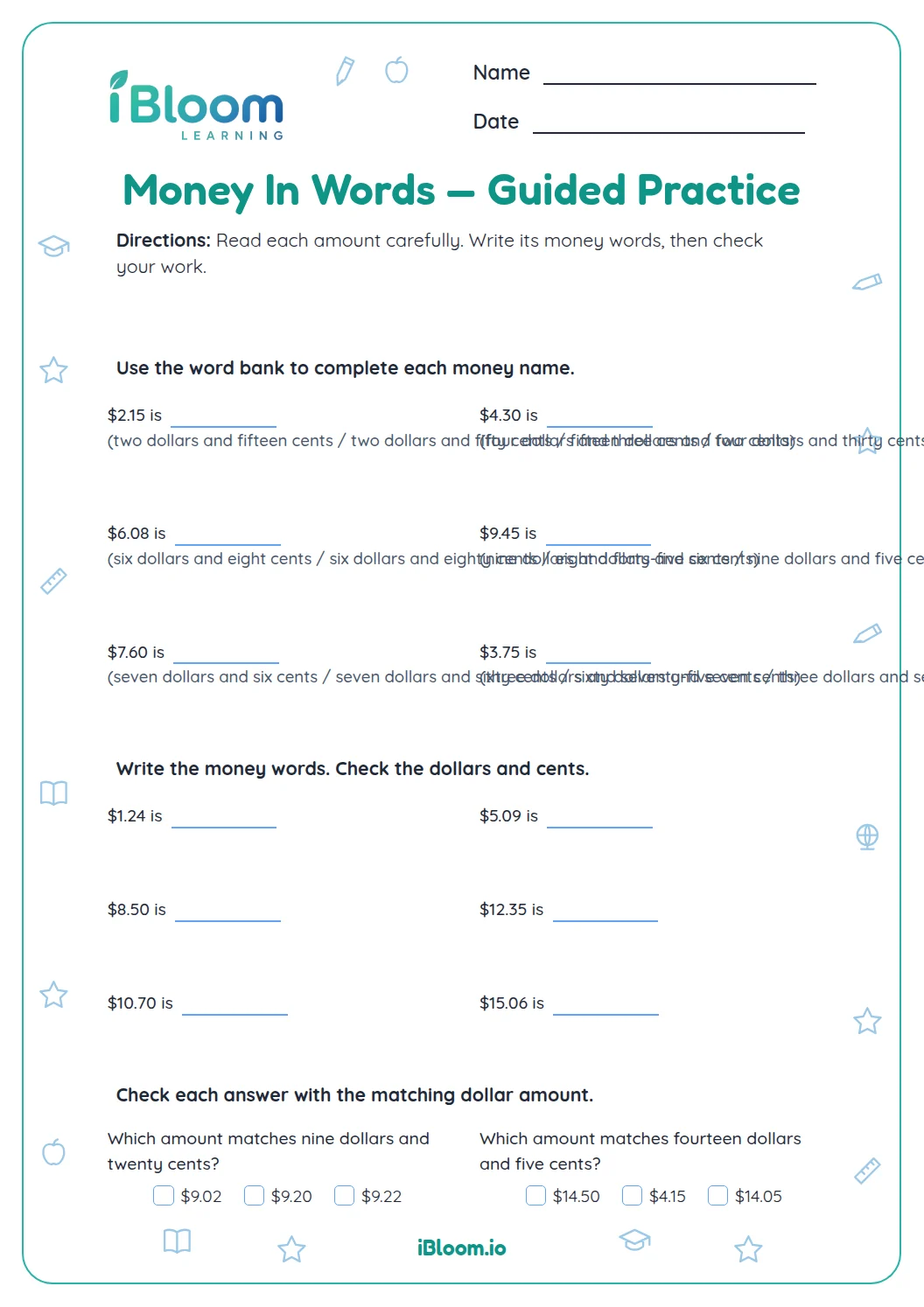
The dollar sign and decimal point show how cents combine into dollars. For example, 141 cents is $1.41: one whole dollar and 41 cents. Writing two digits after the decimal point keeps amounts such as $1.05 clear and easy to read.
How can I help without doing the addition?
Ask your child to name each pictured coin and total the four values before adding the bill. If a total is off, point to the coin row and recount its values one at a time. The number sentence keeps the work tied to familiar US money.
Does this worksheet include an answer key?
Yes. The separate answer key lists all 16 totals. Use it after your child has written the amounts, and revisit any missed total by checking the four-coin subtotal before adding the dollar bill. This helps locate the step where an amount changed.