



About this worksheet
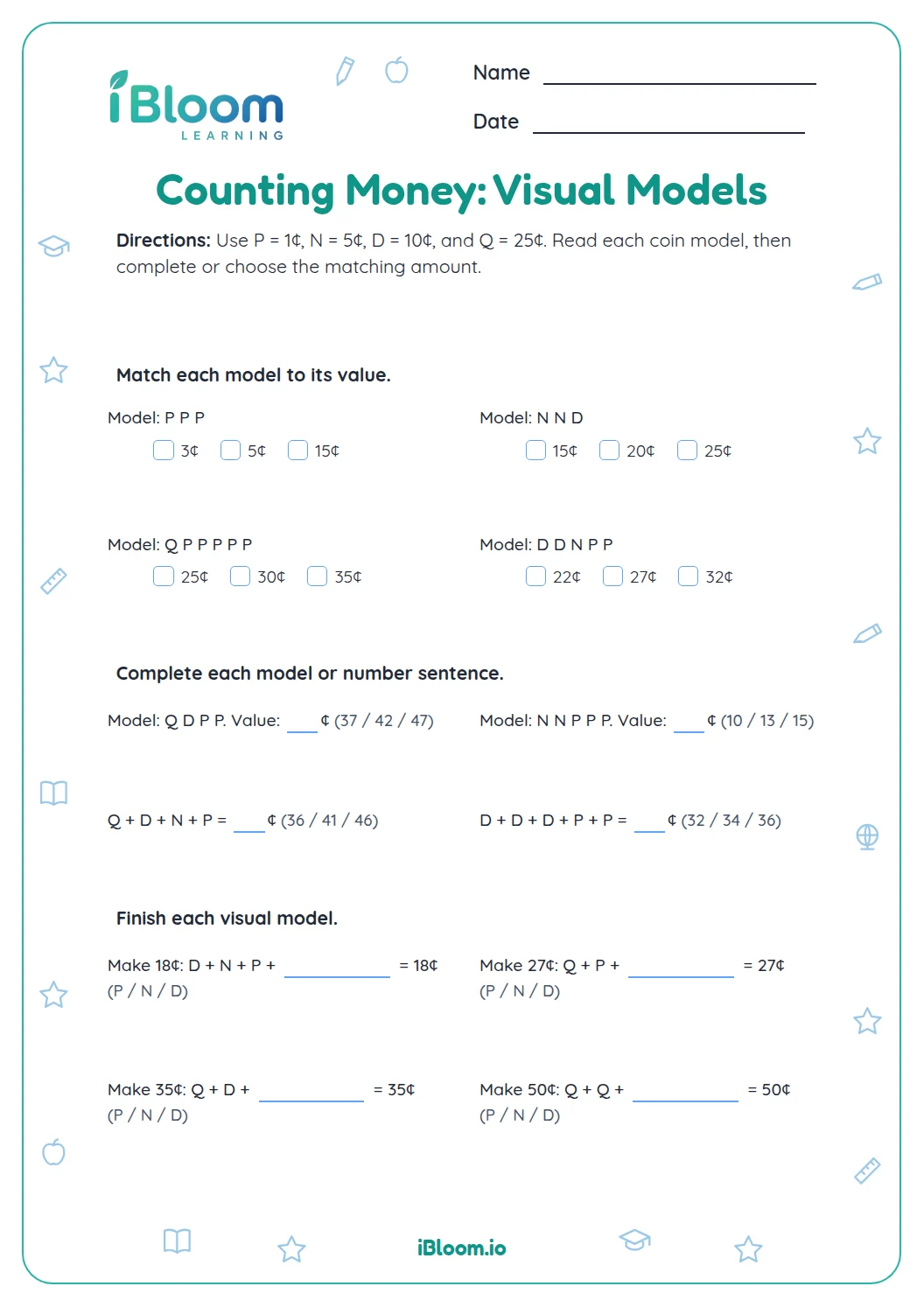
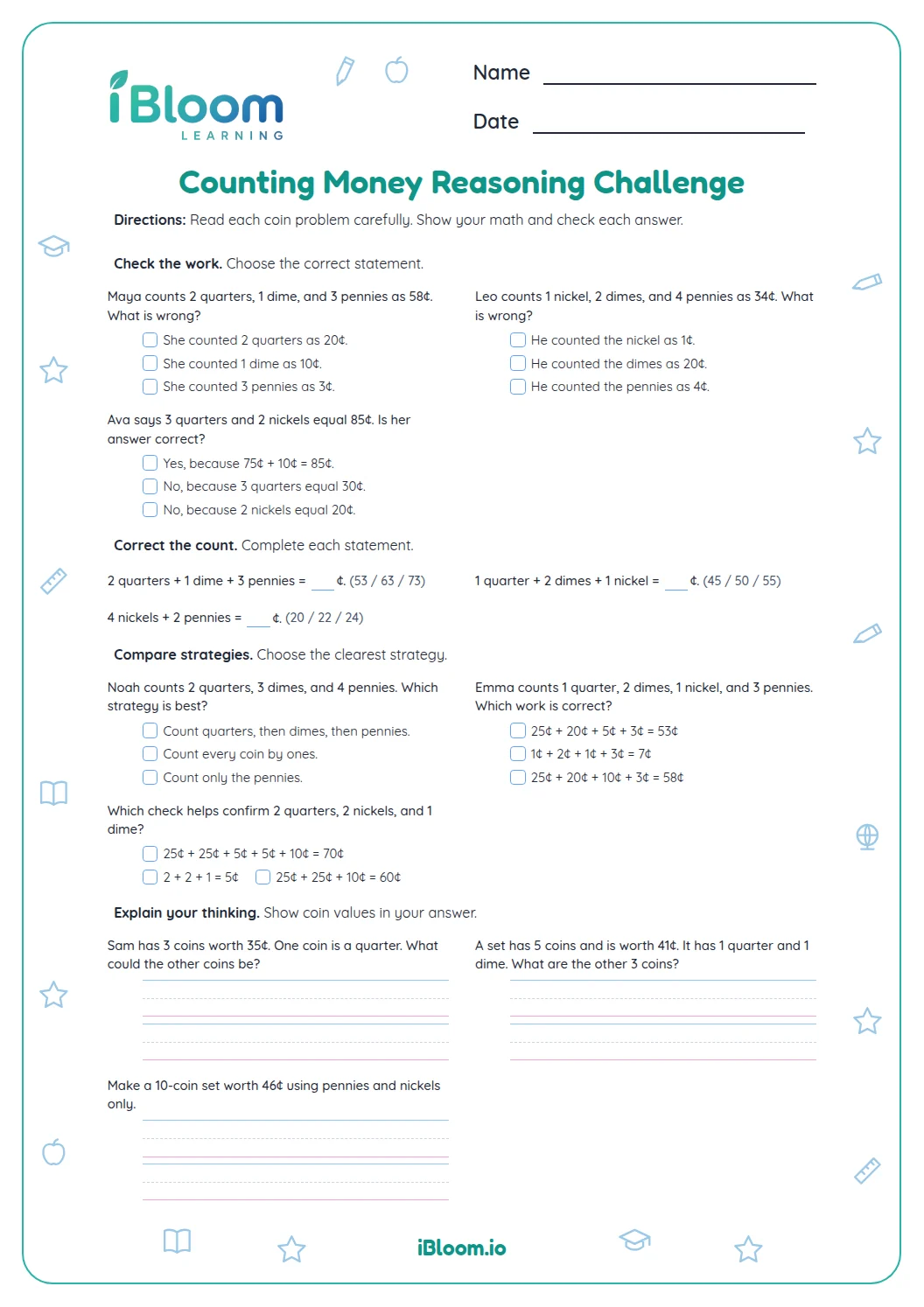
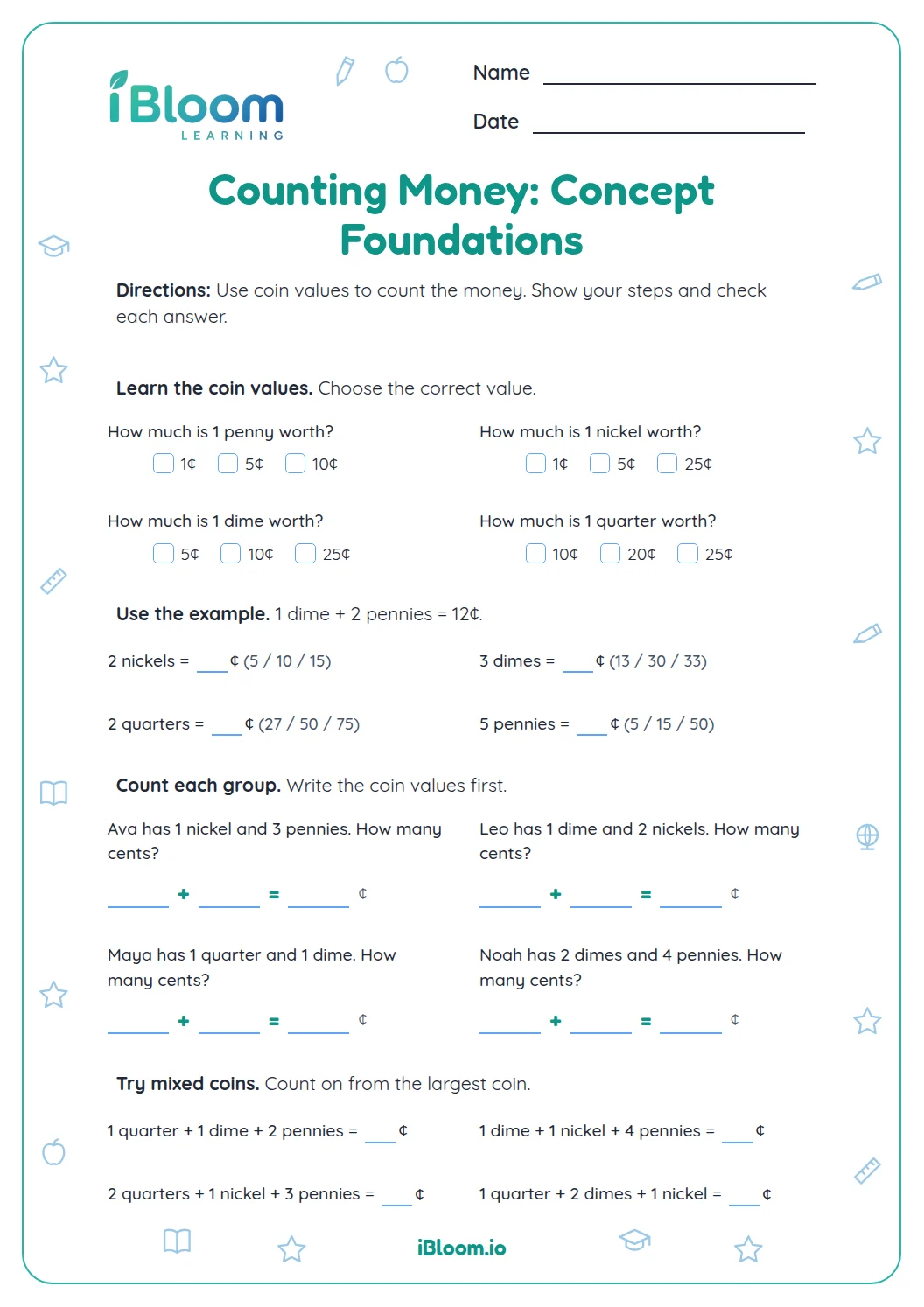
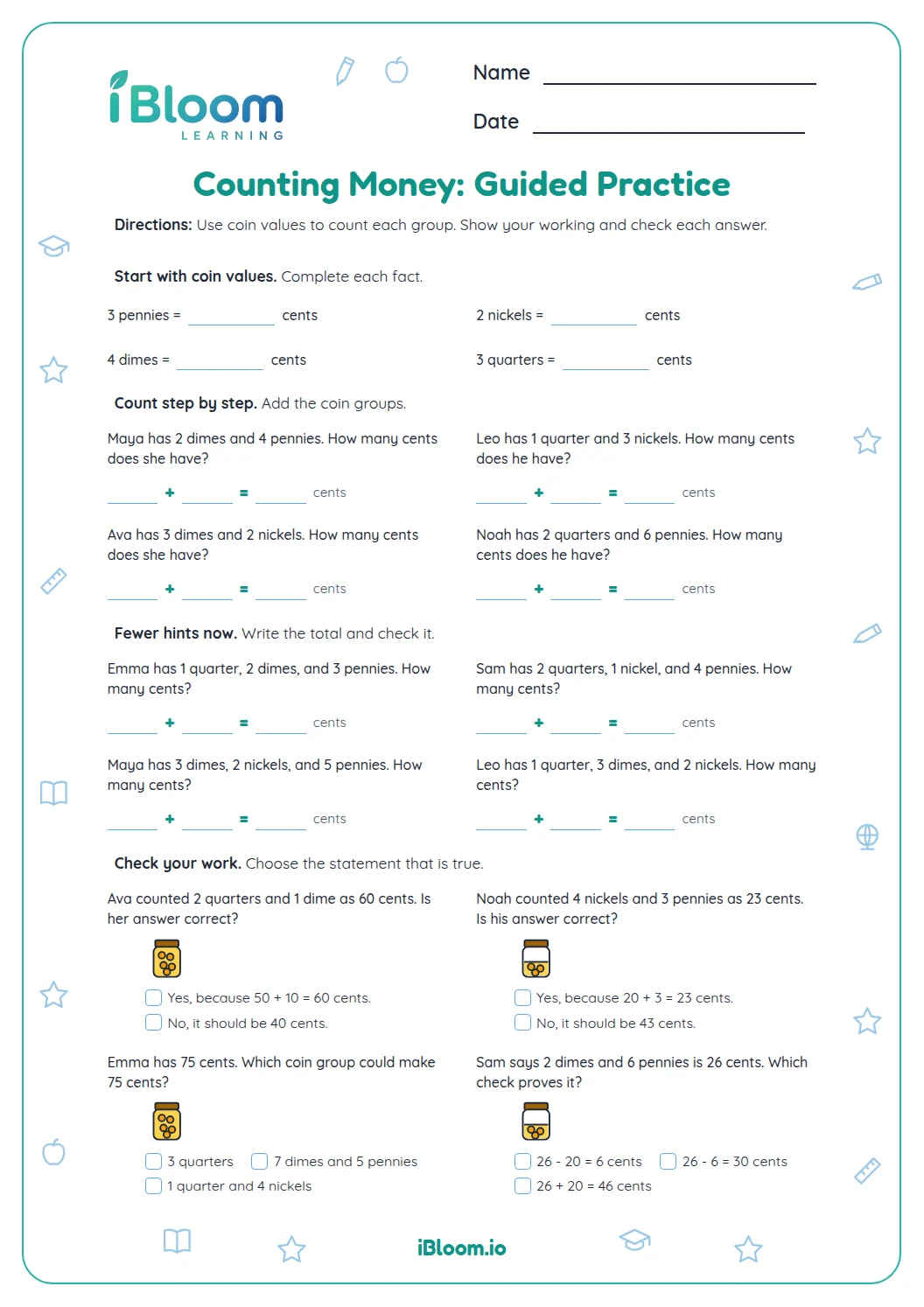
This independent practice page asks Grade 2 learners to total groups of exactly ten pennies, nickels, dimes, and quarters. Every prompt names the coin counts so children can add each kind and check the total carefully.
Aligned to 2.MD.C.8
How much is each coin worth?
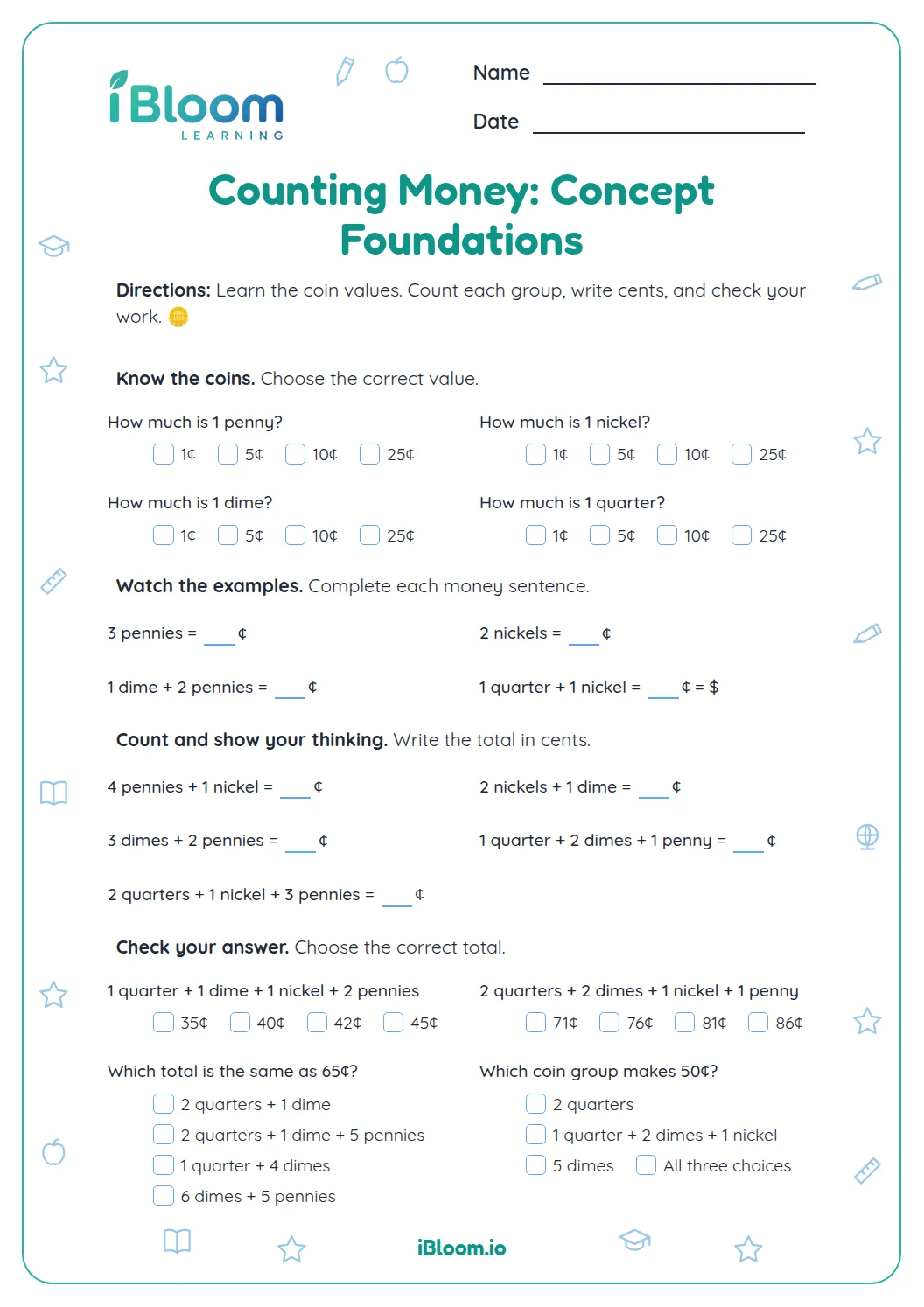
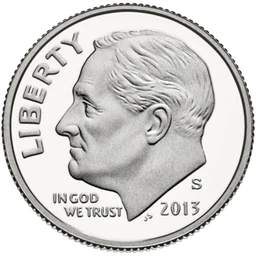
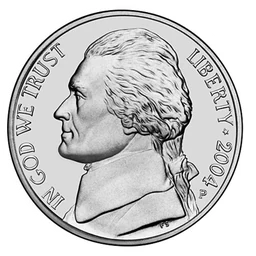
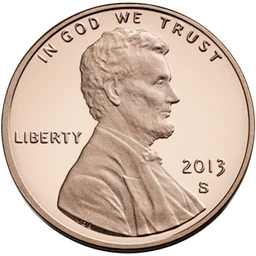
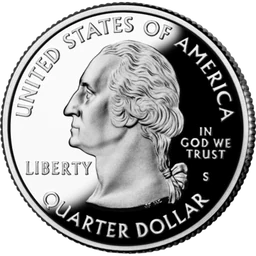
A penny is 1¢, a nickel is 5¢, a dime is 10¢, and a quarter is 25¢. Count coins of the same kind together, then add the group values.
Every set on this worksheet has exactly 10 coins. The pictures show the coin types; the sentence gives the complete number of each type in that set.
- 11 quarter = 25¢
- 21 dime = 10¢; 2 nickels = 10¢
- 36 pennies = 6¢
- 425¢ + 10¢ + 10¢ + 6¢ = 51¢
What does independent practice include?
There are 14 ten-coin sets across two worksheet pages. Each question names the number of quarters, dimes, nickels, and pennies, and asks for the value in cents.
The combinations change from question to question. Each total is no more than 100¢, so learners can focus on recognizing coin values and adding groups.
How can a learner check a coin total?
First make sure the coin counts add to ten. Then calculate each group and add those values. For example, two nickels are 10¢, while two dimes are 20¢.
The key gives the total in cents. If an answer differs, check that the number of each coin was counted once and that its value was used correctly.
How to use this worksheet
- 1Read how many coins of each kind the set contains.
- 2Check that the four coin counts add to ten.
- 3Multiply each count by its coin value or count by that value repeatedly.
- 4Add the group values and write the total in cents.
- 5Check the answer key after finishing the questions.
Common mistakes and quick fixes
The mistake
Treating the number of coins as the number of cents.
The fix
Use each coin’s value: a dime is 10¢, not 1¢.
The mistake
Counting every coin as if it had the same value.
The fix
Group quarters, dimes, nickels, and pennies separately before adding.
The mistake
Forgetting to check that there are ten coins altogether.
The fix
Add the four coin counts in the sentence before finding the value.
Common Core alignment
This page practices solving problems with US coins.
Find the value of groups of US coins using cent amounts.
On this sheet: Learners find the total cent value of sets made from pennies, nickels, dimes, and quarters.
Show the official wordingHide the official wording
Solve word problems involving dollar bills, quarters, dimes, nickels, and pennies, using $ and ¢ symbols appropriately.
What to practice next
Make more practice
Questions parents and teachers ask
How many coins are in each set?
Each question describes exactly 10 coins. The sentence gives the number of quarters, dimes, nickels, and pennies. Check that the four counts add to ten before calculating the value, then use the coin values to find the total in cents.
What are the coin values?
A penny is worth 1 cent, a nickel 5 cents, a dime 10 cents, and a quarter 25 cents. The worksheet asks students to use those values to find the total for each ten-coin set and write the answer in cents.
Should students write a dollar sign or a cent sign?
The directions ask for the total in cents. Write the number of cents, such as 51, for a set worth 51¢. The answer key also gives totals in cents, so the response format matches the prompt and is easy to check.
How can students check an answer?
Check that the four coin counts add to ten, then recalculate each group by coin value. Add the group totals and compare the result with the separate answer key. Rechecking each type helps catch a missed coin or a coin counted at the wrong value.
What is the total for question 1?
Question 1 has one quarter, one dime, two nickels, and six pennies. Their values are 25¢, 10¢, 10¢, and 6¢. Add them to get 51 cents, or 51¢. The four counts also add to ten coins, as each set should.